Disclosure: Some links in this post are affiliate links. As an Amazon Associate I earn from qualifying purchases, at no extra cost to you. Learn more
Specs are compiled from manufacturer listings and verified buyer reviews and can change over time — please confirm the key details on the product page before buying.
You want sunglasses you can actually wear without babying them. Scratch-resistant coatings now come on budget frames too, and several picks here survive daily driving, work, and water without hazing over with hairline marks. The bad news is that a “scratch-resistant” badge on the box means very little on its own — what protects a lens is the coating quality and how the frame behaves when you shove it in a bag or drop it on concrete.
This guide is built by comparing the manufacturers’ published specifications and the patterns across verified customer reviews, so you get each pick’s real strengths and trade-offs instead of marketing spin.
Below are the frames worth your attention, ranked by how well their lenses and coatings survive real life — and the seven options here cover aviator, square, and wrap shapes across every tier. Here is the shortlist of scratch resistant sunglasses for men that made the cut.
Top Picks
How To Choose The Best Scratch Resistant Sunglasses for Men
Scratch resistance is a coating story, not a frame story. The lens underneath is usually polycarbonate or an acetate-mounted lens, and the anti-scratch layer sits on the front surface as a thin hard film. That film is what takes a hit when you wipe a dusty lens with a dry cloth, or when the glasses slide off a car seat into a cup holder. Two pairs can look identical and have wildly different coating durability, so the label alone is worthless — the lens material, the coating thickness, and how gently the frame holds the lens all matter.
Lens material and coating: the part that actually resists scratches
Polycarbonate lenses are the standard on sport and value frames because they’re impact-resistant and light — O’Neill’s backside anti-reflective coating on an impact-resistant polycarbonate lens is a good example of this pairing. Acetate frames like CARFIA use a moulded plastic body that holds the lens firmly, which reduces the micro-shifting that lets grit grind into the coating. The biggest scratch risk isn’t the lens material at all — it’s wiping a dry, dusty lens. Use a microfibre cloth and a drop of water, and most coatings will last through years of daily wear.
UV400 and polarization: protection versus glare control
UV400 means the lens blocks light wavelengths up to 400 nanometres — that’s the UVA and UVB range that damages eyes over time. Polarization is a separate filter that kills horizontal glare bouncing off water, hoods, and asphalt. Every pick here carries UV400, but not every one is polarized, and the polarized ones differ in how aggressively they cut glare. If you drive a lot or spend hours on water, polarization matters more than coating thickness. If you mostly want sun protection for yard work, UV400 alone is fine.
Fit, nose pads, and temple grips: how the frame survives a drop
A loose frame slides off your face, and a sliding frame is a scratching frame. Silicone nose pads and rubberised temple tips — the kind Under Armour and O’Neill both use — grip through sweat and sunscreen so the glasses stay where you put them. Medium-fit wrap frames like the Maui Jim Kaiwi Channel sit firm on the nose bridge and block side glare. The frame’s hinge quality also matters: a squeaky hinge that backs its screw out is a frame that will eventually fall apart at the temple, which is the most common durability complaint across this category.
Side-by-Side Comparison
| Model | Best For | Lens Protection | Polarized | Frame Material | Amazon |
|---|---|---|---|---|---|
| Under Armour UA 0005/S★ Best Overall | Everyday work and driving | UV400 | Yes | Plastic | Amazon |
| WearMe Pro MaxwellBest Value | Aviator look on a budget | UV400 | Yes | — | Amazon |
| CARFIA Retro Square | Dressy square-frame style | UV400 | Yes | Italian Acetate | Amazon |
| WearMe Pro Wesley | Large heads and wide faces | UV400 | Yes | — | Amazon |
| Shady Rays Classics | Active use with replacement warranty | UV400, anti-scratch coating | Yes | Lightweight frame | Amazon |
| O’Neill Offshore 2.0 | Water sports and boats | UV400 UVA/UVB | Yes | ZEROFORM polymer | Amazon |
| Maui Jim Kaiwi Channel | Serious glare control | UV400 | Yes | — | Amazon |
Detailed Reviews
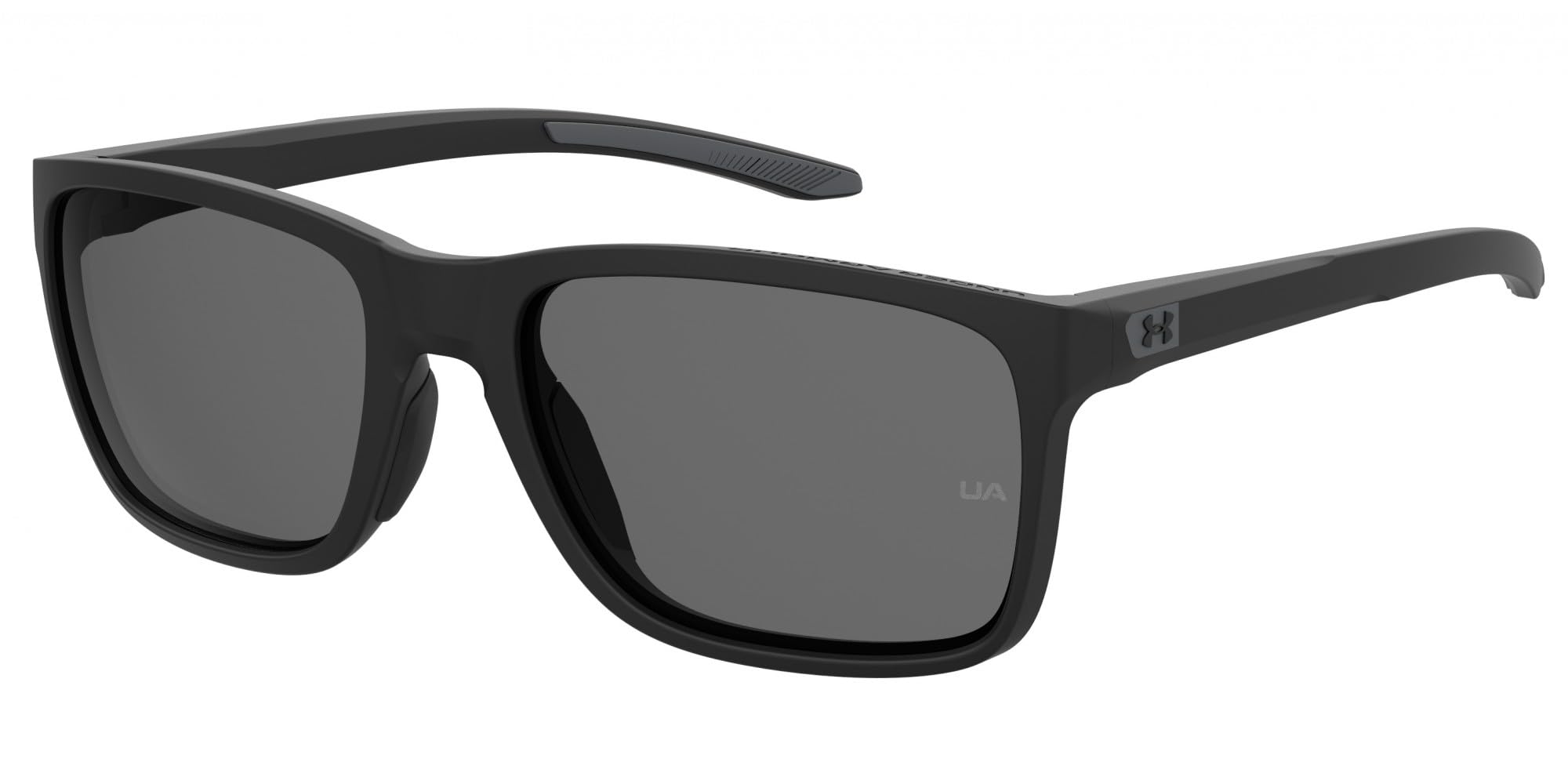
1. Under Armour Men’s Ua 0005/S Rectangular Sunglasses
Our pick — 4.5+★ from 850+ verified ratings; the strongest balance of quality and price.
The rectangular frame that survives drops, grips through sweat, and still looks sharp on a job site.
These are the pick if you wear sunglasses for actual work rather than for posing. The frame is a 58mm lens with a 19mm bridge and 145mm temples — a size that fits a typical adult male face without sliding forward when you look down. Under Armour builds the nose and ear contact points in silicone, so they hold through sweat and don’t shift when you’re moving. Buyers report the exact trait this article is about: “Durable for daily/work wear; survived drops with minor lens scratch.”
The lens is polarized plastic and does reduce glare noticeably — “These are great sunglasses… They really reduce the glare and fit well.” One honest caveat from the same buyer pool: the lens isn’t overly dark, so if you want that deeply tinted look on the brightest days, the tint here may feel moderate. Against the WearMe Pro Maxwell, the Under Armour has a sweated-in silicone grip the Maxwell’s plastic temples don’t; but the Maxwell is cheaper and gets more compliments, while the UA frame is the tighter, more workmanlike fit.
What you should know before ordering: the temple colour in the photo and in person can differ — some buyers find the sides read brownish-maroon rather than the black-and-clear shown. One buyer also found the 145mm temples a touch long for their head. If neither of those bothers you, this is the most sensibly built daily pair in the mid tier — the hinges on it are generally solid, with only reports of the odd screw working loose over time.
What holds up
- Silicone nose and ear grips keep the frame planted through movement and sweat
- Polarized lens cuts glare on road and water, with UV protection on top
- Survived daily work wear and drops with only minor lens marking, per buyers
Where it falls short
- Tint is only moderately dark; some want a deeper shade
- Temple colour can read brown-maroon versus the photo’s black-and-clear
- The 145mm temples run long for smaller heads
Reach for this if: you want a grippy, polarized daily pair that handles work and driving without slipping.
The honest catch: check the temple colour against your expectation before you commit.
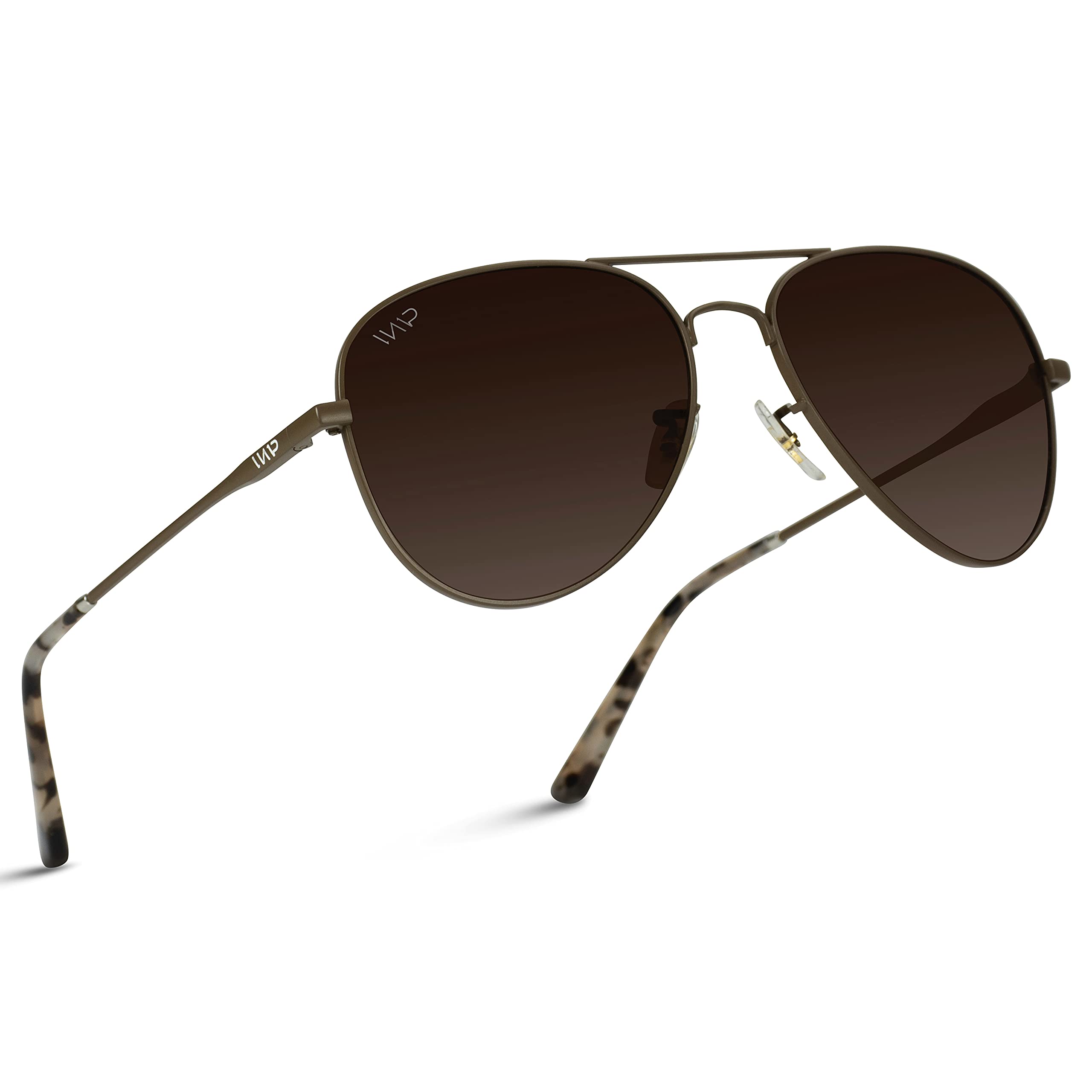
2. WearMe Pro Maxwell Polarized Sunglasses
A classic aviator shape that one buyer kept re-buying: “This is my third or fourth pair of WearMe pros.”
That line is the whole pitch. The Maxwell is the budget aviator that people come back to — the shape is classic, the tint is UV400, and the price stays low enough that losing a pair on a boat doesn’t ruin the day. Fit is the other recurring note: it sits comfortably for long stretches and doesn’t slip on the nose. As a first polarized aviator or a car backup, it covers the basics.
The honest limits: clarity opinions are split — some find the lens crisp, others less so — and durability has its share of complaints, though the frame holds up better than its price suggests. It also ships without a case, which is fine if you already have one but worth knowing if you don’t. Neither carves into the design, which remains the cleanest aviator silhouette on this list.
What wins people over: the aviator shape and the price — an easy, low-risk first pair that looks the part.
Know before you buy: no case is included, and clarity is not on the same level as the Maui Jim or CARFIA options here.
Suits: the buyer who wants the aviator look, UV400 protection, and a low-stakes price tag.
Look elsewhere if: you need a case in the box or borderline-optical lens clarity.
3. CARFIA Acetate Polarized Sunglasses
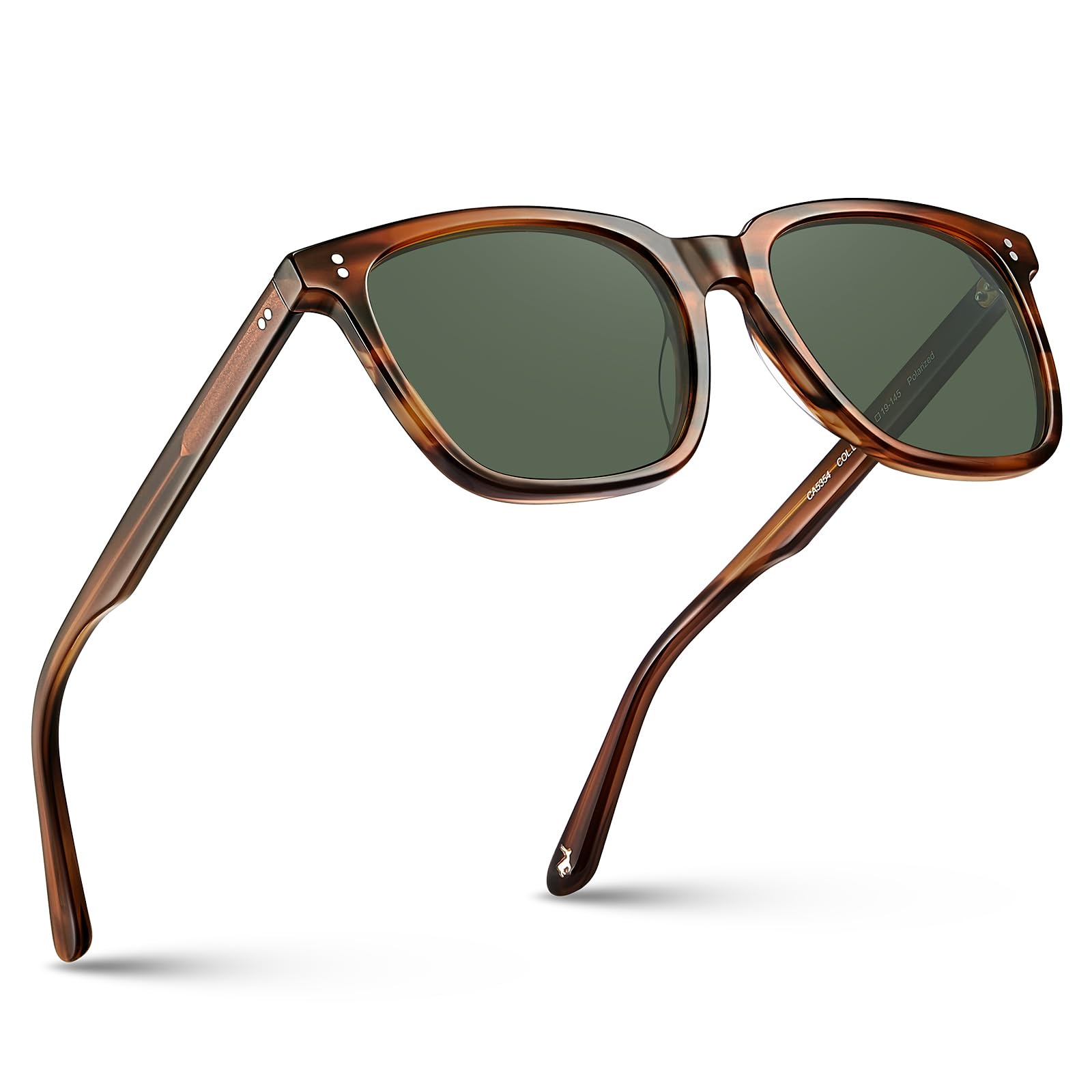
The acetate square frame with a real scratch-free track record: four months of daily wear, no marks on the lens.
Scratch resistance is the thing buyers bring up unprompted about the CARFIA. “Good lens quality; worn daily 4 months, no scratches.” That’s a genuine daily-wear result on a square acetate frame, and the lens also does the glare work you’d expect from a polarized UV400 build. The Italian acetate body is a step up from the plastic frames most of this list uses — it feels more substantial in the hand and holds the lens more firmly. Where the WearMe Pro Wesley is the wider frame, the CARFIA is the dressier, more compact choice — package dimensions put it at 5.91 x 2.76 x 1.97 inches versus the Wesley’s larger 6.75 x 2.75 x 1.5 inch box, and the fit reflects that difference.
The catch — and it’s a real one — is size. Several buyers find the frames run small for the average adult male face, so if you have a wide head, size up or pick a different pick. The other issue is durability over the long haul: one owner had the frames warp after about six months in a hot car, though the seller covered it with a free replacement. Treat the acetate as hot-weather-sensitive and you’ll get years from it. Clarity and UV protection are strong for the money, and the black-on-black build reads as a near-luxury frame at a mid-tier price.
Pick this: if you want an acetate square frame with a proven scratch-free lens and a dressier look.
Think twice: if your face runs wide, or if the glasses will live on a hot dashboard.
4. WearMe Pro Wesley Polarized Sunglasses
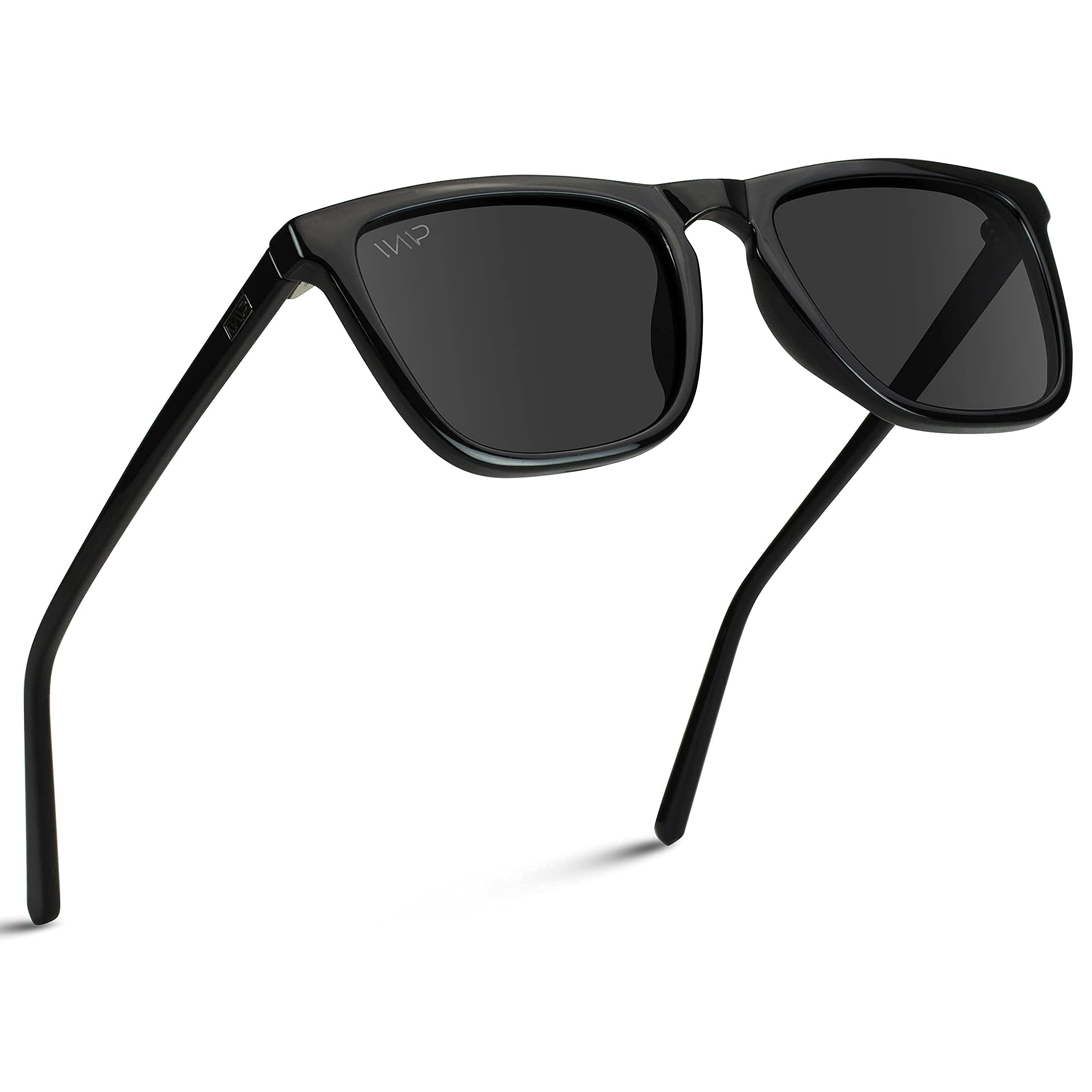
Built for the wide-of-head: one of the few square frames here that buyers with a larger face keep calling a good fit.
If most sunglasses feel like they’re biting your temples, the Wesley is worth a serious look. The square frame is deliberately large, and buyers with bigger heads repeatedly flag it as one of the few pairs that sits comfortably without pressure. The lens is UV400 polarized, tinted to a pleasant middling shade — not too dark, not too bright — and the whole thing is light on the face. A buyer who isn’t usually a sunglasses person summed it up: “Nice fit, sharp looking, polarized, working well.”
Where it comes up short is long-term durability. Hinges loosen over time, and a couple of owners mention an arm breaking within a few months. That’s not the norm for the frame, but it’s a real consideration if you’re hard on your gear. The oversized shape also leaks a little sun around the edges for sensitive eyes — a large frame that doesn’t fully wrap means bright light can still get in at the sides.
For the price, the lens quality is genuinely strong and the scratch-resistant coating has held up for regular wearers. It’s a sensible everyday square frame. Pair it with a hard case and a microfibre cloth and it’ll serve you well; drop it loose in a bag and the hinges are the weak point.
The case for it
- One of the few frames here sized for a larger head, with a comfortable non-slip fit
- UV400 polarized lens with a balanced tint that suits all-day wear
- Light on the face and priced modestly for the build quality
The trade-offs
- Hinges loosen over time and a few arms have broken within months
- The large frame lets some side light in for sensitive eyes
- Not a full wrap, so no side-glare sealing
Best for: wide faces and large heads that find standard frames too tight.
Know going in: keep it in a case — hinge durability is the one long-term risk.
5. Shady Rays Classics Sunglasses

An anti-scratch, shatter-resistant lens backed by a replacement guarantee — the pair you can actually be rough with.
The spec that matters here is the anti-scratch coating paired with a shatter-resistant lens: two separate protections, so a knock doesn’t crack the lens and a wipe doesn’t fog it up with scratches. The frame is lightweight and shaped for both casual and active wear, and the fit works on big and average heads alike. One buyer who does boiler work and cuts glass in them put it plainly: “I’ve put them threw hell… they keep looking up.” That’s a genuinely tough frame in a work context.
There’s a practical tradeoff buried in the specs you should know about: the polarization is strong enough that some wearers find it hard to read a car dashboard screen or a phone through the lens in bright light. That’s the nature of a good polarized filter, not a defect — but if you rely on a digital dash or a phone mount, it’s worth factoring in. And while the lenses resist scratching well, they are thin; treat them gently and they’ll last, and the replacement policy covers the loss or break that a golfer or boater is likely to have.
The real draw: a scratch-and-shatter resilient lens that survives rough handling, with a warranty that backstops the accidents.
The one gripe: the strong polarization can make dashboard and phone screens tricky to read in bright sun.
Choose these if: you’re hard on gear and want a lens that shrugs off knocks and wipes.
Skip if: you need to read a digital dash through your sunglasses while driving.
6. O’NEILL OFFSHORE 2.0 Polarized Sunglasses for Men, Women

The saltwater-ready frame: a water-repellent lens, a hydrophobic coat, and a polymer body built to grip when wet.
This is the pick if your sunglasses get splashed. O’Neill builds the HYDROFREAK lens with a hydrophobic coat that beads water off the surface — water doesn’t sit in the coating and leave dried spots, which is exactly the kind of thing that leads to scratched lenses over time. The ZEROFORM frame is a synthetic polymer that has some flex and a secure grip, the PSYCHOTECH contact points at the nose and temple hold on wet skin, and the UV400 UVA/UVB protection is on the lens. For sailing, kayaking, or anything where a wet face is normal, this is the most purpose-built frame on the list.
It does have a sharp eye for side-glare. The frame shape blocks light coming in from the side without rubbing the brow line or smearing sunscreen onto the lens — a genuinely useful detail for anyone who’s spent a hot day on a boat. The tradeoff is the same polarized-screen issue others here have: the lenses can make a phone screen hard to read in bright light.
Long-term durability is mixed. Some wearers report no scratches after regular use; hinge issues do come up over time. The water-repellent coating is the real standout, though, and if you use these for watersports and store them in the case, they’ll look after you well. One point of caution: the lenses are on the lighter-tinted side for maximum clarity, so for the brightest glare on open water you may want a darker option.
Where it delivers
- Hydrophobic water-repellent lens beads water off and resists surface marking
- PSYCHOTECH grip points hold on wet skin; ZEROFORM frame retains its flex
- Frame shape blocks side glare without smearing sunscreen
What to watch
- Hinge durability gets mixed feedback over time
- Polarization can make digital screens hard to read in bright light
- The lens tint runs light for killing the brightest open-water glare
Made for: surfers, sailors, and kayakers — anyone whose glasses get wet and need to stay gripped.
Look elsewhere if: you want a dark, max-tint lens rather than a lighter clarity-first tint.
7. Maui Jim Kaiwi Channel Wrap Sunglasses

The optical ceiling of the list: lens clarity that makes everything else here look like a first draft.
Maui Jim’s whole reputation rests on lens quality, and the Kaiwi Channel doesn’t break that pattern. The polarized lenses deliver noticeably richer colours and a clarity that owners describe as setting the standard — one says the overall quality is better than their Ray-Bans. The wrap shape is built for driving and water, and the medium fit with non-slip nose and temple pads keeps the frame firm on the bridge without pinching. For long hours in bright sun, this lens stays clear and easy on the eyes.
The trade-off is plain: it’s the priciest pick by a wide margin, and the performance gain over the mid-tier frames is real but incremental for casual wearers. The maintenance also matters — the nose pads are replaceable only if you can source them, and when they wear out over time the frame is harder to keep going than the plastic options here. Keep spares on hand and the Kaiwi Channel will serve you for a long time.
What to expect in daily use: it’s light and comfortable for hours at a stretch, and the wrap blocks glare from every angle. For fishing, driving a rig, or long days outdoors, the lens does the heavy lifting. For occasional weekend wear, it’s more lens than you need.
Worth it for: frequent drivers and water-sports users who want the sharpest polarized clarity on this list.
The honest limit: source replacement nose pads early — they wear over time and are the frame’s one weak point.
Know the Specs
Anti-Scratch Coating
A thin hard film on the lens front that takes the abrasion from wipes and drops. It’s not permanent — a dry cloth on a dusty lens will still wear through it eventually. Use a microfibre cloth and a little water, and the coating holds its clarity for the life of the frame. O’Neill’s backside anti-reflective layer is a related coating that reduces glare bouncing back into your eye.
UV400 Protection
UV400 means the lens blocks wavelengths up to 400 nanometres — the UVA and UVB range. Every pick on this list carries UV400, so it’s a baseline here rather than a differentiator. Look for the number on the lens or the packaging; “100% UV protection” is the same claim in other words.
Polarization
A filter that kills horizontal glare bouncing off water, hoods, and asphalt. It’s why the water pick is a boat frame and why the road pick is a driving frame. The tradeoff is that strong polarization can make a phone screen or digital dashboard harder to read in bright sun.
Frame Material and Hinge Quality
Acetate is a moulded plastic that holds the lens firmly and gives a substantial feel; polycarbonate and ZEROFORM are lighter and more flexible. Whatever the material, the hinge is the joint that takes the most wear — a squeaky or loose hinge is the earliest sign of a frame that won’t last. Keep a small screwdriver handy and tighten hinges before they back out.
Common Questions
Do scratch-resistant sunglasses actually resist scratches?
What is the difference between UV400 and polarized lenses?
Why can’t I read my phone through some polarized sunglasses?
Which frame shape suits a wide face or a large head?
Are acetate frames more resistant to scratching than plastic ones?
Do sunglasses with a hydrophobic coating help with saltwater and sweat?
How long should a pair of hard-wearing sunglasses last?
Is a wrap frame better for driving than a square frame?
Will a replacement guarantee cover scratched lenses?
Can I get prescription lenses put into these frames?
The Bottom Line
The top pick is the Under Armour UA 0005/S — it holds 4.5+ stars across 800+ ratings, and it pairs silicone grip points with a polarized lens that survives a workday. If scratch-free acetate style is your priority, the CARFIA Retro Square has a four-month no-scratch daily-wear record. And for anyone whose glasses get wet, the O’Neill Offshore 2.0 is the only frame here with a hydrophobic, water-repellent lens built for it.
How we choose
We do not accept paid placement. Every pick is matched to a real buyer and a real use-case; we do not hands-on test units.
Sources
Specifications: manufacturer listings and product documentation. Review insights: verified customer reviews, as of October 2026. Pricing: not shown on this page (it changes often); check the current price via the retailer link.
As an Amazon Associate, Aappliancez earns from qualifying purchases. This does not affect which products we feature.