Disclosure: Some links in this post are affiliate links. As an Amazon Associate I earn from qualifying purchases, at no extra cost to you. Learn more
Specs are compiled from manufacturer listings and verified buyer reviews and can change over time — please confirm the key details on the product page before buying.
If you hunt where your phone shows zero bars, the one thing that actually matters is whether help can find you when something goes wrong. That splits the field into two very different tools. A personal locator beacon (a pocket-sized device that fires your GPS position straight at rescue services with no monthly bill) is the simplest lifeline. A satellite communicator or satellite phone adds two-way texting and voice, but you pay a subscription. This guide covers both, and the single most reassuring pick for most hunters is the ACR ResQLink View PLB425, a floating beacon that needs no airtime plan at all.
This guide is built by comparing the manufacturers’ published specifications and the patterns across verified customer reviews, so you get each pick’s real strengths and trade-offs instead of marketing spin.
Some units here call rescue with no plan, while others add texting or voice through a paid service. Either way, the focus is on the best satellite phone for hunting that actually fits how you travel in the backcountry.
Top Picks


How To Choose The Best Satellite Phone for Hunting
The first fork in the road is simple: do you need to send a message, or just summon rescue? Answer that and half the field drops away.
Beacon or communicator: pick your job first
A personal locator beacon (PLB) does one job. It sends an SOS distress signal with your GPS position to Search and Rescue forces, and on the ACR units no subscription is required. That means it works the day you buy it and every year after, with nothing to renew.
A satellite communicator like the Garmin inReach family adds two-way messaging and location tracking over the Iridium satellite network, but an active subscription is required. If you want to text your family a nightly check-in from a remote camp, that plan is the price of admission. If you only want the rescue button, a beacon keeps your wallet closed after purchase.
Read battery numbers carefully
Battery figures here are not the same animal. A beacon lists operational life in hours of active distress transmission. A communicator lists tracking hours, which is how long it lasts while logging your position on a timer. A satellite phone lists talk time and standby separately. Compare like with like, and never assume a bigger number means a longer trip without charging.
Water, cold, and a glove-friendly button
Hunting season is wet and cold, so check the waterproof claims and whether the controls work with thick gloves. The ACR units are described as waterproof and buoyant, meaning they float. Several Garmin handhelds are built around button controls that owners say work through gloves. In a blind at 20 degrees, that detail matters more than screen size.
Weight you carry versus features you want
A communicator that rides in a chest pocket gets carried every trip. A heavier handheld with a big screen and full maps may stay in the truck pack. Decide if you want a device you forget you are wearing or a navigation computer, because those are different products with different weights.
Side-by-Side Comparison
| Model | Best For | Type | Battery Rating | Subscription | Amazon |
|---|---|---|---|---|---|
| ACR ResQLink View PLB425★ Best Overall | Set-and-forget rescue cover | Personal locator beacon | 28 hours operational | Not required | Amazon |
| Garmin GPSMAP 67iTop Performer | Mapping plus messaging | Handheld GPS communicator | 165 hours tracking | Required for inReach | Amazon |
| Garmin inReach Mini (Renewed)Featherweight Pick | Featherweight texting | Satellite communicator | 24 days | Required | Amazon |
| Garmin GPSMAP 66i (Renewed) | Big-screen trail mapping | Handheld GPS communicator | 35 hours tracking | Required for inReach | Amazon |
| ACR ResQLink 400 PLB | Simple no-fee SOS | Personal locator beacon | Battery lasts years | Not required | Amazon |
| Garmin inReach Mini 3 Plus | Photo and voice messaging | Satellite communicator | 350 hours tracking | Required | Amazon |
| ACR ResQLink 410 RLS | Confirmed SOS receipt | Personal locator beacon | 24 hours operational | Not required | Amazon |
| Inmarsat IsatPhone 2 | Voice calls from camp | Handheld satellite phone | 160 hours standby / 8 hours talk | Required for airtime | Amazon |
| BlueCosmo IsatPhone 2.1 Kit | Rugged voice kit with SIM | Handheld satellite phone | 160 hours standby / 8 hours talk | Required for airtime | Amazon |
| Iridium 9555 Kit | Polar-capable voice | Handheld satellite phone | 36 hours standby / 3.1 hours talk | Required for airtime | Amazon |
| BlueCosmo Iridium Extreme Bundle | Hard-use global voice | Handheld satellite phone | 30 hours | Required for airtime | Amazon |
Detailed Reviews
1. ACR ResQLink View PLB425
Our pick — 4.5+★ from 350+ verified ratings; the strongest balance of quality and price.
A floating distress beacon that calls rescue without ever sending you a bill.
For a hunter who wants the shortest path from trouble to a rescue team, this is the cleanest answer. Press the button and the ResQLink View sends a 406 MHz emergency distress signal (a radio frequency reserved for life-saving alerts) with your GPS position directly to Search and Rescue forces worldwide. It also sends a 121.5 MHz homing signal (a second frequency that acts like a beacon) that helps rescuers zero in as they close in. No subscription is required at any point. Owners praise the one-touch SOS and the no-subscription rescue signal above all else.
The battery rating is 28 hours of operational life, which is the window your beacon keeps transmitting during an actual emergency rather than a runtime clock for everyday use. Compact is the other note that keeps coming up: the case measures 4.52″L x 2.03″W x 1.49″H, so it disappears into a jacket pocket or clips to a belt. It is buoyant too, so it floats if you go into the water.
Two things to weigh honestly. It reports into a screen and strobes, but it cannot text a family member that you are running late, and there is no map. Battery conditioning is also the recurring watch item — several buyers treat the printed expiry date as the first thing to check on arrival. Many units ship fresh, and owners are glad when a delivered unit arrives recently made. At 350+ ratings and 4.5+ stars it is the highest-rated pick here; the ACR ResQLink 400 has 300+ ratings and a slightly lower score.
Reasons hunters trust it
- No subscription — the rescue signal is free and works for the life of the unit.
- 406 MHz distress plus 121.5 MHz homing get Search and Rescue pointed your way.
- Buoyant body with a belt clip, oral inflation tube clip, straps and lanyards for wearability.
- Bright LED strobe and an infrared strobe for visual signaling.
Where it draws the line
- No two-way messaging or map — just the SOS plus test messages over an optional 406Link plan.
- GPS acquisition is the mixed spot; some units take a while to lock.
- Check the manufacture date on the box and the unit label so you register it under warranty.
Built for: the hunter who wants rescue cover with zero monthly cost and pockets the beacon on every trip.
Think twice if: you want to send a status text home — that job belongs to a communicator.
2. Garmin GPSMAP 67i
The handheld that maps the ridge and summons help from the same screen.
Serious backcountry hunters get two tools in one here. The GPSMAP 67i carries preloaded TopoActive maps, satellite imagery and multi-band GNSS support for navigation, then adds two-way messaging and an interactive SOS over the 100% global Iridium satellite network. That SOS goes to Garmin Response, a staffed emergency coordination center, and an active subscription is required. It carries the heaviest feature load here — maps, messaging and SOS — and owners cite functionality more than any other trait.
The endurance number is the one that changes the trip. Garmin rates it at up to 165 hours in 10-minute tracking mode and up to 425 hours in expedition mode at 30-minute intervals. Set that against a beacon like the ACR ResQLink View PLB425 at 28 hours of operational life and you see why this is a multi-day tool rather than a last-resort transmitter. The 3-inch sunlight-readable color display and its glove-friendly buttons are the two details hunters mention most around a cold morning glassing session. At 8.1 ounces it is pocketable but you feel it — the Garmin inReach Mini drops that to 3.52 ounces.
Two real watch-outs. There is a learning curve; the menu system takes study before it feels natural, so plan a shakedown trip before relying on it deep in the woods. GPS tracking feedback swings both ways as well. And remember the safety features only work with a live subscription. For the hunter who wants maps, weather, waypoints and a rescue button in one unit, the trade-off in weight and setup time is worth it.
What earns it a spot: 165 tracking hours plus preloaded TopoActive maps make this a navigation and safety package, not just a beacon.
The honest cost: heavy menus and a paid plan — it rewards the hunter who reads the manual.
Reach for this if: you hunt wide country and want maps, messaging and SOS in a single rugged handheld.
Look elsewhere if: you want zero subscription and a button you never have to learn.
3. Garmin inReach Mini (Renewed)
Slim enough to forget you clipped it on, tough enough to text from a ridge.
Weigh the options by ounces and this one stands alone. At 3.52 ounces it is less than half the heft of the GPSMAP 67i at 8.1 ounces, which is the difference between a device that rides on your chest strap all season and one that lives in the pack. It does the essentials through the 100% global Iridium network (a satellite system that covers the whole planet): two-way text messaging and an interactive SOS to a search and rescue monitoring center, both with a satellite subscription required.
The battery figure is quoted as 24 days, and that is a standby-style number rather than tracking hours. In practice that means this is not a perpetual tracker; you send messages and check in, and the screen stays dark in between. The monochrome, sunlight-readable transflective display (a low-power screen that reflects daylight) is why it can idle that long. Owners use it for exactly the hunting scenario it suits: nightly safety check-ins from camp where there is no cell service.
This is a renewed unit, so set expectations. You get the peace-of-mind core without the newest hardware, and battery performance is the aspect that draws the most divided feedback. Maps and aerial imagery come through the Garmin Earthmate app on your phone, so reading a route means pairing a second device. It is the lightest way into two-way satellite safety, and if ounces drive your kit, that settles it.
Ounce-per-ounce verdict: 3.52 ounces with Iridium messaging and SOS is the lightest serious option here.
Fair warning: it is a communicator, not a navigator — bring your phone or a paper map.
Pair it with: a hunter who counts grams and only needs to text home and hit SOS.
skip it if: you want on-screen topo maps or a brand-new unit rather than a renewed one.
4. Garmin GPSMAP 66i (Renewed)

A daylight-readable map screen built for planning a stalk and calling for help.
The 3-inch sunlight-readable color display is the headline, and it is the part that makes route-finding in open country bearable. You get preloaded Garmin TOPO mapping and direct-to-device Birdseye satellite imagery downloads with no annual subscription, plus multi-band GNSS support and navigation sensors. Add two-way messaging and an interactive SOS over the Iridium network — satellite subscription required — and it is a full navigation-and-rescue handheld.
Where it slows down is the connection itself. Messages can take several minutes to make it out depending on cover, and owners describe texting over satellite as a patience game rather than an instant chat. The GPS side is strong in the open and less reliable in dense forest and swamp, where direction readings can wander. Battery is rated at up to 35 hours in 10-minute and 1-minute tracking modes, and 200 hours in Expedition mode with 30-minute tracking.
Because this is a renewed unit, the usual renewed-unit check applies: confirm it powers on and holds a charge before you trust it on a hunt. It offers more screen real estate than the inReach Mini above without the full weight of the 67i, which makes it a middle path for the hunter who wants maps on a bigger glass.
Go with this if: readable topo maps on a big color screen matter more than carrying the lightest kit.
Know before you buy: in heavy timber the compass can wander, so pair it with a paper map and compass.
5. ACR ResQLink 400 PLB
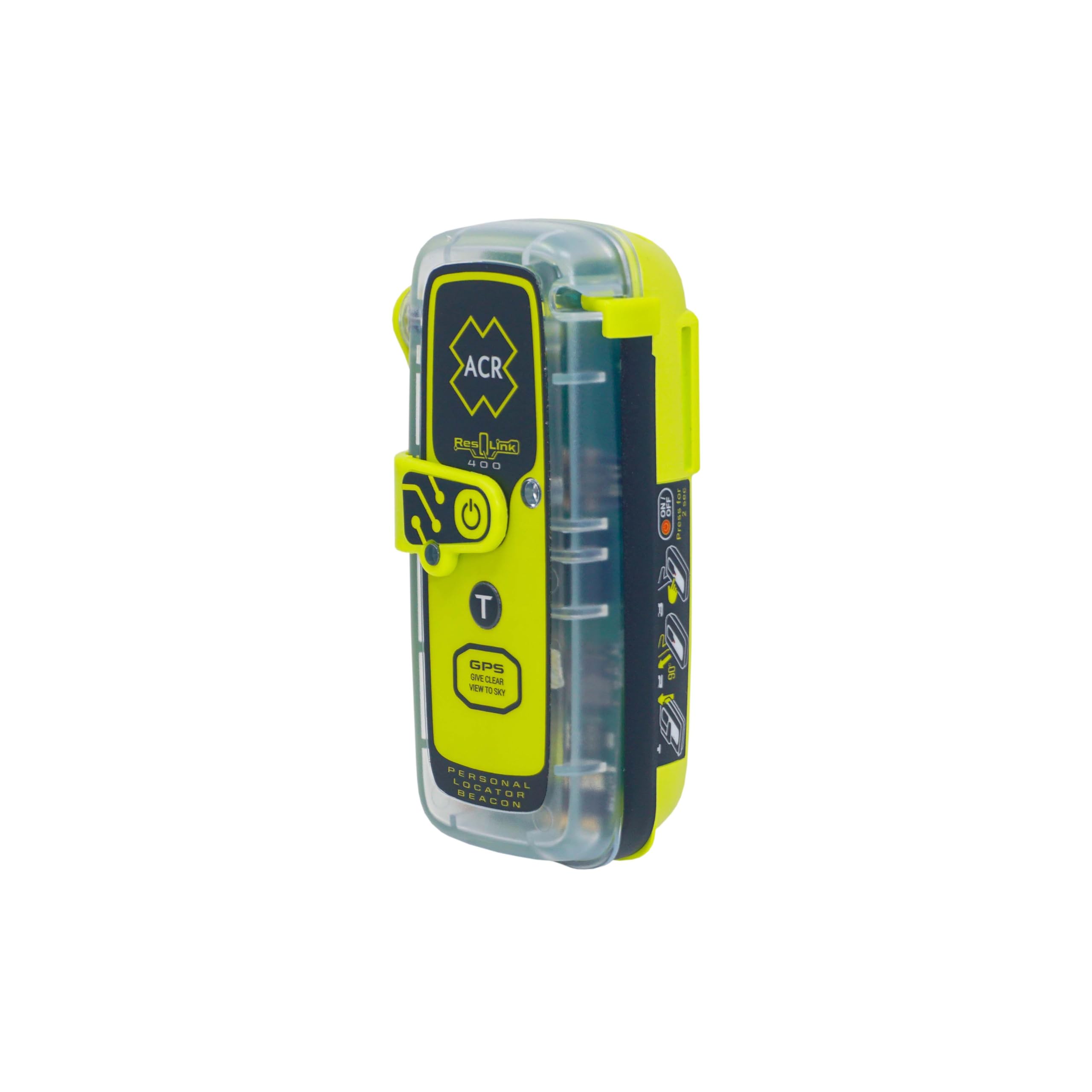
The simplest possible rescue button, with a battery you never have to charge.
Everything about the ResQLink 400 is stripped to the one job that matters. It sends a 406 MHz distress and homing signal to rescuers with GPS and Galileo GNSS positioning, over global Cospas-Sarsat and MEOSAR coverage, with no subscription required. There is no screen to learn, no plan to renew, and no charging routine — the battery is rated to last years and it is designed to be tested yearly and ready when needed.
At 5.28 ounces it is lightweight enough to live on a hunting pack or life vest and forget about, and that compactness is the thing buyers bring up most. The LED strobe and infrared strobe give rescuers a visual signal in low light. For a hunter who heads deep with no cell service but wants zero ongoing hassle, this is the no-fuss answer.
The trade-off is battery finality. It is not rechargeable and not user-serviceable, so when it runs out, replacement means factory service, and each self-test slightly consumes the battery. The 410 RLS below adds a confirmation feature this one lacks, and both are honest one-button tools rather than communicators. Buy it for a lifeline you test once a season and trust the rest of the year.
What works: no subscription, 5.28 ounces, and a strobe both visible and infrared for rescuers.
The catch: the sealed battery needs factory service to swap, so keep tests to the yearly schedule.
Best matched to: hunters who want a lifetime-free rescue signal and never want to think about charging.
Not the pick if: you want a battery you can recharge or replace yourself.
6. Garmin inReach Mini 3 Plus
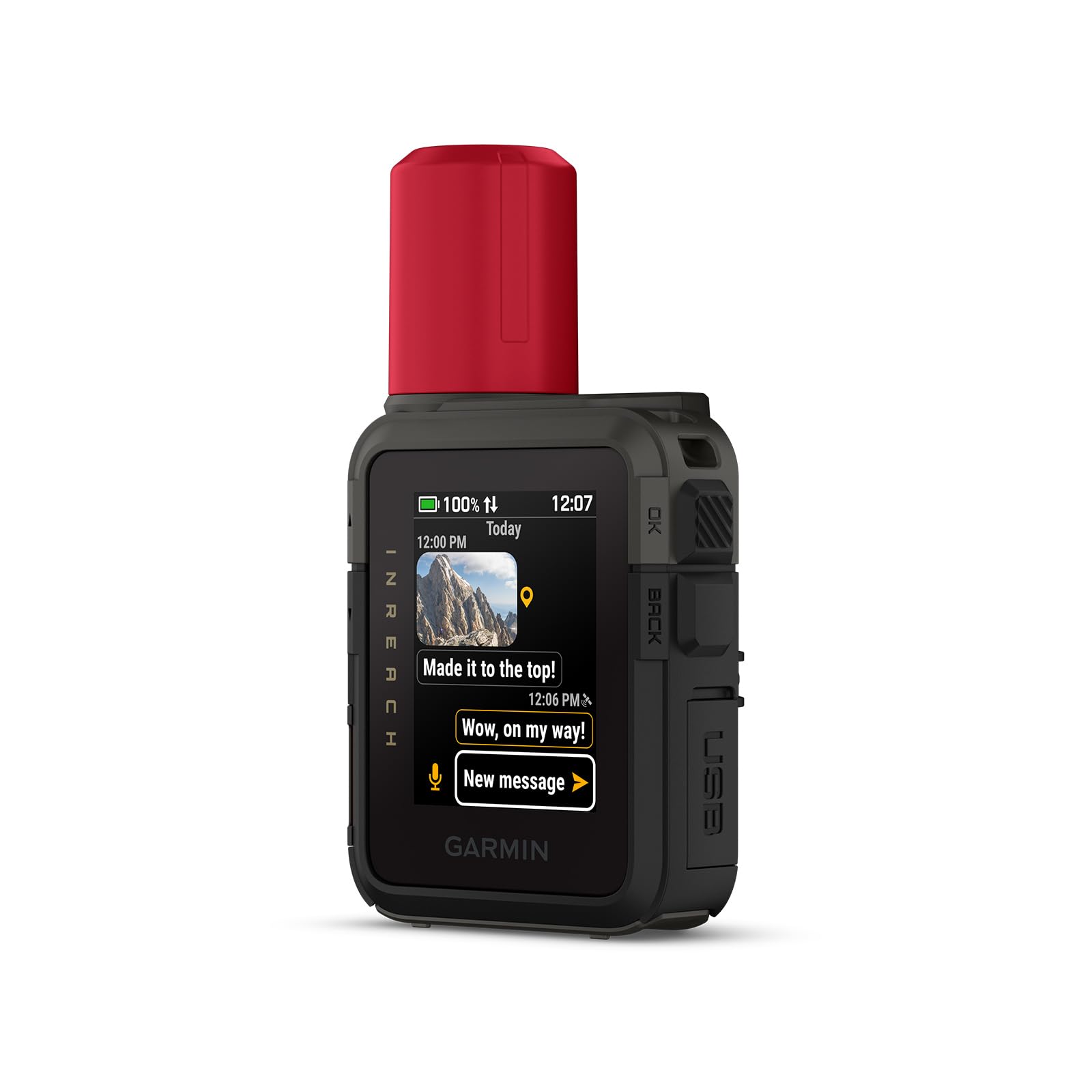
A pocket communicator that sends a photo, a text, or an SOS from the timber.
This is the modern inReach, and the feature that separates it from the rest of the communicators is communication type. Beyond text, you can exchange photos and voice messages when paired with your phone through the Garmin Messenger app, all over the Iridium network with an active subscription required. Owners rate functionality above every other trait, from photo and voice messaging to 350 hours of tracking.
The battery rating tells you how much they have stretched the power budget: up to 350 hours with 10-minute inReach tracking, and up to 95 hours in performance messaging mode. Compare that to the GPSMAP 66i at 35 hours of tracking and the gap in endurance is plain. It is built to take a hit too, with a scratch-resistant color touchscreen and an IP67 water rating (meaning it survives a dunk), and at 4.31 ounces it disappears on a clip.
The recurring question is cost, and value for money divides opinion here — some see it as worth the extra, others find it expensive, and the subscription is a real ongoing line. There is also the pairing rule: photos and voice need your phone, so keep both charged. For a hunter who wants to send a photo of a kill site or a voice note home rather than a bare check-in, this is the sharpest communicator on the page.
Standout feature: photo, voice and text over satellite with 350 hours of tracking endurance.
The honest cost: a subscription is required and smartphone pairing is needed for the richest features.
Choose it if: you want rich two-way messaging and a touchscreen in a device you barely feel.
Consider the alternative if: a subscription is off the table entirely.
7. ACR ResQLink 410 RLS
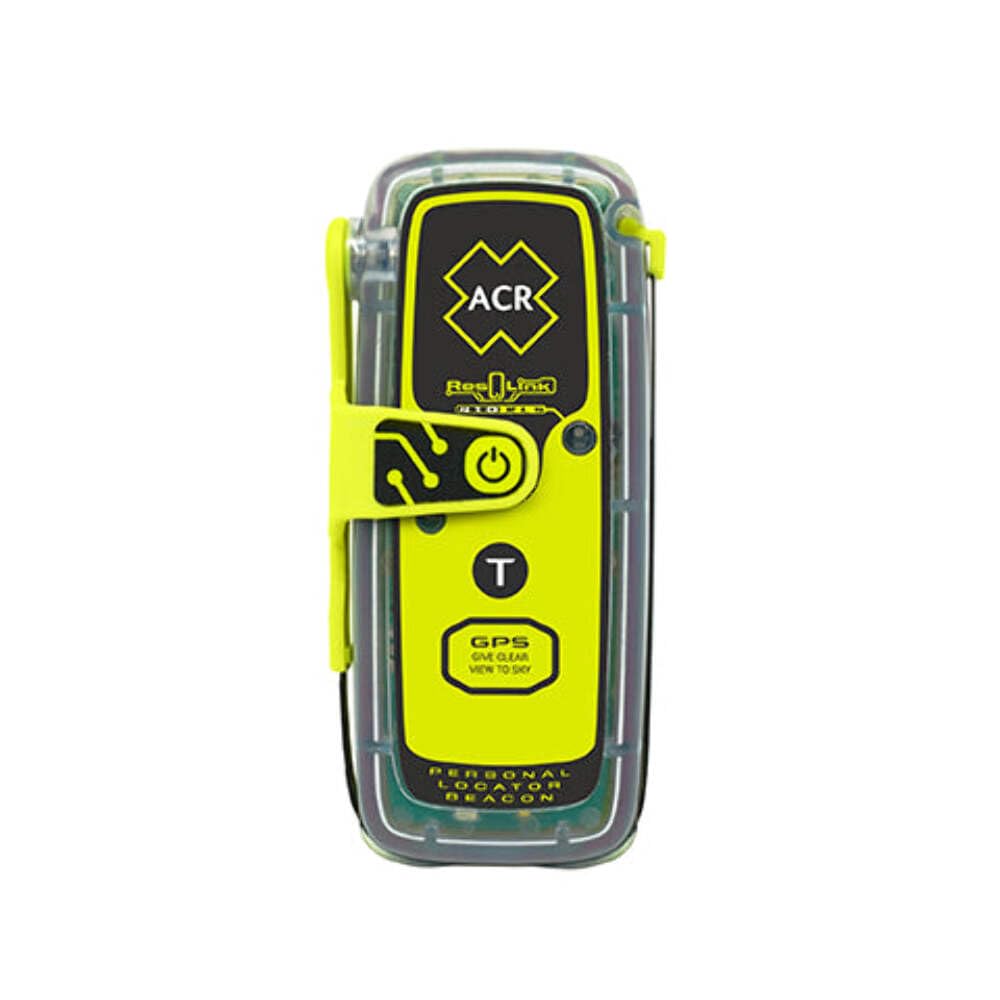
The beacon that tells you rescue has your signal, not just that you sent it.
Most beacons leave you wondering. The ResQLink 410 RLS answers the question with Return Link Service — a confirmation that Search and Rescue has received your emergency distress signal. For a solo hunter in a remote drainage, that confirmation is worth paying for, because it turns “I pressed the button” into “somebody is coming.”
It carries a 5-year battery life and 24+ hours of operational life, and like its ACR siblings it needs no subscription. GPS, Galileo GNSS and MEOSAR compatibility give it global coverage, and the built-in buoyancy means it floats. The multifunction clip system handles the different attachment points a hunting pack or vest offers. The self-test mode is a small feature buyers appreciate, since it lets you verify readiness without a live emergency.
The honest note is that a beacon like this is single-purpose. It does not text, map, or track, so it pairs best with a phone or radio for routine communication. It is also a smaller-review-count product compared to the ResQLink View, so there are simply fewer experiences logged. For the specific reassurance of a two-way signal confirmation, though, this is the one.
Built for: the solo hunter who wants proof the rescue signal landed.
Pair with a communicator if: you also want two-way chat — this device only raises the alarm.
8. Inmarsat IsatPhone 2

A real handset you can talk on, not just a button you press in trouble.
When you want to hear a voice, a beacon will not do it. The IsatPhone 2 is a full satellite phone that makes voice calls, sends SMS, and tracks your GPS position across the globe, excluding polar regions. The included SIM can be activated with prepaid or monthly airtime from the seller, so verify pricing before you buy. Incoming calls and messages are free wherever you use it.
The endurance figures are split between talk and standby: 8 hours of talk time and 160 hours on standby. That pairing fits a hunting camp where you check in at night and leave the handset off the rest of the day. Owners single out build quality and call clarity most, with voice quality repeatedly rated above rival handsets. The complete kit includes the handset, lithium-ion battery, international plug kit, DC charger, holster, earpiece, lanyard and USB cable.
Set against a no-subscription beacon, this is a different financial animal, because airtime is ongoing. Dialing instructions are also the kind of detail worth learning at home. Signal reception draws a divided response, and a properly deployed antenna matters. For a hunter who wants to call the lodge or a family member from deep country, this is the voice tool in the lineup.
The draw: real voice calling with 8 hours of talk and 160 hours of standby on one charge.
The reality check: airtime is extra and ongoing, and the antenna has to be up for a good signal.
Good fit for: hunters who need to talk, not just text, from the backcountry.
Not the right tool if: you only want an emergency button and no recurring bill.
9. BlueCosmo IsatPhone 2.1 Kit

The IsatPhone 2.1 bundled into a turnkey kit with a SIM and an 18-month warranty.
This is the same global calling capability as the phone above, packaged for a hunter who wants to unbox and activate. The kit includes the IsatPhone 2.1 handset, lithium-ion battery, international AC charger, automobile DC charger, holster with belt clip, hands-free earpiece, lanyard, USB cable, quick start guide and SIM card, backed by an 18-month warranty. No roaming charges apply as you call, text and track from anywhere on the globe.
The durability specs are the differentiator here. It withstands dirt, dust and jets of water from every direction, carries an IK04 shock resistance rating (a measure of impact tolerance) and an IP65 ingress rating, and operates from -20°C to +55°C. That is a phone designed for a wet, cold hunt camp. Battery is 8 hours of talk and 160 hours of standby on a 3180 mAh lithium-ion pack that charges in 3.5 hours.
Reliability and connectivity are the divided aspects in owner feedback: some callers connect quickly and some struggle to hold a network, so line of sight to the satellite matters. Build quality, though, earns consistent praise, and the IP65/IK04-rated body feels substantial in hand. Activation takes a couple of hours at most, and setting it up before you leave is the smart move. For a ready-to-go voice kit, this is the complete answer.
What you get: a full phone kit, SIM, 8 hours of talk, and IP65/IK04 ratings for wet, rough use.
Watch for: connection likes a clear view of the sky, and activation has to happen before you head out.
Made for: the hunter who wants everything in one box with a warranty behind it.
Hold off if: you want no airtime commitment — a beacon avoids that entirely.
10. Iridium 9555 Kit

A compact open up handset for hunters who trust the Iridium name.
For the Alaskan or polar hunter, Iridium matters, and this kit puts the well-known network in a compact, easy-to-use handset. It ships factory open up in retail packaging with the antenna, soft case, 12V charger, wall charger and SIM included, so you can get on a plan with the airtime provider of your choice. Owners describe it as reliable on hunting trips, with a compact body that packs easily and 36 hours of standby.
The battery figures are honest and modest: 3.1 hours of talk time and 36 hours of standby. That is less endurance than the Inmarsat handset above at 8 hours of talk and 160 hours of standby, so plan a charging routine. In trade, the Iridium network reaches regions the Inmarsat constellation does not, which is the whole reason a polar or remote hunter pays attention to it.
The recurring friction is service setup rather than the hardware. Some buyers hit SIM errors and activation snags that need a support call, and a package purchase is often required before the phone will register. Do the setup before your trip. If the Iridium name is the priority and you accept a smaller runtime, this is a solid, proven choice.
Reach for this if: Iridium coverage is a must and you want a compact, open up handset.
Watch out for: service setup — get the SIM and plan sorted well before the season starts.
11. BlueCosmo Iridium Extreme Bundle

The satellite phone built to military standards, for hunters who demand global coverage.
The Iridium Extreme bundle is the toughest voice option here, and it says so in the specs. It meets US Military Standards 810F for resistance to dust, shock, vibration and blowing rain, and it carries an IP65 ingress rating with a speakerphone and a wind-resistant microphone. A diamond tread, tapered grip keeps it in hand when the weather turns, and powered by 66 cross-linked Low Earth Orbit satellites, the Iridium network is the only truly global satellite phone service, reaching oceans and polar regions.
Battery is rated at 30 hours, and the bundle includes the handset, lithium-ion battery, AC charger with international plugs, automobile DC charger, holster, earpiece, USB adapters, an auxiliary magnetic mount antenna with a 5-foot cable, and an 18-month warranty, with a prepaid SIM included for online activation. At 247 g it is a substantial handset you will notice in a pack, but it is built for it.
The cost question here is twofold: the handset itself is the highest-end option on this list, and the prepaid airtime is a separate purchase you will need to manage. Setting it up before you leave is not optional — owners stress it. Some report the prepaid minutes expire, so plan the reload. For the hunter heading to the most extreme places where only truly global coverage will do, this is the phone that earns its place.
Why it earns the top-of-range spot: military-standard toughness, IP65, a global Iridium constellation and an 18-month warranty.
The trade-off: heaviest handset here, and prepaid minutes need attention before they lapse.
Built for: hunters in the harshest, most remote places where only global Iridium coverage reaches.
Skip if: you want the lightest carry and the simplest no-plan safety solution.
Know the Specs
Distress signal vs. network messaging
A personal locator beacon broadcasts a 406 MHz distress signal with a 121.5 MHz homing signal straight to Search and Rescue, and no subscription is required. A satellite communicator sends two-way messages over the Iridium network and needs an active subscription. A satellite phone adds voice calling over the same kind of network with a prepaid or monthly airtime plan. The first is the simplest, the others are richer but come with an ongoing cost.
Battery hours mean different things
Beacon numbers like 24 hours or 28 hours describe operational life in an emergency. Communicator numbers like 165 hours or 350 hours are tracking hours on a timer. Handset numbers split into talk time, like 8 hours or 3.1 hours, and standby, like 160 hours or 36 hours. Always compare the same kind of number, or you will misjudge how long a device lasts on a hunt.
IP ratings and buoyancy
An IP67 rating means the device survives a dunk in water, which is the standard the inReach Mini 3 Plus carries. A buoyant beacon floats instead of sinking, a real advantage on a wet hunt. Military-standard 810F and IK04 ratings describe impact and weather toughness for hard-use phones. Match the rating to your conditions — wet timber country calls for real water protection.
Weight you feel on the trail
Ounces add up over a full day of still-hunting. A communicator at 3.52 ounces or 4.31 ounces disappears on a chest clip. A full handheld with a big screen at 8.1 ounces is felt, and a satellite handset at 247 g is a noticeable weight. Weigh the features you actually need against a body that carries the device every trip.
Common Questions
Will a satellite phone work in deep forest where my cell has no bars?
Do I need a subscription to use a personal locator beacon?
Is a Garmin inReach worth it over a simple beacon?
How long does the battery actually last on a hunting trip?
Can a satellite phone reach rescue directly or do I call 911?
Will my device work near the poles or in Alaska?
What happens when a beacon battery runs out?
Do satellite phones need to be set up before a trip?
Can I use a satellite communicator with gloves on?
Is a satellite kit with a SIM ready to use straight from the box?
The Bottom Line
For most hunters, the best satellite phone for hunting is the ACR ResQLink View PLB425 because it puts a GPS-precise distress signal in rescue hands with no subscription and floats if you go in the water. If you want two-way texting and maps in one handheld, grab the Garmin GPSMAP 67i with its 165 hours of tracking and preloaded TopoActive mapping. And for the hunter who needs to actually talk from the backcountry, the BlueCosmo IsatPhone 2.1 Kit brings voice calling and an 18-month warranty in one box. At 4.5+ stars across 350+ ratings, the ResQLink View is the highest-rated pick here — the starting point for anyone whose first priority is a rescue button that always works.
How we choose
We do not accept paid placement. Every pick is matched to a real buyer and a real use-case; we do not hands-on test units.
Sources
Specifications: manufacturer listings and product documentation. Review insights: verified customer reviews, as of October 2026. Pricing: not shown on this page (it changes often); check the current price via the retailer link.
As an Amazon Associate, Aappliancez earns from qualifying purchases. This does not affect which products we feature.