Disclosure: Some links in this post are affiliate links. As an Amazon Associate I earn from qualifying purchases, at no extra cost to you. Learn more
Specs are compiled from manufacturer listings and verified buyer reviews and can change over time — please confirm the key details on the product page before buying.
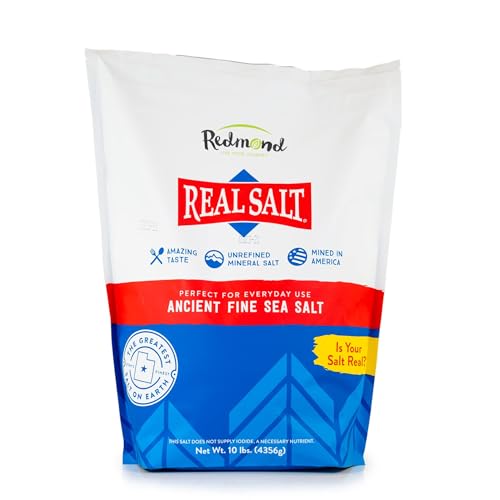
You want salt you can trust, without worrying about heavy metals. For most kitchens, the Redmond Real Salt 10 Lb Bag is the smartest pick: it is unrefined, unprocessed, mined in Utah, and it is the crowd favorite at 4.8 stars across 800+ ratings. The rest of this list covers a low-sodium Baja option, a French coarse finishing salt, a microplastic-free spring salt, and a lab-certified premium jar, so you can match the salt to how you actually cook.
This guide is built by comparing the manufacturers’ published specifications and the patterns across verified customer reviews, so you get each pick’s real strengths and trade-offs instead of marketing spin.
Labels like “unrefined” and “mineral-rich” get thrown around loosely, and the only way to sort the real ones from the noise is to read the fine print on sourcing and testing. That is exactly what this guide does for every salt without heavy metals pick here.
Top Picks
How To Choose The Best Salt Without Heavy Metals
To buy clean salt, check three things on the label: how it was harvested, what minerals (if any) were left in, and whether the maker publishes contaminant testing. Everything else — the pink color, the fancy tin, the influencer endorsement — is decoration.
Unrefined matters more than “natural”
“Natural” has no legal teeth on a salt bag. “Unrefined” and “unprocessed” do — they mean the crystals were not washed and stripped of their trace minerals through industrial refining. Sea salt, spring salt and mined ancient sea-bed salt can all be unrefined, so the word you are looking for is right there on the front, not buried in the fine print.
Learn to read a lead or Proposition 65 warning
Some unrefined salts carry a California Proposition 65 lead disclosure, not because they are dangerous but because the state’s threshold is extremely low. The useful number is the micrograms per serving, not the warning itself — a fraction of a microgram per quarter-teaspoon is a very different story from a salt that hides the figure entirely. If a maker publishes a microplastic or heavy-metal test result, that transparency is the strongest signal you can buy.
Match the grain to the job
Fine grind is the all-rounder: it dissolves fast, works in a shaker and disappears into baking and brining. Coarse and flaky crystals are finishing salts — they give a satisfying crunch on top of a steak or salad but will clog a standard grinder. If you want one bag to do everything, buy fine. If you finish dishes at the table, a coarse bag earns its shelf space. And note that unrefined sea salts hold natural moisture, which is why some makers suggest drying them before they go into a grinder.
Side-by-Side Comparison
| Model | Best For | Grain | Weight | Sourcing | Amazon |
|---|---|---|---|---|---|
| Redmond Real Salt Fine, 10 Lb Bag★ Best Overall | Everyday cooking and canning | Fine | 9.92 pounds (160 Ounce) | Mined in Utah since 1958 | Amazon |
| SaltCraft Baja Sea Salt, 16 ozBest Low-Sodium | Lower-sodium daily seasoning | Natural grain crystals | 1 pounds (16 Ounce) | Hand-harvested from Baja waters | Amazon |
| French Sea Salt Coarse, 1 lb | Finishing and traditional recipes | Coarse | 1 pounds (16 Ounce) | Hand-harvested French coastal marshes | Amazon |
| Ancient Spring Salt, 7 oz Pouch | Microplastic-free finishing | Coarse flaky | 7 ounces (7 Ounce) | Underground spring, microplastic-free | Amazon |
| MAYİ Natural Spring Salt, 1.2 lb | Certified-clean all-purpose use | Fine | 1.2 pounds (21 Ounce) | Ancient underground springs, lab-tested | Amazon |
Detailed Reviews
1. Redmond Real Salt Fine Sea Salt 10 Lb Bag
Our pick — over 4.5★ from 850+ verified ratings; the strongest balance of quality and price.
The 10-pound Utah-mined workhorse that never needs re-buying mid-season.
For anyone who cooks daily, salts their own water, or cans a garden in August, this is the bag that ends the whole search. It is an unrefined ancient sea salt mined in Utah since 1958 from a seabed the makers say has been protected from modern pollution. You get trace minerals left in the crystal, which is the entire point of buying clean salt in the first place.
The size is the headline: 160 ounce, roughly ten times the volume of a standard 16-ounce bag, and it weighs 9.92 pounds on the shelf. That is a bulk buy that lives in the pantry for a long time. The fine grind is the other half of the appeal — it behaves like table salt in a shaker, dissolves fast in water and brine, and does not jam a grinder the way coarse flakes can.
What wins people over is the flavor: buyers report it is “subtly sweet, never bitter,” which is why it does not overpower a dish the way a sharper commercial salt can. The most-cited praise is the taste, followed closely by mineral content, and the recurring theme in reviews is how well one bag covers everything from canning and cooking to table and finishing.
What earns it first place
- Unrefined and unprocessed — no additives, no bleaching, minerals left in
- 160-ounce bag (9.92 pounds) covers canning, brining, baking and everyday seasoning
- Fine grain works in shakers and dissolves quickly in water
- Mined in Utah since 1958, so the sourcing story is traceable and domestic
Where it asks a little patience
- The 10-pound bag is a commitment — storage space matters if you are a light user
- Texture feedback is the one mixed note in the reviews: some prefer a coarser crystal for finishing
- Not a low-sodium salt — it is a full-sodium unrefined option
Buy this one if: you want one honest, unrefined bag that handles every kitchen job without constant reordering.
Look at the low-sodium grid below if: you are trying to cut sodium, since this is a full-sodium salt.
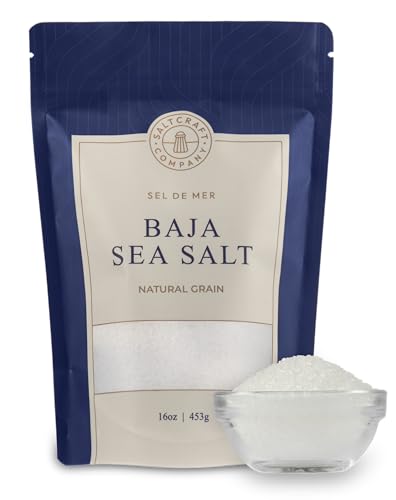
2. SALTCRAFT Baja Sea Salt 16 oz Bag
A 30% reduced-sodium Baja sea salt for the cook who still wants real flavor.
The defining spec here is right on the front of the bag: 30% low sodium. If you have been told to pull back on salt but cannot stand bland food, that number is the reason this pick exists. It is a hand-harvested Baja sea salt, kosher certified, mineral-rich and free of additives — and it comes in a compact 16-ounce bag that fits neatly in a drawer.
Compare it to the Redmond bag and the size gap is real: 16 ounces versus 160 ounces, a full ten-times difference in volume and a 1-pound versus 9.92-pound weight gap. That matters if you are buying for one person rather than a whole pantry. What the smaller format buys you is a lower-sodium option you can actually finish before it cakes in humid air.
Owners mention a single pinch seasons a whole dish, so the 30% sodium cut costs you nothing in flavor. That pinch-does-it property is the whole value: you use less and still taste salt. Buyers also stir it into a daily glass of water for the minerals.
Reach for this if: your goal is lower sodium without giving up mineral-rich flavor on the plate.
Buy the Redmond bag instead if: you cook in bulk and need a large-format salt for canning and brining.
3. French Sea Salt Coarse 1lb
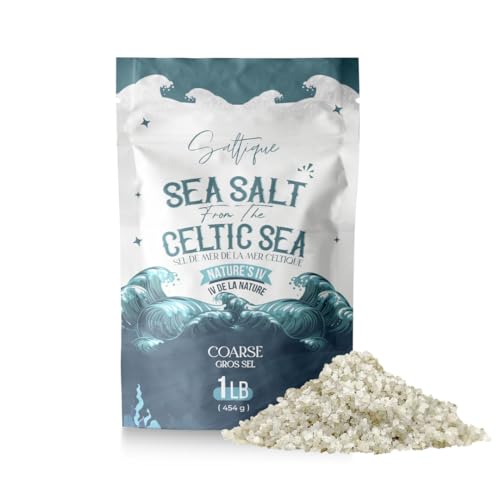
A moist, hand-harvested French crystal built for the last pinch at the table.
This is the bag you reach for when the dish is done and you want a crunch on top. It is a 100% natural, unrefined coarse salt, hand-harvested from the coastal marshes of France using traditional techniques, and left completely unprocessed so it keeps its magnesium, calcium, potassium and iron content. The crystals are naturally moist — sun and wind do the drying, not a kiln — which is what gives them that slightly wet, delicate bite on the tongue.
Here is the honest catch, and Saltique says so plainly on the label: because it is hand-harvested and holds natural moisture, it may not work in a grinder. The maker suggests spreading it on a baking sheet and drying it in the oven if you want to grind it. That means this is fundamentally a finishing salt and a pinch-over-the-plate salt, not a shaker refill.
Reviews confirm the quality and the flavor — the most-praised trait is salt quality, with taste just behind. The recurring note is that it works beautifully on steak, on rough greens massaged with olive oil, and in special recipes.
Who it fits: cooks who finish dishes at the table and want coarse crystals with real mineral depth.
One honest note: this bag carries a California Proposition 65 lead disclosure — the maker states 0.8 micrograms per quarter-teaspoon serving, well below the FDA interim reference level for adults. If any lead disclosure is a dealbreaker for you, look at the microplastic-free and lab-certified picks instead.
The plate-finisher’s pick: keep it in a small bowl by the stove and crush it between your fingers over the food.
skip it if: you want a salt that goes straight into a grinder without drying it first.
4. Ancient Spring Salt 7oz Pouch

Microplastic-free flaky salt that stays clean all the way to the finishing pinch.
If the phrase “microplastic free” is what brought you here, this is the pouch that owns it. It is an unrefined, organic sea salt the maker markets as completely microplastic free and toxin free, packed with more than 70 trace minerals, and formed into coarse flakes rather than fine grains. The 7-ounce pouch is the most compact option on this list — a size that lives happily in a spice drawer.
The flake format is the reason to buy it. Sprinkle it over a salad, a quesadilla, a steak or a bowl of pasta and you get a satisfying crunch the fine salts simply cannot deliver. Customers note the flakes melt into sauces and dressings and that a little goes a long way.
The trade-offs are worth naming upfront. The grain is coarse enough that the most-repeated mixed note is the grind — you may need a grinder, and one buyer found it “way too coarse and thick” when mixed into food. Value is also a split opinion, with some finding the pouch size small for the cost. Where it wins universal praise is purity and flavor: buyers describe the flavor as pure and bright, and the honest reason many return is knowing the salt is thoughtfully made and plastic-free.
The purity pitch: unrefined, microplastic-free and toxin-free, with over 70 trace minerals left in the flake.
The catch: a 7-ounce pouch is a finishing-size purchase, and the coarse flake will not work in a standard shaker — plan for a grinder or crush it between your fingers.
Worth it if: avoiding microplastics is your priority and you want a flaky finishing salt for salads, steaks and pasta.
Not your bag if: you need a bulk all-purpose salt for everyday cooking and baking — that is the Redmond job.
5. MAYİ Natural Spring Salt 1.2 lb
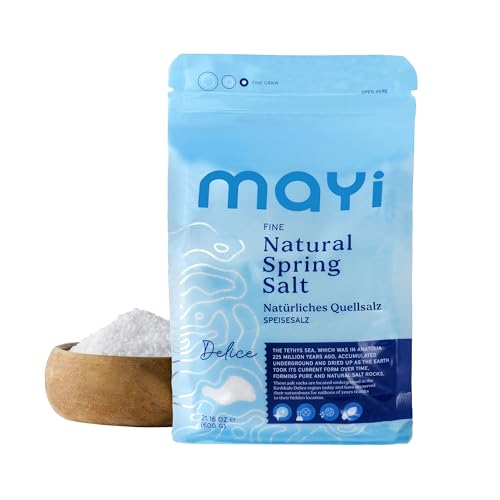
The one with the test certificate — 82 minerals, zero microplastics, fine grind.
What separates MAYİ from everything else on this list is the word “lab-certified.” The maker states this salt is sourced from ancient underground springs and independently tested to contain zero microplastics — a stronger claim than “microplastic free” alone, because it points at a third-party result rather than a marketing badge. It is also kosher certified, hand-harvested, and non-GMO.
The mineral count is the second headline: 82 minerals in every crystal, naturally rich in magnesium, potassium and calcium with no processing, additives or bleaching. And unlike the coarse finishing salts above, the grind here is fine, which means it dissolves instantly for cooking, baking, canning and pickling — and it dissolves clean in water for electrolyte drinks.
Buyers back up the clean-taste claim consistently. The most-cited praise is quality, with taste right behind, and the theme across reviews is a clean, natural flavor that lands noticeably better than standard table salt. Sourdough bakers report the fine grain dissolves evenly into their dough. The recurring honest caveat is cost — several reviewers point out it is more expensive than ordinary salt, and some wish it came in a larger size. That is the price of a tested, mineral-rich spring salt, and it is a small jar at 1.2 pounds (21 ounces).
Why it earns the premium shelf: lab-certified microplastic-free sourcing, 82 minerals, and a fine grind versatile enough for baking and electrolyte water.
The honest trade-off: it is the highest-cost-per-ounce pick here, and at 1.2 pounds it is not a bulk canning bag — buy it for daily seasoning and drinks, not for a season of pickling.
Choose this one if: third-party microplastic testing and a mineral-rich fine grind are worth the higher cost to you.
Choose Redmond if: you want the same unrefined promise at a bulk scale for canning, brining and baking in volume.
Know the Specs
Grain Size: Fine, Coarse and Flaky
Grain size decides what a salt can physically do in your kitchen. Fine grind dissolves fast, so it is the right call for baking, brining, pickling and any salt that needs to disappear into a dish — it also works in a shaker. Coarse and flaky crystals sit on top of food for crunch, which is exactly what a finishing salt is for, but they can clog a standard grinder, so buyers often dry them or crush them by hand first.
Mineral Content and Sodium Level
Unrefined salts keep the trace minerals that refining strips out — mostly magnesium, calcium, potassium and iron. That is what gives an unrefined salt its layered, mineral flavor instead of a flat, sharp saltiness. Sodium is a separate number: a standard sea salt is full-sodium, while a bag marketed as 30% low sodium is built for cooks who want less sodium in the same pinch. Read both numbers — “mineral-rich” and “low sodium” are different promises.
Microplastic-Free and Lab-Certified Claims
“Microplastic-free” is a maker’s claim about the product; “lab-certified” points to independent testing behind that claim. If avoiding contaminants is why you are buying, the certified language is the stronger one to look for. Spring-sourced salts are often marketed on this basis because the water comes from underground rather than open ocean.
Reading a Proposition 65 Lead Disclosure
Some unrefined salts carry a California Proposition 65 lead warning because the state’s threshold is very low. The number that actually helps you decide is the micrograms per serving, which good makers publish next to the warning. If a bag shows no warning and no testing data at all, that is not proof of purity — it is simply the absence of disclosure.
Common Questions
How can I tell if a salt actually has no heavy metals in it?
Does unrefined salt really have more minerals than table salt?
Which salt here is best for a low-sodium diet?
Why does my coarse unrefined salt clog my grinder?
Is a microplastic-free salt better than an ordinary sea salt?
What is the difference between a fine salt and a flaky finishing salt?
Can I use sea salt for electrolyte drinks and mineral water?
How long does a 10 pound bag of salt actually last?
Is hand-harvested salt safer than machine-harvested salt?
Do I need to dry unrefined salt before putting it in a shaker?
The Bottom Line
For most kitchens, the salt without heavy metals winner is the Redmond Real Salt 10 Lb Bag because it is unrefined, mined in Utah since 1958, and delivers 160 ounces of mineral-rich salt that handles canning, brining, baking, and table use in one purchase. If sodium is the number you are watching, grab the SaltCraft Baja Sea Salt at 30% low sodium. If certified microplastic-free sourcing is the whole point of your search, the MAYİ Natural Spring Salt is the one that carries the testing language. And for the cook who finishes at the table, the French Sea Salt Coarse and the flaky Ancient Spring Salt pouch each earn their spot on the counter next to the grinder.
How we choose
We do not accept paid placement. Every pick is matched to a real buyer and a real use-case; we do not hands-on test units.
Sources
Specifications: manufacturer listings and product documentation. Review insights: verified customer reviews, as of October 2026. Pricing: not shown on this page (it changes often); check the current price via the retailer link.
As an Amazon Associate, Aappliancez earns from qualifying purchases. This does not affect which products we feature.