Disclosure: Some links in this post are affiliate links. As an Amazon Associate I earn from qualifying purchases, at no extra cost to you. Learn more
Specs are compiled from manufacturer listings and verified buyer reviews and can change over time — please confirm the key details on the product page before buying.
If you are staring at orange bloom on a wheel arch, a trailer coupler, or the inside of a boxed truck frame, you already know the problem: most sprays that promise to kill rust either wash off in the first rain or dry into a chalky film that flakes away by spring. The right answer depends entirely on where the rust lives — hidden frame cavities need a coating that creeps and clings, painted body panels need a decontaminating wash that pulls embedded iron out of the clear coat, and bare hardware on a boat needs a barrier that survives salt spray. This guide sorts the five best rust removal sprays by the job they actually do.
This guide is built by comparing the manufacturers’ published specifications and the patterns across verified customer reviews, so you get each pick’s real strengths and trade-offs instead of marketing spin.
You will see which formula creeps into sealed frame rails, which one changes color as it eats iron, and which wax film stays put through a salty winter. Read on for the rust removal spray picks that match your actual rust problem.
Top Picks


How To Choose The Best Rust Removal Spray
The single biggest mistake buyers make is treating “rust removal spray” as one product type. It is not. A spray that dissolves iron particles sitting on top of paint does nothing for rust eating the inside of a frame rail, and a heavy wax barrier that seals a frame will smear a painted hood. Pick the formula by the surface, not by the biggest word on the can.
Match the formula to where the rust actually is
Rust on visible painted panels is usually surface contamination — tiny iron shavings from brakes and rail dust that embed in the clear coat and bloom orange. That calls for a decontaminating spray that reacts and rinses away. Rust inside a sealed frame, behind a rocker panel, or on a trailer coupler is structural, and it needs a coating that creeps into the cavity and stays there. Ask yourself where you can actually see the rust before you buy anything.
Look at what the can delivers per pass
Coverage is the spec that surprises people most. A 14-fluid-ounce aerosol with a thick creep formula will not treat a full boxed frame in one can — owners doing real frame work routinely go through several. Read the volume on the label against the size of the job, and budget for a second or third can on anything larger than a small repair.
Check the delivery nozzle, not just the liquid
A standard spray tip reaches open surfaces and nothing else. If your rust is behind a bolt hole or inside a cavity, you need either an extension tube that feeds into the opening or a wand that sprays in a full circle. That hardware decision matters as much as the chemistry inside the can.
Accept the smell and the mess
Nearly every serious rust product here is a chemical coating, and that means ventilation, gloves, and eye protection. Several formulas leave a persistent odor or a sticky film that collects dust. Spray outdoors in old clothes and the results hold up.
Side-by-Side Comparison
| Model | Best For | Volume | Form | Core Job | Amazon |
|---|---|---|---|---|---|
| Eastwood Internal Frame Coating★ Best Overall | Hidden frame cavities and boxed rails | 14 fluid ounces | Aerosol with extension tube | Coat and prevent inside sealed metal | Amazon |
| Meguiar’s Ultimate Iron RemoverPaint Decon Pick | Paint, glass, and chrome decontamination | 24 ounces | Pre-diluted spray | Dissolve embedded iron particles | Amazon |
| Boeshield T-9 | Long-term wax barrier on hardware | 12 fluid ounces | Aerosol | Displace moisture, dry to waxy film | Amazon |
| CorrosionX Heavy Duty | Harsh marine and saltwater equipment | 12 ounces | Thick aerosol | Self-healing drip-free barrier | Amazon |
| CorrosionX Rust Inhibitor | Electrical connections and frozen parts | 16 fluid ounces | Aerosol | Dielectric barrier plus penetrant | Amazon |
Detailed Reviews
1. Eastwood Internal Frame Coating Aerosol
Our pick — 4.5+★ from 900+ verified ratings; the strongest balance of quality and price.
The one spray built for the rust you cannot see, deep inside sealed frame rails.
Most rust sprays are designed to land on a surface you can reach with your hand. This one is built for the opposite job: metal buried inside a boxed frame, behind a rocker panel, or up inside a chassis rail where no cloth or brush will ever reach. It does that with a 14-fluid-ounce aerosol can that feeds a flexible extension tube into a frame opening, then sprays a 360-degree pattern as you pull the wand back out. In plain terms, you insert a thin straw into a bolt hole and coat the inside walls of the metal as the nozzle retreats — the part of the frame that normally rusts from the inside out and gets discovered too late.
Compare that to the Boeshield T-9, which carries 12 fluid ounces and 12 ounces of weight against this can’s 14 fluid ounces and 16 ounces. The Eastwood wins on sheer volume for cavity work. What really decides it, though, is the finish: this sprays on as a black coating and is listed at 24 hours to dry and 24 hours to full cure, so it is a weekend job, not a quick touch-up. It is marketed as a rust converter and prevention coating in one, which means you are not pre-treating and then coating — you coat once and let it cure. The spec sheet lists 50 as a coverage ceiling, and owners doing full frame work confirm that number holds in practice.
What wins people over is the quality of the coating itself. The word buyers keep reaching for is that it does exactly what it claims inside tight spaces, and the coverage from that rotating wand is the reason. As one buyer describes a full chassis job: “Used 3 cans for rear half of 2013 Chevy 2500 boxed frame; good coverage.” That line is also the honest warning — a full boxed frame eats cans fast. The wand is flexible and lacks stiffness, so taping a straightened coat hanger to it improves control inside long channels, and the spray keeps pushing for a few seconds after you release the button, so pull the nozzle before you think you should. The recurring gripe is drying time and residual pressure, not performance. Budget for a multi-can job on anything bigger than a small repair, and wear a respirator, goggles, and a face shield — the can carries an explicit chemical warning.
What earns it first place
- 360-degree wand coats the inside walls of a sealed frame, not just the opening
- One product handles both conversion and long-term prevention, so no second step
- 14 fluid ounces gives it more volume than the 12-fluid-ounce Boeshield T-9
- Reaches bolt holes, rocker panels, and cavities a brush physically cannot enter
Where it asks patience
- 24-hour dry and 24-hour full cure means you plan a weekend around it
- Flexible tube needs a stiffener — a taped coat hanger — for long runs
- It takes multiple cans to cover a full boxed frame
- Residual pressure keeps spraying for a few seconds after release
Buy it if: your rust is hidden inside a frame, rocker, or chassis rail and you want one product that converts and protects in a single cure.
Plan around: the 24-hour cure and multi-can appetite on a full frame — this is a project product, not a five-minute spray.
2. Meguiar’s Ultimate Iron Remover, 24 Oz
For the orange speckle on white paint that a wash mitt and soap will never lift.
This is a completely different animal from the frame coating above. Meguiar’s Ultimate Iron Remover is a pre-diluted spray for the outside of a vehicle — paint, glass, and chrome — that dissolves embedded iron particles, the tiny metallic shavings from brakes and rail dust that lodge in the clear coat and bloom as rust-colored freckles. You spray it on, let it dwell for 30 seconds, agitate with a damp wash mitt, and rinse with a strong stream of water. The formula is pH balanced and does the work without abrasives, so you are not scrubbing grit across your finish.
The feature that sells it is the color change: as it breaks down contamination, the liquid turns color, which tells you visually it is working. That is not a gimmick on a white or silver car — it is the difference between hoping you got the spots and seeing them dissolve. At 24 ounces it is the largest can on this list, and coverage is honest for the size. As a buyer running it over a full sedan put it, “One 24oz bottle just covered a Nissan sedan.” For a full-size truck body plus wheels, expect to use a generous portion and possibly a second pass.
What people rave about is the cleaning punch. It pulls off baked-on brake dust and rust haze that ordinary wheel cleaners leave behind, and it does the same job the premium detailing brands do. The trade-off you must plan for is the smell. The sulfur odor is strong and unmistakable — this is a product for a self-service wash bay or an open driveway, never a closed garage, and it earns its gloves and eye protection. It is also a surface decontaminator, not a structural fix; it will fade rust bloom on paint and brighten chrome, but it will not stop a rusting frame. Prep your paint with it before any polish or coating and it does its best work.
The 30-second dwell: spray, wait half a minute, agitate, rinse — that is the entire method, and the color change shows you where the iron was hiding.
Reach for this if: you are chasing rust-colored contamination on paint, glass, chrome, or wheels and want it gone before polishing or protecting.
Look elsewhere if: your rust is structural metal damage or inside a sealed cavity — this cleans surfaces, it does not rebuild metal.
3. Boeshield T-9 Lubricant
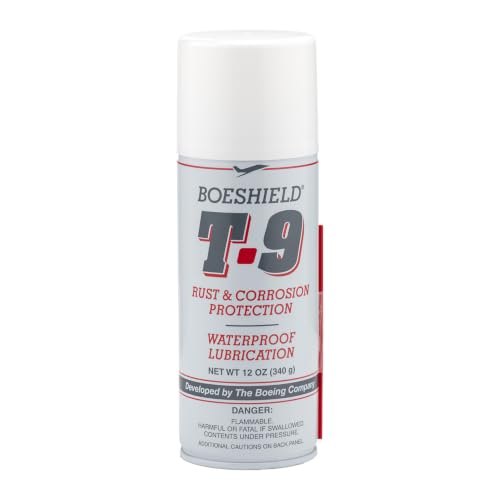
Dries to a thin wax film that seals out moisture without the sticky mess of an oil.
If you have ever sprayed a penetrating oil on a hinge or a battery terminal and watched it turn into a dust magnet within a week, the Boeshield T-9 is the answer to that specific frustration. It is a 12-fluid-ounce aerosol that displaces moisture and then dries to a thin waxy film rather than a wet oily residue. The wax layer helps protect metal from humidity, road spray, salt exposure, and seasonal storage. Originally developed by Boeing, it is the pick for anyone who wants corrosion protection with a finished appearance instead of a greasy one.
Where it really proves itself is on hardware that has to keep moving. Hinges, latches, battery terminals, tow hitches, trailer plugs, seat tracks, window mechanisms, and shop tools are all in its lane, because the same wax film that blocks rust also lubricates. Owners describe it keeping trailer couplers and hitch balls gliding for months after the visible rust was wiped away, and it has become a go-to for RV owners on door and awning hardware and for anyone storing a boat through a salty season. The lightweight 12-ounce can suits a garage toolbox better than a full-frame restoration.
Two honest caveats. First, it is the lightest can here — 12 fluid ounces versus the 16 fluid ounces of the CorrosionX Rust Inhibitor — so on large surface areas you will use it up quickly. Second, that thin wax film is the whole point, which means it sacrifices some raw thickness for a cleaner surface. The recurring note from owners is a strong chemical smell during application and the need for goggles, a mask, and gloves, plus one report of it lifting a little paint near screw holes on a bike frame, so test on a hidden spot first. Spray it on bare or previously protected metal, let it dry, and it quietly does its job for the season.
What sticks with people: the wax finish. It protects like an oil but handles like a dry coat, so door jambs, latches, and locks stay clean to the touch.
The honest limit: this is a preventive film, not a heavy rust eater — on thick, active corrosion you want a thicker product with more staying power.
Best fit for: moving hardware, terminals, and stored equipment where a clean dry film beats a greasy one.
Think twice if: you need to coat large flat areas in one session — the smaller can runs out fast at that scale.
4. CorrosionX Heavy Duty Anti Rust Spray

A thick, self-healing gel for equipment that lives in salt, spray, and pressure washing.
The CorrosionX Heavy Duty is the brute of the group. Its 12-ounce aerosol lays down a self-healing barrier that clings through rain, seawater, and pressure washing, and it will not drip away like a thinner oil. Where the wax film of the Boeshield dries hard, this one stays thick, flexible, and bonded — so it flexes with machinery that shifts and vibrates instead of flaking off at the first crack. The manufacturer rates it for up to 5 years indoors and 2 years outside — a service window that suits dock hardware and farm implements.
This is a marine and heavy-industrial product first. Boat motors, trailer leaf springs, winches, axles, snowblower interiors, and any bare metal that faces saltwater overspray are its natural targets. It also does duty on rugged electrical connections — battery posts and grounding lugs — because the thick non-conductive formula seals them without harming the components. Buyers report it deactivating actively growing rust over a period of days, turning the bloom dull gray rather than bright orange, and after a full year a treated transmission pan still had visible thick coating with clean metal underneath.
The catch is the mess, and it is a real one. The formula is goopy — it stains clothes for good, carries a long-lasting chemical smell, and wants hand protection. Because the coating stays tacky, it collects dirt, so treated surfaces can look grimy after a few months. It is also the smallest can at 12 ounces, and a formula this thick gives limited coverage per can, so you will go through more than you expect on big jobs. Every one of those points is the trade-off for a barrier that survives saltwater; if you want a cleaner finish, the wax-based pick above is the better fit.
Why marine owners keep buying it
- Self-healing film flexes with vibrating equipment instead of cracking
- Rated for up to 5 years indoors and 2 years outside
- Seals battery posts and grounding lugs with a thick non-conductive film
- Shrugs off seawater and pressure washing without dripping away
What you trade for that barrier
- Permanently stains clothing and carries a lingering smell
- Tacky surface collects dust and grime over time
- Small 12-ounce can with limited coverage per pass
Choose it for: anything permanently exposed to salt — boat trailers, dock equipment, farm machinery, and winter-plowed frames.
Skip the fuss only if: you want a clean show finish — the sticky, dirt-collecting coating is not for painted surfaces you care about.
5. CorrosionX Rust Inhibitor, Dielectric Corrosion Prevention

The one you reach for when the rust is on a live electrical connection, not a bumper.
Here is a rust problem most sprays cannot touch: corrosion creeping across the terminals, connectors, and sensor wiring on a boat, a truck, or a piece of outdoor equipment. The CorrosionX Rust Inhibitor is built for exactly that. Its 16-fluid-ounce aerosol forms a moisture-blocking dielectric barrier — dielectric meaning it insulates against electrical current rather than conducting it — molecularly bonded to the metal. The maker rates that film above 39,000 volts, so it can go directly on circuits, battery terminals, and sensors without shorting them.
The versatile part is that it is also a genuine penetrating oil. It frees rusted bolts, marine fittings, and seized engine parts, creeping into seams and threads where a surface spray never reaches. Owners on boats and aircraft use it as their default for engine-room and electrical protection, and several describe years of saltwater exposure with zero corrosion on the connections they treated. A treated electrical terminal that once would have grown a green crust stays clean. It is also the largest can here at 16 fluid ounces, which pairs with the sense from owners that a little goes a long way.
The honest trade-offs come from the same thickness that makes it work. It is greasy — the film lingers and can feel tacky on hands and surfaces — and it is priced at the premium end of this group, which some buyers notice. The nozzle is a plain aerosol straw rather than an attached one, so budget for a separate can style if that matters to you. On heavy active rust, saturating the part and giving it time is the method; this is not a wipe-on-wipe-off product, and expecting instant results from a quick pass will leave you underwhelmed. Treat it as the protective layer it is and it earns its keep.
The 39,000-volt detail: that dielectric film is what separates it from every other can here — it protects energized connections other sprays would smear and short.
Pick this one when: corrosion is attacking wiring, battery posts, sensors, or a seized bolt and you want one spray that insulates as it protects.
Consider the others if: you only need a clean dry finish on hardware — the greasy film here is a feature on terminals and a drawback on a latch.
Know the Specs
Fluid ounces versus item weight
The volume on the label — 14, 16, or 24 fluid ounces — tells you how much liquid you are buying. The item weight in ounces tells you how heavy the can feels. On an aerosol these two numbers are not the same, because the propellant and can add heft. When you compare cans, check fluid ounces for value and coverage, and ignore the shipping weight. A thicker formula with more fluid ounces still gives less coverage per ounce than a thin one, so thick products burn through volume faster.
Dry time and full cure time
Dry time is how long until the surface stops being wet to the touch. Full cure time is how long until the coating has fully set and is doing its whole job. The Eastwood frame coating lists 24 hours to dry and 24 hours to full cure — meaning you plan around a day, not an afternoon. A wax or dielectric film, by contrast, is protecting the moment it dries. Match the cure window to how much downtime your vehicle or equipment can take.
Dielectric protection
Dielectric means a material blocks electrical current rather than carrying it. On battery terminals and connectors, a dielectric film keeps moisture away from the metal while still letting the connection work. The CorrosionX Rust Inhibitor rates its film above 39,000 volts, so it can go on electrical parts without shorting them. This is the reason it belongs on a boat’s wiring but not necessarily on a painted panel.
Coverage and nozzle delivery
Coverage is how much surface one can treats, and it is the number that most often surprises owners. A thick coating on a big boxed frame needs several cans, and a decontaminating spray on a full truck body uses a generous share of a bottle. The nozzle matters just as much: a straight tip hits open surfaces, while an extension tube or a 360-degree wand reaches inside sealed cavities. Buy the delivery method your rust location demands.
Common Questions
Can a rust removal spray stop rust that is already deep inside a sealed frame?
Will an iron remover spray take rust off painted body panels?
How long does a corrosion inhibitor actually protect metal?
Is a dielectric spray safe to use on battery terminals and wiring?
How many cans do I need to do a full frame?
Why does my rust spray turn purple while I use it?
Can I use a heavy anti-rust spray on painted surfaces?
Do I need protective gear when applying these sprays?
Can a rust inhibitor free a bolt that is already seized?
What is the difference between a wax film and a thick self-healing coating?
The Bottom Line
The pick that solves the hardest rust problem — corrosion you cannot see inside a frame — is the Eastwood Internal Frame Coating, because its 360-degree wand and single convert-and-protect cure reach metal no other can on this list can touch. If the rust is really orange freckling on paint and wheels, the Meguiar’s Ultimate Iron Remover is the surface answer with its color-change formula and 24-ounce bottle. And when the metal lives in salt spray and wiring, the CorrosionX Rust Inhibitor is the one to reach for, thanks to its 39,000-volt dielectric barrier. Match the can to where the rust lives and you buy right the first time.
How we choose
We do not accept paid placement. Every pick is matched to a real buyer and a real use-case; we do not hands-on test units.
Sources
Specifications: manufacturer listings and product documentation. Review insights: verified customer reviews, as of October 2026. Pricing: not shown on this page (it changes often); check the current price via the retailer link.
As an Amazon Associate, Aappliancez earns from qualifying purchases. This does not affect which products we feature.