Disclosure: Some links in this post are affiliate links. As an Amazon Associate I earn from qualifying purchases, at no extra cost to you. Learn more
Specs are compiled from manufacturer listings and verified buyer reviews and can change over time — please confirm the key details on the product page before buying.
If a bolt has rusted itself shut, you want a spray that soaks into the thread instead of sitting on top of it. That is the whole job of a rust penetrant spray: creep into the gap, break the corrosion bond, and leave a film that keeps moisture out afterward. The picks below split into two jobs — the ones that free stuck metal fast and the ones that keep rust from coming back for a season or more.
This guide is built by comparing the manufacturers’ published specifications and the patterns across verified customer reviews, so you get each pick’s real strengths and trade-offs instead of marketing spin.
You need a rust penetrant spray that either creeps into a frozen thread or leaves a wax or thick barrier that holds up to salt and rain. The one you reach for depends on if you need parts loose today or protected for the long haul. These rust penetrant spray picks cover both jobs with specs you can compare side by side.
Top Picks

How To Choose The Best Rust Penetrant Spray
Two sprays that both say “penetrant” can do opposite things: one creeps in thin and dries to a wax, another lays down a thick goo that stays wet for a year. Pick the wrong one and you either get a coating that fights you every time you touch the part, or a thin film that washes off in the first rain. Match the formula to the job before anything else.
Does it need to free a stuck part or protect a clean one?
If the bolt is already seized, you want a formula that wicks into the thread and keeps working over hours or days, not one that sets into a hard shell on contact. If the metal is clean and you want it to stay that way, a moisture-blocking film that clings and resists washout does more good than a fast flash-off spray. Most buyers end up with one can for freeing parts and a second, heavier formula for the long-term shield.
Flash point and where you plan to spray
Flash point is the temperature at which the vapor can catch a spark. A low flash point is fine on a cold hinge but a real concern on a hot exhaust manifold or engine block. Higher flash-point formulas give you more margin around warm parts, so check that number if the work is anywhere near heat or a live electrical panel.
Will it touch plastic or electrical contacts?
Plenty of penetrating oils attack nylon, polycarbonate, and wire insulation, causing them to soften or crack. If your job runs through a switch, a connector, or a plastic housing, look for a formula explicitly rated plastic-safe. For electrical work, look for a dielectric (non-conductive) film that displaces moisture without shorting the contact you are trying to protect.
Thin film or thick barrier?
A wax or thin-film spray leaves a dry-ish surface that does not grab dust and dirt, which suits hinges, latches, and parts you handle. A thick barrier coats heavier and stays put through rain and salt but draws grit and smears onto clothing. Neither is wrong; a clean finish and a heavy shield are simply different jobs.
Side-by-Side Comparison
| Model | Best For | Flash Point | Liquid Volume | Item Weight | Amazon |
|---|---|---|---|---|---|
| Royal Purple 05000 Maxfilm★ Best Overall | Freeing stuck bolts and long-term lubrication | 60 °C | 325 ml | 9.6 ounces | Amazon |
| CRC 2-26 Precision LubricantBest for Electrical | Plastic parts and electrical contacts | 93 °C | 11 fluid ounces | 14.88 ounces | Amazon |
| CorrosionX Rust Inhibitor 6oz | Folks in coastal and marine climates | 132 °C | 6 fluid ounces | 0.17 kg | Amazon |
| Boeshield T-9 | Wax-film rust prevention on stored metal | — | 12 fluid ounces | 12 ounces | Amazon |
| CorrosionX Heavy Duty 12oz | Heavy saltwater and industrial equipment | — | 12 fluid ounces | 0.47 kg | Amazon |
Detailed Reviews
1. Royal Purple 05000 Maxfilm
Our pick — 4.5+★ from 450+ verified ratings; the strongest balance of quality and price.
The synthetic penetrant that keeps sneaking deeper into a part for months after one spray.
The thing that wins people over is how long it keeps working after you walk away. The Royal Purple 05000 is a synthetic formula — meaning the base oil is man-made rather than mineral — and it keeps creeping into a joint over days instead of flashing off in minutes. A screen door and a lock keyhole stayed free-moving for months after a single application, and squeaks that did not quit right away slowly loosened as the oil worked its way in.
One spray is not the whole story. Buyers report it frees frozen, rusty nuts and bolts, and its recommended uses list loosening stuck parts, lubricating power tools, protecting stored metal, and even metal cutting fluid. The 325 ml can goes further than it looks because you do not need much per job. As owners put it: “It works just like any other penetrating oil except 10x better.”
Here is the catch worth knowing before you buy. With a flash point of 60 °C — the temperature where the vapor can ignite — this is a spray for cold parts, not a hot exhaust manifold or a live engine bay. Keep it away from anything running warm. It also carries a vehicle-specific fit note, so match it to your job rather than assuming universal use.
What earns its keep
- Keeps working for months after one application
- 325 ml can with low per-job consumption
- Frees frozen bolts, lubricates tools, protects stored metal
Where it bites you
- 60 °C flash point rules out use near hot parts
- Slow on some squeaks; not an instant fix
- Premium tier means fewer jobs per dollar than entry options
Grab it if: you want one can that frees stuck hardware and keeps metal moving for the long term.
Pass it if: the metal will be hot when you spray or you need a plastic-safe electrical formula.
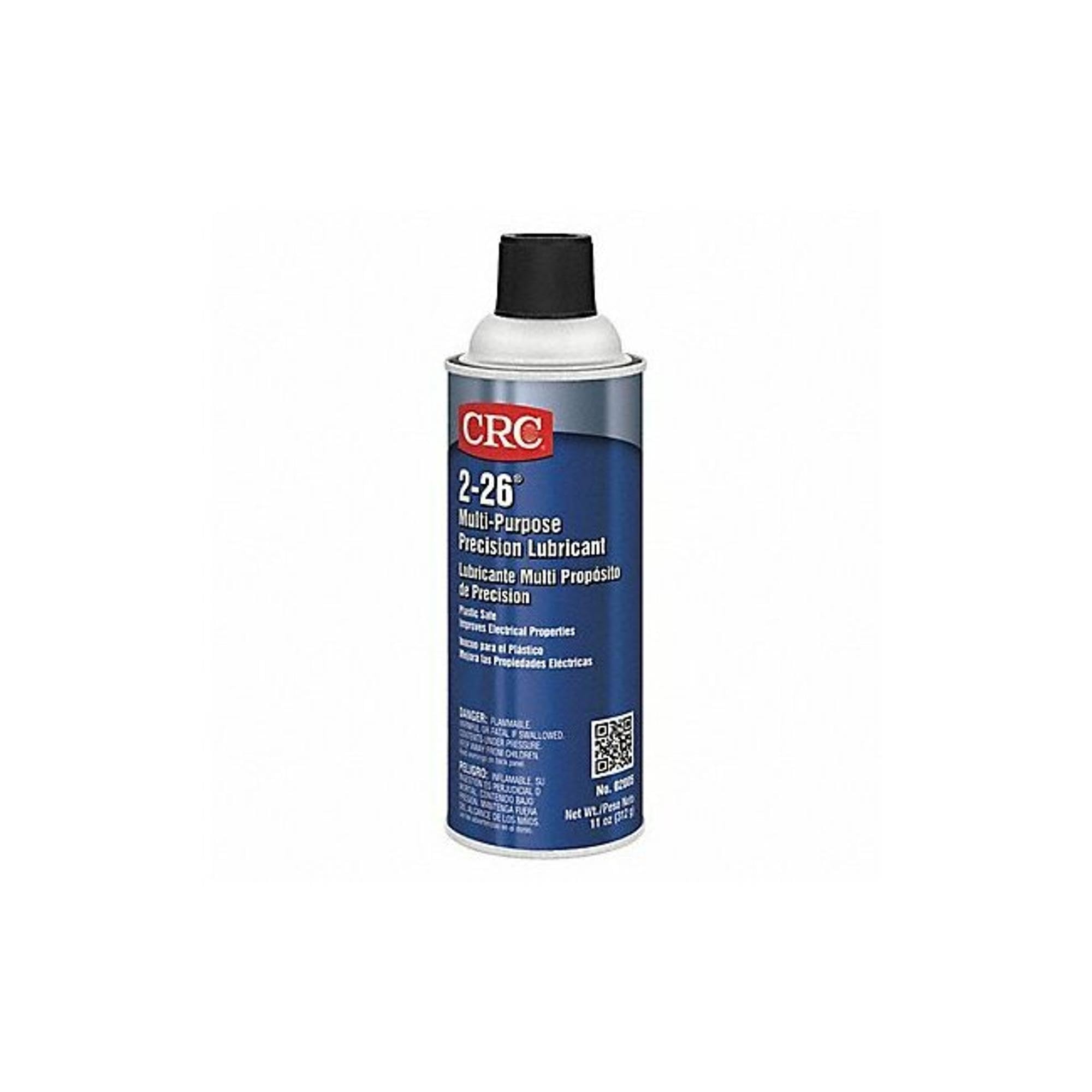
2. CRC 2-26 Multi-Purpose Precision Lubricant- 11 wt. oz.
The one that will not wreck a plastic housing while it frees the switch inside.
Quality is what keeps coming up with the CRC 2-26, and it is the plastic-safe feature that makes it the pick for switches, connectors, and anything with nylon or polycarbonate near the spray zone. Most penetrating oils will soften plastic; this one is rated safe for it. Owners mention “Most spray lubricants aren’t safe on plastics, causing them to soften or break. This stuff is great on nylon and other plastics.”
The can holds 11 fluid ounces — noticeably more liquid than the CorrosionX 6-ounce can — and the 360-degree spray valve lets you point it up, down, or sideways into a tight compartment. It carries an NSF H2 food-plant registration and is rated to restore resistance values and help stop current leakage on electrical contacts. A mechanical keyboard repair gets pinpoint spray onto switches with no odor and no mess.
The 93 °C flash point gives you a safer margin than a low-flash formula, but it is still a spray, so keep it off live current and hot surfaces. It is the pick for electronics, plugs, blinds runners, and mechanical assemblies — not the heavy shield you would buy for a boat trailer left in salt air.
Where it shines: 11 fluid ounces of plastic-safe lubricant with a 360-degree valve for accurate aim into switches, plugs, and blind runners.
Where to look elsewhere: it is not a thick anti-corrosion barrier, so skip it for long-term saltwater protection on big metal.
The smart call: electronics, wire, and plastic parts that need freeing without damage.
Keep shopping: if your real problem is a rusted bolt on a boat or a trailer frame.
3. CorrosionX Rust Inhibitor 6oz
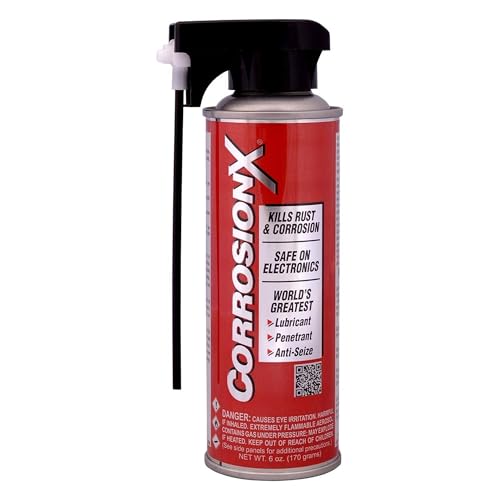
The coastal-climate can that bonds to metal and shrugs off salt spray and rain.
Its flash point of 132 °C is the standout here — more than double the 60 °C of the Royal Purple, which means a lot more margin if you are working near a warm engine or an exhaust. The formula builds a moisture-blocking dielectric barrier (a non-conductive film, safe around live circuits) that bonds to the metal surface and keeps working under it. Its dielectric film is rated over 39,000 volts, so it protects terminals and sensors without shorting them.
The 6-ounce can is smaller than the CRC’s 11 fluid ounces, so you get fewer ounces per job, but it is the pick for marine and coastal work. Corrosion Technologies is qualified by the U.S. Navy for advanced marine corrosion protection, and this 6-ounce can is the flagship formula. Customers note freeing seized fan-motor shaft bearings so the fans ran like new again, then spraying four outdoor fans that still start smoothly after rains. A 50-year-old audio rig came back to life with it used as a corrosion remover, protectant, and cleaner in one pass.
The recurring gripe is the spray mechanism — the nozzle can act up, and a few reviewers point out it. It is also somewhat messy to apply. Neither stops it from doing the job, but aim carefully and wipe overspray off plastic trim. It is the small-can, high-flash-point choice for anyone fighting salt air.
Reasons it earns the spot
- 132 °C flash point — the highest here
- 39,000-volt dielectric film protects terminals and sensors
- Qualified by the U.S. Navy for marine corrosion protection
- Bonds to metal and shields it against salt and rain
Reasons to pause
- 6 fluid ounces — the smallest volume of the three fluids on the list
- Some shoppers say the spray nozzle failing
- Messy to apply; mask nearby trim
Made for: boat, dock, RV, and coastal metal that lives in salt air and rain.
Think twice: if you want maximum ounces per can or a nozzle that will not misbehave.
4. Boeshield T-9 Lubricant
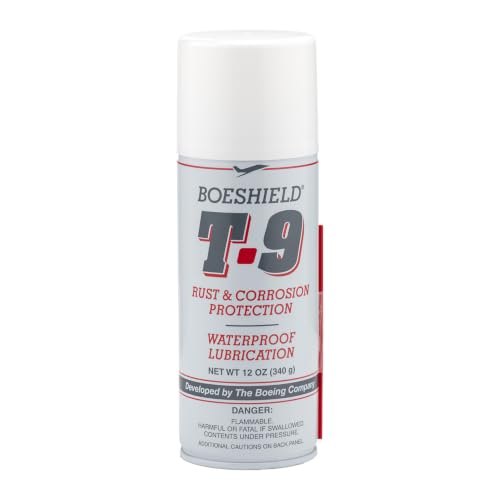
A wax finish that seals metal against salt and moisture without the sticky residue.
Boeshield T-9 is the 12-ounce can for anyone who wants protection they can actually live with. The penetrating formula displaces moisture, then dries to a thin waxy film rather than a thick oily residue — so parts you handle stay clean and do not grab dust. Rust resistance is the thing buyers rave about, with more mentions than any other trait, and the film seals out humidity, road spray, and salt through seasonal storage.
The wax coating fixed a microwave door latch and a trailer hitch coupler, with rust coming off and the parts moving smoothly. Buyers report two saltwater boat engines coated with it still looked brand new five years later. The 12 fluid ounces is the same as the CorrosionX Heavy Duty, and it makes a strong pick for RV doors, windows, locks, hitches, awnings, and jacks, plus e-bikes and battery terminals.
It started as a Boeing-developed formula, and it dries to a thin wax film rather than an oily coat — some buyers find the leftover film a fair trade, others less so. It has a strong chemical smell, and it can lift paint if you overspray, so use it outdoors with gloves and a mask. It is a metal protectant that wants a little prep, not a spot-and-forget spray.
What it does best: a 12-ounce waterproof wax film that stays put through salt spray and seasonal storage, drying clean instead of oily.
One honest limit: the strong chemical smell and paint-lifting risk mean careful, outdoor, gloved application.
Reach for this if: you want dry-feeling, long-lasting rust prevention on stored vehicles and metal gear.
Look elsewhere if: you need a plastic-safe electrical spray or a formula for fresh paint.
5. CorrosionX Heavy Duty 12oz

The thick, self-healing coat built for boat trailers, barn doors, and salty equipment.
Functionality is the trait buyers care about most here, and it is the thickness that earns it — this 12-ounce can lays down a dripless barrier that stays bonded through rain, seawater, and pressure washing. The self-healing coating is rated to keep protecting for up to five years indoors and two years outside — long enough to leave on a trailer leaf spring or a winch. One can goes a long way because the coat is built to stay put, not flash off.
It is the heavy-duty pick over the standard CorrosionX — thicker, dripless, and self-healing, and better suited to the big stuff. It stops salt corrosion on boat motors that already have it, and protects against recurrence with a periodic reapplication. Use it on battery posts, grounding lugs, undercarriage pans, and the inside of a snowblower. It stays flexible instead of flaking or cracking as machinery shifts and vibrates.
The trade-off is the texture. The coating is goopy, tacky for a while, and it stains clothing — keep your hands and sleeves clear of it. A few buyers find it draws heavy dirt over months and that the 12 ounces cover only so much area. It is the one you put on equipment you do not need to look clean, and the protection is worth the mess.
Why it holds up
- Self-healing, dripless barrier rated up to 5 years indoors and 2 years outside
- Thick coat resists rain, seawater, and pressure washing
- Stays flexible — does not flake or crack as machinery shifts
- Its Polar Bonding stops hidden electrolysis and galvanic damage between dissimilar metals
What you trade away
- Tacky, goopy texture that stains clothing
- Attracts dirt and grit over months
- 12 ounces with heavy coverage means reordering on big jobs
Pick this for: marine, agricultural, and industrial metal that lives outdoors in salt and weather.
Skip it for: clean indoor parts or anything you will touch bare-handed.
Know the Specs
Flash Point (°C)
Flash point is the temperature at which the vapor from the spray can catch a spark. A low flash point, like 60 °C, is fine on a cold hinge but risky near a warm exhaust manifold or engine block. Higher flash-point formulas, like the 132 °C CorrosionX, give you more safety margin around hot parts and electrical panels.
Liquid Volume (fluid ounces)
Liquid volume tells you how much formula is in the can before the propellant. Six fluid ounces is a compact can for small, repeated jobs like bearings and motors; eleven or twelve gives you more jobs per can. Check the volume if you are covering large metal surfaces or reapplying often.
Wax Film vs. Thick Barrier
A wax film (like a thin waxy finish) dries to a dry-ish surface that does not grab dust, so it suits hinges, latches, and metal you handle. A thick barrier stays goopy and draws grit but holds up to rain and salt far longer. Match the finish to whether the part lives indoors or outdoors.
Plastic-Safe and Dielectric
Plastic-safe means the formula will not soften or crack nylon, polycarbonate, or wire insulation. Dielectric means it does not conduct electricity, so it protects terminals and sensors without shorting them. Choose these when the job runs through a switch, connector, or plastic housing.
Common Questions
How long does a rust penetrant spray take to free a stuck bolt?
Can I use a rust penetrant spray on a hot engine?
Is rust penetrant spray safe on plastic and electrical contacts?
What is the difference between a penetrating spray and a corrosion inhibitor?
Will a wax-based spray like Boeshield T-9 leave a sticky finish?
Does a rust penetrant spray prevent new rust as well as remove old rust?
How many jobs will one 6-ounce can cover?
Is it safe to use on battery terminals and electrical connectors?
What does a 132 °C flash point mean for safety?
Why does the same brand offer a standard and a heavy-duty anti-rust spray?
The Bottom Line
The rust penetrant spray winner is the Royal Purple 05000 Maxfilm, because its synthetic formula keeps creeping into threads and keeps parts moving long after the spray dries. If your job runs through switches, plugs, or plastic housings, grab the CRC 2-26 for its plastic-safe, 360-degree precision spray (a nozzle that sprays from any angle). For coastal steel and equipment left outdoors in salt, the CorrosionX Heavy Duty lays down the thick self-healing barrier that holds up to weather, and if you want a dry wax finish instead of goop, the Boeshield T-9 is the one to reach for.
How we choose
We do not accept paid placement. Every pick is matched to a real buyer and a real use-case; we do not hands-on test units.
Sources
Specifications: manufacturer listings and product documentation. Review insights: verified customer reviews, as of October 2026. Pricing: not shown on this page (it changes often); check the current price via the retailer link.
As an Amazon Associate, Aappliancez earns from qualifying purchases. This does not affect which products we feature.