Disclosure: Some links in this post are affiliate links. As an Amazon Associate I earn from qualifying purchases, at no extra cost to you. Learn more
Specs are compiled from manufacturer listings and verified buyer reviews and can change over time — please confirm the key details on the product page before buying.
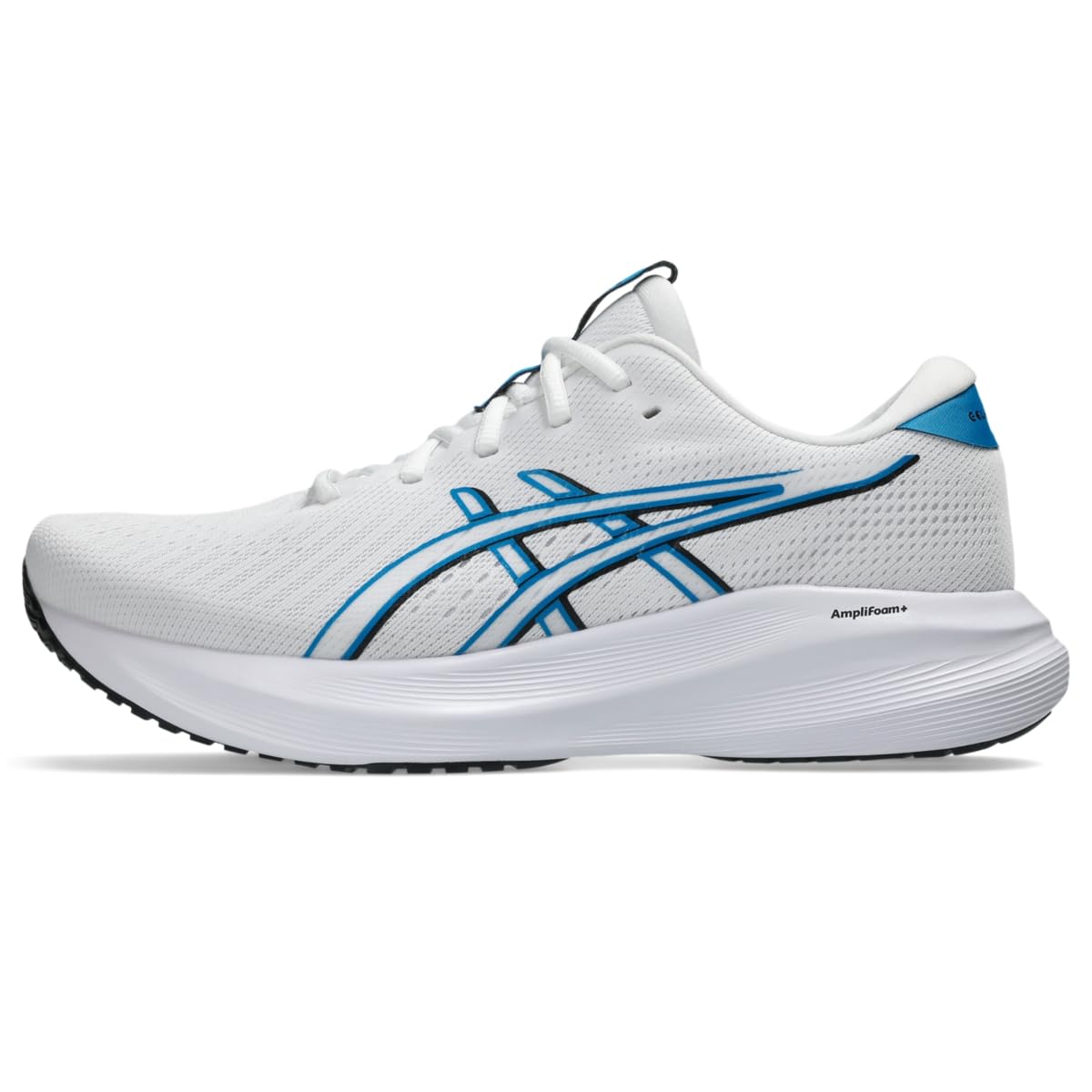
A cross-country season depends on grip on wet grass at a sharp turn and whether your teen’s feet still feel okay at the third mile. Most teen runners get handed whatever was on sale, then spend October nursing blisters and rolled ankles. The picks below are the ones that actually hold up on grass, gravel and packed dirt — starting with the crowd favorite, the ASICS Gel-Excite 11, which sits at 4.5+ stars across 1,600+ owners and costs less than most team hoodies.
This guide is built by comparing the manufacturers’ published specifications and the patterns across verified customer reviews, so you get each pick’s real strengths and trade-offs instead of marketing spin.
Teen cross-country feet are still growing, so fit and toe-box room matter as much as cushioning. Below you’ll find seven shoes sorted by what they’re actually good at — spikeless racers, cushioned trainers, and one wide-foot favorite. Every claim traces back to the maker’s own spec sheet or to what buyers keep saying after a full season of running shoes for teens cross country.
Top Picks

How To Choose The Best Running Shoes for Teens Cross Country
Cross-country isn’t road running with prettier scenery. A 5K course can go from soft grass to gravel to a muddy incline inside one mile, and the shoe has to handle all three without the runner thinking about their feet. Here’s what actually decides whether a pair works for a teen season.
Outsole traction beats everything else on race day
Look for actual outsole lugs — the raised rubber bumps under the forefoot and heel — not a smooth road sole. Lugs bite into loose dirt and wet turf so your runner doesn’t slide on a downhill turn. A spikeless cross-country shoe like the Brooks Draft XC is built exactly for this; it gives grip on uneven ground without the metal pins that many middle-school meets don’t allow.
Cushioning versus ground feel
A teen logging 25 miles a week needs enough cushioning to protect growing joints, but too much foam turns a cross-country shoe mushy on grass. Brands describe this with “stack height” — how much foam sits between the foot and the ground. Higher stack means softer landings; lower stack means the runner feels the terrain and reacts faster. Cross-country racers tend toward the lower end, while trainers sit higher.
Fit: room in the toe, locked at the heel
Growing feet need toe-box room so toes don’t jam on descents. But the heel has to be held firmly, or the foot slides and blisters form. Several picks here run narrow or wide depending on the model, so read the fit notes in each review before ordering. When in doubt, size up half a step for a teen mid-growth-spurt — several owners did exactly that.
Side-by-Side Comparison
| Model | Best For | Weight | Cushioning Tech | Key Trait | Amazon |
|---|---|---|---|---|---|
| ASICS Men’s Gel-Excite 11★ Best Overall | Everyday trainer on a budget | 1.44 lb | FF BLAST PLUS + PureGEL | Softer gel insert | Amazon |
| Brooks Men’s Trace 4Top Trainer | Daily training for narrow feet | 1.5 lb | BioMoGo DNA (neutral) | Brooks’ everyday neutral platform | Amazon |
| Brooks Women’s Trace 4 | Wide-width teen runners | 1.5 lb | BioMoGo DNA (neutral) | Wide width available | Amazon |
| Brooks Draft XC Spikeless | Race-day cross-country | — | BioMoGo DNA | Outsole lugs + wide midfoot | Amazon |
| Under Armour Charged Assert 11 | All-day comfort on wide feet | 2.4 lb (packaged) | Charged cushioning | Roomy toe box | Amazon |
| ASICS Women’s GT-1000 14 | Stability for overpronators | 1.44 lb | FF BLAST + 3D GUIDANCE SYSTEM | Stability guidance built in | Amazon |
| New Balance FuelCell Rebel V5 | Responsive speed training | 2.1 lb | FuelCell foam | Wider, higher-stack midsole | Amazon |
Detailed Reviews
1. ASICS Men’s Gel-Excite 11 Running Shoes
Our pick — 4.5+★ from 1,500+ verified ratings; the strongest balance of quality and price.
The cushioned all-rounder that gets a brand-new runner through their first season without complaint.
Here’s the number that earns this shoe the top spot: it weighs 1.44 pounds, and that lightness is exactly what a growing teen needs when they’re logging miles before they’ve built the leg strength for it. Underfoot sits FF BLAST PLUS foam layered with PureGEL — a gel insert the maker says is a softer version of standard ASICS GEL — so hard pavement and packed-dirt race courses both feel forgiving rather than jarring.
The upper is an engineered mesh with a polyester lining and an OrthoLite X-30 sockliner (the soft removable insole that sits under the foot), which lets air through on a hot September practice. What wins people over is the quality — the most-praised point by a wide margin — followed closely by comfort. Buyers report the fit feels snug and supportive with almost no break-in period, and they hold up across road and trail with traction that grips well. The one honest wrinkle is sizing: the listing notes some buyers find them true to size and some say they run small, so order a half size up if your teen’s foot is between sizes.
What earns the top spot
- 1.44 pounds keeps a young runner light on their feet
- FF BLAST PLUS plus PureGEL delivers cushioning that doesn’t feel mushy
- Engineered mesh upper and OrthoLite X-30 sockliner keep feet cool
- Versatile enough for running, walking and gym class alike
Where it asks a little of you
- Sizing feedback is split — some find it true to size, others say it runs small
- The mesh stretches slightly over long-term use
Reach for this if: you want one pair that handles practice, gym class and weekend runs without blowing the season budget.
Look twice if: your teen is right between sizes — order up half a step.
2. Brooks Men’s Trace 4 Neutral Running Shoe
A Brooks built for narrow feet that holds up to 4-plus miles six days a week.
Start with the honest catch the maker puts front and center: the Trace 4 is built for narrow feet. If your teen has a wide toe box or a high-volume foot, this isn’t the shoe — but for a slimmer-footed runner it’s an excellent, well-made daily trainer. It weighs 1.5 pounds; the Gel-Excite 11 weighs 1.44 pounds, though the weight sits fine on foot for a neutral runner.
What’s earned it a following is longevity. Brooks runners who keep coming back describe it as wearing like iron — one long-time user logs 4+ miles, six days a week and still reports true-to-size fit months on. Owners mention it feels broken-in from day one with soft, responsive cushioning and no break-in period, plus breathable mesh and steady outsole grip. The one place reviews split is durability: while the bulk of buyers describe it as going the distance, a few note it doesn’t wear forever, which is normal for a neutral trainer at this price tier.
The narrow-foot advantage: unlike the wider women’s version below, this Trace 4 is tuned for a slimmer profile, so the foot stays locked through sharp turns rather than shifting side to side.
Pick-this-one-if: your teen wants a dependable everyday neutral trainer they won’t outgrow in a season.
Best for: a mid-week mileage runner with narrow feet who needs cushioning that lasts.
Skip if: the foot is wide or the toe box needs breathing room — take the women’s Trace 4 instead.
3. Brooks Women’s Trace 4 Neutral Running Shoe
The version to grab when a wider foot needs room to breathe without losing stability.
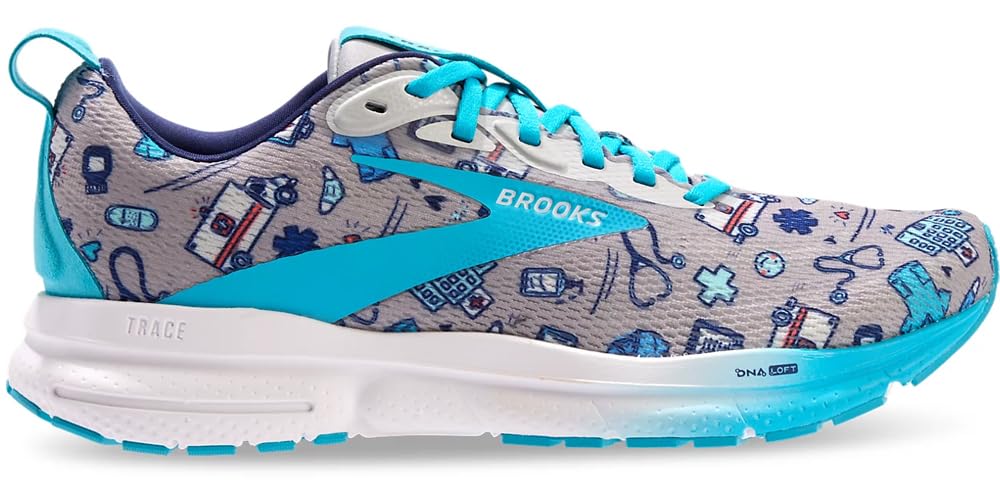
If the men’s Trace 4 above reads as too narrow, this women’s version is the fix — it comes in a wide width, and for a teen whose foot runs wide, that makes all the difference. Customers note the front of the shoe has plenty of room, that it feels stable and grounded while walking, and that the width ensures toes aren’t squished. The trade-off many flag? Cushioning is thinner than expected for a neutral trainer — so it works best for runners who prefer feeling the ground over sinking into foam.
Quality is the strongest impression this shoe leaves, with fit right behind it. It weighs 1.5 pounds, identical to the men’s Trace 4, and works for everyday running, walking and long days on your feet. One recurring caveat is a too-wide toe box for runners used to a tighter forefoot — if a teen’s foot is only slightly wide, try a half size down in the wide width before committing.
Fit is the whole point here: this is the pick where wide-footed teens stop hearing “size up and hope.” The wide width option and generous toe box mean plenty of room at the front, and the stability feedback across buyers is consistent — feet feel planted, not sloshing around.
Go with this one when: a wide foot has made every other trainer pinch.
Think twice if: the runner wants plush cushioning underfoot; this leans firm.
4. Brooks Draft XC Running Shoe
The one shoe here built from the sole up for cross-country courses, not the sidewalk.
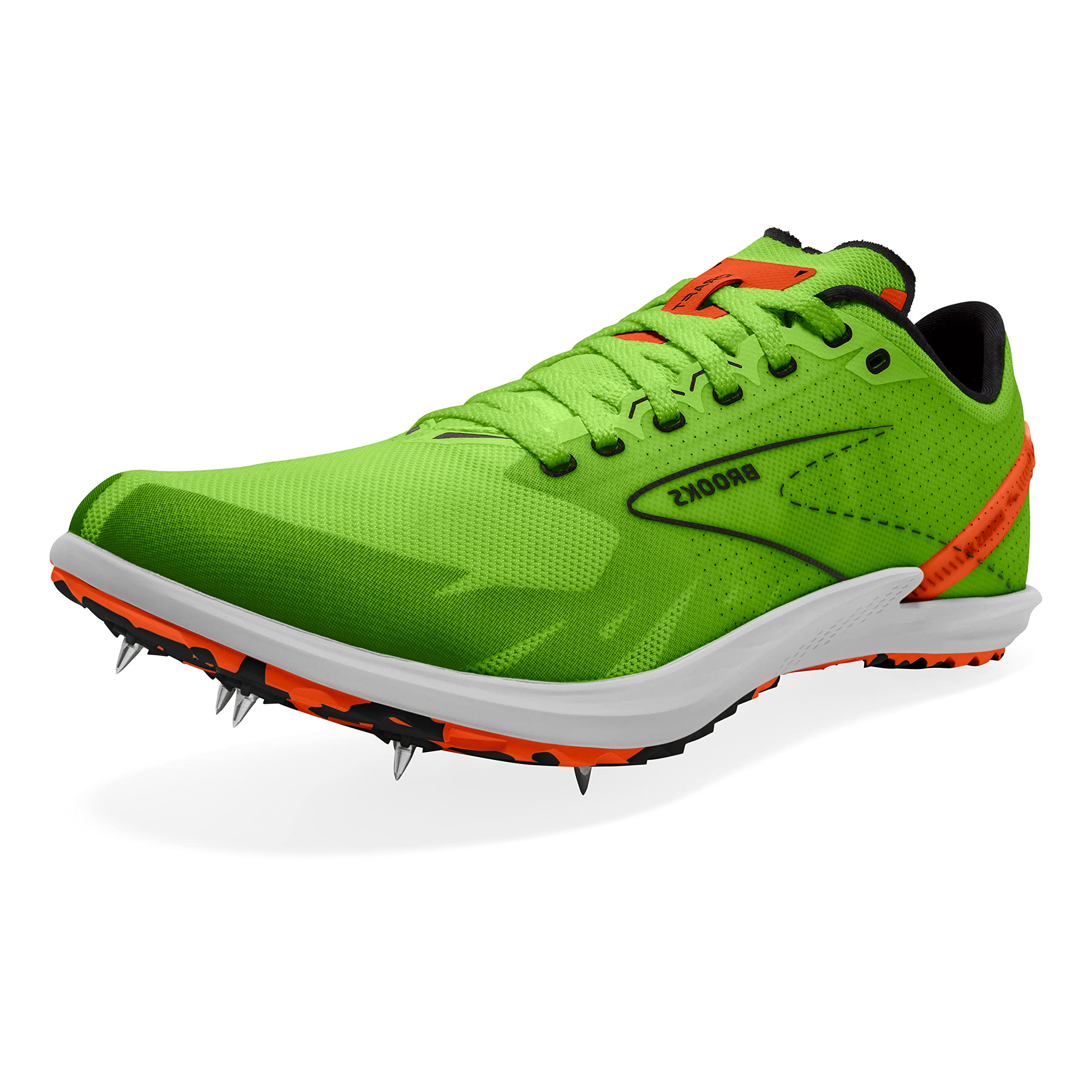
This is the pick parents should zero in on if their teen is actually racing xc rather than just training. Brooks designed it specifically for “middle and high school runners who want to represent their teams as they compete on the varying terrain of cross-country courses” — and the build matches that. Durable outsole lugs (raised rubber bumps) bite into uneven ground, a wide midfoot platform keeps footing stable on rough turf, and BioMoGo DNA cushioning stays responsive from the start gun to the finish chute.
The custom heel piece is a fun touch for a team runner: it’s a blank spot meant for goal times, a mascot or a team cheer. What buyers keep praising is quality — by far the most-discussed point — with value close behind. Families report it carries a runner through cross-country season and into track season, fits comfortably right from the start, and grips confidently on the grass. The two areas that split feedback are size and spike/sole durability: some say true to size, some say runs small, and one teen racer did describe it as a touch on the heavy side.
Why the xc crowd likes it
- Purpose-built outsole lugs grip uneven terrain, not just pavement
- Wide midfoot gives stable footing on rough cross-country ground
- Custom heel piece lets your teen personalize it for the team
- BioMoGo DNA cushioning responds from start to finish
What to expect from the fit
- Size feedback is split — some runners need to size up
- A teen racer found it slightly heavier than expected
The verdict: this wins for anyone whose season is measured in 5K race times, not gym-class miles.
One caution: measure the foot before ordering — the size reports are genuinely divided.
5. Under Armour Women’s Charged Assert 11 Running Shoes

The comfort-first pick for the teen who wears her trainers from first bell to last.
Comfort is the runaway story with this Under Armour, and it’s not a small compliment when the shoe also has to survive a cross-country season. The Charged cushioning underfoot earns the most praise of any point by a wide margin, with quality right behind it. Wide-footed teens especially seem to find relief here — reviewers point out ample room, supportive arch grip, and a roomy toe box that doesn’t crush toes on long days, plus a design that still looks sharp. Under Armour’s whole pitch is to help you reach a goal, and for a growing runner that translates to a shoe that doesn’t fight back on light training days.
One head-on comparison: the women’s Charged Assert 11 has a 2.4-pound packaged weight, while the ASICS Gel-Excite 11 weighs 1.44 pounds, so it’s less of a featherweight and more of a plush comfort shoe. Cushioning and durability each get mixed reports — some find it plenty cushy, others say it wears faster than expected, so treat it as a training-day comfort pick rather than a race-day rocket.
Where it shines: if your teen complains that every shoe crowds their toes, this roomy-toe-box fit is the fix. Buyers describe the arch support and cushioning as softening long days rather than just tolerable.
One thing to watch: skin-tight the shoe is not — if a runner wants a locked-down racing feel, this sits on the plush side.
Best for: the wide-footed teen who wants one pair to live in all day.
Skip if: they’re chasing a personal record and need something snappier and lighter.
6. ASICS Women’s GT-1000 14 Running Shoes

The stability shoe for a runner whose ankles roll inward on every long stride.
Some teen runners overpronate — their foot rolls inward with each step, which strains the ankle and knee over a season. This ASICS is built for exactly that. The 3D GUIDANCE SYSTEM (a set of stability features that guide the foot through each stride) keeps the landing centered, while an FF BLAST midsole adds a responsive, bouncy feel. It weighs 1.44 pounds, tied with the ASICS Gel-Excite 11 as the lightest shoe on this list — impressive given the added stability build.
Comfort is what buyers praise most, with fit close behind, and several note it’s especially good for narrower feet plus long days on foot. The one recurring gripe is durability at the very front of the shoe — a lace loop or heel tab has come loose for some, so reinforce them with a tiny stitch if your runner is hard on gear. A few find the tongue tall and bulky. If your teen has narrow feet and wants gentle stability without a clunky feel, this is the shoe to try.
What makes it a stability standout
- 3D GUIDANCE SYSTEM keeps inward-rolling feet tracking steady
- FF BLAST midsole gives a bouncy, responsive ride
- At 1.44 pounds it stays surprisingly light for a stability shoe
- Narrow-foot fit earns steady praise
Fine print to know
- A front loop or tab has come loose for some buyers
- A few find the tongue tall and bulky
Match it to: a narrow-footed teen who needs pronation control and doesn’t want a heavy clunker.
Be aware: the tongue runs tall, and pull tabs may need reinforcing.
7. New Balance Men’s FuelCell Rebel V5
The lightweight speed shoe for the teen who wants to feel fast on tempo days.
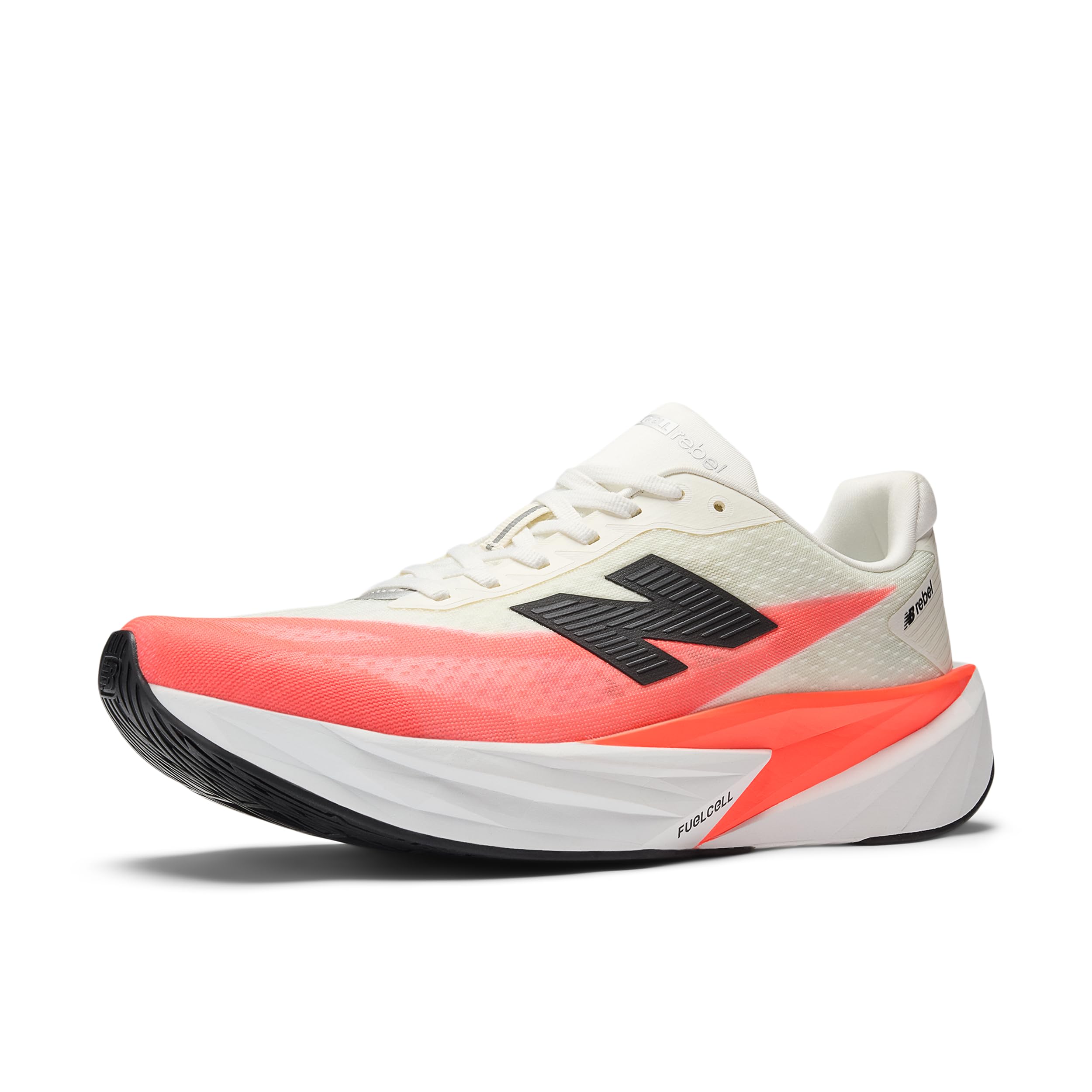
New Balance built this as a trainer that changes how you think about everyday running, and the specs back the pitch. FuelCell foam gives a propulsive, springy feel that adapts from long steady runs to short hard efforts — exactly the mixed workload of a cross-country week. The geometric midsole is wider and stacks higher than its predecessor for more cushioning, and the FantomFit bonded upper (a lightweight, glued-together upper) holds the foot with very little material weight. It has a 2.1-pound weight and a premium price, so it’s a considered spend rather than a grab-and-go.
Shoppers say it works well for frequent medium-distance running, with a regular size that fits well and cushioning that’s supportive without feeling mushy. Quality is the point they praise most. The fit and arch support split feedback: some find the heel roomy with good arch, others say the toe box runs tight and several suggest sizing up half a step. One buyer valued a prior pair highly, calling it a comfortable, breathable shoe with durable build — a fair read for a trainer at this level.
The speed case: FuelCell foam plus a wider, higher-stack midsole makes this the most responsive trainer on the list for a runner who wants to feel the pace pick up on tempo work, and the FantomFit upper keeps weight off without sacrificing structure.
The honest trade-off: it’s the highest-priced option here and demands you get the size right — the toe-box reports are genuinely mixed.
Consider it a fit for: the committed teen racer whose season is training-heavy and who wants a springy, fast trainer underfoot.
Hold off if: budget is tight or the foot runs wide — the fit is narrower and pricier than the budget trainers.
Know the Specs
Stack height and drop
“Stack height” is how much foam sits between the foot and the ground — higher means softer landings, lower means more ground feel. “Drop” is the height difference between heel and toe; a 12mm drop is higher, a 6mm or 4mm is more level. Growing runners often do well with a moderate drop that cushions the heel while still letting the forefoot push off. Several picks here note their drop, so compare before you buy to match the runner’s stride.
Neutral versus stability shoes
Neutral shoes add no extra guidance — they let the foot move naturally and typically suit runners with a normal stride. Stability shoes add features like a medial post or the ASICS 3D GUIDANCE SYSTEM to slow inward rolling, helping overpronators. The Brooks Trace 4 is a neutral shoe; the ASICS GT-1000 14 is the stability pick. Match the shoe to how the teen lands, not to the trend.
Outsole lugs and traction
Lugs are the raised rubber bumps under the sole that bite into loose dirt and wet grass. Cross-country-specific shoes like the Brooks Draft XC lean on bigger lugs and a wide midfoot to stay stable on uneven terrain. Road-oriented trainers have flatter soles that slip on wet turf. If your teen races on grass and mud, prioritize lug height and a wide platform over outright lightness.
Weight and how it feels on foot
Weight matters most for a teen still building strength — 1.44 pounds feels noticeably different from 2.1 pounds over a full practice. But the number alone isn’t everything: heavier shoes can carry more cushioning or stability, and lighter ones can feel flimsy. Use weight as one input alongside fit, cushioning and traction, and let the runner tell you which feels right in motion.
Common Questions
Do teenagers need special cross-country shoes instead of regular running shoes?
What does neutral running shoe mean for a teen?
How many miles before a teen running shoe needs replacing?
Should I size up for a growing teen’s running shoes?
Are spikeless cross-country shoes better than spiked shoes for high school meets?
How do I know if my teen overpronates and needs a stability shoe?
Does stack height make a running shoe hotter or heavier for cross-country?
Can a teen wear cross-country shoes for other sports?
How tight should the heel feel in a teen running shoe?
What is the difference between a trainer and a race shoe for cross-country?
The Bottom Line
The strongest overall pick for running shoes for teens cross country is the ASICS Men’s Gel-Excite 11, because it balances a light 1.44-pound build, PureGEL cushioning and a price that won’t blow the season budget. If your teen is actually racing cross-country, the Brooks Draft XC Spikeless is purpose-built for grass and mud, with real outsole lugs and a stable wide midfoot. And for a wide-footed runner who wants all-day comfort, reach for the Under Armour Charged Assert 11. Buy the one that matches how your teen actually runs — a racer for race day, a comfy trainer for every other day.
How we choose
We do not accept paid placement. Every pick is matched to a real buyer and a real use-case; we do not hands-on test units.
Sources
Specifications: manufacturer listings and product documentation. Review insights: verified customer reviews, as of October 2026. Pricing: not shown on this page (it changes often); check the current price via the retailer link.
As an Amazon Associate, Aappliancez earns from qualifying purchases. This does not affect which products we feature.