Disclosure: Some links in this post are affiliate links. As an Amazon Associate I earn from qualifying purchases, at no extra cost to you. Learn more
Specs are compiled from manufacturer listings and verified buyer reviews and can change over time — please confirm the key details on the product page before buying.
If your big toe joint aches every time your foot rolls forward, the fix is usually the shoe, not your training plan. You need a shoe with a wide, tall toe box that stops pressing on that joint, plus a sole stiff enough to keep the toe from bending upward on every step. The nine picks below all give you that, and they range from a roomy road trainer to a firm stability shoe built for heavier runners. The crowd favorite is the ASICS SUPERBLAST 2, at 4.5+ stars across 1,000+ owners, with a tall soft stack that eases forefoot pressure without feeling mushy.
This guide is built by comparing the manufacturers’ published specifications and the patterns across verified customer reviews, so you get each pick’s real strengths and trade-offs instead of marketing spin.
You will see which shoes give your toes room to spread, which ones hold a custom orthotic steady, and which lose their shape after a season. Every pick is measured on toe-box shape, drop, and cushioning depth so you can match it to your own foot rather than guess — this is what separates the real running shoes for hallux limitus from general trainers.
Top Picks
How To Choose The Best Running Shoes for Hallux Limitus
Hallux limitus means the joint at the base of your big toe no longer bends upward the way it should. Every step you take pushes that joint into its end range, and a shoe that folds right at the toe makes it worse. A shoe that keeps the forefoot flat and gives the toes room stops the joint from hinging on every step.
Start with the toe box, not the cushioning
A wide, tall toe box lets your toes sit straight instead of curling or pressing together. Altra builds this in with its FootShape fit, and the Torin 8 lists a roomy toe box as a signature feature. A deep toe box also leaves room for a thicker insole or a custom orthotic without squashing your toes against the top of the shoe.
Check the drop and the sole stiffness
Drop is the height difference between the heel and the toe, measured in millimeters. A 0 mm drop, like the Altra Torin 8 at 30 mm/30 mm, keeps your foot level and can reduce how much your toe has to bend. A stiffer forefoot also helps, because the shoe resists folding at the joint instead of letting it hinge.
Match stability to your stride
If your foot rolls inward hard, a stability shoe with a firm heel counter and a wide base keeps you from overpronating. Brooks uses a guide-rail system in the Adrenaline and Addiction lines, and the Beast GTS 26 flares its sole for a wider platform. Neutral runners can go lighter and softer without losing much.
Leave room for an orthotic
Orthofeet shoes ship with a removable insole and extra depth to take most custom orthotics, plus fitting spacers and an arch booster for fine-tuning. If you already wear a prescription insert, check for a removable insole before you buy anything else.
Side-by-Side Comparison
| Model | Best For | Drop | Weight | Toe Box | Amazon |
|---|---|---|---|---|---|
| ASICS Unisex SUPERBLAST 2★ Best Overall | Long-distance comfort with a lively feel | — | 1.44 lb | Engineered mesh | Amazon |
| Brooks Women’s Glycerin GTS 22Best Support | Plush support for sensitive arches | — | 1.5 lb | Ample width | Amazon |
| ALTRA Men’s Torin 8Widest Toe Room | Wide toe box and zero drop | 0 mm | 8.4 oz | FootShape roomy | Amazon |
| Orthofeet Relay | Built-in orthotic support | — | 2.2 lb | Wide and pressure-free | Amazon |
| Brooks Women’s Adrenaline GTS 25 | Stable daily trainer with toe room | — | 1.5 lb | Wide toe box | Amazon |
| Orthofeet Tilos | Adjustable depth and slip-on ease | — | — | Extra-wide deep | Amazon |
| Brooks Men’s Addiction GTS 15 | Orthotic-friendly stability | — | 1.6 lb | 4E width | Amazon |
| New Balance Fresh Foam X More V5 | Maximum cushioning for long days | — | — | Wide base | Amazon |
| Brooks Men’s Beast GTS 26 | Heavy runners needing firm stability | — | 1.5 lb | Wide platform | Amazon |
Detailed Reviews
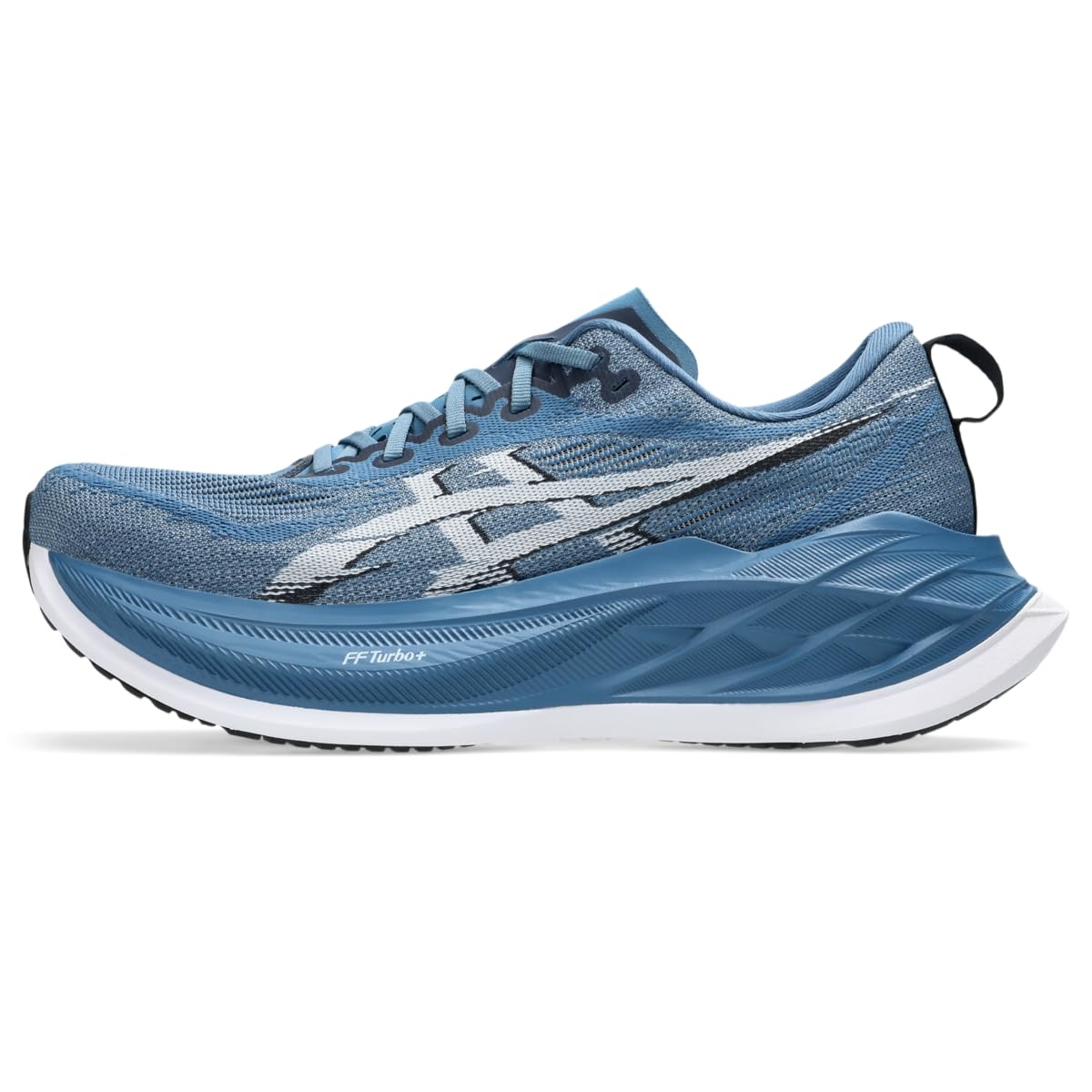
1. ASICS Unisex SUPERBLAST 2 Running Shoes
Our pick — 4.5+★ from 1,000+ verified ratings; the strongest balance of quality and price.
A tall stack of bouncy foam that keeps the pressure off a stiff big toe joint.
Here is the shoe that takes the sting out of the forward roll. The midsole pairs FF BLAST PLUS with FF BLAST TURBO, the same turbo foam ASICS uses in its racing models, and that combination keeps weight down while staying soft under the ball of the foot. The lightweight feel that wins people over most on these pages (comfort earns far and away the most praise) comes from a shoe that weighs 1.44 pounds. Compare that to the 1.5 pounds of the Brooks Glycerin GTS 22 above, and the SUPERBLAST 2 is the lighter shoe of the two.
The geometry also matters for a limited toe. ASICS describes a trampoline-style outsole and an AHARPLUS rubber heel plug, which means the shoe bounces you back instead of letting your toe do the bending work. The engineered mesh upper and gusseted tongue wing hold the midfoot steady, so a high-volume forefoot is not sliding forward into the front of the shoe. Buyers report the “Cushioning actually improves over time – feels better than new at over 120 miles.”
Fit is the honest catch here. Plenty of buyers find it true to size, while a chunk of feedback says it runs big, so measure first and consider going down half a size if you sit between sizes. There is also a small group who find the high stack less stable on direction changes. It measures 12.7 x 7.9 x 4.5 inches against the Brooks Glycerin GTS 22 at 14 x 9 x 5 inches, so it takes less room in a bag but also sits on a tighter footprint. For flat, forward road miles with a stiff toe, that trade is well worth it.
Where it earns its keep
- Dual-layer foam makes the toe-off phase feel assisted instead of strained
- 1.44 pounds keeps the leg turn-over easy on tired runs
- Gusseted tongue wing holds the midfoot and stops the foot sliding forward
- Breathable engineered mesh keeps the forefoot cool on long efforts
What to plan around
- Sizing is split — some find it true, some find it big
- High, soft stack can feel less planted when you cut or pivot
- Value is contested for a shoe at the top of the mid-range
Go for this if: you run road miles and want a soft, responsive shoe that does not fold at the toe joint.
Think twice if: you need a firm, flat platform for court sports or lots of sharp turns.
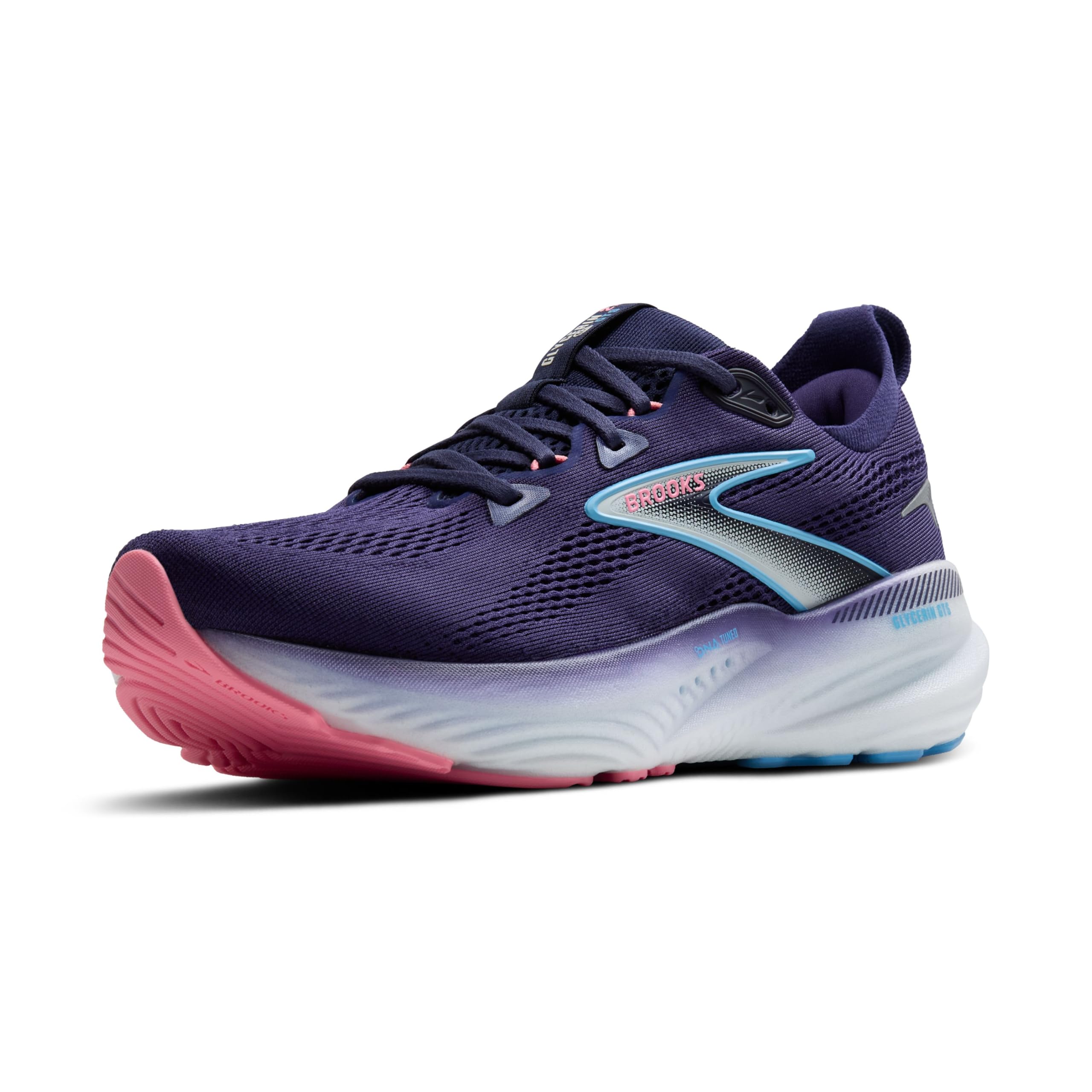
2. Brooks Women’s Glycerin GTS 22 Supportive Running Shoe
A cushioned stability shoe for the woman whose big toe joint flares when her arch rolls in.
This is the pick for the runner who needs support but cannot handle a hard slab underfoot. The GTS 22 guides the foot with a stabilizing bar that corrects inward roll without feeling like a wedge under your arch. What earns the most praise across its many buyers is the fit — more owners single out fit than any other quality — and the arch support comes in second. Plenty of buyers describe the ride as walking on clouds, and the plush padding around the Achilles heel keeps the back of the foot cushioned on long days.
The GTS build matters for a stiff toe because it stops the foot collapsing inward, which is what pushes extra force through the big toe joint on push-off. It measures 14 x 9 x 5 inches and weighs 1.5 pounds, making it the bulkier shoe next to the 1.44-pound ASICS SUPERBLAST 2. The up-side is a roomier interior: owners with flat arches and wide forefeet call the toe width ample. One reviewer noted the shoe held up through repeated machine washing, and durability feedback overall stays solid.
Here is where you should be careful: the support is firm, and a smaller share of buyers with very flat, flexible feet find the arch support too aggressive after half an hour of standing. If your arch collapses badly and you need real correction, this is your shoe. If your foot is already neutral and stable, the softer Glycerin (non-GTS) may feel less intrusive. Sizing runs a touch long for some, so try your usual length before you decide.
Who it is built for: women who roll inward and want cushioning plus correction in one package. The stabilizing bar does its job without a break-in period.
What to expect: a substantial 1.5-pound shoe with a full, plush feel. If you want an airy road racer, this is a step in the other direction.
Reach for this if: your arch rolls in and the front of your foot needs a cushioned, stable base for daily miles.
Look elsewhere if: you have a neutral, stable stride and prefer a lighter, less corrective ride.
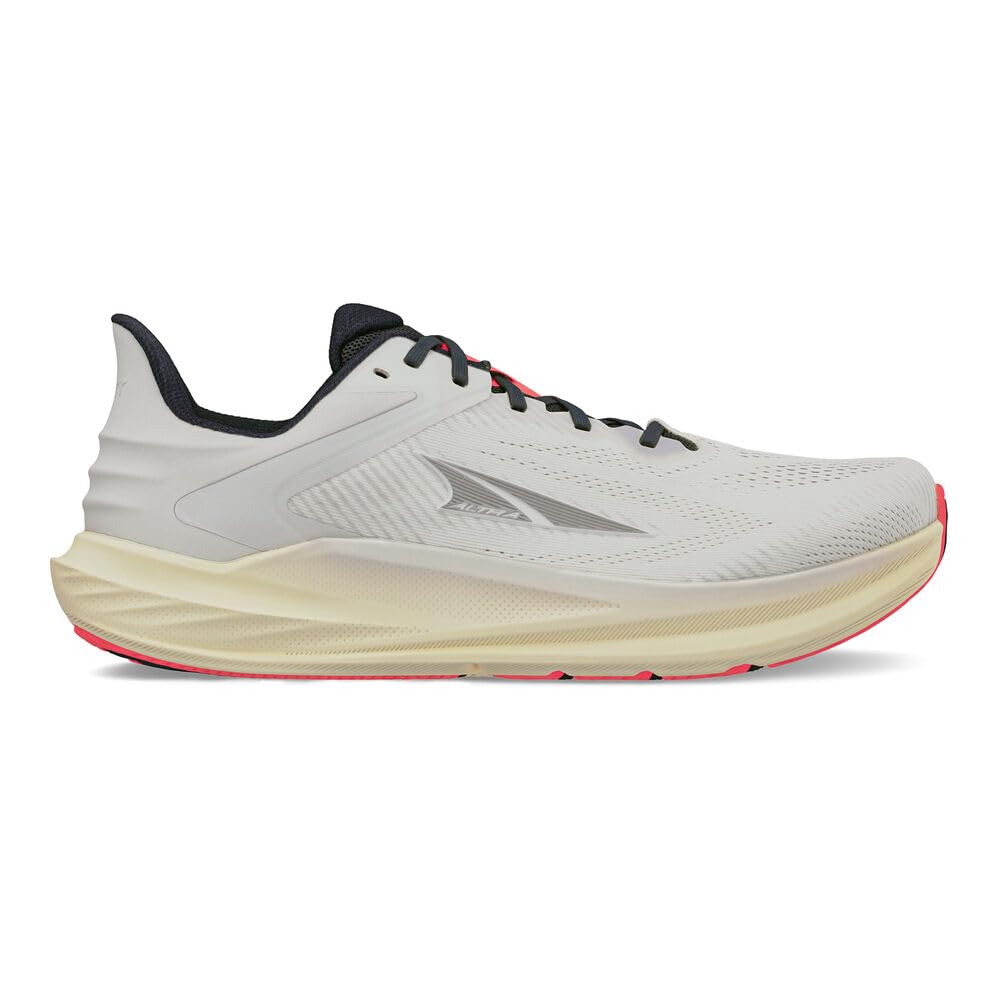
3. ALTRA Men’s Torin 8 Road Running Shoe
The shoe built around letting your toes spread flat, with no drop pushing you forward.
Altra’s whole approach is different: instead of tapering the front, the Torin 8 keeps a wide, roomy toe box through the whole FootShape fit. For a stiff big toe joint that is the most important spec on the page — your toes can sit straight instead of curling, so the joint is not forced upward with every step. The zero-drop platform, listed at 30 mm/30 mm with a 0 mm drop, keeps your foot level and lets the joint rest in its natural angle. It also weighs just 8.4 oz, so you barely feel it.
The cushioning runs plush, and the EGO MAX foam adds a little bounce. Reviewers describe running in it like running in soft house slippers, and one noted it works well for a midfoot-striking run style. The quality of the build wins the most praise — the design and construction are clearly the standout. A wide-footed buyer who normally needs an extra-wide still found the standard width worked: “The shoe deside is wide, not a wide size but feels GREAT!!” One runner reported pain-free 12-mile runs after the previous generation hurt past three or four miles.
The honest trade-off is the ride: the foam is soft, and a few buyers find it too soft or “dead” underfoot rather than springy. There is also limited arch support, so if you need correction for a collapsing arch, plan to add an insert. And the sizing can run about half a size long, so measure your foot before you pick a size.
The case for it: if toe width is your whole battle, this shoe gives you the most open forefoot of the bunch and a flat, level platform.
One caveat: the flat profile gives little arch correction, so a collapsing arch needs a support insert added.
Go for this if: your priority is maximum toe room and a level, zero-drop ride.
Consider the Brooks GTS line instead if: you need real arch correction rather than a flat platform.
4. Orthofeet Relay Orthopedic Women’s Running Shoes
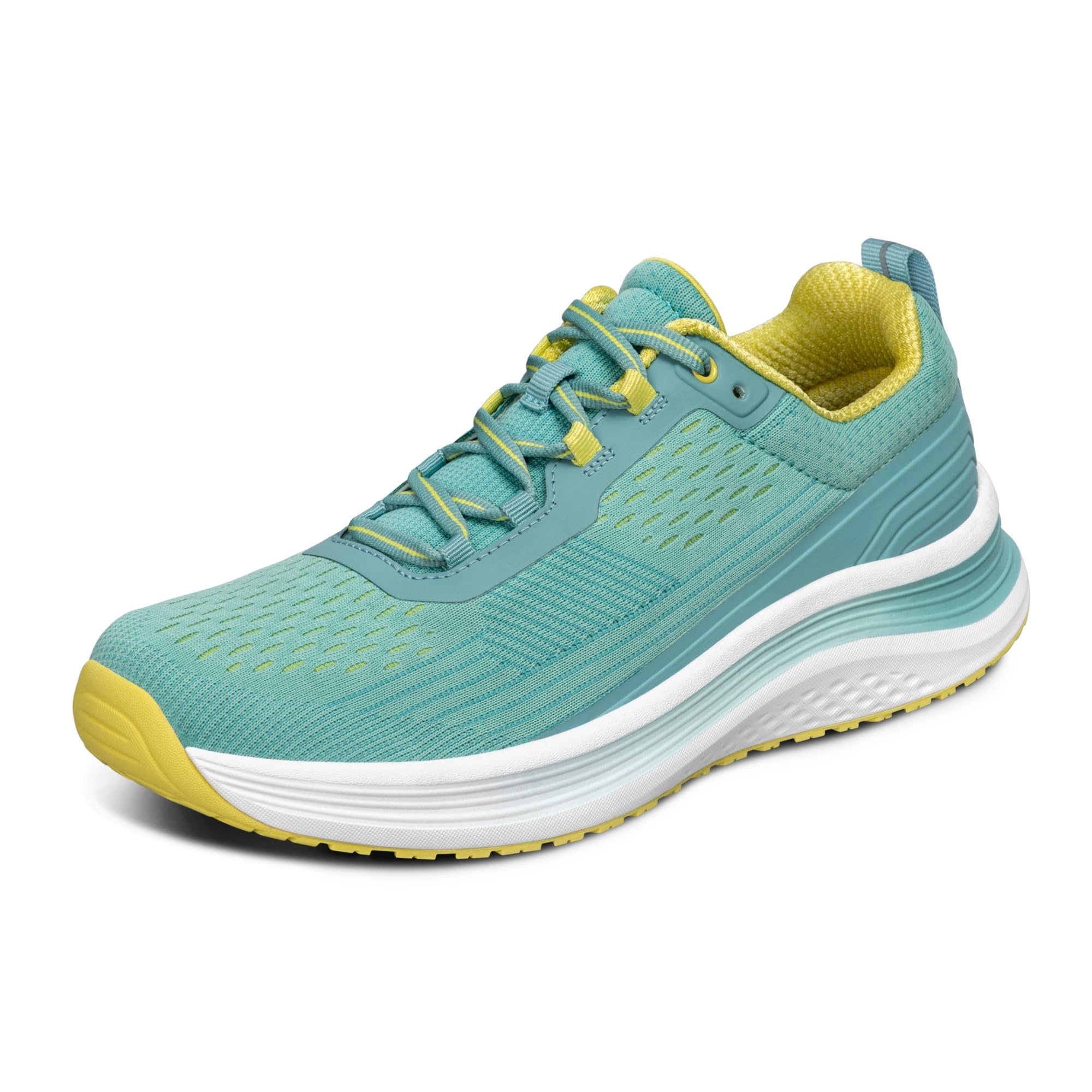
The women’s shoe that arrives with its own orthotic kit, so your custom insert is not fighting the shoe.
Orthofeet builds shoes for sensitive feet, and the Relay leans into that. The Ortho-Cushion system combines a built-in orthotic insole, a shock-absorbing sole, and extra depth so a custom orthotic can drop in without crowding your toes. Two under-insole spacers and extra arch supports are in the box, letting you fine-tune how much arch correction you feel. Fit is the strongest suit — owners single out fit more than any other quality — with the wide toe box and deep forefoot giving the big toe joint space to sit without pressure.
Owners describe it as comfortable for women with foot pain and light on the foot for its size, and the built-in arch support earns consistent praise. The shoe has a wide base and firm heel counter for balance, and the removable insole means you are not ripping anything out to install your own. The look also scores well — owners mention the shoe does not read as an orthopedic design, which matters if you wear it out rather than to the gym.
The catches worth knowing: sizing is the one inconsistency buyers flag, with one woman reporting a size 10 wide ran long and narrow and a black extra-wide felt shorter than the same number in white. A few also find the top lacing grommets sit high on the foot. That points to ordering your usual length and being ready to swap a color or width if the fit is off, rather than sizing up by default.
Smart picks for tender feet
- Removable insole and extra depth take most custom orthotics
- Two spacers and an arch booster let you tune the support
- Shock-absorbing sole cushions the forefoot on long standing days
Where it may fall short
- Sizing can differ between colors and widths
- Top lacing grommets sit high on some feet
Best for: women who already wear a prescription insole and want a shoe built to hold it.
Not for: buyers who want a light, flexible trainer for fast running.
5. Brooks Women’s Adrenaline GTS 25 Running Shoe

The daily trainer that keeps a wide front foot planted without crowding the toes.
Tons of runners use the Adrenaline as their go-to shoe, and the GTS 25 keeps the formula that made it popular. The guide-rail support holds the foot steady without a hard post under the arch, and the toe box comes wide enough for a roomy feel. Comfort wins the most praise — the ball-of-the-foot cushioning is the part people talk about, and the fit sits right behind it. If your toes need space and your heel still wants a locked-in feel, this delivers both.
For a stiff big toe joint, the practical win is the room in front plus the cushioned ball that absorbs force before it reaches the joint. Women with foot pain and tendinitis report relief, and a thin insert fits without crowding the toe box. It comes in several colorways, so it does not force a bland choice on you. Fit runs true to length for most, though a share of buyers find it long and size down.
The texture story is the one to watch: a few owners note the newer build is a little firmer at the heel, and a couple call it snug. Fit consistency between pairs also gets mentioned. None of that outweighs the support and toe room, but if your heel is sensitive, try this one in a store if you can or buy from a seller that handles returns well.
Why it keeps selling
- Cushioned ball of the foot eases force at the toe joint
- Wide front gives your toes room to sit flat
- Guide-rail support without a harsh arch wedge
- Multiple colorways keep it wearable every day
What to keep in mind
- Some find the heel collar firmer than older models
- Sizing is inconsistent for a smaller share of buyers
Pick this if: you want one supportive shoe for walking, running, and everyday miles with room up front.
Pass if: you want a very soft, flexible sole and no guidance at all.
6. Orthofeet Tilos Orthopedic Men’s Sneakers

A men’s shoe you can dial in with stackable inserts, then slide on without tying.
If you have a men’s wide or extra-wide foot and a stiff toe, the Tilos gives you room and control at the same time. It ships with stackable inserts and an extra arch booster, so you can build up the support you need or take it away if it is too much. Comfort is the quality that owners praise most, and the extra-wide, deep toe box is a close second — the forefoot is deep enough that a bunion can sit without rubbing, and one 73-year-old with type 2 diabetes in a size 13 extra-wide called this the most comfortable and supportive shoe he had worn.
The laces convert to a slip-on, which helps if bending to tie a shoe is hard on your toes or your back. With up to four inserts in the box, you can fine-tune the height of the footbed, then lock it in. The shoe is light and sturdy, and customers note it holds up on daily wear. For a big toe that needs space and a flat, level base, this is a control-heavy option.
Two real limits: sizing runs about a half to a full size big for some, so measure before ordering. And the flat base is built for pavement and getting around rather than uneven ground, which the review pages confirm.
Good to know: the stackable inserts and extra arch booster let you change the support height yourself, which is unusual for a shoe at this level.
If the fit runs long: it can run a half to full size big on some feet, so check the sizing chart before you commit.
Best for: men with wide or extra-wide feet who want to adjust the insole depth themselves.
skip it if: you spend time on trails or uneven ground.
7. Brooks Men’s Addiction GTS 15 Running Shoe
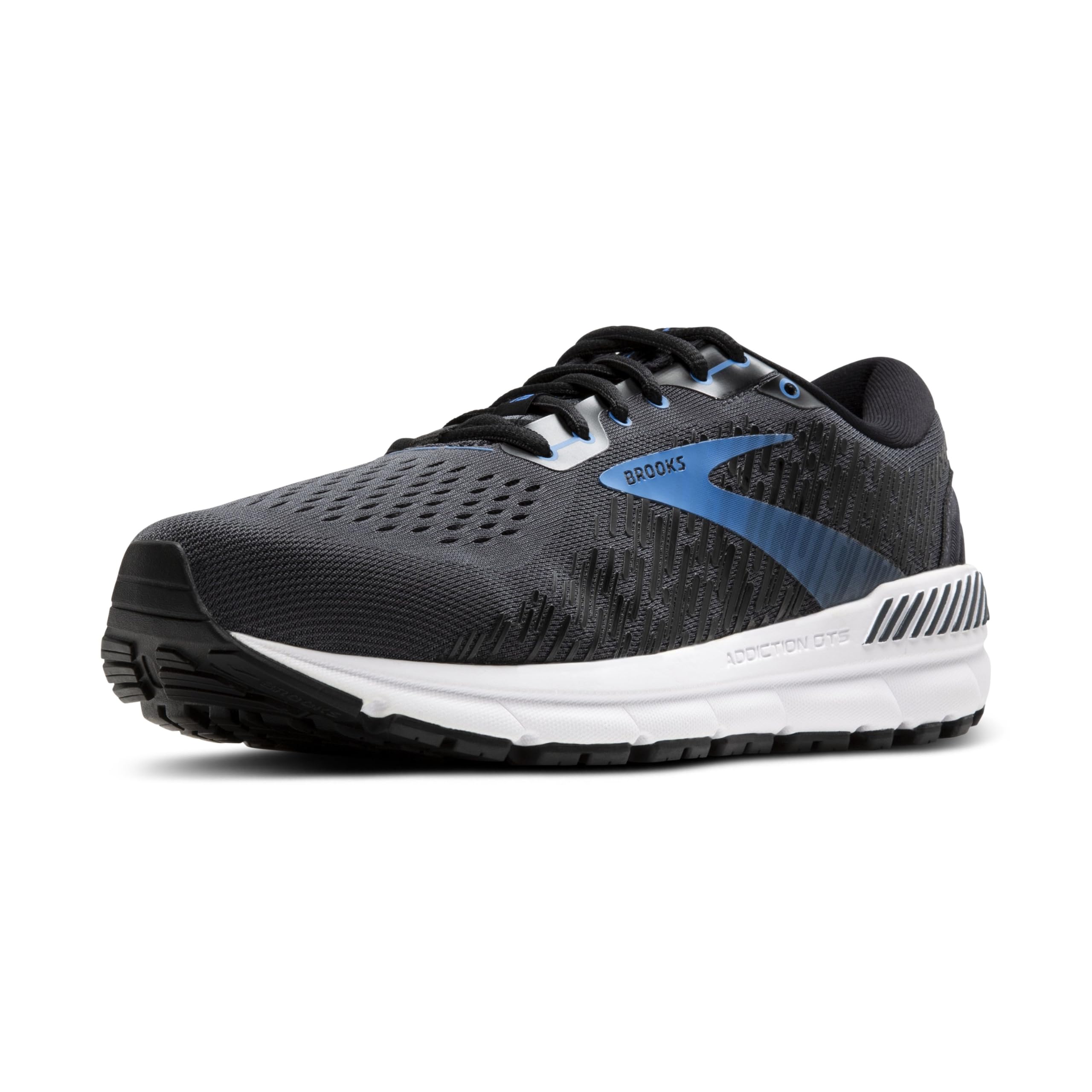
The men’s stability shoe that holds a prescription orthotic locked against your heel.
The Addiction GTS 15 is built for a heavy, wide foot that needs a deep, secure bed. The 4E width gives the toe box plenty of room, and the deep well plus the side foam hold an insert without letting it move. Owners who wear ankle-foot orthotics report it holds the device and heel firmly in place, which is the rare quality that makes it worth the price. Arch support and support overall are what buyers praise most, with comfort a close second.
For a stiff big toe joint, the wide, deep toe well is the key — your toes sit flat with no sideways squeeze, and the firm guide rail keeps the foot from rolling so the toe joint does not take extra force. A longtime Brooks wearer at around 190 pounds found it a balanced blend of cushion and stability for daily miles.
The catch that comes up most is sizing: this shoe runs small, and some buyers needed to go up half a size and into a wide. The toe texture also shows dirt and resists cleaning. Neither one is a deal-breaker, but order with returns in mind and check the size guide before you buy.
The reason it stands out: the deep well and firm heel lock a prescription insert down, and the 4E width leaves real room for toes that need it.
What to know going in: it runs small, and the toe surface picks up grime fast.
Choose it if: you wear an orthotic or AFO and need a secure, wide stability shoe.
Look past it if: you want a light, fast shoe for race day.
8. New Balance Men’s Fresh Foam X More V5 Running Shoe

The cushioning king for men whose toe joint wants a soft landing, not a firm push.
If your big toe flares when your foot slams into the ground, this shoe softens the whole stride. The Fresh Foam X midsole is the thickest, softest cushioning here, and owners describe it as walking on supportive memory foam — plush but not so unstable that you sink. Comfort is the quality buyers praise most, and overall quality sits right behind it. The rocker sole rolls you from heel to toe without the toe joint having to bend hard, which is the whole point for a stiff toe.
The shoe is built for long days as much as fast runs. Men report running 500 miles without pain and logging 20,000 steps a day in them. The wide base gives a neutral runner stability, and the breathable upper keeps the foot from overheating. One owner with a bunion and a stiff joint found it comfortable through a full day on hard floors. Bonus: the plush tongue doesn’t bunch or shift.
Fit is the honest catch: it runs a half size long in some sizes, and wide sizes should order wide rather than size up further. And the lighter colors show dirt fast, so a dark colorway will look cleaner longer. Neither issue touches the cushioning comfort, but know the sizing quirk before you order.
Why it wins: maximum foam with a rocker base gives your toes a soft landing and reduces how hard the joint has to work.
A practical note: this shoe is not water resistant, so a wet run can leave it noisy for a while.
Reach for it if: you want the softest, thickest cushioning for long days on your feet.
Choose another shoe if: you need a firm, responsive racing feel.
9. Brooks Men’s Beast GTS 26 Running Shoe
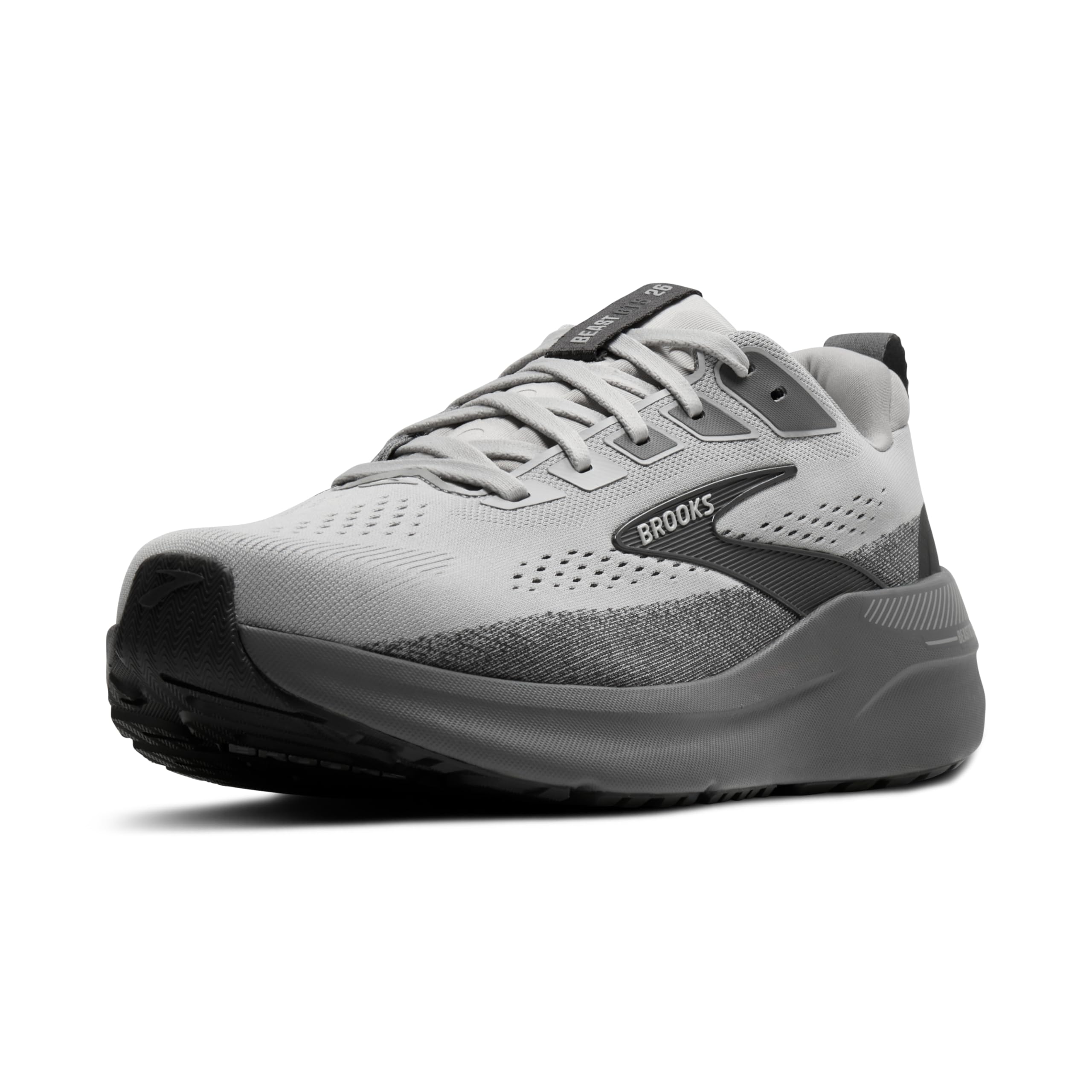
A firm, planted shoe for the heavier runner whose toe joint hates a soft, sinking ride.
The Beast GTS 26 is what you buy when you want the shoe to do the work, not bend under you. The base is wide, the guide rails and heel support hold the foot from rolling, and the insole is firm rather than squishy. Buyers with flat feet and heavy overpronation describe it as stable and supportive, and the quality of the build is what earns the most praise. Compression-molded one-piece soles like this resist folding at the toe, which is exactly the firm resistance a stiff big toe joint needs.
It fits a heavier foot well. Owners around 225 pounds find the flared sole keeps them planted, and the padded collar and tongue add a soft feel without spongy give. The toe bumper and venting round out a build made to last through daily wears. It weighs 1.5 pounds, right in line with the Brooks stability shoes above, so you are not paying a weight penalty for the extra support.
The obvious limits: the foam is firm and not bouncy, so if you are looking for a lively, springy feel, this one will read as heavy. And the tread is softer on newer versions, with a couple of buyers saying it wears faster than older models. Fit also splits — some go true to size, a few need to size up. Those are honest trade-offs for a shoe that keeps a heavy foot lined up.
Built for real support
- Wide, flared sole keeps a heavy foot stable
- Firm insole resists folding at the toe joint
- Padded collar and tongue soften the ride
- One-piece molded sole adds durability
What you give up
- Firm foam won’t feel bouncy
- Tread can wear faster on newer versions
- Some need to size up
A fit for: heavier men with flat feet who need firm stability and a wide platform.
Not for: runners who want a light, soft, springy ride.
Know the Specs
Toe Box Width and Depth
Toe box is the space at the front of the shoe where your toes sit. For a stiff big toe joint, a wide and deep box lets the toes lie flat instead of curling, and stops the shoe pressing on the top of the joint. A removable insole adds depth, which is why shoes like the Orthofeet line build extra room in.
Heel-to-Toe Drop
Drop is the height difference between the heel and toe in millimeters. A 0 mm drop, like the Altra Torin 8 at 30 mm/30 mm, keeps the foot level so the toe joint does not bend as sharply on each step. A higher drop tilts you forward, putting more load through the forefoot.
Stability and Guide Rails
Guide rails are firm pieces on the side of the shoe that keep the foot from rolling inward. Less roll means less force pushing through the big toe on push-off. Stability shoes like the Brooks Adrenaline and Beast use this to keep a heavy or overpronating foot lined up.
Rocker and Forefoot Stiffness
A rocker sole curves up at the toe so your foot rolls forward instead of bending hard at the joint. A stiffer forefoot does the bending for you. Both reduce the range the big toe has to travel, which takes pressure off a limited joint on every step.
Common Questions
What kind of shoe helps a stiff big toe joint?
Should I size up for a wide toe box?
Can I wear my custom orthotics in these shoes?
Does a zero-drop shoe help a big toe that cannot bend?
Which is better for a stiff toe, stability or neutral shoes?
How long should running shoes last before the foam goes flat?
Are orthopedic sneakers as good as regular running shoes for running?
Are these shoes waterproof for rainy runs?
What is the best shoe for a wide foot with a stiff big toe?
The Bottom Line
For most people shopping for the best running shoes for hallux limitus, the ASICS Unisex SUPERBLAST 2 is the winner because its dual-layer FF BLAST PLUS and FF BLAST TURBO foam takes pressure off the toe joint while staying light at 1.44 pounds. If toe room is your absolute priority, the ALTRA Torin 8 gives the most open forefoot with a 0 mm drop. And for a heavy runner who needs a firm, wide, stable base, the Brooks Beast GTS 26 is the one to reach for. The SUPERBLAST 2 also has more owners than the Beast, so it is the safer bet if you are undecided.
How we choose
We do not accept paid placement. Every pick is matched to a real buyer and a real use-case; we do not hands-on test units.
Sources
Specifications: manufacturer listings and product documentation. Review insights: verified customer reviews, as of October 2026. Pricing: not shown on this page (it changes often); check the current price via the retailer link.
As an Amazon Associate, Aappliancez earns from qualifying purchases. This does not affect which products we feature.