Disclosure: Some links in this post are affiliate links. As an Amazon Associate I earn from qualifying purchases, at no extra cost to you. Learn more
Specs are compiled from manufacturer listings and verified buyer reviews and can change over time — please confirm the key details on the product page before buying.
If your toes feel pinched by the second mile, the fix is not a bigger size but a shoe built with room at the front. A wide toe box lets your toes spread flat and push off naturally, and most conventional running shoes squeeze that space away. Below are nine pairs that actually give your forefoot room, sorted by what each one does best. The overall winner, the Altra Lone Peak 9, is the crowd favorite at 4.5+ stars across 1,200+ ratings, and it pairs a famously roomy front with a zero-drop platform (heel and toe sit level to the ground).
This guide is built by comparing the manufacturers’ published specifications and the patterns across verified customer reviews, so you get each pick’s real strengths and trade-offs instead of marketing spin.
Some shoes here have a wide front but a snug midfoot, and that difference decides whether a pair works for you. Read on for the honest breakdown of each. This guide to the best running shoe with wide toe box explains what each pair’s measurements mean for your feet.
Top Picks
How To Choose The Best Running Shoe With Wide Toe Box
The mistake most people make is sizing up a half size to get toe room. That adds length at the heel, not width at the front, and your foot slides forward on downhills. What you want is a shoe whose toe box is shaped wide from the start, with a midfoot that still holds you in place.
Toe box width versus overall width
A roomy toe box is not the same as a wide shoe. Several picks here are built with an anatomical front that lets toes spread while the heel and midfoot stay snug. If your whole foot is wide, check whether the model comes in a wide width at all. If only your toes need space, an anatomical last (the foot-shaped mold the shoe is built on) may be enough.
Drop, stack height, and how they feel
Drop is the height difference between heel and toe. A 0 mm drop (zero drop) sits your heel and forefoot level, which asks your calves and Achilles to do more work — most people need a few weeks to adapt. Stack height is how much foam sits under your foot. A 25 mm stack feels close to the ground and stable; a 35 mm stack feels plusher but taller.
Outsole grip for road versus trail
Trail shoes use sticky rubber compounds and lugged patterns to bite into dirt and wet rock. Road shoes use flatter rubber for smooth pavement. If you split your miles between road and trail, look at a trail model with a multi-surface outsole — several picks here are built for that transition.
Side-by-Side Comparison
| Model | Best For | Drop | Stack Height | Weight | Amazon |
|---|---|---|---|---|---|
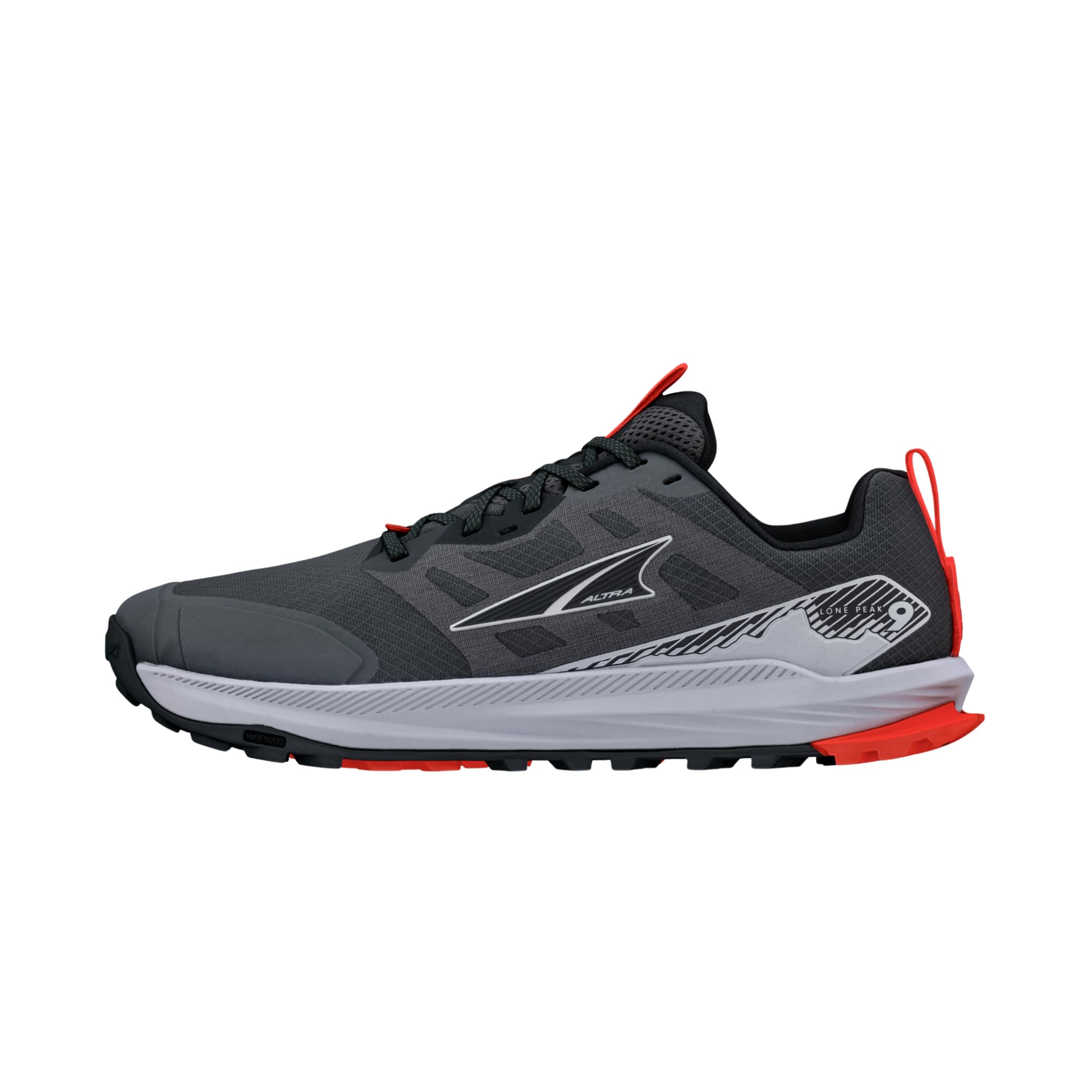
| ALTRA Lone Peak 9★ Best Overall | Trail and hiking | 0 mm | 25 mm | 11.15 oz / 316 g | Amazon |
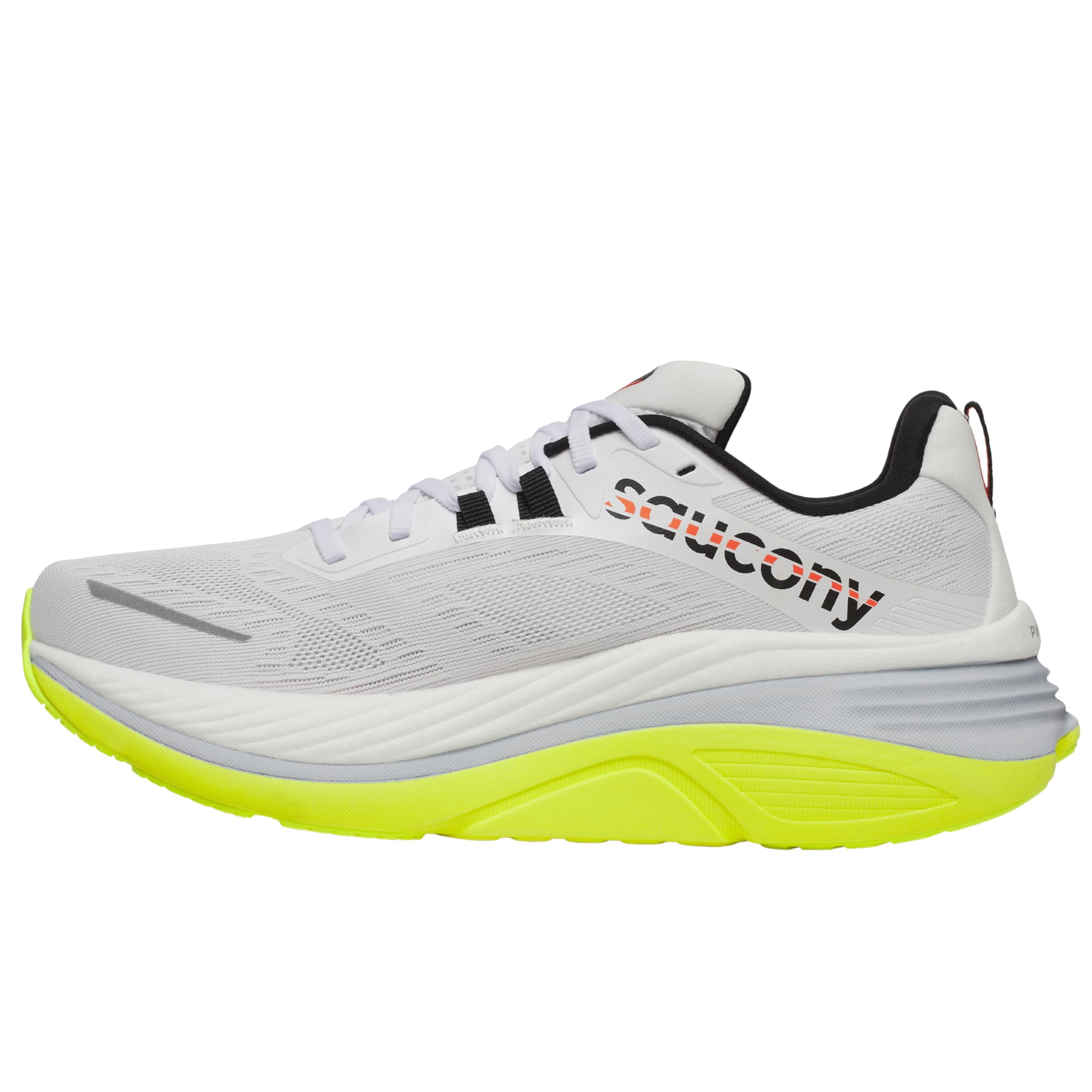
| Saucony Hurricane 24Best Cushioning | Max cushion stability | 6 mm | 38/32 mm | 10.6 oz / 302 g | Amazon |
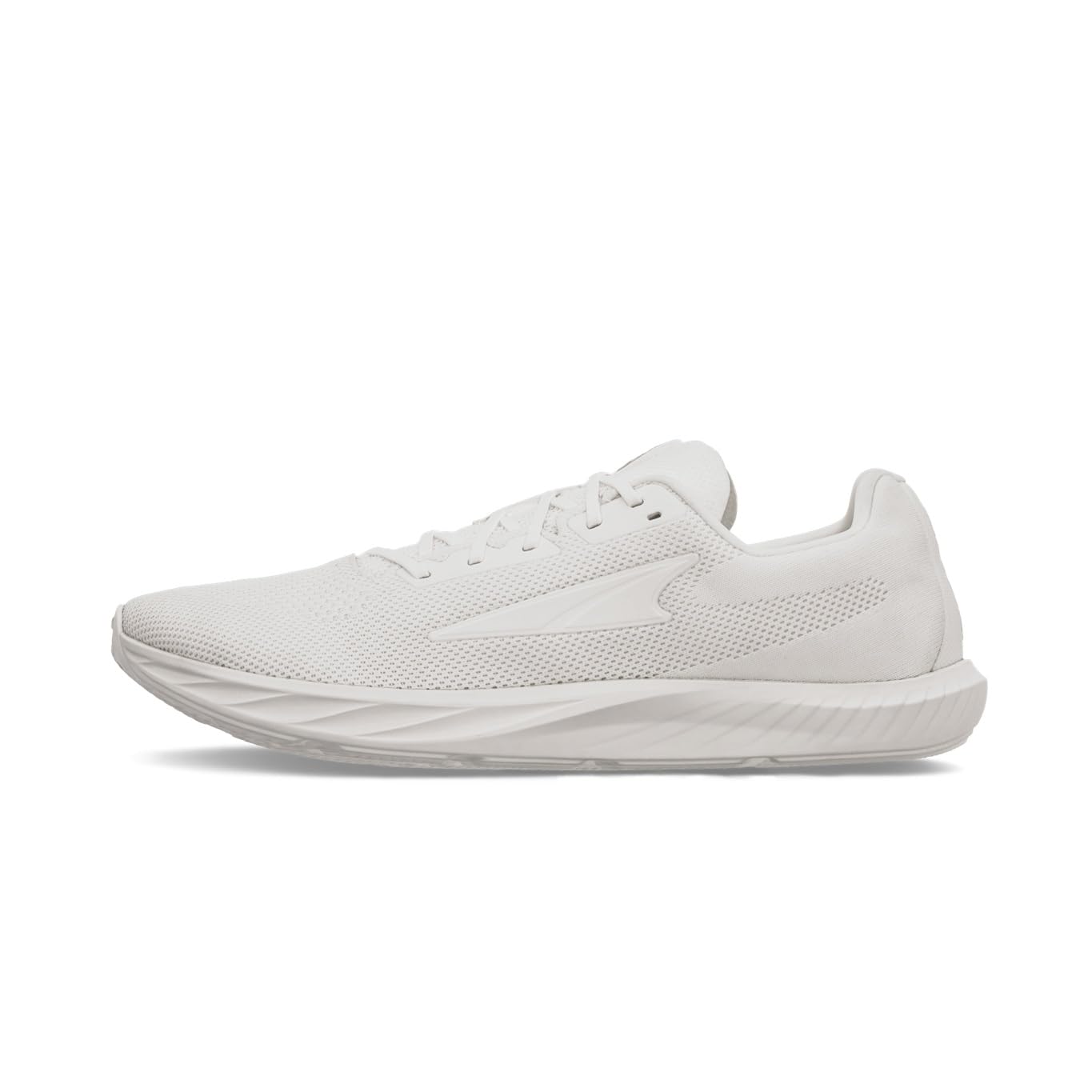
| ALTRA Escalante 4 (Men’s)Best Road Runner | Everyday road runs | 0 mm | 28 mm | 8.5 oz | Amazon |
| ALTRA Escalante 4 (Women’s) | Walking and casual wear | 0 mm | 28 mm | 8.5 oz | Amazon |
| Topo Ultraventure 4 | Long trail runs | 5 mm | 35 x 30 mm | — | Amazon |
| Topo Terraventure 4 | Rocky technical trails | 3 mm | — | — | Amazon |
| Saucony Ride 18 | Daily training | 8 mm | 35/27 mm | 9.1 oz / 259 g | Amazon |
| ALTRA Lone Peak 8 | Hiking and thru-hikes | 0 mm | 25 mm | 10.7 oz / 303 g | Amazon |
| Flux Adapt Runners | Barefoot-style wear | 0 mm | — | — | Amazon |
Detailed Reviews
1. ALTRA Men’s Lone Peak 9 Trail Running Shoe
Our pick — 4.5+★ from 1,000+ verified ratings; the strongest balance of quality and price.
The trail shoe that treats your toes like they own the place.
Altra built this one around its roomiest toe box, and that is the whole reason it takes the top spot. Toes spread flat, push off naturally, and stop rubbing against each other on long miles. The platform sits level — 0 mm drop, heel and toe the same distance from the ground — so your foot lands the way it does barefoot. Stack height is 25 mm, a mid-level cushion that keeps you connected to the dirt without bruising your sole on rocks. There is a Stoneguard insert underfoot (a thin protective plate) that shields you from sharp debris.
The MaxTrac outsole uses a sticky rubber compound built for mixed terrain, and a ripstop mesh upper (a woven, tear-resistant fabric) handles brush and scree. Buyers report the fit is natural from the first wear — one put 60 miles in with zero blisters and no break-in period. That tracks with the pattern: quality and comfort are what people talk about most, and the toe box itself is singled out again and again.
Here is where it gets honest. This is a trail shoe, not a road trainer — the cushion is limited by design, and the zero drop takes some getting used to if you have always run in a raised heel. Traction on wet rock is decent but not the best in this group; the Topo Terraventure 4 below is the stronger pick for slick, technical descents. Durability opinions split, with a minority reporting seams separating early while most say theirs handled high mileage without trouble.
What earns the crown
- Roomiest toe box in the Altra line, with space through the midfoot too
- 0 mm drop and 25 mm stack encourage a natural, low-impact stride
- Stoneguard insert protects against rocks and debris
- MaxTrac outsole grips mud, gravel, and rock
- Breathable ripstop mesh drains and dries fast
Where it asks something of you
- Zero drop needs an adjustment period for heel-strikers
- Cushion is modest — not the pick for long road miles
- Wet-rock grip trails the Topo Terraventure 4
Go for it: Trail runners, hikers, and anyone with bunions or wide forefeet who wants toes free and a level platform.
Think twice: If you need plush cushioning for pavement or want the surest grip on wet rock, a different pick serves you better.
2. Saucony Men’s Hurricane 24 Sneaker
Max stack, max cushion, and a toe box that surprises people who expect stability shoes to run narrow.
The Hurricane 24 stacks two foams: a plush PWRRUN PB layer for bounce and a firmer PWRRUN frame underneath for support. The offset is 6 mm (38/32 mm), so the heel sits 38 mm off the ground and the forefoot 32 mm — a tall, protective ride. The broader base and higher sidewalls come from Saucony’s CenterPath Technology, which cradles your foot and steadies each stride. Weight is 10.6 oz / 302 g, and that is where the honest caveat starts: this is not a light shoe, and the cushioning is not built for fast paces.
What wins people over is the stability that does not intrude. The foam frame acts like a bathtub holding a soft layer, so your foot stays centered without a hard arch post digging in. That matters for flat feet and for anyone who overpronates (rolls inward). One long-time wearer who dropped 160 lb and went from a 13 4E to a 12.5 called it the most comfortable max-stack stability shoe they had found, noting the wide base controls both pronation and supination. Another, a teacher on her feet all day, sized up a half and found her perfect fit.
Fit is the one split decision. Some find it true to size; others say it runs small, so try before you commit if you can. A couple of wearers note the white colorway built in one factory fits wider than the pair made elsewhere — a quiet inconsistency in build, not a flaw in the design. On the toe box specifically, most agree there is real room up front, which is unusual for a stability shoe.
Where the money goes: You are paying for a dual-foam system that returns energy without wobbling, and a wide base that keeps flat feet steady over long miles.
The trade-off: Weight and pace. At 10.6 oz this is a recovery-day or work-day shoe, not a speedwork shoe.
Reach for this if: You want maximum cushion, flat feet that need steadying, and a roomy front all in one.
Look elsewhere if: You are chasing a race-day pace or want a lightweight feel.
3. ALTRA Men’s Escalante 4 Road Running Shoe
The stripped-down road shoe for people who want their toes to spread and the pavement to talk back.
At 8.5 oz, the Escalante 4 is one of the lightest picks here, and that lightness comes from a redesigned rubber midsole built to flex more underfoot. The FootShape fit gives you an anatomical toe box with a secure midfoot, and the 0 mm drop keeps your heel and forefoot level. A knit upper wraps like a sock, with a knit tongue to match. FootPod technology in the outsole follows the natural flex of your foot so the shoe bends where you bend.
Comfort is the headline — the fit holds up for hours. One buyer put 12-hour workdays in them without issues. Another, wearing a 4E-wide foot, found no side-rail pressure over roughly 20 miles, which is rare in a shoe that is not sold in wide widths. The catch with this generation is the heel: one wearer hit hotspots and blisters within a mile on the reduced heel cushioning and two vertical heel seams. A heel-lock lace pattern helped briefly. That is a specific complaint, not a universal one — plenty of people go hundreds of miles happily.
Durability is the aspect to weigh. There is a real cluster of reports saying pairs fell apart inside four months, and that pulls this shoe’s honest ceiling down. Most wearers get good life out of theirs, but if you demand the longest-wearing shoe in this group, the Topo Terraventure 4 below is the more durable trail option. For road miles and everyday wear, the lightness and toe freedom here are hard to argue with.
Why runners keep coming back
- 8.5 oz — light enough for fast training days
- Anatomical toe box gives toes room without a wide-width label
- Altra EGO foam feels responsive on pavement
- Knit upper wraps like a sock with a knit tongue
- FootPod outsole flexes with your foot
What some buyers run into
- Heel cushioning is reduced, and heel seams can rub
- Durability reports are mixed, with a few pairs failing early
- The scratchy mesh upper is not the softest
Pick this if: You want a light zero-drop road shoe and toe space matters more than a plush heel.
Pass if: You need maximum heel cushioning or the longest-wearing build in the lineup.
4. ALTRA Women’s Escalante 4 Road Running Shoe

Same light road platform as the men’s, shaped for a woman’s foot and built for all-day barefoot-style movement.
The women’s Escalante 4 shares the men’s 0 mm drop and 8.5 oz build, with a knit upper and FootShape toe box that lets toes sit naturally. What makes this the walker’s pick is the way the soft, stretchy upper behaves over hours — the room up front means no cramping after a long day on your feet. Owners mention it works for hours of standing without ache, and the stretch removes the need to seek out a wide width for some wearers.
Comfort and fit dominate the feedback here, and the toe box is what people name most. One reviewer noted her toes had lots of room to spread and simply felt great. Another, dealing with arthritis and ball-of-foot pain, found no pain after switching and wore them for hours without break-in. The stretchy knit is a big part of that — it gives where a stiff leather or mesh front would press.
The recurring caution is width in the wrong place. This is a wide toe box, not a wide shoe. More than one wearer with a genuinely wide midfoot found the rest of the shoe too tight, with pressure across the top of the foot and lace issues. If your entire foot runs wide, go into this knowing the front is generous and the body is not. Durability also splits, with a portion of feedback noting early wear.
The everyday case: A zero-drop shoe with a sock-soft upper and a roomy front is a natural for long walks, errands, and standing shifts.
The honest limit: Wide forefoot, standard midfoot — a true wide-foot fit may still pinch across the top of the foot.
Great match for: Women who walk a lot or want a wide-toe road shoe for casual days and light runs.
skip it if: Your whole foot — not just the toes — needs extra width.
5. Topo Athletic Women’s Ultraventure 4 Trail Running Shoe
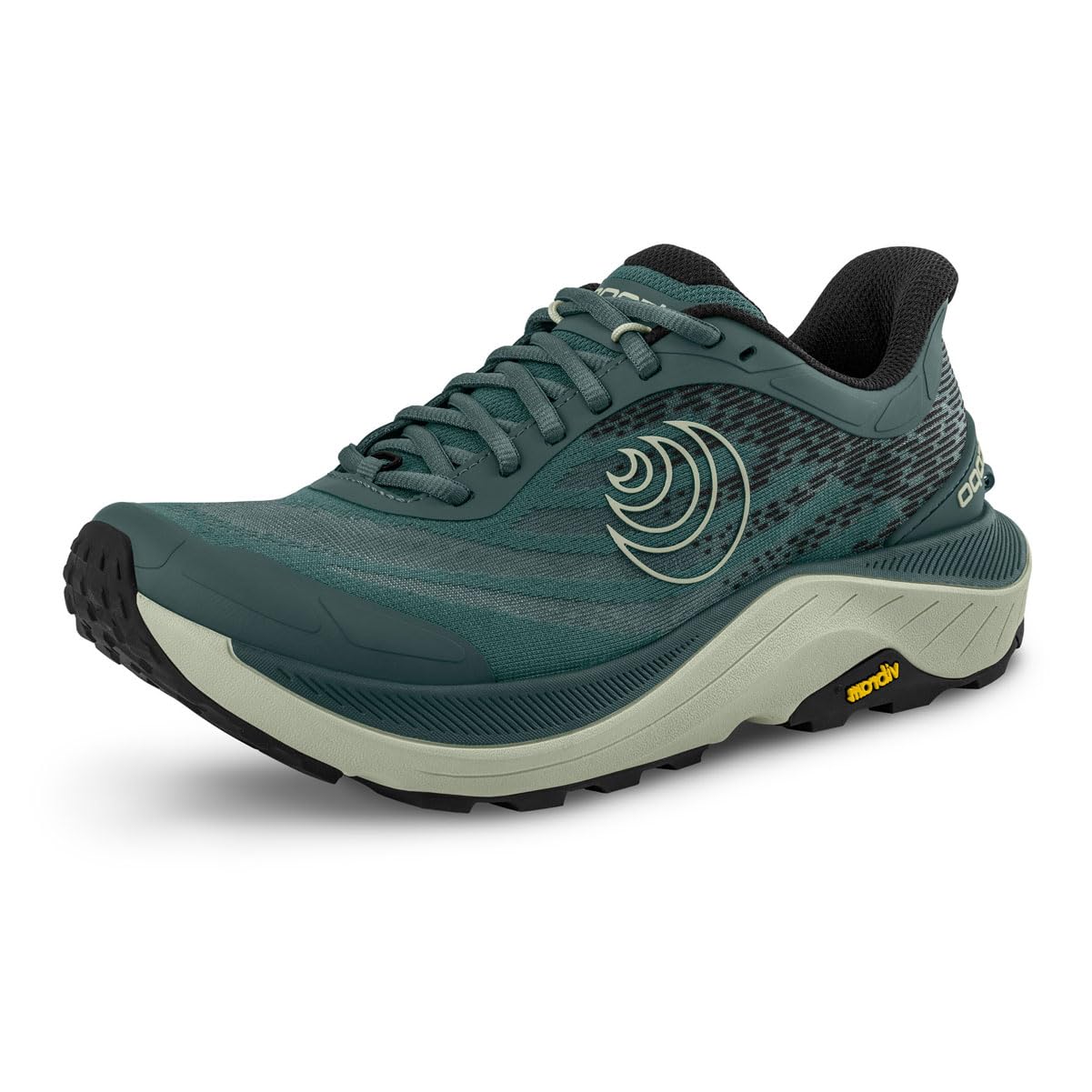
A high-cushion trail runner that keeps its anatomical toe box through the longest days on mild-to-moderate dirt.
Topo’s Ultraventure 4 sits on a 35 x 30 mm ZipFoam platform — a proprietary midsole that Topo says springs back more than standard EVA over the life of the shoe. The Vibram XS Trek EVO outsole transitions easily between trail and road, and the recycled mesh upper has PU print where it needs extra structure. The 5 mm drop is gentler than the 0 mm Altra platform, so it is an easier move for people coming from traditional shoes.
The roomy toe box is the reason this shoe lands here, and it does the job without turning the whole shoe into a boat. One woman who wears an 11 wide found it fit perfectly from the start. Another switched over from Altra after that brand’s toe box stopped working for her, and reported no break-in, no blisters, and a full 32K steps across three weeks with no issues. The wider front also helps with neuromas and plantar-fascia irritation, though cushioning and support come up more often in feedback than toe room alone.
Durability is the honest caveat here, and it is not rare — a meaningful share of feedback reports premature wear. Some describe soles wearing through and side fabric ripping in around three months, others report tearing inside a couple of months. Not every pair does this, and plenty of buyers wear them for years of walking. But if you expect to log serious trail miles, buy with that risk in mind — the Topo Terraventure 4 is the sturdier option from the same brand.
What makes the miles feel short
- 35 x 30 mm ZipFoam platform takes the sting out of long trail days
- Anatomical toe box without an overly wide overall fit
- Vibram XS Trek EVO outsole grips wet rock and handles road transitions
- Recycled mesh upper with PU print in high-wear zones
- 5 mm drop is easier to adapt to than zero drop
What to weigh before buying
- Durability complaints are common enough to count against it
- Some pairs wear through the sole or rip side fabric within months
- No waterproof version offered
The right fit for: Trail runners and hikers who want a cushioned, toe-friendly shoe and do not mind replacing pairs more often.
Better to choose: The Terraventure 4 if longevity on rocky ground is your priority.
6. Topo Athletic Women’s Terraventure 4 Trail Running Shoe

If your trails are all rocks and roots, this is the shoe that lets you forget about them.
The Terraventure 4 carries a flexible ESS rock plate underfoot — a thin shield that stops sharp rocks and roots from bruising you — plus a Vibram outsole and a 3 mm drop. The anatomical toe box lets toes spread, and the upper can be paired with gaiters (sold separately) to keep dirt and twigs out. It is the trail-specific build in this group and reads that way on the ground.
What earns it praise is how it handles terrain. Long-distance walkers have taken it across multi-week routes at 13-18 miles a day with no foot trouble, and hikers report it gets roughly 500 miles per pair, with the front toe rubber sometimes needing a dab of glue near the end. The snug midfoot with a roomy front is the shape most people want here — one buyer describes it as roomy up front and slimmer through the middle. For wide feet specifically, the regular width can fit correctly even when a wide width causes heel slip.
There is one clear caveat: the built-in arch support is aggressive. If you are used to firm arch support, it suits you. If you have never worn any, it can be too much and will feel like pressure rather than help. Separately, one buyer found the downhill treatment too harsh for long descents despite the protection, so if steep hiking is the plan it may not be the ideal match — but for running rocky, rolling trail it holds up.
Why trail runners stick with it: The rock plate and Vibram rubber let you run technical ground without flinching, and the roomy-toe-snug-midfoot shape is genuine — not a marketing phrase.
The catch to check: The arch support is firm; if you have never worn arch-support shoes, try it before making it your only trail pair.
Your shoe if: You run or hike rocky, technical trails and want durable protection with real toe room.
Not your shoe if: You need a soft, neutral arch or are planning steep, long descents.
7. Saucony Men’s Ride 18 Sneaker
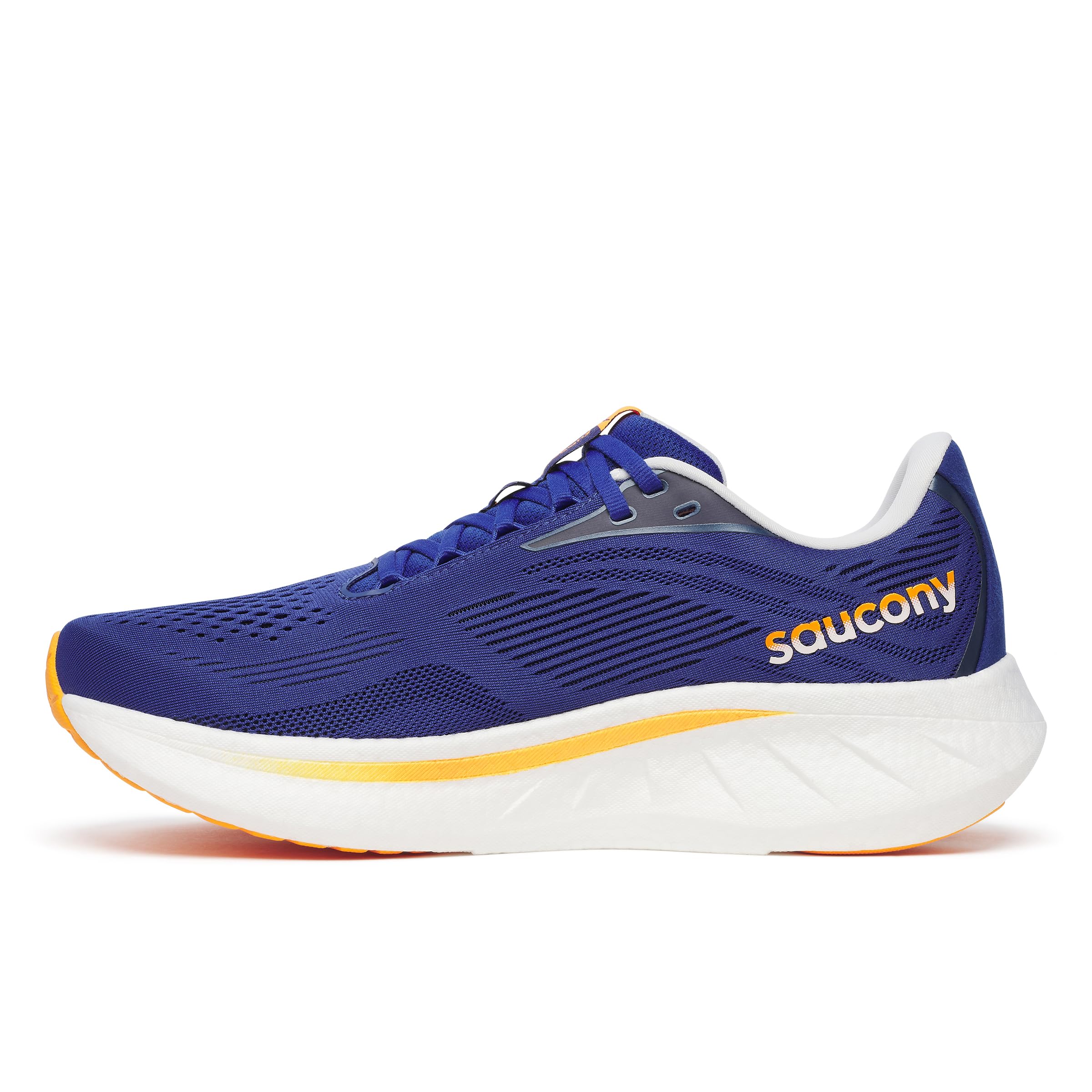
A neutral daily trainer that gets the toe room right without giving up a smooth, protective ride.
The Ride 18 runs on reformulated PWRRUN+ foam — lighter, softer, and more responsive than the previous blend, according to Saucony — with a 8 mm offset (35/27 mm) and a weight of 9.1 oz / 259 g. An engineered mesh upper stretches and breathes, and a padded heel collar softens the fit. It is a neutral shoe, meaning no built-in stability features, so it suits runners whose stride does not need correction.
Where the toe box is concerned, this is the pick for people who want a little room without a distinctly anatomical shoe. One wearer describes decent toe room plus good roll-out and breathability. Another who needed a 9.5 wide found it comfortable from the first step, with no hot spots over daily four-mile pavement walks that a pair of Adidas had not survived two months of. It is not flashy, and that is the appeal: it handles daily miles without asking you to change how you run.
The honest trade-off is cushioning that varies by taste. Some find the ride plush; a portion say their feet feel uncomfortable, which is the split you see across feedback. If you want to try the Ride, order a half size down if you prefer a snugger fit, or your usual size for more room. On durability, foam and rubber hold up well, though a pair that shows early wear can usually be resolved through Saucony’s support line.
What it does well
- PWRRUN+ foam balances softness with a little pop for faster paces
- 9.1 oz keeps it light for a daily trainer
- Engineered mesh upper stretches and breathes
- Neutral ride that does not fight your stride
- Decent toe room for a standard-width shoe
Where it can fall short
- Cushioning comfort is a split experience across wearers
- Neutral only — no stability features for overpronation
- Not a distinctly anatomical toe box, just modestly roomy
Best for: Neutral runners who want one shoe for daily miles and want their toes to have some room to move.
Look elsewhere if: You need stability support or a truly anatomical toe box.
8. ALTRA Women’s Lone Peak 8 Trail Running Shoe

The thru-hiker’s favorite in a women’s build — roomy toes, MaxTrac grip, and a level platform for the long haul.
The Lone Peak 8 pairs a ripstop mesh upper with a MaxTrac outsole and Altra EGO midsole foam. Stack height is 25 mm and drop is 0 mm, so it sits you close to the ground with a level platform. It weighs 10.7 oz / 303 g — a touch lighter than the Lone Peak 9’s 11.15 oz, though on foot the difference is small. TrailClaw lugs sit under your metatarsals for extra bite on loose climbs and descents.
Toes are the star here, and they get a wide front with room through the midfoot — a shape that solved pain-free hiking for one wearer after Merrells had caused discomfort on steep, rocky routes. Others chose it specifically for wide, flat feet and found no break-in needed. Traction on loose dirt and rocky paths holds up, and the shoe stays light even when wet.
The honest limits are worth naming. Cushioning is a split subject — some find it plenty for comfort, others say it needs more underfoot for very long days. And wet rock is not its strength; a muddy 20-mile run held up otherwise, but grip on slick rock and roots is weaker than on dry dirt. A long-service reviewer also had a side panel blow out around 230 miles, which is a durability ceiling to know about before buying.
The wide-toe win: Hikers get genuine toe room and a zero-drop platform that keeps their stride natural over miles of rolling trail.
The real gripe: Wet-rock grip and long-term durability are the two places this shoe asks you to accept a little less.
Hit buy if: You hike or run trail regularly and want a light, wide-toed, level-platform shoe at a friendly tier.
Hold off if: You need extra cushion for very long days or want the surest wet-rock traction.
9. Flux Footwear Adapt Runners
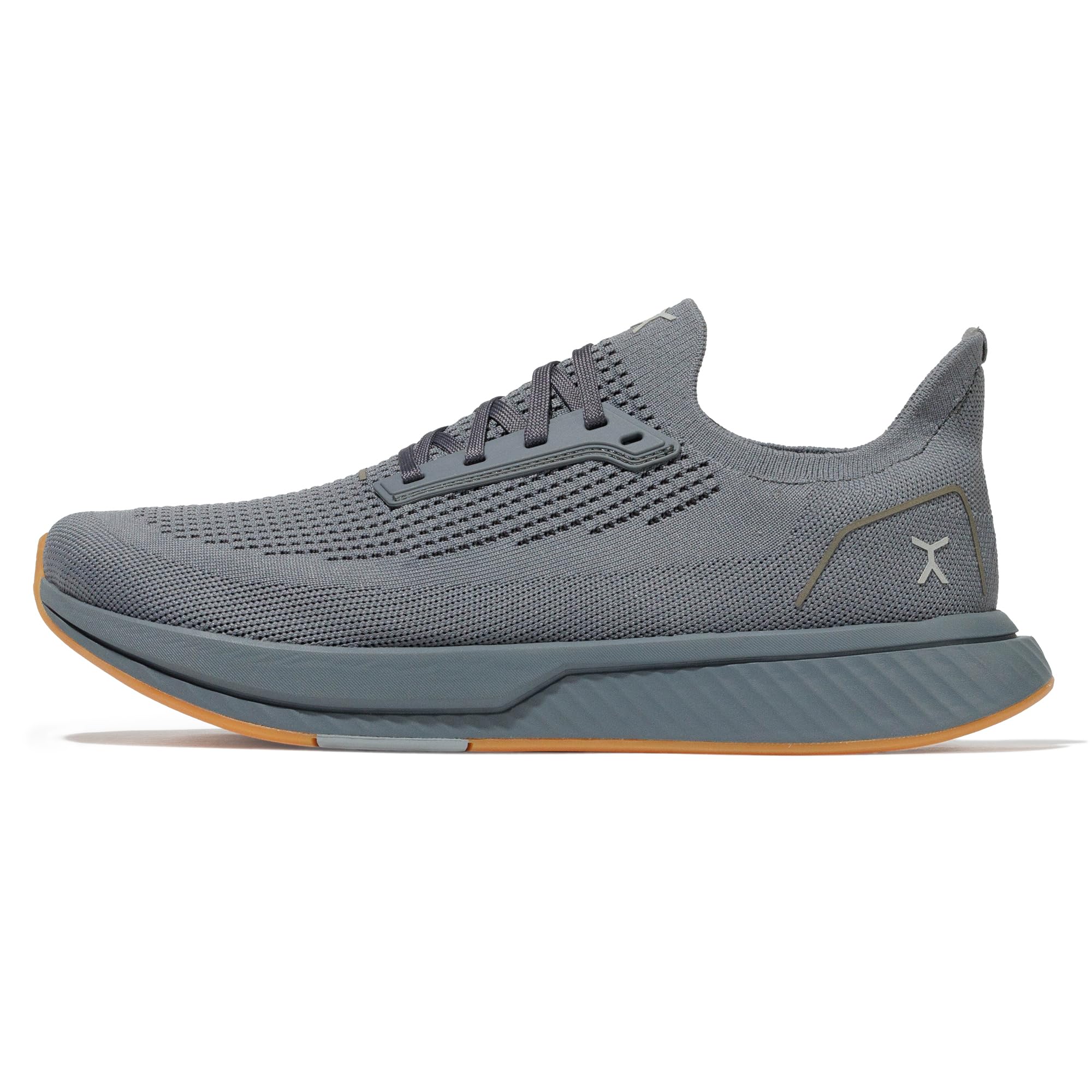
A barefoot-style shoe that looks like a normal sneaker but lets your toes spread all day.
The Adapt Runners pair a wide toe box with a 0 mm drop, so your toes align and spread and your heel and forefoot sit level. Flux shapes the toe box to look like a regular shoe rather than a five-toe silhouette, which is why people wear it to work and on trips. The brand recommends sizing up a half size for most feet, and the shoes are machine washable on a gentle cold cycle — then air dry, since machine drying can shrink them.
Comfort is the strongest thread in feedback, with cushioning and style close behind. People wear these for daily work, 5+ mile theme-park days, and multi-week backpacking trips in Europe. The wide toe box gets the job done without looking like a barefoot shoe, which is the appeal for people who want the function without the look. One buyer went up half a size and found them the best shoes they had worn.
Two practical notes matter more than anything else here. Sizing runs small, and fit varies by colorway — a black pair and a sand pair in the same size have fit differently in length and width. Second, they may not suit high arches, where pressure across the top can build after half an hour. If you have high arches or wide feet across the whole foot, try before committing, because the toe box is the generous part and the rest is not.
Where it shines
- Wide toe box in a normal-looking sneaker shape
- 0 mm drop keeps heel and toe level
- Machine washable on a gentle cold cycle
- Comfortable enough for long days on foot and travel
- Soft cushioning underfoot
What to watch
- Runs small — size up a half size per the brand’s own guide
- Fit varies between colorways
- Not ideal for high arches or very wide midfeet
Consider this: Anyone who wants a barefoot-shaped shoe that passes for everyday footwear.
Try before you buy if: You have high arches, need extra midfoot width, or want a specific colorway to fit like another.
Know the Specs
Drop (Heel-to-Toe Offset)
Drop is the height difference between the heel and the forefoot, measured in millimeters. A 0 mm drop puts your heel and toes level, which some runners find encourages a flatter, more natural landing. An 8 mm drop like the Ride 18’s raises the heel slightly, easing the calf and Achilles. Higher-drop shoes tend to feel easier to adapt to; lower-drop ones often feel more grounded but can strain muscles that are not used to the position.
Stack Height
Stack height is how much material sits under your foot, again in millimeters. The Hurricane 24’s 38/32 mm stack is a tall platform that cushions heavy landings but asks more of your ankles for balance. The Lone Peak 9’s 25 mm stack is closer to the ground, which many trail runners prefer for stability on uneven terrain. Neither is better — it depends on what your runs and your joints want.
Toe Box Width
A wide toe box is shaped to let toes spread sideways and push off naturally. That is different from a wide-width shoe, which adds width all the way around. Some shoes here — the Escalante 4 and the Adapt Runners — give you a wide front with a normal or snug midfoot. Others, like the Topo Terraventure 4, keep room in front and hold the middle and heel closer to the foot.
Outsole Rubber
Each outsole compound is chosen for its ground. Vibram XS Trek EVO on the Ultraventure 4 and the Terraventure 4’s Megagrip rubbers are made for mixed and wet trail, while the Ride 18’s flatter rubber suits pavement. MaxTrac on the Lone Peak models is a sticky, mixed-terrain compound. If you split your miles between road and trail, a multi-surface outsole like these covers both in one shoe.
Common Questions
Will a wide toe box shoe fit someone with a genuinely wide foot?
How much does a zero-drop shoe change the way you run?
Is a trail shoe okay to wear on pavement and at work?
Which of these gives the most cushioning underfoot?
Why does sizing differ so much between wide toe box shoes?
Do these shoes have arch support?
Can a wide toe box shoe help with bunions or toe pain?
How long should I expect a trail shoe to last?
Which pair should I pick for long hot days on my feet?
Are these shoes machine washable?
The Bottom Line
For most people shopping the best running shoe with wide toe box, the running shoe with wide toe box winner is the ALTRA Lone Peak 9 — its roomiest-in-line toe box comes with a 0 mm drop, a 25 mm stack, and a MaxTrac outsole built for mixed terrain. If your priority is cushioning and steadying a flat foot, the Saucony Hurricane 24 puts a 38/32 mm dual-foam platform over a wide base. And for rocky, technical trails where grip and a rock plate matter more than a plusher ride,reach for the Topo Terraventure 4. Every pick here frees your toes, so choose by the ground you run on and how much cushion you want underfoot.
How we choose
We do not accept paid placement. Every pick is matched to a real buyer and a real use-case; we do not hands-on test units.
Sources
Specifications: manufacturer listings and product documentation. Review insights: verified customer reviews, as of October 2026. Pricing: not shown on this page (it changes often); check the current price via the retailer link.
As an Amazon Associate, Aappliancez earns from qualifying purchases. This does not affect which products we feature.