Disclosure: Some links in this post are affiliate links. As an Amazon Associate I earn from qualifying purchases, at no extra cost to you. Learn more
Specs are compiled from manufacturer listings and verified buyer reviews and can change over time — please confirm the key details on the product page before buying.
Staying warm without overheating is the key to winter running. Below you’ll find seven pieces that handle cold miles — fleece-lined tights that hold heat down to the teens, water-resistant jackets that block wind without cooking you, and a few budget layers that punch well above their tier. Every pick here has real cold-weather credentials you can check on the label.
This guide is built by comparing the manufacturers’ published specifications and the patterns across verified customer reviews, so you get each pick’s real strengths and trade-offs instead of marketing spin.
Cold-weather running gear only works if it fits the temperatures you actually run in, so this breakdown focuses on warmth ratings, pocket security, and how each piece layer up together. Read on for the strongest options for running gear for winter.
Top Picks


How To Choose The Best Running Gear for Winter
Cold-weather running gear is built around one job: holding your body heat in without trapping sweat against your skin. Get that balance wrong and you either freeze in the first mile or overheat by the third. Here’s what actually matters when you’re picking pieces for winter miles.
Match the warmth rating to your real temperatures
Most thermal tights and winter jackets list a temperature range they’re designed for. A pair rated for 20-50°F is a solid all-rounder for most of the winter season. Tights rated for colder conditions will feel too warm and loose once you’re moving above freezing, so match the rating to what your local winter actually looks like before you buy.
Fleece lining versus plain compression fabric
Plain compression tights wick sweat and support muscles, but they don’t hold heat on their own. Fleece-lined thermal tights add a brushed inner layer that traps warm air close to your legs. That’s the difference between a pair you can run in at 25°F and a pair that only works as a base layer under shorts. If you regularly run in sub-freezing temps, fleece lining is the feature you want.
Pocket security matters more in winter than summer
Winter running means carrying a phone, keys, and possibly gloves you’ll want to peel off. Zippered pockets keep everything locked in place while you’re pumping your arms. Open pockets or shallow ones let your phone shift and bounce on longer runs, which gets annoying fast when you’re already cold.
Water resistance and wind blocking for real weather
Winter running isn’t just cold — it’s wet, snowy, and windy. A water-resistant outer layer handles light rain and snow without soaking through. Windproof fabric stops the chill that cuts through a regular jacket once you’re moving. Look for both if your winters bring mixed precipitation rather than just dry cold.
Side-by-Side Comparison
| Model | Best For | Type | Warmth / Rating | Key Feature | Amazon |
|---|---|---|---|---|---|
| Under Armour Men’s HeatGear Armour Leggings★ Best Overall | Versatile base layer for workouts and layering | Compression leggings | Cold and hot months | Mesh ventilation panels, 28″ inseam | Amazon |
| baleaf Men’s Thermal Running Tights Fleece LeggingsBest Value | Budget-friendly cold-weather base tight | Fleece-lined thermal tights | 15-40°F | Drawstring waistband, zippered cuff | Amazon |
| Pudolla Men’s Thermal Running Tights | Tall runners wanting pocket capacity | Water-resistant fleece tights | ~32°F and below | 3 zipper pockets, ankle zippers | Amazon |
| baleaf Women’s Running Jacket Winter Puffer Coat | Women’s lightweight layer for runs and travel | Water-resistant puffer jacket | Light rain and snow | Elastic cuffs, full zipper, zipped pockets | Amazon |
| baleaf Mens Running Tights Thermal Cycling Pants | Versatile winter running and cycling | Fleece-lined thermal tights | Down to 20°F | Adjustable waistband, ankle zippers | Amazon |
| ROCKBROS Men’s Winter Cycling Jacket | Cycling and running in cold, windy conditions | Windproof thermal jacket | 40°F and below with a shirt | Thumb-hole cuffs, rear pockets | Amazon |
| baleaf Men’s Cycling Winter Jacket Softshell | Full winter riding and running protection | Windproof softshell jacket | 20-50°F | 2+2 zipper pockets, reflective elements | Amazon |
Detailed Reviews
1. Under Armour Men’s HeatGear Armour Leggings
Our pick — over 4.5★ from 25,500+ verified ratings; the strongest balance of quality and price.
A sweat-wicking compression base layer for gym sessions and layering under winter tights
Under Armour’s HeatGear Armour leggings are the most-praised piece in this entire list — the crowd favorite at 4.6 stars across 25,000+ ratings. What wins people over is the fit: it comes up more than any other trait in the feedback, and owners describe a true second-skin feel that never rides up or bunches while they move. The fabric is 84% polyester and 16% elastane, which is the blend behind that stretch-and-recover behavior.
Here’s the catch worth knowing: HeatGear is a hot-weather fabric tuned to wick sweat and dry fast, not a fleece-lined winter tight. Owners running at 40°F and below use it as a base layer under shorts or over a thermal tight rather than as their only leg covering. In 20°F weather, this pair alone won’t cut it — you need something fleece-lined underneath.
Two dozen buyers report: “They stay in place and don’t bunch up while moving.” Jujitsu training, football, hot yoga, weightlifting, and casual soccer are all in the review pages — this is a true multi-sport piece, not a single-use running tight. The 28″ inseam (the length from crotch to ankle) and drop-in Strength Pocket on the right side are category-standard touches that make it work as an everyday layer too.
What earns it the top spot
- HeatGear fabric wicks sweat and dries quickly so you stay dry mid-run
- 84% polyester / 16% elastane blend holds shape through multiple washes
- Mesh ventilation panels target the areas that need airflow most
- 28″ inseam and Strength Pocket work for training and casual wear alike
Where it comes up short
- Sizing runs small, so order a size up from your usual
- No fleece lining — this is a base layer, not a standalone winter tight
- Seams can loosen quickly on some units, especially in the ankle area
Reach for this if: you want one versatile base layer that handles gym sessions, hot yoga, and cold-weather runs under a fleece tight.
Look elsewhere if: you need a single piece that keeps you warm at 20°F without any layering.
2. baleaf Men’s Thermal Running Tights
Fleece-lined thermal tights rated 15-40°F for under
The baleaf thermal tights hold warmth from 40°F all the way down to 15°F, and owners confirm they run in freezing conditions without complaint. The drawstring waistband and zippered cuffs are the two features that justify this as a running tight rather than a generic fleece legging — you can cinch the waist snug and zip the ankle closed so nothing rides up mid-stride.
Fleece lining is the headline here, and it works. Bumping up a size, as another owner advises, gives you the room the fleece needs to lay flat.
What you give up versus a premium tight is color choice and the ability to wear it above 55°F — the fleece gets too warm. Below 20°F it may need a shell layer over the top. For a first fleece-lined running tight, this is a strong entry point without the premium sticker.
The fleece story: A single fleece layer inside the leg keeps heat trapped where you need it — especially valuable on longer runs where wind chill builds.
Realistic temperature ceiling: Push these above 60°F and they get swampy. Winter running is the target, and that’s where they excel.
You’ll get on with these: winter runners who want a fleece-lined tight without paying premium pricing and don’t mind a simple color lineup.
Skip if: you regularly split your runs between 20°F and 55°F — the fleece is too warm for the warmer end of that range.
3. Pudolla Men’s Thermal Running Tights

Water-resistant fleece tights with three zippered pockets and a long 30″ inseam cut for taller runners
Three zippered pockets — one rear, two side — plus water-resistant fleece fabric set the Pudolla tights apart from the pair above. The cut is long: an owner at 6’0″, 185 lbs found the size L too big and moved down to M. That same long cut makes this a sharp fit for taller runners who usually find tights balloon around the calf. Owners mention the weight is right for the warmth: “Lightweight but warm. Nice pockets. I have 4 pairs all in different colors.”
The compression fit is snug on purpose — it aids circulation on cold runs and sits flat under shorts. If you’re between sizes, size up. One owner at 28″ waist in a small found it snug at the range’s edge, while another at 6’0″, 185 lbs found even a large too roomy — so measure against the size chart rather than guessing.
The main complaint is length: the ankle hem runs slightly past the top of a shoe, and shorter runners will need to pull the slack up. For tall, slim builds, that’s an asset. For shorter legs, it’s a small inconvenience worth tolerating for the pocket layout.
Pocket practicality: A rear zipper pocket plus two side zippers lets you carry phone, keys, and gels without wearing a belt or vest.
The cut caveat: Designed for tall athletes. Runners under 5’8″ will notice the ankle hem sitting low on the shoe.
Best for: tall runners who want to pocket their phone, a key, and a gel without adding a running belt.
Not the pick if: you’re shorter than average and prefer a hem that stops above the shoe collar.
4. baleaf Women’s Running Jacket

A SORONA puffer front with stretch sleeves and back panels for unrestricted arm swing
The baleaf women’s running jacket pairs a SORONA thermal puffer front (a plant-based insulation that traps heat) with stretchy sleeves and back, so you get warmth across the chest without the rigid feel that usually comes with a padded coat. Quality is the trait owners single out most across the reviews, followed by fit — a combination that pushes the star rating to 4.7, the highest in this guide.
The full front zipper blocks cold from your neck down, and elastic cuffs stop wind from creeping up your sleeves. Zipped pockets fit a phone and wallet. One caveat that comes up in a handful of reviews is a thumb hole placed too low on the sleeve, which makes the sleeve feel tight when you use it. If you don’t rely on thumb holes, this isn’t a concern — and at least one owner reports their particular color didn’t have a thumb hole at all.
The rear hem runs longer than the front, which covers your lower back when you’re bent over on a run or a bike. True to size is the consensus, so order your usual.
Why it earns your attention
- SORONA thermal puffer front holds warmth with less filling and weight
- Stretchy sleeves and back panels keep you flexible on the run
- Water-resistant fabric handles light rain and snow without soaking through
- Elastic cuffs and a full front zip block wind from entering
The fine print
- Thumb hole placement can feel tight on the sleeve if you rely on it
- Thin sleeves mean warmth concentrates in the torso rather than the arms
- Not designed for sustained heavy rainfall
Pick this up if: you want a winter running jacket that works just as well for hiking, cycling, or travel in a carry-on.
Consider an alternative if: you need thickly insulated arms or full rain protection for long wet runs.
5. baleaf Mens Running Tights
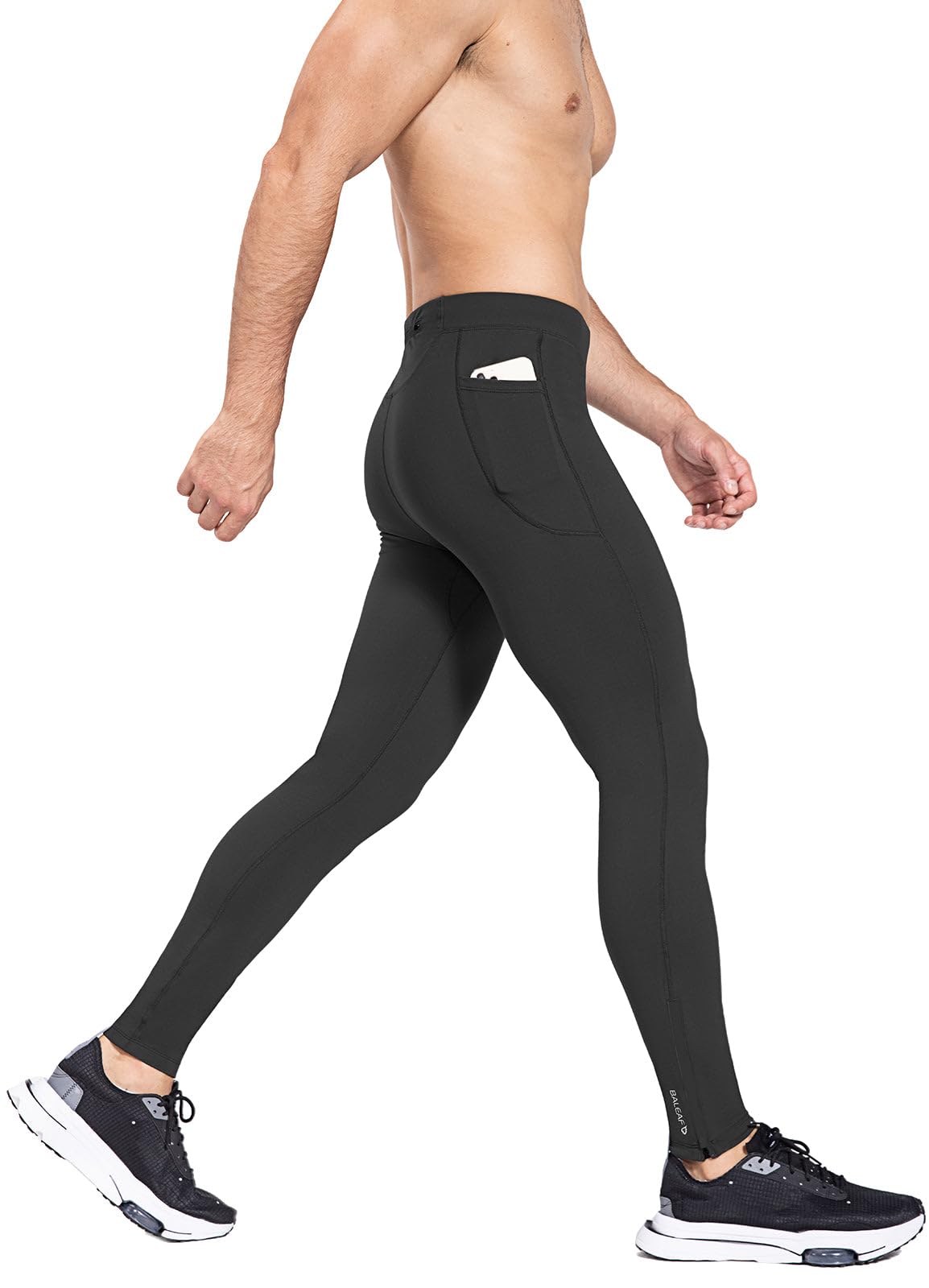
Fleece-lined tights rated to 20°F with two deep side pockets plus a rear zip pocket
The baleaf fleece cycling and running tights are the workhorse of this list — an adjustable drawstring waistband, back zipper pocket, and zippered ankles cover what most winter runners need in a single pair. Owners confirm these hold up in 20°F conditions solo and around 20°F with layers over the top. That’s narrower cold-weather proof than the baleaf fleece tights above, which claim into the teens.
What makes this pair stand out is pocket depth: two deep side pockets plus a back zip pocket swallow a phone, wallet, and keys without a belt. The fleece lining is smooth rather than scratchy, and the form-fitting cut sits flush under shorts or a jacket without bulk. Ankle zippers are backed with fabric on this model, which keeps them from catching leg hair — a common snag point on cheaper tights.
Be careful with sizing. Multiple reviews note that the waistband fit runs noticeably small compared to the size chart, and one owner at a normal build found even a large tight. Order one size up if you’re deciding between two.
Pocket depth matters: Deep side pockets and a rear zipper hold everything without a belt, a real advantage on runs where bouncing gear gets in the way.
Sizing honesty: The listed waist range doesn’t match the real fit. Even owners with slim builds report needing to size up — measure yourself and compare carefully.
The pick for you if: you want one fleece pair that handles mid-20s runs, cycling commutes, and cold hikes, with enough pockets to leave the running belt at home.
Look past this one though if: you’re at the upper edge of a size band or want something rated well below 20°F.
6. ROCKBROS Men’s Winter Cycling Jacket

A windproof softshell for 30-45°F rides, with a left-side zipper pull that’s fiddly in gloves
The ROCKBROS jacket is the piece owners reach for when temperatures hit the 30s and wind is cutting. Quality is what stands out most in the feedback, and the wind resistance holds up to gusty rides — an owner at 5’10”, 196 lbs used an XL over layers on 30-45°F rides with no complaints about overheating. Plenty of large pockets handle gloves, phone, and a snack.
Two honest caveats. First, the zipper sits on the wearer’s left — the opposite side from most men’s jackets — and the pull is small enough to be fiddly with gloves on.
For mixed winter precipitation, the windproof shell held up well — one rider reported staying dry through winter sleet and 40mph gusts. If you can look past the left-handed zipper and order to your chest measurement, this is a strong winter cycling or running jacket at the mid-tier.
Wind defense: The shell blocks gusts that cut through lighter running jackets, and the long rear hem covers your back when you’re bent over the bars.
Fit quirk to plan around: Size to your chest, not your waist. The torso runs narrow relative to the shoulders, and layering changes the fit.
Great for you if: you ride or run through gusty, mixed-precipitation winters and want one jacket that blocks both wind and light rain.
Look at alternatives if: fiddly zippers frustrate you, or you prefer a right-side zipper pull.
7. baleaf Men’s Cycling Winter Jacket
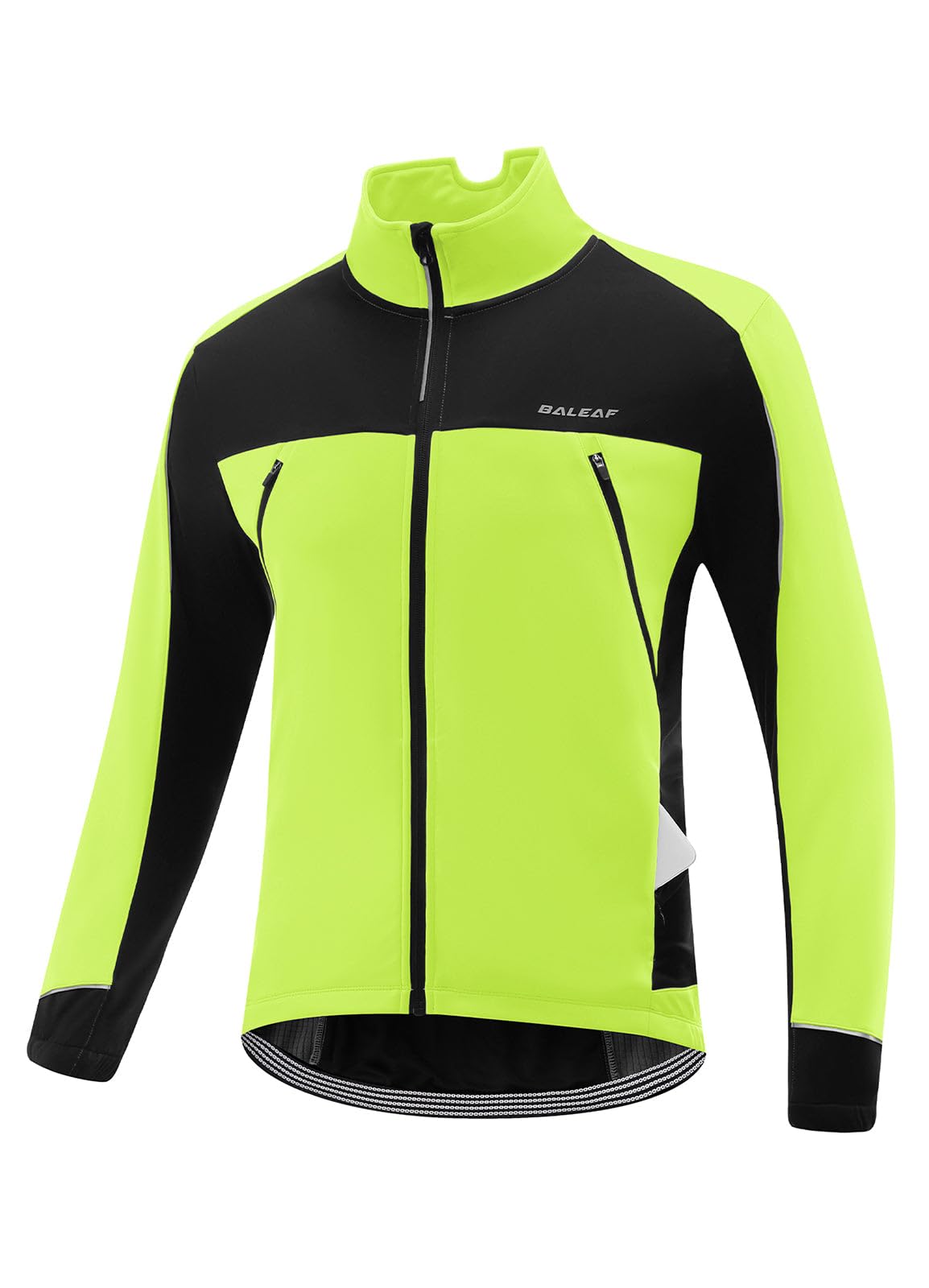
A 20-50°F windproof softshell with 2+2 zipper pockets and reflective elements for cycling and running
The baleaf softshell jacket is rated for 20-50°F, which covers most of the winter season without becoming a one-trick piece. Reflective elements run across the fabric for low-light visibility, and the 2+2 zipper pocket layout — two exterior plus two interior — handles gloves, a neck gaiter, and cold-weather extras. Quality and warmth lead the positive feedback, and customers note it handles 40-degree cycling comfortably while still working with just a thermal shirt underneath at 50°F.
Unlike the ROCKBROS jacket above, this one is designed specifically as a softshell (a stretchy, wind-resistant fabric), which means the whole piece is wind-resistant rather than just the front. That’s a meaningful difference if you’re facing crosswinds or downhill descents on a ride. The 2+2 pocket config (two hand pockets plus two chest pockets) is also the most generous storage in this guide for a jacket.
The chief trade-off is that a softshell will eventually soak through in sustained heavy rain — it handles wind and light precipitation, but it isn’t a hardshell. If your winters are mostly dry cold with occasional flurries, this is the pick.
What buyers keep coming back for
- 20-50°F rating covers most of the winter season
- Reflective elements boost visibility on low-light runs and rides
- 2+2 zipper pockets store gloves, gaiter, and phone
- Softshell construction blocks wind across the whole jacket, not just the front
Where it draws the line
- Not a hardshell — sustained rain will get through
- Sizing runs to US sizes, so check the chart before ordering
- Rated down to 20°F, so it needs a fleece base layer below that
Your winter running jacket if: you want one piece that works equally well for cycling and running across the whole cold season, with the pockets to hold everything you carry.
Think twice if: your winters bring days of steady rain — that calls for a fully waterproof shell instead.
Know the Specs
Warmth Rating (°F range)
Most winter tights and jackets list a temperature range they’re engineered for — a pair rated 20-50°F trades warmth for breathability across the middle of the winter season, while a pair rated to 15°F is built for the coldest runs. Match the rating to the temperatures you actually train in. Above the rating’s upper bound, fleece gets clammy; below the lower bound, you’ll want a base layer underneath.
Fleece vs. Compression
Compression fabric hugs the leg and supports muscle but holds almost no heat on its own. Fleece lining adds a brushed inner face that traps warm air between the fabric and your skin. If you’re deciding between the two, compression works as a base layer under shorts or a fleece tight, while fleece is the direct-contact layer for cold days. Some tights — like the baleaf winter cycling pair — combine both: a fleece inner with a compression outer cut.
Pocket Security
Zippered pockets keep phones, keys, and gels locked in place while you’re moving. Deep side pockets plus a rear zip pocket is the ideal setup for most runners — enough capacity that you can skip the running belt entirely. Shallow pockets that bounce are among the most common annoyances in winter tights, so prioritize zippers over open slip pockets.
Water Resistance vs. Waterproof
Water-resistant fabric beads water and sheds light rain or snow but will wet through under sustained heavy rain. Waterproof fabric has a sealed construction that blocks all liquid water. For winter running, water-resistant is usually the balance — you get breathability plus light rain protection without the heavy, non-breathing feel of a full waterproof shell.
Common Questions
What temperature are fleece-lined running tights good for?
Should I size up in winter running tights?
Can I run in compression leggings in winter?
What makes a winter running jacket windproof?
Are zippered pockets worth it on running tights?
What’s the difference between water-resistant and waterproof running gear?
How do I layer for running in sub-zero temperatures?
Is a thermal fleece tight too warm for runs in the 40s?
How should winter running tights fit?
Do I need a special jacket for winter cycling versus winter running?
The Bottom Line
The strongest pick among the running gear for winter here is the Under Armour Men’s HeatGear Armour Leggings — a versatile base layer backed by an enormous body of positive feedback and a 4.6-star average. If you want fleece-lined cold-weather coverage, the baleaf Mens Running Tights Thermal Cycling Pants handle 20°F runs with deep pockets, and the baleaf Men’s Cycling Winter Jacket Softshell rounds out the top layer with a 20-50°F rating and reflective visibility. Layer all three for the coldest days: HeatGear base, fleece tights, softshell on top.
How we choose
We do not accept paid placement. Every pick is matched to a real buyer and a real use-case; we do not hands-on test units.
Sources
Specifications: manufacturer listings and product documentation. Review insights: verified customer reviews, as of October 2026. Pricing: not shown on this page (it changes often); check the current price via the retailer link.
As an Amazon Associate, Aappliancez earns from qualifying purchases. This does not affect which products we feature.