Disclosure: Some links in this post are affiliate links. As an Amazon Associate I earn from qualifying purchases, at no extra cost to you. Learn more
Specs are compiled from manufacturer listings and verified buyer reviews and can change over time — please confirm the key details on the product page before buying.
A leaking vent pipe is one of the few home problems that punishes you twice: the drip stains the ceiling, and the fix usually means getting back on the roof in bad weather. The short answer is that a flexible boot sized to your pipe diameter is what stops the water, and the material it is made from decides how many seasons it survives.
This guide is built by comparing the manufacturers’ published specifications and the patterns across verified customer reviews, so you get each pick’s real strengths and trade-offs instead of marketing spin.
Below you will find five boots that cover everything from a full replacement on a corrugated metal panel to a quick repair over a torn collar. Every pick here is matched to a real pipe size and a real roof type, which is what separates a permanent seal from a temporary patch on any roof vent pipe flashing.
Top Picks
How To Choose The Best Roof Vent Pipe Flashing
The single mistake that causes most leaks after a new install is ordering by the pipe’s nominal size instead of its outside diameter. A vent stack labelled as a nominal size can measure a very different number across the outside of the wall. Measure the outside of the pipe with a tape before you order anything.
Match the boot to your pipe’s outside diameter
Each boot lists a range it will accept. A #3 boot generally covers a wide spread of pipe sizes because the rubber cone is designed to be cut down. The cone carries cut lines marked in both inches and millimeters on some models, which lets you trim to an exact fit instead of guessing. Trim a little at a time — once you cut past your measurement, the boot is ruined.
Silicone versus EPDM rubber
Silicone holds up over a very wide temperature spread, which matters near a chimney or a wood stove flue where heat climbs high. EPDM rubber is the familiar black boot material and works fine for ordinary plumbing vents that never see serious heat. If your pipe carries hot exhaust, silicone is the safer call. If it carries room-temperature air from a drain, EPDM does the job.
Look at your roof panels and your pitch
A flexible aluminum base bends to follow the raised ribs of a corrugated metal panel, which keeps the flange flat against the roof instead of bridging over a gap. On roofs with deep corrugation, the maker advises stepping up a boot size to keep the same pipe fitting. On steep pitches, a square base holds its footing better than a round one. Those two notes come straight from the sizing sheets and they save a second trip up the ladder.
Side-by-Side Comparison
| Model | Best For | Pipe Range | Material | Weight | Amazon |
|---|---|---|---|---|---|
| Oatey Master Flash 14052★ Best Overall | All-around vent and flue sealing | 0.25″ – 5.75″ | Aluminum with EPDM | 6.72 ounces | Amazon |
| VIVIDA #3 Red BootTop Heat Range | High-heat metal roof vents | 1/4″ – 5″ | Silicone rubber | 14 ounces | Amazon |
| Flashers FS3 Silicone | Long-term metal roof installs | 1/4″ – 5″ | Silicone rubber | 5.9 ounces | Amazon |
| ACNOYEL 2-Piece Kit | Doing two vents at once | 1/4″ – 5-3/4″ | EPDM | 1.7 pounds | Amazon |
| Perma-Boot 312-4 | Fixing a torn boot, no shingles pulled | Fits 4″ PVC | Plastic | — | Amazon |
Detailed Reviews
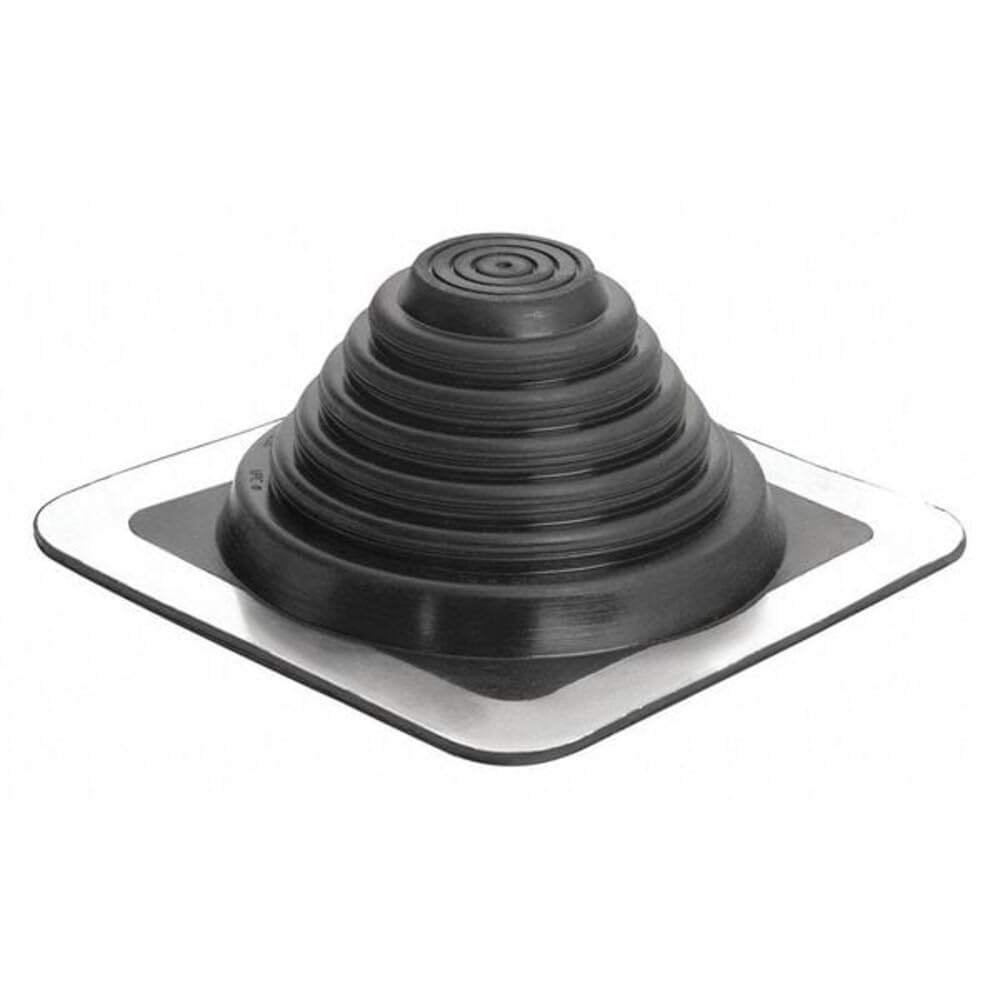
1. Oatey Master Flash Closed to 5-3/4 In. Roof Pipe Flashing
Our pick — 4.5+★ from 400+ verified ratings; the strongest balance of quality and price.
The widest pipe range here, wrapped around a boot that keeps its shape while you work.
This one takes pipes from 0.25 inches up to 5.75 inches across the outside — a spread no other pick in this lineup covers. That means a single size can seal a narrow vent and a fat flue without you ordering two boxes. The 8-inch by 8-inch aluminum base carries an EPDM rubber collar, and the base holds its form so the flange sits flat against the deck instead of curling while you drive screws.
Water is what this boot is built around. Buyers report sealing a flat-roof vent pipe flange on a bed of Henry’s Ultimate sealant and over GRK mounting screws, then watching heavy rain hit the next day with zero leaks come through. The rubber stretches around the pipe and tightens down as it sets, and the metric and standard sizes are printed on the boot so you know where to cut. One buyer cut a TV antenna mast mount through it and called the result a roughly ten-minute watertight install.
The honest trade-off is the rubber itself. EPDM is the dependable everyday boot material, but it is not the high-heat silicone used on the picks below, so a wood stove flue running at serious temperature is not this boot’s job. It is the right boot for a plumbing vent, a conduit pass-through, or an antenna mast.
Where it earns the top spot
- Covers 0.25″ to 5.75″ pipe outside diameter with one size
- Aluminum base holds its shape so the flange seats flat
- Cut lines printed in both metric and standard sizes
- Pliable rubber that stretches and seals around the pipe
What to weigh before ordering
- EPDM rather than silicone, so it is not the call for a hot flue
- Listed under a single part number with no screws in the box
Reach for this: the broadest pipe range in this roundup, and the safest default when you are sealing an ordinary plumbing vent or a conduit.
Hold off: your pipe carries wood stove or chimney heat where silicone is the better material.
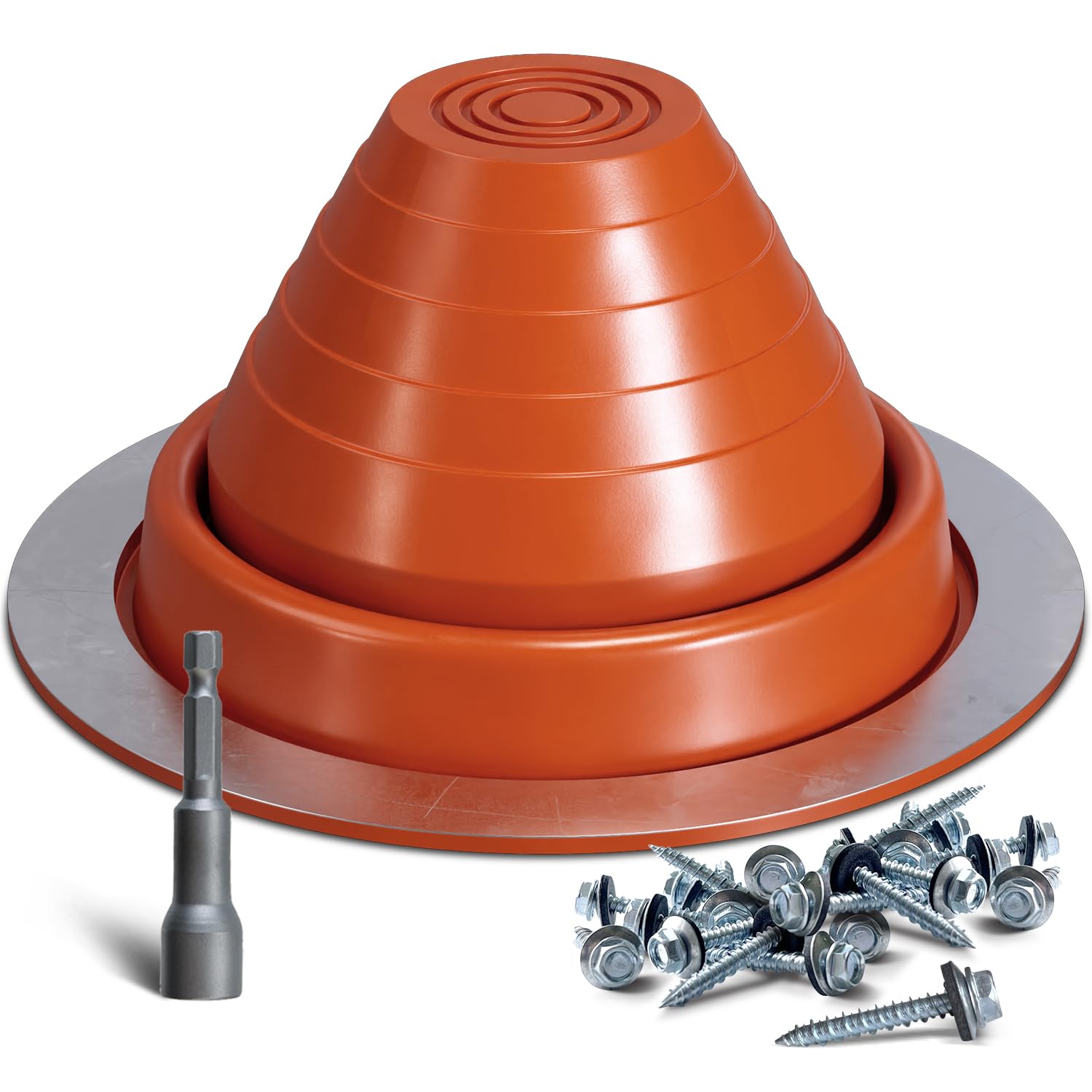
2. VIVIDA #3 Metal Roof Vent Boot
A silicone boot that arrives with the screws and the socket, so nothing stops the job at the ladder.
The number that defines this boot is its temperature ceiling: silicone rated from -165.2°F up to 446°F. That is the range where a wood stove flue or a hot exhaust vent lives, and it is why this boot suits a chimney pass-through where an EPDM boot would be the wrong tool. The collar takes pipes from 1/4 inch to 5 inches outside diameter, and the cone cuts down with ordinary scissors.
Buyers cut one down for a 4-inch flue vent and found the rubber trim cleanly with good scissors and the included screws pull the collar snug for a seal against the wall thimble. The package ships with 18 roofing screws and an 8mm hex bit socket, so you are not hunting for fasteners mid-install. The 14-ounce weight sits on the heavy side of this group against the 5.9 ounces of the Flashers boot below, and that extra mass reads as a thicker molded cone in the hand.
The recurring gripe is the silicone wall itself — it is easy to tear if you rush the trim or over-tighten the screws. Cut slowly and stop the driver before the head sinks into the rubber. One buyer also noted the deep-corrugation caveat printed right on the listing: step up a boot size when the panel ribs run past 1.5 inches, and switch to a square base past a 10/12 pitch.
What wins people over: the heat rating is the headline — silicone from -165.2°F to 446°F covers a flue that would cook an ordinary rubber boot, and the included screw kit removes the last excuse to delay the repair.
Buy it for: a metal roof over a hot vent or a wood stove, where the silicone ceiling is doing real work.
Think twice: the collar tears if you force the cut, so slow hands matter more than strength here.
3. Flashers #3 Silicone Round Metal Roof Pipe Flashing

At 5.9 ounces this is the lightest boot in the lineup, and it has the longest real-world track record.
Here is where the weight gap becomes useful: this silicone boot weighs 5.9 ounces against the 14 ounces of the VIVIDA above, so the cone sits slimmer and more pliable between your fingers. That thinner silicone shapes itself over metal roof ribs instead of fighting them. The temperature rating reads -100°F to +450°F for continuous service, which is the widest working band on this list, and the maker states that the silicone will not crack or harden as it absorbs expansion, contraction, and vibration.
Owners mention a roof boot that stayed put for three years on the roof and was still easy to install when it went on. One buyer set a #7 version of this same silicone line over a 6-inch double-wall chimney on a metal roof and saw a leak-free result after a month of the pipe running at 400°F. The rubber cone carries cut lines in inches and millimeters, so trimming to your pipe’s outside diameter takes scissors or tin snips and nothing more. It is manufactured in the USA, which matters if your project needs documented domestic sourcing.
The mixed notes land on size and value rather than how it works. Some buyers find the base narrow for a steep 8/12 pitch, and the boot arrives on its own with no screws or sealant in the box — you supply both. The catch: you supply the screws and sealant yourself.
Why the silicone crowd favors it
- -100°F to +450°F continuous rating covers a hot flue and a cold winter
- Silicone stays flexible under UV, heat cycling, and roof vibration
- Marked cut lines in inches and millimeters for a clean trim
- Light at 5.9 ounces, so it molds over corrugation easily
What it does not bring
- No screws or sealant in the package
- Narrow base is a poor match for a very steep pitch
The standout: the widest temperature band of any boot here, in the lightest housing, with a U.S. build behind it.
Not the one: your pitch runs steep and you want a wide base to anchor against it.
4. ACNOYEL #3 Metal Roof Vents Flashing Kit, 2 Pieces
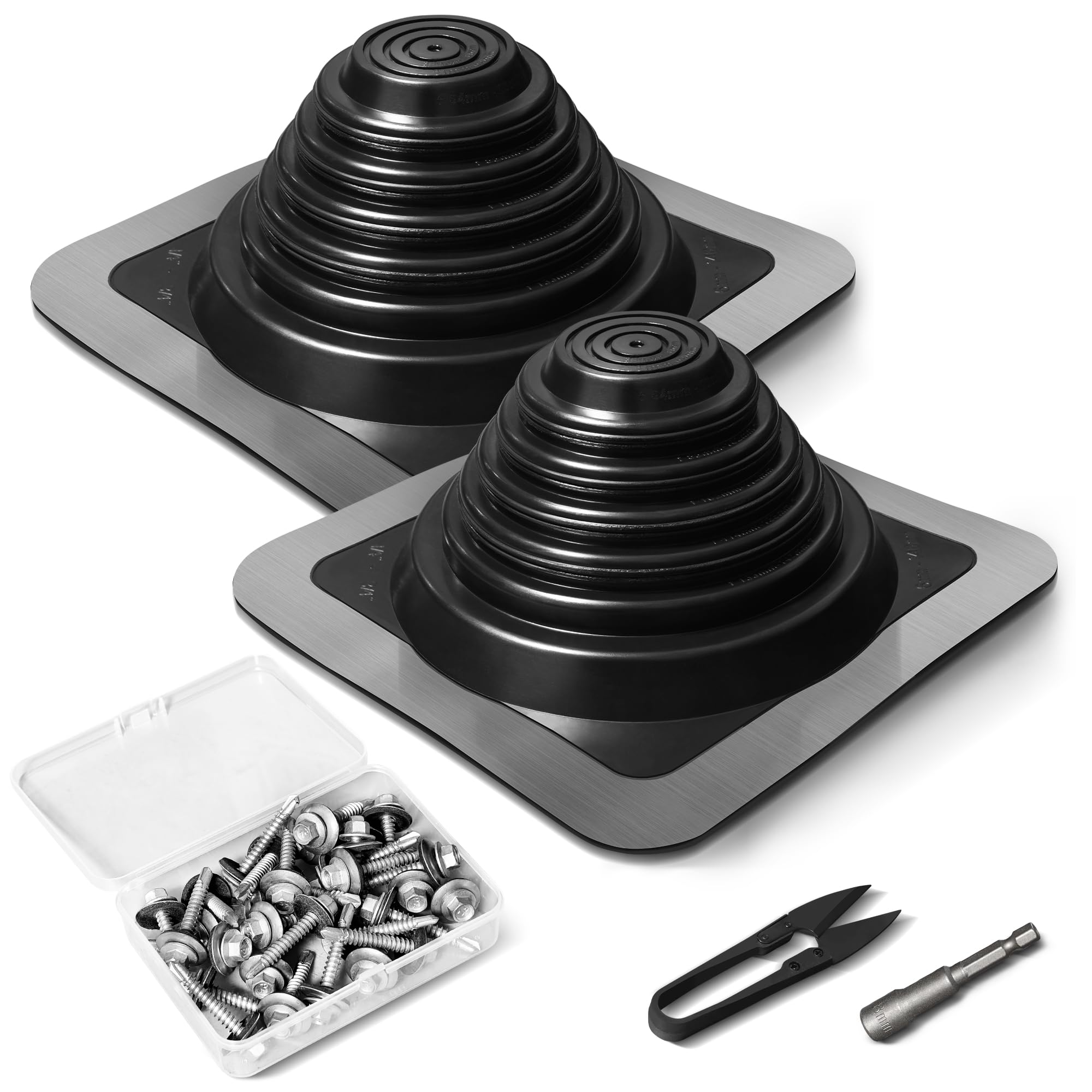
Two boots, thirty screws, a hex socket and a pair of scissors in one box — a full kit for two vents.
If you have more than one pipe to seal, this kit is the arithmetic winner. You get two EPDM-and-aluminum boots, and the sleeve takes pipes from 1/4 inch to 5-3/4 inches outside diameter. The square base bends to sit flat against corrugated panel styles.
The tools are the surprise. Along with 30 roof screws and an 8mm hex bit socket, the box includes scissors for cutting the sleeve down to size, so the job needs no extra trip for a blade or a driver bit. What wins people over is the quality read for the money — it works just like the name brands and feels of similar quality. One buyer had installed a single boot with zero issues and said it cut and screwed down like the others.
The 1.7-pound package weight is two boots and hardware, not one floppy collar, so it is not the pick for a single-pipe job. And the recurring note is on fit: choose your sleeve size by the actual outside diameter of the pipe, because the range is wide and a loose fit is the one thing that turns this into a callback.
The practical read: two boots plus screws, a socket and scissors means one order finishes two vent penetrations, and the EPDM handles the -65°F to 250°F swing of a standard roof vent without drama.
Pick it when: you are sealing two pipes and want everything in one box on a single ladder trip.
Skip it for: one narrow vent where a single collar is all you need.
5. Perma-Boot 82873 4-Inch Roof Vent Pipe Boot Repair
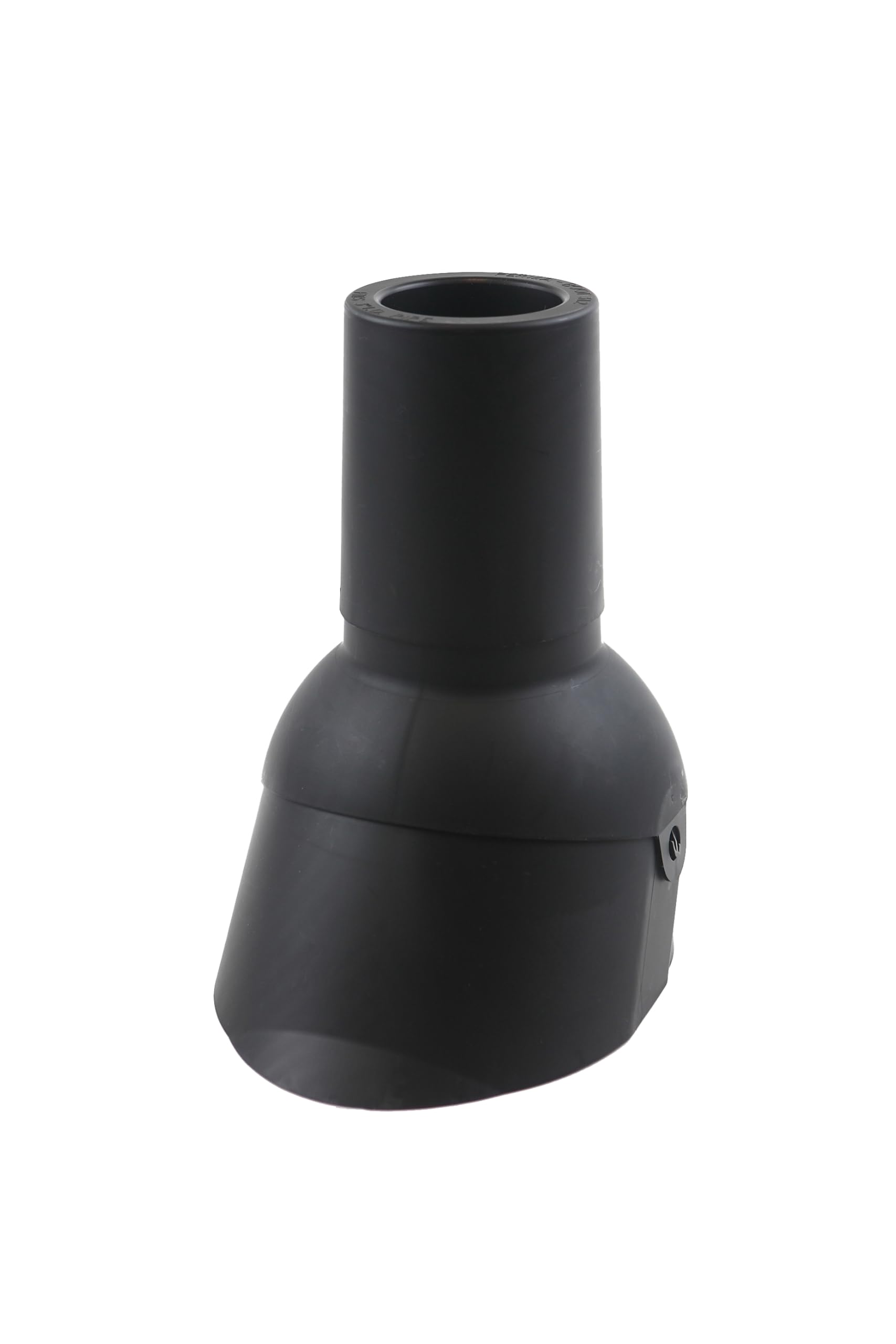
The fix for a boot that already split — it slides over the old collar without a shingle coming up.
Every other pick here installs a fresh boot where shingles get lifted or panels get prepped. This one assumes the damage is already done and works around it. The Perma-Boot slides down over an existing roof vent boot to stop the leak that starts where the collar cracks, sized for a 4-inch PVC pipe. It is built for roof pitches from 3/12 to 12/12, so it holds its footing across the slope range you find on most residential roofs.
Ease of installation is what wins people over — it is the one point that comes up most in owner feedback. The kit uses a cap that snaps down over the top to lock the boot onto the vent pipe, and the black finish covers an older white pipe in the process. It carries a lifetime-of-the-shingle warranty and is made in the USA.
Two things to know before you buy. The cap belongs to the kit and the boot will not lock down without it, so confirm it is in the box on arrival. And a small number of buyers find the collar runs a touch short — one pipe was roughly two inches too tall to sit under it, and cast iron is far harder to shorten than PVC.
Why it beats tearing up shingles
- Slides over the existing boot, so no shingle removal
- Fits roof pitches from 3/12 to 12/12
- Snap-on cap locks the boot to the vent pipe
- Lifetime-of-the-shingle warranty, built in the USA
The fine print
- Without the cap in the box, it will not secure
- A vent pipe that sits unusually tall may need trimming first
Made for you if: the old boot is cracked and you want the leak stopped without a shingle job.
Look elsewhere if: the pipe is too tall for any collar, in which case you need the replacement under it.
Know the Specs
Pipe Outside Diameter
This is the measurement across the outside of the pipe, not the pipe’s listed size. Every boot here lists a range it accepts, such as 1/4 inch to 5 inches outside diameter. Measure yours with a tape around the outside wall and match it to that range. Get this right and the collar pulls tight around the pipe. Get it wrong and you get a loose seal or a boot that will not slip over the pipe at all.
Silicone Versus EPDM
Silicone takes heat far better than EPDM rubber. The Flashers boot is rated for continuous service from -100°F to +450°F, and the VIVIDA boot is rated from -165.2°F to 446°F. The EPDM boots on this list, the Oatey and the ACNOYEL kit, are the right call for a pipe carrying normal-temperature air. If your pipe carries hot exhaust, the silicone rating is the deciding number.
Common Questions
How do I size a roof vent pipe boot to my pipe?
Is silicone better than EPDM for a roof pipe boot?
Can I install a roof vent boot without lifting the shingles?
What roof pitch does a vent boot work on?
Will a vent boot fit a corrugated metal roof?
Do the boots come with screws and sealant?
Can I reuse a vent boot that has already cracked?
How tight should the screws be on a pipe flashing?
Will a vent boot work on a chimney or a wood stove flue?
Does the repair boot work on a cast iron vent pipe?
The Bottom Line
For most roofs, the roof vent pipe flashing that does the most work is the Oatey Master Flash, because it covers the widest pipe range here at 0.25 inches to 5.75 inches outside diameter. If your pipe carries heat, the Flashers FS3 silicone boot is the one to reach for, since its -100°F to +450°F rating is the broadest on this list. And when the old collar is already split, the Perma-Boot fixes it over the shingles in minutes.
Measure your pipe’s outside diameter before you order anything. That one number decides whether the boot seals or leaks, and it is why the Oatey spans so many sizes while a snug silicone collar needs a careful trim. Match the material to the pipe’s temperature, and the repair you make this weekend is the last one that vent needs.
How we choose
We do not accept paid placement. Every pick is matched to a real buyer and a real use-case; we do not hands-on test units.
Sources
Specifications: manufacturer listings and product documentation. Review insights: verified customer reviews, as of October 2026. Pricing: not shown on this page (it changes often); check the current price via the retailer link.
As an Amazon Associate, Aappliancez earns from qualifying purchases. This does not affect which products we feature.