Disclosure: Some links in this post are affiliate links. As an Amazon Associate I earn from qualifying purchases, at no extra cost to you. Learn more
Specs are compiled from manufacturer listings and verified buyer reviews and can change over time — please confirm the key details on the product page before buying.
If you’re managing blood sugar, rice is usually the first thing you’re told to cut. Hearts of palm, konjac yam, and cauliflower all mimic rice closely enough to carry a curry, soak up a sauce, or sit under a stir-fry, while keeping carbs low. This guide breaks down five rice substitutes for diabetics, ranked by carbs per serving and how each one holds up on the plate.
This guide is built by comparing the manufacturers’ published specifications and the patterns across verified customer reviews, so you get each pick’s real strengths and trade-offs instead of marketing spin.
Some swaps nail the texture but taste faintly of cabbage; others cook in a minute but run soft. Below you’ll find the numbers, the honest catches, and the everyday meals each option actually suits — so the right rice substitute for diabetics lands in your cart, not just in a list.
Top Picks

How To Choose The Best Rice Substitute for Diabetics
Pick the wrong swap and the carbs climb anyway, or the texture turns to mush under sauce. Three things decide whether a rice substitute works for you: what it’s made from, how many carbs land on your plate per serving, and whether it holds its shape once you pour sauce over it.
Read the base ingredient first
Hearts of palm is a vegetable stalk, so it carries fiber and a mild flavor. Konjac comes from the konjac yam and is almost entirely water and fiber, which is why it has so few carbs. Cauliflower is a cruciferous vegetable with its own faint sweetness. The base decides the texture and how the swap behaves in a hot pan.
Check carbs per serving, not per package
A six-pack can look like a lot of food until you see that each pouch is one serving. Palmini lists 20 calories and 4g of carbs per serving, while Natural Heaven runs about 70 calories per serving with 5g of carbs per container. A cup of cooked white rice runs about 45g of carbs, so the gap is roughly tenfold.
Match texture to your dish
Palm rice holds a grain-like bite, so it works in casseroles and fried rice. Konjac rice is springy and sauce-hungry, best under a curry or chili. Cauliflower rice is the softest of the three and shines in bowls where it can soak up flavor without competing.
Decide on prep time
If you want dinner on the table in one minute of microwave time, a shelf-stable hearts of palm or cauliflower pouch wins. Konjac needs a rinse and a drain, which takes a few extra minutes but removes the storage liquid that some people find off-putting.
Side-by-Side Comparison
| Model | Best For | Base Ingredient | Carbs Per Serving | Pack Size | Amazon |
|---|---|---|---|---|---|
| Palmini Rice★ Best Overall | Everyday rice texture | Hearts of palm | 4g | 6 x 12 oz pouches | Amazon |
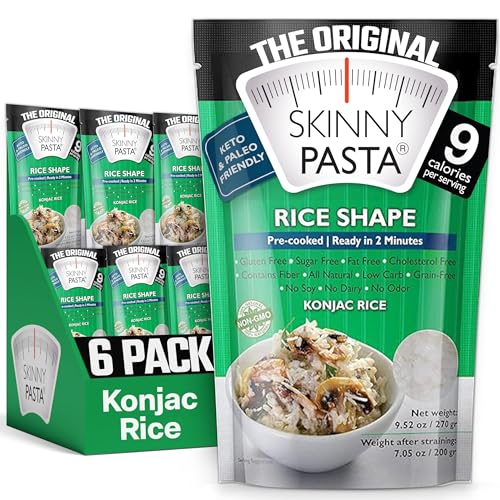
| Skinny Pasta Konjac RiceBest Value | Sauce-forward meals | Konjac | — | 6 pack, 57.12 oz | Amazon |
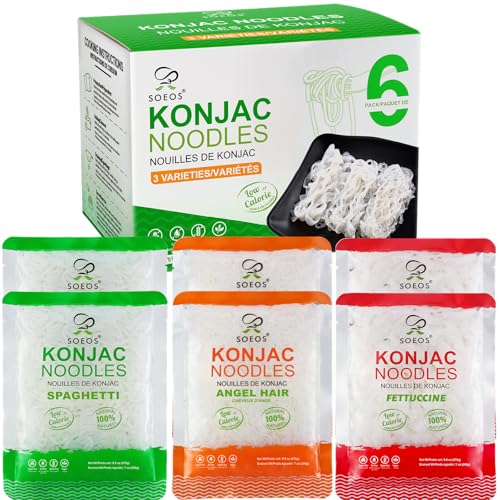
| Soeos Konjac Noodles | Asian noodle dishes | Konjac | — | 6 x 9.5 oz, 3 shapes | Amazon |
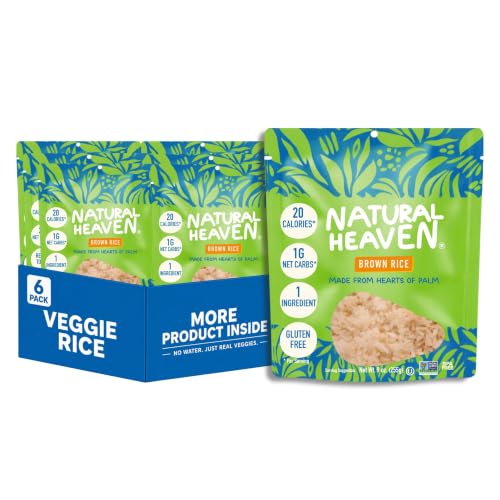
| Natural Heaven Brown Rice | One-minute side dishes | Hearts of palm | 5g per container | 6 x 9 oz | Amazon |
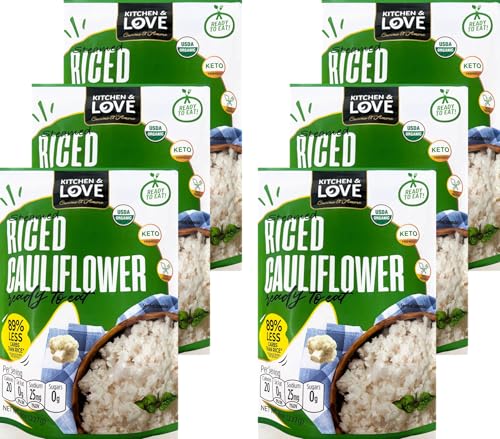
| Kitchen & Love Riced Cauliflower | Travel and desk lunches | Cauliflower | — | 6 x 8 oz | Amazon |
Detailed Reviews
1. Palmini Rice
Our pick — 4.0+★ from 600+ verified ratings; the strongest balance of quality and price.
The hearts of palm rice that keeps its grain-like bite under heavy sauce
If you want a bowl that looks and chews like rice, this is the one that gets closest. Palmini builds its rice from hearts of palm — the tender core of a palm stalk — and packs 20 calories with 4g of carbs per serving. For a diabetic plate, that is the headline number: you get the bulk and mouthfeel of a rice portion without the starch load.
What wins people over is the texture. It keeps a distinct, slightly larger bite than a normal rice kernel, so it stands up to chili, taco filling, and butter chicken instead of dissolving. One word of caution from the review pages: the flavor reads a little like pickled cabbage out of the pouch, and a quick rinse plus a minute in a warm pan with sauce handles that neatly. The same review summed it up as “Tastes more like pickled cabbage than rice, but I still liked it.”
On the practical side, a pack of six 12-ounce pouches weighs 4.5 pounds total, so the shelf footprint is modest for how many meals it covers. That is meaningfully heavier per serving than a konjac six-pack, which is largely water. If your priority is a rice-shaped base you can build a real dinner on, that extra density is exactly what you want.
Where It Earns Its Spot
- 20 calories and 4g of carbs per serving fit a carb-counted plate
- Holds a grain-like bite that survives chili, tacos, and curries
- Kosher, vegan, gluten free, and Non-GMO
- Rinses and reheats in about a minute
What To Expect
- Mild pickled-cabbage edge straight from the pouch until you rinse it
- Denser and chewier than a plain rice kernel, so texture purists may notice
- Six pouches is a real commitment if you only cook for one
Land it here: shoppers who miss the act of spooning rice under a saucy main and want the closest chew-alike of the bunch.
Think twice if: you want a swap with zero flavor of its own — this one asks for a rinse and a little seasoning.
2. Skinny Pasta Konjac Rice
The neutral, odor-free konjac rice built to disappear under whatever you pour on it
Konjac rice earns its keep by being invisible — it brings no flavor of its own, so your sauce does all the talking. This six-pack runs 57.12 ounces total, and it’s the pick for anyone whose curry, chili, or ragu is the star of the plate. Rinse, microwave about a minute, drain, and it’s ready.
The thing that stands out most across the reviews is the taste, and right behind it, the fact that it doesn’t smell. That matters because shirataki — the Japanese name for konjac noodles and rice — has a reputation for a fishy storage odor, and buyers here note it arrives clean. As one review put it plainly, “Perfect rice substitute except for the price.”
Here’s the honest catch: the texture divides people. Konjac has a springy, slightly rubbery chew, and a few reviewers found it firmer than they wanted. One buyer also reported receiving the noodle shape instead of the rice grain. If you’re new to konjac, expect a texture unlike any grain and give it a fair first bowl before you judge.
The real appeal: a clean, near-zero-carb base that soaks up flavor and needs about a minute of microwave time.
Before you commit: the grain shape has a springier chew than palm or cauliflower rice, and the price per serving feels high to some shoppers.
Reach for this if: your meals are sauce-driven and you want a base that steps aside completely.
Look elsewhere if: you need a texture that mimics a rice kernel — palm rice gets you closer.
3. Soeos Konjac Noodles
Three noodle shapes in one box for when rice isn’t the craving
Not every low-carb dinner calls for rice — sometimes it calls for lo mein, pad thai, or a cold sesame salad. Soeos bundles six 9.5-ounce pouches across three shapes: spaghetti, fettuccine, and angel hair. That range is the whole point: konjac takes on any flavor you cook it in, so one box covers ramen night and pasta night alike.
What buyers keep coming back for is the short ingredient list. These are made from konjac flour and water, and the review pages are full of people who switched from brands that add chickpea flour, potato starch, and calcium hydroxide. The payoff is a cleaner label and no fishy smell out of the pouch.
Two things to know before you order. First, the noodles expand in your stomach once they absorb water, so chew thoroughly and don’t overdo a single sitting. Second, the texture is chewier and more calamari-like than wheat pasta — some love it, some find it a step softer than rival konjac brands. Portion them into halves or thirds and that chew becomes a feature, not a hurdle.
Why it earns a spot: three shapes, only konjac flour and water, and no refrigeration needed until you open a pouch.
The one caveat: konjac expands as it absorbs water, so cut portions down and chew carefully.
Pick it when: you want one box that handles ramen, stir-fry, and cold noodle salads without changing brands.
Pass it over if: you’re set on a rice-grain shape — this pack is all noodles.
4. Natural Heaven Brown Rice
Fully cooked palm rice that goes from pouch to plate in a minute
When dinner has to happen fast, this is the pouch you grab. Natural Heaven’s hearts of palm rice is fully cooked and ready to eat — one minute in the microwave or two on the stovetop, no rinsing required. Each serving carries 5g of carbs, and it comes with 0mg of sodium per serving, which matters if you’re watching salt along with sugar.
The flavor is mild and slightly nutty, so it slides into stir-fries, pilafs, curries, and Asian-style bowls without fighting the seasoning. Within its pack, each 9-ounce container is its own serving, and the six-pack totals 54 ounces. Buyers describe warming it with butter and folding it into casseroles where it beats cauliflower rice on texture.
The trade-off is texture consistency. It reads rice-like to most, but some find it mushy and others notice a subtle artichoke-like aroma. Reviews also flag the price as the sticking point — several note they’d repurchase anyway for the convenience. Six containers is one of the larger serving counts among the palm options here, so it suits a household rather than a solo cook.
Reasons Buyers Keep It Stocked
- Ready in one minute, no rinsing or draining
- 5g of carbs and 0mg sodium per serving
- Mild, slightly nutty flavor that takes on any sauce
- Fully cooked and shelf-stable until opened
Trade-Offs To Weigh
- Texture leans soft — some find it mushy
- Faint artichoke-like aroma to some noses
- Cost per serving runs high for a convenience pick
The fit: busy cooks who want a low-carb rice side on the table without a pot or a strainer.
Not the fit: anyone who wants a firm, distinct grain — this one leans soft.
5. Kitchen & Love Organic Riced Cauliflower
Shelf-stable cauliflower rice for the desk drawer, the suitcase, and the late-night bowl
Cauliflower rice is the swap most people try first, and this version removes the one step that stops them: it comes ready to eat from the bag. No freezing, no chopping, no pan. Six 8-ounce pouches stay shelf-stable, so they live in a desk drawer or a go-bag until you need a light base for lunch.
Its ingredient story is simple and clean — real cauliflower bringing vitamin C, vitamin K, and potassium. That makes it a genuinely nutrient-dense base, not just a low-carb one, and it holds up for grain-free bowls, stir-fries, wraps, and salads. The texture earns the most praise here because it behaves like the homemade version, only fast.
Two honest notes. Cauliflower rice is the softest texture in this group, so it absorbs liquid fast and can turn porridge-like if you oversauce it. And the price per pouch reads high against buying a fresh head of cauliflower and ricing it yourself. For a road lunch or a quick side, though, the convenience is hard to argue with.
What stands out: real cauliflower carrying vitamin C, vitamin K, and potassium in a pouch that needs no cooking.
Keep in mind: the softest texture of the five, so add sauce sparingly and eat it fresh from the microwave.
Best for: anyone who needs a low-carb base on the go, with no fridge, freever, or stovetop in reach.
Skip if: you want a firm grain that holds its shape under a heavy, wet sauce.
Know the Specs
Carbs Per Serving
This is the number that matters most for a diabetic plate. A standard serving of cooked white rice carries far more carbohydrate than a palm or konjac swap — Palmini lists 4g of carbs per serving and Natural Heaven lists 5g per container. Always read the pouch, because a multi-pack can look generous until you realize each pouch is one serving, not two.
Base Ingredient
Hearts of palm comes from a palm stalk and gives you a vegetable with a mild flavor and a grain-like chew. Konjac comes from the konjac yam and is nearly all water and fiber, which keeps carbs low and makes it soak up sauce. Cauliflower brings its own vitamins and a softer bite. The base decides how the swap behaves in a hot pan.
Common Questions
Which rice substitute has the fewest carbs per serving?
Does konjac rice really have no smell?
Can I eat these rice substitutes every day?
Do konjac noodles need to be refrigerated?
Is hearts of palm rice better than cauliflower rice?
How long do these pouches last in the pantry?
What does konjac rice taste like on its own?
Are these substitutes gluten free and vegan?
Can I cook these rice substitutes in a stir fry?
Do any of these contain added salt or oil?
The Bottom Line
For most people, the rice substitute for diabetics that earns the top spot is Palmini Rice, because it delivers the closest thing to a real rice bite at just 20 calories and 4g of carbs per serving. If your meals are built on sauce, the Skinny Pasta Konjac Rice is the neutral base you want — a clean version that ditches the fishy smell konjac is known for. And when you need a base with zero cooking, the Kitchen & Love Riced Cauliflower comes ready from the bag for a desk lunch or a quick side. Whichever you pick, the math stays simple: fewer carbs on the plate, more of the meal you actually enjoy.
How we choose
We do not accept paid placement. Every pick is matched to a real buyer and a real use-case; we do not hands-on test units.
Sources
Specifications: manufacturer listings and product documentation. Review insights: verified customer reviews, as of October 2026. Pricing: not shown on this page (it changes often); check the current price via the retailer link.
As an Amazon Associate, Aappliancez earns from qualifying purchases. This does not affect which products we feature.