Disclosure: Some links in this post are affiliate links. As an Amazon Associate I earn from qualifying purchases, at no extra cost to you. Learn more
Specs are compiled from manufacturer listings and verified buyer reviews and can change over time — please confirm the key details on the product page before buying.
If you want the short answer: buy a resistant starch powder that states its resistant starch percentage on the label and mixes without clumping — that single promise decides whether you actually stick with it. Everything else, the flavor, the bag size, the serving scoop, is secondary. The five picks below all clear that bar, and the one at the top is the crowd favorite, holding 4.5+ stars across 800+ ratings.
This guide is built by comparing the manufacturers’ published specifications and the patterns across verified customer reviews, so you get each pick’s real strengths and trade-offs instead of marketing spin.
Resistant starch is simply a type of fiber your small intestine cannot break down, so it travels to your large intestine where gut bacteria ferment it instead. Below, every pick is ranked on what it actually delivers in a daily routine, so you can choose the right resistant starch supplement without guessing.
Top Picks

How To Choose The Best Resistant Starch Supplement
Three things decide whether a resistant starch powder works for you: how much resistant starch is actually in each serving, what it is made from, and whether it mixes into a drink you already enjoy..
Read the resistant starch percentage, not the bag weight
A bigger bag does not mean more fiber per scoop. Anthony’s states at least 50% unmodified resistant starch per serving, while Jonnys Good Nature lists a minimum of 60% organic resistant starch per gram. Those are the numbers that tell you how much actually reaches your gut bacteria. A large bag of lower-percentage flour can deliver less per spoonful than a smaller bag of a concentrated powder.
Match the source to your gut
Potato starch, green banana flour, and multi-source blends feed different bacteria at different speeds. A single-ingredient potato starch is the simplest starting point. A blend like Dr. Mercola’s, which combines green banana flour, pregelatinized potato starch, tigernut, and larch heartwood, ferments from more than one direction. If one source has not agreed with you, a different source is worth trying before you give up on resistant starch entirely.
Start small, then build up
The most common beginner mistake is jumping straight to a full serving on day one. Green banana flour is potent enough that using it as a full flour substitute causes significant digestive discomfort — partial use is the smarter approach. Begin with a fraction of a scoop, hold there for a week, and increase only when your gut settles.
Side-by-Side Comparison
| Model | Best For | Stated Resistant Starch | Source | Format | Amazon |
|---|---|---|---|---|---|
| Anthony’s Organic Potato Starch★ Best Overall | Everyday value and gluten-free baking | At least 50% unmodified per serving | Organic potato starch | 80 Ounce bag | Amazon |
| Dr. Mercola Organic Resistant Starch ComplexMulti‑Source Pick | Multi-source gut support in one scoop | 7.5 g per scoop | Green banana flour, potato starch, tigernut, larch | 9.52 oz, 30 servings | Amazon |
| NaturalSlim Glucotein | Feeling full between meals | — | Green banana flour, yellow pea starch | 16 servings | Amazon |
| Jonnys Good Nature Green Banana Flour | Smoothie and protein shake mixing | 60% per gram minimum | Organic green banana flour | 12 Ounce, 42 servings | Amazon |
| Greenliving Camp Organic Green Banana Powder | Wheat-free baking and thickening | — | Organic green banana | 14 OZ foil pouch | Amazon |
Detailed Reviews
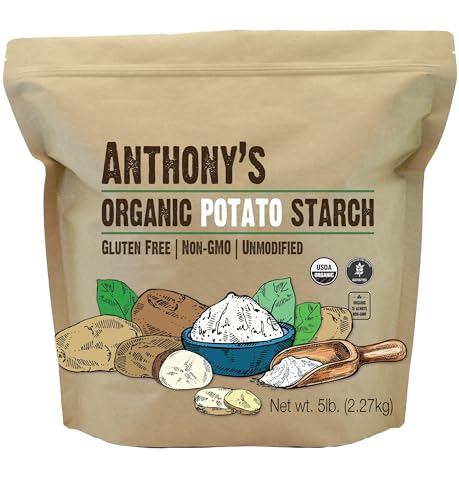
1. Anthony’s Organic Potato Starch 5 lb
Our pick — 4.5+★ from 850+ verified ratings; the strongest balance of quality and price.
The plain potato starch that quietly does two jobs and is the easiest one to keep buying.
This is the pick for anyone who wants raw, uncooked resistant starch without a blend, a flavor, or a serving scoop to think about. Anthony’s lists at least 50% unmodified resistant starch per serving and is USDA Certified Organic and batch tested as gluten free. At 80 ounces, the bag is the biggest in this lineup by a wide margin — Jonnys Good Nature’s pouch weighs 12 ounces, so Anthony’s carries roughly 6.7 times the powder. Fans of the 40-gram daily approach know exactly why that size matters: the bag is big enough that hitting the higher end of a daily dose does not feel like rationing.
What wins people over is value, closely followed by how well it actually works. The taste is genuinely neutral, which is why owners stir it into shakes and even plain water without noticing it. Unmeasured, it thickens whatever it touches — that is the same property that makes it a cornstarch stand-in for soups, sauces, gravies, and pie fillings. Buyers report it does not clump when measured, so a spoonful goes into a cold drink without a whisk or a shaker bottle.
The catch is that this is raw starch, not a ready-made supplement blend. There is no scoop, no flavoring, and no prebiotic add-ons, so you decide the dose yourself. Digestion quality also varies with how much you take at once, which makes starting small the practical move rather than a suggestion.
What earns it the top spot
- At least 50% unmodified resistant starch per serving, stated right on the package
- USDA Certified Organic and batch tested to be gluten free
- 80-ounce bag — the largest format here — supports a higher daily dose without constant reordering
- Neutral taste that disappears into shakes and drinks, and it does not clump when measured
- Doubles as a cornstarch substitute for thickening soups, sauces, and baked goods
Worth knowing before you buy
- Raw uncooked starch, so you control the daily amount rather than following a pre-portioned scoop
- The bag format is bulky on a pantry shelf compared with the smaller pouches below
Reach for this if: you want a single affordable ingredient you can dose yourself and use in both drinks and cooking.
Look elsewhere if: you would rather have a pre-measured scoop with a set gram count per serving.
2. Dr. Mercola Organic Resistant Starch Complex 9.52 oz
Four fiber sources in one scoop, for the person who wants more than potato starch alone.
Each scoop carries 7.5 g of resistant starch plus 1.5 g of Organic ResistAid arabinogalactan — a fiber extracted from Minnesota-grown larch trees. The base is not one ingredient but four: green banana flour, pregelatinized potato starch, tigernut, and larch heartwood. That mix is the reason this one is worth the step up over a plain single-source starch. Because the fibers ferment at different rates, the load arrives in stages instead of all at once.
The experience owners describe is steady rather than dramatic. Owners mention smoother digestion and better regularity, with fewer of the gas spikes that usually come with switching starches. The blend is the likely reason, since fermented fibers taken one at a time can hit harder. One long-time sufferer of daily digestive discomfort, after adding it to a protein shake: “Finally…relief. I feel so good!!!” The powdery, unflavored texture vanishes into smoothies, yogurt, or plain lemon water, and the lightly sweet taste is mild enough not to fight a protein powder.
What holds this back is the format. Thirty servings of a 9.52-ounce tub goes fast if you take it daily, and it is the heaviest of the compact containers here at 9.88 ounces. The multi-source formula also costs more per serving than a bag of straight potato starch, which is the honest trade for the broader blend.
Why the blend is the draw: you get four fiber sources — green banana flour, potato starch, tigernut, and larch — feeding your gut from more than one direction in a single 7.5 g scoop, which is what most owners point to when they say the transition felt calm.
The practical limit: at 30 servings per tub and 9.88 ounces per container, daily users refill often, and the blend costs more per serving than simple potato starch.
The right fit is someone who has tried single-source starch and wants a gentler multi-fiber version.
Not the pick if you want the cheapest route to a high daily gram count.
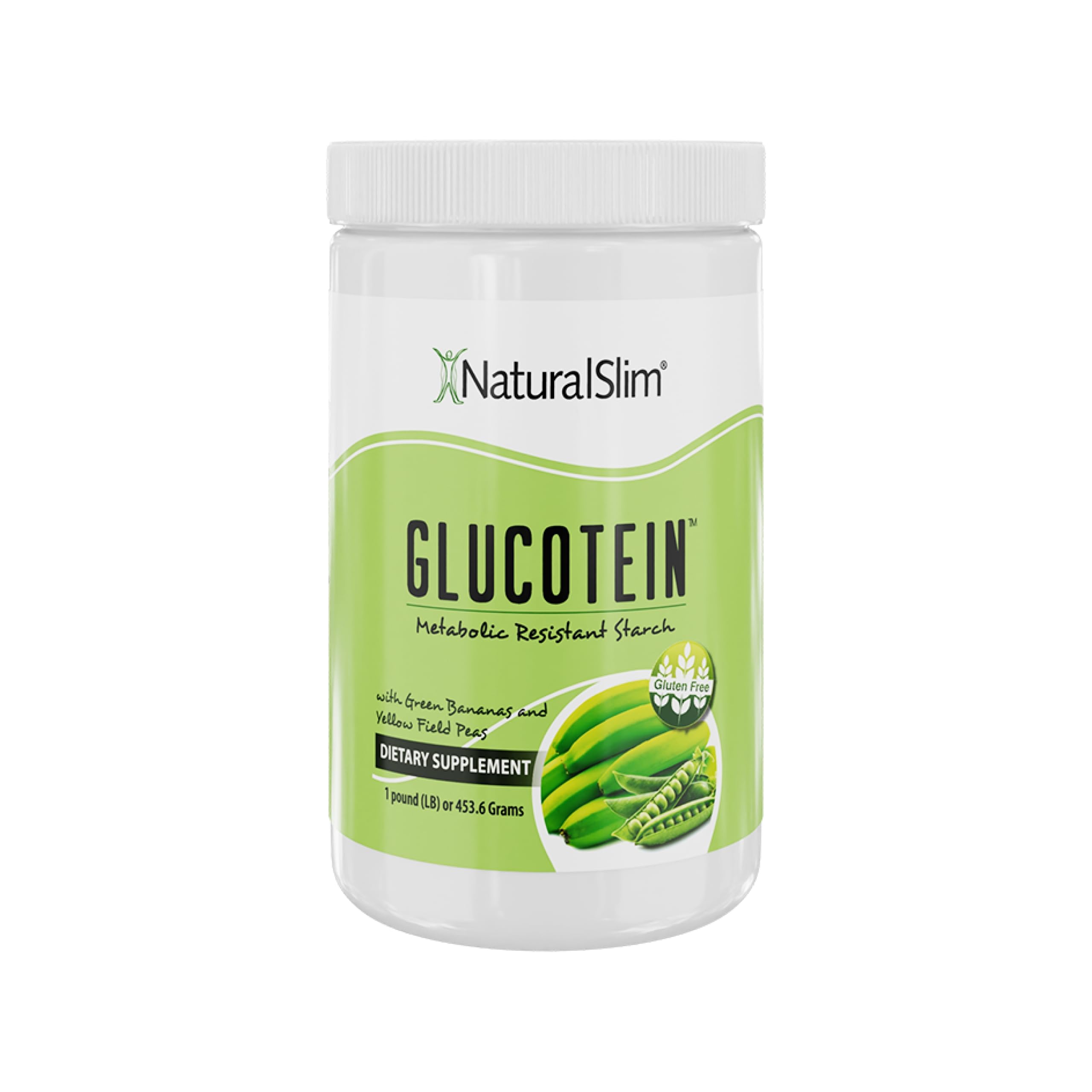
3. NaturalSlim Glucotein Prebiotic Resistant Starch Powder
A two-source prebiotic built for the stretch between meals, not the baking drawer.
Glucotein is made from green banana flour and yellow pea starch, and it is designed around feeling full rather than around thickening recipes. The blend is low-glycemic (it does not spike your blood sugar quickly) and free of rice and corn, which keeps it flexible for people already managing their carbohydrate sources carefully. One tablespoon into a shake or recipe once a day is the whole routine — no measuring beyond the spoon. It is also the most compact container in this group, and that compactness shows up in the numbers: it measures 3.5 x 3.5 x 6 inches, while Anthony’s bag runs 10 x 5 x 14 inches, so it takes a fraction of the shelf space.
Quality is what buyers single out most about this one, with effectiveness close behind. The standout daily-use case is appetite. A type 2 diabetic buyer mixes it into diet iced tea and reports it keeps them full for hours, cutting the carb cravings and vending-machine snacking between meals. That is a specific, practical win — a powder that buys you time between meals without a stimulant or a sweetener doing the work.
The honest trade-off is serving economy. A 16-serving tub is the smallest count here, so a strict once-a-day habit empties it faster than the larger bags and pouches. It is also a two-ingredient blend rather than a labeled multi-source complex, so if you specifically want tigernut or larch in the mix, this is not that product.
What it is built to do: green banana flour plus yellow pea starch, taken as one tablespoon daily, is aimed squarely at keeping you full and steady between meals — the reason it shows up in the routines of people managing appetite rather than baking.
Where it runs short: 16 servings goes quickly for a daily user, and the formula is two ingredients where the Mercola pick above stacks four.
Choose this when appetite control and a small container are your priorities, and you want a simple non-GMO, gluten-free blend.
Pass it over if a long-lasting tub or a multi-source complex matters more than satiety.
4. Jonnys Good Nature Organic Ultra High Resistant Starch

The concentrated green banana flour that disappears into a smoothie without leaving grit.
Jonny’s lists a minimum of 60% organic resistant starch per gram — higher per gram than Anthony’s stated 50% floor — and states it delivers on average 10 times more prebiotic fiber than similar green banana flours. It arrives as 42 servings in a 12-ounce pouch, and it is a single-ingredient flour: 100% whole peeled organic green bananas, nothing else. For anyone who has fought a powder that sinks and clumps in a shaker, that fineness is the point.
Owners rave most about taste and effectiveness. The mild, slightly nutty flavor works in smoothies and milk but does poorly in plain juice, so a shake is the natural home. Mixability draws its own praise, with the powder blending into smoothies and protein shakes with only a slight thickening and no clumps. The fan favorite is the combination of more fullness and better regularity — one long-time sufferer says chronic digestive trouble cleared up after adding it to a daily protein shake, and another says it fixed iron-supplement-induced constipation without stomach upset.
If you have tried plain potato starch and found it harsh, this is the gentler alternative, and it is the pick the most experienced users in this lineup gravitate toward. There is one firm rule: keep it out of high heat above 140°F, because that is what destroys the resistant starch you paid for. Expect results over weeks, not days, and expect them to fade within a day of stopping.
The standout traits
- Minimum 60% organic resistant starch per gram, higher per gram than the potato starch pick
- Made from 100% whole peeled organic green bananas with no other ingredients
- 42 servings in a 12-ounce pouch, with a fine texture that blends into smoothies and shakes
- Certified Organic, Non-GMO Project Verified, gluten free, vegan, kosher, halal, and keto and paleo friendly
- Slight thickening with a mild nutty flavor that shines in milk and smoothies
What to plan around
- High heat above 140°F damages the resistant starch, so it belongs in cold mixes, not baked goods
- Tastes off in plain juice — smoothies and milk are where it works
The best call for smoothie and protein-shake routines, and the one to try if single-ingredient potato starch felt too aggressive.
Keep it out of the oven — this is a cold-mix powder, not a baking flour.
5. Organic Green Banana Powder 14 OZ

The wheat-free baking flour that doubles as a prebiotic and thickens your jam.
This is a single-ingredient powder — pure dried organic green bananas grown on a family farm in Thailand, free from preservatives, sugar, and gluten. It is sun-dried and ground to a super fine flour, then sealed in a recloseable foil pouch. Baking is where it earns its place: it brings out a sweet aroma in the oven, which separates it from Jonnys Good Nature, whose starch does poorly above 140°F. If you want one powder that sits in the flour bin and still feeds your gut bacteria, this is that product.
Owners who bake with it describe a texture as fine as all-purpose flour and call it the best wheat alternative they have tried. It also works as a thickener — one buyer uses it to set homemade jam. Buyers cite appetite control and easier digestion as the everyday benefits, and it fits keto and paleo grain-free recipes without a substitute list.
There is a real limit, and it is worth respecting: eating too much resistant starch at once causes significant digestive discomfort. The smart way to use this one is as a partial swap, blending it with your usual flour rather than replacing it entirely, which is exactly how the most satisfied users approach it. Treat the 14-ounce foil pouch as a pantry staple to build up to, not a full serving to start with.
Why bakers like it: a super fine, gently sun-dried green banana flour that substitutes for wheat, adds a sweet aroma in the oven, and still delivers prebiotic fiber — the rare powder that works in a hot oven without losing its purpose.
The one caution: use it as part of a flour blend rather than a total swap, because a large amount of resistant starch in one sitting is what causes digestive discomfort.
Best suited to grain-free and gluten-free bakers who want fiber and flour from one pouch.
Go with the Jonnys Green Banana Flour above if you want the single highest labeled resistant starch percentage instead.
Know the Specs
Resistant Starch Percentage
This is the share of each gram that actually reaches your large intestine undigested, and it is the single most useful number on a resistant starch label. Anthony’s states at least 50% unmodified per serving and Jonnys lists a minimum of 60% per gram. A higher percentage means a smaller spoonful does the same work, which is why a modest 12-ounce pouch can out-deliver a much larger bag of lower-concentration flour.
Fiber Source and Fermentation Speed
Where the starch comes from changes how fast your gut bacteria feed on it. Potato starch, green banana flour, tigernut, larch heartwood, and yellow pea starch each ferment at different rates. Blending them, as the Mercola complex does with four sources, spreads the load over a longer window — the reason a multi-source formula tends to land more gently than a single one taken at the same total amount.
Serving Count and Format
The tub, pouch, or bag decides how often you reorder and how easily you dose. A 30-serving tub or a 16-serving container runs out quickly on a daily habit, while Anthony’s 80-ounce bag and Jonnys’ 42-serving pouch stretch further. Packaged flour also stores differently — a recloseable foil pouch keeps out moisture, and a resealable bag keeps a large supply fresh.
Heat and Mixing Tolerance
Resistant starch survives cold drinks and smoothies but degrades under high heat — above 140°F the structure breaks down and the prebiotic benefit goes with it. That is why the baking-friendly green banana powder suits the oven while Jonnys is best kept in cold mixes. If you plan to use your powder in coffee or cooked food, check the heat tolerance first; if you use it in smoothies or yogurt, any of these powders works.
Common Questions
How much resistant starch should I take per day?
Should I choose potato starch or green banana flour?
Will resistant starch cause gas or bloating?
Does resistant starch survive heat if I bake with it?
Can I use a resistant starch supplement if I follow a keto or paleo diet?
What is the difference between a single-source and a multi-source resistant starch?
How should I store an open bag or pouch of resistant starch powder?
Can I mix resistant starch into cold drinks like iced tea or lemon water?
Is gluten-free resistant starch safe if I have a wheat allergy or celiac sensitivity?
How long before I notice results from a resistant starch supplement?
The Bottom Line
For most people, the resistant starch supplement winner is Anthony’s Organic Potato Starch because at least 50% unmodified resistant starch per serving, USDA Certified Organic status, and an 80-ounce bag make it the easiest daily habit to keep. If you want a multi-source formula that ferments more gently, reach for the Dr. Mercola Organic Resistant Starch Complex. And for smoothies or protein shakes, the concentrated mixability of Jonnys Good Nature Green Banana Flour is the one to grab. Whichever you pick, start with a partial serving and give your gut a week to catch up — the potencies here are real, and building up slowly is what makes resistant starch stick.
How we choose
We do not accept paid placement. Every pick is matched to a real buyer and a real use-case; we do not hands-on test units.
Sources
Specifications: manufacturer listings and product documentation. Review insights: verified customer reviews, as of October 2026. Pricing: not shown on this page (it changes often); check the current price via the retailer link.
As an Amazon Associate, Aappliancez earns from qualifying purchases. This does not affect which products we feature.