Disclosure: Some links in this post are affiliate links. As an Amazon Associate I earn from qualifying purchases, at no extra cost to you. Learn more
Specs are compiled from manufacturer listings and verified buyer reviews and can change over time — please confirm the key details on the product page before buying.
Greenhead flies bite through skin and leave a welt that itches for days, so the right repellent does two jobs: it keeps them off your skin and off your clothes. Treat your clothing with permethrin for the bites that come through fabric, and spray exposed skin with DEET or picaridin for the rest. The picks below cover both halves of that plan, from a permethrin (a fabric treatment that kills and repels insects) clothing spray to a citronella (a plant-based oil used as a repellent) pump bottle to a family aerosol.
This guide is built by comparing the manufacturers’ published specifications and the patterns across verified customer reviews, so you get each pick’s real strengths and trade-offs instead of marketing spin.
Greenheads hit hardest on the salt marsh, the beach, and the trail, and no single bottle solves every version of that day. Here is what to know before you pick a repellent for greenhead flies.
Top Picks

How To Choose The Best Repellent for Greenhead Flies
Greenheads are biting flies, and biting flies behave differently from mosquitoes. Mosquitoes land and probe; greenheads land and cut. That difference changes which products belong in your bag. A repellent that only scares mosquitoes off may do very little against a greenhead, and a repellent that works on greenheads often works on mosquitoes too.
Treat your clothes, not just your skin
The most reliable greenhead setup has two parts: treated fabric and a skin spray. First, treat the fabric — your shirt, pants, socks, and hat — with a permethrin clothing spray. Permethrin is a treatment that bonds to fabric fibers rather than sitting on your skin, which is why it keeps working through sweat and light rain. Then spray your exposed skin with a topical repellent like picaridin or DEET. A greenhead that lands on treated fabric picks up the treatment; one that lands on your bare forearm meets the skin spray.
Pick your active ingredient on purpose
DEET (the long-standing chemical repellent) is the well-known option, and a higher percentage generally means longer protection rather than stronger protection — so a 40% bottle lasts fewer hours than a 100% one, not a weaker one. Picaridin (a newer, low-odor repellent) is the alternative, and manufacturers position it as more effective at repelling biting flies than DEET. Permethrin is not a skin product at all — it is a fabric treatment you apply to clothing. If you are deciding between a DEET spray and a picaridin spray for your skin layer, choose based on if you want the lower-odor, gear-safe option or the long-established one.
Side-by-Side Comparison
| Model | Best For | Active Ingredient | Application | Container Size | Amazon |
|---|---|---|---|---|---|
| Sawyer Products SP657 Premium Permethrin Insect Repellent for Clothing, Gear & Tents★ Best Overall | Treating clothing, tents and gear | Permethrin | Trigger spray | 24 ounces | Amazon |
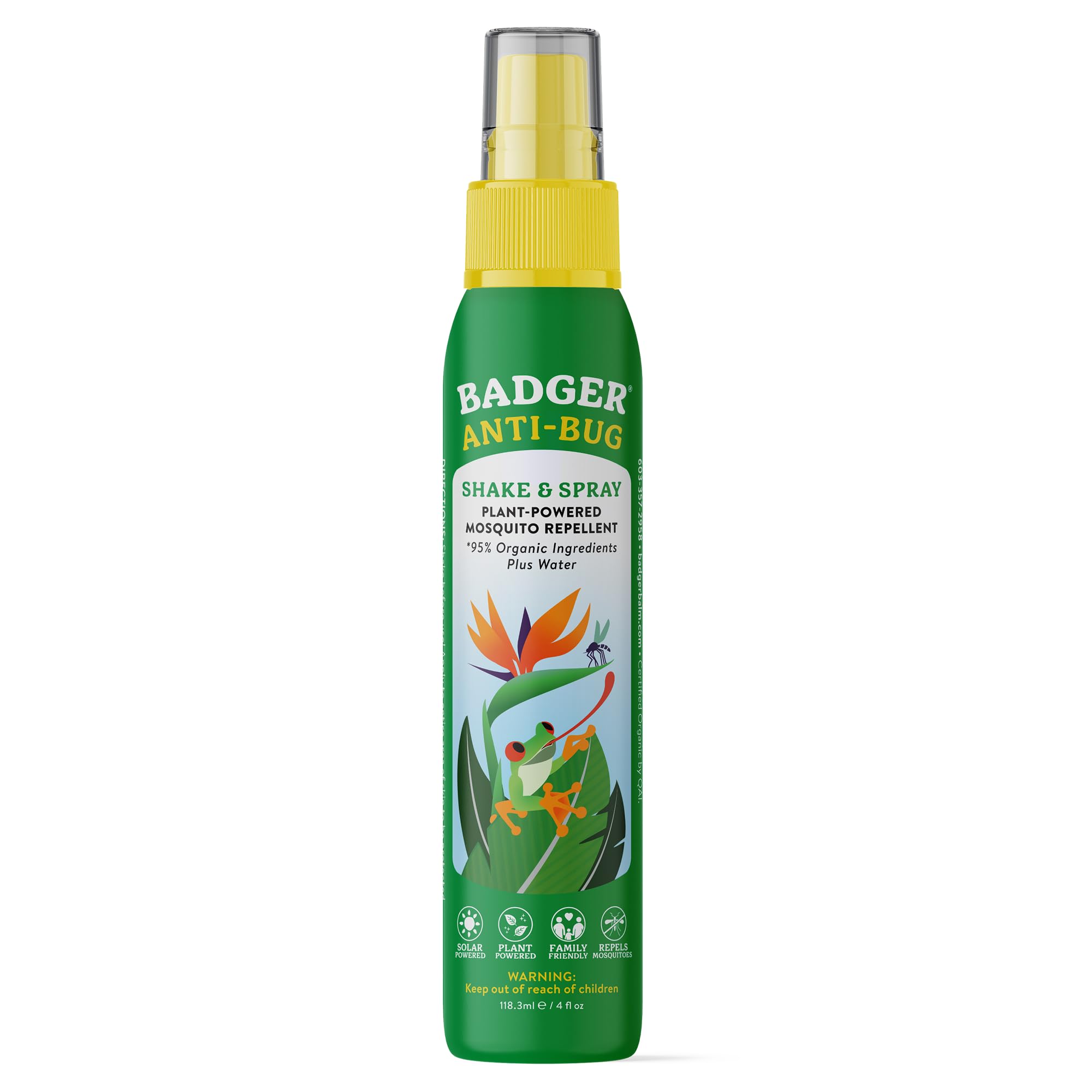
| Badger Bug Spray, DEET-Free CitronellaBest Natural Pick | Natural, family-friendly everyday use | Citronella, cedarwood, rosemary, lemongrass oils | Pump spray | 4 fluid ounces | Amazon |
| Coleman 100 Max 100% DEET Insect Repellent Spray | Long protection on exposed skin | 100% DEET | Continuous spray aerosol | 4 fluid ounces | Amazon |
| Sawyer Products SP5432 Picaridin Insect Repellent Spray, 20% | Odorless gear-safe skin coverage | 20% Picaridin | Pump spray | 3 fluid ounces (2-pack) | Amazon |
| Repel Sportsmen Max Mosquito & Insect Repellent | Family packs for active days outdoors | 40% DEET | Aerosol spray | 6.5 ounces (3-pack) | Amazon |
Detailed Reviews
1. Sawyer Products SP657 Premium Permethrin Insect Repellent
Our pick — over 4.5★ from 43,000+ verified ratings; the strongest balance of quality and price.
Treat the shirt, not just the arm — the bottle that armors your whole outfit.
Greenheads hunt through clothing, and this is the one product here that addresses that. Permethrin works by bonding to fabric fibers, which is the technical way of saying it sinks into the cloth instead of sitting on top of it. Once dry, it stays put for up to 6 weeks or through 6 washings, whichever comes first — so a single treatment session on a stack of fishing shirts and hiking pants carries you deep into the season. Light rain and heavy sweat do not strip it; only UV exposure and the agitation of a washing machine break it down.
It is also easier on your gear than most repellents. Sawyer states it will not stain or damage clothing, fabrics, plastics, finished surfaces, or outdoor gear, and it dries fragrance free. If you have ever watched a DEET spray cloud a pair of sunglasses or lift the finish off a fishing rod, that detail matters. The published coverage claim is 4 outfits per bottle, though the more common experience is around 3 outfits and 2 to 3 pairs of shoes. The sprayer itself is a trigger pump, and a few hours of pumping does tire your hand.
Treat the night before, not the morning of, so the fabric is fully dry before it touches your skin. Because permethrin bonds to the fabric rather than your skin, it keeps repelling greenheads after you sweat through your shirt. If you are pairing it with a skin product, the same maker’s picaridin spray below is the intended partner.
Where it earns its keep
- Bonds to fabric for up to 6 weeks or 6 washings, so one session covers weeks of marsh trips
- Won’t stain or damage clothing, plastics, or finished gear surfaces
- Fragment-free once dry — safe to wear under layers without a lingering smell
What to plan around
- Trigger pump tires your hand during a full treatment session
- Real-world coverage lands nearer 3 outfits than the claimed 4
- Not for skin — it is a fabric and gear treatment only
Reach for this if: your greenhead problem is bugs biting through your shirt, and you want one treatment to cover several outings.
Skip the pairing: this alone leaves exposed skin unprotected — you still need a topical spray on ankles, wrists, and neck.
2. Badger Bug Spray
A citrus-scented pump bottle for the porch, the trail, and kids who hate the smell of DEET.
The appeal here is what it leaves off your skin: no DEET and no synthetic chemicals. No DEET, no synthetic chemicals — instead you get a blend of organic citronella, cedarwood, rosemary, and lemongrass essential oils that reads as a clean herbal citrus rather than a chemical fog. The bottle is a lightweight, leak-resistant aluminum pump, and the whole thing is 4 fl oz, small enough to live by the back door or in a tackle box. Badger also builds it in a solar-powered U.S. facility and packages it in recycled aluminum, which is a real consideration if you are trying to keep your outdoor kit low-waste.
Where it asks something back from you is duration. The listed protection is up to 3 hours, and the lived experience is closer to 30 minutes of solid coverage before a reapply, especially once you start sweating. The method matters: this works when you coat every bit of exposed skin and your clothing, and the citronella scent is doing real labor. It wears as a slight film rather than a greasy slick, and the scent fades rather than sharpens as it dries.
Sizing it against the rest of the list: this is a skin spray for a short walk or an evening on the patio, not the bottle you carry onto an open salt marsh in July. One review on the listing is blunt about the smell being strong and overpowering — loud, but not unpleasant, and it does not linger. Families who want a plant-based option for toddlers and kids have a genuine reason to reach for it; the coverage math is the trade.
The honest read: a genuinely pleasant, low-waste natural repellent that earns its place for light outings and young kids — as long as you plan on reapplying.
The catch: 30-minute real-world protection means a marsh afternoon is a constant re-spray routine, which is not what greenhead territory rewards.
Best matched to: backyard evenings, walks, and family trips where natural ingredients and a good smell come before maximum duration.
Look elsewhere if: you are heading into heavy biting-fly country and want one application to last.
3. Coleman 100 Max 100% DEET Insect Repellent Spray – 4 oz

The full-strength bottle for the days when a light spray isn’t going to cut it.
This is the skin half of the greenhead equation at its most concentrated. Coleman packs 100% DEET into a 4 oz aerosol, and the company lists protection of up to 10 hours that withstands water and perspiration — enough to survive a full day of surf fishing or a humid hike without a reapply. The continuous spray can works at all angles, so you can coat the back of your neck and your ankles without fighting gravity. It is unscented and formulated against ticks, mosquitoes, chiggers (tiny biting mites), biting flies, gnats, fleas, and flies.
The trade is texture. This is a greasy product by design, and it leaves a residue that sits on top of your skin. Buyers report it can stain clothing, socks, and shoes, and one buyer describes it taking the paint off a chair. The practical fix is the application method owners keep repeating — spray close and then rub it in, and for your face and ears spray your palms first and apply, keeping it out of your eyes, your mouth, and your inner ear. Keep it off sunglasses and synthetic watch bands.
Weighing it against the picaridin pick below: the Coleman carries the higher DEET concentration and the longer listed window, while the Sawyer runs odorless and gear-safe. The Coleman is what you take when strong protection outranks comfort. If you plan to pair it, owners consistently suggest treating your clothes with permethrin first and reserving this for the exposed skin you have left.
What it’s built for: long, wet, bug-heavy outdoor days where you want the maximum protection window and don’t mind a residue.
The trade: greasy on the skin, capable of staining fabric and hard surfaces, so it is not a spray you wear to a backyard dinner.
Pick this for: the marsh, the blind, or the fishing boat, when you need the highest protection concentration you can get.
Think twice if: you want to spray and walk out the door without a residue or a stain risk.
4. Sawyer Products SP5432 Picaridin Insect Repellent Spray

The odorless, gear-safe skin spray that goes where the DEET bottles can’t.
Picaridin is the strongest argument on this list for switching your skin product. Sawyer loads 20% of it into each 3 oz pump bottle, and the company positions that formula as more effective at repelling biting flies than DEET. The listed windows are up to 12 hours against mosquitoes and ticks and up to 8 hours against flies, gnats, and chiggers — which is the fly number you care about here. Just as important, this is non-greasy, fragrance free, odorless, and dries quickly, so it won’t damage plastics or synthetic coatings. That means sunglasses, a backpack, a watch band, fishing line, and a firearm finish are all safe to spray around.
What wins people over is how invisible it is. It doesn’t announce itself the way a citronella or a 100% DEET spray does, and it disappears into the skin rather than sitting on top of it. The practical watch-out is coverage: users report that any spot you miss is a spot a biting fly will find. Sweating and wiping reduce the duration, so on a hot day expect closer to 6 to 8 hours than the full 12.
You get two bottles in the pack, each small enough to pass the carry-on limit for a 3 oz container. The pump sprayer is the recurring annoyance — the bottle makes application easy, but the pump itself gets called out as fiddly, and a few owners mention leakage in transit. If you want the two-part routine owners keep recommending, pair this skin layer with the Sawyer permethrin above; that is the exact combination customers describe reaching for.
The reason it stands out: you get serious biting-fly protection without the greasy film, the heavy odor, or the risk to your gear.
The annoyance: the pump mechanism is the weak point — plan on possibly transferring it to a spray bottle you like better.
Choose this when: you want the strongest biting-fly choice that is also odorless and safe around expensive outdoor gear.
Not the fit for: anyone who wants to soak their hat and shirts in the same product — that job needs the permethrin treatment, not a skin spray.
5. Repel Sportsmen Max Mosquito & Insect Repellent
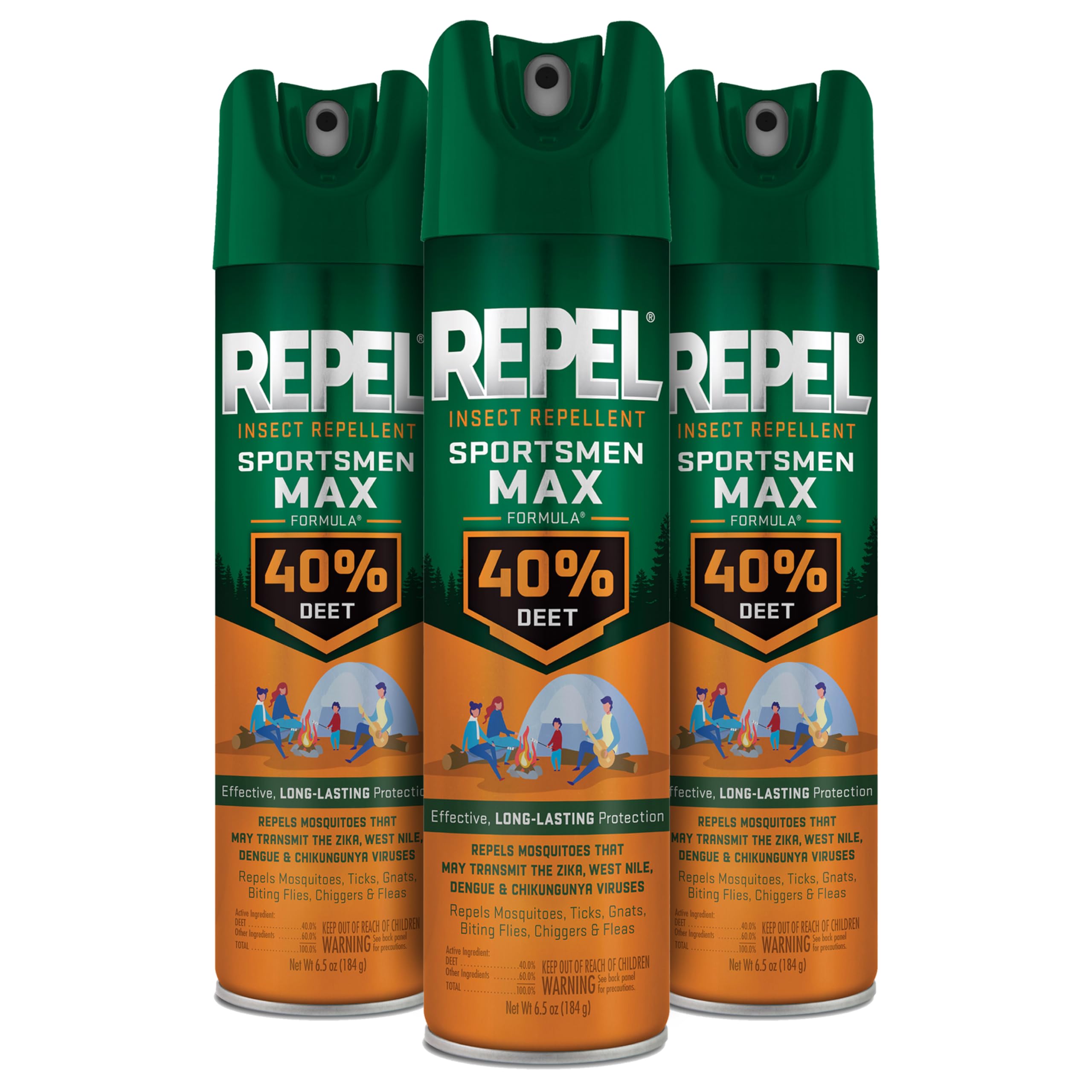
Three aerosol cans of mid-strength DEET for the family that loses one bottle every trip.
You get 3 aerosol cans of 6.5 oz each, all carrying 40% DEET — one for the truck, one for the beach bag, one for the rod holder. The formula is fragrance free and unscented, and Repel lists it against mosquitoes, ticks, gnats, biting flies, chiggers, and fleas. That mid-range DEET percentage is deliberate — it is enough to give real protection, and lower than the 100% concentration in the Coleman without giving up much, because the higher concentration delivers more hours rather than more power.
This is the spray families keep in rotation for the practical reason that one can per person means nobody is walking back to the car. Owners use it on the trails, in the fields, and at the ballpark, and the recurring note is that it simply works. The aerosol form is easy for kids to use under supervision, and a can packs into a day bag without a leak risk.
There is a learning curve with the strength. The 40% concentration carries a strong smell, and it tastes terrible if it gets on your lips — so the recommended move is to spray an outer layer like shoes, pant legs, sleeves, and a hat rather than misting it directly onto skin, and to do it outdoors so you are not breathing the cloud. It will leave an odor on clothing that you should wash out or air out promptly. For face and ears, spray your palm and pat it on where you want it, and keep it well clear of your eyes.
What it does well: a multi-can package of 40% DEET takes the pinch out of sharing one bottle across a whole family trip.
What to know: that strength comes with a strong scent and a bitter taste — spray it on outer layers and outdoors rather than misting directly onto skin.
Ideal for: families heading out as a group to parks, fields, and ball games who want a can for everyone while staying affordable.
Choose something else if: you would rather spray directly onto bare skin — the picaridin and 100% DEET picks above suit that better.
Know the Specs
Active Ingredient and Percentage
The active ingredient is the chemical doing the actual repelling, and the percentage tells you how concentrated it is. In practice, a higher DEET percentage buys you more hours of protection rather than stronger protection — so 40% and 100% DEET both work, but the 100% version lasts longer before you reapply. Picaridin is a separate active ingredient, and its concentration is quoted the same way, as a percentage in the formula. Permethrin is a third category entirely: it is a treatment you apply to fabric, not to skin, which is why you will see it sold for clothing, tents, and gear.
Application Type and Sprayer
How a repellent gets out of the bottle matters more than most buyers expect. An aerosol continuous spray is the fastest to apply and works at odd angles, which is handy for reaching your back or the backs of your legs. A pump or trigger sprayer is slower, and long sessions can tire your hand, but it puts down a more controlled, precise coat. Fabric treatments almost always come as a trigger or pump bottle so you can wet a shirt evenly without fogging the room. A featureless jug of a bottle that leaks in a pack is a real frustration, so check what owners say about the sprayer before you commit.
Common Questions
What actually works against greenhead flies?
Should I use permethrin on my skin?
Is picaridin or DEET better for biting flies?
How many outfits will a 24-ounce bottle of permethrin treat?
How long does a permethrin clothing treatment keep working?
Will 100% DEET damage my sunglasses or fishing gear?
How do I apply a high-percentage DEET spray to my face safely?
Can I use a citronella repellent for a full day on the marsh?
Why do some repellents need reapplying more than others?
Is a 3-pack or single bottle the better buy for a family?
The Bottom Line
For most people facing greenheads, the winner is the Sawyer Permethrin Clothing Spray because it is the one product here that protects you through your clothing, not just on your skin — one treatment bonds to fabric for up to 6 weeks or 6 washings. Treat your shirts, pants, socks, and hat with it, then layer a skin spray on top. For your exposed skin, the Sawyer 20% Picaridin Spray is the choice if you want odorless, gear-safe protection, and the Coleman 100 Max is the one to reach for when the day is long, wet, and unforgiving. If you are kitting out a whole family for the ballpark, the Repel Sportsmen Max 3-Pack puts a can in every bag. And if you want a natural, DEET-free option for a backyard evening, the Badger Citronella Spray earns its place — just plan to reapply.
How we choose
We do not accept paid placement. Every pick is matched to a real buyer and a real use-case; we do not hands-on test units.
Sources
Specifications: manufacturer listings and product documentation. Review insights: verified customer reviews, as of October 2026. Pricing: not shown on this page (it changes often); check the current price via the retailer link.
As an Amazon Associate, Aappliancez earns from qualifying purchases. This does not affect which products we feature.