Disclosure: Some links in this post are affiliate links. As an Amazon Associate I earn from qualifying purchases, at no extra cost to you. Learn more
Specs are compiled from manufacturer listings and verified buyer reviews and can change over time — please confirm the key details on the product page before buying.
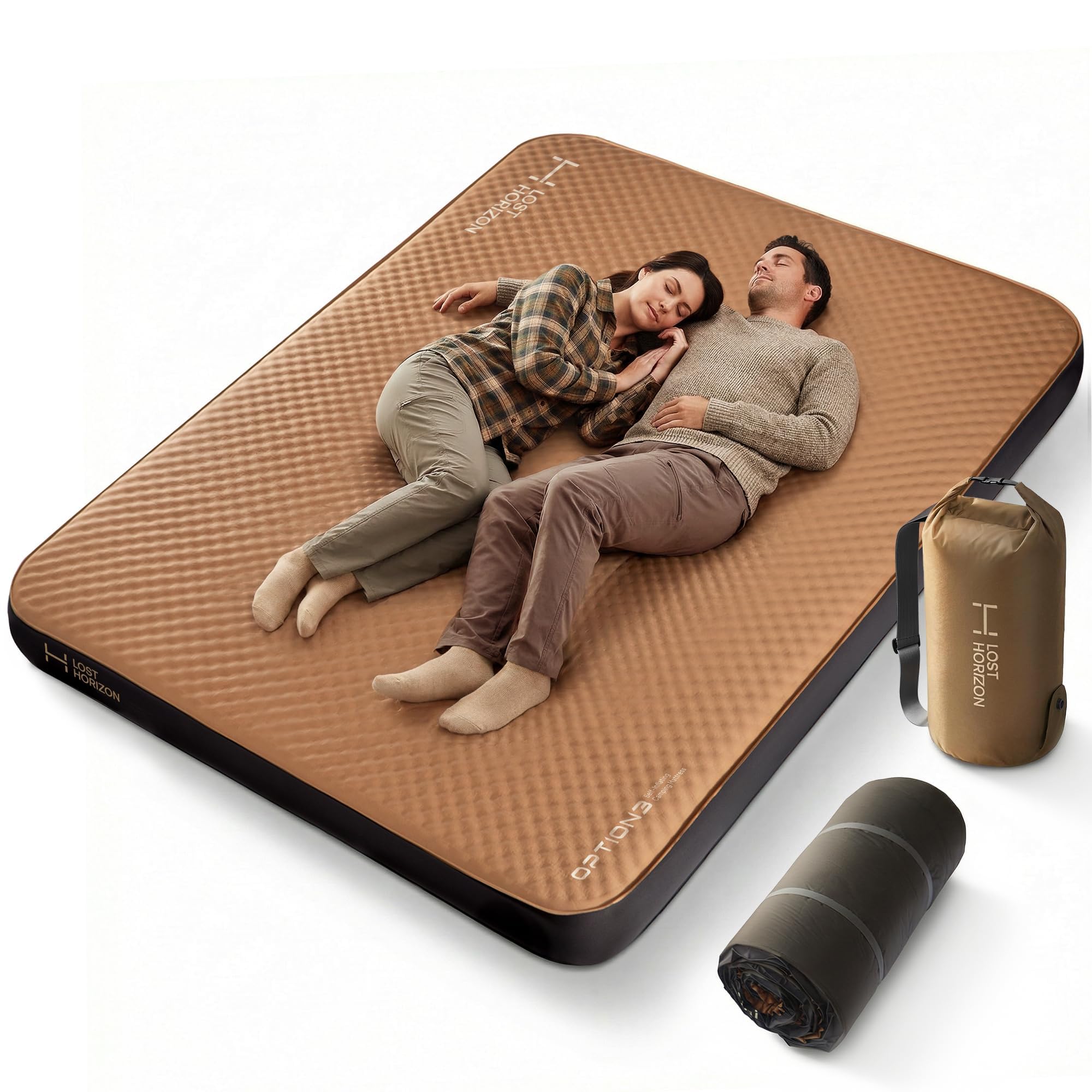
If you want the short answer: buy the Lost Horizon Option3 in Queen. It is the only true queen-size mattress in this lineup, it holds a 4.5-inch foam-and-air core under two adults, and it carries the highest owner satisfaction here at 4.5+ stars across 300+ ratings. The trick with a queen camping mattress is that “queen” on a listing does not always mean two adults sleep comfortably — you have to check the actual inflated width, the thickness, and the insulation rating before you commit. This guide sorts those three things for you.
This guide is built by comparing the manufacturers’ published specifications and the patterns across verified customer reviews, so you get each pick’s real strengths and trade-offs instead of marketing spin.
A queen pad lives or dies on three numbers — inflated width, thickness, and R-value — and the picks below are sorted by how well they deliver all three. Here is the honest breakdown of every queen camping mattress worth putting in your tent.
Top Picks

How To Choose The Best Queen Camping Mattress
A queen camping mattress is not a backpacking pad with extra width. It is a car-camping bed — something you unroll in a tent, an SUV bed, or a guest room, and something that has to hold two adults without either of you rolling into the middle. The three things that decide whether it works are width, thickness, and insulation. Get those wrong and no amount of “comfort foam” language will save the night.
Check the real inflated width first
Queen-size bedding runs 60 inches wide, but camping pads play loose with the word. The Lost Horizon Option3 is a true 60 inches across. The OGERY tops out at 48.82 inches, which is closer to a full. If two adults are sharing, measure your tent floor and match the pad width to it — a pad that overhangs bunches up at the walls, and one that is too narrow means someone sleeps on the seam.
Thickness and foam core decide whether you feel the ground
A 4-inch pad with a foam fill keeps your hips and shoulders off the floor in a way a thin air pad cannot. The foam also stops the bouncy, waterbed feel that plain air mattresses have, and it means a slow leak does not leave you flat at 2 a.m. Look for a stated thickness of at least 3.15 inches and a foam construction rather than air-only.
R-value is the cold-ground number
R-value rates how well a pad resists heat loss into the ground — higher is warmer. The Lost Horizon lists an R-value of 13, which is a serious winter number. The PineHike lists 9.5, and the Exped lists 8.1. Anything in the 8 to 13 range will keep you warm through three-season camping; the higher figures matter if you camp in shoulder-season cold.
Pump or no pump
Self-inflating foam pads still need help getting fully firm — that is what the included pump is for. A built-in rechargeable pump saves you carrying a separate inflator, but check the battery capacity and how many inflation cycles it delivers per charge before you rely on it for a multi-day trip.
Side-by-Side Comparison
| Model | Best For | Inflated Size (L x W x Thickness) | R-Value | Weight Capacity | Amazon |
|---|---|---|---|---|---|
| Lost Horizon Option3 Queen★ Best Overall | Two adults who want a real bed | 80″L x 60″W x 4.5″Th | 13 | 440 lbs | Amazon |
| PineHike 4″ Ultra-Thick Memory FoamBudget Champion | Family car camping on a budget | 78.74″L x 29.13″W x 4″Th | 9.5 | 660 lbs | Amazon |
| Wise Owl Outfitters Self Inflating Pad | Solo sleepers with back trouble | 78″L x 28″W x 4″Th | — | 200 lbs | Amazon |
| OGERY 3.15″ Memory Foam Pad | Minivan and truck-bed setups | 76.77″L x 48.82″W x 3.15″Th | — | — | Amazon |
| Exped MegaMat Duo Long Wide Plus | Premium insulated sleep | 77.6″L x 52″W x 4″Th | 8.1 | — | Amazon |
Detailed Reviews
1. Lost Horizon Self-Inflating Foam Camping Mattress Queen 4.5″
Our pick — 4.5+★ from 350+ verified ratings; the strongest balance of quality and price.
The only true queen here — 60 inches across, 4.5 inches deep, built for two.
Two adults sharing a tent need one thing above all: width. This pad delivers a full 60 inches, and it pairs that with 4.5 inches of thickness and a 13-pound foam fill, so your hips and shoulders stay clear of the ground. It carries up to 440 pounds, which covers most couples and their gear.
The insulation figure is the standout. An R-value of 13 (a rating of how well the pad blocks cold coming up from the ground) is a genuine winter number. The Exped MegaMat, a premium competitor, sits at 8.1. If you camp in shoulder-season cold or sleep in a tent into late autumn, that gap matters more than any other spec on this page. The foam-and-air core spreads support evenly, so hips and shoulders don’t bottom out in one spot.
Comfort is the most-praised thing about this pad, with a large share of owners comparing it to their bed at home. The included pump deflates it quickly, and owners rate the overall setup highly. The recurring gripe is the pump itself: it can lose charge over a few weeks, and a few replacements have gone to aftermarket pumps. Treat the pump as the wear part, not the mattress. The pad is also bulky and heavy — Lost Horizon states plainly that it is not for backpacking, and that is fair.
What earns it the top spot
- True 60-inch queen width fits two adults side by side.
- R-value of 13 handles cold ground far better than the Exped’s 8.1.
- 4.5 inches of thickness — a quarter-inch more than the PineHike’s 4 inches — keeps hips and shoulders off the floor.
- Silent foam-and-air core means turning over will not wake your partner.
Where it asks for patience
- The included pump is the weak link — expect to replace it eventually.
- Bulky and heavy; it lives in the car, not on your back.
- Needs storage space at home between trips.
The one to buy: couples who want a genuine two-person bed in a tent or SUV, and anyone camping into cold weather.
Think twice if: you need to carry your pad any distance — Lost Horizon itself says it is not a backpacking pad.
2. Camping Sleeping Pad, 4″ Ultra-Thick Memory Foam Camping Mat
A 660-pound load rating and a 50-second electric pump for entry-level money.
Start with the load figure, because it is unusual: this PineHike pad is rated to 660 pounds, the highest capacity on this page and a good margin over the Lost Horizon’s 440. That makes it the pick for heavier sleepers, for a parent-plus-kid setup, or for anyone who has flattened a lesser pad. It measures 78.74 x 29.13 x 4 inches, so it is a single-sleeper footprint despite the generous weight rating.
The pump is the headline convenience. A 2400mAh rechargeable battery (milliamp-hours — the same unit used to rate a phone battery) inflates the pad within 50 seconds and manages up to 7 inflation cycles on a full charge. Recharging takes 3 to 4 hours. The foam does the comfort work: high-resilience 50D sponge (50D being a density rating, where higher means firmer and more durable) cuts noise and stops the bouncy feel of an air-only pad. It is rated R-value 9.5, which is well insulated for three-season use.
Owners praise the comfort most, and it holds up for side sleepers and restless kids alike. The honest catch is inflation consistency. The vents can sit loose enough that air creeps out under body weight through the night, and a few owners have had to top it up. The fix is simple: seat the valve firmly and under-inflate slightly rather than chasing a brick-hard surface. One more thing — it is not compact. Even deflated it takes real space, so this is a drive-up camping pad, not a hike-in one. The upshot is that it inflates and deflates fast with the built-in pump, as buyers report.
The value read: at entry-level pricing you get 4-inch memory foam, a 9.5 R-value and a pump that clears the job in under a minute — a lot of pad for the outlay.
The fit note: it is a single-sleeper pad at 29.13 inches wide, so a couple needs two of these rather than one shared bed.
Reach for this if: you want serious thickness and insulation without the premium price, especially for family or drive-up camping.
Look elsewhere if: you need a two-person width out of one pad, or you want a compact pack size.
3. Wise Owl Outfitters Self Inflating Sleeping Pad 4″
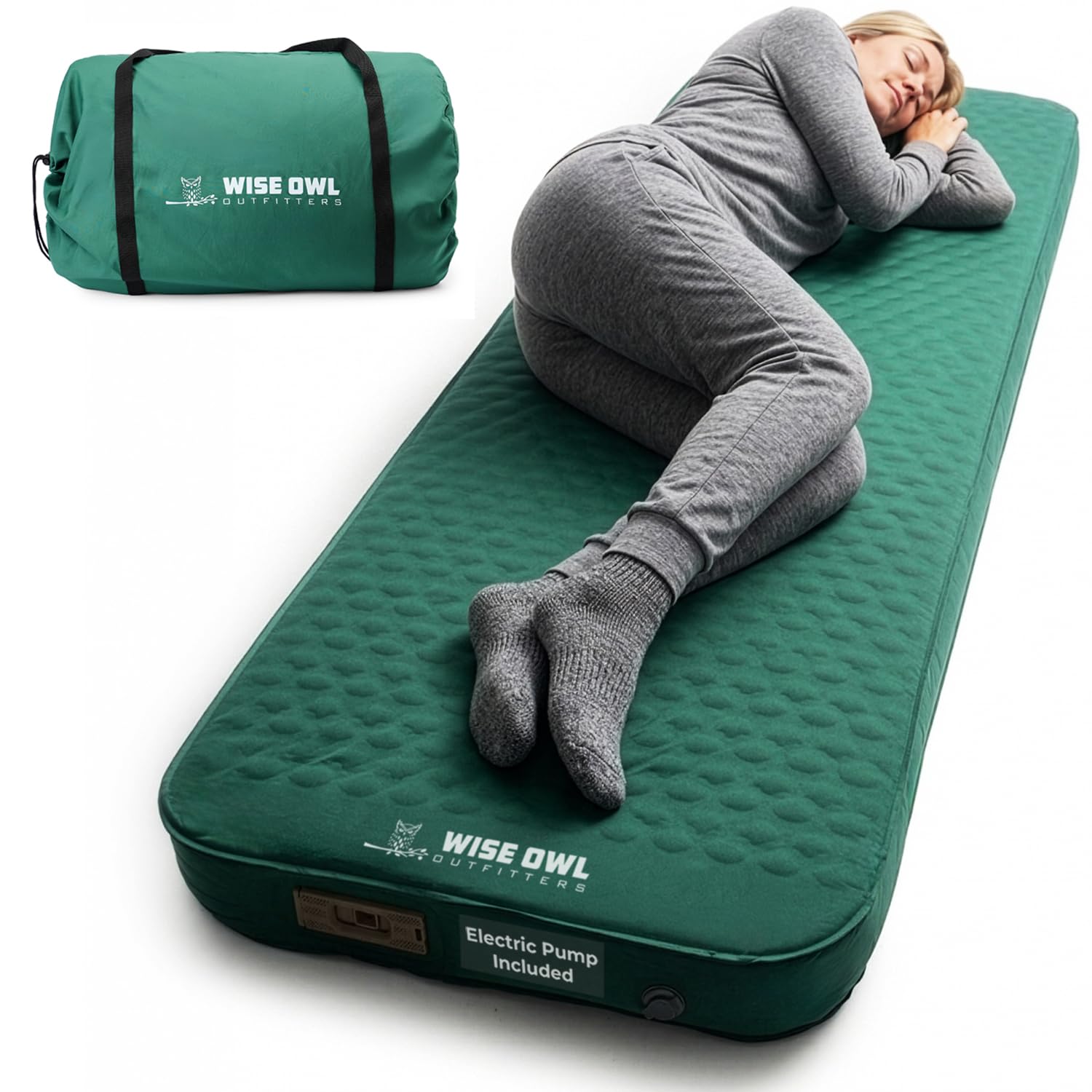
The lightest pad here at 4 pounds — the one that actually fits in a carry-on.
Most self-inflating foam pads are car-only. This Wise Owl pad weighs 4 pounds, which is far lighter than the Lost Horizon and enough of a difference to fold down and travel with. Owners describe it as lighter than its size suggests, and some pack it into a carry-on-sized bag when folded. It measures 78 x 28 x 4 inches and supports up to 200 pounds.
Setup is where it earns its keep. The removable USB-C electric pump (USB-C being the modern oval charging plug) inflates the pad in about 1 minute 30 seconds. Firmness is adjustable — check it by hand as it fills. The removable pump also handles deflation, so you can roll it tight and strap it with the included compression strap. The box includes the pad, pump, USB-C cable, compression strap, air nozzle, two repair patches, a carry bag and a manual.
Owners talk about build quality most: no leaks reported, and the collapsible-cell foam keeps its shape. The main limitation is the 200-pound weight cap, the lowest on this list. Heavier sleepers should look elsewhere. The zigzag foam design also means you cannot deflate it fully without the pump, so do not lose it. And despite the low weight, Wise Owl does not pitch this as a backpacking pad — it is a car-camping and short-haul mat first.
The standout: at 4 pounds with a pump that inflates in 1.5 minutes and a deflate that rolls it near flat, this is the most travel-friendly pad here.
The honest limit: 200 pounds is a hard ceiling — if you are above it, this pad is not built for you.
It suits: solo sleepers under 200 pounds who want comfort and easy pack-up on road trips.
It does not suit: couples, heavier sleepers, or anyone who needs a four-season insulation rating.
4. OGERY 3.15″ Memory Foam Sleeping Pad
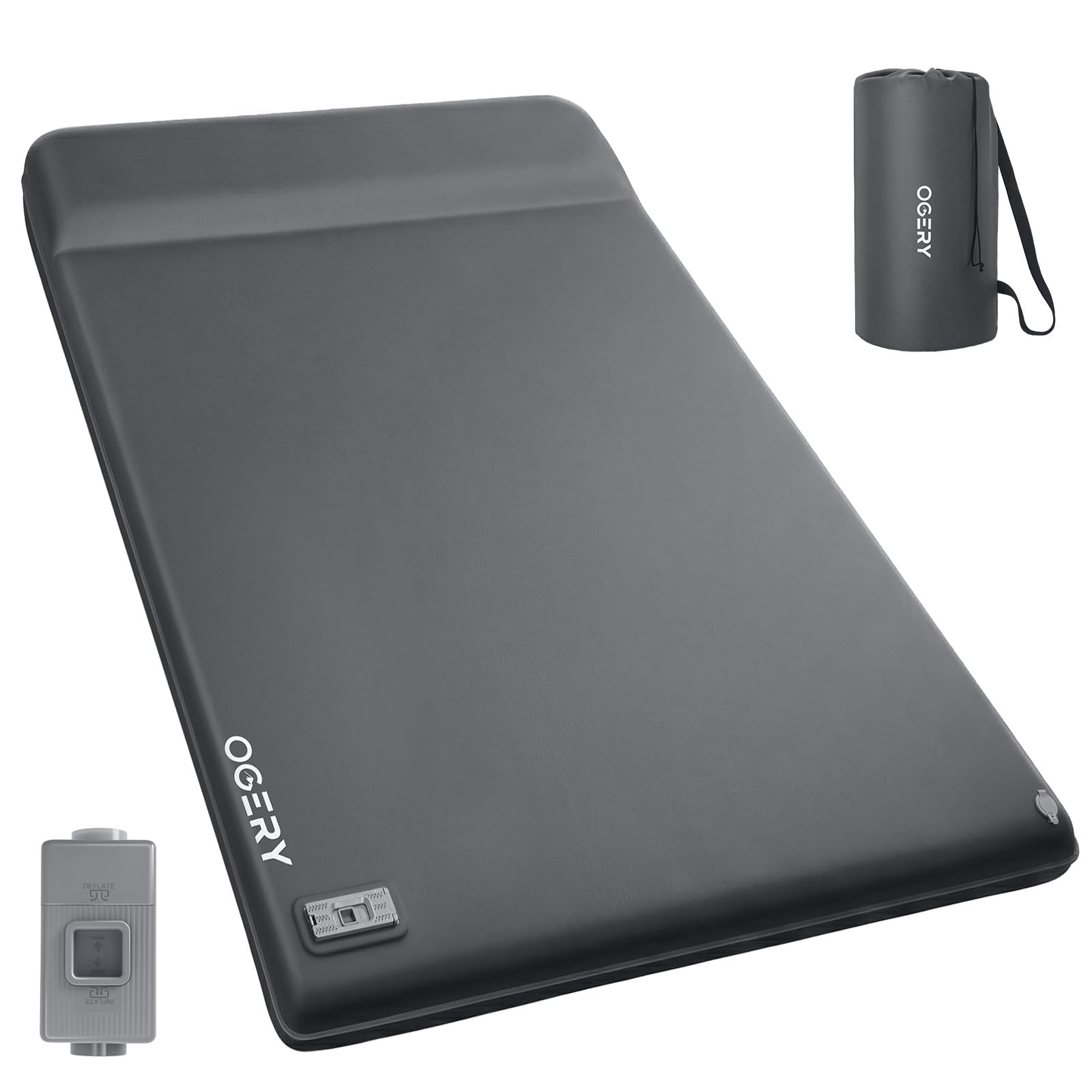
A 48.82-inch-wide foam pad with a built-in pillow — made for a truck bed, not a trail.
This OGERY pad is the one to consider if you sleep in a vehicle. At 76.77 x 48.82 x 3.15 inches, it fits a truck bed or minivan floor better than a full queen, and the integrated raised pillow means you do not need to pack a separate camping pillow. The memory foam core pairs with adjustable air pressure, so you can add or release air to change firmness.
Setup is quick by design. The built-in electric pump both inflates and deflates, so there is no separate pump to carry or lose. Owners mention it fills in under a minute and holds air for a couple of nights. The pump is USB-rechargeable and, on a full charge, works for roughly 5 minutes of pumping time across a wide temperature range. That short run time per charge is worth knowing if you plan a long trip without power.
Owners tend to praise the build quality, and the stretch-knit cover and built-in pillow add to the finished feel. The fit is the honest caveat: this is described as a small pad in some reports, and that is by design — 48.82 inches is closer to full-size than queen. If you want two adults to share one pad, this is not it. Some taller or heavier sleepers may want extra padding underneath. For a solo vehicle sleeper or a single adult plus a kid, the width works. The stretch fabric is quiet too, so turning over will not wake the tent.
Why it suits vehicle sleeping
- 48.82-inch width slots into a minivan or truck bed better than a full queen.
- Built-in pillow saves packing a separate camp pillow.
- Pump inflates and deflates in under a minute — fast setup and pack-down.
- Quiet stretch-knit surface reduces crinkling noise.
What to weigh before buying
- Not queen-width — do not buy it expecting two adults to share comfortably.
- Pump delivers only about 5 minutes per charge.
- 3.15 inches is the thinnest pad here; heavier sleepers may want extra padding.
Yes for: solo vehicle campers who want a compact foam pad with a built-in pillow and a fast pump.
No for: couples expecting a true queen width, or cold-weather campers who need a higher R-value.
5. Exped MegaMat Sleeping Pad, Duo Long Wide Plus

Cored foam, 3D sidewalls, and a surface that does not taper at the edges.
Exped builds this pad for people who camp often and want it to feel like a bed. The 4-inch cored polyurethane foam (open-cell foam that compresses small for packing) provides the support, and the 3D vertical sidewall construction keeps the sleeping surface full right to the edges — no tapering, so you do not roll off the side at 2 a.m. It measures 77.6 x 52 x 4 inches, which is a wide two-person bed but not a full 60-inch queen.
The insulation rating is R-value 8.1, well below the Lost Horizon’s 13 but still enough for cool-weather camping. The surface is 100% recycled 4-way stretch tricot polyester — soft and quiet, and the fabric resists stains and smells in a way owners of dogs and kids tend to appreciate. Two welded side handles make it easy to move and roll. A Top-Up Pump is included so you can add firmness as needed.
Quality is the most-discussed positive here by a clear margin, and customers note sleeping better than in their bed at home. The trade-offs are real, though. It is the priciest pad on this list, and a few reviewers point out it deflating overnight, which points to treating the valves and surface with care — the thin material punctures on keys left in a pocket. A repair patch is included. Inflation also takes time on the first go-round; expect to top it up manually. This is a premium pad for committed campers, not a starter.
Where it leads: quality and design — cored foam, 3D sidewalls, and a recycled stretch surface make this the most bed-like pad here for frequent campers.
What you accept: the highest price on the page and a material that needs careful handling — keep sharp objects away and store it deflated.
Worth it for: frequent campers and couples who want a durable, wide, bed-like pad and will care for it indoors.
Not the pick if: you want winter-level insulation — the Lost Horizon’s 13 outranks this pad’s 8.1 for cold ground.
Know the Specs
R-Value Explained
R-value rates how well a pad stops cold from the ground seeping into your sleeping bag. Higher means warmer. A pad with an R-value around 8 handles cool nights; an R-value of 13 is a genuine winter number. If you camp in shoulder-season cold, this is the figure to check before anything else.
Thickness and Foam Core
Thickness (listed as 3.15 inches, 4 inches, or 4.5 inches on these pads) keeps your hips and shoulders off the floor. The fill matters too — a foam core stays supportive even if a little air leaks out, while an air-only pad goes flat. Foam also stops the bouncy, waterbed feel of a plain air mattress.
Inflated Width and Length
This is the number that decides whether two people fit. Queen bedding runs 60 inches, but camping pads range from 48.82 to 60 inches across. Measure your tent floor before you commit. A pad that is narrow leaves someone sleeping on a seam; one that is too wide bunches at the walls.
Pump and Battery
Self-inflating foam pads still need a pump to reach full firmness. A built-in rechargeable pump saves carrying a separate inflator, but check the battery capacity (like the 2400mAh in the PineHike) and how many cycles it delivers per charge. Run time matters as much as inflation speed for longer trips.
Common Questions
Is a queen camping mattress big enough for two adults?
What R-value do I need for cold-weather camping?
Will a queen camping mattress fit in my tent?
Can I use a self-inflating camping pad as a guest bed at home?
Why does my self-inflating pad not fully inflate on its own?
How heavy is a queen camping mattress?
Does the built-in electric pump need to be charged?
What is the difference between a foam sleeping pad and a plain air mattress?
Can I use a camping mattress in an SUV or truck bed instead of a tent?
What weight capacity should I look for?
The Bottom Line
The strongest queen camping mattress pick for most couples is the Lost Horizon Option3. It is the only true 60-inch queen here, and it pairs that width with a 4.5-inch foam fill and an R-value of 13 — a combination that keeps two adults warm and off the ground even into cold weather. Comfort is the most-praised thing about this pad by a clear margin. If you want serious thickness and a high load rating for family camping without the premium outlay, the PineHike is the value pick at 660 pounds and an R-value of 9.5. And for solo vehicle campers or anyone who wants a compact pad with a built-in pillow, the OGERY fits a minivan or truck bed where a full queen will not.
How we choose
We do not accept paid placement. Every pick is matched to a real buyer and a real use-case; we do not hands-on test units.
Sources
Specifications: manufacturer listings and product documentation. Review insights: verified customer reviews, as of October 2026. Pricing: not shown on this page (it changes often); check the current price via the retailer link.
As an Amazon Associate, Aappliancez earns from qualifying purchases. This does not affect which products we feature.