Disclosure: Some links in this post are affiliate links. As an Amazon Associate I earn from qualifying purchases, at no extra cost to you. Learn more
Specs are compiled from manufacturer listings and verified buyer reviews and can change over time — please confirm the key details on the product page before buying.
A puppy food without chicken exists for one reason: your dog cannot handle chicken. Maybe the itching started a few weeks after you brought her home, or the stool never firmed up, or a vet finally named the trigger. Whatever got you here, the fix is the same — move to a formula whose first protein is lamb, salmon, turkey or duck, and make the change over a week to ten days so the stool stays firm.
This guide is built by comparing the manufacturers’ published specifications and the patterns across verified customer reviews, so you get each pick’s real strengths and trade-offs instead of marketing spin.
Below you will find fifteen chicken-free puppy formulas, ranked by how well they actually work for sensitive puppies and how easy they are to keep feeding. Every pick here lists its first protein openly, because that one line on the bag tells you more than any front-label claim. Choosing the right puppy food without chicken starts with the first named protein on the panel, then a check for chicken fat or poultry by-product meal further down.
Top Picks


How To Choose The Best Puppy Food Without Chicken
Your job here is narrower than it looks. You want a puppy formula with no chicken in it, one named protein source, and kibble a small mouth can actually chew. Get those three right and the remaining choices — bag size, brand, price — matter far less.
Read the first ingredient and the allergen line together
What matters is what comes first. A bag that leads with real lamb, salmon, turkey or duck is telling you which protein is doing the heavy lifting. Pair that with the allergen information listed for the product, because a formula can be grain-free and still carry chicken fat or poultry by-product further down the list.
Watch for the sneaky middle-of-label entries too. “Poultry by-product meal” and “chicken fat” are not the same as a lamb-first recipe, and a puppy with a true chicken sensitivity will react to either. If the label says chicken-free in the headline, verify it in the ingredient panel before you commit to a big bag.
Match kibble size to your puppy’s mouth
Small-breed puppies and toy breeds struggle with a large kibble — they chew it badly, swallow it whole, and then bring it back up. A smaller kibble, or a formula explicitly built for small and medium breeds, means your puppy actually eats the full portion you measure out.
Large-breed puppies have the opposite concern. Their formula needs carefully determined protein and mineral levels because they grow fast and their joints are still forming. A small-breed bag fed to a German Shepherd puppy undershoots the mineral levels its joints need, and a large-breed bag fed to a Yorkie comes in kibble too big for its mouth.
Plan for the switch, not just the bag
The most common reason a chicken-free food “fails” is speed. Moving straight from an old kibble to a new protein over one meal is what produces the runny stool people then blame on the recipe. Over roughly a week to ten days, mix increasing amounts of the new food into the old one and watch the stool firm up.
Buy a smaller bag for that first trial. Every pick below comes in a manageable size, and starting small means you are not stuck with a twenty-pound bag your puppy refuses to touch.
Decide how much convenience you want to pay for
Dry kibble is the easy default — scoop, seal the bag, and it keeps without refrigeration. Freeze-dried raw formulas take more handling because you may rehydrate them with warm water or broth first. Both are legitimate chicken-free choices; they just fit different routines and different budgets.
Side-by-Side Comparison
| Model | Best For | First Protein | Form | Bag Size | Amazon |
|---|---|---|---|---|---|
| Purina Pro Plan Lamb & Rice Puppy★ Best Overall | All-round chicken-free pick | Lamb | Dry | 6 lb | Amazon |
| Purina Pro Plan Sensitive Skin & Stomach SalmonBest for Sensitive Skin | Itchy skin and loose stool | Salmon | Dry | 4 lb | Amazon |
| Taste of the Wild High Prairie PuppyBest for Picky Eaters | Picky eaters, big appetites | Roasted bison | Dry kibble | 5 lb | Amazon |
| Diamond Naturals Large Breed Puppy Lamb & Rice | Large-breed growth | Lamb | Dry kibble | 20 lb | Amazon |
| Jinx Atlantic Salmon, Sweet Potato & Carrot | Budget-friendly salmon | Atlantic salmon | Kibble | 4 lb | Amazon |
| Blue Buffalo Life Protection Lamb & Oatmeal | Puppies needing grains | Lamb | Dry | 5 lb | Amazon |
| Blue Buffalo Basics Turkey & Potato | Limited-ingredient starter | Turkey | Dry | 4 lb | Amazon |
| Merrick Grain Free Beef & Sweet Potato | Muscle-building protein | Deboned beef | Kibble | 4 lb | Amazon |
| Wellness CORE Small Breed Puppy Turkey & Salmon | Small-breed kibble | Turkey | Dry | 4 lb | Amazon |
| Natural Balance L.I.D. Duck & Potato | Single-protein feeding | Duck | Pellet | 22 lb | Amazon |
| Farmina N&D Pumpkin Lamb & Blueberry Mini | Picky toy breeds | Lamb | Pellet | 2.50 kg | Amazon |
| NutriSource Grain Free Turkey & Whitefish | Rotational feeding | Turkey | Dry kibble | 12 lb | Amazon |
| VICTOR Sensitive Skin & Stomach Salmon Meal | Skin and coat recovery | Salmon meal | Pellet | 80 oz | Amazon |
| Zignature Puppy Formula Turkey | Limited-ingredient value | Turkey | Kibble | 4.1 lb | Amazon |
| Primal Pronto Freeze-Dried Mini Nuggets | Raw feeding | Chicken, beef & salmon | Freeze-dried cubes | 16 oz | Amazon |
Detailed Reviews
1. Purina Pro Plan Puppy Food Lamb & Rice 6 lb
Our pick — 4.5+★ from 11,000+ verified ratings; the strongest balance of quality and price.
Real lamb first, no chicken in sight — the quiet default for a puppy who cannot eat poultry.
This is the bag you buy when you want the switch to be boring. Real lamb sits first on the ingredient list, backed by a high-protein formula built to support lean muscle growth in a puppy under a year old. DHA from omega-rich fish oil is in there for brain and vision development, live probiotics support digestive health, and antioxidants back the developing immune system. Calcium, phosphorus and other minerals handle bones and teeth, while vitamin A and omega-6 fatty acids feed the skin and coat.
What sells it is the pattern across owner experiences with allergic puppies. One golden retriever owner summed up the whole category in a line: “After vet visits and tests, found out my golden retriever is allergic to chicken and simply changing his food to lamb and rice solved his problems.” That story repeats here — a puppy with chicken sensitivity stops itching once the poultry leaves the bowl, and a picky eater still cleans the bowl because the taste holds up. The formula is described as highly digestible (easy on the gut), which matters most in the first weeks of a switch when everything is in flux.
The 6 lb bag works as a trial size, and here is the direct contrast: against the 4 lb Jinx salmon bag, this Purina gives you 6 lb versus 4 lb — more food in one purchase, so a medium puppy gets further before you reorder. It is a dry kibble from a brand whose lamb and rice line has been the fallback for poultry-allergic dogs for years.
What earns the top spot
- Real lamb as the first ingredient, with no chicken in the recipe
- DHA from fish oil plus live probiotics in the same bag
- Highly digestible formula aimed at puppies under 1 year
- 6 lb bag gives you 50% more food than the 4 lb Jinx bag
Where it asks a little of you
- Lamb and rice is a single flavor lane — no poultry-free variety within the bag
- It runs as a veterinary diet formula, so read the feeding guide on the bag rather than guessing portions
Start here if: your puppy has a confirmed or suspected chicken sensitivity and you want the safest, most proven lamb-first switch.
Think twice if: your puppy has already reacted badly to lamb or rice, in which case move down to the salmon or duck picks.
2. Purina Pro Plan Sensitive Skin & Stomach Puppy Food Salmon & Rice 4 lb
For the puppy scratching through the night — salmon and rice built around a settled stomach.
Two problems usually arrive together with a chicken sensitivity: the itching and the loose stool. This formula is aimed squarely at both. Real salmon is the number one ingredient, and the recipe carries fish oil as a source of EPA and DHA for heart health, plus DHA specifically for brain and vision development. Rice is the easily digestible grain here, omega-6 fatty acids and vitamin A handle skin and coat, and natural prebiotic fiber feeds the intestinal bacteria that keep digestion steady. It is corn free, wheat free and soy free, with no artificial colors or flavors.
Taste is the surprise. Puppies on a sensitive-stomach formula often turn their noses up, and that is exactly what does not happen here — the bowls come back empty. Owners who were dealing with itching and diarrhea on a long-standing food describe both problems clearing up after the switch. A breeder with decades of experience recommended this exact salmon formula, and the puppy in that household had no trouble with tummy or skin. Coat condition shows up in the feedback too, with puppies reported as having soft, healthy coats on this food.
The trade-off worth knowing before you order: this is a 4 lb bag, so a larger puppy will go through it quickly during the trial stage. That is fine for testing, less fine as a permanent size. Treat the first bag as your two-week switch supply, then size up once you know the stool is firm and the scratching has stopped.
The itch-and-stool fix: salmon as the first protein alongside prebiotic fiber and omega-6 makes this the pick when skin and digestion are the two symptoms you are chasing.
The honest catch: at 4 lb it is a trial size, not a bulk buy — plan to reorder once your puppy proves it works.
Reach for this if: your puppy is itchy, gassy or producing soft stool and you suspect poultry is behind it.
Look elsewhere if: you need one big bag that lasts a month — the 6 lb lamb bag or the 20 lb Diamond bag covers that better.
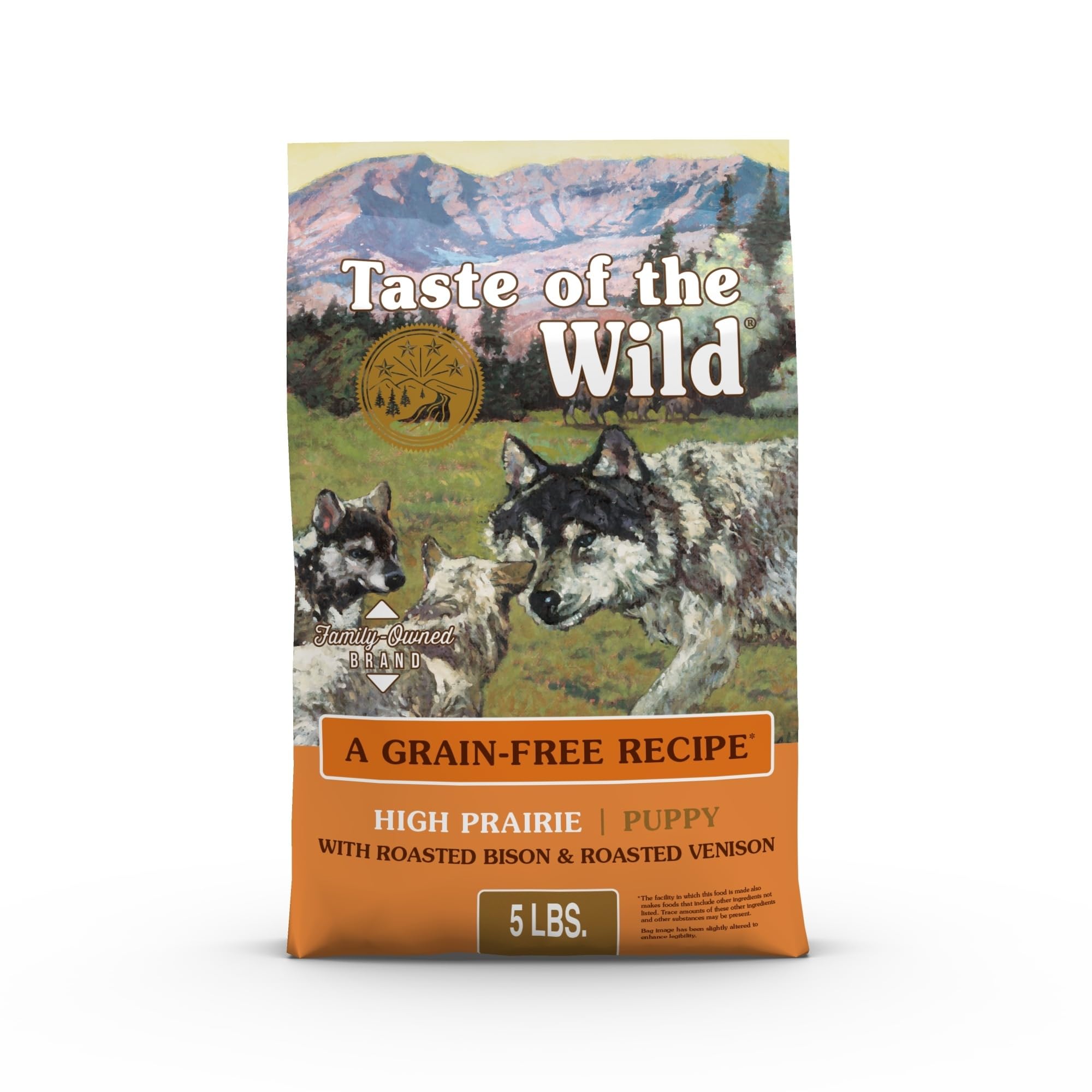
3. Taste of the Wild High Prairie Puppy Dry Dog Food 5 lb
Bison and venison instead of poultry — the chicken-free bag that gets finished at every meal.
Some puppies are not allergic so much as impossible to feed, and that is where this bag earns its place. Real meat is the number one ingredient, specifically roasted bison and roasted venison, at a high-protein 28% for bones, joints and lean muscle in growing puppies. Vitamins and minerals come from superfoods, omega fatty acids cover skin and coat, and each serving carries species-specific K9 Strain probiotics plus antioxidants and prebiotics for digestion and immune support. It is grain free and made in the USA by a family-owned company.
The pattern here is loud and consistent: puppies finish the bowl. Dogs that were fussy on other foods eat this one from an automatic feeder without overeating, and coats come out shiny with normal, regular stool even in dogs with finicky digestion. Owners staying on it long-term describe good energy and steady condition year after year, which is the real test of any puppy kibble — does it still work when the novelty wears off.
Two things to weigh honestly. The kibble runs small, which smaller mouths appreciate and bigger puppies may gulp, and the smell of the bison recipe split opinion — some found it pleasant, others found it strong. Neither is a deal-breaker, but if you have a large-breed puppy who inhales food, watch the portion rather than free-feeding.
Why it lands: bison and venison as the first ingredients plus 28% protein give a picky puppy a reason to eat and a growing body something to build on.
Fair warning: the small kibble size suits toy and small breeds best — a large-breed puppy will need portion control on this one.
Best matched to: a chicken-sensitive puppy who also turns up their nose at ordinary kibble.
Not the fit for: a puppy whose stomach has reacted to rich novel proteins before — start with the lamb pick instead.
4. Diamond Naturals Large Breed Puppy Dry Dog Food 20 lb

Twenty pounds of lamb-first kibble for the puppy that will not stay small for long.
Large-breed puppies are a different job. Their protein and mineral levels need to be carefully determined because they grow fast and their joints carry that weight early. This formula is built for exactly that, with real pasture-raised lamb as the number one ingredient and live, naturally occurring microorganisms included for gut support. And the 20 lb bag is the practical answer to a big dog’s appetite.
Owners who have fed Diamond Naturals since the 1990s for St. Bernards, AmStaffs and Dobermans report no nutritional deficiencies over that stretch, and they specifically choose the lamb version because of chicken allergies in their dogs. Puppies on it gain weight steadily, stool stays firm, and one underweight rescue puppy corrected its knuckling after starting the food. For chicken-allergic dogs, this lamb line is a long-established option rather than a new experiment.
The honest note: large-breed formulas are rich, and an aggressive switch can produce loose stool — a slow transition matters more here than on a small bag. Also check your shipment when it arrives, because a bag can occasionally show up with a damaged seal in transit. Neither issue is about the recipe itself.
Where it delivers
- 20 lb bag sized for a large breed’s appetite
- Pasture-raised lamb as the first ingredient, no chicken
- Lamb formulation chosen by owners specifically because of chicken allergies
- Protein and mineral levels set deliberately for large-breed growth
Where to be careful
- Rich formula — transition slowly over a week or more
- Large kibble suits big mouths, not toy breeds
Worth grabbing if: you are raising a Lab, Shepherd, Retriever or similar and need a big bag your puppy will still be eating in a month.
Better to pass if: your puppy is under about ten pounds — the kibble and the formula are both aimed at bigger bodies.
5. Jinx Grain Free Dry Dog Food 4 lb

Salmon, sweet potato and carrot in one bag — the salmon option that does not strain the budget.
Real Atlantic salmon is the first ingredient in this 4 lb bag, which is the whole point for a puppy who cannot eat chicken. Omega-3 and omega-6 fatty acids from salmon and flaxseed support skin and coat, fiber-rich sweet potatoes and live probiotics help the gut, and there is no corn, wheat, soy or filler in the recipe. The kibble is described as a good size for small-to-medium mouths, and the smell is mild rather than overpowering — a small thing that matters if you keep the bin in the kitchen.
The 4 lb size is the practical counterpoint to the 6 lb Purina lamb bag above: 4 lb versus 6 lb, so this one is the lighter commitment if you are still testing whether salmon is the right protein. For a trial, that is exactly the right shape. Owners of a 10 lb dog describe a slow switch with no tummy trouble and a dog who eats happily. A Husky-Akita mix with a sensitive stomach that refused a pricier Purina One switched over and came out with more energy, more muscle and a softer coat.
It is a flexible recipe in one respect: the label lists all life stages, so you are not swapping bags the moment your puppy turns one. That saves you another transition. The catch is simply the bag size — a growing medium puppy will empty 4 lb faster than you would like.
What you get for the money: real salmon first, probiotics and omega fatty acids, in a budget-friendly 4 lb bag that suits a trial switch.
The small print: all-life-stages formula means it is not tuned specifically to puppy growth the way the Purina and Diamond bags are — fine for many puppies, worth knowing.
A smart fit for: a salmon-friendly puppy on a tighter budget who still needs a named protein first on the label.
Skip the trial if: your puppy has shown sensitivity to fish — move to the turkey or duck picks instead.
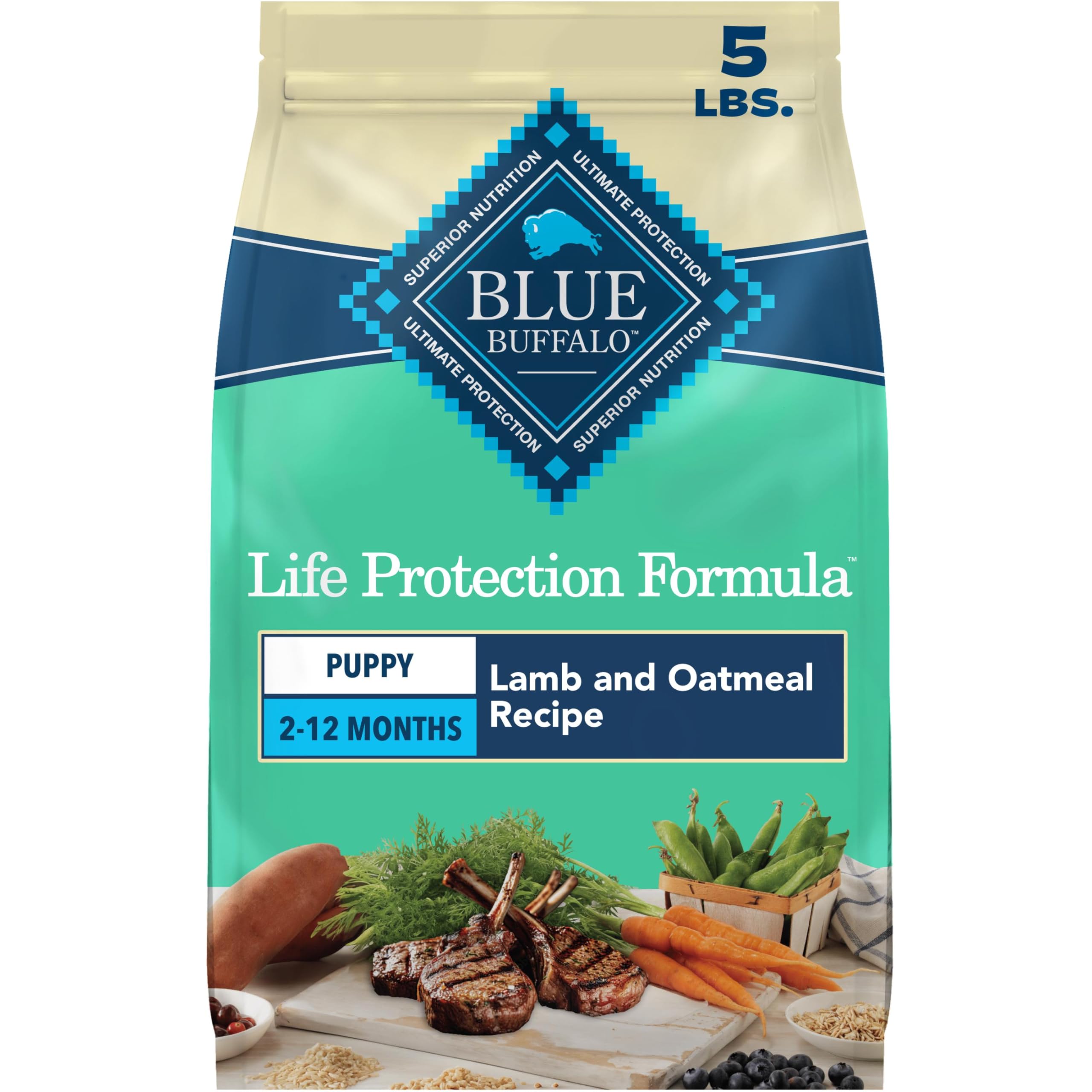
6. Blue Buffalo Life Protection Puppy Dry Dog Food 5 lb
Lamb, oatmeal and barley for the puppy who needs grains as much as she needs poultry out.
Not every chicken-sensitive puppy needs a grain-free bag, and this one leans the other way on purpose. Real lamb is the first ingredient for puppies from 2 to 12 months, with oatmeal, barley and brown rice providing gentle, regular digestion and steady energy. It adds DHA and ARA — the fatty acids found in mother’s milk — plus choline for brain and eye development, and calcium and phosphorus for bones and teeth. Natural prebiotic fiber supports stool quality, and the recipe carries no poultry by-product meals, no corn, wheat or soy, and no artificial flavors or preservatives.
The LifeSource Bits are the distinguishing feature: a blend of antioxidants, vitamins and minerals formed at a lower temperature to preserve potency. That blend is where the immune support claim lives. In practice, owners switching off a cheap grocery kibble describe runny stool firming up within about four days and energy climbing, and picky French Bulldogs and Doodles take to the lamb flavor readily.
One oddity to know about: the recipe is named Lamb and Oatmeal, yet oatmeal does not appear in the ingredient list a buyer would read on the bag. It is a naming quirk rather than a safety issue, but if oats were the specific reason you chose this formula, check the panel before you commit to a big order.
Where it shines: a grain-inclusive lamb recipe with DHA, ARA and the antioxidant LifeSource Bits, in a 5 lb bag that suits a two-to-twelve-month puppy.
The naming wrinkle: oatmeal is in the product name but not in the listed ingredients — pick this for the lamb and the grains you can verify, not for the oats.
Pick it when: your puppy does better on a grain-inclusive diet and you want lamb as the protein.
Move on if: your vet has put your puppy on a grain-free plan — the Basics turkey recipe below is the closer match.
7. Blue Buffalo Basics Turkey & Potato Puppy Dry Dog Food, 4 lb

One animal protein, no chicken anywhere — the short ingredient list a sensitive puppy needs.
When a puppy reacts to everything, the fix is usually subtraction. This recipe runs on a single animal protein source — real turkey as the number one ingredient — with potato alongside, and it is explicitly chicken free and beef free. There is no corn, wheat, soy or dairy, and no chicken or poultry by-product meals. DHA supports brain and eye development, and the antioxidant LifeSource Bits carry the immune support.
For a puppy whose chicken allergy was the whole problem, the result is straightforward: firm stool, a shinier coat, healthy weight and muscle, and growth back on track. Sensitive-stomach puppies settle on it. Note the calorie density — the puppy formula runs about 20% higher in calories per cup than the adult version, which helps a puppy hold weight when overfeeding causes vomiting and underfeeding causes loss.
Honesty time: palatability is the split. Some puppies eat it without enthusiasm and keep it down, others refuse it outright, and a few owners found the stool softer and lighter than they wanted before eventually switching. That is the nature of a limited-ingredient formula — fewer ingredients means fewer flavors to hide behind. Give it a fair two-week switch before you judge.
What makes it worth trying
- Single animal protein — turkey — with chicken and beef both absent
- No corn, wheat, soy or dairy in the recipe
- DHA plus LifeSource Bits for development and immune support
- Puppy formula carries roughly 20% more calories per cup than the adult version
Where it may not land
- Some puppies simply will not eat a limited-ingredient turkey recipe
- Stool can run softer than expected during the first weeks
The right call for: a puppy with multiple suspected triggers who needs the shortest possible ingredient list.
Try elsewhere first if: your puppy is a fussy eater with no confirmed allergy — the bison or lamb bags get eaten more reliably.
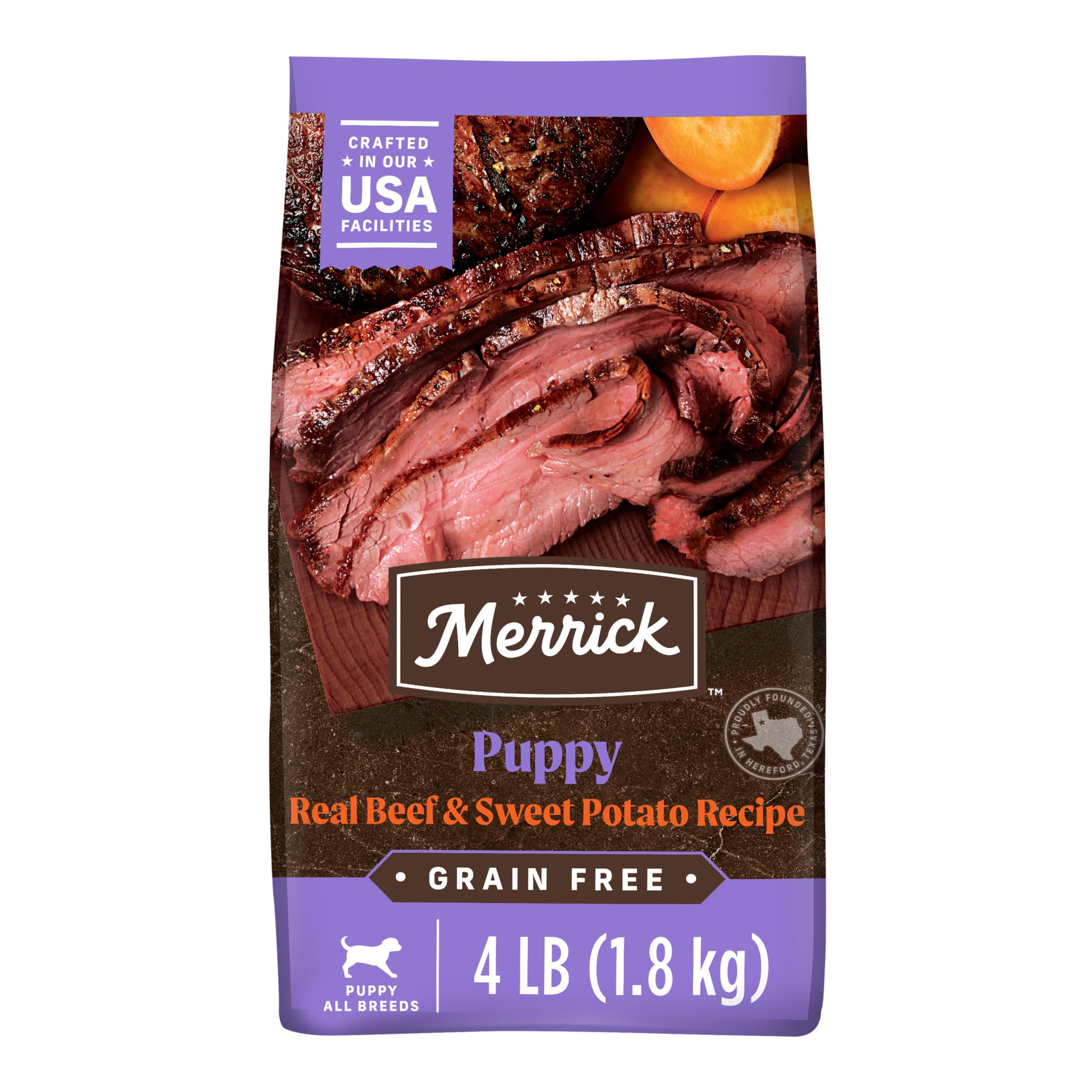
8. Merrick Premium Grain Free Dry Puppy Food 4 lb
Beef and sweet potato with a protein blend built for muscle — and a kibble sized for puppy teeth.
Real deboned beef is always the first ingredient here, and the numbers behind it are unusual for a puppy bag: a blend of 52% protein and healthy fat ingredients, with 48% produce, fiber, vitamins and minerals, and 70% of the protein coming from animal sources. DHA (a fatty acid that supports brain development) is included, omega-6 and omega-3 fatty acids feed skin and coat, and glucosamine and chondroitin are in there for hips and joints. Smaller-sized kibble makes it easy for a puppy to chew, and the recipe is gluten free with no artificial colors, flavors or preservatives.
Tiny mouths do well on it. Miniature Bichons around five and six and a half pounds eat it easily, and the fussiest female in that household still finishes her bowl. Dogs recovering from surgery have come back to healthy weight on the puppy formula, with firm, perfect stool along the way.
The honest part is that beef is a rich protein and appetite varies. Some puppies need hand-feeding at first, and a German Shepherd puppy who preferred this over chicken puppy foods still did not finish every meal and had slightly runny stool that did not settle within a week. If your puppy has a delicate gut, transition slower than the bag suggests.
Why it stands out: deboned beef first, 70% of protein from animal sources, plus glucosamine and chondroitin — rare in a puppy kibble.
What to expect: a rich beef recipe with variable appetite; slow the switch and measure portions rather than free-feeding.
Fits best with: small-breed puppies and toy breeds who need a small kibble and a protein-dense formula.
Probably not for: a puppy with a known beef sensitivity or a very delicate stomach — start with turkey or lamb instead.
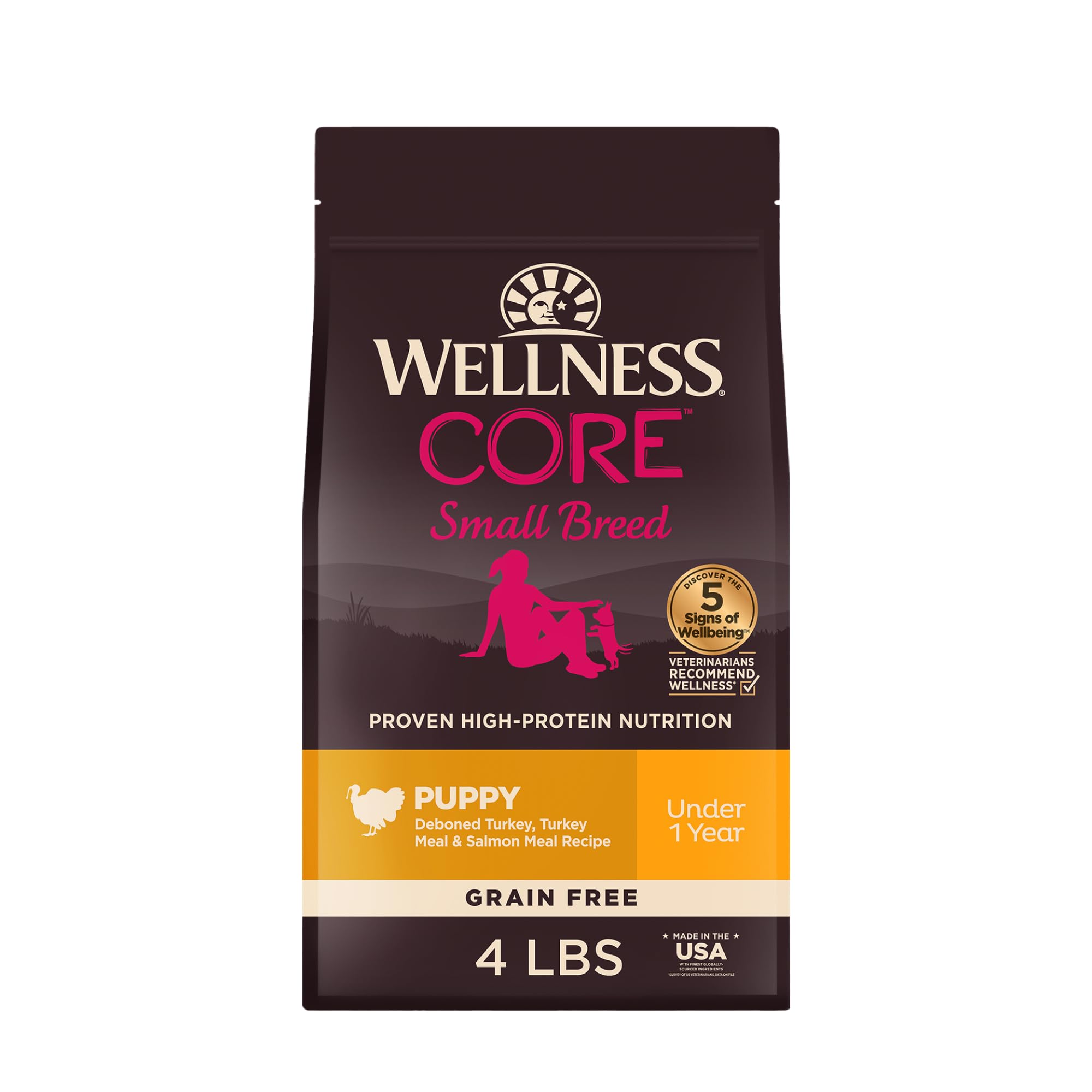
9. Wellness CORE Small Breed Puppy Dry Dog Food 4 lb
Grain-free turkey and salmon in a kibble size built for small mouths — with one label caveat.
Small-breed puppies get a formula of their own here. Responsibly sourced turkey is the headline protein, balanced with nutrient-rich superfoods, and the recipe is built on 53% high-quality protein ingredients for lean body mass and muscle tone. Guaranteed DHA supports brain development, antioxidants back the immune system, probiotics help digestion, and calcium and phosphorus handle bone and muscle growth. There is no corn, wheat or soy, no poultry by-product meal, and no artificial colors or preservatives.
The kibble size is the practical win — a new Dachshund takes to it with well-formed stool, healthy growth and good coat, and a picky, non-food-motivated dog consistently chooses it over fresh chicken and vegetables. Owners who picked it for the ingredient list, spinach and blueberries included, find the resealable bag stays fresh.
Now the caveat that matters most on this particular list. The turkey flavor has been reported to also contain chicken, and at least one chicken-allergic dog had to stop because of it. That is the single most important thing to check on this bag before you buy — read the panel for the specific recipe you are ordering, and if chicken appears, this is not your formula. Digestibility also split opinion, with some puppies settling in after an adjustment period and others refusing it.
What wins people over: small-breed kibble size, 53% protein ingredients, DHA, probiotics, and calcium and phosphorus for growth.
The label check you must do: the turkey recipe has been reported to carry chicken — verify the ingredient panel for your exact bag before feeding a chicken-allergic puppy.
Good match for: a small-breed puppy with no chicken allergy who needs a fine kibble and a protein-dense grain-free recipe.
Not for you if: chicken is the confirmed trigger — confirm the panel first, and otherwise choose the Blue Basics turkey bag.
10. Natural Balance Limited Ingredient Puppy Dog Food 22 lb

Duck, potato and a 22 lb bag — the single-protein route for a puppy who has tried everything else.
Duck is the move when lamb, salmon and turkey have all been tried. This limited-ingredient recipe uses duck as its single animal protein source, a rich protein carrying essential amino acids for strong muscles. Wholesome grains including brown rice support digestion and stomach health, omega-3 and omega-6 fatty acid sources feed skin and coat, and DHA is included for brain development. The kibble is formed in smaller bites to fit puppy jaws and teeth, and the recipe is free of corn, soy and wheat with no artificial colors or flavors.
A 22 lb bag is the other half of the pitch. For a medium puppy, one order carries you well past the trial stage, and the smaller bites mean a puppy with a small mouth still eats the full portion rather than dropping half of it on the floor. It is a limited-ingredient formula, which is exactly what you want when you are narrowing variables to find what your puppy tolerates.
The trade-off is straightforward: duck is a novel protein, and novel proteins can take longer for a puppy’s gut to accept than the lamb or salmon they may have had before. Budget a full slow transition rather than a fast swap, and keep the first bag small in your mind as a test even though the bag itself is large.
The case for it: duck as the only animal protein, brown rice and omega fatty acids, DHA for development, and small bites in a 22 lb bag.
Where to slow down: duck is a novel protein — plan a longer transition than you would for lamb, and watch stool closely for the first two weeks.
Choose this when: you have already ruled out lamb, salmon and turkey and need a fresh single protein your puppy has never eaten.
Hold off if: your puppy is brand new to chicken-free food — start with a familiar protein like lamb, then rotate here.
11. Farmina N&D Pumpkin Mini Puppy Food 2.50 kg
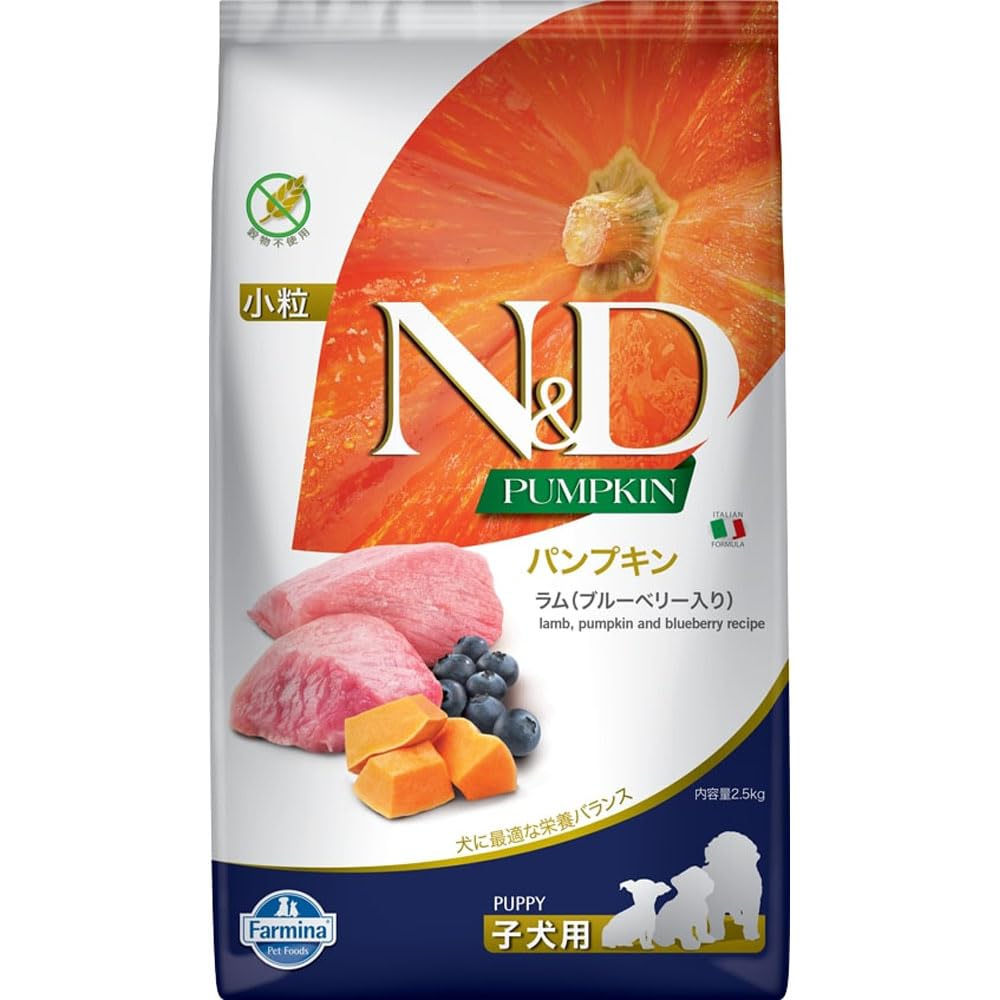
Lamb, pumpkin and blueberry in a mini kibble — the food picky toy breeds finally finish.
This is the bag you reach for when your puppy has rejected everything, including the expensive stuff. It is a grain-free, limited-ingredient recipe built on lamb with pumpkin and blueberry, high in animal protein, and made in a mini size for small mouths. The formula comes from an Italian brand operating under strict EU ingredient controls, and the first ingredients are real proteins rather than meals — no artificial preservatives either.
Picky eaters are where this one earns its keep. Maltipoos that turned down fresh, raw and freeze-dried food accepted this puppy formula, then moved to the adult version, with improved hair, skin, nails and energy. A very fussy poodle keeps coming back to it. Standard Poodles rotating between the cod and lamb recipes show beautiful coats, easy digestion and excitement at every meal.
Fair warning on the cost, because it is real: this is one of the pricier bags on the list, and it is a smaller 2.50 kg size. The counterargument owners make is that it is worth it for the ingredient quality. If your puppy is not fussy, you can spend less and get the same result from a lamb or salmon pick above.
Where it pays off: real proteins rather than meals at the top of the list, grain free, mini kibble, and a record of winning over puppies who refuse everything else.
The genuine catch: premium-tier cost in a smaller bag — if your puppy is a confident eater, the cheaper lamb picks do the same job.
Made for: toy and small-breed puppies who turn their nose up at food, and owners willing to pay for the ingredient list.
Not necessary if: your puppy already eats well on a mid-range lamb or salmon formula.
12. NutriSource Grain Free Puppy Food 12 lb

Turkey and whitefish with probiotics coated on the outside of every kibble — built so you can switch proteins without a stomach upset.
Turkey is the number one ingredient in this grain-free recipe for small and medium breed puppies, and there is no corn, wheat, soy or by-product in the bag. what separates it is the gut system: probiotics (good bacteria) are coated on the outside of each kibble so they absorb quickly, paired with BIO-MOS prebiotic, Bioplex trace minerals and Sel-Plex selenium yeast. DL Methionine, choline chloride, taurine and L-Carnitine are in there for heart and whole-body support, with balanced omega-3 and omega-6 fatty acids for brain, skin and coat.
The rotation angle is the real selling point for a chicken-sensitive puppy. NutriSource formulates its recipes so you can switch between proteins without digestive upset, which means you are not locked into one bag forever if your puppy’s taste shifts or a formula stops agreeing with her. A 12 lb bag gives you a longer runway than the 4 lb bags above, so a small-to-medium puppy gets through the transition and several weeks beyond it on one order.
That rotation claim is the brand’s own formulation promise, not something years of owner reports have confirmed yet.
What it brings: turkey first, probiotics coated on the kibble, BIO-MOS prebiotic, taurine and L-Carnitine, in a 12 lb bag for small and medium breeds.
The fair caveat: a short review history compared to the established lamb and salmon picks — buy it expecting to evaluate the stool yourself.
A strong fit for: owners who plan to rotate between proteins over a puppy’s first year and want the gut support to make that easy.
Less compelling if: you want a formula with years of owner experience behind it — the Diamond lamb bag has that in spades.
13. VICTOR Sensitive Skin & Stomach 5 lb

Salmon meal and gluten-free grains for the dog whose skin has been the problem all along.
This one is built around a specific complaint: skin. Salmon meal is the first ingredient in a nutrient-dense recipe, made with gluten-free grains and explicitly no chicken, aimed at dogs prone to allergies. It carries proper levels of omega-3, omega-6 and vitamin E to nourish skin and coat, plus prebiotics and probiotics for gut health and immune support. VICTOR’s proprietary VPRO blend adds a mix of supplements, vitamins and minerals, and every bag is produced in the company’s own Texas facility.
The feedback centers on skin turning around. Dogs with severe allergies, fur loss and constant scratching come out with thicker, shinier coats, perfect stool and no stomach trouble, and a dog with yeasty nails and bald ears regrew hair on this food. Owners who had been paying far more for a premium brand find the price reasonable by comparison, and the food is palatable enough that portions need watching — dogs eat it eagerly.
Size it honestly: the 5 lb bag and the pellet form suit a medium dog, and digestion drew mixed reactions across owners, with some dogs doing beautifully and others getting gas. If your puppy has a delicate gut as well as sensitive skin, start smaller and slower than the bag suggests.
Why it earns a place
- Salmon meal as the first ingredient, with no chicken and gluten-free grains
- Omega-3, omega-6 and vitamin E aimed at skin and coat
- Prebiotics and probiotics plus the VPRO supplement blend
- Made in VICTOR’s own Texas facility
Where it can trip up
- Digestion split opinion — some dogs thrived, some had gas
- The pellet form is firm; a very young puppy may need it softened
Point this at: a puppy whose chicken allergy showed up as itchy, flaky skin and a dull coat rather than as stomach trouble.
Look past it if: your puppy’s only symptom is loose stool — the Purina salmon and rice bag targets that more directly.
14. Zignature Puppy Formula Dry Dog Food, Turkey, 4.1 lb Bag
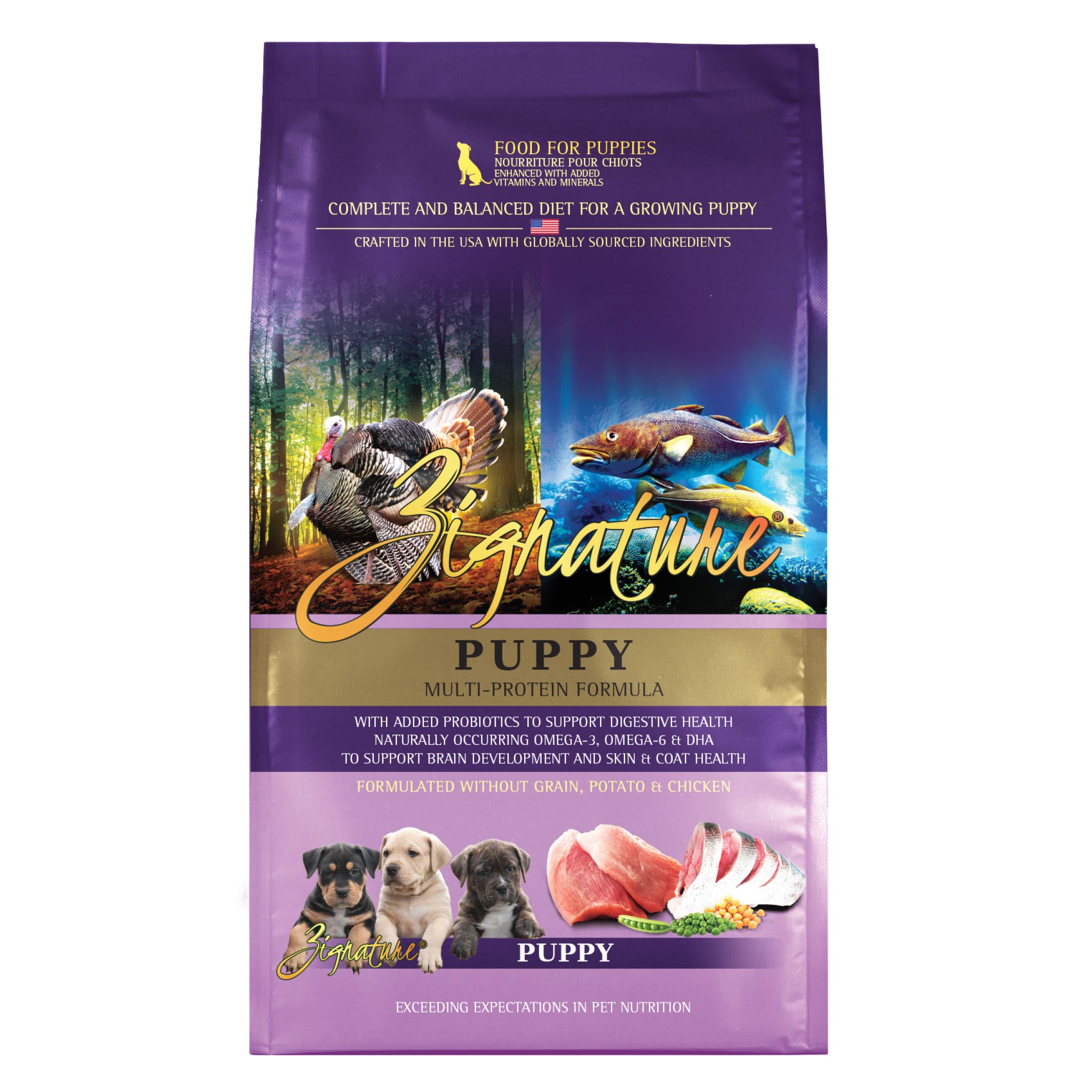
A turkey-based limited-ingredient kibble a Yorkie owner described in three words: no chicken in it.
Limited ingredients, one protein lane, and a formula that keeps things simple. This turkey recipe adds probiotics for digestive health and carries naturally occurring omega-3, omega-6 and DHA for brain development plus skin and coat. It is a limited-ingredient diet for all life stages, which means you are not swapping bags when your puppy turns one, and the kibble runs small enough that little mouths manage it without a struggle.
Small dogs do well on it. Yorkies eat it happily, a pug puppy sprints to the bin the moment it opens, and mini Dachshunds fed long-term stay lean and energetic with a vet asking about the diet. The portion math works in its favor too — recommended servings are small, around a quarter cup rather than a full cup, so a bag stretches much further than the size suggests.
Two practical notes. It is a multi-protein recipe rather than a strict single-protein one, so if your puppy reacts to more than chicken, read the panel closely. And the 4.1 lb bag is a trial size — good for the switch, short for the long haul.
What it does well: turkey, added probiotics, omega-3, omega-6 and DHA, in a limited-ingredient formula for all life stages and a small, easy kibble.
Read before buying: it is multi-protein, so a puppy with several sensitivities should have the ingredient panel checked first.
Suits: small and toy puppies who need a fine kibble and a chicken-free, limited-ingredient diet that carries into adulthood.
Not ideal for: a puppy with confirmed reactions to more than one protein — the duck single-protein bag is safer.
15. Primal Pronto Freeze-Dried Puppy Food, Mini Nuggets, 16 oz

Raw nutrition without the freezer — freeze-dried nuggets a puppy can eat as a meal, topper or treat.
This is the different route on the list: a freeze-dried raw recipe formulated specifically for puppies, made with cage-free chicken, grass-fed beef and wild-caught salmon. Protein-rich and nutrient-dense, it is aimed at developing muscles, brain, gut, skin, coat, teeth and eyes during early growth. It is gently freeze-dried rather than high-heat cooked, grain free, and made with USDA certified organic produce and no synthetic vitamins or minerals. There is no corn, wheat, soy, lentils or legumes, and no artificial flavors, colors or preservatives.
It is the most flexible format here. Serve it as a complete meal, scatter it as a topper over kibble, or use a nugget as a high-value treat. You can rehydrate with warm water, bone broth or goat milk for a softer, moisture-rich texture, or feed it dry if your puppy prefers. Digestibility is where it earns attention: a puppy’s stomach settles after eating it, and the recipe is described as supporting improved nutrient absorption and reduced stool volume compared to heavily processed foods.
Two things you need to know before ordering. First, this recipe contains chicken alongside beef and salmon, so it is only a fit if your puppy’s trigger is something other than poultry — this is not the bag for a confirmed chicken allergy. Second, cost is the recurring theme in the feedback, and a 16 oz bag of freeze-dried food disappears fast. It is a premium format with a premium upkeep.
Where it makes sense
- Freeze-dried raw, shelf-stable, no freezer required
- Works as a full meal, a topper or a training treat
- USDA certified organic produce, no synthetic vitamins or minerals
- Rehydrate with warm water or broth for an easier chew
What rules it out for some
- Contains chicken — not suitable for a confirmed chicken allergy
- Premium-tier cost with a small 16 oz bag
Right for: a puppy with a non-poultry sensitivity whose owner wants a raw, minimally processed option without freezer handling.
Wrong for: a puppy whose confirmed trigger is chicken — pick the lamb, salmon or duck bags above instead.
Know the Specs
The First Ingredient
The ingredient listed first on a bag is the one present in the largest amount by weight, so it tells you which protein a puppy is actually eating most of. A bag that leads with real lamb, salmon, turkey or duck is a chicken-free formula in practice. A bag that leads with a grain or a vague “meat meal” tells you far less. Always cross-check the first ingredient against the allergen information listed for that product, because chicken can hide further down the list as fat or by-product meal even when the front of the bag does not mention poultry.
Protein Percentage and Source
A higher protein percentage generally means more of the bag is built for muscle and growth, which matters during a puppy’s first year. What matters just as much is where that protein comes from — a formula where most of the protein is animal-based behaves differently from one padded out with plant protein. Look for a declared figure and a named animal source rather than a bare percentage with no ingredient behind it.
Kibble Size and Form
Kibble size decides whether your puppy actually eats the portion you measure. A fine kibble suits toy and small breeds, while a large kibble is built for big mouths and larger jaws. Freeze-dried and pellet forms sit in between — pellets are firm and can be softened, and freeze-dried nuggets can be rehydrated with warm water or broth for easier chewing. A kibble too large for the mouth gets chewed badly, swallowed whole or dropped, so the measured portion never actually gets eaten.
Bag Size and Feeding Rate
Bag size is really a question of how long the food lasts. Feeding rates vary widely between recipes, so a smaller bag of a dense formula can outlast a larger bag of a lighter one. Buy a small bag for the first switch so you are not stuck with a large bag your puppy refuses, and size up only once the stool has firmed and the scratching has stopped.
Common Questions
How do I know a puppy food truly has no chicken in it?
Will switching to a chicken-free food stop my puppy’s itching?
How long should a food transition take for a puppy with a sensitive stomach?
Is a grain-free puppy food better if my puppy cannot eat chicken?
What is the difference between a limited-ingredient and a single-protein puppy food?
Can a large-breed puppy eat a small-breed puppy food?
How long does a bag of puppy food last?
Should I pick lamb, salmon, turkey or duck for a chicken-allergic puppy?
Is freeze-dried raw puppy food suitable for a chicken-allergic dog?
Does a puppy food without chicken still give my puppy everything she needs to grow?
The Bottom Line
For most puppies with a chicken sensitivity, the puppy food without chicken that solves the most problems at once is the Purina Pro Plan Lamb & Rice puppy bag — real lamb first, DHA and live probiotics in the same formula, and a long record of poultry-allergic dogs settling on it. If the problem is skin and stool rather than appetite, the Purina salmon and rice formula is the closer match. And when you are raising a big dog that needs a big bag, the Diamond Naturals large-breed lamb bag is the one to reach for.
One honest nudge before you order: buy the smallest bag of your chosen protein first. A chicken-free food only proves itself after a slow switch and a couple of weeks of watching stool and skin, and starting small means you find out before you commit to a large bag. Pick one chicken-free protein, switch over a week to ten days, and judge the result by stool and skin after two weeks.
How we choose
We do not accept paid placement. Every pick is matched to a real buyer and a real use-case; we do not hands-on test units.
Sources
Specifications: manufacturer listings and product documentation. Review insights: verified customer reviews, as of October 2026. Pricing: not shown on this page (it changes often); check the current price via the retailer link.
As an Amazon Associate, Aappliancez earns from qualifying purchases. This does not affect which products we feature.