Disclosure: Some links in this post are affiliate links. As an Amazon Associate I earn from qualifying purchases, at no extra cost to you. Learn more
Specs are compiled from manufacturer listings and verified buyer reviews and can change over time — please confirm the key details on the product page before buying.
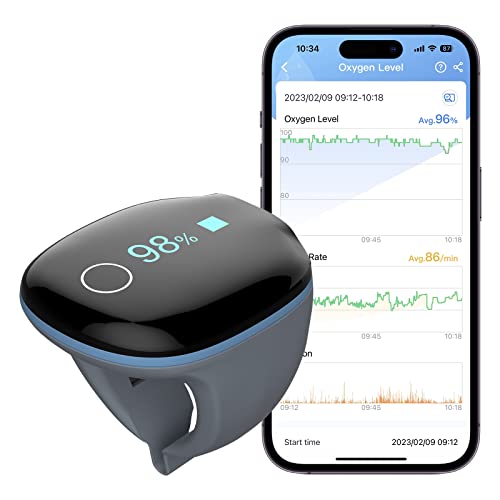
If you want the short answer: buy the Wellue O2Ring. It samples oxygen and pulse every second, runs 16 hours per charge, and has the deepest track record among nightly users. Every other ring here trades one of those strengths for a bigger display, a lower price, a deeper app, or a 24-hour battery. This guide covers all eight so you can match one to your sleep length and how long you keep a ring on.
This guide is built by comparing the manufacturers’ published specifications and the patterns across verified customer reviews, so you get each pick’s real strengths and trade-offs instead of marketing spin.
A ring oximeter succeeds or fails on two things: a snug fit and a sensor that keeps sampling all night. Get both right and the overnight graphs are worth reading. The picks below are ranked around exactly that, and each one is a genuinely capable pulse oximeter ring worth considering.
Top Picks


How To Choose The Best Pulse Oximeter Ring
A ring oximeter is not a wristwatch with a sensor bolted on: it shines light through your finger to measure blood oxygen. It shines light through your finger to measure how much oxygen your red blood cells are carrying. That light needs steady contact, so the fit is the first thing that decides whether the numbers are worth anything.
Below are the four things worth checking before you buy any of these.
Fit decides accuracy before any feature matters
Most of these rings are built for a finger perimeter of roughly 2 to 3.2 inches. A ring that spins loose will drop your oxygen reading, and one that pinches will wake you up. Silicone bands feel soft at first but stretch with use — every ring here that uses silicone is worth checking for snugness every few months.
Match battery hours to your sleep hours
A short charge cycle is fine if you only spot-check. If you want a full night plus a nap, look at the rated hours. This list runs from 10 hours up to 24 hours per charge, so the difference is real for anyone who sleeps long or wears the ring during the day.
On-board memory and the app
Your phone does not need to be awake all night. A ring with built-in memory keeps recording on its own, then syncs when you reconnect. Four sessions of 10 hours is the common pattern here, so a ring that overwrites the oldest session quietly loses data if you forget to download.
Alerts and vibration reminders
An alert only helps if you can set the threshold where you need it. Some rings let you adjust both the oxygen and pulse thresholds in the app and vibrate on the ring itself. Others have fixed or narrow limits, which matters if your baseline sits outside the usual band.
Side-by-Side Comparison
| Model | Best For | Battery | SpO2 Range | Memory | Amazon |
|---|---|---|---|---|---|
| MugaTree 50F Fingertip★ Best Overall | Multi-user households | Rechargeable dock | 70–100% | 300 sets × 10 users | Amazon |
| Wellue O2RingAlso Great | Nightly sleep tracking | 16 hours | 70–99% | 4 × 10-hour sets | Amazon |
| Wellue O2Ring-SBest for Long Sleeps | Long-sleep marathons | 24 hours | — | 4 × 10-hour sets | Amazon |
| Vibeat WearO2 | Wear-and-forget comfort | 12–16 hours | — | 4 sessions × 10 hours | Amazon |
| HOLFENRY JKS50G | Bundled app plus PC export | 10 hours | — | 21 hours offline | Amazon |
| Orvyna Titanium Ring | All-day lifestyle tracking | 4–6 days | — | Charging case included | Amazon |
| Vibeat OxyRing | On-ring display fans | 12–16 hours | 70–100% | 4 × 10-hour sets | Amazon |
| LOOKEE Ring-Pro | Clinician-shared reports | 16 hours | — | 4 × 10-hour sets | Amazon |
Detailed Reviews
1. MugaTree 50F Fingertip Pulse Oximeter
Our pick — 4.0+★ from 100+ verified ratings; the strongest balance of quality and price.
A clip-based monitor for a whole household, with a charging dock and ten user profiles.
This is the one on the list that is not a ring. It is a handheld fingertip device with an adult monitoring probe, and its defining feature is ten-user mode: ten people can share one device, each storing up to 300 sets of data with date and time. It measures SpO2 over 70–100% accurate to 1%, and pulse rate over 30–250 bpm accurate to 1% or 1 bpm, displaying in about 10 seconds.
Two modes cover how you use it: point-based checks and continuous monitoring. Alerts beep below a factory or user-defined threshold, and that number flashes on the screen — and the threshold and volume can both be adjusted or switched off. Charging runs through a USB-C dock, so you drop it in rather than fish for a plug. The app uploads readings automatically over Bluetooth and you can share data with family.
The friction is the physical fit and the app depth. The finger clip can feel tight, especially over a long session. Some find the app shows only a graph image without clickable data points or timestamps, which limits what you can pull out of a reading after the fact. Alarms also cannot be set below 80, so if your baseline sits lower, this device will not alert you at that level. That is a real limit for anyone tracking low saturation closely.
What it does well
- 10-user mode with 300 data sets per user — ideal for a shared household
- Accuracy of 1% on SpO2 and 1 bpm on pulse, with readings in about 10 seconds
- Adjustable alarm threshold and volume, or switch off entirely
- USB-C docking base removes the cable hunt
The honest gaps
- Finger clip can feel tight over long sessions
- Alarms cannot be set below 80
- App shows graph images without clickable data points or timestamps
Worth it for: a family or care setting where several people share one monitor.
Not for you if: you need a continuous overnight wearable with low-threshold alarms — a ring does that better.
2. Wellue O2ring Pulse Oximeter
The overnight workhorse that keeps sampling every second while you sleep.
The O2Ring records oxygen level, pulse rate and perfusion index continuously — those are the three numbers a sleep report is actually built from. Perfusion index tells you how strong the pulse signal is at the sensor, which is often the difference between a reading you can trust and a flat line. Its silicone body fits a finger perimeter of 2 to 3.2 inches, so most adult fingers land inside the band without a separate sizing kit.
What wins people over is how quietly it handles a night. Store four sets of 10-hour data on the device and it syncs to the free app over Bluetooth 4.0 BLE when you reconnect. When your oxygen or heart rate crosses a threshold you set, the ring vibrates and marks the moment in the report, so you can find the drop on the graph instead of guessing at 3 a.m.
Here is the honest head-to-head: the O2Ring is rated 16 hours, and the Vibeat WearO2 is listed at 12 hours, so this one gives you a longer single-charge window for the same overnight job. The catch is the band itself. The silicone stretches with age and loosens, and a loose ring is a ring that overstates oxygen drops until you replace the band. Owners also want a manual power-off, which this model does not offer. It is a nightly tool, not a set-and-forget gadget.
Where this one earns its spot
- Per-second sampling of oxygen level, pulse and perfusion index — the full set a report needs
- 16-hour rated battery covers a full night with room to spare
- Four built-in 10-hour sets keep recording when your phone is off
- Ring vibration plus a marked report flag whenever a threshold is crossed
What to go in knowing
- Silicone stretches over time, loosening the fit and skewing readings
- No manual power-off control
- The ring is bulky enough that daytime wear is a compromise
Go here first: anyone tracking oxygen night after night who wants the most complete record.
Look elsewhere: if you need a slim ring you can wear in public all day.
3. Wellue O2Ring-S Oxygen Monitor
A full day of samples with no recharge detour — the marathon runner of the group.
The single number that separates this from its own sibling is 24 hours. The standard O2Ring is rated 16 hours; the O2Ring-S doubles that window, which means you can wear it all night and through the next day without hunting for a cable. Under the hood the chip samples at 200Hz, and a full report can carry up to 36,000 data sampling points. That density is what lets you zoom into a two-minute dip and see whether it was a real event or a hand movement.
The fit is listed at a finger perimeter of 2.17 to 3.15 inches — 55 to 80mm — and it is a one-size band rather than a sizing kit. Comfortable for most, but a buyer with very small fingers will find it sits loose, and a very large finger will feel the squeeze. Like the rest of this family, it stores four sets of 10-hour data and auto-syncs to the ViHealth app and the free PC software for PDF and CSV reports you can hand to a clinician.
The recurring complaint is the download. When the stored data will not push to a laptop, the software cannot connect and the only reset is to drain the battery, which takes about 24 hours. That is a software headache rather than a sensor fault, and it does not hit everyone — but it is the reason this sits below the standard O2Ring for pure reliability. Also worth flagging: the charging cable is proprietary even though the port looks like USB-C, so do not lose it.
Why the battery matters: a 24-hour rating is the longest on this list, and it is the difference between a device you charge nightly and one you charge when it suits you.
The trade-off to weigh: sampling depth and battery life are excellent, but the PC sync software is the weak link — plan on using the app over Bluetooth, where the connection is described as quick and reliable.
Reach for this if: your sleep runs long, or you want continuous tracking across a whole day and night without a top-up charge.
Think twice if: you rely on PC downloads for your records and have no patience for a stuck sync.
4. Vibeat Pulse Oximeter WearO2

Soft silicone, a light touch on the finger, and a night you can actually sleep through.
Vibeat built this ring around the idea that a monitor you forget about is a monitor you keep wearing. The silicone sensor is shaped to slip on without making your finger sore or numb, and it is rated for 12 to 16 hours on a charge — enough for a full night plus some. It weighs 0.12 kg in its packaging, which reads as light on the hand for long stretches.
The app side is where this one earns fans. The free ViHealth app shows oxygen, heart rate and body-motion trends, stores long-term data without an extra cost, and exports a PDF report you can share. It also integrates with Apple Health. The vibration threshold and intensity are both adjustable from the app, so an alert can be a gentle nudge rather than a jolt. One CPAP user summed up the daily experience: easy to wear while sleeping, easy app, clear readings.
The honest caveat on this one is the band. The recurring gripe is that the silicone becomes stretchier with each use, and a looser ring reads lower oxygen. That is a fit note, not a sensor failure, but it means you should expect to check the snugness every few months. A few units have also arrived dead from the start and refused to power on after charging, which is a real but occasional quality miss rather than the norm.
The comfort play: silicone and a low-profile sensor make this the pick for anyone who has given up on a pinching fingertip clip at night.
Keep an eye on: the band stretches over time, so a snug fit today can become a loose fit in a few months — recheck it regularly.
Best fit for: overnight CPAP monitoring and anyone who wants the least intrusive ring on the finger.
Not ideal if: you want a band that holds its tension for years without attention.
5. HOLFENRY JKS50G Ring Pulse Oximeter
Built for the phone-first buyer who wants charts, exports and a rotatable readout.
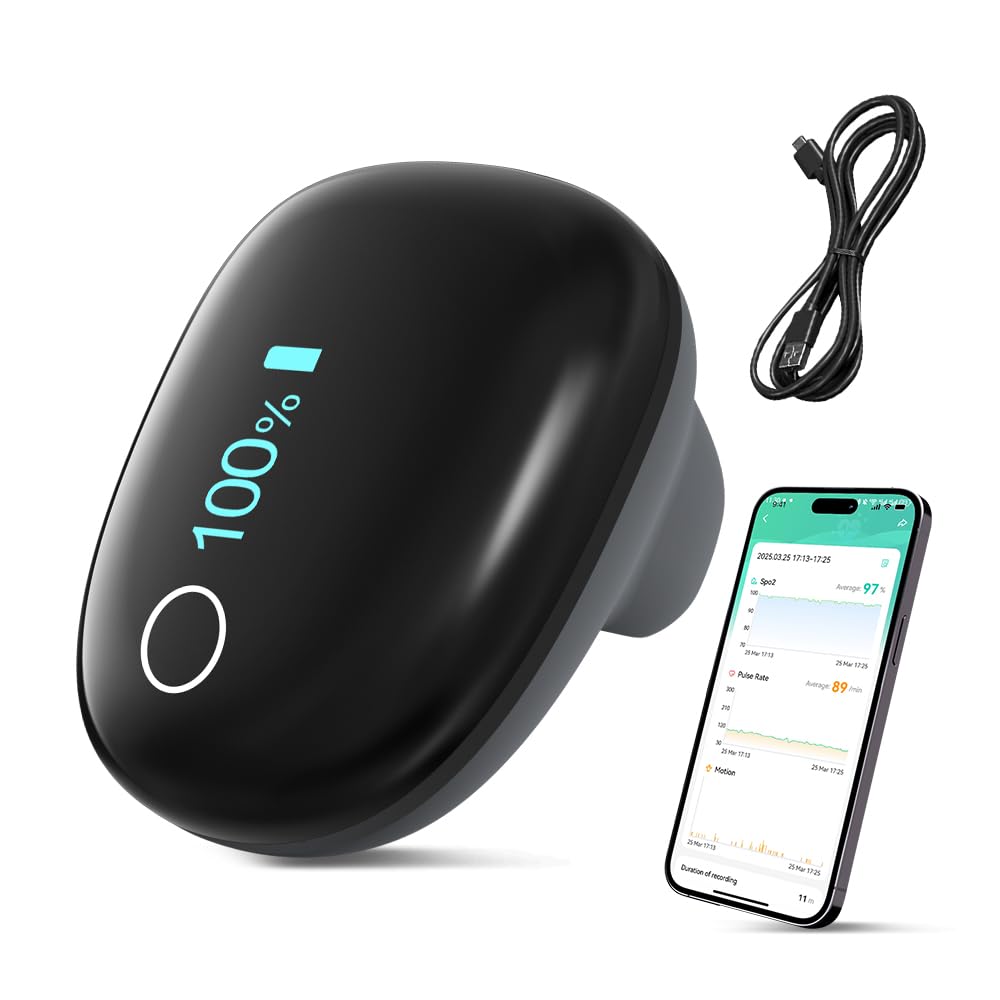
HOLFENRY goes after the data side. The app runs offline with no internet connection needed, stores data without a cap while it is open, and can hold 21 hours of readings on the device when the Bluetooth link drops. That offline buffer is the standout — most rings here top out at four 10-hour sessions before you have to sync. The ring itself is low-sensitivity silicone sized for a fingertip of 1.57 to 2.36 inches, and the display rotates so left- and right-handed wearers both get a readable angle.
Charging is over USB-C, and a full charge is rated at 10 hours of continuous use. The app adds multi-user storage, report downloads and customizable alert thresholds for both oxygen and pulse. There is also a companion PC route for exporting sleep reports, which is unusual at this tier. One surprise worth knowing: it will not run while it is charging, so plan your top-up between sessions rather than during one.
The mixed part is fit and polish. The silicone band can feel tight on some fingers, and it may loosen over the months. The charging cover is stiff enough that short nails struggle to pop it off. And the learning curve on the app is steeper than the ring itself, which is a fair trade for the depth you get once you are in. This is the pick for a tinkerer, not a plug-and-forget buyer.
What stands out
- 21 hours of offline device memory — the biggest on-board buffer on this list
- App works with no internet connection, so your data stays local
- Rotatable display suits either hand
- Customizable oxygen and pulse alert thresholds
Where it stumbles
- Will not operate while charging
- The charging cover is hard to remove without fingernails
- App learning curve is steeper than most
Pick this for: anyone who wants deep app data, offline storage and a PC export path.
Skip the upgrade path if: you want a ring you charge and forget — the no-run-while-charging rule will annoy you.
6. Vibeat OxyRing Continuous Pulse Oximeter
A readable screen right on the ring, for anyone who wants to glance and know.
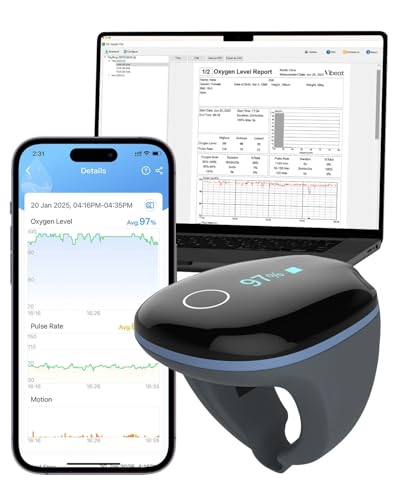
Most rings hide their numbers in an app. The OxyRing puts them on the device. Lift your hand and the display wakes so you can read your oxygen without opening your phone, then it fades back down. It is rated for 12 to 16 hours of continuous recording of oxygen level, heart rate and body motion, and the measuring range runs 70% to 100% SpO2 with a stated accuracy of ±2%.
The report side is generous. Free PC software and the app give you graphic trends, and you can download and share unlimited PDF, CSV and binary records that include an O2 score plus max, min and average oxygen and pulse readings. It also integrates with Apple Health. Built-in memory holds four groups of 10-hour data, so an overnight session survives even if Bluetooth drops.
The trade-off is size and consistency. The display makes the ring noticeably bigger than the app-only models, which is fine for sleep and awkward for daytime. Readings also tend to drift below what a fingertip meter or a doctor’s office device shows, and some units send false oxygen-drop alerts that set off the phone alarm. The battery is rated at 2 years and is not replaceable, so this is a device with a known shelf life — treat it as a two-year tool, not a lifetime purchase.
Why the screen sells it: a live readout on the ring means no phone fumbling at 2 a.m. — just raise your hand and the number is there.
The honest limit: the bigger body and the non-replaceable battery are the two things to accept going in.
Best suited to: a buyer who values an on-ring readout over a slim profile.
Rethink it if: you want to wear the ring out of the house or need it to last beyond a couple of years.
7. LOOKEE Ring-Pro Wearable Oxygen Monitor
One of the longest-running ring oximeters, built to hand a doctor a clean report.
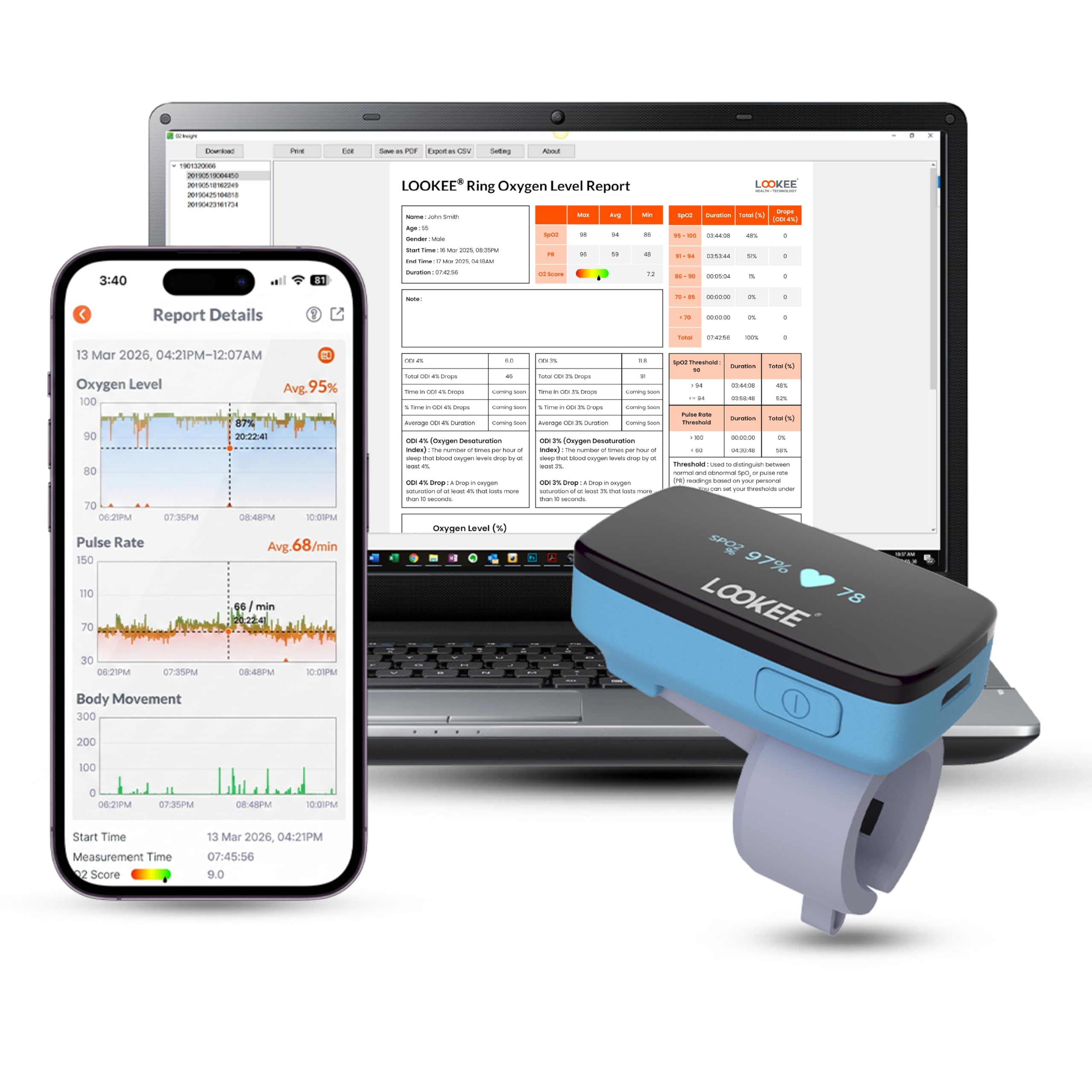
LOOKEE has been selling this design since 2019, which shows in the polish. The package is straightforward: continuous tracking of oxygen, pulse and motion, up to 16 hours on a charge, a smart vibration reminder when your oxygen falls below your threshold, and a free app plus PC software that exports unlimited PDF and CSV reports. Built-in memory holds four sets of 10-hour data, and the ring auto-syncs when you connect.
The fit is a patented soft silicone sensor ring, light and comfortable, at 0.63 ounces — the lightest of the ring class on this list. For sleep-apnea tracking, the app reports the number of sudden oxygen drops, plus the lowest, highest and average oxygen and heart-rate values across the night. That is the summary a clinician actually wants to read. Users who compare it against a sleep-lab monitor find the numbers land close, which is the real test.
The honest edge case: this model shuts itself off after 10 hours by design, and that cannot be changed. For a standard night that is invisible. For someone with long or irregular sleep, it means no apnea alerts past the ten-hour mark. Some units also read low against a fingertip device, so start with a comparison against a meter you already trust. It remains a strong pick for anyone whose sleep is regular.
The report that matters: apnea events, lowest, highest and average oxygen and heart rate, all in one export — this is the one to hand a clinician.
The limit to respect: a hard 10-hour cutoff means long sleepers lose alerts late in the night.
The right call for: regular-night sleepers who want a clean, shareable report and a genuinely light ring.
Look past it if: your nights regularly stretch past ten hours or you sleep in irregular blocks.
8. Orvyna Titanium Smart Ring
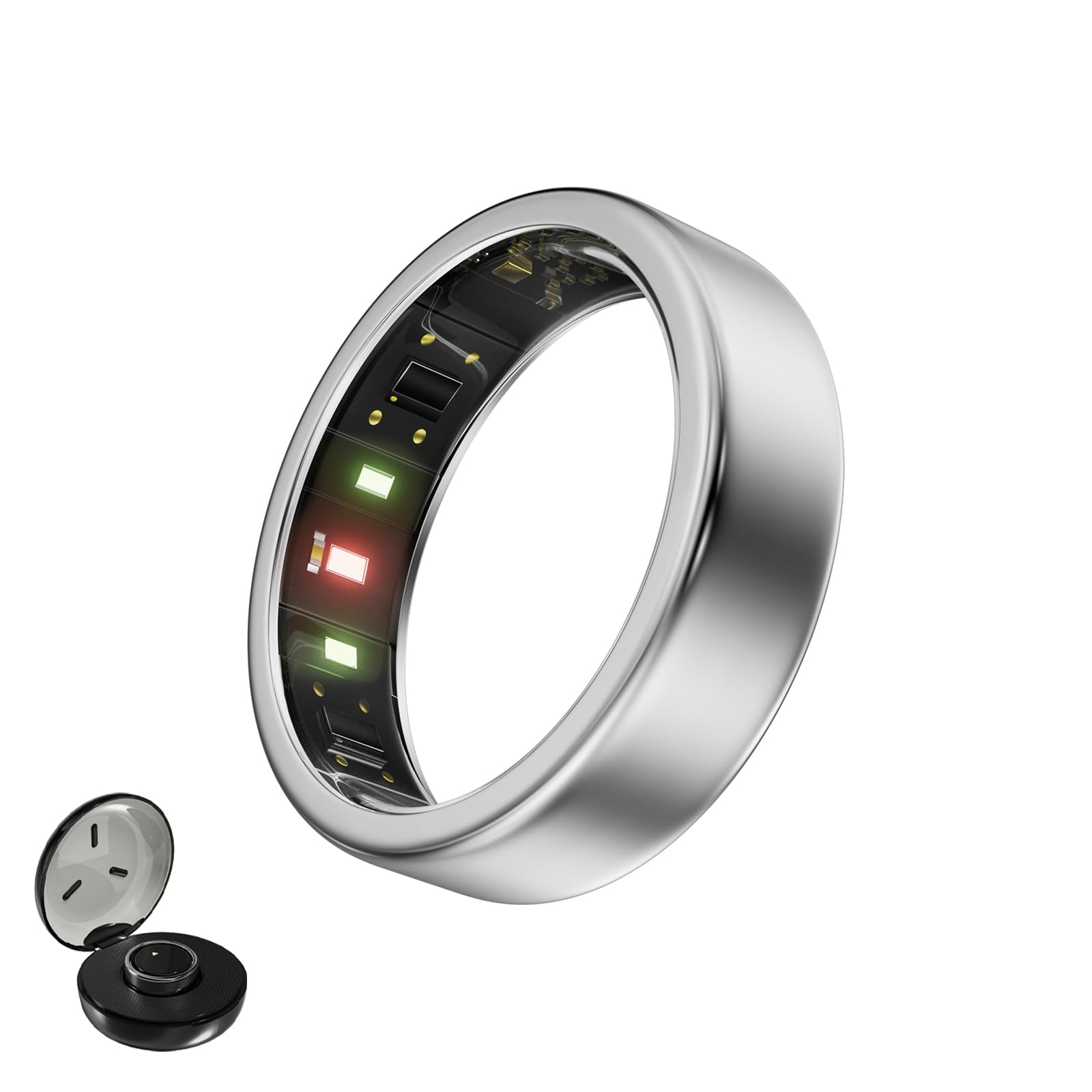
A titanium smart ring for all-day wear — not a dedicated overnight oximeter.
This is a different animal from the rest. The Orvyna is a lifestyle ring that tracks sleep, heart rate, SpO2 and activity, built in titanium and weighing in very light. It carries a 22 milliamp-hour battery cell inside the ring plus a 500mAh charging case good for three top-ups, and it runs 4 to 6 days between charges. For a buyer who wants a discreet ring that also shows oxygen data, that multi-day life is a different rhythm from the 10-to-24-hour window of a dedicated monitor.
The brand is clear about the biggest risk: fit. Finger size shifts through the day, so the recommendation is to use a sizing kit and wear it for 24 hours before committing to a size. It works with both iOS and Android, and there is no subscription — all health insights come with the ring. The sleek titanium shell is the reason it slips under a sleeve without a second glance.
That said, the track record here is thin. If you need a proven overnight oxygen recorder, the Wellue and LOOKEE rings above have years of nightly owner experience behind them; this one is new, and early signals include a ring that lost its phone connection. Buy this for the discreet all-day look and general wellness tracking, not for a sleep-apnea record.
The appeal: a titanium ring that reads your oxygen and sleep, with 4–6 days of battery and a case for travel.
The caution: no subscription and a slim shell are nice, but it is not a substitute for a dedicated overnight monitor if accuracy matters.
The right buyer: someone who wants a discreet everyday health ring that also tracks SpO2.
Look elsewhere if: your goal is a nightly oxygen record you can share with a clinician.
Know the Specs
SpO2 Range and Accuracy
SpO2 is your blood oxygen saturation — the percentage of oxygen your red blood cells are carrying. Most rings here measure across 70% to 100% (or 70% to 99%). Accuracy is quoted either as ±2% or “accurate to 1%.” A tighter number matters when your readings sit near a threshold you care about, because a small error can mean the difference between a normal night and an alert.
Battery Hours vs. Sleep Hours
A charge rating is the hours the ring can record continuously before it needs power. This list runs from 10 hours up to 24 hours. If you want to track a full night plus a nap or daytime wear, aim higher. If you only spot-check, a shorter run is fine. None of these rings charge while worn, so a long night and a multi-day trip both depend on this number.
Perfusion Index and Motion
Perfusion index (PI) tells you how strong the pulse signal is at the sensor. A low PI means the reading is weaker and less reliable. Body-motion tracking is the other half — it lets the app mark which oxygen drops happened while you were moving versus still, which helps separate a real event from a hand shift.
On-Board Memory
This is how many readings the ring holds when your phone is out of range. Most rings here hold four sets of 10-hour data; one holds 21 hours. A ring that overwrites the oldest session loses data if you forget to sync, so check the number before you rely on a full night going untouched.
Common Questions
What finger size does a pulse oximeter ring fit?
Is a pulse oximeter ring as accurate as a fingertip clip?
How many hours does a ring oximeter record on one charge?
Does a ring oximeter store data when my phone is off?
Can I wear a pulse oximeter ring all day?
Is a ring oximeter a medical device I can use for diagnosis?
What does the vibration reminder do?
Why does my ring band feel looser over time?
Can a ring oximeter share reports with my doctor?
Do I need to worry about oxygen readings that look too low overnight?
The Bottom Line
For most people, the winning pulse oximeter ring is the Wellue O2Ring because it samples every second, holds a 16-hour charge, and has the deepest track record among nightly users. If your nights run long or you want tracking across a full day, the Wellue O2Ring-S doubles up with 24 hours. And for a family or clinic where several people share one monitor, the MugaTree 50F with its ten-user mode is the one to reach for.
How we choose
We do not accept paid placement. Every pick is matched to a real buyer and a real use-case; we do not hands-on test units.
Sources
Specifications: manufacturer listings and product documentation. Review insights: verified customer reviews, as of October 2026. Pricing: not shown on this page (it changes often); check the current price via the retailer link.
As an Amazon Associate, Aappliancez earns from qualifying purchases. This does not affect which products we feature.