Disclosure: Some links in this post are affiliate links. As an Amazon Associate I earn from qualifying purchases, at no extra cost to you. Learn more
Specs are compiled from manufacturer listings and verified buyer reviews and can change over time — please confirm the key details on the product page before buying.
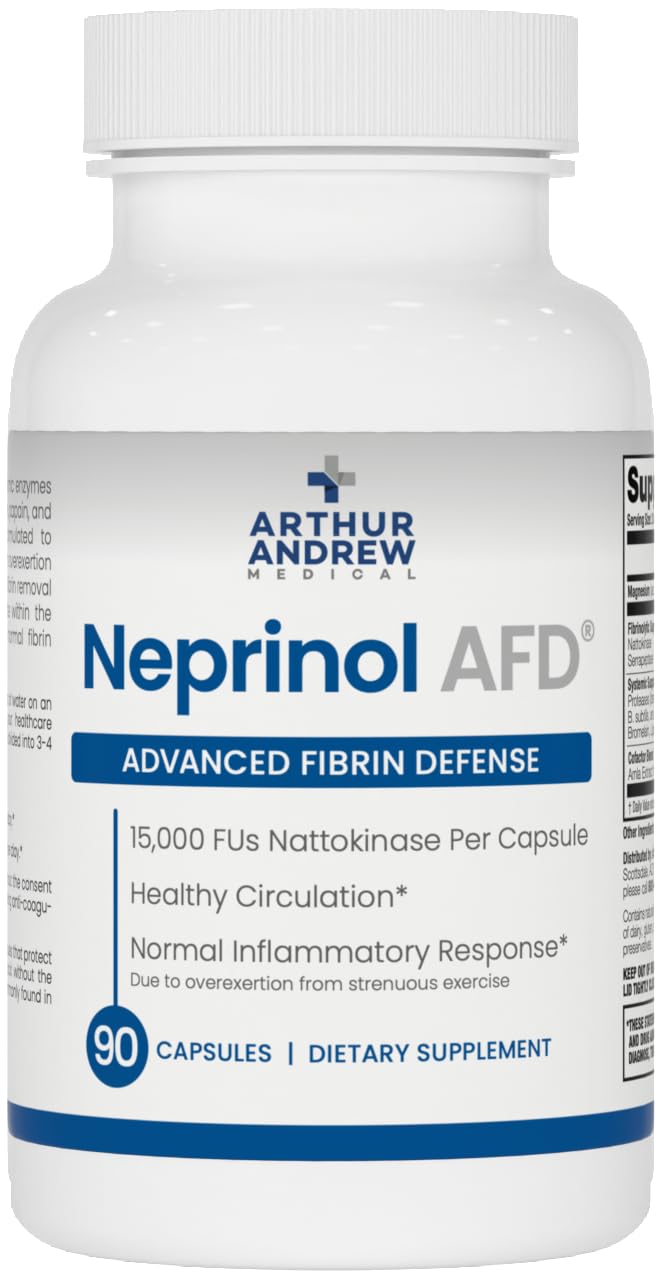
Here is the short answer before anything else: if you want one bottle that covers the most ground, the Arthur Andrew Medical Neprinol AFD is the strongest all-rounder on this list. It packs serrapeptase and nattokinase together at 30,000 FU per serving, and it sits at 4.5+ stars from a large pool of buyers. Everything below tells you which of these enzyme formulas to pick for joint aches, sinus pressure, post-exercise soreness, or blood-flow support — and which one to skip.
This guide is built by comparing the manufacturers’ published specifications and the patterns across verified customer reviews, so you get each pick’s real strengths and trade-offs instead of marketing spin.
These are enzymes that break down proteins, so what you are really choosing is a dosage, a delivery capsule, and a formula that survives your stomach. This walkthrough of proteolytic enzyme supplements for inflammation keeps every claim anchored to the label.
Top Picks

How To Choose Proteolytic Enzyme Supplements for Inflammation
The biggest mistake buyers make in this category is comparing the front of the bottle. Two products can both say “serrapeptase” and be wildly different in what a single capsule actually delivers. Read the supplement facts panel first, then check how the capsule is built.
Read the dose per capsule, not the bottle total
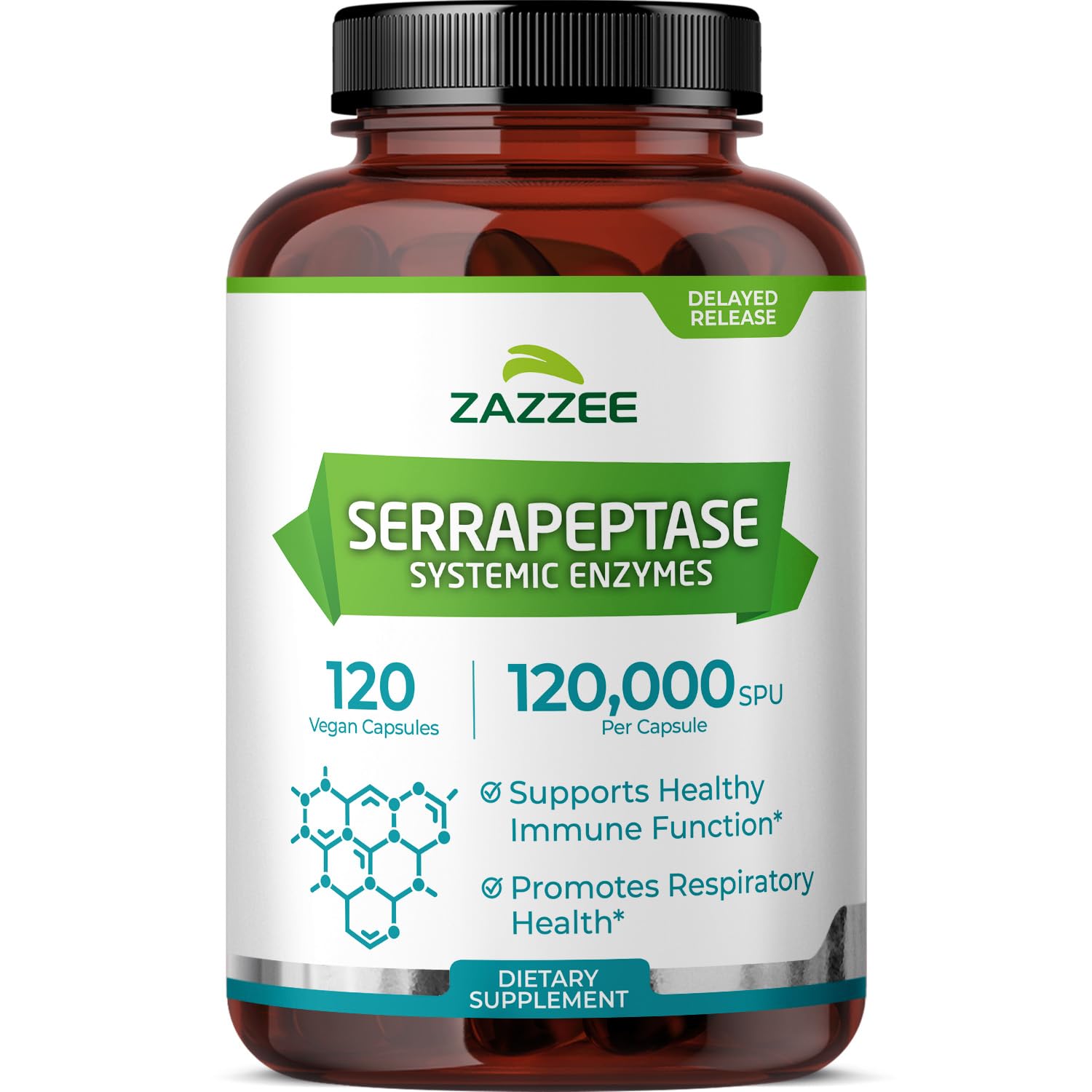
A product can advertise a huge number that turns out to be spread over two capsules or a whole serving. The Zazzee bottle, for example, states 120,000 SPU per capsule — that is a per-capsule figure, which is why 120 capsules covers a long stretch. Always check whether the number on the label lines up with one pill or with a full serving. SPU stands for serrapeptase units, the measured activity of the enzyme, so a higher SPU means more active enzyme in the dose.
Check the capsule for acid protection
These are delicate proteins. Stomach acid can destroy them before they ever reach the small intestine, where absorption happens. That is why delayed-release or acid-resistant capsules show up again and again in this category — they are designed to pass through the stomach intact. If you plan to take your dose on an empty stomach, which most labels recommend, this is the single most important build detail to look for.
Decide between a single enzyme and a blend
A pure serrapeptase product gives you one enzyme at a focused dose. A blend like Neprinol adds nattokinase and lipase alongside serrapeptase. If you already know you tolerate one enzyme well, a single-ingredient bottle is simpler to dial in. If you want to cover more ground with one bottle, a multi-enzyme blend saves you stacking separate products. Neither is universally better — it depends on how many bottles you want on your counter.
Think about timing and your medication list
Nearly every label here says to take the capsules with water on an empty stomach, typically 30 to 60 minutes before a meal or a couple of hours after one. That timing is not a marketing flourish — it is how the enzyme reaches your system without competing with food digestion. And because nattokinase and serrapeptase both affect how the blood behaves, anyone on blood thinners or scheduled for surgery should talk to their doctor before starting.
Side-by-Side Comparison
| Model | Best For | Enzyme Strength | Capsule Count | Capsule Type | Amazon |
|---|---|---|---|---|---|
| Arthur Andrew Medical Neprinol AFD★ Best Overall | All-round blend for joint comfort and circulation | 30,000 FU per serving | 90 | Acid Armor capsules | Amazon |
| Enzymedica Repair GoldBest for Recovery | Muscle and joint recovery after hard activity | Proprietary Thera-blend | 60 | Vegetarian capsule | Amazon |
| Biomedic Labs Serra-RX 260 | Sinus and scar-tissue support | 260,000 SPU per two capsules | 60 | Vegetarian capsule | Amazon |
| Zazzee Delayed Release Serrapeptase | Long-run value and easy dosing | 120,000 SPU per capsule | 120 | Delayed release | Amazon |
| Liposomal Nattokinase + Serrapeptase | Blood-flow and circulation support | 12,000 FU nattokinase / 360,000 SPU serrapeptase | — | Microbeadlet encapsulation | Amazon |
| VITÄLZYM Digestive Enzymes | Digestion plus systemic support in one | — | 90 | Vegan capsule | Amazon |
| Arthur Andrew Medical Serretia | Pure serrapeptase for sinus and recovery | — | 90 | Vegan capsule | Amazon |
Detailed Reviews
1. Arthur Andrew Medical Neprinol AFD 90 Count
Our pick — 4.5+★ from 900+ verified ratings; the strongest balance of quality and price.
The one-bottle answer for buyers who would rather not stack five separate enzyme products.
Neprinol earns the top spot because of what it folds into a single capsule. You get serrapeptase and nattokinase at 30,000 FU per serving, plus lipase — a blend aimed at breaking down excess fibrin, the protein that can stiffen blood and tissue. Reviewers most often credit it with easing everyday aches and inflammation, and many single out the serrapeptase-nattokinase-lipase blend. The capsules are also built with what the brand calls Acid Armor, a chemical-free shell designed to resist stomach acid so the enzymes survive to where they are absorbed.
The convenience is the real selling point. One bottle replaces a shelf of separate serrapeptase, nattokinase, and CoQ10 products, and that consolidation is what the most enthusiastic buyers point to when they justify the higher upfront layout. It is vegan, non-GMO, and kosher certified, and the label directs two to three servings daily with water on an empty stomach. Two to three servings a day is a routine most buyers report they can stick with.
The honest catch is cost. The value question comes up often, and a real slice of buyers do find it expensive next to single-enzyme bottles. If your budget is tight or you only need one enzyme, a pure serrapeptase product further down will serve you for less. But for a do-everything blend, the depth here is hard to match.
Where Neprinol pulls ahead
- Serrapeptase and nattokinase together at 30,000 FU per serving
- Acid Armor capsules designed to survive stomach acid
- Replaces several separate supplements in one bottle
- Vegan, non-GMO, and kosher certified
- Firmly the crowd favorite, with the highest buyer confidence on this list
What to weigh first
- Needs two to three servings a day to hit the label dose
- Premium-tier cost per bottle compared with single-enzyme options
- Not the pick for you if you only want one enzyme
Go for it if: you want the widest enzyme coverage from one bottle and can commit to a multi-capsule daily routine.
Hold off if: you are on a strict budget or already know one specific enzyme is all you need.
2. Enzymedica Repair Gold for Men & Women – 60 Capsules
Built for the days you overdid it — a seven-enzyme blend aimed squarely at muscle and joint recovery.
Repair Gold is the pick for the active buyer. It stacks protease, catalase, serrapeptase, bromelain, papain, amylase, and lipase into one capsule, all wrapped in the brand’s Thera-blend technology. Thera-blend means the enzymes are designed to keep working across the body’s full pH range, so they stay active in both acidic and alkaline environments. That is a real difference from blends that only perform in one zone. Buyers consistently call it effective, and mobility is a recurring theme — the standout reported result is a shoulder that went “from 20% to 70%” after six weeks.
The suggested routine is two capsules two to three times daily on an empty stomach, one hour before or two hours after a meal, with room to take more as needed. It is vegan, kosher, and gluten and soy free. For post-workout soreness or a stiff neck from an old injury, this is the formula that lines up with how owners mention they use it.
The part to plan for is your stomach. Digestive discomfort is the most-noted downside, and a few buyers describe heartburn or reflux after dosing. Starting low and taking it well away from meals is the common workaround. Value splits opinion too — some call it the best deal going, others find it premium-priced for 60 capsules.
Recovery-first formula: you get seven enzymes in one bottle, not just one, so it covers more of the body’s breakdown work than a single-enzyme product. Thera-blend (a delivery method designed to keep enzymes active across different pH levels, from acidic to alkaline) is what separates it from simpler single-enzyme bottles. That combination is why it earns a place on the shelf of anyone who trains or works physically.
Dose to watch: at two capsules two to three times daily, a 60-capsule bottle does not stretch as far as the larger serrapeptase bottles here — factor that in if you plan to take it daily.
Reach for this if: sore muscles and stiff joints after exercise are your main reason for buying enzymes.
Look elsewhere if: you have a sensitive stomach that reacts to bromelain-heavy blends.
3. Biomedic Labs Serra-RX 260 Serrapeptase, 60 Capsules

High-strength serrapeptase for anyone whose real problem is mucus, sinuses, or old scar tissue.
Serra-RX 260 gives you 260,000 SPU (serrapeptase units, the standard measure of this enzyme’s strength) across two capsules, built on Peptizyme SP EN serrapeptase in vegetarian capsules. Acid resistance here refers to the enzyme itself, which is the detail that matters — it is formulated to get past stomach acid intact, so more of it reaches your gut instead of being broken down in your stomach. The label positions that dose for sinus and mucus support and healthy scar-tissue management. It directs you to take one to two capsules with a large glass of water, 30 to 60 minutes before or two hours after a meal.
Buyers with chronic sinus drainage and year-round throat clearing report clearer airways and better sleep. Chronic sinus drainage and year-round throat clearing are the stories that repeat, and buyers who stick with it describe clearer airways and better sleep over time. Scarred, ropey tissue softening is the other headline result owners describe. Effectiveness is the most-praised trait by a wide margin, well ahead of the smaller group who keep reordering.
The trade-off is that strong serrapeptase can hit hard at first. Nausea and headaches are the experiences that get mentioned, alongside a feeling of drowsiness at higher doses. The smart play with this one is to start small and let your body adjust rather than jumping straight to two capsules twice a day.
The 260,000 SPU edge: compared with a straight serrapeptase bottle, this two-capsule dose is a serious step up in strength, which is exactly why it suits buyers chasing sinus or scar-tissue results rather than general daily maintenance.
Sizing the strength: if you are new to systemic enzymes, that same power is the reason to ease in — the dose is not a beginner’s starting point.
This is your bottle if: sinus congestion, mucus, or lingering scar tissue is the specific thing you are trying to address.
Give it a pass if: you want a gentle entry-level enzyme or you react quickly to strong doses.
4. Zazzee Delayed Release Serrapeptase 120 Capsules
The bottle that turns one capsule a day into a long, low-maintenance routine.
Zazzee’s math is the reason it sits high here. Each capsule carries 120,000 SPU — a per-capsule dose, not a serving split — and the bottle holds 120 capsules, which the label describes as a full supply that runs for months. Those capsules are delayed release, designed to shield the enzyme through stomach acid and release it in the small intestine for maximum absorption. That build is the difference-maker for a delicate enzyme like serrapeptase.
The formula is vegan and non-GMO, free of sweeteners, gluten, soy, and the usual allergen list, and made in the USA in a fully certified facility. Owners talk about it most for inflammation and for being a straightforward value, and repeat purchases are a recurring theme. One owner’s experience with internal scar tissue — a half-inch band across the abdomen from decades of injections softening over five months of daily use — is the kind of long-haul result people describe.
What to know before you commit: the delayed release is a real plus, but it does not erase the enzyme’s blood-thinning effect. The label and numerous owners stress stopping well before any surgery and checking with a doctor if you take anticoagulants. Stomach upset is the other variable — some buyers sail through, others get pain or nausea at this strength.
Why the value math works
- 120,000 SPU in every single capsule
- 120 delayed-release capsules per bottle
- Shell built to survive stomach acid for small-intestine absorption
- Vegan, non-GMO, allergen-free formula
- Made in the USA in a certified facility
Before you start
- Strong dose can cause stomach pain or nausea for some
- Blood-thinning effect means pausing before surgery
- Single-ingredient, so no nattokinase or added enzymes
Built for: the buyer who wants one easy daily capsule and the longest stretch between reorders.
Not ideal for: anyone who needs a multi-enzyme blend or is about to have surgery.
5. Liposomal Nattokinase Serrapeptase Enzyme Supplement

The circulation specialist — huge serrapeptase and nattokinase numbers delivered in a liposomal shell.
If blood flow is your goal, this is the formula that pushes the hardest. Each serving carries 12,000 FU of nattokinase and 360,000 SPU of serrapeptase, prepared with a liposomal delivery method and a microbeadlet encapsulation process aimed at precise, consistent delivery. The blend does not stop there — it adds papain, curcumin, bromelain, rutin, and amla, along with vitamin C, magnesium, vitamin B6, calcium, and inulin. It is gluten-free and vegan-friendly, made without artificial additives.
The caution sits right on the label’s logic: nattokinase and serrapeptase both act in the direction of thinner blood. Several owners advise telling your doctor before any surgery. If you take prescription anticoagulants, clear this one with your physician first. Otherwise, for a comprehensive circulation-focused blend, the numbers here are the ones to beat.
The circulation numbers: 12,000 FU of nattokinase is a large dose, and pairing it with 360,000 SPU of serrapeptase in one serving gives you a combined push on blood viscosity that single-enzyme bottles cannot match.
Stock and timing note: this is a newer product on the shelf, so a fresh order does not have the years of buyer history the Arthur Andrew bottles carry — worth knowing if track record matters to you.
Pick this one if: circulation, vein appearance, and blood viscosity are your focus and you want the strongest combined dose in a single serving.
Talk to your doctor first if: you take blood thinners or have surgery on the calendar.
6. VITÄLZYM Digestive Enzymes for Gut Health, 90 Capsules

For the buyer whose bloating and indigestion are the problem worth solving first.
VITÄLZYM is the hybrid pick — it handles digestion and systemic support at the same time. The formula brings together protease, serrapeptase, papain, bromelain, amla, rutin, lipase, and amylase, aimed at breaking down proteins, fats, and carbs while supporting mobility and immune health across multiple body systems. It is vegan, gluten- and yeast-free, non-GMO, and comes in a small capsule that is easy to swallow.
Owners describe less bloating and indigestion after meals with steady daily use. Owners describe a night-and-day difference in how they feel after eating, with bloating and indigestion easing and steady daily use becoming the norm. The enzyme list is broad, and one owner highlights the serrapeptase specifically as a reason they chose it. For the buyer who wants one bottle to cover both gut comfort and whole-body support, the breadth is the draw.
The genuine caveat is how your body reacts early on. Some reviewers point out temporary blood-sugar swings and stomach burning before things settle, and the fix is usually taking it a couple of hours from meals or before bed. It is also a premium-priced bottle, and dosing can climb to several capsules a day, so the bottle empties faster than a one-capsule product.
The double-duty formula: pairing digestive enzymes with serrapeptase and papain means one bottle addresses both the meal-time bloat and the deeper systemic goals that usually need two separate products.
An honest sizing note: the label’s flexible dosing means a heavier daily routine is possible, so plan on a bottle lasting a matter of months rather than a full year if you dose high.
Best match for: someone who wants digestion fixed and systemic enzyme support in one easy capsule.
Think twice if: you react quickly to new enzyme blends or want a single, fixed daily dose.
7. Arthur Andrew Medical Serretia 90 Capsules
One enzyme, no fillers, no extras — the bottle to reach for when you know serrapeptase is your thing.
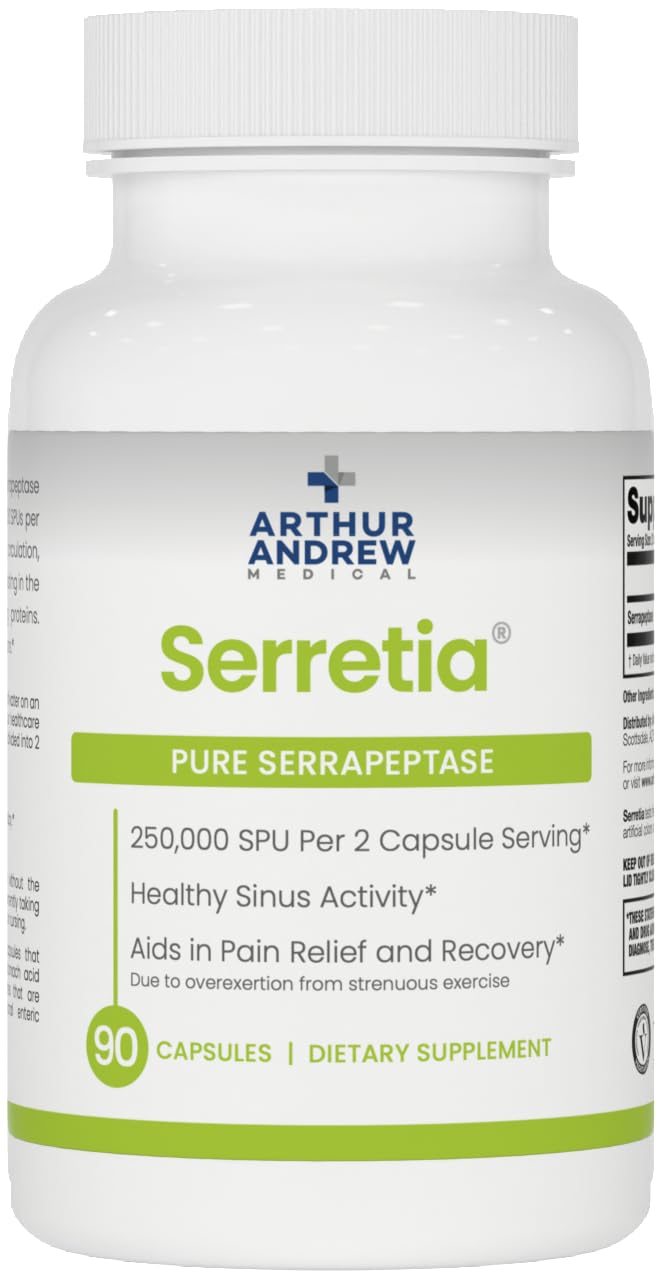
Serretia strips it back to a single ingredient: pure serrapeptase. The label builds it around recovery from sore muscles and joints, a healthy inflammatory response, and easier breathing through clearer sinuses. Two capsules daily with water on an empty stomach is the routine, and they can be split into two or three servings if that sits better. It is vegan, non-GMO, kosher, and GRAS certified, and the capsule carries no fillers or unnecessary ingredients — a detail buyers specifically call out.
Buyers most often praise its overall effectiveness, with its effect on inflammation the second most-cited reason for reordering. Sinus clearing and fibro-scan improvements are among the reported wins, and for anyone chasing a specific result like eye floaters or adhesions, this brand gets named as the one that finally delivered where others did not. It is a focused tool rather than a broad blend.
Value is the sticking point. A meaningful group of buyers find it costly for a single enzyme, especially when other single-enzyme bottles sit at lower tiers. If you want maximum ingredients per bottle, a multi-enzyme blend will feel like better math. If you want a clean, pure serrapeptase and nothing else, the focus is the whole point.
The case for pure serrapeptase
- Single-ingredient formula with no fillers
- Flexible dosing — two capsules daily, splittable into two or three servings
- Aimed at recovery, inflammatory response, and sinus clearing
- Vegan, non-GMO, kosher, and GRAS certified
What you give up
- No nattokinase or supporting enzymes in the blend
- Premium-priced for a single-ingredient bottle
- Requires a clean empty-stomach routine to get the most from it
Ideal for: the buyer who has settled on serrapeptase and wants it pure, not blended with anything else.
skip it if: you would rather cover more enzyme ground with one bottle than focus on a single enzyme.
Know the Specs
FU and SPU — what the enzyme units mean
FU (fibrin units) measures nattokinase activity, and SPU (serrapeptase units) measures serrapeptase activity. These are not weight in milligrams — they measure how much active enzyme you get. That is why comparing the numbers on two bottles is more useful than comparing the pill size. A higher FU or SPU means a more concentrated dose, so check whether that number is per capsule or per serving before you compare.
Delayed release and acid resistance
Enzymes are proteins, and stomach acid breaks proteins down. A delayed-release capsule or an acid-resistant formula is built to pass through the stomach and release the enzyme further along the digestive tract, where it can be absorbed. This is why the same SPU count can behave differently depending on the capsule it comes in — the shell, not just the dose, is part of the effectiveness.
Single enzyme versus multi-enzyme blend
A pure serrapeptase bottle gives you one enzyme at a focused dose. A blend adds nattokinase, lipase, bromelain, or papain to cover more processes at once. A blend is convenient if you want to avoid stacking bottles, but if one enzyme, taken at a known strength, does the job for you, a single-ingredient bottle is simpler to control and often easier on the wallet.
Empty-stomach timing
Most labels here direct you to take the capsules with water on an empty stomach — typically 30 to 60 minutes before a meal, or a couple of hours after one. The reasoning is that food digestion can compete with the enzyme’s intended job in your system. Keeping the dose away from mealtimes is the most common way buyers get consistent results.
Common Questions
What is the difference between FU and SPU on an enzyme label?
Should I take proteolytic enzymes on an empty stomach?
Are serrapeptase and nattokinase safe to take together?
How long does a bottle of serrapeptase last?
Do I need to stop proteolytic enzymes before surgery?
What side effects do proteolytic enzymes cause?
Is a multi-enzyme blend better than a single enzyme?
What does delayed release mean on a serrapeptase capsule?
Can I take proteolytic enzymes with food?
The Bottom Line
The winner in proteolytic enzyme supplements for inflammation is the Neprinol AFD, because it packs serrapeptase and nattokinase into one acid-protected blend and covers more ground than any single-enzyme bottle here. If circulation and blood viscosity are your focus, the Liposomal Nattokinase + Serrapeptase pushes the hardest at 12,000 FU and 360,000 SPU per serving. And for a pure, single-enzyme routine that stretches across a long stretch of daily doses, the Zazzee Delayed Release Serrapeptase is the easy daily pick.
Whichever you choose, start at the lower end of the dose and keep the capsule away from meals. Keeping the dose away from meals does more for your results than any claim on the bottle.
How we choose
We do not accept paid placement. Every pick is matched to a real buyer and a real use-case; we do not hands-on test units.
Sources
Specifications: manufacturer listings and product documentation. Review insights: verified customer reviews, as of October 2026. Pricing: not shown on this page (it changes often); check the current price via the retailer link.
As an Amazon Associate, Aappliancez earns from qualifying purchases. This does not affect which products we feature.