Disclosure: Some links in this post are affiliate links. As an Amazon Associate I earn from qualifying purchases, at no extra cost to you. Learn more
Specs are compiled from manufacturer listings and verified buyer reviews and can change over time — please confirm the key details on the product page before buying.
If you are shopping for a protein shake while managing kidney disease, the number that matters most is not how much protein is in the can. It is how much potassium and phosphorus come with it. That single difference is why a shake built for dialysis patients looks so different from the vegan protein powder sitting next to it on the shelf. This guide walks through five real options, what each one is actually for, and which one fits which stage.
This guide is built by comparing the manufacturers’ published specifications and the patterns across verified customer reviews, so you get each pick’s real strengths and trade-offs instead of marketing spin.
Some of these are clinical nutrition shakes made for people on dialysis, and some are everyday protein drinks that happen to be gentle on the kidneys. The right pick depends on your stage and what your care team has told you to watch.
Top Picks


How To Choose The Best Protein Shake for Kidney Disease
The biggest mistake people make is grabbing the shake with the most protein on the label. On a kidney diet, protein is rarely the problem — minerals are. Potassium and phosphorus are the two your care team is usually tracking, and a shake that is high in either one can undo the rest of your day’s food choices. So the first thing to look at is not the protein number. It is what the shake leaves out.
Start with potassium and phosphorus, not protein
For dialysis patients, the minerals matter more than the protein. A shake made for dialysis patients keeps phosphorus and potassium low, and the label says so right on the can. Those shakes often say “specifically designed to meet the nutrition needs of people on dialysis.” A regular protein powder can have 21g of plant protein but still carry a mineral load that does not fit your plan. So check the potassium and phosphorus numbers before you check the protein.
Watch how much potassium and phosphorus is actually in each serving, and compare that against what you are allowed in a day. A shake with a low mineral load per serving is easier to fit into a tight daily budget.
Match the shake to your stage, not to a friend’s recommendation
A Stage 3 CKD patient and someone on dialysis have very different needs. The dialysis crowd often needs high calories to hold weight, which is why so many of the shakes built for them land around 400 calories a container. Someone earlier in the journey may just want a clean protein boost that does not overload the kidneys. Both are valid — they just serve different stages.
Check whether it is a meal or a supplement
Some of these are designed as complete meal replacements, with the vitamins and minerals to match. Others are boosters you add on top of food. That changes how often you drink one and how many you need in a case. A shake you treat as a full meal needs a fuller nutrient profile than one you sip between meals.
Side-by-Side Comparison
| Model | Best For | Protein Per Serving | Format | Key Mineral Note | Amazon |
|---|---|---|---|---|---|
| Nepro Liquid Nutrition, Homemade Vanilla (Pack of 24)★ Best Overall | Dialysis patients needing complete nutrition | — | 8-ounce ready-to-drink bottle | Low-phosphorus, lactose-free | Amazon |
| Nepro with Carb Steady Complete Nutrition, Mixed Berry (Case of 24)Slower-Carb Formula | Dialysis patients wanting slower-digesting carbs | — | 8-ounce ready-to-drink container | Low phosphorus and potassium | Amazon |
| KATE FARMS Organic Nutrition Shake, Chocolate (12 Pack) | Plant-based, allergen-free nutrition support | 16g | Ready-to-drink carton | USDA Organic, non-GMO, no artificial sweeteners | Amazon |
| Slate Milk Classic Chocolate Protein Milk Shake | Everyday protein with low sugar and carbs | 20g | Ready-to-drink can | Lactose-free, 1g sugar | Amazon |
| UpNourish Chocolate Vegan Protein Powder (15 Servings) | Budget plant-based protein and superfoods | 21g | Powder, 15 servings | No sugar, no dairy, no GMO | Amazon |
Detailed Reviews
1. Nepro Liquid Nutrition Homemade Vanilla 8-Ounce
Our pick — 4.5+★ from 850+ verified ratings; the strongest balance of quality and price.
The dialysis staple that tastes like a milkshake instead of a supplement.
This is the one kidney patients reach for after treatment. It is a complete, balanced high-calorie nutrition shake built specifically to meet the nutrition needs of people on dialysis, and it replaces the protein and other nutrients dialysis strips out. Each 8-ounce bottle delivers 425 calories and 19g of protein, which is a serious calorie load for a can that small. That density is the point — it lets you hold weight without eating a full plate of food.
What wins people over is the taste. Vanilla here reads like a milkshake, and the review pages are full of dialysis patients mixing it with ice cream to make one. The mineral side is where it earns its place on a kidney diet: it is low-phosphorus, lactose-free, and high-calcium, with at least 100% of the RDI for 18 key vitamins and minerals. The crowd favorite across the board has been the berry variety, but the homemade vanilla is the one that disappears fastest in a household with two people drinking them daily.
The catch is cost, and it is a real one — this is the priciest way to get your daily nutrition on this list, and the value complaints are the loudest thing in the reviews. There is also the size. At 8 ounces a bottle, one patient who relies on Nepro as primary nutrition goes through roughly 35 containers a week and wishes they came quart-sized instead. If you are drinking two a day, do the math on how many cases you need before you commit.
Why it holds the top spot
- 425 calories and 19g protein per 8-ounce bottle — a dense, easy way to add weight
- Low-phosphorus and lactose-free, built specifically for dialysis nutrition
- At least 100% of the RDI for 18 key vitamins and minerals, ready to use
- Vanilla tastes like a milkshake; patients mix it with ice cream
What to plan around
- Price is the most common complaint — it costs more than most protein shakes
- 8-ounce bottles go fast if you drink two or more a day
Reach for this if: you are on dialysis and need a complete, calorie-dense shake that replaces what treatment takes out, with taste that makes it easy to keep drinking.
Think twice if: you are looking for the cheapest protein per serving — the 8-ounce bottles and premium price add up fast.
2. Nepro with Carb Steady Complete Nutrition Mixed Berry
Blood-sugar-friendly carbs in a berry shake built for dialysis nutrition.
Take the dialysis shake above and swap the carbs for versions that digest more slowly, and you get this one. Nepro with Carb Steady uses slowly digested carbohydrates along with Fibersol and Maltitol — Fibersol is a fiber that slows digestion, and Maltitol is a low-digestibility sweetener that lands gentler on blood sugar. It is still built to meet the nutrition needs of people on dialysis, but the carb profile is the whole reason this version exists for anyone watching glucose at the same time.
Effectiveness is the second-strongest strand in the feedback after taste, and it reads the same way every time: people use it as their main source of nutrition and it holds them steady. One Stage 3 CKD patient drinks it as primary nutrition, roughly 35 containers a week across about seven meals, and describes it as soft, smooth, and delicious. When you rely on a shake that heavily, drinkability stops being a nice-to-have and becomes the deciding factor.
The first thing to notice in the numbers is weight. At 15 pounds for a case of 24, this is a heavy order to have on your doorstep, and its 11.89 x 8.27 x 5.94 inch carton takes up real shelf space. For reference, the UpNourish powder below weighs just 1.44 pounds. The tradeoff for the bigger, heavier case is the berry flavor already mixed in — no scooping, no shaker, no blending.
What the berry brings: Mixed berry is the flavor people name most often here, and it drinks well cold or even at room temperature when you are not at home to chill it.
The cost reality: Buyers give this can mixed reviews on value. The recurring note is that a big-box store sells the same product for less, so compare prices before you commit to a full case.
Pick this over the vanilla if you are managing blood sugar alongside dialysis and want the carb blend that digests more slowly.
One thing to know: a case this size is heavy to store and the 8-ounce containers are small — budget your cabinet space and your case count together.
3. KATE FARMS Organic Nutrition Shake Chocolate
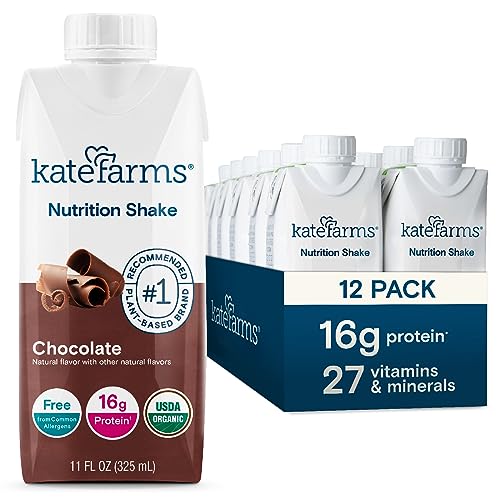
Organic pea protein with phytonutrients, for when food itself is the hard part.
This is the pick for anyone whose kidneys are fine but whose diet has been narrowed by other restrictions. Kate Farms builds its chocolate shake on plant-based organic pea protein — pea protein is protein extracted from yellow peas, and it is dairy-free by nature. On top of that it blends phytonutrient extracts from things like broccoli, kale, berries, and turmeric, which is what the “nutrition booster” reviews are pointing at.
The label is where this one separates itself. It is Certified USDA Organic, Non-GMO Project Verified, Kosher, gluten free, and made without common allergens, with no artificial flavors or sweeteners. If your diet plan has layered restrictions on top of the kidney watch, that level of clean labeling is worth a lot of label-reading time saved. At 16g of protein per shake, it lands a notch below the Slate Milk chocolate shake at 20g, so this is about the ingredient list rather than hitting a protein goal.
Where it shines is meal support. People with severe GI issues and celiac disease lean on it to fill the gap between meals, and it is mentioned for G-tube feeds and dietary restrictions where calorie and macro delivery is the whole job. It does not need refrigeration, and the carton is easy to grab on the way out the door. The one honest note is sugar — some drinkers love that it skips artificial sweeteners, while others flag the sugar content as higher than they expected.
what separates it
- Certified USDA Organic, Non-GMO Project Verified, Kosher, and gluten free
- Plant-based organic pea protein with no artificial flavors or sweeteners
- Phytonutrient blend from broccoli, kale, berries, and turmeric
- No refrigeration needed; smooth consistency for an on-the-go meal
Where it asks something of you
- Sugar content splits opinion — read the label against your own plan
- 16g protein is lower than the chocolate milk shake below
Best for: layered dietary restrictions — organic, allergen-free, plant-based nutrition when you cannot eat enough solid food.
Skip if: protein grams are your main target, since this sits below the 20g shake on that one number.
4. Slate Milk Classic Chocolate Protein Milk Shake
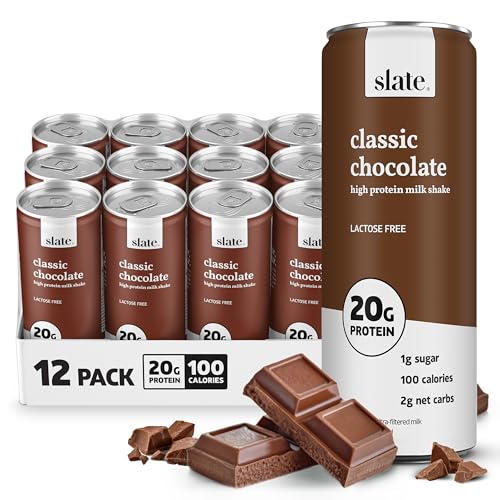
Chocolate milk that runs 1g of sugar and 20g of protein per can.
For anyone whose kidney plan does not require a clinical shake, this is the everyday protein drink that works. Slate ultrafilters its milk — ultrafiltration pushes milk through a fine filter to pull out the lactose sugars and some water, which is why it can be lactose-free and still taste like chocolate milk. From there it is sweetened with stevia and monk fruit instead of sugar, landing at 20g of protein, 1g of sugar, and just 100 calories a can.
Taste carries this product, and it carries it hard. It drinks like real chocolate milk rather than a milkshake substitute, and the kids in the house apparently agree. The 1g sugar figure is what makes it fit a low-sugar, low-carb daily routine without giving up the chocolate. It is shelf stable without preservatives thanks to an all-natural pasteurization method, so you can keep a can in a bag without ice — though everyone agrees it tastes best cold.
The honest trade-off is texture. Some drinkers call it super smooth, while others find it thinner and more watery than a decadent shake. It is also lighter in flavor than a full-on treat, which is a feature if you are drinking it daily and a letdown if you wanted dessert. Both of those are texture and expectation gaps, not quality problems — the 100-calorie light body is simply the trade for the low sugar.
What the numbers buy you: 20g of protein for 100 calories and 1g of sugar is a genuinely lean profile, and it takes the sugar question off your plate entirely.
Where it can disappoint: if you want a thick, creamy shake, the lighter body may not scratch the itch — plenty of drinkers wish it were richer.
The one to grab when your plan is built around low sugar and low calories and you want chocolate milk you can actually drink every day.
Look elsewhere if you need a clinically structured dialysis shake — this is a clean everyday protein drink, not a complete medical nutrition formula.
5. UpNourish Chocolate Vegan Protein Powder
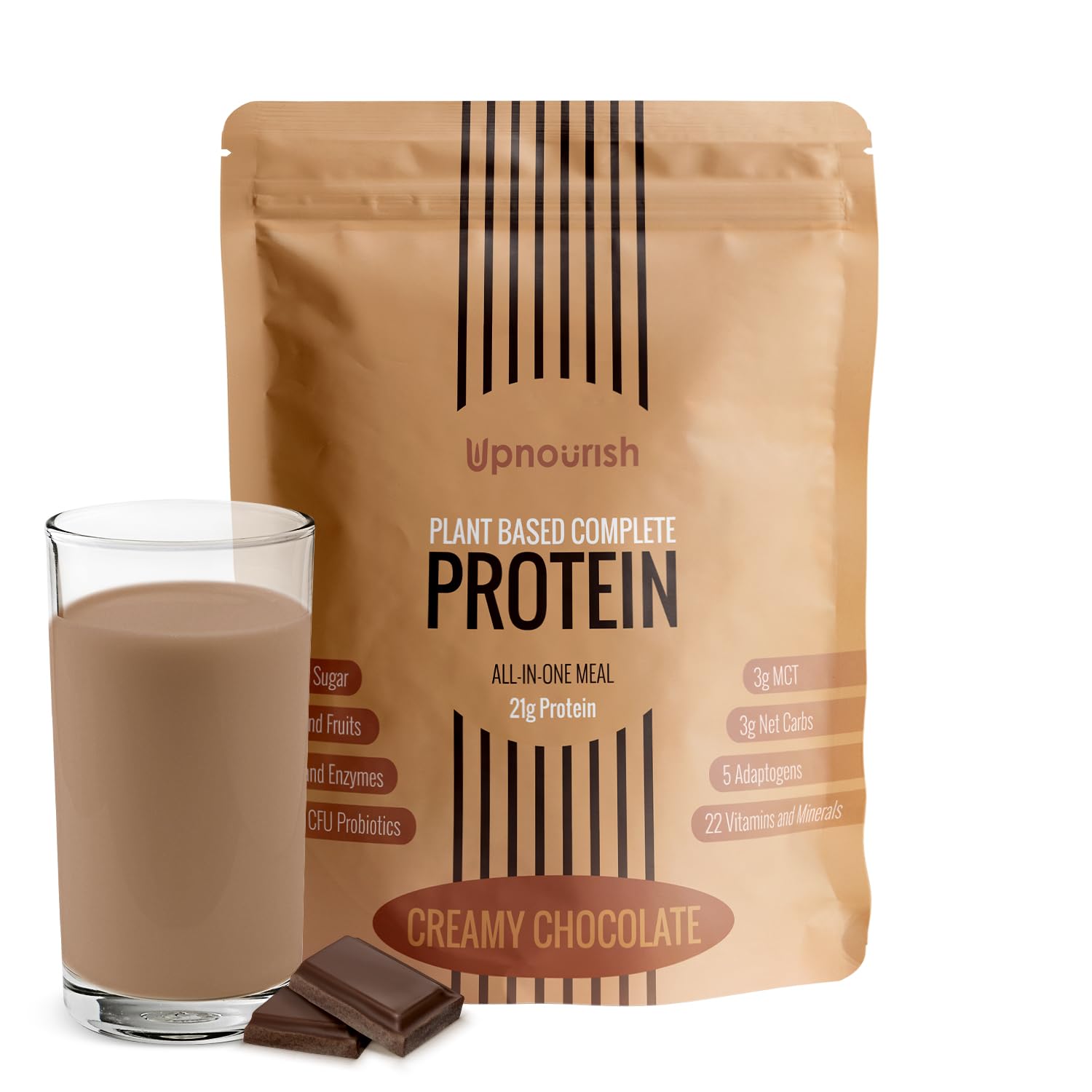
A dry chocolate powder that packs 54 nutrients into every scoop.
This is the flexible one — a powder you build yourself instead of a can you crack open. UpNourish is a vegan protein powder with 21g of plant-based protein per serving and 1.5 Billion CFU probiotics, which are live beneficial bacteria added to the blend. It carries 54 superfoods in the mix, and it is made with no sugar, no dairy, and no GMO ingredients, so it fits a keto-friendly or low-carb approach to a meal replacement shake.
You control the liquid, which is the real advantage for anyone with a kidney diet. Mix it with water, or blend it with whatever milk alternative your plan allows, and it takes a shaker bottle without clumping. It works as breakfast, lunch, a grab-and-go snack, or a post-workout scoop, so one bag covers a lot of daily situations. As a dry powder it also stores cool and dry without taking up fridge space.
The reality check is that this is a general-purpose vegan powder, not a shake formulated for dialysis or a low-potassium kidney plan. It does not carry the low-phosphorus or low-potassium positioning that Nepro does, so read the mineral panel before you make it a daily habit. What it does offer is 21g of plant protein and 54 nutrients in a flexible format, with a lighter, sweeter chocolate profile that works best when you blend it rather than shake it.
What makes it flexible
- 21g plant-based protein and 1.5 Billion CFU probiotics per serving
- 54 superfoods, no sugar, no dairy, no GMO ingredients
- Powder format lets you choose your own liquid; 15 servings per bag
What to weigh first
- Not a low-potassium or low-phosphorus clinical formula — check the mineral panel
- Best blended; shaken in water alone, the texture is thinner
Your pick if you want plant-based protein and superfoods you can mix your own way, without dairy or sugar in the powder.
Not the fit if your plan calls for a low-potassium clinical shake built for dialysis — this is an everyday vegan powder with a different job.
Know the Specs
Potassium, Phosphorus, and Protein
The number that matters most on a kidney diet is usually potassium, followed by phosphorus. A shake built for dialysis patients will tell you it is low-phosphorus or low-potassium, and that is the label language to look for. Protein sits third — it is important, but a shake with a high mineral load is the wrong choice even if the protein number looks good. Always read the mineral panel against your own daily limits before the protein grams.
Calories Per Serving and Format
Calorie density tells you how many shakes you need in a day. A bottle with 425 calories works as a meal replacement, while a 100-calorie can is a light protein boost you add on top of food. Ready-to-drink shakes are fast but heavier to ship and store in bulk. Powders cost less per serving and let you control the liquid and sweetness. Pick the format based on if you need a full meal or just an add-on.
Common Questions
Are these shakes safe if I have kidney disease?
How much potassium and phosphorus should a kidney-friendly shake have?
What is the difference between a dialysis shake and a regular protein shake?
Can I drink Nepro if I am not on dialysis?
Is Slate Milk a good choice for kidney disease?
Do I need to refrigerate these shakes?
How long does a case of protein shakes last?
Does a kidney-friendly shake taste good enough to drink daily?
Can I use a plant-based protein powder on a kidney diet?
Is a higher protein shake always better for kidney patients?
The Bottom Line
For most dialysis patients, the protein shake for kidney disease that fits best is the Nepro Liquid Nutrition, Homemade Vanilla. It is low-phosphorus and lactose-free, and each 8-ounce bottle gives you 425 calories and 19g of protein — exactly what a dialysis diet needs. If you also watch blood sugar, the Nepro with Carb Steady, Mixed Berry uses slower-digesting carbs, but its case weighs 15 pounds and takes real shelf space. Want an everyday low-sugar protein drink instead of a clinical shake? Choose the Slate Milk Classic Chocolate for its 20g of protein and 1g of sugar per can. And if layered allergies have narrowed your diet, the KATE FARMS Chocolate Shake is the clean-label plant-based option. Whichever you pick, read the potassium and phosphorus panel before the protein count.
How we choose
We do not accept paid placement. Every pick is matched to a real buyer and a real use-case; we do not hands-on test units.
Sources
Specifications: manufacturer listings and product documentation. Review insights: verified customer reviews, as of October 2026. Pricing: not shown on this page (it changes often); check the current price via the retailer link.
As an Amazon Associate, Aappliancez earns from qualifying purchases. This does not affect which products we feature.