Disclosure: Some links in this post are affiliate links. As an Amazon Associate I earn from qualifying purchases, at no extra cost to you. Learn more
Specs are compiled from manufacturer listings and verified buyer reviews and can change over time — please confirm the key details on the product page before buying.
If your liver is scarred and your doctor has told you to keep protein up, the powder you want is the plainest one you can find — no sweeteners, no flavor tricks, nothing extra for a strained liver to process. That single rule narrows this shelf down fast. Below are five unflavored, low-ingredient options, sorted by what each one actually does well, so you can match a powder to your own daily routine instead of guessing.
This guide is built by comparing the manufacturers’ published specifications and the patterns across verified customer reviews, so you get each pick’s real strengths and trade-offs instead of marketing spin.
Everything here is unflavored or near-tasteless on purpose, because a powder you can hide in soup, oatmeal or a shake is a powder you will actually finish. These picks cover the range from plain whey isolate to a one-ingredient bone broth, and each one earns its place for a different reason. Below is the shortlist of the best protein powder for liver cirrhosis.
Top Picks

How To Choose A Protein Powder For Liver Cirrhosis
The plainest powder wins here, almost every time. When your liver is working harder than it should, you want the fewest ingredients you can get, no added sugar, and nothing artificial to sort through. The right bottle lists a handful of recognizable ingredients you can scan in ten seconds.
Start with the ingredient list, not the flavor
Flip the container around before you look at the front. An unflavored whey isolate might list almost nothing beyond the protein itself, while a flavored blend can carry sweeteners, colors, and gums you did not plan on. Shorter lists mean fewer decisions for your body to make.
Check whether the label says “isolate” or “concentrate.” Whey isolate is filtered harder, so it tends to carry less lactose and less fat per scoop, which many sensitive stomachs handle more easily. If dairy is out for you, a pea-based plant protein is the usual swap.
Match the grams to what your day actually needs
Protein per serving is the number that decides how many scoops you go through in a week. A 25-gram scoop and a 15-gram scoop are very different tools — one covers a bigger share of your daily target, the other leaves room to spread protein across several small meals. Neither is wrong; they just fit different routines.
Think about where you will hide it
Unflavored powder lives or dies by what you stir it into. Cold smoothies and oatmeal are the safe zone. Hot coffee and hot soup are where clumping shows up, so plan a workaround — mix into a little cold liquid first, then add the hot. A powder that disappears into your usual breakfast is worth more than one that tastes better but sits unused in the cupboard.
Side-by-Side Comparison
| Model | Best For | Protein Per Serving | Servings Per Container | Protein Source | Amazon |
|---|---|---|---|---|---|
| Isopure Zero Carb Whey Isolate, Unflavored 1 LB★ Best Overall | Highest protein per scoop | 25 grams | 16 servings | 100% whey isolate | Amazon |
| Clean Nutraceuticals Liver Cleanse Detox & RepairLiver Support Pick | Liver-focused capsule support | — | 90 capsules (3-capsule serving) | Herbal blend (milk thistle, NAC, TUDCA) | Amazon |
| Unjury Protein Powder, Unflavored | Sensitive stomachs and clinical diets | 21 grams | 15 servings | 100% whey isolate | Amazon |
| Complement Vegan Unflavored Plant Protein | Dairy-free and plant-based diets | 15 grams | 15 servings | Pea protein | Amazon |
| Bluebird Provisions Chicken Bone Broth Powder | Sipping broth and savory meals | 11 grams | — | Dehydrated chicken bone broth | Amazon |
Detailed Reviews
1. Isopure Zero Carb Whey Isolate Protein Powder Unflavored 1 LB
Our pick — 4.0+★ from 40,500+ verified ratings; the strongest balance of quality and price.
The plainest scoop on the shelf, and the one that delivers the most protein per serving.
Here is the number that decides it for a lot of people: 25 grams of protein per scoop, from 100% pure whey isolate. That is 19% more protein per serving than the Unjury bottle further down this list, which lands at 21 grams. For someone trying to hit a daily protein target without eating a plate of meat at every meal, that gap is the whole argument. One 1 lb bag holds 16 servings, and a serving mixes into 6-8 fl oz of whatever flavored drink you already like.
The formula is built around eight ingredients in total, with zero carbs and no added sugar — which is the point. Unflavored means it disappears into smoothies, oatmeal, baked goods and coffee without leaving a sweet aftertaste behind. Buyers report it plainly: “I love this protein powder. There’s no after taste or gritty texture. It blends great in smoothies and other recipes.” What wins people over most is the clean, unsweetened blank-canvas quality — you are not fighting a flavor you did not ask for. It also pulls double duty for anyone with multiple food allergies or sensitivity to artificial sweeteners, since there is nothing extra to react to.
The catch is temperature. Cold liquids are its home turf; hot ones are not. Coffee straight out of the pot tends to leave clumps no matter how long you stir, so the fix is to mix the scoop into a little cold creamer first and then pour the hot coffee in. It is also a genuinely plain product — if you wanted a chocolate shake, this is not it. The same bag reseals fine and the tub is reusable for pantry storage, which is a small thing that goes further than it sounds.
What lands the top spot
- 25 grams of whey isolate per scoop — the highest protein-per-serving figure in this lineup
- Zero carbs and no added sugar, so nothing extra tags along with your protein
- Truly unflavored: no aftertaste, blends into smoothies, oatmeal, baking and coffee
- Eight-ingredient formula suits people juggling several allergies or sweetener sensitivity
Where it asks a little patience
- Clumps in hot liquids — mix into something cold first, then add the hot coffee
- Only 16 servings in the 1 lb bag, so heavy daily users restock fairly often
Reach for this if: you want maximum protein per scoop with nothing else in the scoop, and you mostly blend cold.
Look elsewhere if: your whole routine is a hot drink — a powder built for cold mixing will fight you there.
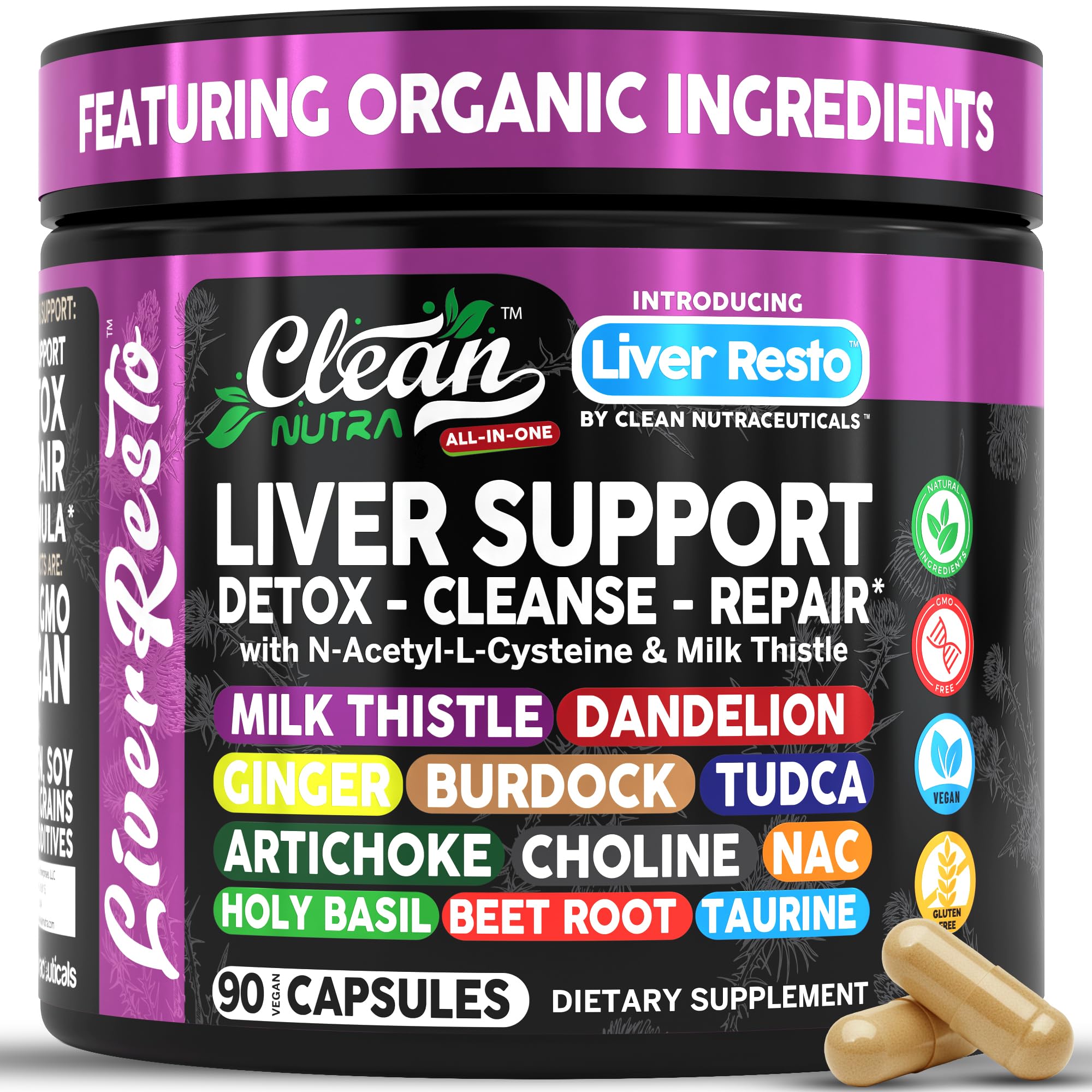
2. Clean Nutraceuticals Liver Cleanse Detox & Repair
Not a powder at all — a capsule built around the liver-support herbs people ask about most.
This one sits in a different lane from every other pick, and that is worth being upfront about. It is a capsule, not a protein powder, so it does not add protein grams to your day — it is here because milk thistle, NAC, TUDCA, dandelion root, artichoke, choline and beet root are the exact ingredients someone researching liver support tends to be hunting for, and this bottle puts them in one place instead of five. One serving is three capsules, and the bottle holds 90 capsules.
What buyers talk about most is whether it does anything, and the answer that comes back is generally yes. Buyers with sluggish digestion report more regular bowel movements, and one gallbladder-free buyer with fatty liver said the colon-clearing effect began about three days after starting. The other recurring theme in reviews is steadier energy, described as feeling lighter on waking. It is also the most budget-friendly item in this roundup despite carrying the longest ingredient list, which is a fair chunk of its appeal.
The honest wrinkle: the ingredient panel is not universally loved. Some buyers are happy to see every component they wanted, while others flag maltodextrin sitting in the mix — worth reading the label yourself before you commit. A three-capsule dose is also a real daily habit to keep, not a scoop you can toss in a shaker. Treat this as a companion to a protein powder, not a replacement for one, and bring the label to your doctor so they can see exactly what is in it.
Why it makes the list: it consolidates the liver-support ingredients people end up buying separately, in a single 90-capsule bottle, and the effect buyers describe most is simply feeling their digestion get back on track.
Read before you buy: the panel includes maltodextrin according to some buyers, so scan the full ingredient list against whatever your care team has told you to avoid.
Worth adding alongside a powder if: you specifically want milk thistle and NAC in your routine and prefer one bottle to a shelf of them.
Not the pick if: you need actual protein grams — this adds none, and a three-capsule serving is its own daily commitment.
3. Unjury Protein Powder, Unflavored, 21g, 15 Servings

The unflavored whey isolate hospitals and dietitians hand to patients on restricted diets.
Unjury has sold since 2002, and its clinical reputation rests on the formula: 100% whey protein isolate, 21 grams per serving, lactose free, and free of gluten, egg, peanut, tree nut, sesame and shellfish. No artificial colors or flavors, and kosher certified. Fifteen servings to a container. If you are sorting through a restricted diet and every label feels like a minefield, that short allergen list is the feature doing the real work here.
It is also unusually adaptable. The maker suggests stirring one scoop into 8 fl oz of a beverage with a strong flavor of its own, and specifically advises against plain water. Buyers describe mixing it into sourdough, food, and daily drinks with barely a trace — one household used it every day while a family member’s protein levels were low during chemo treatments, precisely because “it has no taste so it was easy to mix in his food.” Being able to hide a scoop in a meal you were going to eat anyway is what makes a powder stick around long enough to matter.
Where it stumbles is texture in extreme temperatures. Too hot or too cold a liquid and it turns lumpy; a fair number also find the scoop design awkward. Compared with the Isopure above, you get 21 grams per serving instead of 25, and the container weighs 1.08 pounds to Isopure’s 1 pound — a little more bulk for a little less protein per scoop. You are paying for the short allergen list and the clinical track record, not the highest protein count in this lineup.
The clinical case for it: a lactose-free whey isolate with a deliberately narrow allergen list — gluten, egg, peanut, tree nut, sesame and shellfish all absent — that suits a stomach reacting badly to everything else.
The everyday friction: it froths and clumps when the liquid is too hot or too cold, so aim for a middle temperature and shake hard.
This is your bottle if: allergen safety and a sensitive gut outrank squeezing the most grams into every scoop.
Keep shopping if: you want the highest protein-per-scoop figure available — the Isopure beats it on that measure.
4. Complement 15g Vegan Unflavored Plant-Based Protein Powder
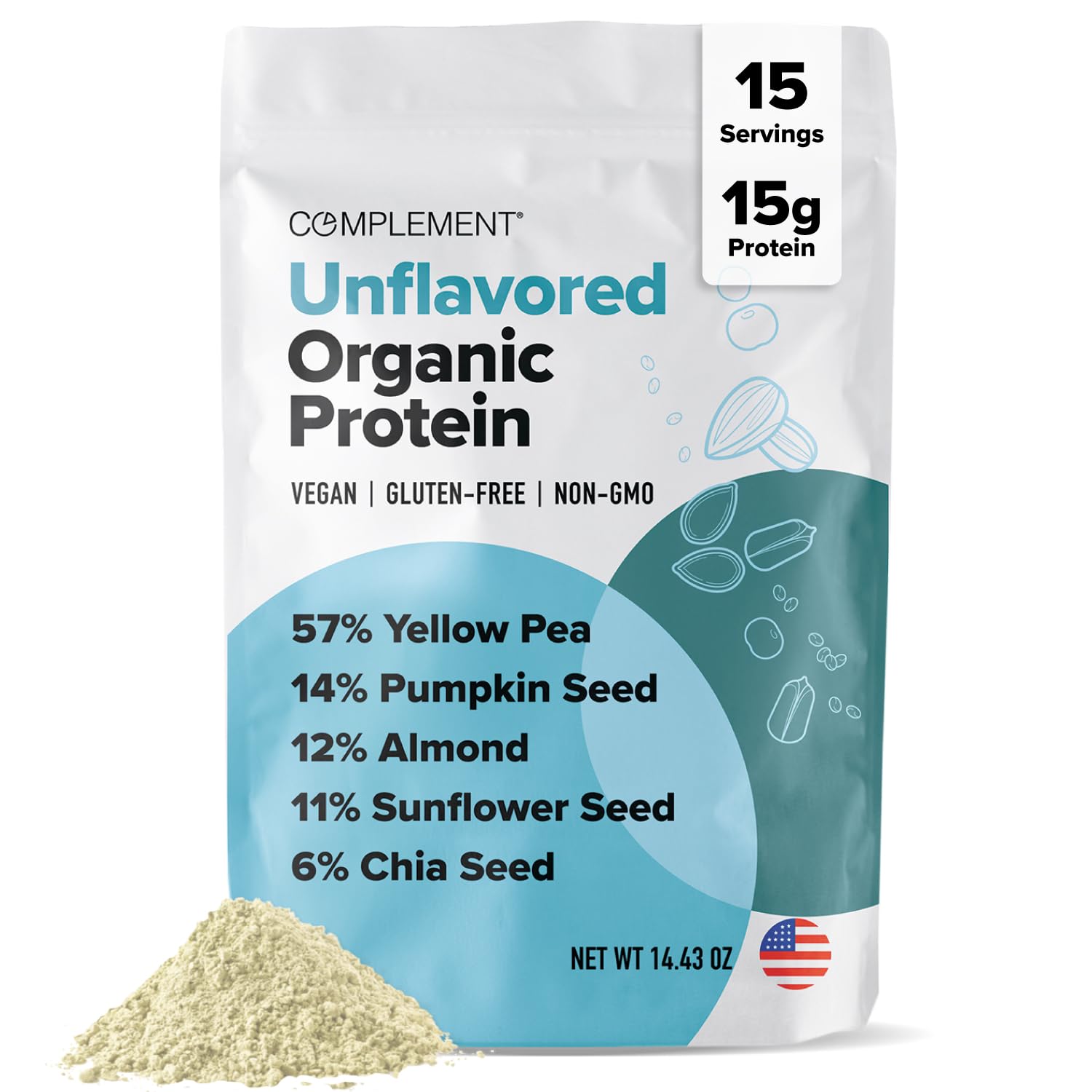
Dairy-free, fifteen grams a scoop, and quiet enough to vanish into a bowl of oatmeal.
For anyone who cannot or will not do whey, this is the plant answer in the lineup. It is built on pea protein, delivers 15 grams per serving, and comes with no added sugar, no gluten, and no fillers. Fifteen servings per container. The pitch is simplicity: a neutral-tasting powder you can stir into smoothies, coffee, oatmeal, baking or even savory dishes without changing what the dish tastes like. That neutrality is the entire product, and it holds up.
Taste is what carries this one — it is the quality people bring up most, and for good reason. A buyer going through chemo, hypersensitive to both flavor and texture, described it as adding “just a barely-there amount of flavor,” which is about the highest compliment an unflavored powder can earn. The ingredient list draws the second wave of approval: no additives, no greens or probiotics crammed in, just the protein. It also mixes cleanly into oatmeal and smoothies, so the everyday use case is covered.
Two honest caveats. First, the price-to-portion math draws mixed feelings — some find it fair, others think it runs high for what is in the bag, and there have been grumbles about the packaged amount shrinking versus what was pictured. Second, and more importantly, bags have arrived with small silica moisture packets buried inside that are not called out on the outside — scoop carefully and check before you blend, especially if anyone else in the house is fixing their own shake. Compared with the whey options above, you are trading protein density (15 grams versus 25) for a dairy-free formula, so plan on more scoops per day if you are chasing a high target.
What it gets right
- Genuinely neutral taste that disappears into oatmeal, smoothies and baking
- Clean pea-protein formula with no added sugar, gluten or fillers
- Works for vegan and dairy-free diets where whey is off the table
- Mixes smoothly enough for a daily bowl, not just a shaker bottle
What to weigh first
- 15 grams per serving is on the lighter side — budget for extra scoops
- Some buyers question the value for the portion size
- Check each bag for silica moisture packets before scooping
Best fit for: dairy-free or vegan eaters who want a tasteless scoop for oatmeal and smoothies and do not mind using more of it.
Think twice if: you need maximum grams per scoop or you want a portion that clearly matches the picture on the listing.
5. Bluebird Provisions Chicken Bone Broth Powder

A single-ingredient broth powder for the days a sweet shake just will not go down.
Sometimes the problem is not protein at all — it is that you cannot face another creamy drink. This is the savory option. One ingredient: dehydrated chicken bone broth, made from water and pasture-raised chicken bones. Each cup delivers 11 grams of collagen protein for 45 calories, with 110 mg of sodium per serving left deliberately low so you salt it yourself. No onion, no garlic, none of the fillers that turn up in most broth powders. If you want something warm and sippable that behaves like soup rather than a supplement, this is the one.
What owners value most is straightforward quality — that it is what it says it is, mixes into water without fuss, and does not come loaded with extras. Reviewers managing IBS and SIBO on restricted diets call it filling and easy to keep down, and the powder travels well with no additives. Sprinkle it on vegetables, cook with it, or make it your morning cup instead of tea. The one-ingredient label is the whole selling point, and it lives up to it.
Now the part you need to hear: taste is genuinely divisive. This is the most talked-about quality of the product, and opinions split hard — some find it pleasant with a pinch of salt, cumin or turmeric, while others find it unpleasant no matter what they add. Texture is the second sticking point; it clumps and needs real stirring plus a minute of resting. And it is the priciest item here, with 7.05 ounces in the container and no listed serving count. Try a small amount before you commit to a routine built around it.
Where it shines: a clean, one-ingredient broth you can sip, season yourself and take anywhere — no refrigeration, no spoilage, no long list to vet.
The honest trade-off: the flavor wins some people over completely and puts others off entirely, and the powder needs patient stirring to smooth out.
Pick this when: you want warm, savory protein you can sip or cook with, and a one-ingredient label matters more to you than a sweet shake.
Pass on it if: you need a guaranteed neutral taste or the highest protein grams per serving — this is neither.
Know the Specs
Protein Per Serving
This is the grams of protein in one scoop, and it decides how many scoops it takes to reach your daily target. A 25-gram scoop (like the Isopure) covers more ground per serving than a 15-gram plant scoop, so you use less powder — and buy bags less often. It is not a quality score, just a density math problem. Pair it with the serving count to see how long a container really lasts.
Whey Isolate vs. Pea vs. Bone Broth
Whey isolate is dairy protein filtered hard enough to strip most lactose and fat, which is why sensitive stomachs often handle it better than regular whey. Pea protein is the plant route — dairy-free, slightly lower in grams per scoop, and neutral enough to hide in food. Bone broth powder is a different animal entirely: a savory, sippable protein for when a sweet shake is the last thing you want.
Unflavored Means Unflavored
“Unflavored” is the feature that matters most here, because it is what lets you bury a scoop in soup, oatmeal or coffee without changing the dish. But unflavored does not mean tasteless to everyone — some powders still carry a faint note. The real test is whether it disappears into something you already eat, so look for buyers describing it as a blank canvas rather than “no flavor.”
Mixability and Temperature
Even a great powder will clump if you add it to the wrong liquid. Hot coffee and hot soup are the usual trouble spots — the protein sets before it can dissolve. The reliable trick is to whisk the scoop into a small amount of cold liquid first, then add the hot. If you mostly drink cold smoothies, mixability is close to a non-issue. If your routine is a hot morning cup, plan around it.
Common Questions
Can I use a protein powder if I have cirrhosis?
Is whey or plant protein easier on a damaged liver?
Why does unflavored protein powder clump in hot coffee?
How many grams of protein per serving should I aim for?
Can I add protein powder to soup or savory food?
Do I need a liver cleanse supplement with my protein powder?
What does silica packet warning on a protein bag mean?
How long does an opened protein powder stay good?
Is bone broth powder a good protein source for someone with a sensitive gut?
What is the difference between whey isolate and whey concentrate?
The Bottom Line
For most people working protein into a liver-conscious routine, the protein powder for liver cirrhosis choice is the Isopure Zero Carb Whey Isolate, because it pairs the highest protein per scoop in this lineup — 25 grams — with a plain, unflavored, eight-ingredient formula that slips into smoothies and oatmeal without a fight. If allergen safety matters more to you than grams, the Unjury is built for sensitive stomachs with a deliberately narrow ingredient list. If dairy is off the table, the Complement plant protein keeps things neutral and vegan; and if you just want something warm and savory to sip, the Bluebird bone broth powder is the one to reach for. And if you want to add milk thistle and NAC to your routine too, the Clean Nutraceuticals capsules consolidate those into a single bottle. Whichever you pick, read the label against what your care team has told you — that check matters more than any spec sheet.
How we choose
We do not accept paid placement. Every pick is matched to a real buyer and a real use-case; we do not hands-on test units.
Sources
Specifications: manufacturer listings and product documentation. Review insights: verified customer reviews, as of October 2026. Pricing: not shown on this page (it changes often); check the current price via the retailer link.
As an Amazon Associate, Aappliancez earns from qualifying purchases. This does not affect which products we feature.