Disclosure: Some links in this post are affiliate links. As an Amazon Associate I earn from qualifying purchases, at no extra cost to you. Learn more
Specs are compiled from manufacturer listings and verified buyer reviews and can change over time — please confirm the key details on the product page before buying.
Choosing a pool heater for a propane setup means solving one problem: getting a big, cold body of water to a comfortable temperature without waiting days or burning money on fuel. Most people shopping in this category are deciding between a heat pump, which pulls warmth out of the outside air, and a gas-fired unit. Both work; they just suit different pools, different seasons, and different patience levels.
This guide is built by comparing the manufacturers’ published specifications and the patterns across verified customer reviews, so you get each pick’s real strengths and trade-offs instead of marketing spin.
The picks below range from compact electric heat pumps built for smaller above-ground pools to high-output gas heaters for large in-ground installations. Every entry lists the practical spec that decides whether it fits your pool, from BTU output to water temperature range. If you want a straightforward shortlist for a propane pool heater, start here.
Top Picks

How To Choose The Best Propane Pool Heater
Before you buy anything, you need three numbers about your own pool: how many gallons it holds, how cold your nights get in the shoulder seasons, and whether you have a propane line or only household electricity near the equipment pad. Those three answers narrow the field faster than any feature list.
Match BTU output to your gallon count first
BTU (British Thermal Unit) is the standard measure of heating power. A 30,000 BTU unit is built for pools up to about 8,000 gallons, while a 250,000 BTU gas heater handles an in-ground pool many times that size. Going too small means the heater runs constantly and never quite wins the race against cool nights.
Understand the heat pump versus gas divide
A heat pump moves existing warmth from the outdoor air into your water rather than burning fuel to create heat. That makes it cheaper to run in mild weather, but output drops as the air gets colder. A gas heater burns propane or natural gas directly, so it heats fast in any temperature — and that speed is what most propane owners are paying for.
Check the electrical and plumbing requirements
Most compact heat pumps run on 120 V household power, while the larger units need a 220–240 V hardwired connection. Note the plumbing connection size on the unit you pick, because it has to match your existing hoses or PVC runs. Reaching for the wrong size mid-install is the most common first-timer headache.
Look at the temperature range and cooling modes
Some heat pumps do more than heat. A unit with a cooling range lets you drop the water temperature when a heat wave makes the pool feel like a bath. If you swim in spring and fall, the heating range matters more than top-end output, because a heater that only works in peak summer is not earning its keep.
Side-by-Side Comparison
| Model | Best For | Max Output | Power Source | Pool Size | Amazon |
|---|---|---|---|---|---|
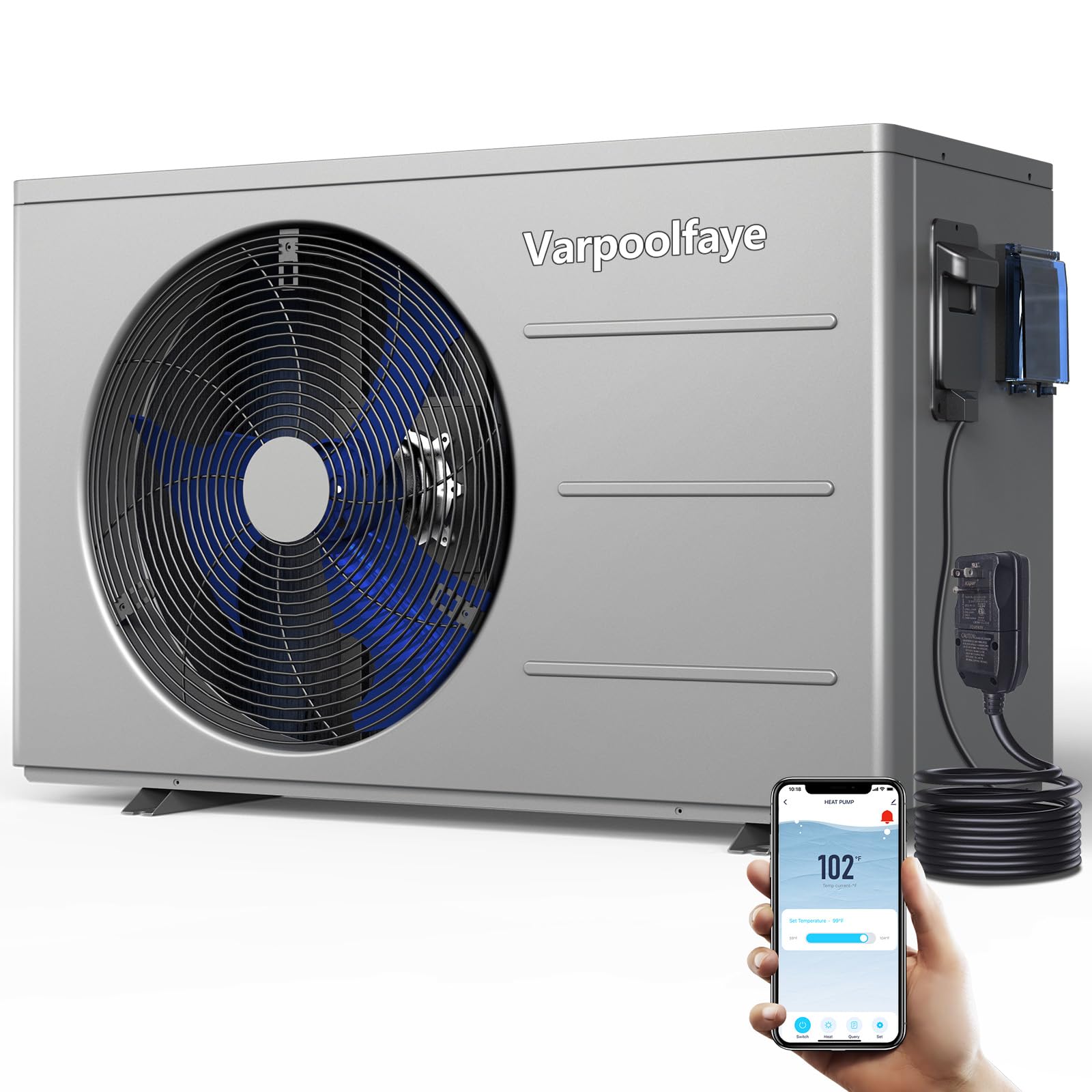
| 30,000 BTU Electric Above Ground Pool Heater★ Best Overall | Above-ground pools under 8,000 gallons | 30,000 BTU | 120 V electric | Up to 8,000 gallons | Amazon |
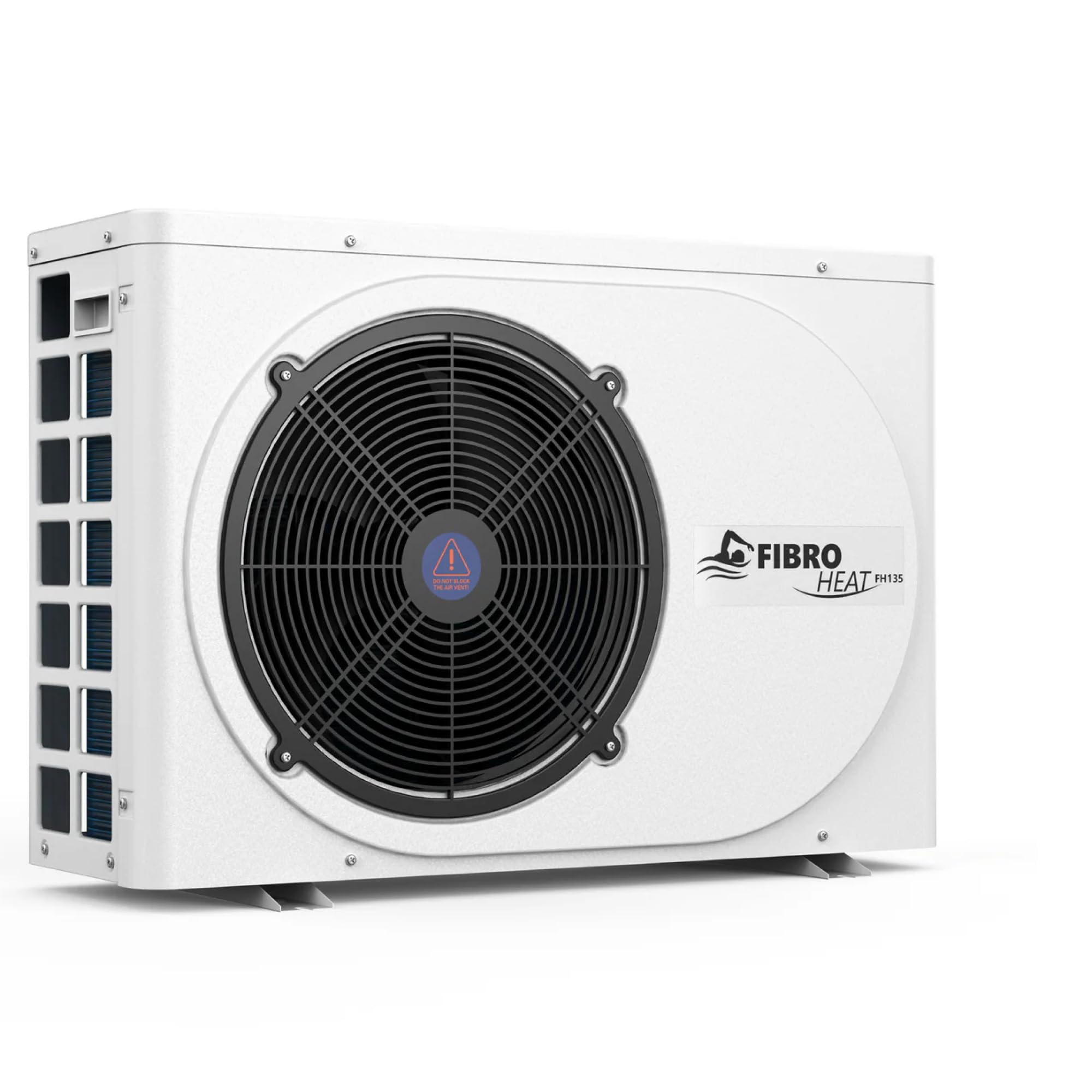
| FibroPool FH135Compact Pick | Small pools and spas, 120 V simplicity | 35,000 BTU | 120 V electric | Small pools and spas | Amazon |
| Hayward H-Series 250,000 BTU (Natural Gas)Top Performer | Large in-ground pools needing fast heat | 250,000 BTU | Natural gas | Up to 750 sq ft | Amazon |
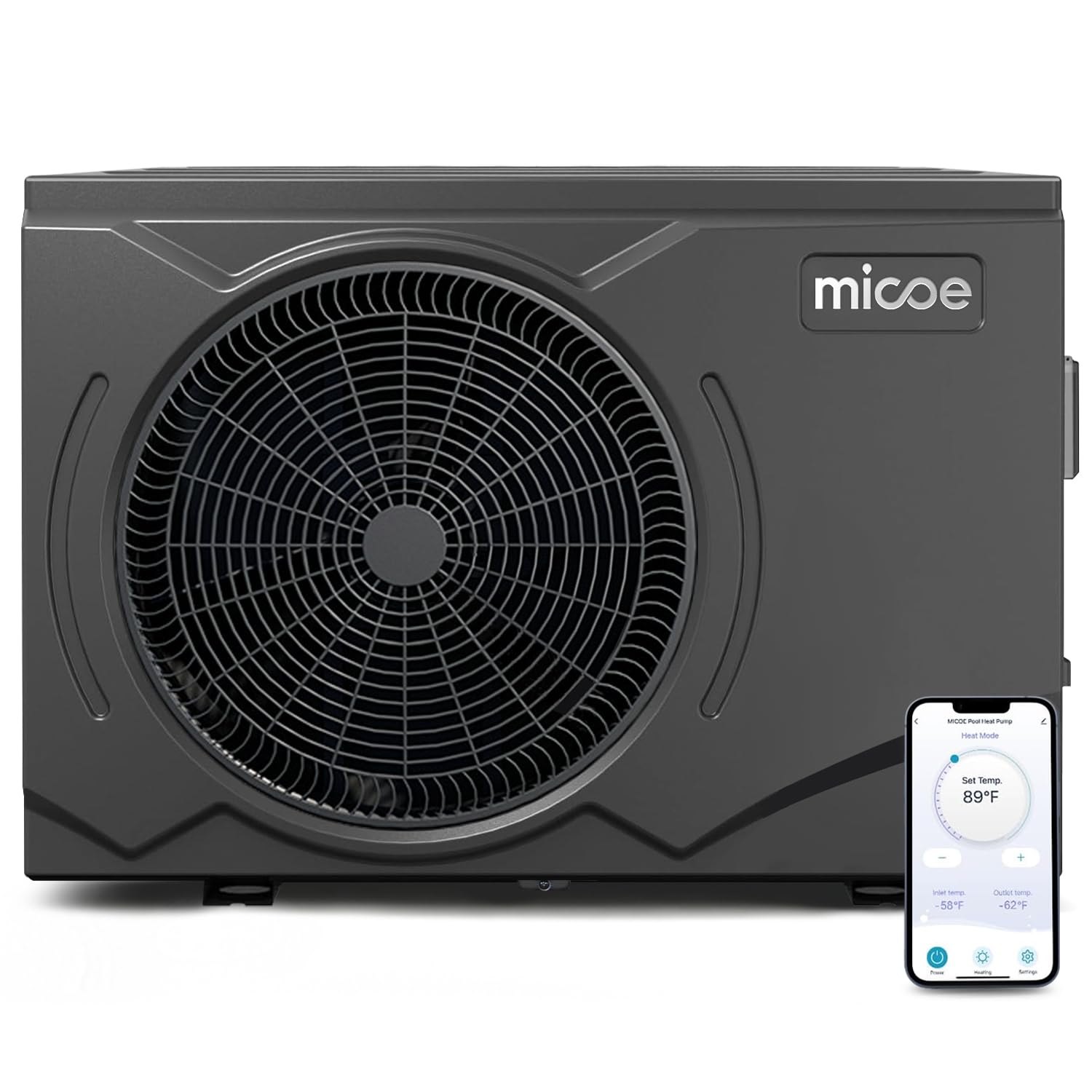
| MICOE 58,000 BTU Pool Heat Pump | Mid-size pools up to 16,500 gallons | 58,000 BTU | AC electric | Up to 16,500 gallons | Amazon |
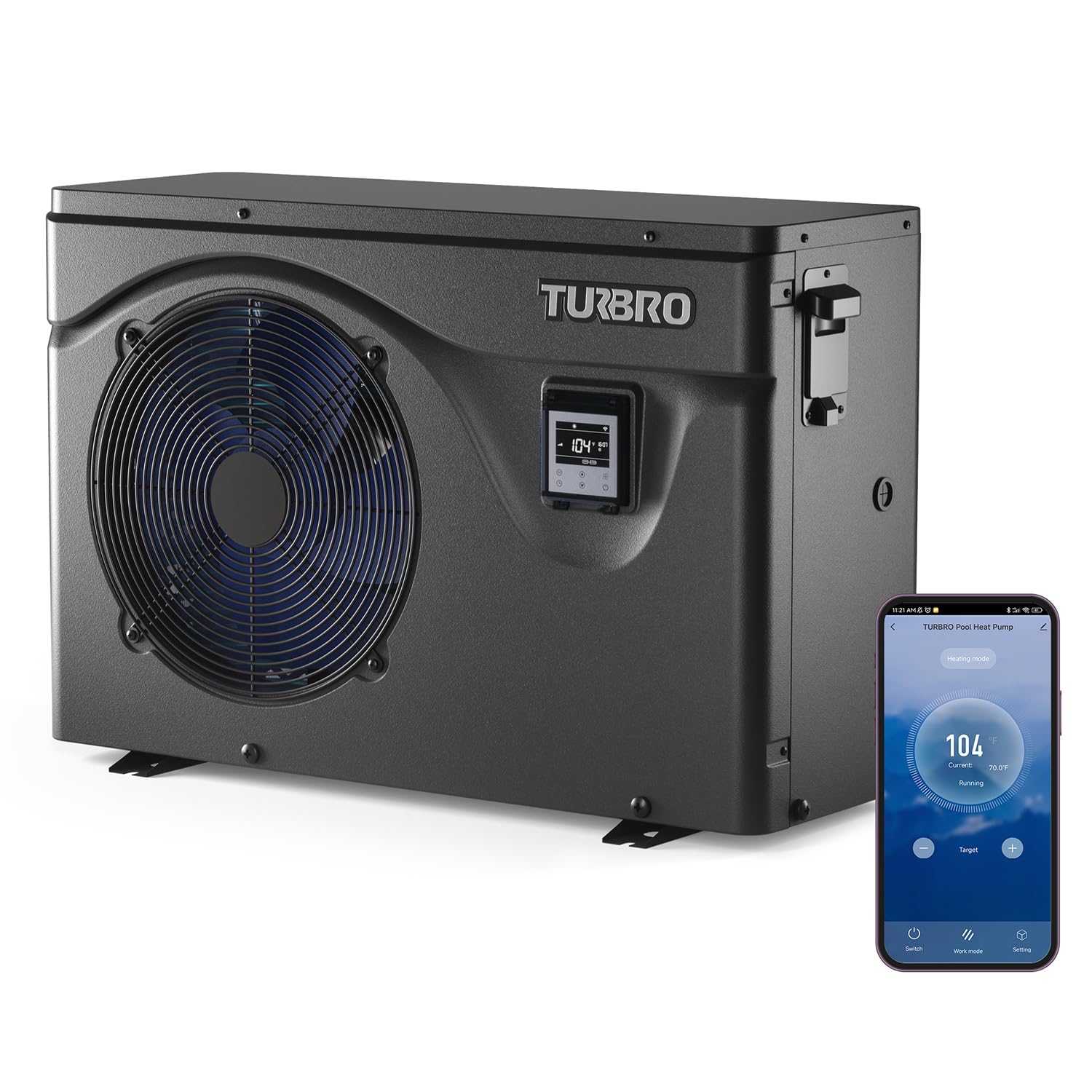
| TURBRO Beluga B50V | Variable pools up to 21,100 gallons | 50,000 BTU | 220–240 V electric | Up to 21,100 gallons | Amazon |
| FibroPool FH270 | In-ground pools up to 15,000 gallons | 70,000 BTU | 240 V electric | Up to 15,000 gallons | Amazon |
| Raypak PR106AENC | Above-ground pools and spas, tight pads | 105,000 BTU | Natural gas | Above-ground and spa | Amazon |
| 21,000 Gallon Inverter Pool Heat Pump 220V | Large in-ground pools up to 21,000 gallons | Inverter system | 220 V electric | Up to 21,000 gallons | Amazon |
| Pentair MasterTemp 125 Propane | Small pools and spas up to 15,000 gallons | 125,000 BTU | Propane | Up to 15,000 gallons | Amazon |
| Pentair EC-462024 Natural Gas 125K | Small pools and spas on natural gas | 125,000 BTU | Natural gas | Up to 15,000 gallons | Amazon |
| Hayward H-Series 250,000 BTU (Propane) | Large in-ground pools on propane | 250,000 BTU | Propane | Up to 750 sq ft | Amazon |
| Raypak 266,000 BTU Digital | Large in-ground pools wanting high output | 266,000 BTU | Natural gas | Swimming pools and spas | Amazon |
| Hayward HeatPro 140,000 BTU | Large in-ground pools in coastal climates | 140,000 BTU | Electric | In-ground pools | Amazon |
Detailed Reviews
1. 30,000 BTU Electric Pool Heater
Our pick — 4.0+★ from 250+ verified ratings; the strongest balance of quality and price.
A 120 V heat pump that heats and chills, sized for the typical backyard above-ground pool.
If your pool tops out around 8,000 gallons — a 14 to 23 foot above-ground — this is the unit that fits the job without demanding a gas line or a dedicated circuit. It runs on ordinary 120 V household power, puts out 30,000 BTU, and carries a COP of 5.8 — the heat delivered per unit of electricity used. In plain terms, it grabs warmth out of the outside air and drops it into your water, which is why it sips electricity instead of gulping it.
The flexibility is the real story. It heats across 46°F to 104°F and also cools across 46°F to 82°F, so it works as a heater in spring and fall and a chiller in the worst of August. Owners run it as a 12,000 gallon saltwater setup and report the water climbing from 68°F to 78°F in 24 hours and reaching 82°F by day two. In another case it held a mid-80s pool steady and kept it there all summer. It runs at 52 dB (about as loud as a quiet dishwasher) and comes with a titanium heat exchanger that shrugs off both fresh water and salt.
Setup favors the patient Do-It-Yourselfer. You get 1.5 inch connectors and a 126 inch power cord, which is long enough that most people do not need to relocate the outlet. Water and electrical components are kept separate, and controls run through a WiFi app for scheduling and temperature changes. Condensation dripping from the bottom is normal — it is the byproduct of the heat exchange, not a leak.
easy above-ground setup
- Heats and cools across 46°F to 104°F and 46°F to 82°F, so it earns its spot in every season.
- Runs on standard 120 V power — no electrician visit or gas hookup needed.
- Titanium heat exchanger handles saltwater pools without corroding.
- 52 dB operation keeps it from dominating the backyard.
slow in cold snaps
- A few units arrive with loose factory adapters and weep water until you reseal them.
- The companion app is basic — owners want more from it.
- Expect some weeping from the bottom on cold mornings; that is condensate, and it stops.
small pools: you run an above-ground pool up to 8,000 gallons and want heat plus cooling without a gas line or a wiring project.
large pools: your pool is much bigger than 8,000 gallons — 30,000 BTU will never keep up, and you should step up to a higher-output unit in this list.
2. FibroPool FH135-35,000 BTU Propane
The space-saving round cabinet that fits the tight equipment pad nobody planned for.
If your pad is already crowded with a pump and a filter, this one slides in where a boxy heater will not. It puts out 35,000 BTU at up to 5.5x efficiency on standard 120 V household current — no propane tank, no gas line. The cabinet is the differentiator here: a rounded, slim shape that slips into a tight corner and stays out of the way.
Owners get real heat from it. One summed up the experience simply: “My pool is 24×52 and heats up pretty fast.” Others report running it all summer in sunshine mode and holding 84°F, or heating an 8,400 gallon Intex pool to 86°F off a 110 V outlet. Several use it with a bubble solar cover to lock in the heat overnight, and the electricity bump is described as small enough to forget about — one owner pegged it at roughly a month.
The honest caveat concerns the control box. On a rainy install, the controller can develop water intrusion issues, so it is worth placing the unit where rain cannot pool on it and setting it on blocks off the ground. One owner also needed a dedicated outlet to stop it from tripping. Handle those two details before install and the unit performs as advertised.
compact 120V unit: a 35,000 BTU output packed into a round cabinet designed for tight equipment pads, plus quiet operation and low-moving-part upkeep.
limited BTU output: the controller wants protection from direct rain, and a dedicated outlet keeps it from tripping on a shared circuit.
small above-ground: small above-ground or in-ground pools and spas where the equipment pad is cramped and 120 V is the only power you have.
big inground: you have no covered spot near the pad — this one wants shelter from the weather.
3. Hayward H-Series Natural Gas 250,000 BTU
When speed matters more than operating cost, this is the brute-force answer for large pools.
For a big in-ground pool that needs to go from chilly to comfortable overnight, output wins. This H-Series puts out 250,000 BTU — enough raw heating power for in-ground pools and spas up to 750 sq ft — and it is designed to warm the water fast, not gradually. If your benchmark is cold morning to swimmable by the next day, this is the class of heater that delivers it.
Owners confirm the speed. A 22,500 gallon pool went from 65°F to 80°F overnight, and the unit runs quietly enough that its noise never becomes a talking point. The trade-offs land in the paperwork: gas heaters like this one mean a bigger install project with flexible gas and electric connections on either side, lower pump runtime, and low-NOx certification for cleaner emissions. It also weighs 171 pounds, so plan for a two-person lift onto the pad.
This is the pick where the running cost deserves a straight talk. Gas heat is fast, and the owner reports reflect a real monthly increase at a steady pool temperature. The flip side is that the upfront install labor and parts run higher than a plug-in heat pump, because you are paying for gas plumbing and a licensed hookup. The return is a pool that heats in hours, not days.
inground pools: large in-ground pools where heat-on-demand speed is worth the higher install and fuel cost.
off-grid homes: the up-front gas plumbing and labor is the real decision — not the box price.
4. MICOE 58,000 BTU Pool Heat Pump
Inverter tech and a big BTU number for mid-size pools that want smooth, steady heat.
If your pool sits in the 16,500 gallon range and you want a heat pump that can also cool, this is the one to consider. It puts out 58,000 BTU with an inverter compressor — that means the motor ramps up and down smoothly instead of banging on and off — and it uses a titanium heat exchanger that is rated to handle both freshwater and saltwater systems without corroding.
Owners find it reliable, and the standout detail is flexibility: it heats across 46°F to 104°F and cools across 45°F to 82°F, with auto-defrost to keep working in colder air. The unit is engineered to run outdoors from 32°F to 109°F, so you get spring and fall use, not just peak summer. One customer reports heating a 10,000 gallon in-ground pool to 99°F in a single day. Another got their above-ground pool from 68°F to 86°F in 18 hours and swims daily during cooler nights. The ABS cabinet resists UV, fading, and cracking, so it will not turn brittle in the sun.
The one thing to think through is energy efficiency, which generates genuinely mixed feedback. The install itself is also fussier than a simple plug-in: the touch panel and app run the show, but you will need to set up flow and wiring correctly, and there is a learning curve before the unit is humming.
inverter efficiency: a 58,000 BTU inverter system that heats and cools, with titanium internals ready for saltwater and roughly 52 dB operation that keeps the party noise-free.
higher upfront cost: efficiency opinions split, and a unit with no power at the touch screen has left at least one owner hunting for support that did not come fast enough.
mild climates: your pool is in the mid-size range and you want heating plus cooling with saltwater-ready internals.
frigid winters: you need a plug-in-and-go setup — this one rewards proper installation and the effort shows.
5. TURBRO 50,000 BTU Inverter Pool Heater
A full DC inverter that stretches shoulder seasons without turning your pool into a hot tub.
This one is built for the pool owner who wants to swim in April and October, not just July. It runs a full DC inverter compressor that adjusts heating power based on outside temperature, water flow, and your set temperature — so it holds a steady water temp instead of cycling hard. Its heating capacity reaches up to 75,000 BTU with a COP rating of up to 16.2, and TURBRO claims that efficiency cuts running costs by up to 40% versus natural gas and up to 70% versus propane.
Buyers report exactly that experience. A 12×23 foot oval pool went from 71°F to 87°F overnight, and during a heat wave the cooling mode dropped a pool from 94°F to 84°F in a single night. One replaced an old electric heater and called the difference “night-and-day,” heating a 10,000 gallon pool from 40°F to 85°F in four days at outdoor temperatures of 50°F to 60°F. The app handles two timed periods and lets you check status from the couch.
The setup demands respect. This unit needs a certified electrician to hardwire it into a 220–240 V supply, and the manual’s wiring spec has been flagged as unclear — one owner found the instructions called for a smaller gauge than the job really wants. The pump wiring hookup is also unclear in the guide. And after a long season, one owner saw the top panel warp. None of that is fatal, but plan the install carefully and treat the housing with care.
medium pools: pools up to 21,100 gallons where extending the swim season is the whole point.
tiny spas: you want a plug-in unit — this one needs a licensed 220–240 V hookup and benefits from a careful installer.
6. FibroPool Swimming Pool Heat Pump – FH270 70,000 BTU
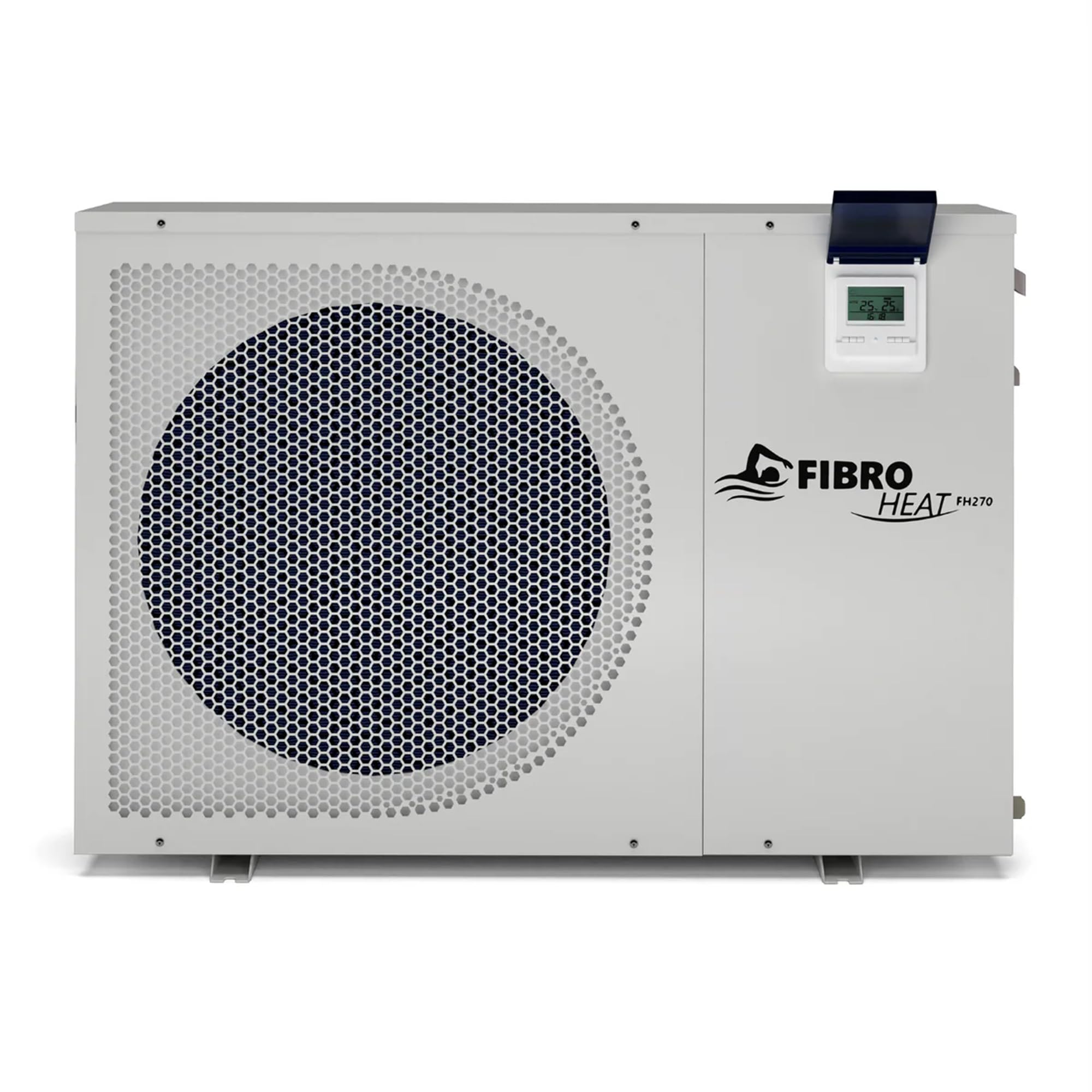
The step-up FibroPool for in-ground pools that spend real time in the water.
Move up from the compact FibroPool in this list and you get 70,000 BTU of heating power with a titanium heat exchanger and a high-pressure compressor. It is built for in-ground pools up to 15,000 gallons, and above-ground pools of 27 ft round or 18 by 33 ft oval in milder climates. The enamel-coated steel cabinet resists weather and corrosion, and the slim profile still fits a tighter pad — though at 157 pounds it needs two people to position.
Performance is the headline in buyer feedback, and the numbers back it. Pools warmed from 77°F to 82°F-84°F in about four hours. Owners mention a 55,000 BTU setting heating an 11,000 to 13,000 gallon in-ground pool from 77°F to 86°F in 36 hours, and recovering from a two-day storm shutdown back to 86°F in about 24 hours. Another owner, running an 8 hour a day schedule at 60°F outside, moved a 24 ft above-ground pool from 72°F to 77°F. Control is via a digital display with an optional extension panel, so you can mount the readout where it is actually convenient.
Two caveats deserve a mention. The heat output and ease of use both draw mixed reactions: some feel it is not enough heat for their pool size, and safety shut-offs mean the pump has to run continuously. Setup is on a 240 V circuit with 1.5 inch fittings, and multiple owners recommend a pro install for the electrical side.
powerful heat pump: 70,000 BTU with a titanium exchanger that shrugs off pool chemicals, plus a quiet run that keeps it from dominating the yard.
bulky footprint: heat output is judged differently by different owners, and at least one unit failed early and left the owner chasing support — a good reason to register the warranty immediately.
large pools: in-ground pools up to 15,000 gallons where steady output matters more than raw speed.
small yards: your nights get cold and you want heat in minutes — a gas unit in this list will get you there faster.
7. Raypak PR106AENC 105,000 BTU Natural Gas
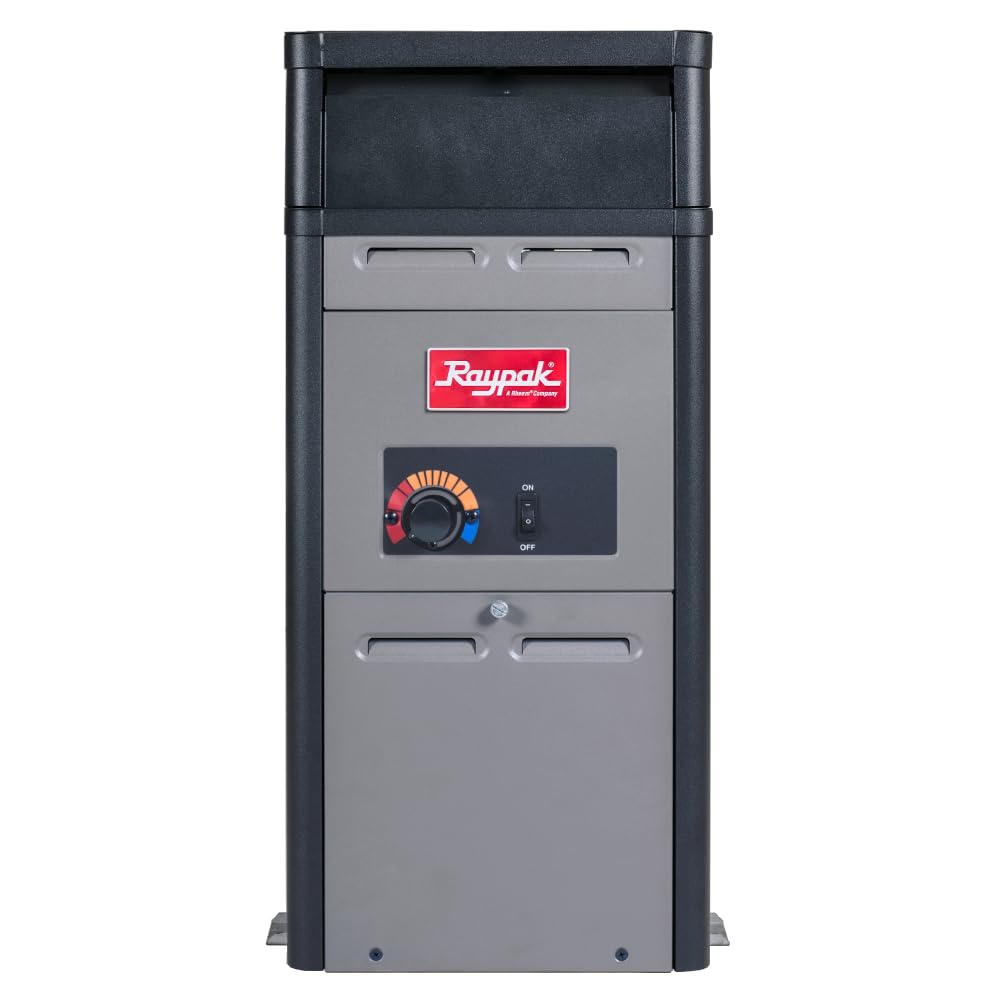
Built to keep heating no matter what the weather throws at it — rated for elevations to 4,999 ft.
For a small above-ground pool or a spa on a property with weather that refuses to cooperate, this Raypak is the tough option. It puts out 105,000 BTU via an all-copper-fin-tube heat exchanger made from a single piece of extruded copper, and it holds up against falling leaves, wind, rain, sleet, snow, and downdrafts without needing fans to solve drafting problems. Polymer headers prevent rust stains from appearing on your pool or spa surface — a small thing that matters if your deck is light-colored.
At 78.8 pounds, it is the lightest gas heater in this group, which is a genuine advantage on a small pad. Owners self-install it easily. One notes it fires right up after a straightforward install, and another observes the exhaust runs so quietly that they had to hold a hand over the vent to confirm it was actually running. Plumbing connections sit close together, so plan on an extra straight section before any elbow. It has been an easy drop-in replacement for older units and keeps working season to season — though most owners expected it to take over a stubborn install, not need the world’s fanciest plumbing.
Reliability deserves an honest mention. Longevity after a full season is still unproven for most of these, and at least one owner reports leaks and internal rust after only about a year of use. On the whole, owners describe it as a solid heater with quality construction, but treat it like any gas appliance and keep your water chemistry in balance.
commercial pools: you need a small-footprint gas heater on a small pad that will not blink at bad weather or high altitude.
residential settings: a few owners have seen leaks develop, so treating a short-track warranty claim carefully is worth planning for.
8. 21,000 Gallons Inverter Pool Heat Pump
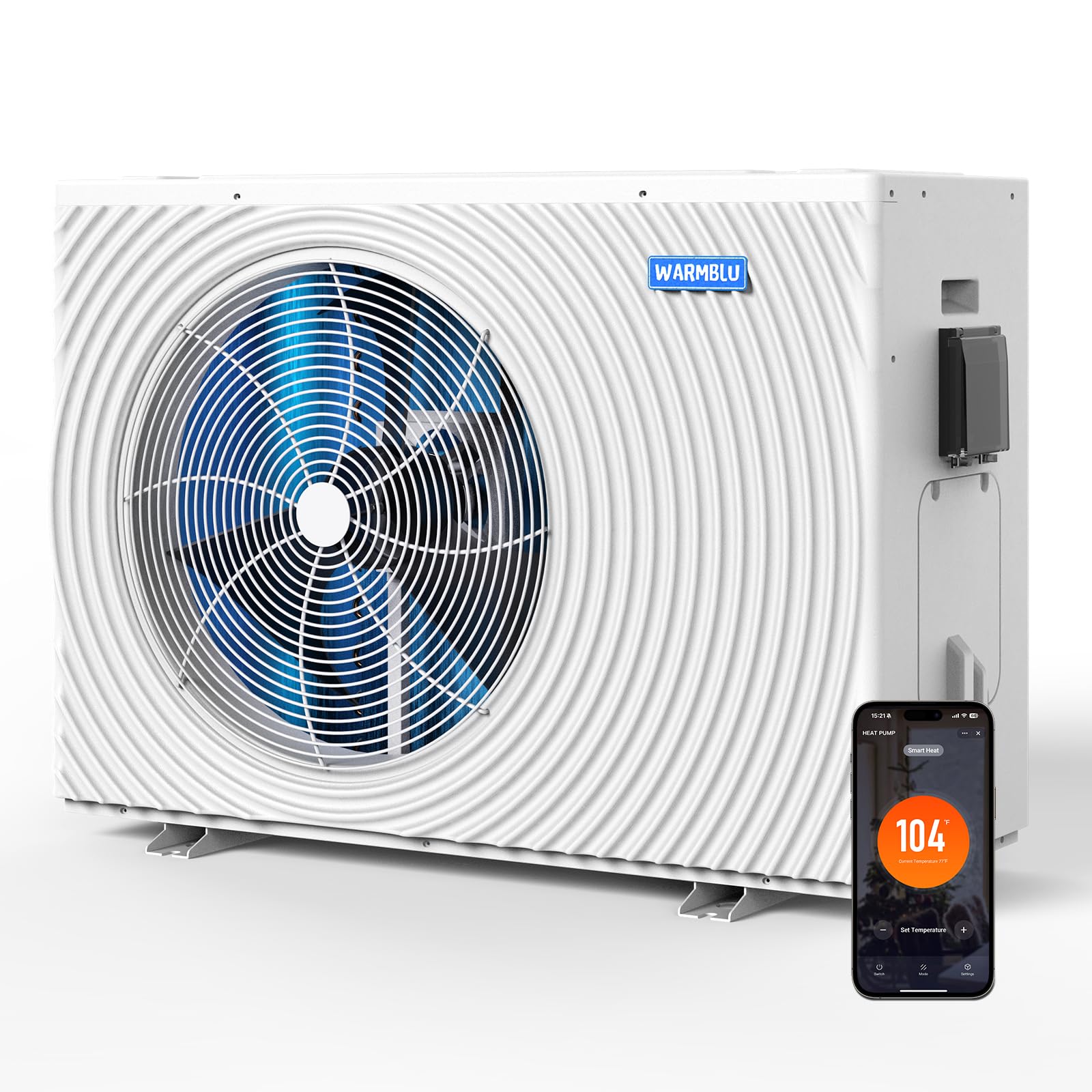
Big-pool capability with a quiet cabinet and a market-leading efficiency rating.
For a large pool up to 21,000 gallons, this is the high-efficiency option. Its corrosion-proof pure titanium heat exchanger pairs with a Max COP of up to 16.0, the highest efficiency rating in this list. That number is the whole pitch: it translates into lower running cost on a big pool where a less efficient unit would spend far more to do the same job. An intelligent inverter control adjusts output on the fly instead of hammering on and off.
What stands out is the quiet. It runs below 50 dB — the maker compares it to a refrigerator’s hum — so deck conversation is not competing with the equipment. Buyers confirm the fundamentals with real numbers: a 6,100 gallon pool went from 67°F to 86°F in four days and held 88°F on a 12 hour pump schedule even with 60°F nights, a 13,000 gallon pool moved from 70°F to 86°F in 24 hours, and it pulls just 6A (about 1.3 kW) at an 8 hour a day pace. The touch panel and app handle control, and water and electrical components are fully separated for safety.
Two things to plan around. It needs proper flow regulation — installed correctly, owners find the balance around 40-42 GPM, and a 3-way valve plus unions help. There is also at least one report of a unit failing early with an error code, though the manufacturer replaced it promptly. The app setup can be a frustration to dial in.
top energy efficiency
- A Max COP up to 16.0 — the highest efficiency rating on this list for large pools.
- Runs below 50 dB, so backyard conversation goes undisturbed.
- Pure titanium exchanger handles both fresh and salt water.
complex installation
- Flow regulation must be dialed in — owners add a 3-way valve and unions to get it right.
- The WiFi app setup takes patience.
- One unit failed early with an error code; the replacement process worked, but the round trip costs time.
eco-conscious owners: you have a large in-ground pool and want the lowest running efficiency hit available here.
DIY installers: you would rather not fuss with flow valves and app troubleshooting — this one rewards a hands-on installer.
9. Pentair EC462025 MasterTemp 125 Propane

The compact propane burner that turns a small pool warm with pre-mixed combustion speed.
This is a gas heater for a propane setup on a small body of water — above-ground pools, spas, and in-ground pools up to 15,000 gallons. It puts out 125,000 BTU at 82% energy efficiency, which Pentair calls the highest in its class. The engine behind it is pre-mixed combustion, a design that mixes fuel and air before ignition for fast heat-up rather than a slow build. It uses 1.5 inch plumbing, which is ideal for smaller pools, and the digital display/controller makes daily operation simple.
This is the pick for a compact pool where a big gas heater would be overkill and speed matters more than economy. Where the 250,000 BTU Hayward in this list takes down a 22,500 gallon pool in one night, the MasterTemp is tuned for the small end — an above-ground pool or spa. Count on the speed advantage of a gas heater but on a footprint sized for a tight install.
One thing to keep in mind: the propane versus natural gas distinction is real, and this model is the propane version. Because the housing makes the two easy to confuse, ordering carefully makes the difference between working plumbing and a pricey return. Set it and maintain the pool chemistry properly, and the fast heat-up is worth the fuel cost for small pools used frequently.
inground pools: small pools and spas up to 15,000 gallons on propane, where quick heat-up beats a slow, steady climb.
natural gas homes: confirm the propane configuration at purchase, because mixing it up with the natural gas version creates return hassle.
10. Pentair EC-462024 – Natural Gas 125K Heater
The natural gas twin of the MasterTemp — compact power for small pools off a gas line.
If your propane setup is actually a natural gas setup — a permanent line run to the equipment pad — this is the version that fits. It carries the same 125,000 BTU output and 82% energy efficiency rating as its propane sibling, with 1.5 inch plumbing sized for above-ground pools, spas, and in-ground pools up to 15,000 gallons. Pre-mixed combustion means the gas and air are combined before ignition, which is what gives these units their quick heat-up.
The experience is a mixed one, and worth being straight about. A fair number of customers note it operating flawlessly across multiple seasons — particularly on 18×54 above-ground pools, where it has been installed easily and run without trouble. Others have had a heat exchanger fail within months, and that gap in outcomes is the most-discussed part of this heater. The model that it replaced, notably, is often another Pentair unit that served for years, which is why some buyers expect long service and are disappointed when they do not get it.
The upshot: this is a solid, well-specified compact natural gas heater that can last many seasons. If you buy it, document the install, keep up on your water chemistry, and register the warranty the day it arrives. That is good practice on any gas pool heater, but especially on this one.
consistent natural gas heat: 125,000 BTU of pre-mixed combustion heat in a compact 82% efficiency package sized for small natural gas pools.
needs gas hookup: reliability is genuinely split — some units run flawlessly for seasons, while some heat exchangers have failed within months.
inground pools: a small natural gas pool or spa where a compact fast-heating burner fits the pad and the plumbing.
propane users: some owners have had to fight for warranty coverage — document everything and register it immediately.
11. Hayward H-Series Propane 250,000 BTU

The propane twin of the natural gas H-Series — same muscle, different fuel line.
For a propane setup running a large in-ground pool, this is the heavyweight you reach for. It puts out 250,000 BTU and is built for in-ground pools and spas up to 750 sq ft with a propane connection. The front control panel with a digital LED display handles temperature setting and self-diagnostic readouts, and the gas, water, and electric connections can be configured on either the right or the left side — a real advantage when your plumbing and gas line are already fixed in place.
Owners describe it as a workhorse that does exactly what it should: heat the water. With this much output, a large pool reaches swimming temperature in hours rather than days, which is the trade-off you weigh. The build is rated to resist corrosion from unbalanced water chemistry, and it is certified for low-NOx emissions, so it burns cleanly. Fit matters here: it is a 171 pound, full-size unit, so plan for a two-person lift and the same heavy install as its natural gas sibling.
The honest caveat: quality feedback is mixed. Owners who dialed in their pool chemistry properly tend to report loving it, while those who let their water chemistry drift have reported problems. That is not a defect in the heater as much as a recommendation to take water balance seriously with a gas heater.
rural properties: a large in-ground propane pool that needs fast, high-output heat-up on a permanent gas line.
urban gas lines: keeping your pool chemistry in balance is not optional with this class of heater — it is the difference between a long life and an expensive repair.
12. Raypak 266,000 BTU Natural Gas

The biggest burner in this group, matched to pools that refuse to stay cool.
When your pool is large and your patience is small, output is the spec that matters. This Raypak puts out 266,000 BTU — the highest output in this list — and is built for pools and spas of substantial size. It uses an intermittent spark ignition system, which means the pilot only fires when the thermostat calls for heat rather than burning constantly, a design that saves fuel over the season. The cabinet is built to withstand weather extremes, so harsh winter or summer conditions will not sideline it. It is also the heaviest unit here at 210 pounds, so install day means a crew and a good pad.
Owners rate its heating performance highly and compare it favorably to larger, higher-cost competitors. Ease of install and ease of use both draw praise, and the heat exchanger gets positive mentions for holding up. One owner runs it steadily from May through September and reports it reliably holding the water between 85°F and 90°F once dialed in. The intermittent spark pilot also means you are not burning pilot gas around the clock, which is a small but real saving on a big pool that runs every day.
The nudge here is about planning, not performance. This is the most demanding install of the group — a 266,000 BTU gas heater needs the right gas supply volume and a well-prepped pad, and it weighs enough that you cannot wrestle it into place alone. Factor those into your timeline and the payoff is a big pool that heats fast and holds steadythrough the season.
large inground: your pool is large enough that only the highest output will do and you want fast, fuel-efficient heat.
small pools: the 210 pound weight and a demanding gas-supply setup mean a proper two-person install before you swim.
13. Hayward HeatPro Pool Heat Pump

Big heat-pump output built specifically to survive salt air and coastal humidity.
If your in-ground pool sits near the coast, corrosion is the enemy that kills heaters early — and this one is engineered around that. It puts out 140,000 BTU and uses Ultra Gold corrosion-resistant technology plus a titanium heat exchanger for maximum heat transfer, paired with UV-resistant body panels that resist deterioration. Hayward backs it with over 80 years of pool-equipment experience, and the Ultra Gold coating targets coastal salt air that corrodes lesser cabinets.
Performance holds up in the field. A shaded in-ground pool in South Alabama went from the 60s to 86°F in about 25 hours and held 85°F afterward with no big jump in the power bill. A 20,000 gallon pool climbed from 73°F to 84°F in eight hours, with temperature accuracy within 1°F and the spa heating fast. One owner in central New Jersey chose it over gas specifically because they had no long gas line to run, and found the monthly electric bill barely moved — they even pushed the pool up to 95°F for hot-tub duty. This is the unit for a regularly used in-ground pool where steady, reliable temperature is the goal.
Two facts to plan around. First, it is genuinely large and heavy at 320 pounds, so a level pad, electrical, bonding, and plumbing prep are all needed before install — and owners recommend isolation valves or a bypass. Second, the warranty realistically means a local authorized tech, which can be a limitation in remote areas, and one unit arrived with a faulty sensor that required a return visit. Plan the install carefully and it delivers.
all-electric heat pump: 140,000 BTU of heat-pump power with an Ultra Gold corrosion-resistant build and titanium exchanger — made for coastal salt air.
slower heat rise: its 320 pound weight and the fact that warranty service means finding an authorized technician nearby.
moderate climates: a coastal in-ground pool where the pool is used regularly and corrosion resistance is the deciding factor.
quick heat needs: you are far from authorized service techs — the one required repair visit is worth checking you can get quickly.
Know the Specs
BTU Output
BTU (British Thermal Unit) is the measure of how much heat a unit can deliver per hour — higher is more powerful. A 30,000 BTU heat pump handles pools up to 8,000 gallons, while a 250,000 or 266,000 BTU gas heater serves large in-ground pools of many thousands of gallons. Matching output to your gallon count matters most: an undersized heater runs nonstop and still loses ground on cool nights.
Gas vs Heat Pump
A gas heater burns propane or natural gas to create heat directly, which makes it fast in any weather — ideal for big pools that need heat in hours. A heat pump moves existing warmth from the outside air into the water, which is cheaper to run in mild weather but slows as air cools. For a propane setup, gas wins on speed; a heat pump wins on running cost in warm climates.
COP Rating
COP (Coefficient of Performance) tells you how efficiently a heat pump converts electricity into heat — a higher number means more heat per unit of power. Ratings like 5.8 on the compact heat pump mean it moves far more warmth than it consumes. This is why heat pumps cost less to run than gas in mild weather, though real efficiency drops as outdoor temperatures fall.
Electrical and Wiring
Smaller heat pumps often run on standard 120 V household current, which means a standard outlet works. Larger units need a hardwired 220–240 V connection that a licensed electrician must install, sometimes on a dedicated breaker. Always check what the unit needs before purchase — plugging a 240 V heater into a normal outlet is not an option.
Common Questions
How many BTUs do I need for my pool size?
Should I choose a propane gas heater or an electric heat pump?
Can a propane pool heater run on a standard household outlet?
How long does it take to heat a pool with a propane heater?
Do heat pumps still work when the air is cold?
What maintenance does a propane pool heater need?
Will a heat pump work with a saltwater pool?
What size plumbing connection do these heaters use?
How do I reduce the running cost of a pool heater?
Can I install a pool heater myself?
The Bottom Line
For most people shopping for a propane pool heater setup, the winner is the 30,000 BTU Electric Above Ground Pool Heater because it heats and cools, runs on ordinary household current, and fits the backyard above-ground pools most owners actually have. If you want that fast gas heat on a large in-ground pool, grab the Hayward H-Series Propane 250,000 BTU. And for a coastal in-ground pool where corrosion resistance decides everything, the Hayward HeatPro 140,000 BTU is the one to reach for.
Whichever way you go, match the output to your gallon count and sort out the wiring and plumbing before install day. Do that, and any of these picks will keep your water comfortable across the whole season.
How we choose
We do not accept paid placement. Every pick is matched to a real buyer and a real use-case; we do not hands-on test units.
Sources
Specifications: manufacturer listings and product documentation. Review insights: verified customer reviews, as of October 2026. Pricing: not shown on this page (it changes often); check the current price via the retailer link.
As an Amazon Associate, Aappliancez earns from qualifying purchases. This does not affect which products we feature.