Disclosure: Some links in this post are affiliate links. As an Amazon Associate I earn from qualifying purchases, at no extra cost to you. Learn more
Specs are compiled from manufacturer listings and verified buyer reviews and can change over time — please confirm the key details on the product page before buying.
Printing a PDF pattern on forty sheets of paper, taping the pages together, and hoping the tiles line up is the grind every sewist, quilter, tufter, and pattern drafter knows. Projecting your pattern straight onto fabric or a cutting mat kills that whole ritual. The trick is picking a projector that throws a wide image from close to the table, focuses sharply enough to read a seam line, and stays cool while you work — and that is exactly what this shortlist sorts out for you.
This guide is built by comparing the manufacturers’ published specifications and the patterns across verified customer reviews, so you get each pick’s real strengths and trade-offs instead of marketing spin.
Projectors for sewing are just short-throw lamps with good focus, so brightness and throw distance matter far more than streaming apps. Below you get nine real options, ranked, so you can finally skip the tape and scissors with the best projector for sewing patterns.
Top Picks


How To Choose The Best Projector for Sewing Patterns
For pattern work you are not chasing a cinema picture. You are chasing a sharp, accurate line that lands on your cutting mat from a machine sitting close to it. That flips the usual projector shopping order on its head — throw distance and focus beat raw brightness, and a quiet fan beats a fancy app store.
Throw ratio decides whether it fits your table
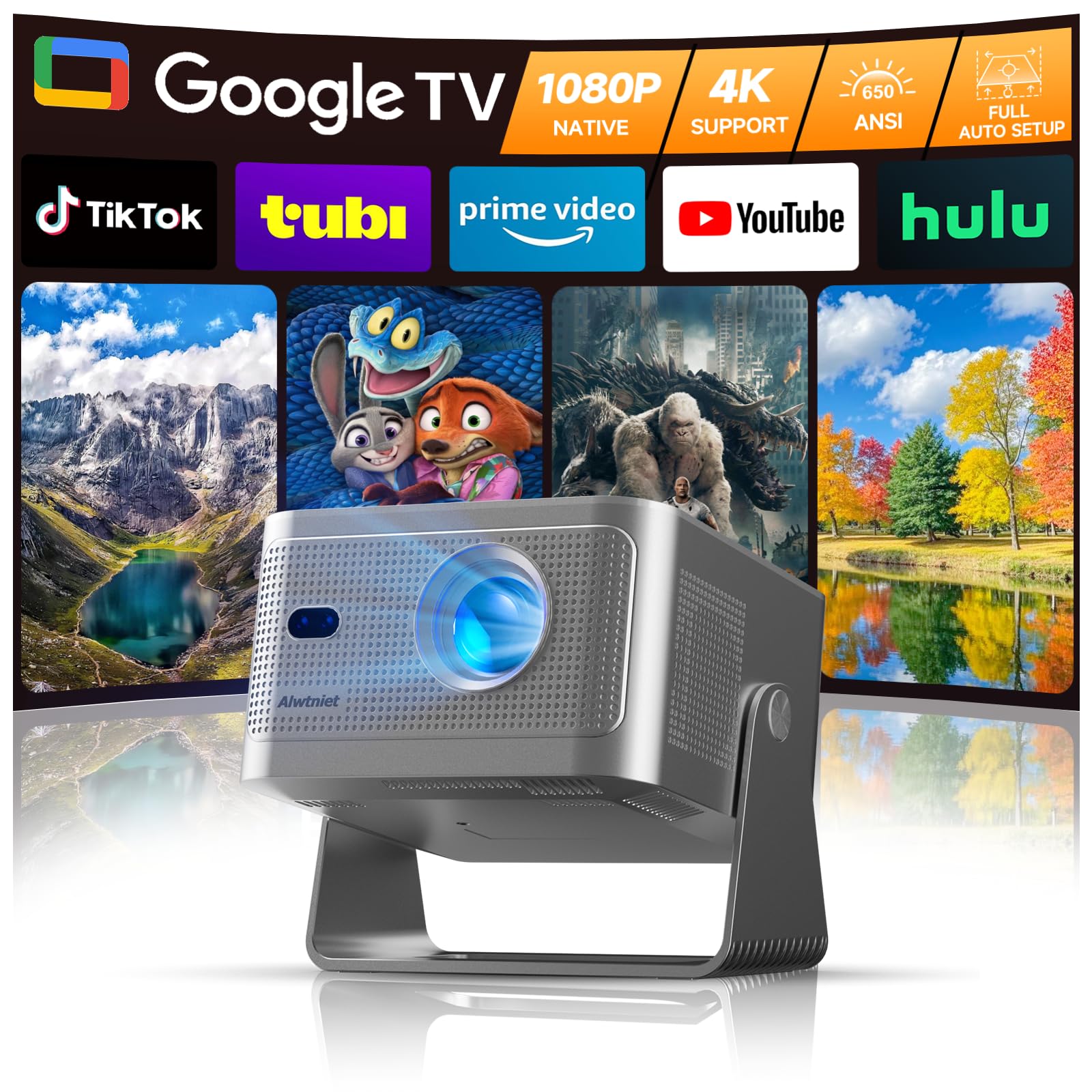
Throw ratio is how wide the image gets for every foot the projector sits back from the wall or mat. A lower number means a bigger picture from a shorter distance. A 1.0:1 ratio, like the Alwtniet HY350GT, can throw a 35–135 inch image from 0.9–3.0 meters away — so a projector sitting at the far edge of a cutting table can still fill the surface. A longer-throw unit forces you to shove the projector across the room, which loses focus and wastes floor space.
Focus and keystone keep the pattern true
Keystone correction is the digital fix that squares up a picture when the projector is tilted rather than dead-on. Without it, your pattern lines come out as trapezoids and your seam allowances skew. Auto focus keeps the line crisp as the machine warms up and the lens expands. For tracing, both matter more than resolution bragging rights — a blurry 4K is worse than a razor-sharp 720P.
Brightness and heat, stated plainly
A dim room is the pattern tracer’s friend. Dim projectors with modest lumen counts still read cleanly on fabric when the blinds are down, and lower brightness often means less fan noise and less heat near your hands. Heat is the sleeper issue: units that run hot can shift focus mid-session, so a cool-running body is worth more than a few extra lumens you will not use.
Side-by-Side Comparison
| Model | Best For | Brightness | Throw Ratio | Resolution | Amazon |
|---|---|---|---|---|---|
| Alwtniet HY350GT★ Best Overall | All-round pattern tracing | 650 lm | 1.0:1 | 1080P native | Amazon |
| FATORK Mini ProjectorBest for Portability | Portable tracing anywhere | 200 lm | Short throw | 1080P | Amazon |
| Magcubic HY300PROBudget Champion | Budget bedroom tracing | 200 lm | Short throw | 720P native | Amazon |
| Sainyer Mini Projector | Ceiling-angle setup | — | Short throw | 1080P supported | Amazon |
| CiBest Mini Projector | Big-screen value tracing | 12000 lm | Short throw | 1080P | Amazon |
| BESGEER Tufting Projector | Rug and tufting tracing | 120 ANSI lm | 4-14 ft adjustable | 1280x720P | Amazon |
| iSinbox Short Throw | Studio-quality app setup | 500 ANSI | 1.1:1 | 1080P native | Amazon |
| XGIMI Vibe One | Battery-powered flexibility | 250 lm | Short throw | 1080P | Amazon |
| PUTRIMS P66 | Premium ceiling tracing | 500 lm | 1.17:1 | 1080P native | Amazon |
Detailed Reviews
1. Alwtniet HY350GT Projector
Our pick — 4.5+★ from 150+ verified ratings; the strongest balance of quality and price.
The pattern tracer’s benchmark: a 1.0:1 lens that fills a cutting table from the far edge.
If you draft patterns on a table and need the whole layout lit at once, the Alwtniet HY350GT is the pick that answers every hard question at the same time. Its 1.0:1 throw ratio (how wide the image gets per foot of distance) lets it throw a 35–135 inch picture from just 0.9–3.0 meters away, so you can fill a cutting table from the far edge. You can also scale the image between 80% and 100% without moving the body — that means you shrink the image to fit your mat precisely instead of shoving the projector around the room and losing focus.
Brightness lands at 650 lumens with a 2000:1 contrast ratio, so pattern lines hold their edge under normal room light. On raw contrast the HY350GT does not beat the FATORK mini below, which carries 3000:1 — the FATORK leads on that one number. But the Alwtniet’s 1.0:1 lens is the tighter throw of the two when short-distance flexibility is your real problem. Auto focus, 6D keystone (a digital squaring fix for tilted placement), obstacle avoidance, and screen alignment all run automatically, so setup takes seconds instead of a fiddling session. The maker recommends 1.35 meters for the sharpest result.
Owners consistently rate the build quality and value as the standout. Buyers report it being light-years ahead of cheaper projectors they had tried: “I tried THREE projectors before this one.” The thin 12W speaker does not bother a tracing user who works in dim light and does not need cinema audio.
What earns the top spot
- 1.0:1 throw ratio gets big images from a tabletop-friendly distance
- Auto focus, 6D keystone, and obstacle avoidance mean near-zero setup time
- 650 lumens keeps lines readable without killing room light
- WiFi 6 and Bluetooth 5.4 let you send reference images from your phone
Where it asks patience
- Adapter gets warm during extended use
- Built-in 12W speaker is thin — pair a Bluetooth bar
- Beyond 2.5 m, the remote manual touch-up is needed for peak sharpness
Best pick if: you draft on a cutting table and want one projector that handles pattern, film, and phone referrals without a fuss.
Not your match if: you need hours of uninterrupted battery work — this one is mains-powered only.
2. FATORK Mini Projector with 5G WiFi
A soda-can-sized DLP that slips into a sewing bag and runs on its own battery.
The FATORK is the one to grab when your sewing happens in more than one room. It’s a DLP projector (a chip-based light engine rather than an LCD panel), and it’s smaller than a soda can, so it travels with the project instead of being bolted to one wall. It runs off a built-in rechargeable battery and comes with a tripod, HDMI cable, carrying bag, and lens cover — everything you need to set up on the kitchen table, then carry to a class the next morning.
Owners mention the value and picture are what sell it, but the real story for crafters is on the packaging: the review pages are full of artists and crafters using it for art tracing with the lights on. Its 200 lumen output and 3000:1 contrast ratio are built for dim corners, so pattern lines come out bold on fabric when the blinds are down. The unit throws up to a 114-inch image (10–100 inches is the recommended range) at a 1.64 to 9.85 ft distance. The dustproof closed lens means you’re not chasing dust spots mid-project.
The honest catch is where you will feel the DLP hum: an occasional unit misses focus or drifts on the remote, and a single star review mentioned overheating during long sessions. A dedicated crafter who needs three or four uninterrupted hours of tracing on the mains is better served by the Alwtniet above, which trades portability for steadier output. That said, for the pattern tracer who works in short bursts and travels, this is the best portable option here.
Battery math that matters: expect roughly two to three hours of video per charge, which clears a normal Saturday of cutting without topping up mid-project.
Connection you can trust: 5G WiFi, HDMI, and USB all work — the phone mirroring is best on a decent 5GHz router, and you can always fall back to HDMI if the wireless stumbles.
Reach for this if: you sew in multiple rooms, teach, or take your drafting on the road and want a projector that lives in your craft bag.
Look elsewhere if: your workflow demands mains-powered precision for hours at a stretch.
3. Magcubic HY300PRO Mini Projector
A sub-five-pound budget projector with a 180° stand that angles down onto your table.
The HY300PRO is the entry point for anyone testing whether projector tracing even works for their setup. It weighs 0.67 kg, and the external power supply keeps the body cooler than internal adapters normally do — a real plus when you want to work with hands near the unit. The 180° rotating stand tips it upside down or flat, which is handy for shooting a pattern down onto a mat without a separate ceiling mount.
The spec sheet keeps expectations honest: 200 ANSI lumens (a standardized brightness measure), native 720P resolution with 4K support, and an 8000:1 contrast ratio that actually outpaces many higher-brightness rivals on black level. The brightness picture leans toward dim rooms — you get the best pattern clarity in evening light. Connectivity travels through WiFi, Bluetooth, HDMI, and USB, and the portable Android system gives you apps without an extra stick.
The honest trade-off is the audio. The built-in speaker is the weakest link by most accounts and the natural companion is a Bluetooth soundbar if you also use the unit for movie nights. A few crafters doing hand-painted banners noted a laggy start as the system boots up, but the timings even out within seconds. For a first-timer who wants to try projecting patterns for cutting templates rather than committing to a serious setup, this one earns its place.
The right buy for: quilters and crafters testing projector tracing for the first time, or anyone who wants a bedside projector for movies and patterns.
Think twice if: you need clean pattern lines under overhead light — this one shines brightest in dim rooms.
4. Sainyer Mini Projector with 4K Support
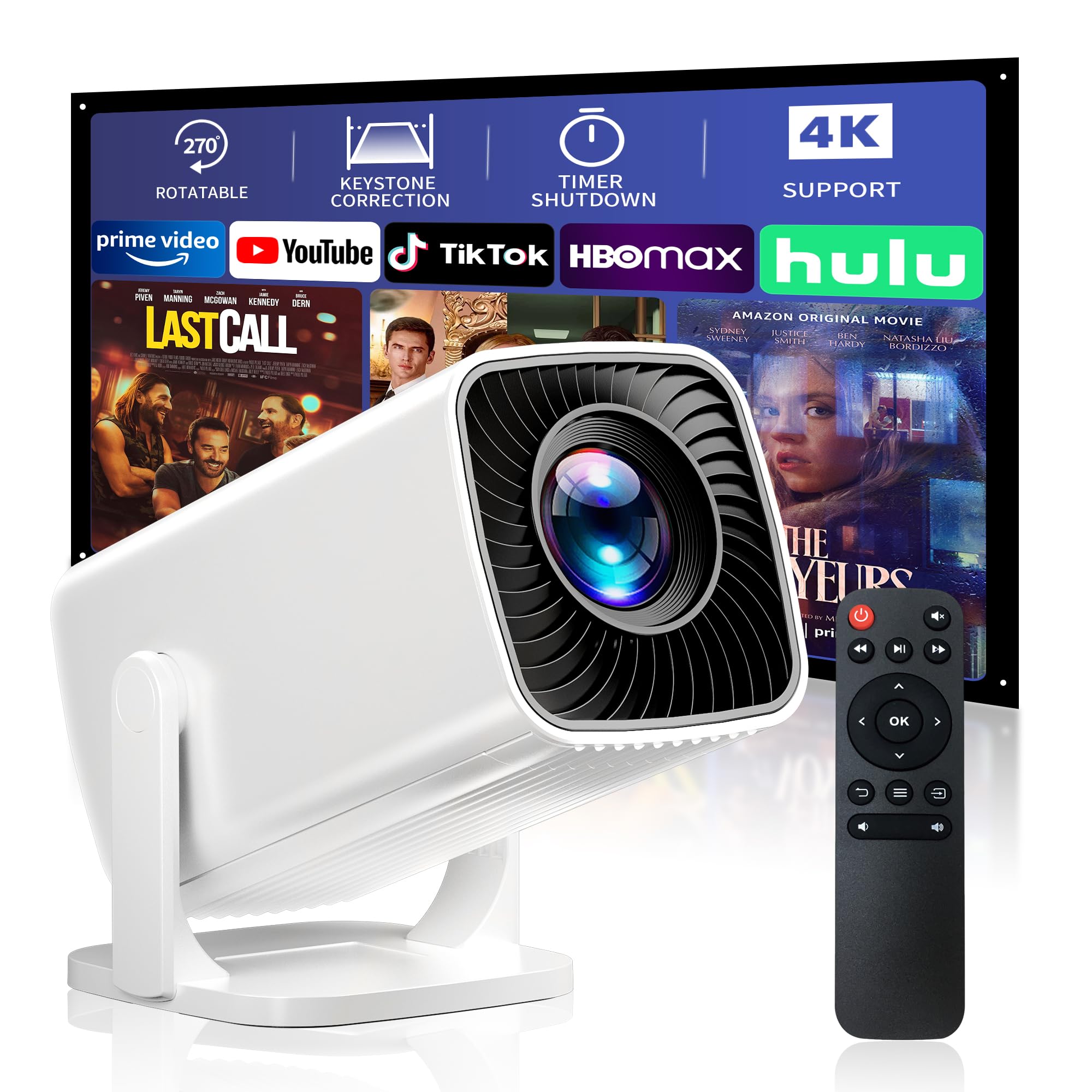
A wide-angle stand that flips the picture straight down onto a mat or cutting board.
Drafting patterns from above means the projector hangs over your work, and that is where the Sainyer’s 270° rotatable stand does real work. Pair it with a tripod or tabletop bracket and you get a clean overhead angle onto a mat, cutting board, or table. The 200-inch maximum projection means even a kitchen table for two can look like a proper drafting surface.
Setup is genuinely light on fuss. Electric focus and electric keystone (an automatic square-up of the image) replace the manual wheels you get on cheaper units, and the whole thing adjusts through ±60° — that range is wide enough to fix an off-axis ceiling angle. The lamp is rated for 50,000 hours, so you are not swapping bulbs mid-project. The 4K input compatibility is there for high-resolution patterns and reference images, and both 4:3 and 16:9 aspect ratios are supported so classic pattern dimensions and modern aspect ratios both work.
The one thing you should know before you order: this model does not support Bluetooth or built-in apps. Owners wanting Android apps or wireless phone mirroring will be unimpressed — one buyer summed it up as: “It was cheap but do not get this item enless you want to plug it into your laptop or iphone.” If your workflow is projector plugged into a laptop and pattern pulled from your desktop, that is nobody’s problem. If you want the unit to stand alone, look at the Alwtniet or Magcubic above instead.
Where it delivers
- 270° rotatable stand catches overhead mats without a separate mount
- Electric focus and keystone remove the manual-wheel routine
- 50,000-hour lamp life covers years of regular tracing sessions
- Handles up to a 200-inch screen from short throw, so small rooms work
What to plan around
- No Bluetooth, no built-in apps — wired HDMI only
- Connection to Android phones is hit or miss
- Best image comes in dark or shaded rooms
Worth it for: anyone who wants the projector mounted above the work surface and will pull pattern images from a laptop.
skip it if: you expect it to be a self-contained media device with apps and streaming built in.
5. CiBest Mini Projector with WiFi and Bluetooth
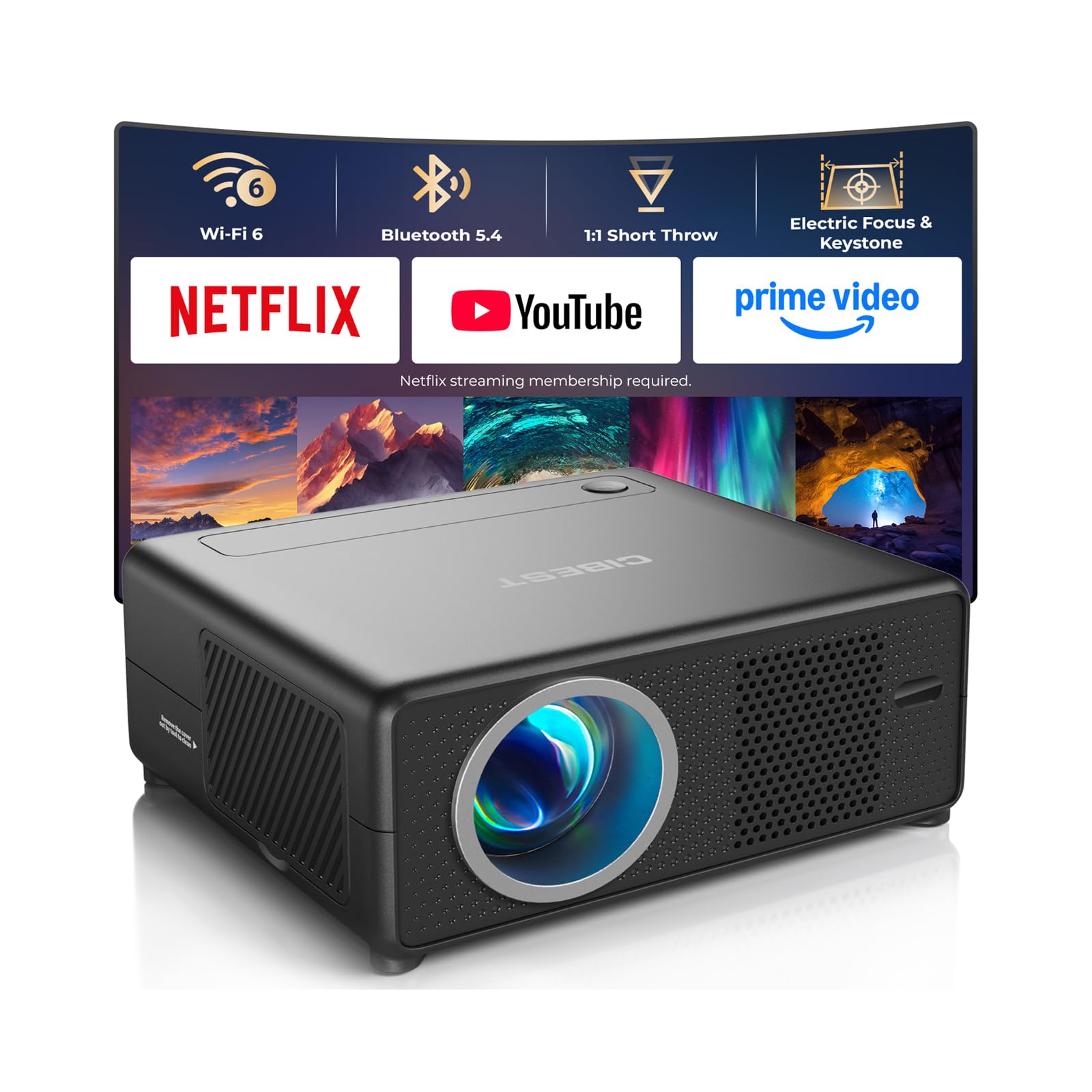
Serious brightness numbers and a big installed base — the mainstream first pick.
The CiBest is the safest bet if you want a projector that works as a home-theater unit first and a pattern projector second. Brightness is quoted as 12000 lm with a 10,000:1 contrast ratio, and the 1080P native resolution with 4K video decoding means both cutting templates and streaming look clean. The short-throw lens throws a 50-inch image from three feet away and scales up to 200 inches if you have the room, so your pattern can be scaled to fit an entire cutting mat.
For tracing specifically, the one-click electric focus and keystone mean you can point it at a mat and get a rectangular, sharp image without dialing anything. WiFi 6 lets you beam patterns straight from a phone with low lag, and Bluetooth 5.4 lets you push sound out to a real speaker if you want music while you work. The smart system includes pre-loaded services, so reference videos play without a Fire Stick — one less device on the table.
The one flaw owners circle back to is the fan. Most users find the fan low noise, but sound quality and fan noise do divide opinion, and the manufacturer notes the unit does not support Dolby audio decoding — you disable Dolby in the app if a show goes silent. Gaming on it feels closer to 30 FPS, which will not matter to a sewer but matters if you plan to share the machine with a gamer. For a first serious projector that you will also use for family movie nights, it is the biggest-name pick here.
Cutting-table performance: sharp center, soft edges. That means center your biggest pattern pieces over the middle of the projected image for cleanest line work; edge designs can look slightly fuzzy in dim corners.
Tuning tip from the review page: owners suggest sharpness 80, contrast 60, brightness 45, and a centered keystone for the cleanest picture.
Pick this if: you want one projector that handles pattern tracing, family movie nights, and casual gaming without a second device.
pass on it if: your priority is an absolutely silent motor next to your machine — you will notice the fan in quiet rooms.
6. BESGEER Mini Projector WiFi for Tufting
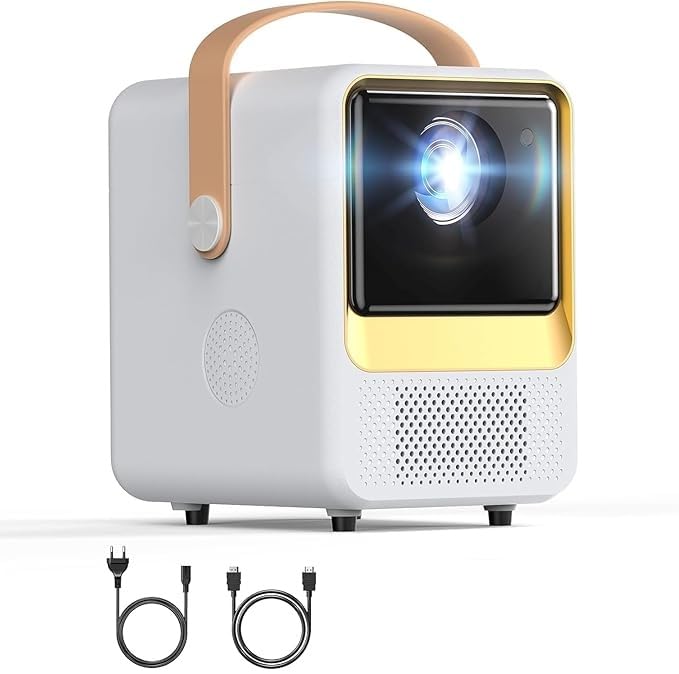
A projector built for rug making, with a whisper-quiet fan so you can think while you tuft.
Most projectors care about movies. The BESGEER is one of the few designed around tufting and rug art — tracing images onto rug cloth, carpet, or upholstery. If your pattern work happens on a rug frame rather than a table, this is the most purpose-fitted pick here. At 1280x720P and 120 ANSI lumens, it trades image bragging rights for cool, quiet operation: the low-noise cooling system sits at 20 dB, so your work music or podcast is not drowned out by a fan.
The adjustable distance is 4 to 14 ft with a 50% zoom for scaling designs precisely, which lets you shrink intricate patterns into the frame without walking the projector back and forth. The compact build (4.1 x 5.7 x 5.5 in and 1.63 lb per the maker) means you can stow it, and the USB support lets you feed pattern images from a PC, laptop, phone, or tablet. Bluetooth 5.2 connects headphones or a speaker without extra kit.
The weak point is the wireless connectivity. Anecdotal reports of phone connection glitches are the reason this one lands in mixed-feedback territory on that front, and if you fall in that bucket, the wired USB route solves it — the pattern still projects. Heavy manual users who want smooth app-based casting might prefer the CiBest above, whose WiFi has a much larger success base. But if your specific craft is tufting, this is the projector that was built with you in mind.
The right tool for: tufters, rug artists, and DIY crafters who want a quiet projector that traces onto fabric and rug backing.
Choose a different route if: smooth wireless casting is essential — wired USB is this one’s most reliable path.
7. iSinbox Short Throw Projector 4K
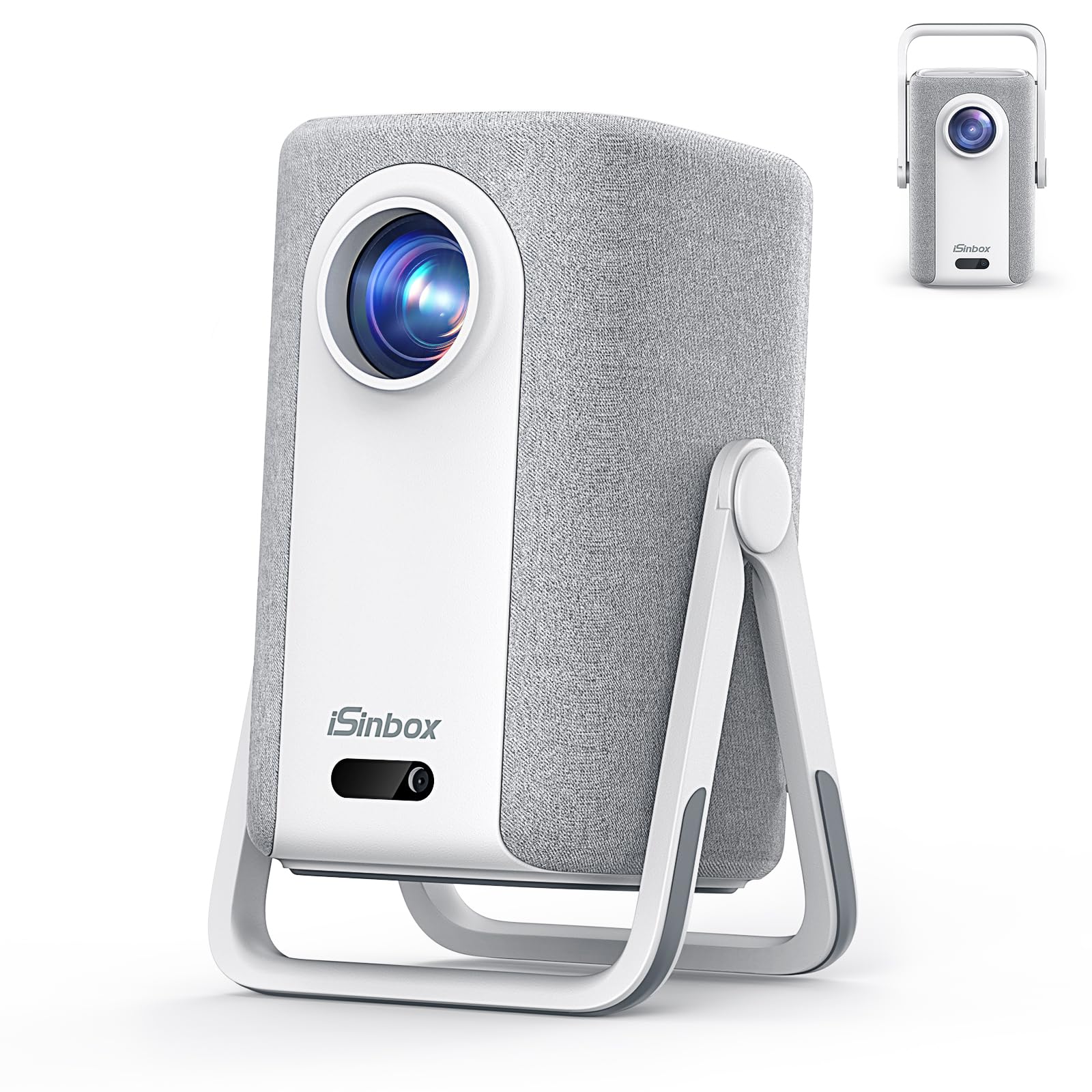
Studio-grade short throw with 500 ANSI lumens and auto-alignment that happens in seconds.
For a sewing studio or a dedicated craft room, the iSinbox is the leap up that stops being polite about it. Its 1.1:1 short throw ratio projects a 100-inch screen from just 7.9 ft from the wall — a distance where the Alwtniet’s 1.0:1 lens would already be stretching. That means even a compact apartment or a dedicated studio wall gets a proper full-width pattern projection for tracing without rearranging furniture. The 500 ANSI lumens and 4K HDR10+ support are the real headline, and the maker notes native 1080P resolution with 4K support on top.
The auto-setup stack does the fiddly work for you: AI autofocus, 6D keystone, obstacle avoidance, and a 50-100% digital zoom all run automatically once it powers on. The maker quotes a 3-second alignment, and the built-in smart TV system with Netflix, YouTube, and Prime Video means reference material is a remote press away. The dual-mode stand flips from wall to ceiling in seconds, and the M4 mount fits most tripods and ceiling brackets if you want a semi-permanent rig over your table.
The trade-off worth knowing is the auto-focus at odd angles. Straight-on, it nails the picture; extreme tilt makes it hunt for focus, and one owner noted a brief distortion wave every 30 minutes. A second reviewer wanted the unit to remember screen-size settings between sessions. Both are minor and solvable — keep the projector on a fixed mount and the auto-focus rarely fights you. For a craft studio that also wants a home theater, there is nothing else in this list that pairs 500 ANSI lumens with a 1.1:1 throw and auto-everything for the money.
The spec that decides it: 1.1:1 throw gives you a 100-inch projection at 7.9 feet — the tightest distance requirement in this whole nine, which is why it suits smaller rooms.
Sound and connectivity: Dolby-certified HiFi stereo, DTS decoding, eARC, Bluetooth 5.4, and WiFi 6 — this is the only pick here that claims WiFi 6 up to 9.6 Gbps and it does not skimp on audio.
Made for you if: you have a dedicated studio wall, want pattern projection plus real home theater, and want the setup to be automatic.
Not the pick if: you need the projector to hold custom screen-size memory between power cycles — you will re-zero it each time.
8. XGIMI Vibe One Projector
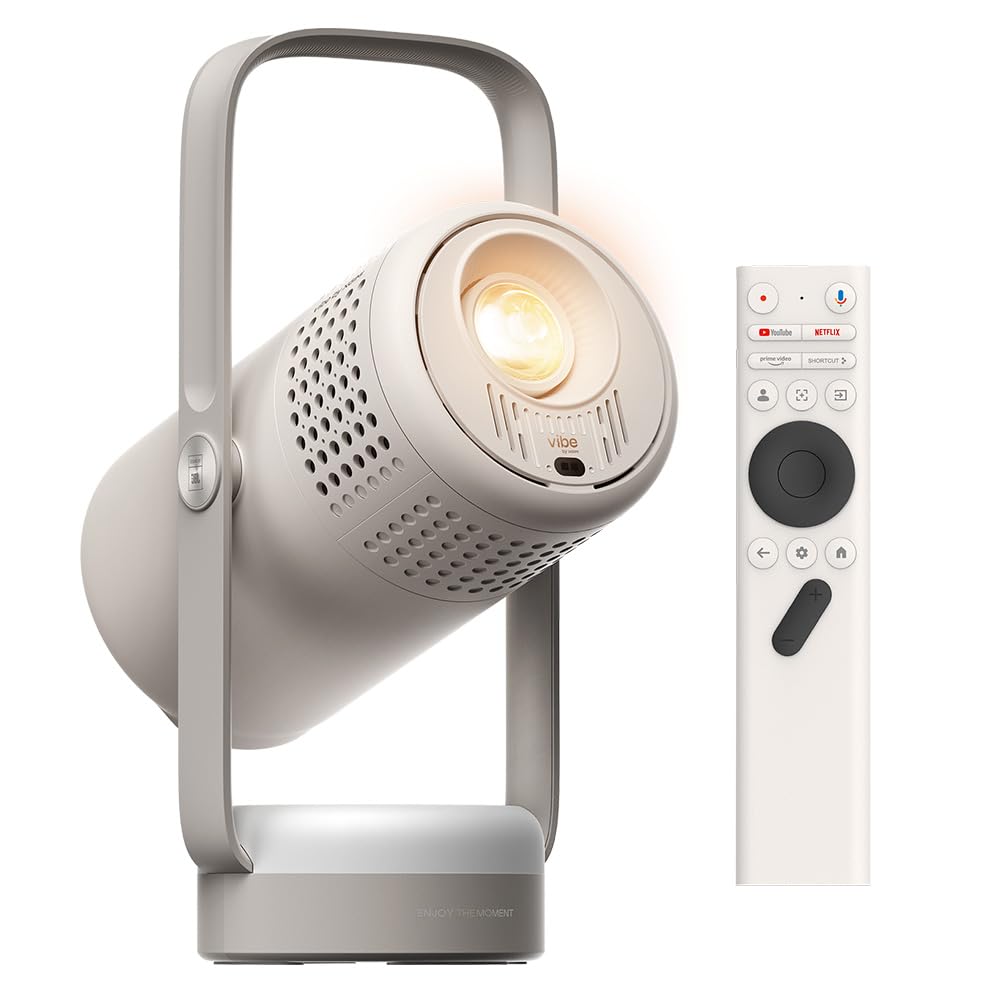
A design-forward portable projector with real battery freedom and a 160° carry stand.
The Vibe One is the one to buy if you want pattern projection to look good on a shelf when you are not using it. The XGIMI design is genuinely striking, and the 160° adjustable stand doubles as a carry handle so you can flip projection from wall to ceiling to match how you work. The battery is the real differentiator: up to 1.2 hours of video playtime or 4 hours of music playtime on a single charge. That is not a long tracing session, but it is freedom from a cable, which matters if your cutting mat is nowhere near an outlet.
Where it shines for a small home studio is Google TV with licensed Netflix and 1080p resolution. That gives you proper streaming in a compact form factor — 250 lumens and 1500:1 contrast ratio make it a dim-room projector, which is fine for tracing but not for bright-daylight use. Auto Keystone Correction and Auto Focus mean the picture lands square without manual adjusting, and the dual 3W speakers plus Ambient Light Mode cover light entertainment duty in a craft room.
The honest limit is the battery playtime: a single full-length cutting session will outlast a charge, so plan to plug in for long projects. The second variable is the intrinsic portability tax — small speaker, modest brightness, and no short-throw advantage over the dedicated tracing machines above. But for the crafter who wants a beautiful, wireless projector that works as a nightstand companion in the same session as her pattern tracing, this is the pick.
The best buy for: crafters who want a design piece, wireless projector, and long-form tracing solution that doubles as a bedroom screen.
Skip if: your session routinely runs longer than an hour — battery life will not cover it and you will be tethered by the end.
9. PUTRIMS P66 Smart 4K Projector with Google TV
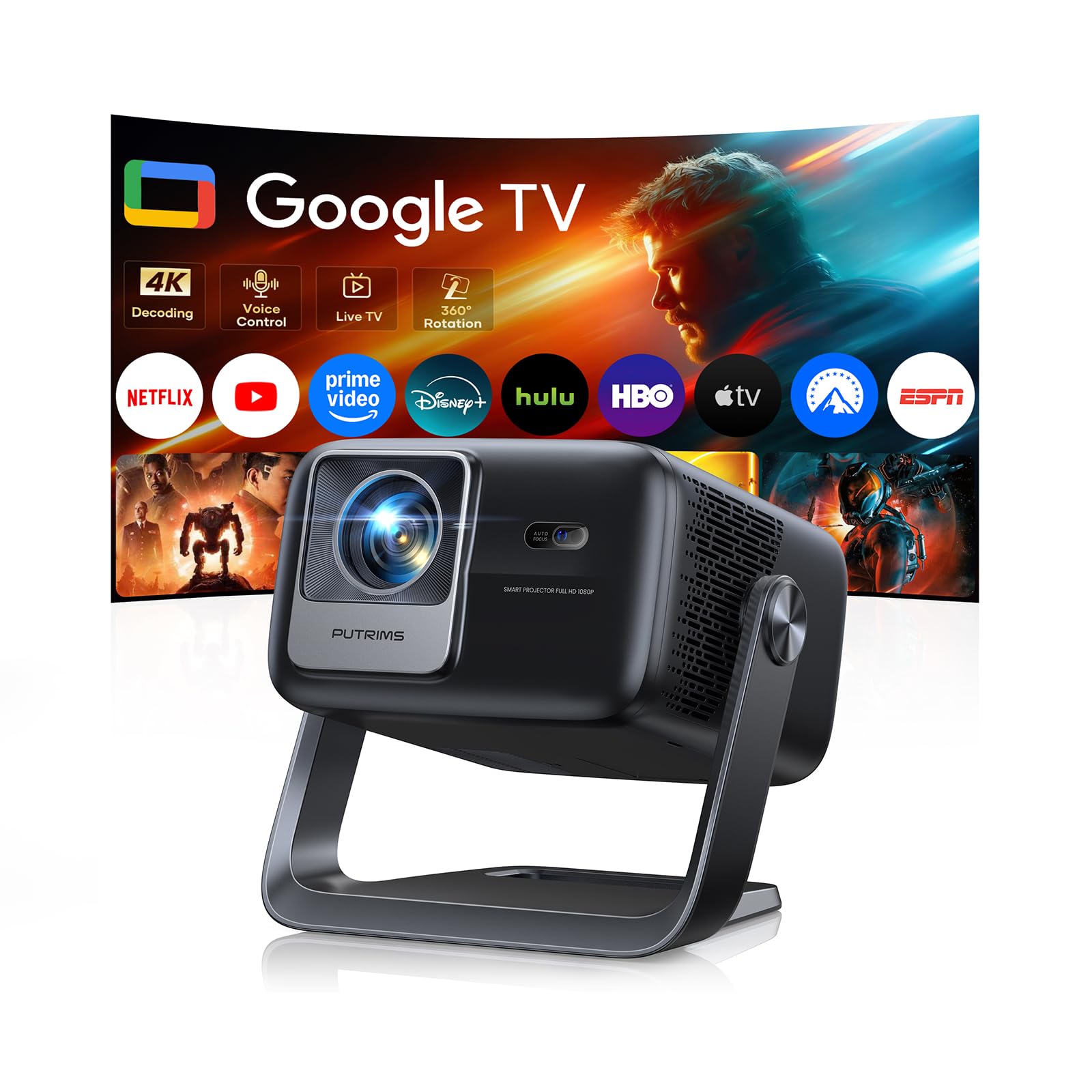
The premium ceiling-mount pick with a 360° stand, 30W stereo, and Google TV inside.
For a serious craft room that has become a family room after hours, the PUTRIMS P66 is the machine that stitches both jobs together. Its 1.17:1 ultra short throw ratio puts a huge image on the wall from just inches away, so a small room gets a full wall of projection without a long cable run. The 360° rotatable stand projects on walls, ceilings, or slanted surfaces, and a built-in 1/4″ screw hole opens up ceiling mounts and tripods — a genuine win for anyone who wants the projector fixed over the table.
Brightness is 500 lumens with native 1080P resolution and 4K decoding, so pattern lines stay readable in a lit room. The 30W HiFi stereo speakers are the loudest in this list. Google TV is built in with 10,000+ apps and 800+ live channels, and the voice remote searches by voice. Auto focus, auto keystone, obstacle avoidance, screen alignment, and 50-100% zoom all run in one button press, and the manufacturer specifically suggests turning Auto Focus and Auto Keystone off when the unit is in a fixed spot so it remembers your custom settings.
There is an honest update note in the manual that is worth reading before you set it up: firmware should be updated before first use via Settings for the best audio and performance. On the downside, sound quality gets mixed reviews and the built-in speakers fall flat for a room-sized movie setup — but a Bluetooth 5.3 speaker solves that cleanly. For a crafter who also wants to host movie nights and game in the same room, the 2-year warranty and lifetime support are a nice cushion, and this is the only pick here that packs 30W HiFi and a 360° stand into one body.
The whole package at a glance: 500 lumens, 1.17:1 ultra short throw, 30W stereo with bidirectional Bluetooth 5.3, WiFi 6, Google TV, HDR10, and a 360° stand — the broadest feature set in the list.
Honest snag: some owners find the sound basic, and the manual itself recommends a firmware update before first use. Take ten minutes for that and the setup is smooth sailing.
Premium pick for: a craft room and home theater combined — permanent ceiling or shelf mounting, plus voice control and a full app library.
it’s not for you if: you want a bare-bones drafting tool — the price tier is aimed at the person who wants it all.
Know the Specs
ANSI vs. marketing lumens
Lumens measure how much light the projector throws, but not all lumen numbers mean the same thing. ANSI lumens (a standardized brightness measurement), like the 120 on the BESGEER or the 500 on the iSinbox and PUTRIMS, are taken using a defined test method. The unstandardized lumen figures that reach five digits on some listings are not measured the same way and tend to run optimistic. For pattern tracing, 120 to 500 ANSI lumens is plenty when your blinds are down — the human eye does not need much to see a clean line on fabric.
Focus, keystone, and pattern accuracy
Focus is the sharpness of the projected line; keystone is the correction that turns a tilted picture back into a proper rectangle. For tracing, both have to be right, because a soft line blurs a seam allowance and a skewed line ruins a pattern. Auto versions of both — on the Alwtniet, iSinbox, PUTRIMS, and XGIMI — save time on setup. Manual focus (like the wheel on the FATORK) is fine if you set it once and leave the projector in place.
Common Questions
What throw ratio do I need to project a cutting mat on a standard table?
Can a projector replace paper patterns for quilting and sewing?
Do I need auto focus and auto keystone for pattern work?
How bright does a projector need to be for tracing in a sewing room?
Will projecting a pattern overheat the fabric or distort it?
Can I connect my phone or laptop to project pattern files?
How long do projector lamps usually last before needing a replacement?
Can a projector handle detailed patterns with fine lines and small text?
Is it better to mount a projector on the ceiling or put it on a table for tracing?
Do I need 4K for pattern projection or is 1080P enough?
The Bottom Line
For most sewing, quilting, and tufting setups, the projector that wins is the Alwtniet HY350GT — its 1.0:1 short throw fills a cutting table from the far edge, and its auto focus, 6D keystone, and obstacle avoidance mean the picture lands true every time you power on. If your work moves between rooms, the FATORK Mini Projector carries a battery and fits in your bag. And for a premium studio setup where the walls are dedicated, the PUTRIMS P66 delivers 500 lumens, 30W sound, and Google TV for the nights you switch off the sewing machine and switch on a film.
How we choose
We do not accept paid placement. Every pick is matched to a real buyer and a real use-case; we do not hands-on test units.
Sources
Specifications: manufacturer listings and product documentation. Review insights: verified customer reviews, as of October 2026. Pricing: not shown on this page (it changes often); check the current price via the retailer link.
As an Amazon Associate, Aappliancez earns from qualifying purchases. This does not affect which products we feature.