Disclosure: Some links in this post are affiliate links. As an Amazon Associate I earn from qualifying purchases, at no extra cost to you. Learn more
Specs are compiled from manufacturer listings and verified buyer reviews and can change over time — please confirm the key details on the product page before buying.
You sanded the railing, you bought the good topcoat, and three months later the rust is bleeding back through the paint. The problem is usually the layer underneath, not the paint itself. A primer for oil based paint has one hard job: grip slick, sealed, rusty, or greasy surfaces that ordinary latex primers slide off, and lock down stains and knots so your topcoat keeps the color you chose. Five picks cover the jobs below. The Rust-Oleum Farm & Implement Gray Primer is the one to buy if you prime outdoor metal and wood equipment, because it spreads up to 130 sq ft per quart and cures in 4 hours. The Zinsser BIN Shellac Base Primer-Sealer is the one for knots, odors, and smoke stains, and it dries in 0.75 hours. The other three split the rest: a water-based acrylic that bonds to nearly anything, a two-part epoxy for bare steel, and a marine primer for wood and fiberglass boats.
This guide is built by comparing the manufacturers’ published specifications and the patterns across verified customer reviews, so you get each pick’s real strengths and trade-offs instead of marketing spin.
One rule saves the most wasted cans: oil-based and shellac primers grip glossy and rusty surfaces that water-based formulas tend to bead off. Water-based acrylics like the INSL-X Aqua Lock Plus 100% Acrylic Water-Based Stain Blocking Primer Sealer clean up easier and smell lighter. That trade-off runs through every product below. The right primer for oil based paint depends on matching the formula to your surface: shellac or oil for knots and rust, epoxy for bare steel, acrylic for interiors.
Top Picks

How To Choose The Best Primer for Oil Based Paint
Choosing a primer to sit under an oil-based topcoat depends on four numbers and one compatibility question. How much surface does a quart cover, how fast does it dry to the touch, how long before you can sand or topcoat, and does it get along with the alkyd (the oil-modified resin) paint you plan to brush over it? Get those right and the topcoat bonds without peeling. Get them wrong and the topcoat lifts within a season.
Coverage per quart decides how many cans you buy
Coverage decides your whole budget before you reach the register. A quart that spreads across 130 square feet covers far more than one that manages 75 to 100 square feet on the same surface. Rough, porous materials like bare wood and weathered concrete drink more primer than smooth metal. So a project that looks like one can online can turn into three. Measure your surface area first, then divide by the coverage number on the label. Divide your measured square footage by the label’s coverage number before you buy.
Dry-to-touch versus full cure — two different clocks
Manufacturers list two times, and they are not the same thing. Dry-to-touch is when you can brush a second coat or handle the piece without leaving fingerprints. Full cure is when the primer has hardened enough that a topcoat will bond properly and the solvents have finished flashing off. Some primers dry to the touch in under an hour; others need 12. Sanding or topcoating too early causes most peeling, so treat the full cure time as a hard rule, not a suggestion.
Making sure the primer and oil-based topcoat get along
An oil-based topcoat — alkyd enamel, tractor paint, marine topside enamel — is a slow-drying, solvent-heavy finish that needs a base coat it can chemically grip. Shellac, oil-based, and two-part epoxy primers are made for exactly that job. Water-based acrylics can still sit under oil paint, but only after they have fully cured. Pick them when you want low odor and soap-and-water cleanup rather than maximum bite on grease or rust. Always check the primer label for the finish coatings it is rated to accept.
Side-by-Side Comparison
| Model | Best For | Formula | Dry Time | Coverage | Amazon |
|---|---|---|---|---|---|
| Rust-Oleum Farm & Implement Gray Primer★ Best Overall | Tractors, trailers, mowers | Oil-based enamel primer | 2–4 hours to touch | Up to 130 sq ft per quart | Amazon |
| Zinsser BIN Shellac Base Primer-SealerFastest Dry | Stain, odor and knot sealing | Shellac-based (oil type) | 0.75 hours | 13 fl oz spray can | Amazon |
| INSL-X Aqua Lock Plus Acrylic Primer Sealer | Interior and exterior repaints | 100% acrylic, water-based | 1 hour | 75–100 sq ft per quart | Amazon |
| SprayMax 2K Epoxy Primer Black | Bare and galvanized metal | Two-part epoxy aerosol | 12 hours | 341 ml can | Amazon |
| Rust-Oleum Marine Wood & Fiberglass Primer | Boat hulls and fiberglass | Oil-based marine primer | 1 hour | 100 sq ft | Amazon |
Detailed Reviews
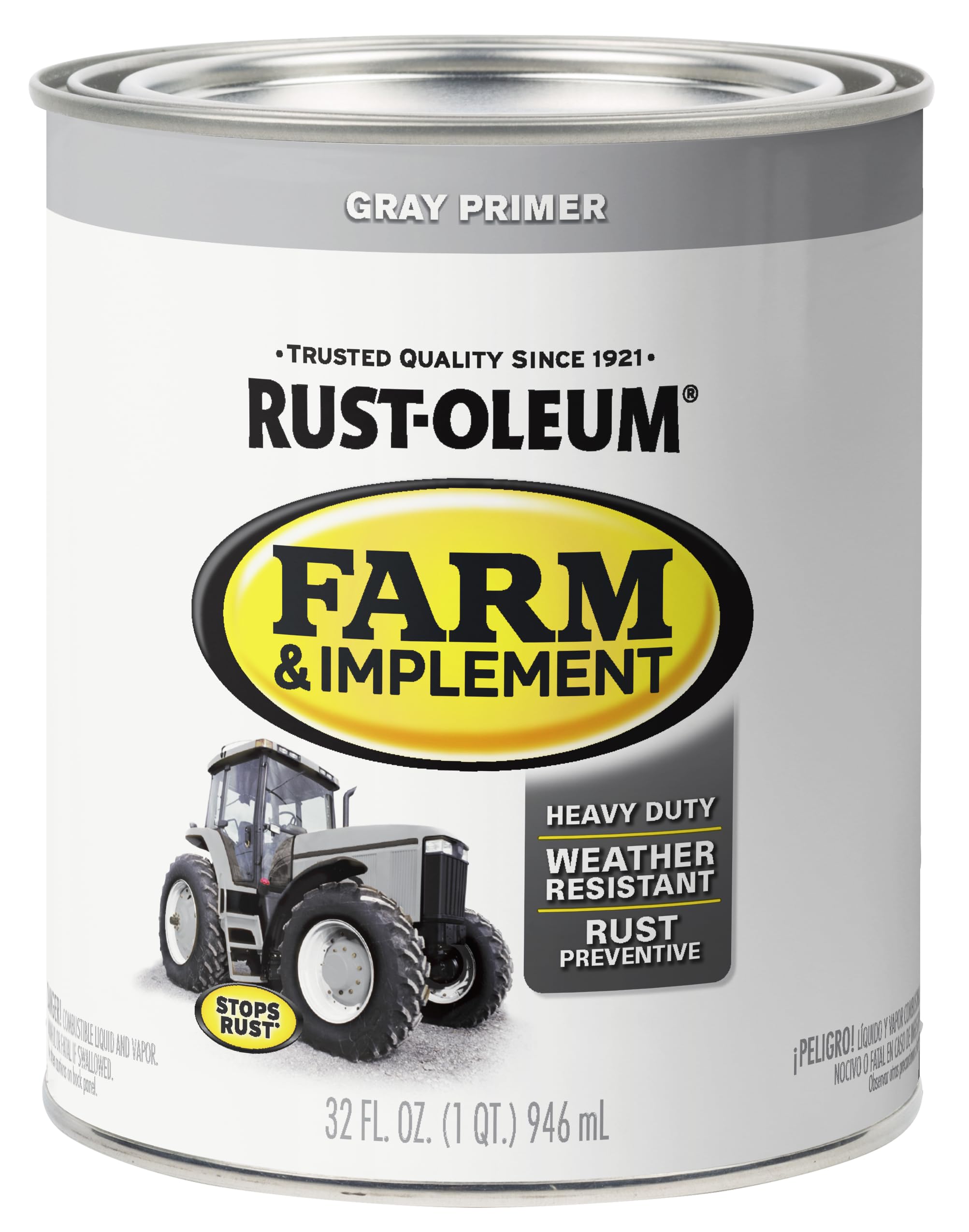
1. Rust-Oleum Farm & Implement Gray Primer
Our pick — 4.5+★ from 1,000+ verified ratings; the strongest balance of quality and price.
An oil-based enamel primer built for tractors, trailers, and mowers that sit outdoors year-round.
This primer earns the top spot because it covers up to 130 sq ft per quart, the widest coverage in this roundup, so fewer cans go on the trailer frame. It is an oil-based enamel primer built for farm and industrial equipment, made to sit under hard-wearing alkyd topcoats and take abuse. On a full trailer rebuild, that coverage is real money.
It also keeps a weekend project moving. Dry-to-touch takes 2 to 4 hours, and full cure takes 4 hours. That is a full eight hours faster than the SprayMax 2K epoxy primer at 12 hours, so you can sand and topcoat the same day instead of tarping the machine overnight. The flat finish matches original equipment manufacturer colors, so gray metal parts blend in rather than stand out.
The film quality is what owners single out more than anything else on the can. Buyers report the finish holds up to heavy use and one coat covers well. Several describe restoration work on wheelbarrows and yard tools that came out looking factory-fresh. Know what you are buying: this is a rust-preventative equipment primer, not a furniture-grade cosmetic primer. It is gray, flat, and formulated for metal that takes a beating.
Where it earns its keep
- Up to 130 sq ft per quart — the widest coverage in this roundup
- Dry to the touch in 2–4 hours and fully cured in 4 hours
- Rust-preventative formula resists chipping and weather damage
- Flat gray matches original equipment manufacturer colors
Where it asks something of you
- Sold as gray only, so tinting to a custom shade is not on the table
- 1-quart cans mean large projects need more than one container
- Made for equipment, not for fine interior cabinetry work
Reach for this if: you are priming tractors, trailers, mowers or anything else that lives outdoors and gets beat on.
Look elsewhere if: you need a white or tintable base coat for interior trim.
2. Zinsser BIN Shellac Base Primer-Sealer in White, 369g
Three-quarters of an hour to dry — nothing else here comes close.
No other primer on this list dries as fast. Dry time is 0.75 hours, roughly sixteen times quicker than the SprayMax 2K epoxy primer at 12 hours. This is a shellac-base primer-sealer, classified as an oil-type paint, and it is formulated to permanently block stains, odors, and wood knots rather than simply cover them.
The 13 fluid ounce spray can shapes what it is good for. Repairs, spot fixes, trim, and furniture get the most out of it; whole rooms do not, because you would burn through cans. The finish is described as sometimes powdery compared with a typical spray paint, which matters if you expect a slick surface. That same chalkiness gives the topcoat something to grip, though, and two thin coats handle most wood jobs. The trade-off that comes up again and again is the smell.
Owners consistently report it goes on over pine knots and scuff marks and dries fast. As buyers put it: “Works like a charm. Covered up my mistakes with one coat.” The odor is a genuine consideration, though — this is a shellac product and it off-gasses, so ventilation is not optional. People who have used it on pet stains and smoke damage keep pairing it with a cleaner and an open window. Get the airflow right and there is very little this small can cannot rescue.
Half the story: an unbeatable stain and knot blocker in spray form, with a dry time nothing else in this list touches.
The other half: strong solvent odor demands real ventilation, and the 13 fl oz can limits it to repairs rather than whole rooms.
It earns its spot for anyone fighting knots, water rings, or odors before the finish coat goes on.
It is the wrong tool when you are priming a full wall and cannot open the windows.
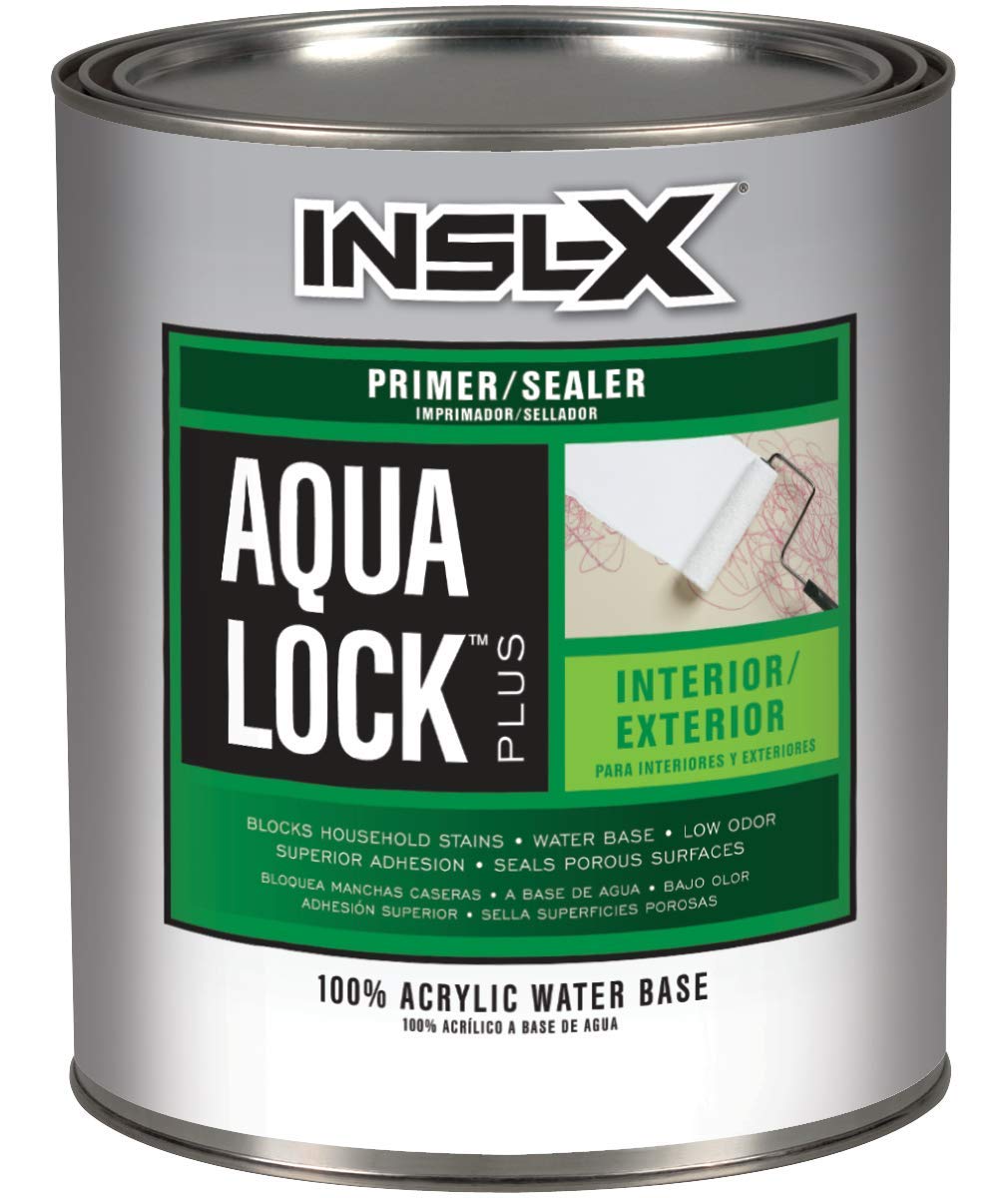
3. INSL-X Aqua Lock Plus Primer Sealer, 1 Quart
The water-based one that still holds its own under an oil topcoat.
Here is the pick when you want to paint indoors and still topcoat with oil. This multipurpose 100% acrylic primer sealer clings to interior and exterior surfaces, and it is designed as an excellent base coat for both latex and oil-based finish coatings — the compatibility question buyers ask most is answered right on the label. It goes tack-free in 30 minutes, takes a topcoat in as little as 1 hour, and carries low VOC (the measure of solvent vapor it releases). That is why it suits bedrooms, kitchens, and any room where the windows stay shut. Coverage runs 75 to 100 square feet per quart, narrower than the Rust-Oleum Farm & Implement at up to 130 square feet per quart.
Sealing is what this primer does best, and it earns the most mentions for exactly that. It takes on the jobs that make water-based primers look weak: new sheetrock, plaster, and wood baseboards where tannins bleed through. The same acrylic film is used in the stucco, wood, and galvanized steel applications owners describe, with a thick coat that resists dripping and a single-coat seal over old paint. If you have ever watched brown streaks seep through fresh white paint on bare pine, you know why this matters.
The honest catch is consistency from the can. A small share of buyers have opened containers that arrived cured solid, chunky, and impossible to stir — seemingly a storage or age issue rather than a formula problem, since the overwhelming majority arrive well packed and undamaged. Buy from a seller with healthy turnover, and shake-test the can before you commit to a whole weekend. What you get in return is a primer that bonds well, sands easily, and leaves a low-odor film you can topcoat within the hour.
Why it stands out: low odor, low VOC, tack-free in 30 minutes, and rated to sit under both latex and oil-based topcoats.
The recurring gripe: an occasional can shows up chunky or cured, so check it before you start.
Best fit: interior repaints, new drywall, and anyone who wants easy cleanup and a breathable room.
Less ideal: heavy rust or greasy machinery, where a solvent-based formula bites harder.
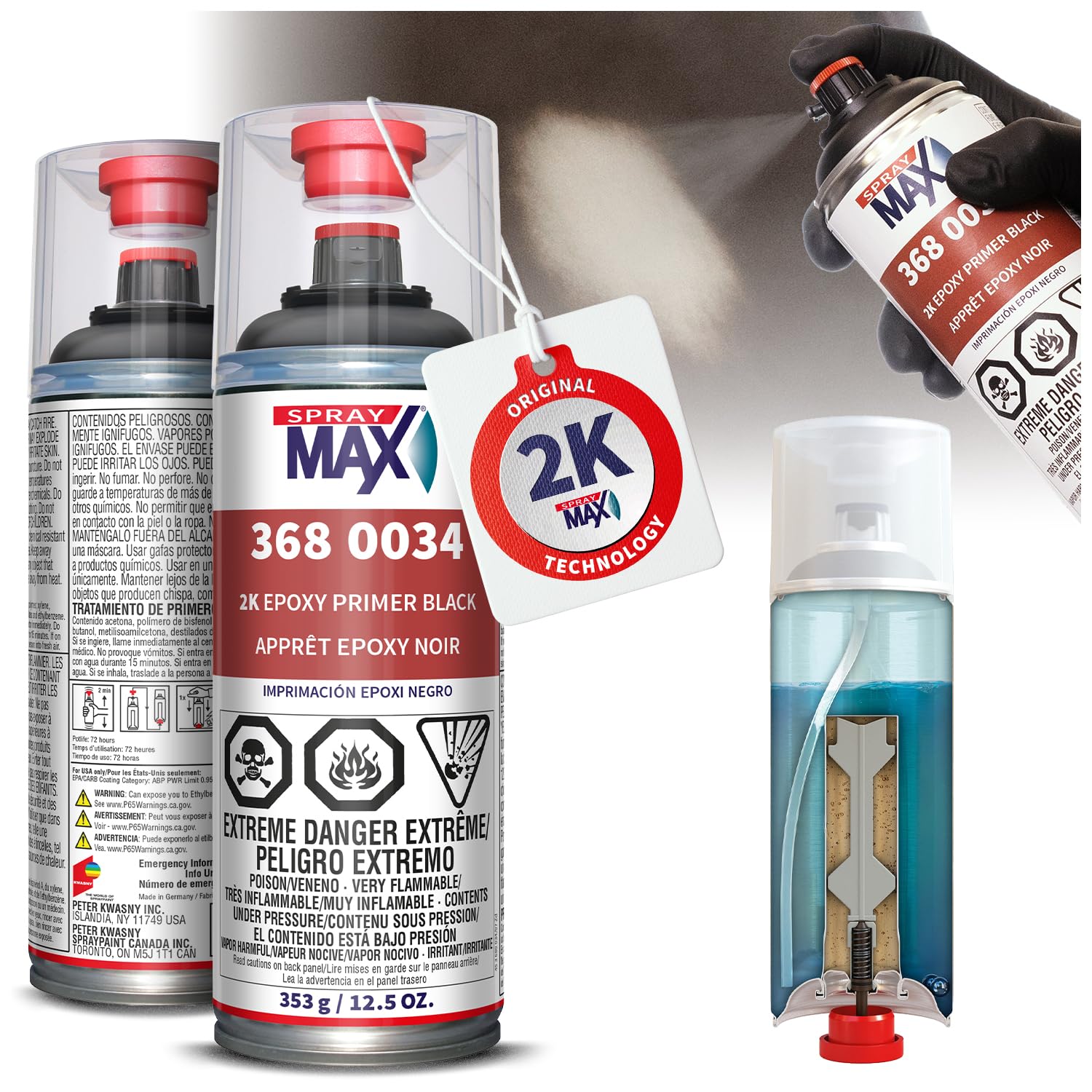
4. SprayMax 2K Epoxy Primer Black
A two-part epoxy in a spray can — no compressor, no mixing cups.
Bare steel, aluminum, and galvanized metal get the strongest bond from this two-part epoxy. The 2K label means two components that cure together inside a specialized aerosol can. That is what gives epoxy primers their reputation for corrosion protection and grip on metal that has been stripped to the base. It dust-dries in about 15 minutes, becomes sandable within hours, and reaches full cure in 12 hours — three times longer than the 4-hour Rust-Oleum Farm & Implement. Plan your sanding and topcoating around that window rather than against it.
The hardware is the point of the design. A variable nozzle controls the pattern, and the whole system skips the compressor, mixing cups, and cleanup of a conventional 2K setup — you activate, shake, and spray. It handles a lot of surface for a single can: a motorcycle fairing, a Jeep hood and two fenders, and truck bed coating have all been covered with just a few cans. Adhesion to cleaned bare metal is strong, and the finish lays down smooth once you get the technique right.
Know before you buy: this is the one pick on the list with a genuinely mixed reception. The formula is professional-grade and the results can be excellent, but spray performance varies from can to can. A defective spray head has been known to spray thin or in the wrong direction. Buyers who take the time to shake thoroughly and test on scrap first get the good result. Treat it as a pro product that rewards a little practice rather than a forgiving beginner primer.
What the 2K chemistry gets you
- Superior corrosion protection on steel, aluminum, and galvanized metal
- Dust-dry in about 15 minutes and ready to sand within hours
- Variable nozzle for precise, even coverage without extra tools
- Strong adhesion over cleaned bare metal and truck bed coatings
Where it tests your patience
- Full cure takes 12 hours — plan for a full day before sanding
- Spray performance varies; a bad head can sputter or misdirect the coat
- Best reserved for metal — not the pick for wood or interior drywall
Chosen by: automotive refinishers, motorcycle builders, and anyone priming stripped steel for a topcoat.
Better skipped by: first-timers who want a primer that forgives uneven spray technique.
5. Rust-Oleum Marine Wood & Fiberglass Primer

Built for hulls above the waterline, not for your garage shelf.
Coverage of 100 square feet and a 1-hour cure make this the fast option for wood and fiberglass near salt water. It is an oil-based marine primer made for surfaces above the waterline, applied as a base coat so the topside enamel above it adheres better and lasts longer. It dries to the touch in 1 hour — matching the INSL-X Aqua Lock Plus on speed but in a solvent-based formula — and reaches full cure in the same 1 hour. That keeps the prep-to-topcoat flow quick.
Performance carries this primer, and that is what stands out most in owner accounts. It sands easily, sticks to bare, lightly rusted, and previously painted surfaces, and it lets the finish coat dry to an even gloss. The logistics work out well for boat owners too: a single quart covered an entire 17-foot skiff in the field reports. A quart covering a 17-foot skiff tells you more about real coverage than the label rating. Adhesion to prepared fiberglass and wood is the reason it gets recommended for refinishing work.
Two things to plan around. The odor is powerful — this is a solvent product and it needs serious ventilation, with an outside workspace strongly preferred. And it dries fast enough that you need to work in manageable sections, because it will skin over in the can if you leave the lid off. Prep and patience do the heavy lifting here; rush the surface and the primer will show every shortcut.
Worth the money because: it is formulated for above-waterline wood and fiberglass, sands easily, and gives the topside paint a base that dries to even gloss.
The trade-off: the solvent odor is strong and the fast dry time means brush-lap mistakes show if you do not work in sections.
Made for: boat owners and refinishers working on wood or fiberglass above the waterline.
Not the pick for someone sealing an interior wall where the smell would linger.
Know the Specs
Dry-to-touch versus full cure time
These two numbers govern your whole schedule. Dry-to-touch is when you can apply a second coat or handle the piece; full cure is when the primer has hardened enough to sand and topcoat without shrinking or peeling. Some primers on this list dry to the touch in under an hour, others in several hours, but the full cure time is what you should schedule around. Sanding too soon is the most common cause of a topcoat failing down the road.
Coverage per quart and per can
Coverage tells you how far one container goes. A quart that spreads across 130 square feet goes much further than 75 to 100 square feet on the same surface, and aerosol cans cover even less because they spray rather than roll. Rough or porous surfaces always drink more than smooth ones, so add a margin if you are priming bare wood or weathered concrete for the first time.
Oil, shellac, epoxy, and acrylic formulas
The formula decides what the primer will stick to. Oil-based and shellac primers bite into glossy and rusty surfaces and sit happily under oil-based topcoats. Two-part epoxy primers bond to bare metal and resist corrosion best. Water-based acrylic primers clean up with soap and water and carry low odor, and they can still go under an oil topcoat once they have fully cured. Match the formula to the surface, not just to the paint on top.
Low VOC and odor
VOC stands for volatile organic compounds — the solvent vapors a primer releases as it dries. Low-VOC acrylics are the friendliest choice for indoor work and enclosed spaces. Shellac and solvent-based primers can be far stronger in odor and need real airflow, so plan those jobs for a garage, an open window, or a day outside.
Common Questions
Can I use a water-based primer under oil-based paint?
Does an oil-based primer really block wood knots and tannins better?
How long do I have to wait before sanding an oil-based primer?
Will a primer for oil-based paint work on bare metal?
How much surface area does one quart of primer cover?
Is an epoxy primer better than a regular oil-based primer?
Why do some cans of primer arrive thick or chunky?
Can I use a marine primer on interior wood instead of a boat?
Is a full cure time of 1 hour realistic for a topcoat?
Do oil-based primers need a topcoat over them?
The Bottom Line
The primer for oil based paint that gets the most done for the least fuss is the Rust-Oleum Farm & Implement Gray Primer. It spreads across up to 130 square feet per quart, dries to the touch in 2 to 4 hours, cures in 4, and is built for the metal and wood equipment that actually needs an oil-based base coat — so one can covers more ground than the INSL-X Aqua Lock Plus, which tops out at 100 square feet per quart. If you are chasing knots, smoke stains, or pet odors before painting, grab the Zinsser BIN Shellac Base Primer-Sealer and give it airflow. And if the surface is bare steel or aluminum, the corrosion-protection edge belongs to the SprayMax 2K Epoxy Primer. For fiberglass and above-waterline wood, the Rust-Oleum Marine Wood & Fiberglass Primer is the one built for the job. Match the formula to your surface and respect the cure window, and the oil-based topcoat will bond instead of peeling.
How we choose
We do not accept paid placement. Every pick is matched to a real buyer and a real use-case; we do not hands-on test units.
Sources
Specifications: manufacturer listings and product documentation. Review insights: verified customer reviews, as of October 2026. Pricing: not shown on this page (it changes often); check the current price via the retailer link.
As an Amazon Associate, Aappliancez earns from qualifying purchases. This does not affect which products we feature.