Disclosure: Some links in this post are affiliate links. As an Amazon Associate I earn from qualifying purchases, at no extra cost to you. Learn more
Specs are compiled from manufacturer listings and verified buyer reviews and can change over time — please confirm the key details on the product page before buying.
New drywall in a bathroom is a sponge. It drinks the first coat of paint unevenly, and the joint compound sucks up moisture until your topcoat looks patchy. The right primer locks that surface down first, so your finish coat goes on even and stays put through steam and splashes. Below are the eleven primers and primer-paint hybrids that actually do that job in a wet room — sorted by what each one is genuinely good at.
This guide is built by comparing the manufacturers’ published specifications and the patterns across verified customer reviews, so you get each pick’s real strengths and trade-offs instead of marketing spin.
A bathroom wall needs a primer that seals porosity and holds back moisture, not just one that covers colour. That single requirement is what separates the picks below, and it is the lens for this primer for new drywall in bathroom guide.
Top Picks


How To Choose The Best Primer for New Drywall in Bathroom
A bathroom is the hardest room in the house to paint well. Steam condenses on the ceiling, splashes hit the wall behind the sink, and new drywall plus joint compound is porous enough to pull the water straight out of your paint. Pick the wrong primer and you get blotchy patches, peeling edges, or stains that ghost back through within a season. Here is what actually matters when you are standing in the aisle.
Sealing porosity versus blocking stains
Fresh drywall and skim coat are thirsty. A sealing primer fills those pores so your topcoat sits on a uniform surface instead of sinking in unevenly — that is what stops “flashing”, the dull and shiny patches that show up under a light. Stain blocking is a different job. It matters when the wall has water marks, smoke residue, or tannins from wood trim. Some primers do both; a dedicated shellac or oil-based stain blocker does the second job hardest.
Shellac, water-based, or oil-based
Shellac-based primers seal the most stubborn stains and odours, but they carry a strong solvent smell and demand fast, careful application. Water-based acrylic primers are the easy choice for an occupied home — low odour, soap-and-water cleanup, and quick drying. Oil-based primers sit in between: strong adhesion and stain blocking, with a longer dry and a heavier smell that needs ventilation. In a bathroom you will usually want water-based for the walls and a shellac or oil-based spot treatment only where a real stain lives.
Dry time and recoat windows
Dry time decides whether you paint today or tomorrow. A primer that dries to the touch in 30 minutes and accepts a recoat in an hour keeps a small bathroom project inside a weekend. A 24-hour dry time means you are taping off the room twice. Check both numbers before you buy — “dry to touch” and “recoat” are not the same thing, and the second one is the one that costs you a day.
Coverage per gallon in a small room
Bathrooms are small, so coverage per gallon matters less than it does in a hallway — but it still tells you how many cans to carry home. A primer rated up to 400 sq. ft. per gallon is plenty for most bathroom walls in one pass. A quart-size can covering roughly 75–100 sq. ft. is right for touch-ups and stain spots, not a full wall.
Side-by-Side Comparison
| Model | Best For | Base Type | Dry Time | Coverage | Amazon |
|---|---|---|---|---|---|
| Rust-Oleum Zinsser B-I-N Shellac-Base Primer★ Best Overall | Stain and odour sealing | Shellac | 24 hours | See package | Amazon |
| EVOLVE Drywall Primer & SealerBest for Drywall | New drywall and plaster | Water-based | — | 1 gallon | Amazon |
| KILZ Original Low Odor PrimerSpot-Stain Pick | Spot stain blocking | Oil-based | 0.5 hours | 75–100 sq. ft. | Amazon |
| Polar Clear Binding Primer | Problem and flaky surfaces | Water-based acrylic | 1 hour | Up to 11m² per liter | Amazon |
| Zinsser B-I-N Shellac Primer-Sealer Spray | Small patches and water marks | Shellac | 0.25 hours | 20–24 sq. ft. per can | Amazon |
| Glidden Total Semi-Gloss All-in-One | Scrubbable bathroom walls | Paint + primer | 4 hours | Up to 400 sq. ft. | Amazon |
| Microblend Interior Paint and Primer | Custom colour matching | Water-based acrylic | — | 350 sq. ft. | Amazon |
| Zinsser WaterTite Waterproofing Paint | Wet basement-grade walls | Latex | 2 hours | Up to 100 sq. ft. | Amazon |
| Glidden Total Eggshell All-in-One | Bathroom colour refresh | Paint + primer | 2 hours | Up to 400 sq. ft. | Amazon |
| Zinsser Smart Prime Water-Based Primer | Glossy and chalky walls | Water-based | 2 hours | Up to 400 sq. ft. | Amazon |
| PRESTIGE Paints Interior Paint and Primer In One | High-humidity rooms | 100% acrylic latex | — | 250–400 sq. ft. | Amazon |
Detailed Reviews
1. Zinsser B-I-N Shellac-Base Primer, 1-Gallon
Our pick — 4.5+★ from 150+ verified ratings; the strongest balance of quality and price.
The shellac sealer that shuts down stains, smoke and musty smells in a single coat.
When the bathroom you are priming has a history — an old leak mark on the ceiling, a smoke-stained wall, or a musty smell that came with the house — this is the primer that ends the conversation. Shellac is the hardest-working stain sealer in the lineup, and the B-I-N formula is described as sealing pet, smoke and musty odours rather than just covering them. It also sticks to surfaces without sanding first, which saves you a whole prep step on trim and patched drywall.
You trade speed and smell for stain-blocking power. The dry time is listed at 24 hours, and the film goes on very thin and dries fast once it is down — so you paint into a wet edge and work quickly, because it sets before you can fuss with it. One buyer put it plainly: “~, very expensive. Covers well: hid two dark brown burn spots in one coat as primer.” That burn-spot result is the whole pitch in one sentence: if a stain is the problem, this is the product for it.
It is not a whole-room economy primer. A gallon runs at the premium end, and the solvent smell is real — window-open ventilation is not optional in a small bathroom. But for a wall that needs sealing and blocking in one pass, nothing else here does the same job. What wins people over is the quality of the seal itself, and it holds the top spot for exactly that reason.
Where It Earns Its Place
- Shellac base blocks pet, smoke and musty odours, not just colour
- Sticks to surfaces without sanding first
- Handles tannin bleed from stained or varnished wood
- One coat covers hard stains like burn marks
What To Expect
- Long 24-hour dry time before topcoat
- Strong solvent odour needs real ventilation
- Very thin film — you must work fast into the wet edge
- Premium price per gallon
Reach for this if: your bathroom wall has a stain, a smell, or a history you need gone before paint.
Look elsewhere if: you want a low-odour primer for a whole room and the wall is already clean.
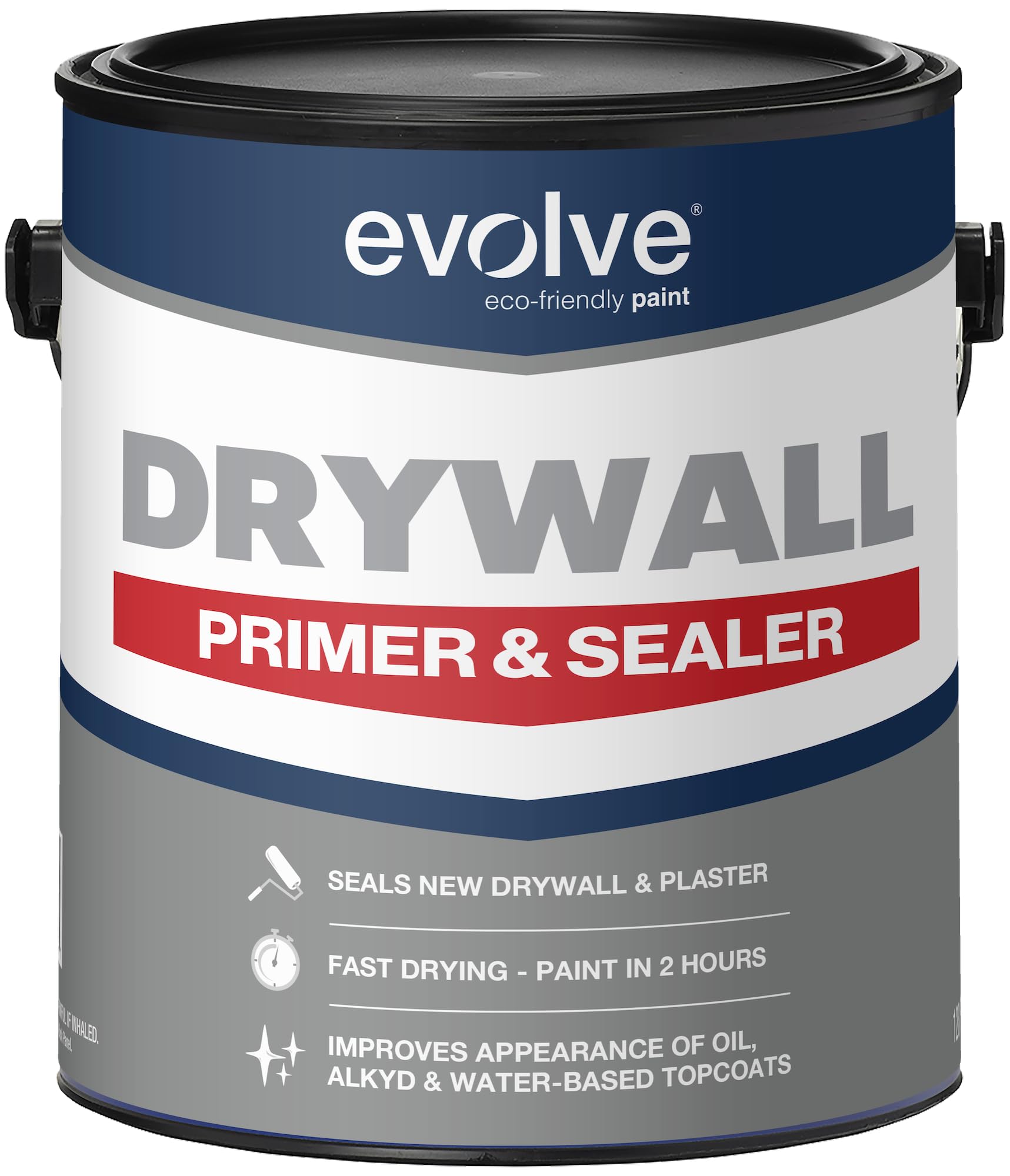
2. EVOLVE Drywall Primer & Sealer, 1 Gallon
Built for the exact job in the title: bare drywall, plaster and skim coat, sealed in one pass.
Most primers are generalists. This one is aimed squarely at new drywall, plaster and skim-coated walls, and its job is to even out surface porosity so your topcoat does not dry into blotchy patches. It is a high-solids water-based formula that primes and seals at once, and it is low VOC and low odour, which matters in a small bathroom you are working in with the door shut.
Hiding power is where it shines. Joint compound, tape lines and surface repairs disappear under it, and one reviewer noted a dramatic before-and-after on a dark wall. The words were: “The bathroom in our house was a hideous dark magenta. I thought for sure it would take several coats to cover it but low and behold, this got it done with one coat.” On brand-new drywall expect a second coat in spots, since the wall is so thirsty — a thin pass first, then a full one, is the reliable rhythm.
Where it gives ground is on hard stains. Unlike the shellac pick above, this is not a stain-blocker first — it handles minor marks and tannins, but a water stain or smoke residue is better served by a dedicated blocker. For clean new drywall in a bathroom, though, it is the most purpose-built primer on the list.
The drywall specialist: formulated specifically for new drywall, plaster and skim coat, with a fast-dry, low-spatter roll-out that lets you paint sooner.
The honest limit: on a fully bare wall you will want two coats, and it is not the tool for a stubborn water stain — keep a shellac blocker on hand for that.
Built for: anyone priming genuinely new drywall or fresh plaster in a bathroom before the finish coat goes on.
Not the one for: walls with an old leak or a heavy stain that needs true blocking power.
3. KILZ Original Low Odor Primer, Interior, 1 Quart
The quart that turns a stained patch of drywall back into a blank, paintable surface in an hour.
Here is the number that makes KILZ worth keeping on the shelf: 0.5 hours. That is the listed dry time — a wall spot you prime at breakfast is ready to topcoat before lunch. It is a primer, sealer and stain blocker in one can, and it works across drywall, plaster, masonry and wood. On a bathroom wall with an old stain behind the sink or a mark by the shower, that combination is exactly what you want.
The “Low Odor” label means lower than the classic oil-based KILZ, not low like a water-based primer — the can is honest about needing ventilation, and the smell is the most-discussed point in owner feedback, both ways. It seals odours as well as stains, which is why it turns up in pet-accident stories and musty-room fixes. Coverage is listed at 75–100 sq. ft., so for most bathrooms a quart does the spot work and a gallon does the whole wall.
One thing to know before you buy: some longtime KILZ users still swear the original red-can oil formula blocks better than the newer versions. If your stain is severe, test a hidden patch first. For routine bathroom spot-priming and a fast recoat, this quart earns its spot in the cabinet.
Why It Stays In The Rotation
- 0.5-hour listed dry time keeps the project moving
- Non-yellowing bright white finish
- Primer, sealer and stain blocker in one can
- Works under oil, alkyd and water-based paints
Where It Asks Patience
- Oil-based odour needs open windows
- Coverage of 75–100 sq. ft. per gallon means a small can
- Stain blocking on hard tannins is debated among longtime users
Worth grabbing if: you have a low square-footage stain to seal and want to be painting again within the hour.
Skip the spot-work job if: the whole wall is bare new drywall — that is a sealing-primer job, not this one.
4. Polar Clear Binding Primer, 1L
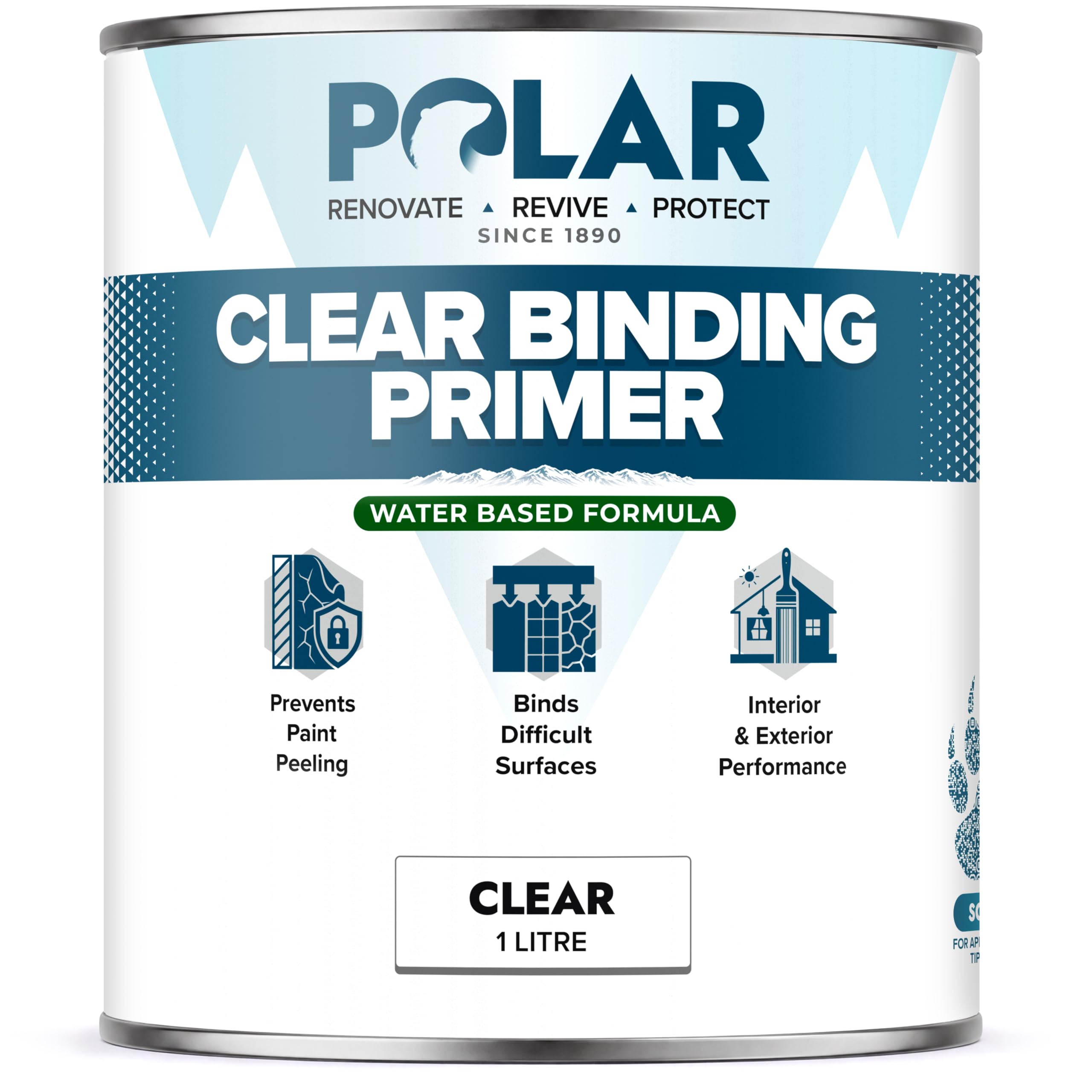
Goes on clear, dries in an hour, and stabilises flaky or sticky walls other primers slide off.
Not every bathroom wall is new. Sometimes you are priming over a failed wallpaper job, a flaking patch, or a surface that has been painted so many times it feels slick. That is where a binding primer earns its keep. This one forms a flexible water-based acrylic film that stabilises porous, damaged and flaky surfaces and gives the next coat something to grip. It goes on clear rather than white, which means you can see exactly what you are sealing.
Dry time is a fast 1 hour, the formula is low VOC, and coverage runs up to 11m² per liter — enough for a bathroom’s worth of problem wall. It works on drywall, plaster, cement, stucco and wood, and the clear film makes it useful when you plan to hang something over the wall rather than paint it. One wallpaper project story described the wall as sticky and uneven after the old paper came off; the new paper stuck with tight seams after the primer went down.
The catch is size. The bottle is 33 fluid ounces, and the most common gripe in owner feedback is that it is smaller than the listing photos suggest. Measure your wall before you order and budget two bottles for a full room. A rare report described a can arriving rusted at the rim — worth a quick check on arrival, though that is a shipping story, not a formula one.
The repair-first formula: clear acrylic film that binds flaky and glossy problem walls and improves adhesion for paint or paper, with a 1-hour dry time.
The catch that bites: a 33-fluid-ounce bottle goes quickly on a full wall, so order with square footage in hand.
Pick this one when: the wall is old, flaky, or freshly stripped and needs binding before anything else goes on.
Think twice if: you are sealing brand-new bare drywall — a white sealing primer covers that job better.
5. Zinsser B-I-N Shellac Primer-Sealer

For the leak mark above the shower you notice the morning you planned to paint.
The can format is the point here. A shellac spray primer dries to the touch in 15 minutes, accepts paint after 30, and sands to a powder when dry — so a small ceiling stain or a patched section of drywall gets sealed and painted the same afternoon. Both water stains and knots, sap and tannins are on the blocking list, and the shellac base seals odours along with stains. It covers roughly 20–24 sq. ft. per can, which is exactly right for patches and touch-ups, not whole walls.
Owner experience splits cleanly. The touches that work — small water marks on a ceiling, a 1’x2′ drywall patch — come out strong and paint grabs them perfectly. Larger water damage is a different story; a pipe-burst stain still wanted another coat. Two real warnings repeat: the sprayer clogs easily if you do not keep it moving in short bursts, and the odour is strong enough that outdoor or window-open spraying with a mask is the move.
Compared with the gallon shellac pick at the top, this is the same shellac idea scaled down to a can — less coverage, far less commitment, and a fraction of the quantity on hand. For a bathroom with one stain and no patience for a long dry time, it is the nimblest option on this list.
What Makes It Useful
- 15-minute touch dry, paintable in 30 minutes
- Shellac blocks water stains, knots and sap
- Fan spray covers patches quickly
- Sands easily to a powder for a smooth topcoat
The Real Friction
- Only 20–24 sq. ft. per can — it empties fast
- Sprayer clogs and needs short bursts
- Strong shellac smell demands ventilation
- Heavy water damage may need a second coat
Best used for: small ceiling stains and drywall patches where speed beats volume.
Look elsewhere for: a full bathroom wall — a gallon of sealing primer covers far more ground.
6. Glidden Total Interior Wall Paint & Primer, Semi-Gloss, 1 Gallon

The all-in-one for walls you will actually wash, in a bathroom that gets splashed daily.
Semi-gloss is the finish that shrugs off a wet sponge, and this Glidden all-in-one pairs that with a paint-and-primer formula that hides and covers in one pass. If your drywall is already primed and you are choosing a finish coat for the splash zone around a sink or tub, this is a strong candidate. The scrubbability and washability are the headline: it is built for cleanup without damage, which is exactly the durability a bathroom wall needs to hold onto.
Coverage is listed up to 400 sq. ft., dry time is 4 hours, and the formula is low VOC — though Glidden notes that colourants added to the base can raise that VOC level depending on the colour you pick. Colours in the paler range keep it close to the stated low-VOC figure. Buyers overall describe good quality and accurate colour, and the finish dries to a solid semi-gloss rather than a flat that marks the moment a towel brushes it.
The caution is the usual all-in-one caveat. A paint-and-primer hides and covers, but on truly bare new drywall the porous substrate still wants a dedicated primer underneath first. Treat this as the finish coat over a properly primed bathroom wall and it delivers; use it as the only coat on fresh drywall and you may chase blotches.
Where it wins: semi-gloss durability with a listed 400 sq. ft. of coverage and 4-hour dry, built for scrubbing and washing without damaging the film.
Where to pair it: over a sealing primer on new drywall — the “all-in-one” label hides and covers, but it is not a substitute for sealing a bare wall.
Choose it for: the topcoat on an already-primed bathroom wall that needs to survive regular washing.
Pair it with a primer if: the drywall was hung last week and has never seen a coat.
7. Interior Paint and Primer, Gloss Sheen, 1 Gallon

A custom-mixed gloss for the buyer who wants a specific colour and a hard, washable film.
The interesting engineering here is the mixing. Microblend runs a patented automated paint machine that makes a fresh bucket for each order, and each bucket is tested with a spectrophotometer so the colour matches from one can to the next. That is a real benefit for a bathroom where you buy one can now and a second later for a touch-up — the two should match, which is more than you can say for many shelf paints. The water-based acrylic resin cures hard, resists stains, and scrubs and washes.
The gloss sheen and 1-gallon size suit a bathroom wall, and coverage is listed at 350 sq. ft. It is low VOC (low in the fumes that off-gas from paint) and low odour, which helps in a closed room. The finish itself earns plenty of praise for texture and appearance, but the recurring theme in feedback is coat count: a medium colour underneath can take two to three coats over white to cover fully, so budget more gallon than you think the room needs.
Colour matching is the fair caveat, and it cuts both ways. Some buyers find the delivered shade lighter than the screen, and one poor experience described a shade arriving clearly off. Order a sample or a quart swatch first if the exact tone matters, and expect to use a dedicated primer under it if the wall is drywall-fresh rather than going straight to the paint-primer.
The Case For It
- Fresh-mixed per order with spectrophotometer colour control
- Hard-curing, washable, stain-resistant acrylic film
- Low VOC and low odour
- 350 sq. ft. of coverage per gallon
What To Budget For
- Two to three coats to cover an existing medium colour
- Gloss sheen shows wall imperfections more than matte
- Colour can read lighter in person than on screen
It suits: a buyer chasing one exact shade who wants a scrubbable, low-odour bathroom finish mix-matched across cans.
It costs: extra coats over a darker wall, so account for a second gallon before you start.
8. Zinsser WaterTite Mold & Mildew White Waterproofing Paint
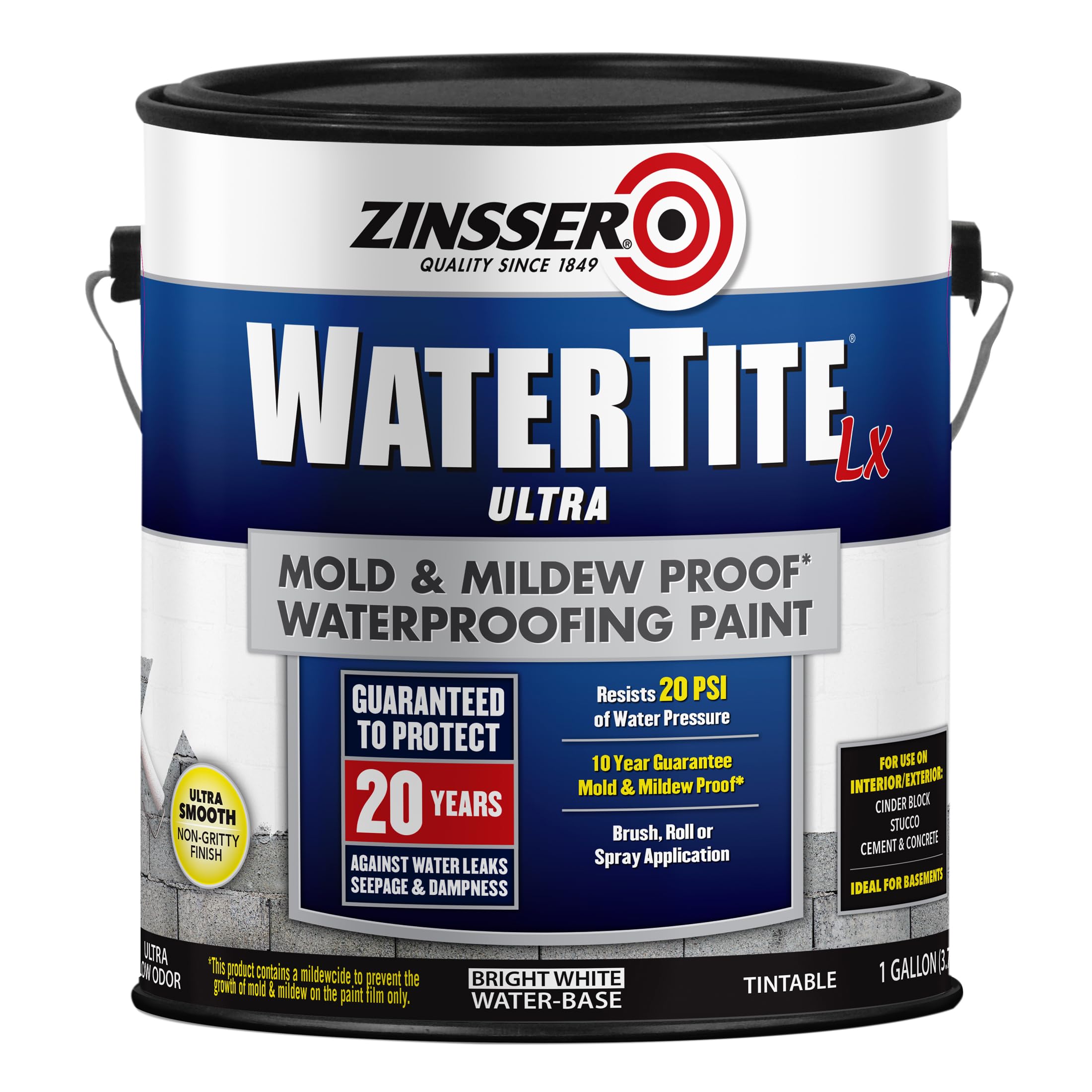
Not really a primer — a latex waterproofing coat for the bathroom wall that actually leaks.
This is the heavy option, and it does a job no ordinary drywall primer can. It is a latex-based mould- and mildew-proof waterproofing paint, rated to stop water and resist up to 20 lbs. of water pressure, with a 15-year waterproof and 10-year mould-and-mildew-proof film guarantee. Coverage is listed up to 100 sq. ft. and it dries smooth, bright white and non-gritty — no sandpaper texture on your bathroom wall.
In a finished bathroom it belongs on the wall that weeps — behind a basement shower, on poured concrete, or on a block wall that goes damp. It works there. One shower-wall story described scraping, wire-brushing and bleaching the cinder block, then painting it and having the finish hold up beautifully. Another buyer used it on a bathroom ceiling, hoping to stop the mould that keeps appearing over the shower. Two coats is the usual balance on a damp wall.
Be clear about two things before you order. First, it is a topcoat-grade waterproofing paint, not a porous-substrate sealing primer — do not expect it to prep bare new drywall for a normal paint job. Second, the film is only as good as the wall behind it. One unhappy report had the paint turned green the next day on a wall that was not dry; painting over active moisture defeats any waterproof coating. Get the wall dry and prepped, and this one holds.
The seal-the-wall pick: latex waterproofing film rated to resist up to 20 lbs. of water pressure, with a 15-year waterproof guarantee.
The prerequisite: the wall has to be dry and prepped first — this resists water, it does not solve a wall that is still wet behind the paint.
For the truly damp wall: poured concrete, block, or a bathroom ceiling that keeps gathering moisture.
Not for: drywall that just needs sealing before a standard paint coat.
9. Glidden Total Interior Wall Paint & Primer, Eggshell, 1 Gallon

The softer eggshell sibling of the Glidden semi-gloss, for a bathroom that wants a gentler finish.
Eggshell sits between flat and semi-gloss: it takes a light wipe-down without the sheen that shows every imperfection. In a bathroom that is mostly painted wall rather than splash zone, that makes it a practical finish choice. Like its semi-gloss sibling, this is a paint-and-primer all-in-one with outstanding scrubbability and washability, listed coverage up to 400 sq. ft., and a 2-hour dry time — quicker than the semi-gloss version’s 4 hours.
The colour is the draw. The Solitary State gray draws the most praise in owner feedback, described as a rich, even finish that brightens a bathroom and hides wall imperfections when dry. Two coats is the honest expectation on a new colour, though a couple of buyers reported full coverage in one. The film is low VOC, and colourants can raise that depending on the shade you choose.
Colour accuracy is the one thing to verify. Screen-to-can shifts happen, and a shade that reads pale on a monitor can arrive darker on the wall. Order knowing you can tint-match locally if the can comes out off, or test a small section before committing the whole room. Get past that and you have a washable bathroom finish that goes on easily and looks good.
Why It Fits A Bathroom
- Eggshell hides imperfections without a high sheen
- Scrubbable and washable for bathroom walls
- 2-hour dry time is quick to paint over
- Up to 400 sq. ft. of coverage
What To Watch
- Colour can read different in person than on screen
- Two coats is realistic for a full colour change
- It hides and covers, but bare drywall still wants a sealing primer
The fit here: a bathroom wall refresh where you want a soft finish, quick dry, and a colour you can wipe clean.
Not the fit for: a wet splash zone that needs a harder semi-gloss film — that is what the sibling above is for.
10. Zinsser Smart Prime Water-Based Primer, 1 Gallon
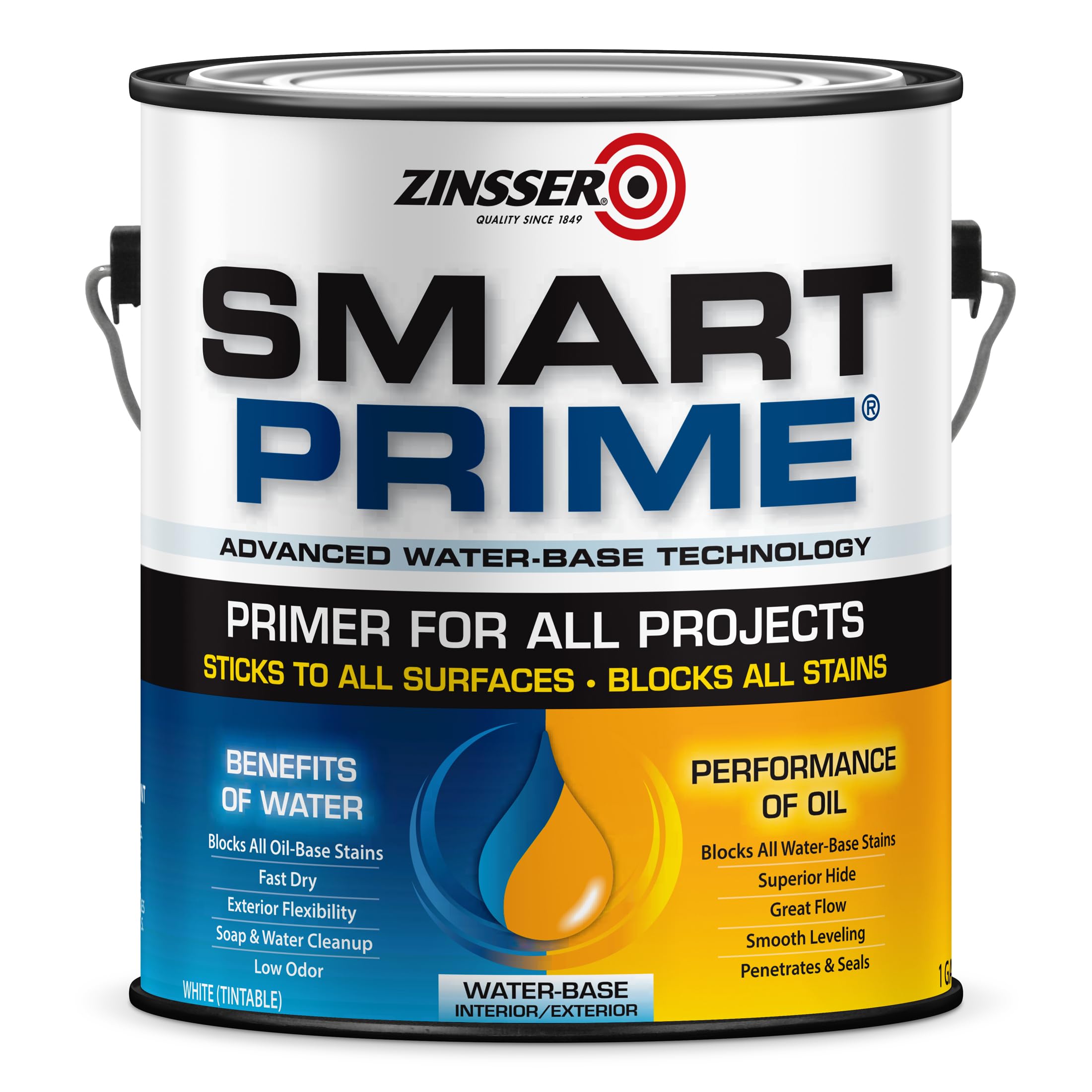
Bonds to glossy and chalky walls without scuff-sanding, with a mould-resistant dry film.
If your bathroom wall has old glossy paint, chalky patches, or a mix of surfaces, most primers ask you to sand first. This one does not. Smart Prime is engineered to stick to glossy surfaces and moderately chalky ones without scuff sanding, which saves the dustiest, most tedious step of a repaint. It is water-based, formulated with stain-blocking resins, and its cured dry film resists mould and mildew, which suits a steamy bathroom wall.
Coverage is up to 400 sq. ft. per gallon, and though the label lists a 2-hour dry time, the maker also advertises a recoat within an hour. It cleans up with soap and water. Owners describe it as thick, like a milkshake, going on with little waste, and it tends to demand thinning for a sprayer. Where it wins with people is coverage and finish: it lays flat, sands easily, and holds off tannins when used on wood trim going white.
The honest asterisk is adhesion, which comes in mixed. Most owners find it bites and holds, but a few report it not sticking as expected, so always test on a hidden patch of a truly glossy wall first. Also expect to work in small amounts, since the formula thickens quickly once open. For tricky surfaces where sanding is off the table, though, the bonding promise is what makes it worth having.
The no-sanding edge: gloss and chalky walls get a bond without the sanding step, and its cured film resists mould and mildew, which suits a bathroom wall.
Test before committing: adhesion is not universal, so try a hidden patch on a fully glossy wall before priming the whole room.
Reach for it when: the wall is glossy, chalky, or just too tedious to sand, and you want a low-odour water-based bonding primer.
Test first on: surfaces with old, hard gloss paint where adhesion reports split.
11. PRESTIGE Paints Interior Paint and Primer In One, Semi-Gloss, 1-Gallon

A 100% acrylic all-in-one aimed straight at kitchens and bathrooms — the label names them.
Prestige formulates this one for high-humidity rooms, and the label calls out bathrooms and kitchens by name. The base is 100% acrylic latex, which cleans up with soap and water and lays down a semi-gloss film that suits a wet room. Coverage is listed at an average of 250–400 sq. ft. per gallon, it is low VOC at less than 5 gms/L prior to tinting, and the finish cures within 4 hours. The shade is a comparable match to a Valspar blue, mixed under Prestige’s own colour specs rather than Valspar’s.
The finish has fans — owners describe a thick, mousse-like consistency that does not splatter or drip, with minimal odour and coverage that goes further than they expected. But coat count is the recurring theme. Several report needing three or four coats to cover a light existing colour, and that turns a one-gallon job into a two-gallon one. Budget for extra and the wet-wall durability is worth it; expect one-coat magic and the project drags.
The colour is the other variable. A cool grey can arrive looking near-white depending on the screen you ordered from, so if the exact tone matters, start with a sample. Used as intended — over a sealed wall in a humid bathroom — this delivers a hard, washable semi-gloss with the acrylic chemistry a steamy room wants.
Why It Suits A Humid Room
- 100% acrylic latex built for kitchens and bathrooms
- Semi-gloss film cleans up with soap and water
- Low VOC under 5 gms/L before tinting
- Thick, low-splatter consistency
What It Asks Of You
- Three to four coats needed over a light existing colour
- Colour can read paler than it looks on screen
- Coverage of 250–400 sq. ft. runs thinner at the low end
The right call when: you want a humidity-ready acrylic semi-gloss and will budget the extra gallon for full coverage.
Order a swatch first if: you need the exact blue to land on your wall as it looked on screen.
Know the Specs
Base Type: Shellac vs Water-Based vs Oil
The base tells you what the primer is best at. Shellac seals stains and odours hardest but carries a strong solvent smell, so it is a spot tool. Water-based acrylics are low-odour and easy to clean up, which makes them the natural first coat on a whole bathroom wall. Oil-based primers split the difference, with strong adhesion and stain blocking but a longer dry and a heavier smell that needs open windows.
Dry Time and Recoat Windows
Dry time tells you when the film is touch-dry; recoat time tells you when the next coat can go on, and those are different numbers. A primer with a 0.5-hour drytime may still need a recoat window near an hour, while a primer listed at 24 hours means you are taping off the room twice. Always check the recoat number before you buy, because it is the one that decides whether the bathroom gets finished this weekend.
Coverage Per Gallon
Coverage is how many square feet one gallon will prime in a single coat. A bathroom is small, so a primer rated up to 400 sq. ft. per gallon handles most walls in one pass. A quart-size can covering roughly 75–100 sq. ft. is right for spot work and stains, not a full wall. Measure your wall area and buy to that number so you are not caught short mid-coat.
VOC and Odour in a Closed Room
VOC stands for volatile organic compounds — the solvents that give paint its smell. A low-VOC formula releases fewer of them, which matters in a bathroom you work in with the door shut. Note that colourants added to a low-VOC base can raise the level depending on the shade, and shellac or oil-based primers will always smell stronger than a water-based one.
Stain Blocking vs Sealing
Sealing fills the pores of new drywall so your topcoat sits evenly. Stain blocking stops a mark — a water spot, smoke, tannins from wood — from bleeding through the paint. Some primers do both; a dedicated shellac or oil-based blocker does the second job hardest. If the wall is clean and new, sealing is all you need. If there is a stain, choose a blocker.
Paint-and-Primer All-in-Ones
A paint-and-primer hybrid hides and covers in one pass and saves a step on an already-primed wall. It is not the same as a dedicated sealing primer on bare drywall, where the porous substrate still pulls moisture out of the coat. Treat the all-in-one as the finish coat over a properly primed wall, and pair it with a real primer when the drywall is fresh.
Mould and Mildew Resistance
In a steamy bathroom, a film that resists mould and mildew is worth looking for. Some water-based primers state a mould- and mildew-resistant dry film, and waterproofing paints carry their own film guarantees. That resistance is about the cured film, not about solving a wall that stays wet — moisture behind the paint still needs to be fixed first.
Common Questions
Do I really need a special primer for new drywall in a bathroom?
Can I skip primer and just use a paint-and-primer all-in-one on new drywall?
How long should I wait before painting over primer in a bathroom?
Will primer stop mould from growing on my bathroom ceiling?
Can I use shellac primer in a small bathroom without windows?
What is the difference between sealing primer and stain-blocking primer?
How much primer do I need for a typical bathroom wall?
Can I apply primer over old glossy paint in a bathroom?
Is it safe to prime and paint a bathroom in one day?
Does bathroom primer need to be waterproof or just moisture resistant?
The Bottom Line
If clean new drywall is your whole project, the EVOLVE Drywall Primer & Sealer is the most purpose-built pick on the list, with a fast-dry low-VOC formula made for bare drywall and plaster. When a stain or an old smell is the real problem, reach for the Rust-Oleum Zinsser B-I-N Shellac-Base Primer — its shellac base blocks pet, smoke and musty odours and hides burn marks and water stains in one coat. And for a damp block or concrete wall, the Zinsser WaterTite Waterproofing Paint carries a 15-year waterproof guarantee that no ordinary drywall primer on this list offers.
One honest nudge before you close the tab: the shellac top pick is the strongest stain sealer here, but if your wall is simply new and clean, the drywall-specific primer is the smarter, easier-to-live-with choice for the room you actually stand in while you work. Match the primer to your wall — sealing for clean drywall, shellac for stains, waterproofing for damp block — and the finish will hold through daily showers.
How we choose
We do not accept paid placement. Every pick is matched to a real buyer and a real use-case; we do not hands-on test units.
Sources
Specifications: manufacturer listings and product documentation. Review insights: verified customer reviews, as of October 2026. Pricing: not shown on this page (it changes often); check the current price via the retailer link.
As an Amazon Associate, Aappliancez earns from qualifying purchases. This does not affect which products we feature.