Disclosure: Some links in this post are affiliate links. As an Amazon Associate I earn from qualifying purchases, at no extra cost to you. Learn more
Specs are compiled from manufacturer listings and verified buyer reviews and can change over time — please confirm the key details on the product page before buying.
If your eyes sting by mid-afternoon and the words on your monitor start to swim, the fix is usually not a new monitor — it is a lens you wear. Some of these options clip onto the prescription glasses you already own, some are readers built for close screen distance, and a few are full safety glasses with a built-in magnifier.
This guide is built by comparing the manufacturers’ published specifications and the patterns across verified customer reviews, so you get each pick’s real strengths and trade-offs instead of marketing spin.
Below you’ll find what actually matters when you stare at a screen for hours, plus the honest trade-offs most listings skip. Here is how to pick the best prescription lenses for computer work without buying three pairs and hoping one sticks.
Top Picks
How To Choose The Best Prescription Lenses for Computer Work
The first question is not which lens — it is what is already on your face. If you wear a prescription every day, a clip-on or fit-over pair turns your own glasses into screen glasses. If you do not, a reader or a magnified safety lens does the job on its own.
Know your seating distance before you pick a magnification
Reader strengths are set for reading distance, roughly the space between your eyes and a book. A monitor usually sits further back, so a lower magnification often reads better on screen than the pair you use for a paperback. Check how far your screen actually sits before you commit to a power.
Clip-on versus fit-over — they are not the same job
A clip-on hangs off the bridge of your existing glasses and covers the front only. A fit-over wraps over the whole frame, sometimes with side coverage, and adds bulk but more protection. Both come down to frame width, so measure the glasses you already wear.
What the blue-light claim actually tells you
Blue light is the short-wavelength part of visible light that screens emit heavily. Listings that name a wavelength range, like 415-455nm or 395-550nm, are telling you which slice of that light the lens filters. An amber or orange lens filters more of it and tints everything else as a result.
Side-by-Side Comparison
| Model | Best For | Style | Lens / Magnification | Coating | Amazon |
|---|---|---|---|---|---|
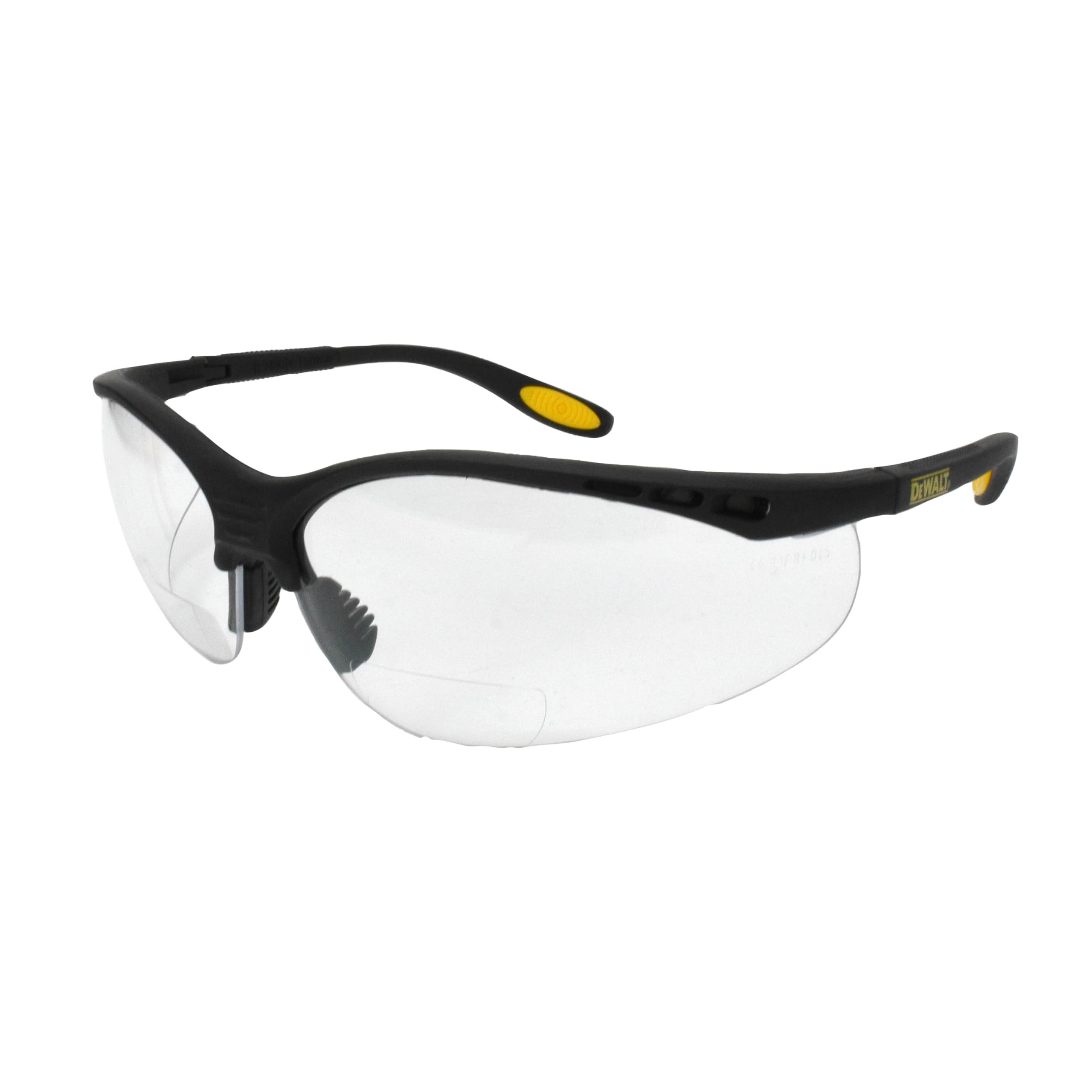
| DEWALT DPG59 Reinforcer Rx-Bifocal★ Best Overall | Workshop and shop floor | Semi-rimless safety frame | 1.5 diopter bifocal | Impact-resistant polycarbonate | Amazon |
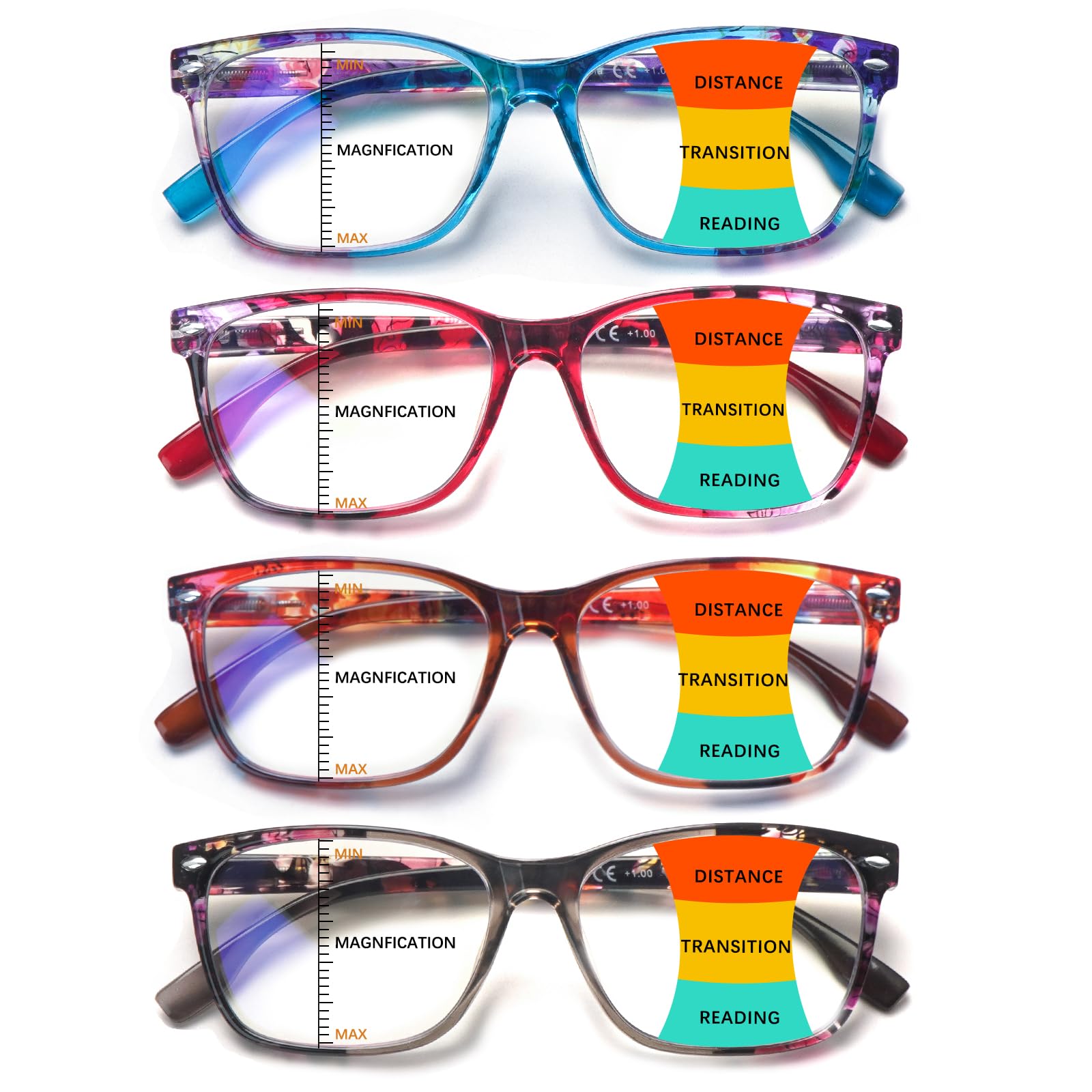
| CLASAGA Progressive Multifocus ReadersBest All-Distance | Women wanting one pair for every distance | Pattern print ladies frame | Progressive multifocus | Blue light blocking | Amazon |
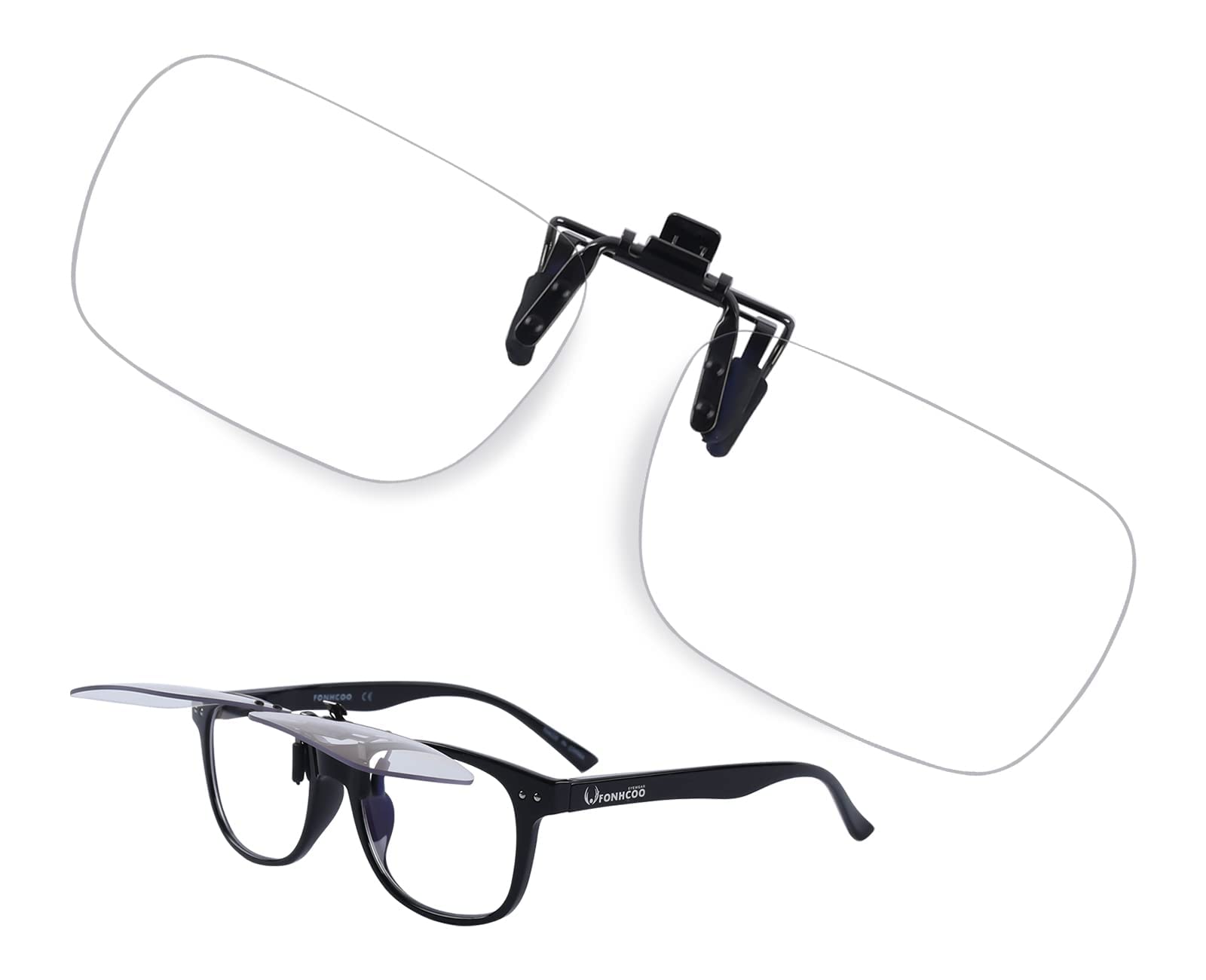
| FONHCOO Clip OnBudget Clip-On | Cheap trial of clip-on coverage | Clip-on | Blue light blocking | Blue light filter | Amazon |
| Yogo Vision Fit Over | Prescription wearers on long sessions | Fit-over | Blue light blocking | Blue light filter | Amazon |
| Elvex DeltaPlus RX-500 | Detail and inspection work | Full-rim safety frame | +1.0 full-lens diopter | Anti-scratch | Amazon |
| Alsenor Fit Over Safety Glasses | Clinic and lab settings | Oversized fit-over | Clear lens | Anti-fog plus 99% blue light | Amazon |
| Vyzia Clip On | Evening screen wind-down | Clip-on | Orange amber lens | 99% blue light blocking | Amazon |
| WEIMELTOY Half Frame Metal Readers | Men who want three pairs spread around | Half frame metal, 3 pack | Reader magnification | UV400, 98% blue light | Amazon |
| Eyekepper Amber Fit Over | Wide-coverage evening screen use | Oversized wraparound fit-over | Orange tinted amber | Filters 395–550nm | Amazon |
| MYSANDY ANSI Z87.1 Safety Glasses | Healthcare and industrial shifts | Full-rim nylon frame | Prescription-ready | Nano anti-fog, 415-455nm filter | Amazon |
| Spectra479 Clip-on | Long sessions on existing frames | Clip-on | Amber lens | Exceeds UV400 | Amazon |
Detailed Reviews
1. DEWALT DPG59 Reinforcer Rx-Bifocal Protective Eyewear
Our pick — 4.5+★ from 3,000+ verified ratings; the strongest balance of quality and price.
A shop-floor lens that puts a 1.5-dioptre magnifier right where you need it
This is the one you want if your day is split between a workbench and paperwork. The bifocal is a 1.5 diopter (a magnification of about one and a half steps up from plain glass) sitting in the lower part of the lens, so you tip your head slightly to read and look level to see the job. That design is what makes it a safety glass first and a reading aid second.
The frame backs that up physically. The lens is impact-resistant polycarbonate (a tough plastic that takes a knock without shattering) and is built to exceed ANSI/ISEA-2020 Z87.1+ standards — the recognised test for protective eyewear. Rubber-tipped temples with belt ribs hold the frame steady when you lean over a saw. The nosepiece is soft and non-slip, and the temple arms adjust to a basic degree so you can dial the fit in.
Buyers who wear these daily in workshops describe the bifocal optics as accurate, with the reading strip sitting low enough that you can look over it. The trade-off is real, though: because the magnifier only covers the bottom edge, reading a full monitor through it means tilting your head or pushing the frame up the nose. It is a lens for close bench work, not eight hours in front of a spreadsheet. As owners put it: “Daily work use over years: lenses hold up but nose pad and yellow arm inserts lost.” A few also note that the scratch resistance is only moderate, so store them in the included sleeve rather than loose in a bag.
What earns its place
- 1.5 diopter bifocal merges safety and reading into one lens
- Polycarbonate lens exceeds ANSI/ISEA-2020 Z87.1+ impact standards
- Rubber-tipped temples with belt ribs keep the frame steady
- Blocks 99.9% of UV rays for outdoor site work
- Protective eyeglass sleeve with belt clip in the box
Where it stops short
- Bifocal covers only the lower lens, so screen reading needs head tilt
- Scratch resistance is moderate — the bifocal area marks up with rough handling
- Nose pad and arm inserts can come loose with long-term daily wear
Made for: anyone who moves between power tools and printed instructions all day and wants one frame for both.
Wrong tool if: your workday is a spreadsheet, not a bench — the bifocal forces a head tilt you will resent by hour three.
2. CLASAGA Progressive Multifocus Reading Glasses for Women
Three vision zones in one patterned frame, so you stop swapping pairs at your desk
Progressive lenses here do the job that three separate pairs cannot: one continuous lens that changes power from close reading up through screen distance and on to looking across the room. For a desk job that swings between a keyboard, a monitor and a door, that removes the constant glasses shuffle. The pattern-print frame and colour variety are the reason many buyers end up with more than one pair — one at the desk, one in the bag.
What wins people over is build quality relative to what the frame costs — the pattern frame is described as sturdy and needing no adjustment out of the packaging. Blue-light filtering is built into the lens, and one buyer credits the evening pair with an easier time getting to sleep after a phone session in bed. The multifocus arrangement stays consistent across the range: “All 3 vision levels were exactly where they should be.”
Here is the honest limit. Progressive lenses are unforgiving of eye position — you have to look through the right band of the lens for each distance, and the far zone is the one that trips people up. Some wearers find the distant view blurry and send them back; others read the TV screen without trouble. Think of these as glasses for a known desk setup, not a substitute for a measured prescription.
The strongest card: a multifocus lens with blue-light filtering at a frame price, in a design people actually compliment.
The asterisk: if you need crisp distance vision for driving, get a dispensed prescription instead of an off-the-shelf progressive.
Choose it if: you are a desk-based reader who wants one patterned pair to cover close, screen and mid-room.
Look past it if: the far zone is what matters most to you — that is the part off-the-shelf progressives handle least reliably.
3. FONHCOO Clip On Blue Light Blocking Glasses
The cheapest way to turn the glasses you already own into screen glasses
If the only thing stopping you from trying blue-light filtering is the idea of buying another pair of glasses, this clip-on removes that excuse. It hangs on the bridge of your existing frame and filters blue light from screens without touching your prescription. The buyer who describes starting to work daily across double monitors and getting headaches — “Now no headaches!” — is exactly the use case this was built for.
The honest part is that the hardware is basic. The lenses run longer than most prescription lenses, so coverage stops short of the full frame, and the clip itself takes a firm push to seat. There is no instruction sheet in the box, which makes the first attach the riskiest moment. Handle the clip, not the lens surface, and the scratch risk drops.
What it delivers is a low-risk first test. If you are unsure whether filtering changes anything for you, this is the least you can spend to find out. Expect to replace it rather than repair it.
Best entry point: someone testing whether screen filtering helps at all, on a prescription they already like.
Know before you clip: lenses are longer than standard frames and coverage stops short — full-lens screening is not what you get.
4. Yogo Vision Fit Over Blue Light Blocking Glasses
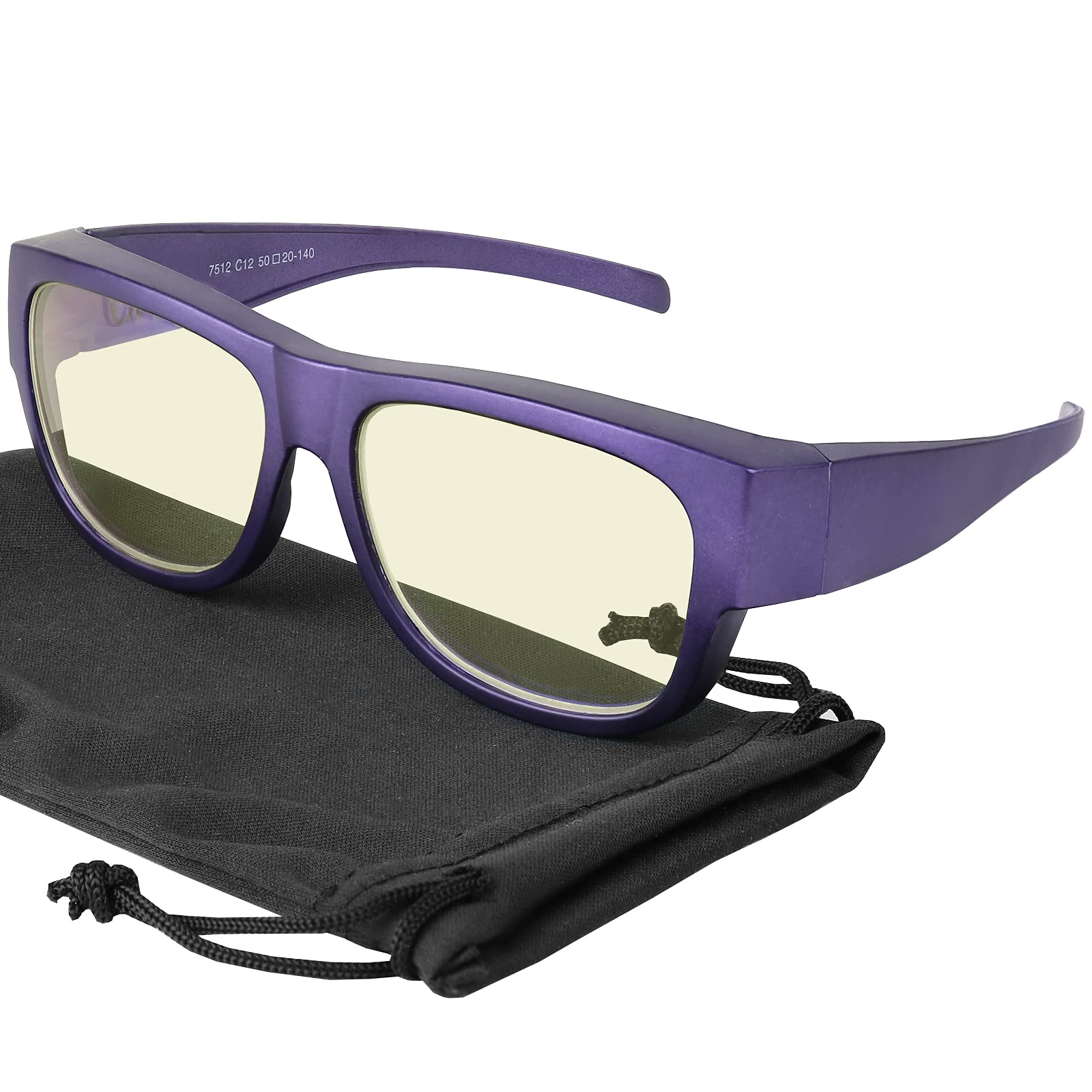
One oversized shell that slips over your prescription and stays there for hours
For a full-day computer job, comfort decides whether you actually keep them on. The oversized shell here covers your existing glasses without pressing behind the ears, and buyers regularly wear them through a long shift rather than a quick session. Gamers describe using them for long sessions on a bright monitor to kill the glare headaches.
Before you buy, measure your face rather than your frame. This is a large fit-over, and the recurring gripe is scale — on a smaller or narrower head the frame slides with any movement, and the same size is loose on one wearer and snug on another. The nose bridge is the other pressure point: on some wearers it bears down enough to cause a headache over a long day. Clean them with the microfiber cloth only, because standard lens cleaner is reported to damage the coating.
Get the size right and they do the job they were bought for. They are also light enough that the extra layer over your prescription does not feel like a second pair of glasses.
Where it delivers: broad coverage over your own frames, comfortable enough for a long computer day rather than a quick errand.
Size it first: it is built large, so a narrow face means slipping and pressure on the nose — check the fit before you commit.
Suits: a prescription wearer with an average-to-large frame who wants one shell for the whole workday.
Not your shell if: you have a small or narrow face — it will slide, and no adjustment fixes a size mismatch.
5. Elvex DeltaPlus Bifocal Safety Glasses RX-500, +1.0 Diopter

Magnification across the whole lens, not a patch at the bottom
This is the quiet fix for anyone who has tried a bifocal safety glass and hated the head tilt. The +1.0 diopter runs across the entire lens instead of sitting in a bottom strip, so you read and inspect through the same power everywhere. That makes it a better fit for close detail work than the DEWALT above, which keeps its magnifier in the lower lens only. The frame is polycarbonate, full rim, and the lens carries an anti-scratch coating to hold up to daily abrasion.
Buyers who use these for inspection and pattern work describe the lens as the clearest +1.00 full-lens safety reading glass they have found, and comfortable enough for prolonged wear. The frame is the weak point — the temples are the part that eventually breaks, and the lens outlasts the arm. It is worth knowing that the price on this model swings around over time, so check it rather than assuming.
For a bench, a lab station or an inspection table, this is the lens to reach for. It is clear and undistorted for detail, and it pairs badly with a distant monitor because the magnification applies everywhere.
Pick this for: inspection, assembly and any close work where a bottom-strip bifocal forces you to tilt.
Think again if: you need to glance at a monitor across the room — the full-lens power blurs everything at range.
6. Alsenor Safety Glasses
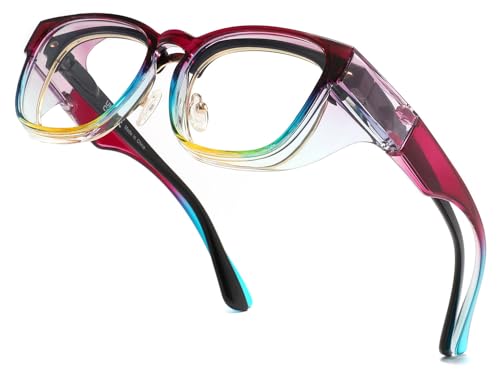
Oversized, side-shielded and built to look like ordinary glasses
When the job demands coverage from the side as well as the front, this is the pair that delivers it. The wraparound shell wraps the eye rather than just sitting over it, and the TR90 frame keeps the weight down despite the size. The lens carries an anti-fog coating (a surface layer that stops condensation building up when you move between temperatures), plus a 99% UV protection coating and a stated 99% blue light blocking figure.
What wins people over is the look. The oversized shape reads like a regular pair of glasses rather than a pair of goggles, and the colour and print get positive mentions. Buyers in clinics and labs rate the eye protection and the side shields specifically. Comfort holds up too — the frame sits away from the face rather than pressing into it.
Two things to weigh. The fit is not one-size-fits-all, and one wearer notes a side that leans into the face unevenly on a narrower head shape. The anti-fog works but is not perfect in every condition, and the frame accumulates scratches over time — a year of daily use is the realistic lifespan before the scratch marks start to bother you.
Why it stands out: side coverage plus an anti-fog coating plus a look that passes as normal glasses — rare in one pair.
The catch: scratch resistance is finite and the anti-fog is a coating, not a permanent property, so treat them kindly to make them last.
Made for: clinical, lab and craft work where splash coverage from the sides matters and you still want to look professional.
Weigh carefully: on a narrow face the frame can sit unevenly across the bridge, and no adjustment corrects it.
7. Vyzia Clip On Blue Light Blocking Glasses for Sleep

An orange lens for the last screen hour of the night, not for the daytime shift
The pitch here is specific: the maker recommends wearing the amber clip-on for roughly 2-3 hours before bed, in the window where screen time most disrupts your body clock. The orange lens filters heavily, which is why it works in the evening and why it looks odd in daylight. The clip mechanism squeezes the bridge of your existing glasses to seat, and the design keeps the extra weight low enough that you forget about it.
Reviewers who wear them nightly describe a more restful evening — less end-of-day eye fatigue and an easier time settling into sleep. The function that scores highest is simply that they do what they were bought to do. One buyer notes that they have reordered after losing a pair, which says more about the practicality than any spec does.
The trade-off is the fit. The clip does not seat reliably on a thick, high-prescription frame and can pop off with a light touch. It also makes the front of your glasses heavy, and the dark orange tint is very visible, so it is not a public-facing pair. Keep these in the bedroom.
Where it shines
- Amber orange lens filters heavily for evening use
- Designed to be worn for roughly 2-3 hours before bed
- Light enough that the clip-on layer does not overwhelm your frame
- Travels with its own carrying case
Where it strains
- Clip seats poorly on high-prescription, thick frames
- Makes the front of your glasses heavier
- Dark orange tint is not subtle in daylight
Worth keeping by the bed: an evening-only clip-on for anyone winding down in front of a phone or TV.
Not for your day frame: thick or high-prescription glasses will not hold the clip, and the orange tint rules out daylight use.
8. WEIMELTOY Reading Glasses

Three half-frame metal readers, one for each place you sit
Nothing clever, just practical: three metal half-frame readers in black, grey and brown, so a pair lives at the work desk, the home office and the nightstand. That is the strategy that makes a reader last — a pair you never have to hunt for is a pair you actually wear. The thin metal frame keeps the weight down, and the spring hinges open about 35° outward, which makes the frame forgiving across most face shapes.
The lens side is worth explaining. UV400 protection means the lens blocks the UV band at the top end, and the coating is described as preventing more than 98% of blue light plus anti-glare. High-definition lens material keeps the magnification accurate, so small print and fine detail stay readable. For a desk job that mixes monitor work with paper, the eye-strain benefit is the point. As buyers report, one office worker keeps pairs “at work, home office, and nightstand” for exactly that reason.
The honest caveat: not everyone finds them light. A few wearers report a heavier feel on the face than expected, and one describes a ghosting effect they attribute to the weight. That is a minority note on a well-rated reader, but it is worth knowing if you are sensitive to frame weight.
Buy it if: you lose readers constantly and want three decent metal frames scattered where you need them.
Pause if: frame weight bothers you — a few wearers find these heavier on the face than a plain reader.
9. Eyekepper Amber Blue Light Blocking Glasses
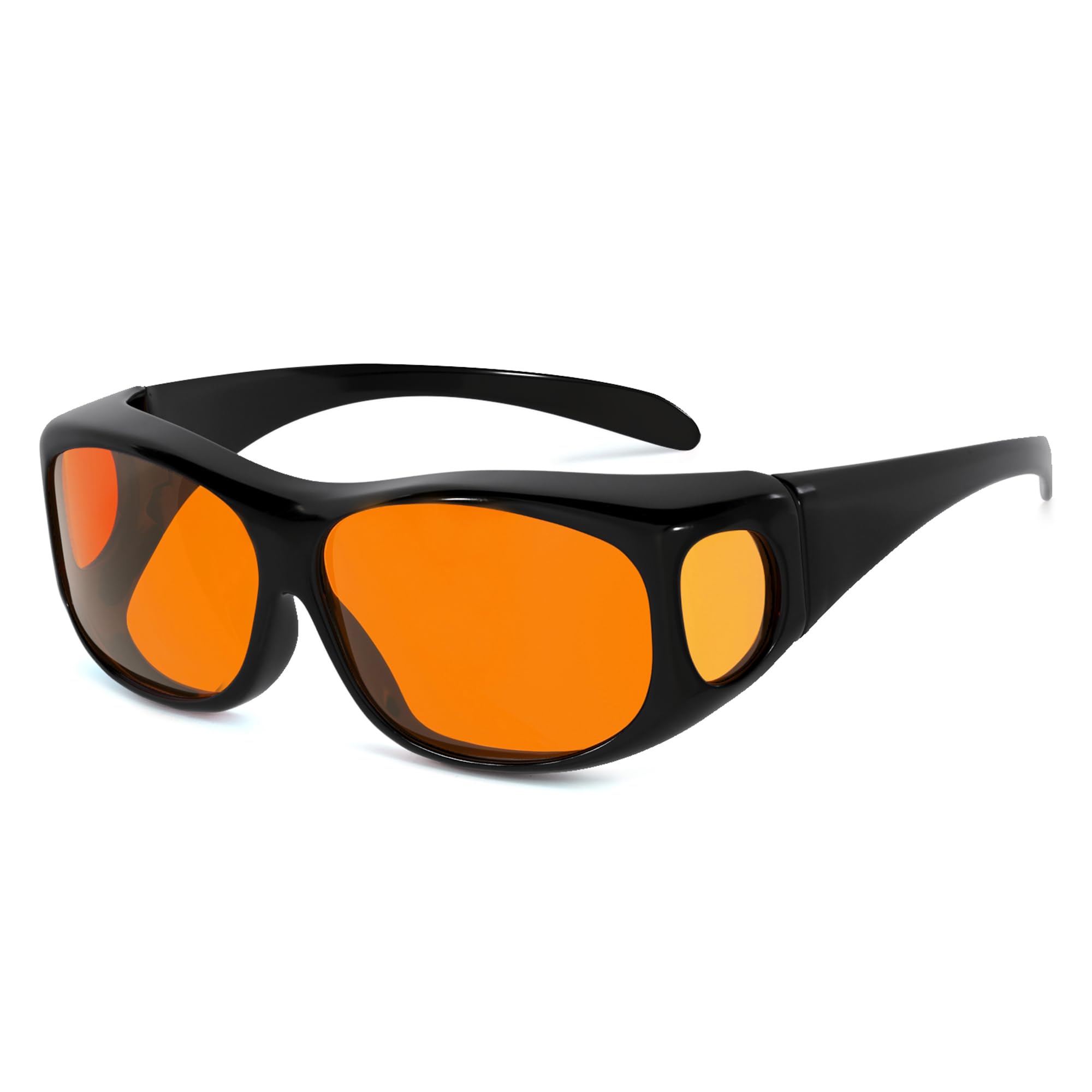
Wraparound amber lenses that cover the sides, not just the front
Most blue-light glasses only cover the front of the eye, and light still reaches you from the sides. This frame is built to address that: an oversized wraparound shape with a side lens, in orange-tinted amber that filters high-energy blue wavelengths across a 395–550nm range. The TR90 material keeps the whole shell light despite the size, and the open-bottom design means you are not looking through a thick strip of frame.
What wins people over is how much of that light it actually filters. Buyers who wear them over their prescription through long workdays report less eye fatigue and dryness, plus an easier time falling asleep after a late session. The hard zippered case with a clip, plus a microfiber pouch and cleaning cloth, is more than most competitors throw in.
The catch is fit tolerance. The frame is listed at 155mm wide, so it snugly covers standard-width glasses but will not nest fully over a wider 160mm frame — if your glasses are large, expect peripheral light from above. The amber tint also alters what you see, which is the cost of the extra filtering. Neither is a defect; both are what you accept in exchange for the coverage.
The half of it that wins: side coverage plus amber filtering that measures up where it matters most, in real screen sessions.
The half to plan around: check your frame width before ordering — 155mm covers standard frames but not larger ones.
Great match for: long evening and all-day screen sessions where side light is the thing bothering you.
Mismatch if: your everyday glasses run wider than 155mm — you will find light leaking in above the frame.
10. MYSANDY ANSI Z87.1 Safety Glasses for Computer Work

Certified impact protection and screen filtering in one nylon frame
For anyone who needs both a safety rating and screen relief, this is the pair that carries both. It is certified to ANSI Z87.1 for impact resistance and meets OSHA safety glasses requirements. On the screen side, the lens filters the 415-455nm blue light band that monitors emit, which is why it is pitched at programmers, gamers and office staff. The full-rim nylon frame can take bifocal or progressive lenses dropped in, which is the path for a worker over 40 who needs a reading add.
The anti-fog layer is rated for 24 months — longer than most — and buyers in humid clinical spaces report lenses that stay clear through long shifts. — buyers who work in humid clinical spaces describe lenses that stay clear through long shifts. It also fits small faces: the adjustable temples and the frame shape sit under a cap or a bandana without pinching. One buyer describes the frame sitting away from the brow and cheeks rather than pressing into them.
Two small things to know. The first pair was snug enough to stay put through a full shift, but the second was slightly less so — quality control can vary. The silicone nose pad on one unit came off within the first week, though the seller replaced it promptly. The colour can also arrive different from what you ordered.
Worth the certification
- ANSI Z87.1 certified for impact resistance
- Filters 415-455nm blue light for screen work
- Anti-fog layer rated for 24 months
- Takes add-on bifocal or progressive lenses
- Adjustable temples fit under caps and bandanas
Small loose threads
- Size can vary — one pair is snug, the next is slightly looser
- Nose pad can come loose occasionally
- The colour shown on the listing does not always match what ships
The one to get if: you work in a regulated environment where the certification is non-negotiable and you stare at a screen all day.
The one to skip if: you just want plain screen glasses and do not need an impact rating.
11. Spectra479 Clip-on Blue Light Blocking Eyewear

Ten grams of amber lens that turns your own glasses into screen glasses
The whole weight of this clip-on is 10 grams, which is the figure that matters most here. That is why buyers forget they have it on, and why the extra layer does not make your prescription front-heavy the way heavier clips do. The lens is amber, and it is rated to exceed the UV400 standard, so it filters the upper UV band as well as the blue-light range.
The other thing that lifts it above budget clips is the hardware. The spring-action clip holds onto the frame steadily and does not scratch your lenses when you take it off. The hard case and microfiber pouch come with it. Across six-hour sessions, owners mention no end-of-day stinging or watery eyes, and credit the amber lens for an easier slide into sleep at night.
The caveat is the tint. Retail workers under fluorescent lighting have found the amber cast too strong for all-day wear, which is fair — it is compensating for a heavily filtered lens, and it will colour everything you look at. It also covers most of a large frame but not the whole width, so a sliver of edge stays uncovered. Both are a question of your tolerance, not a fault.
The decisive figure: 10 grams means you can wear it over a prescription for a full workday without the weight being the reason you stop.
The question to ask yourself: can you live with a strong amber cast all day — the filter that helps the eyes is the same one that colours the screen.
Just right for: full-day screen sessions on a prescription frame, where light weight and lens quality both matter.
Awkward fit: your work is under fluorescent light and colour accuracy matters — the amber cast will wear on you by the afternoon.
Know the Specs
Diopter and the bifocal strip
A diopter is the unit that measures magnification, and a 1.5 diopter lens bends light about one and a half steps more than plain glass. In a safety glass with a bifocal, that magnifier sits only at the bottom of the lens, which is why you tip your head to read through it. A full-lens diopter like the +1.0 applies the same power everywhere, so you read and inspect without changing head angle. Pick bifocal if you only need to read small print occasionally; pick full-lens if detail work is most of the job.
Filter wavelength and tint cost
Blue light blocking is described by which wavelengths get filtered, so a listing that names 415-455nm or 395-550nm is telling you the slice of short-wavelength light the lens absorbs. Wider filtering means more of the disruptive light is removed, and more of the rest of the spectrum is tinted by the cost of the filtering. That is why an amber or orange lens works so well for evening use and so badly for colour-critical daytime work. Choose the tint based on when you wear them, not how strong the claim is.
Common Questions
Can I wear blue light glasses over my existing prescription?
What diopter should I pick for computer work?
Is an amber or orange lens better than a clear one?
Will a bifocal safety glass work for computer work?
Do these lenses actually reduce eye strain?
Will blue light glasses stop me sleeping badly?
Can I put my own prescription into a safety frame?
How do I stop the coating coming off my clip-ons?
Will a clip-on fit any frame?
Is a certified safety glass worth it for desk work?
The Bottom Line
The right pick depends on whether you already wear a prescription and whether you sit at a desk or a workshop bench. If you wear a prescription daily and just want relief from screen light, the Spectra479 Clip-on is the strongest of the clip-on options — a 10-gram amber lens with a spring clip that holds, and it gives you daytime filtering without the weight making your existing glasses front-heavy. If your face is larger and you want a full-coverage wraparound, the Eyekepper amber fit-over gives you side coverage and a 395–550nm amber filter in a TR90 frame that still stays light.
For a desk-based reader who wants one frame for close, screen and mid-room, the CLASAGA progressive multifocus pair skips the swap entirely, while the WEIMELTOY three-pack is the practical buy if you just want a pair in every room. And if your workday straddles a bench and a screen, the DEWALT DPG59 is the one pick that carries a 1.5 diopter bifocal and an ANSI/ISEA-2020 Z87.1+ impact rating in a single frame.
How we choose
We do not accept paid placement. Every pick is matched to a real buyer and a real use-case; we do not hands-on test units.
Sources
Specifications: manufacturer listings and product documentation. Review insights: verified customer reviews, as of October 2026. Pricing: not shown on this page (it changes often); check the current price via the retailer link.
As an Amazon Associate, Aappliancez earns from qualifying purchases. This does not affect which products we feature.