Disclosure: Some links in this post are affiliate links. As an Amazon Associate I earn from qualifying purchases, at no extra cost to you. Learn more
Specs are compiled from manufacturer listings and verified buyer reviews and can change over time — please confirm the key details on the product page before buying.
If your pool deck turns into an ice rink the second it gets wet, you do not need a new deck — you need the right coating. The picks below cover the two big jobs: rubberized non-slip coatings you roll onto bare concrete, wood, or fiberglass, and tile-and-stone treatments that bite into a slick surface without changing how it looks. Every entry here is a real product with published specs and a genuine track record, sorted by what it actually does best.
This guide is built by comparing the manufacturers’ published specifications and the patterns across verified customer reviews, so you get each pick’s real strengths and trade-offs instead of marketing spin.
You will see coverage rates per gallon, cure times, and what each coating actually bonds to, so you can size a single gallon to your deck before you buy. Match the coating to your surface, your sun exposure, and how wet the deck gets.
Top Picks


How To Choose The Best Pool Deck Coating
The costliest mistake with a pool deck coating is buying the wrong type for your surface. A rubberized roll-on coating is designed to rebuild the surface itself. An acid-based treatment is designed to etch traction into a surface you already have and want to keep looking the same. Those are two different products, and picking the wrong one wastes a whole weekend.
Match the coating to your actual surface
Rubberized coatings bond to concrete, wood, fiberglass, and metal, which is why they are the go-to for worn or splotchy decks that need a fresh face. Surface treatments work on unsealed concrete, porcelain, ceramic, travertine, and slate — but they will not work on highly polished tile, vinyl, laminate, or wood. Check what you are standing on before you check anything else.
Do the coverage math before you buy
Coverage per gallon is where pool deck budgets blow up. One coating here covers 45 square feet per gallon, another covers 175 to 200 square feet, and one lists a coverage rate measured across an entire pool interior. Always size your order against the recommended two-coat rate, not the single-coat number, and round up.
Respect the cure time and the weather
Full cure time is the window your coating needs before it is locked in. That ranges from 2 hours on a fast-drying primer to 48 hours on a deck paint. Rain inside that window is the most common reason a fresh coat fails, so check the forecast for the full cure period, not just application day.
Side-by-Side Comparison
| Model | Best For | Coverage | Full Cure Time | Finish | Amazon |
|---|---|---|---|---|---|
| Durabak 18 Textured★ Best Overall | Worn decks and boat interiors needing rubber grip | 60 sq ft per gallon (2 coats) | 24 hours | Semi-Gloss | Amazon |
| In The Swim Patio and Deck PaintCoolest Underfoot | Cooling a hot concrete or wood deck | 150 – 165 sq ft per gallon | 48 hours | Matte | Amazon |
| Olympic Patio Tones Champagne | Resurfacing cracked concrete on a budget | 80 – 125 sq ft per gallon | — | Textured | Amazon |
| Liquid Rubber Multi-Purpose Primer | Priming old wood and concrete before top coat | 175 – 200 sq ft | 2 hours | Matte | Amazon |
| Tuff Coat Medium Texture | Barefoot splash pads and pool surrounds | 45 sq ft per gallon | 24 hours | Matte | Amazon |
| Stone Grip Industrial | Slick tile and stone you want to keep looking the same | Up to 400 sq ft per gallon | — | Unchanged surface | Amazon |
| Dyco Waterborne Acrylic Pool Paint | Coating a whole concrete pool and deck | 1750 – 2000 sq ft per gallon | 12 hours | Semi-Gloss | Amazon |
Detailed Reviews
1. Durabak 18 TEXTURED Non Slip Coating BLACK GALLON
Our pick — 4.0+★ from 200+ verified ratings; the strongest balance of quality and price.
The rubber granule coating that turns a slick fiberglass step into something you can actually trust barefoot.
Durabak 18 is a one-part polyurethane coating — meaning you open the can, stir it, and roll it on with no separate hardener to measure out. That single-can simplicity is why it lands at the top. The textured version is packed with recycled rubber tire granules, so the grip is physical and cut into the surface rather than a chemical etch. It sets in 24 hours, which is the fastest full cure on this list outside the primer.
The flexibility is the real story. This coating is designed to stay flexible rather than brittle, so it moves with a wood deck or a fiberglass tub instead of cracking when the surface flexes underfoot. It bonds to concrete, wood, fiberglass, metal, and already-coated surfaces, and it will bond to itself — so when a high-traffic patch eventually wears, you open the can, stir, and reapply right over the old area.
What wins people over most is the texture itself. Owners roll it onto hot tub steps and describe the before-and-after plainly: a fiberglass interior so slick someone was slipping on every climb in and out, and after painting the step, they were getting in and out without slipping. It is also earning its keep on off-road vehicles, where the matte finish shrugs off tree-branch scratches. The honest trade-off is durability, which owners describe as genuinely mixed — some coatings hold up for years, others have peeled after about two years. As one buyer put it, “The paint flaked and peeled up not even 2 weeks after it was painted,” though that was an entirely different deck paint, not this one.
Where It Earns Its Place
- Recycled rubber tire granules give a physical, rubbery grip that is not just a chemical texture.
- Flexible, waterproof, single-can formula bonds to concrete, wood, fiberglass, metal, and itself.
- 24-hour full cure — the quickest setting roll-on coating in this group.
What To Know Before You Roll
- Coverage is 60 square feet per gallon at the recommended two coats, so a large deck takes several cans.
- Durability is genuinely mixed — some buyers report peeling after about two years.
Reach for this if: your surface is fiberglass, wood, or concrete and you want a fast-curing rubber grip you can top up over the years.
Look elsewhere if: you need a smooth decorative finish, since the whole point here is the visible rubber texture.
2. In The Swim Patio and Deck Paint – White – 1 Gallon
A matte white deck paint that aims at one specific problem: barefoot concrete that is too hot to walk on.
This is a matte acrylic with a non-slip formula built in, and owners consistently describe the cool feel underfoot — a deck that was uncomfortable at 90°F becoming walkable after a weekend of application. There is also a softness to it that comes up repeatedly; it reads as a coating that cushions rather than a hard painted crust.
Sizing is where you need to pay attention. The rated coverage is 150 to 165 square feet per gallon depending on how porous your surface is, and that figure assumes you follow the two-coat instruction. Very porous concrete drinks more, and one owner painting the full area around a pool went through well over 20 gallons. Measure your slab, then budget generously — this is not a product to under-order.
The catch is durability, and it deserves a straight answer. Owners are split on quality, and several report peeling. A single gallon covers a lot of ground here — far more per can than Tuff Coat’s 45 square feet — but if your deck stays wet and foot-trafficked, treat the peel risk as real. Rain inside the 48-hour cure window is the classic way a coat this fresh fails, so plan the weather around it.
Best for hot, sun-baked slabs: a matte white acrylic that measurably cools the surface underfoot and lays down a nonslip texture once dry.
The honest caveat: durability is genuinely mixed, with reports of peeling, so this suits a deck you are willing to touch up rather than a once-and-done job.
Your deck pick if: cooling barefoot concrete matters more than a bulletproof twenty-year finish.
Think twice if: you cannot keep rain off it for the full 48 hours it needs to cure.
3. Kelley Technical Coatings Olympic Patio Tones Champagne
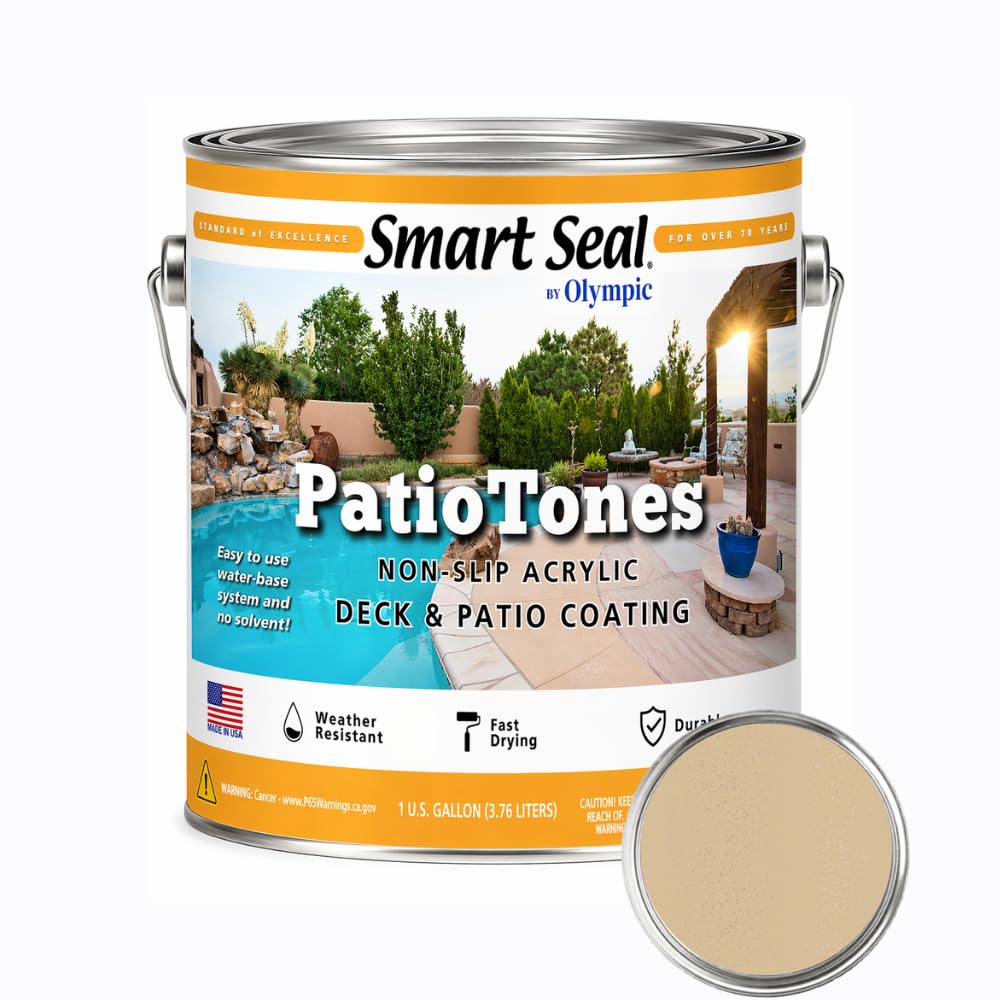
The textured patio coating homeowners reach for when the concrete has gone splotchy but a full deck replacement is off the table.
What sells this one is the finish. This is a textured coating that goes down with a real tactile grip rather than a chemically roughened surface, and a single application genuinely transforms a tired slab. Owners resurfacing a cracked pool deck worked out the value themselves: two gallons, two coats, and a surface that had been staring down quotes in the thousands of dollars. It covers splotchy concrete in a way paint alone does not, because the texture hides the flaws instead of highlighting them.
The color story needs a word of warning, because it is the most-mixed thing about the product. Champagne reads as a golden sand tone once dry, which matches Florida sand beautifully — but it can also run bright, and one buyer found it “way too bright” straight out of the can. If exact color is critical, order the manufacturer’s color card first, since their own guidance points to a physical sample rather than a screen preview. You can nudge the shade lighter with a small amount of white exterior primer in the mix.
Application is where this shines as a weekend job: wet the surface, brush the borders, roll it on, and it is not slippery when wet. Blue-collar owners say it lays down smooth and cleans up easy.
Best value for resurfacing: a textured coating that covers splotchy, cracked concrete in two coats and lays down a nonslip finish that stays grippy when wet.
Pick this when: you want the most texture per dollar on a worn concrete patio and can accept some color variance.
Skip if: you need an exact, guaranteed color match straight from the can.
4. Liquid Rubber Multipurpose Primer 1 Gallon
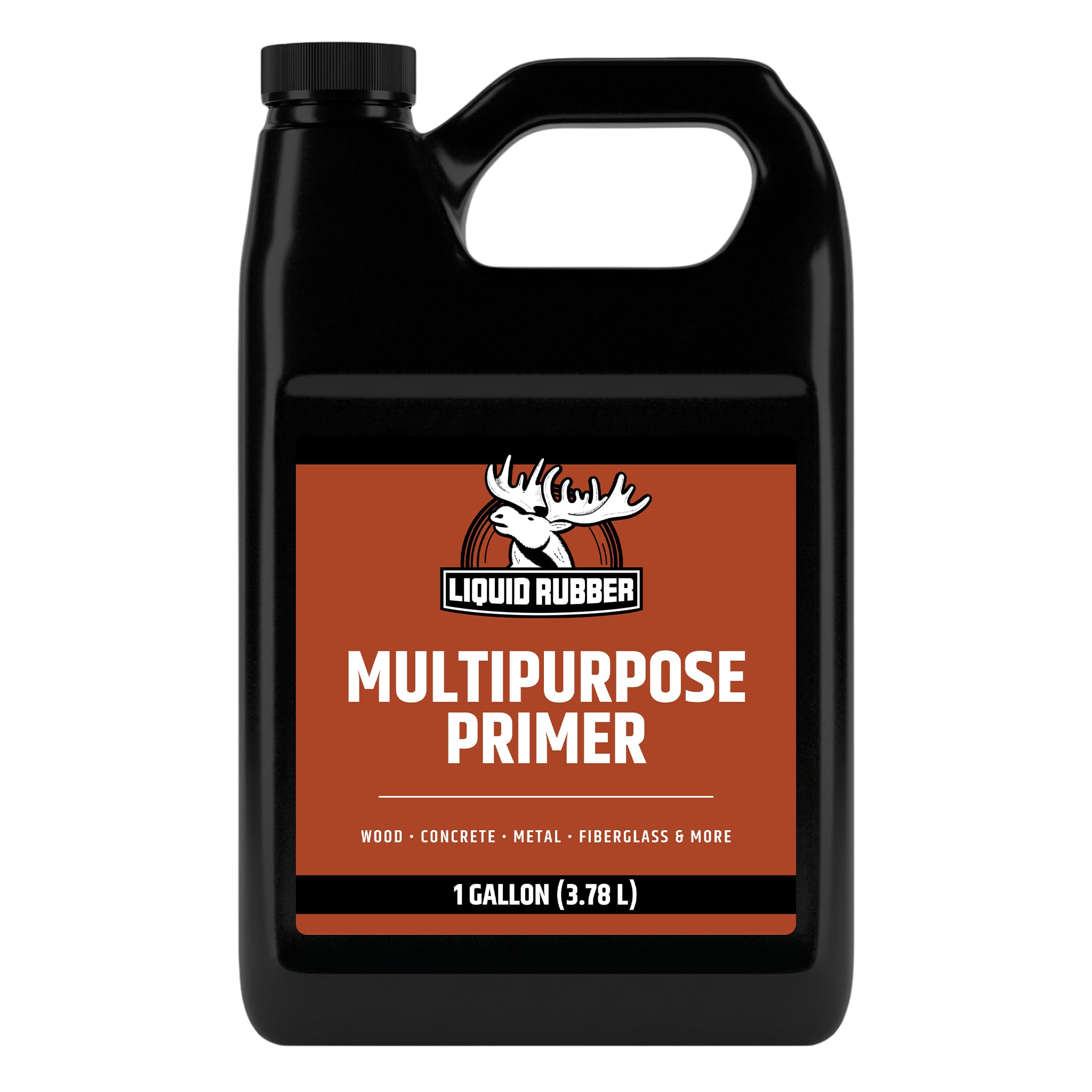
The invisible first step most failing deck coatings skip entirely — a bonding primer that gives your top coat something to hold onto.
Here is the part many homeowners miss: the reason a deck coating peels is often not the coating, it is the lack of a proper bonding layer underneath it. This is a multi-purpose primer that bonds to concrete, wood, metal, and high-density polyethylene. It clears the deck fast, too — a 2-hour full cure and a 1-hour dry time means you can prime in the morning and top-coat the same afternoon.
Coverage is the headline. At 175 to 200 square feet, this primer lays down far more area per gallon than Tuff Coat’s 45 square feet — roughly four times the reach on the same can. It applies by brush, roller, or spray, and you can put your top coat on within 24 hours once it goes tack-free. The finish cures somewhat clear, so it will not fight your top color.
Owners who used it under deck paint on a century-old porch — stripped, sanded, two primer coats, then four paint coats — report the surface still looking like new after a year. That is the value of doing the unseen step. The catch is a real one: it is water based and non-toxic with no solvents and low VOCs, which is a plus for pets and kids, but the product is genuinely thin and milky going on, and some buyers find the cost steep for what feels like a milky liquid. Do not apply it before rain or when dew is forecast.
Do not skip this step: a fast-drying bonding primer that improves adhesion and prevents blistering, so your pool deck coating actually stays put.
Buy this alongside: any roll-on deck coating, if you want the top coat to hold rather than peel.
Not for you if: your existing surface is already sound and you are recoating over a compatible coating, not bare material.
5. Tuff Coat Medium Texture Rubberized Non-Skid Deck Coating (UT-216 Sand, 1-Gallon)
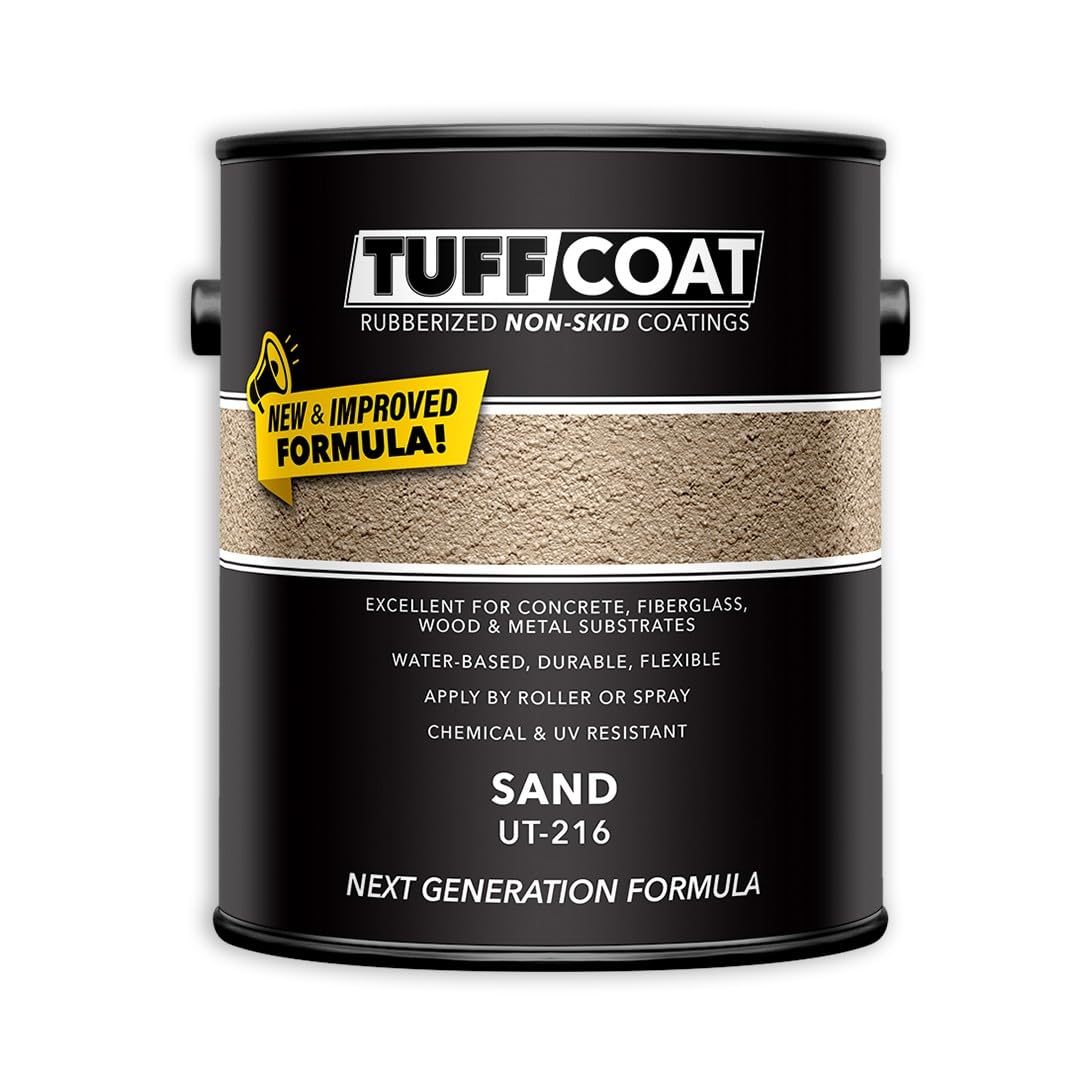
A flexible, water-based rubberized coating built to stay comfortable under bare feet without giving up grip.
Tuff Coat’s medium texture is a single-component coating that cross-links urethanes, acrylics, co-polymers, and recycled rubber granules — a blend engineered for slip resistance in both wet and dry conditions. It works in or out of water, which is why pool decks, splash pads, marina docks, and boat ramps are its natural home. It also dries to 30 to 35 mils of thickness, a real film depth that hides significant surface imperfections and beefs up existing nonskid finishes.
The coverage number is the one to plan around: 45 square feet per gallon. That is the tightest reach in this group, so a 10×10 deck takes more than two cans to do it right. It is chemical and UV resistant and comes in 17 colors, with the sand tone reflecting sun rather than absorbing it. You apply it with a Tuff Coat roller or a low-pressure hopper spray, and the matte finish hides flaws on concrete, fiberglass, wood, metal, and previously painted surfaces alike.
Two honest caveats. First, owners mention a mid-spec setting time — the manufacturer cues a 5-to-7-day cure, and rain nine hours after application removed most of a fresh dock coat, so this is not a coating for an uncovered surface heading into a wet week. Second, the sand granules mean a light scrub now and then to keep the grip alive. Get those right and it cleans easily and stays put.
The Grip And Comfort Case
- Recycled rubber granules in the mix give a barefoot-comfortable texture rather than sharp grit.
- Dries to 30 to 35 mils, a real film depth that hides concrete flaws and refreshes tired nonskid.
- Chemical and UV resistant, in 17 colors, on concrete, fiberglass, wood, metal, and painted decks.
The Planning Notes
- 45 square feet per gallon is the tightest coverage here, so order more cans than you think.
- Long cure window means rain soon after application can ruin the coat.
Go here if: you want the most comfortable barefoot finish for a splash pad, pool surround, or dock.
Look elsewhere if: your surface is exposed and you cannot guarantee a dry cure window.
6. Stone Grip Industrial Gallon Non-Slip Floor Treatment

Not a coating at all — a treatment that etches invisible grip into the tile you already have.
Everything else on this list is a layer you add. Stone Grip works the opposite way: it treats existing natural stone and tile so the surface itself becomes non-slippery, with no change to how it looks. It handles porcelain and ceramic tiles, terrazzo, quarry, slate, brick, travertine, unsealed concrete, honed marble, and granite. A single application runs about 5 to 15 minutes, and the surface is 100 percent ready to use once the solution is neutralized and washed away.
The traction result is what carries this one. Treated slippery porcelain porch steps come back near-zero slip even when wet, and the tile keeps its color and shine. Coverage is generous too — up to 75 square feet per quart or up to 400 square feet per gallon, so a gallon treats a large pool surround. A note for the acid-stained surface crowd: a natural fiber rug nearby can darken after treatment, and highly polished tile, vinyl, laminate, glass, and wood are off-limits.
The honest catch is the labor and the maintenance. This is an acid-based treatment, so it needs proper gloves and eye protection, small sections at a time, and a baking-soda-and-water neutralizer — skip that rinse and the floor can go smeary. Cleaning afterwards takes some upkeep, and one outdoor patio owner found the effects lasted only about a year on tile that stayed drenched. Treated correctly, the manufacturer’s figure is in excess of 2 years of grip.
The clever pick for tile decks: it adds real traction to slick porcelain and stone without changing color or shine, at up to 400 square feet per gallon.
Set aside an afternoon: this is labor-intensive acid work that needs careful neutralizing, and results fade faster on constantly wet surfaces.
Choose this when: your pool deck is tile or stone you want to keep looking exactly as it does today.
Not the one if: your surface is polished, vinyl, laminate, glass, painted, or wood.
7. Dyco Waterborne Acrylic Pool Paint (Ocean Blue, 5 Gallon)

A five-gallon pail of waterborne acrylic built to coat a concrete pool and its surrounding deck in one go.
This is the big-volume play. Dyco packages five gallons in a single pail, and the waterborne acrylic formula is designed to give concrete, plaster, and masonry a tile-like semi-gloss finish that resists UV, fading, peeling, cracking, staining, water, salt, and chemicals. It seals hairline cracks as it goes, and a 12-hour full cure means you are not waiting two days for it to lock in.
Coverage is enormous relative to everything else here: 1750 to 2000 square feet per gallon, which is why this is a whole-pool-and-deck coating rather than a spot fix. The acrylic is easy to apply with standard equipment, and the manufacturer has been in the pool coatings business since 1967, so the finish app is well-worn. Owners consistently praise the appearance — the kind of result that makes a tired pool read as brand new — and it goes down fast with good delivery.
Now the honest part. Longevity is mixed and worth taking seriously on a large-area job. Some customers note the paint dissolving in water within days, while others say it stays on longer than other pool paints they have tried and reseal every time they redo the pool. Bubbling and value are the recurring gripes, so prep and surface moisture matter enormously. Done right, it delivers a strong, surface-penetrating coat that covers vein cracks.
Why The Whole Pool Makes Sense
- Five-gallon pail with 1750 to 2000 square feet per gallon coverage — built for whole-pool projects.
- Resists UV, fading, peeling, cracking, staining, water, salt, and chemicals, and seals hairline cracks.
- 12-hour full cure means a faster turnaround than a 48-hour deck paint.
What To Get Right
- Longevity is genuinely mixed, with reports of dissolving and bubbling when prep or surface moisture is off.
- Value comes up as a sore point for some buyers.
The one for big areas: a five-gallon acrylic for coating a whole concrete pool and deck in one pass, with a fast 12-hour cure.
Be careful with: surface prep and moisture, since the wrong conditions are where this coating fails.
Know the Specs
Coverage: Reading It Right
Coverage per gallon tells you how far one can stretches, and it varies wildly across this category because it depends on both the product and the roughness of your surface. Here it ranges from 45 square feet per gallon on the thickest textured coating to 1750 to 2000 square feet on a five-gallon pool paint. Always plan on the recommended two-coat rate, and add a can for porous concrete, because a thirsty slab never covers like the label promises.
Full Cure Time: The Weather Rule
Full cure time is the window your coating needs before it is locked in and rain-safe. In this group it runs from 2 hours on a fast-drying primer to a full 48 hours on a deck paint. Rain inside that window is the single most common reason a fresh coat fails, and Tuff Coat’s longer cure window rules it out for an uncovered surface heading into a wet spell. Match the cure time you can live with to the forecast you can trust.
Common Questions
How do I know which pool deck coating type I need?
Will these coatings work on a treated wood deck?
How many coats does a pool deck coating actually need?
Can I apply these in direct sun or high heat?
Is a rubberized coating better than a tile treatment for grip?
What is the fastest-drying option here?
Do I need a primer before a pool deck coating?
How long does a pool deck coating last before recoating?
Are these coatings safe for bare feet and pets?
Can I use a pool deck coating to seal hairline cracks?
The Bottom Line
For most pool decks, the best pool deck coating winner is the Durabak 18 Textured because it bonds to almost any surface, lays down real recycled-rubber grip, and cures in 24 hours — the rare coating that both holds up and lets you finish the job in a weekend. If your deck is tile or stone you want to keep looking the same, reach for Stone Grip Industrial, which adds invisible traction without changing the finish. And if you are coating a whole concrete pool and its surrounding deck, the Dyco Waterborne Acrylic five-gallon pail is built for that scale. Whichever you choose, do not skip the bonding primer — it decides whether the coating holds or peels.
How we choose
We do not accept paid placement. Every pick is matched to a real buyer and a real use-case; we do not hands-on test units.
Sources
Specifications: manufacturer listings and product documentation. Review insights: verified customer reviews, as of October 2026. Pricing: not shown on this page (it changes often); check the current price via the retailer link.
As an Amazon Associate, Aappliancez earns from qualifying purchases. This does not affect which products we feature.