Disclosure: Some links in this post are affiliate links. As an Amazon Associate I earn from qualifying purchases, at no extra cost to you. Learn more
Specs are compiled from manufacturer listings and verified buyer reviews and can change over time — please confirm the key details on the product page before buying.
Brass goes dull, but the real trap is picking a polish that scrubs away the dark recessed lines that make old brass look old in a good way. The short answer: buy a liquid or cream polish you wipe on and buff off, not a gritty paste you grind in. Maas Liquid Metal Polish is the one to start with — it lifts decades of tarnish while leaving engraved detail alone, and it does it with very little rubbing.
This guide is built by comparing the manufacturers’ published specifications and the patterns across verified customer reviews, so you get each pick’s real strengths and trade-offs instead of marketing spin.
Below you’ll find polishes that handle heavy tarnish, ones that stay gentle on lacquered or plated pieces, and ones that leave a protective layer behind so the shine lasts. Choosing the right polish for brass depends on matching the formula’s strength to how delicate your piece is.
Top Picks


How To Choose The Best Polish for Brass
Most brass problems are not really polishing problems — they are formula mismatches. A polish built for heavy outdoor tarnish will eat through the thin dark lines of an engraved tray if you lean on it. A gentle jewelry polish will skate right over the green crust on a garden fixture. Match the formula to the piece and the job gets short.
Liquid, cream, or powder?
Liquids and creams spread into the fine grooves of engraved and cast brass, so they lift tarnish evenly without you having to press hard. Powders you mix with water into a paste give you more bite on stubborn spots, and you can dial the thickness yourself. If your brass has scrollwork, a repeating pattern, or lettering you want to keep dark, a liquid is the safer starting point.
Watch out for lacquer
Plenty of decorative brass ships with a clear lacquer coat that keeps it shiny in the shop. Polish cannot reach tarnish under a lacquer film, and scrubbing at it just scuffs the coating. If a piece looks slightly yellowed or flakes at the edges, you are dealing with lacquer, not tarnish — you would need to strip the coat before any polish can work.
Does anti-tarnish protection matter?
It does if you hate re-polishing every few months. Formulas that leave a protective film behind slow the tarnish from coming back, which is the difference between a seasonal job and a weekly one. The trade-off is that a protective layer can feel slightly slick for the first day, so give it time to settle before you handle the piece.
Side-by-Side Comparison
| Model | Best For | Form | Size | Weight | Amazon |
|---|---|---|---|---|---|
| Maas International Liquid Metal Polish★ Best Overall | Best Overall | Liquid | 8 fl oz | 9.6 ounces | Amazon |
| Harold Import “Red Bear” Copper & Brass PolishDetail-Safe Powder | Detail-Safe Powder Mix | Powder | 6.34 Ounce | — | Amazon |
| Brasso Liquid Metal Brass Copper Chrome Polish | Fast Wipe-On Tarnish Lift | Liquid | 175Ml | 7.9 ounces | Amazon |
| Weiman Wright’s Silver Cleaner and Polish | Ammonia-Free Multi-Metal | Liquid | 7 Ounce (Pack of 2) | — | Amazon |
| Twinkle Brass And Copper Cleaning Kit | Cookware & Heavy Tarnish | Cream | 3-pack | 1.12 pounds | Amazon |
Detailed Reviews
1. Maas International Liquid Metal Polish, 8-Ounce
Our pick — 4.5+★ from 700+ verified ratings; the strongest balance of quality and price.
The wipe-on, buff-off liquid that takes a century of tarnish with it.
If your brass is old, ornate, or covered in decades of brown, this is the place to start. The 8 fl oz bottle holds a liquid you spread thin, rub gently, and wipe away — no heavy scrubbing required. What wins people over is raw lifting power: removing tarnish is the thing it does best, and cleaning stubborn metal runs a close second. It also leaves a strong anti-tarnish corrosion inhibitor behind, a protective film that slows the brown coming back. Owners of 150-year-old church brass candle holders report that it’s wipe on, gentle rub, wipe off, and a beautiful shine.
The 9.6-ounce bottle carries a little more product than you might guess for the size, and a small dab covers a lot of surface, so it stretches across big jobs. It dries fast with very little odor, which matters when you are polishing indoors. Unlike the Brasso can below, this is a squeeze-and-spread liquid rather than a metal-tin pour, and it holds 1.7 ounces more by weight than that can — 9.6 ounces versus 7.9. A jeweler’s-eye detail from the review pages: the liquid version applies and wipes off faster than a paste with equal cleaning power, and it does the job without a toxic smell.
Here is the honest catch. Value is the one topic where owners split — a chunk of reviewers find it on the pricey side for the volume, even while calling it effective. The other snag is shipping: an occasional bottle arrives leaking in transit, which is a packaging issue rather than a formula problem. Neither changes what the product does on brass. If you want the easiest, most protective result and don’t mind paying a little more per ounce, this is the pick.
What earns it top spot
- Leaves an anti-tarnish corrosion inhibitor film that slows the brown returning
- Dries fast with very little odor for indoor jobs
- Wipes on and buffs off with minimal elbow grease
- 8 fl oz goes far — a small dab covers a big surface
Where it asks more of you
- Cost per ounce reads high next to powder-style options
- Glass-clean results still need some rubbing on heavy tarnish
- Occasional leaks in shipping
Reach for this if: you want the most protective, easiest liquid for antique brass, engraved trays, or a whole shelf of candle holders.
Look elsewhere if: you polish rarely and want the lowest cost per job — the powder pick below stretches further.
2. Harold Import 1734 “Red Bear” Copper & Brass Polish
A powder you mix yourself, so you decide how much bite each piece gets.
For a piece with scrollwork or lettering, start with the number that matters: this is a 6.34-ounce powder, not a ready-made liquid. You shake some into water, stir it into a paste, and sponge it on. That control is the whole point — on a large brass table top with a repeating intaglio design, the polish clears the tarnish across the flat surface while the recessed lines stay dark, which is exactly the two-tone look collectors want. It rinses clean rather than smearing, and it is completely washable, so you can sponge it off and buff without residue.
What owners praise most is effectiveness, and the second most-praised thing is the shine it leaves. It brightens old brass without hard scrubbing — a genuine relief on a bed frame or a heavy tray. It also carries a light pine scent rather than a harsh chemical smell, and the 180-gram size lasts a long while because a little paste goes far. Speed earns mentions too: buyers report a three-foot-diameter solid brass top coming up in under 30 minutes.. Unlike the Twinkle cream below, you are mixing this one fresh each time, so it never dries out in the jar.
Its value is the spot where buyers divide — the tin is small, and heavy users go through it faster than a big liquid bottle. The other thing to know: it is a paste, so it wants a damp cloth and a rinse step, which is more handling than a wipe-on liquid. Neither is a fault; it is the nature of mixing your own.
The two-tone keeper: fine for engraved, patterned, or recessed brass where you want the low spots to stay dark and the raised surface to gleam.
Trade-off to expect: small tin, paste handling, and a rinse step — fussier than a squeeze bottle, but gentler on detail.
Best for: intaglio and patterned brass, plus anyone who wants to control the strength of the paste.
Think twice if: you want one-step wipe-on speed with nothing to mix or rinse.
3. Brasso Liquid Metal Brass Copper Chrome Polish 175Ml

The metal-can classic that erases heavy, weathered tarnish in seconds.
Some brass problems are urgent — house numbers that have gone green, bar footings so brown you were about to replace them. That is where this liquid earns its keep. You apply it, wait a few seconds, and wipe the residue away; the tarnish comes with it. The 175Ml metal tin holds a liquid that pours and spreads, and the whole job is far less work than grinding a paste into a corner. It is also a lighter carry than the Maas bottle above at 7.9 ounces versus 9.6. Cleaning performance is what owners reveal most about this one, with effectiveness right behind it.
The shine result is the real payoff — heavily tarnished footings come back looking almost new, and dull house numbers read sharp again. This is the “old formula in the metal can” version, and the people who grew up with it say it still removes weathered tarnish the way it did decades ago, some call it more effective than the newer plastic-bottle Brasso.. That consistency is why it stays in toolboxes.
The catch is elbow grease on the worst crust — a few seconds of dwell handles light tarnish, but stubborn green may want a second pass. It is also a liquid that needs a wipe-down, not a rinse-off. Fair for the speed you get back.
Why it stays in toolboxes: the dwell-and-wipe rhythm makes it the fastest way to knock out heavy, weathered tarnish on exterior brass and hardware.
Set your expectation: the heaviest crust can need a second application, and it wipes clean rather than rinses.
Made for: door hardware, bar rails, house numbers, and any brass with thick, outdoor tarnish you want gone in a hurry.
Pass on it if: you are polishing delicate engraved detail where a slower, gentler liquid suits better.
4. Weiman Wright’s Silver Cleaner and Polish 7 Ounce

The gentle ammonia-free formula for brass mixed in with silver and gold.
If your brass sits in a drawer full of silver, gold, and plated pieces, you want one polish that will not attack the softer metals nearby. This is that polish — an ammonia-free liquid sold as a pack of two 7-ounce bottles, formulated for all silver, silver plate, jewelry, antique silver, flatware, pewter, chrome, porcelain, and, of course, brass, copper, and aluminum. The non-scratch formula cleans, shines, and restores without grinding, and it leaves an anti-tarnish coating behind so the shine holds longer between polishes.
Cleaning performance is what owners reveal most, and effectiveness is close on its heels. The easy-on, wait, wipe-off rhythm is the draw — one owner lets it sit about 5 minutes, wipes it off, and reports it looks new.. It handles badly oxidized pieces and shines up silver-plated brass instruments without a fight. The lack of a bad smell matters here; an ammonia-free formula keeps the room breathable during a long polishing session.
The catch is that it is a generalist. On a piece of solid brass with deep, heavy crust, it takes longer than a dedicated brass-only liquid, and the two-bottle pack is aimed at high-volume silver polishers more than one-off brass jobs. It also rewards patience — the longer you let it dwell, the less you rub.
Pick this when: you keep mixed metals in one cupboard and want a single gentle bottle for silver, brass, copper, and plated pieces together.
Skip the shortcut if: your brass is heavily tarnished and you want the fastest possible lift — a dedicated brass formula gets there quicker.
5. Twinkle Brass And Copper Cleaning Kit
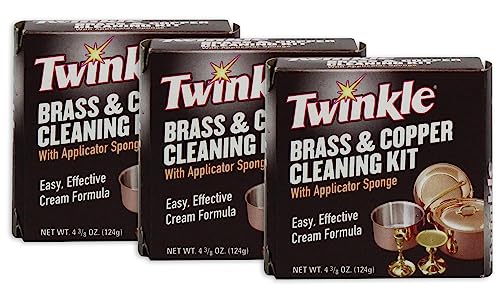
The unscented cream that brings a forty-year-old copper pan back to a mirror.
Copper-bottom pots and pans are the hardest brass-and-copper test there is — heat-cooked stain, blackened edges, and years of kitchen grime baked on. This cream polish is built for exactly that. It is a non-scratch formula that dissolves tarnish and cooked-on stains, and it is unscented, so it will not perfume the kitchen. The 3-pack of cream polish is aimed at regular use on cookware and decorative pieces, and it also suits jewelry without damaging delicate finishes.
Quality is what owners reveal most about this one, and shine is next. The kitchen scene is where it shines: rub it on a copper bottom and watch it come back without a hard scrub, even on copper pots 40+ years old.. It works the same way on hard-to-polish copper like Revere ware, and long-time users go out of their way to buy it when it is not stocked nearby.. No batteries, no fuss — just rub on, buff, and rinse.
The honest caveat is durability. Opinions split on how long a tub stays usable, and some report a cream that dries out into an unusable state if it sits too long — so this is best for people who polish cookware regularly, not for a once-a-year jar you stow in the back of a cupboard. Value gets mixed marks too, though the 3-pack softens that.
Where it earns its keep: kitchen copper and brass — Revere ware, pot bottoms, and cooked-on stains that need a non-scratch cream and no hard scrubbing.
Keep it in rotation: the cream can dry out with long storage, so this suits regular users more than occasional ones.
Turn to this if: you polish copper cookware on a schedule and want a gentle, unscented cream that will not harm the finish.
Look past it if: you only polish a few brass items a year — the cream is better used fresh than stored long.
Know the Specs
Form: Liquid, Cream, or Powder
The form decides how the polish reaches the metal. Liquids and creams spread into grooves and wipe off with a cloth, so they suit engraved and intricate brass. Powders you mix with water give you control over thickness and bite, so they handle heavy spots. A cream sits between the two — spreadable like a liquid but with more body to grab tarnish.
Anti-Tarnish Protection
Some formulas leave a thin protective film after you buff. That film is the anti-tarnish layer — it slows the chemical reaction that turns brass brown again. It does not stop tarnish forever and it means an extra day of slightly slick handling, but it is the difference between polishing seasonally and polishing monthly. Polishes without it need re-doing more often.
Non-Scratch and Washable Formulas
Non-scratch means the abrasive particles are fine enough not to gouge the metal or strip plating. Washable means you can rinse the residue off with water instead of only wiping. On plated or lacquered brass, both matter — you want gentle particles and an easy rinse so you do not grind away the finish while chasing tarnish.
Scent and Fumes
A strong chemical smell matters when you polish indoors. Ammonia-free and unscented formulas keep the room breathable and suit long sessions. Low-odor liquids dry faster with less lingering smell. If you polish in a small room or near food, favor an unscented or ammonia-free label and ventilate anyway.
Common Questions
Can I use silver polish on brass?
Will polish remove the dark lines in engraved brass?
How do I know if my brass is lacquered?
What is the difference between a liquid and a powder brass polish?
Does an anti-tarnish polish actually keep brass shiny longer?
Can I use brass polish on copper-bottom pots and pans?
Is it safe to use ammonia-free polish on jewelry and mixed metals?
Will a cream polish dry out if I store it a long time?
How much rubbing does brass polish usually need?
Do I need to rinse brass after polishing?
The Bottom Line
For most people, the polish for brass winner is the Maas International Liquid Metal Polish, because it combines heavy lifting power with an anti-tarnish film that keeps brass shiny longer, all with an easy wipe-on, buff-off routine. If you have engraved or patterned brass and want the recessed lines to stay dark, reach for the Harold Import Red Bear powder paste you mix yourself. And for copper cookware with baked-on kitchen stain, the Twinkle cream is the one to keep by the stove. Whichever you pick, match the formula’s bite to the delicacy of the piece.
How we choose
We do not accept paid placement. Every pick is matched to a real buyer and a real use-case; we do not hands-on test units.
Sources
Specifications: manufacturer listings and product documentation. Review insights: verified customer reviews, as of October 2026. Pricing: not shown on this page (it changes often); check the current price via the retailer link.
As an Amazon Associate, Aappliancez earns from qualifying purchases. This does not affect which products we feature.