Disclosure: Some links in this post are affiliate links. As an Amazon Associate I earn from qualifying purchases, at no extra cost to you. Learn more
Specs are compiled from manufacturer listings and verified buyer reviews and can change over time — please confirm the key details on the product page before buying.
You want a soft landing under every step, not a shoe that squishes out under your arch by mile two. The picks below are ordered by the one thing that actually matters here: whether the foam stays plush through a full day on your feet without turning your stride wobbly. Some are built for long easy runs, some are built for twelve-hour shifts on concrete, and a couple are built for recovery days when your legs want to be babied.
This guide is built by comparing the manufacturers’ published specifications and the patterns across verified customer reviews, so you get each pick’s real strengths and trade-offs instead of marketing spin.
Soft foam is easy to make and hard to make stable, which is why so many cushion-heavy shoes wobble. Below you get the full spec picture plus the honest trade-offs on stack height, weight and outsole durability before you commit. Read on for the plush running shoes that keep their shape, not just their softness.
Top Picks


How To Choose The Best Plush Running Shoes
Plush means the foam compresses under your weight and springs back, rather than resisting your foot like a firm plank. The trap most first-time buyers fall into is chasing the softest step-on feel in the store. A shoe that feels like a marshmallow in the first ten seconds often bottoms out once you put real miles on it.
Start with the foam, not the marketing name
Midsole foam is the whole ballgame. Plain EVA (ethylene vinyl acetate, the standard foam used in most running shoes) is light and cheap but packs down over time. Blended and infused foams — ASICS FF BLAST PLUS, Brooks’ DNA Loft and nitrogen-infused blends, New Balance Fresh Foam — are engineered to hold their bounce longer. Look for a named foam on the spec sheet, because a shoe that just says “cushioned midsole” is usually hiding generic EVA.
Decide how much stack you can actually handle
Stack height is how much material sits between your foot and the ground. More stack equals more plushness, but it also raises your center of gravity. That is why a high-stack shoe without a wide base or a heel stabilizer feels tippy on corners. If you run on twisty paths or lift weights in your shoes, favor a moderate stack with a firm heel counter. If you mostly walk or log easy straight-line miles, go tall and soft.
Check the outsole before you fall for the upper
The outsole is the rubber on the bottom, and it is the first thing to wear out on plush shoes because soft midsoles flex more. Rubber coverage at the heel and forefoot — ASICS AHARPLUS, Goodyear Performance Outsole, full-coverage blown rubber — is what keeps a cushy shoe alive past a few hundred miles. A plush shoe with a foam-only outsole is an indoor or treadmill shoe in disguise.
Match the toe box to your foot shape
A plush upper sounds universally good, but width is where plush shoes split buyers. Some run wide with generous toe room for bunions and hammer toes, and some run narrow through the midfoot. If you wear custom orthotics, check whether the insole is removable before you buy.
Side-by-Side Comparison
| Model | Best For | Stated Weight | Midsole / Cushion Tech | Outsole / Grip | Amazon |
|---|---|---|---|---|---|
| On Men’s Cloudmonster Sneakers★ Best Overall | All-day standing and easy daily miles | 1 lb | CloudTec pods with Speedboard midsole | — | Amazon |
| ASICS Women’s Gel-Cumulus 27Top Everyday Pick | Daily 3-4 mile runs with roomy toe box | 1.44 lb | FF BLAST PLUS foam with PureGEL | FLUIDRIDE outsole | Amazon |
| Brooks Women’s Trace 4Best for Gym Days | Gym classes and all-day walking | 1.5 lb | Neutral cushioned midsole | — | Amazon |
| Skechers Max Cushioning Glide Step | Hands-free slip-on for long shifts | 2.1 lb | Max Cushioning with Glide-Step rocker | Goodyear Performance Outsole | Amazon |
| Brooks Men’s Adrenaline GTS 25 | Stability plus softness for longer runs | 1.5 lb | Cushioned midsole with GuideRails support | — | Amazon |
| ASICS Men’s Gel-Cumulus 27 | Long shifts and daily jogging | — | FF BLAST PLUS foam with PureGEL | FluidRide outsole | Amazon |
| ASICS Unisex SUPERBLAST 2 | Long-distance training with bounce | 1.44 lb | FF BLAST PLUS plus FF BLAST TURBO | AHARPLUS heel plug rubber | Amazon |
| Brooks Men’s Glycerin Max 2 | Recovery days and joint protection | — | High-stack max cushioning midsole | — | Amazon |
| New Balance Women’s Fresh Foam X More V5 | Plush all-day support for high arches | 2.1 lb | Fresh Foam X cushioning | — | Amazon |
Detailed Reviews
1. On Men’s Cloudmonster Sneakers
Our pick — 4.5+★ from 2,500+ verified ratings; the strongest balance of quality and price.
The big-pod cushion that turned a Swiss running label into a nurse-and-teacher favorite.
If your day is eight hours of standing on something hard, the Cloudmonster is the pick that keeps coming up. It weighs 1 pound, which makes it the lightest shoe in this group by a wide margin — the Skechers slip-on on this list checks in at 2.1 pounds, so you are carrying roughly half the heft with each stride. The cushioning comes from CloudTec pods (individual hollow rubber pockets under the foot that compress as you land) paired with a Speedboard midsole plate, and the result is a step that feels soft without going mushy.
The upper is a breathable anti-microbial mesh with glued reinforcements, so it keeps air moving over long shifts and holds its shape around the sides. The manufacturer lists a plush sockliner as part of the build, and that liner is genuinely part of the comfort story — the whole shoe is tuned to let you stand and walk for hours without chasing you into a firm ride. Solid color range, too, if you want a shoe that looks as casual as it feels.
Here is the honest part: longevity is the weak link. The recurring complaint in owner feedback is the back heel separating and the shoe breaking down after about five months of heavy daily wear, and at least one reviewer noted holes at the toe flex point after six months. Treat it as a comfort-first shoe for standing-heavy days rather than a hundred-mile-a-month trainer. On the durability-versus-plushness ledger, this one leans hard into plush.
What Earns Its Spot Up Top
- At 1 pound it is the lightest shoe here — the Skechers slip-on weighs 2.1 pounds, so your legs drag less on long days.
- CloudTec pods soak up concrete floors and theme-park miles: full days at Disneyland at roughly 15 miles a day, with no soreness reported.
- Breathable anti-microbial mesh keeps the upper fresh through back-to-back shifts.
- Wide color selection and a distinctive chunky silhouette buyers single out for looks.
Where It Gives Ground
- Heavy daily users report the rear heel breaking apart around the five-month mark — budget for replacement.
- Soft pods flex, so the toe area can wear through at the flex crease.
- Not the value play if you pay full price and walk everywhere.
Bring it into rotation if: you stand or walk on hard floors all day, want the lightest plush option here, and want a sneaker that works with jeans.
Look elsewhere for: a shoe that survives a year of pavement miles — this one is a comfort specialist, not a tank.
2. ASICS Women’s Gel-Cumulus 27 Running Shoes
ASICS calls this its lightest, most padded Cumulus ever — and the toe box earns its keep.
The Gel-Cumulus 27 is aimed squarely at the runner or walker who wants more cushion underfoot than a standard daily trainer gives. It runs on FF BLAST PLUS foam (a lighter, more resilient midsole foam) combined with a FLUIDRIDE outsole, and it adds PureGEL at the heel to soften landing impact. The listed weight is 1.44 pounds, so it stays in the lighter half of this group rather than turning into a brick.
What buyers keep landing on is the toe box. The most-praised thing about this shoe by a distance is how it fits, and the most-repeated concrete win is generous room up front. People with hammer toes and a wider forefoot describe the shoe as one of the few that does not pinch across the front of the foot. If you slide a custom orthotic in, the insole is removable, which is a small spec that decides the purchase for plenty of buyers.
The trade-off is that this is not the plushest or the most stable shoe at its tier. Owner feedback splits cleanly on cushioning — some describe a cloud-foam ride, others find it thin and springy compared to Brooks or New Balance foam. Heel fit also runs narrow against a wide toe area, so it can feel like two different shoes on one foot. Go in expecting a balanced, tidy ride rather than a max-cushion mattress.
Fit is the headline: a wide, forgiving toe box with a removable insole is the reason people with orthotics and hammer toes keep buying this model. The shoe is built around fit first and cushioning second.
Where it splits the room: the cushioning is the mixed variable. Some feet read it as plush foam; firmer-footed runners read it as flatter than the Cloudmonster or the New Balance Fresh Foam.
The right call when: your forefoot needs room and you want a light daily trainer that takes an orthotic without complaint.
Think twice if: you want the deepest cushion available — a couple of shoes above this one stack higher.
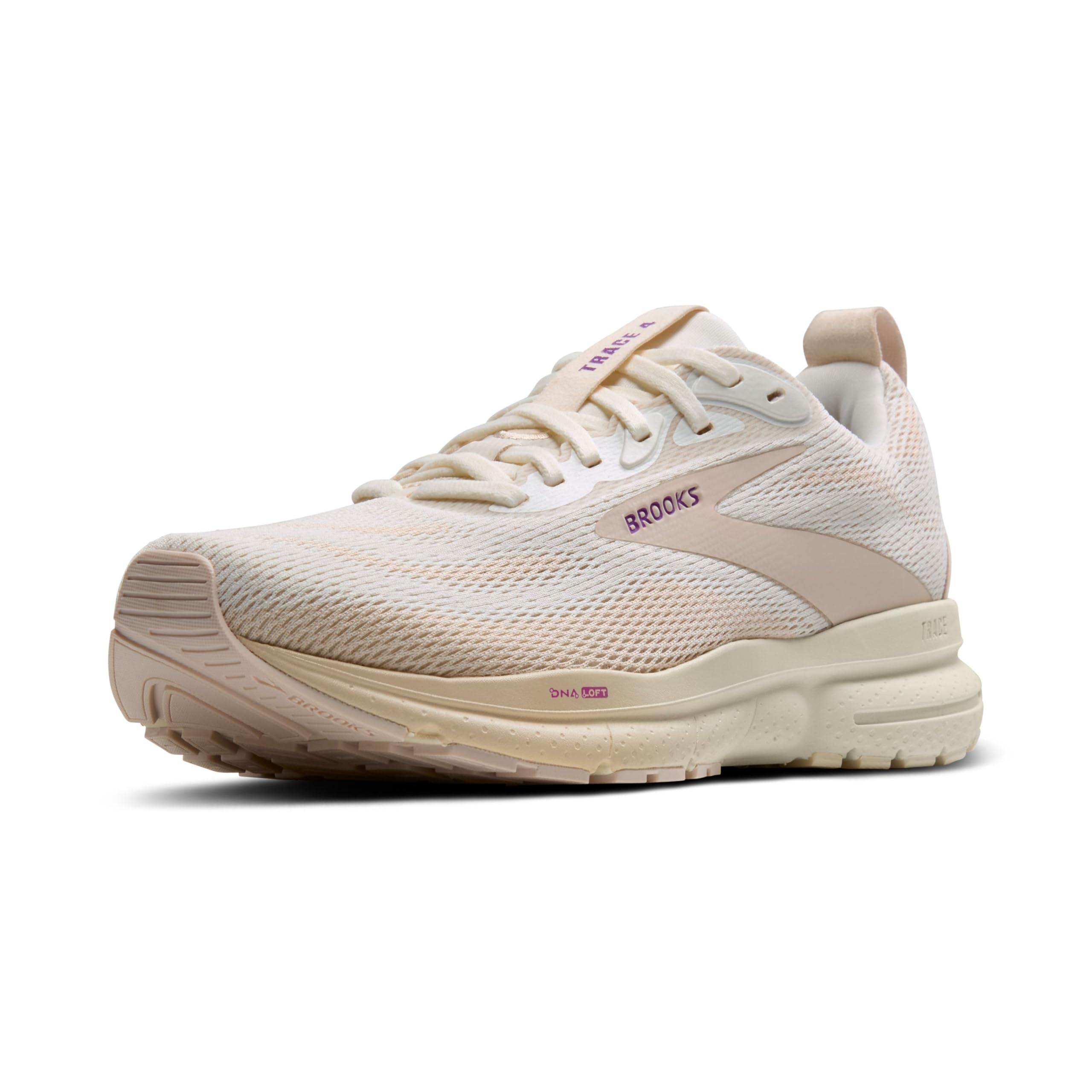
3. Brooks Women’s Trace 4 Neutral Running Shoe
A soft, quiet neutral shoe that shines in HIIT classes and on walking shifts — not on the track.
Trace 4 is a neutral shoe (meaning no built-in stability posting to correct pronation) with a plush collar and a roomy front. The package measures 13 x 9 x 6 inches against the Cloudmonster’s 13.7 x 9.65 x 4.88 inches, so it is a slightly longer, taller boxed shoe. At 1.5 pounds it sits in the middle on weight, heavy enough to feel planted, light enough to move in.
Where this shoe earns repeat buyers is in the gym, not on the road. Step aerobics, HIIT and boot-camp circuits get good cushioning and support without a clunky feel underfoot, which is a hard balance to strike. Walkers put in ten-hour days in these. Buyers with knee problems that rule out most shoes call Brooks their only workable brand, and the wide width plus true-to-size fit suit more foot shapes than most.
Two buyers’ notes are worth hearing before you order. The cushioning is mixed in owner feedback — some describe it as soft, others find very little cushion in the sole. And the toe box skews wide: one comparison against the previous Trace 3 called the new shape “like clown shoes,” and a tighter lace-up can crumple the upper. The included laces are short for heel-lock lacing, so plan on swapping them if that is your tie-down method.
Why It Keeps Getting Bought
- Built for group fitness: cushioning and support hold up through HIIT, step aerobics and boot camp without a clunky feel.
- Plenty of front-of-shoe room for toes, and a wide width option.
- Quiet on hard floors and comfortable straight from the box.
- True to size, so your usual number works.
The Caveats Worth Knowing
- Cushioning reads thin to some feet — not a max-cushion shoe.
- The toe box runs wide; runners who want a snug forefoot should size carefully.
- Stock laces are on the short side for heel-lock lacing.
The match made here: group fitness classes, long walking shifts, and anyone who wants a neutral Brooks at a friendlier tier.
Keep shopping if: you are a dedicated distance runner chasing a pillowy forefoot — this one sits on the firmer side.
4. Skechers Max Cushioning Glide Step
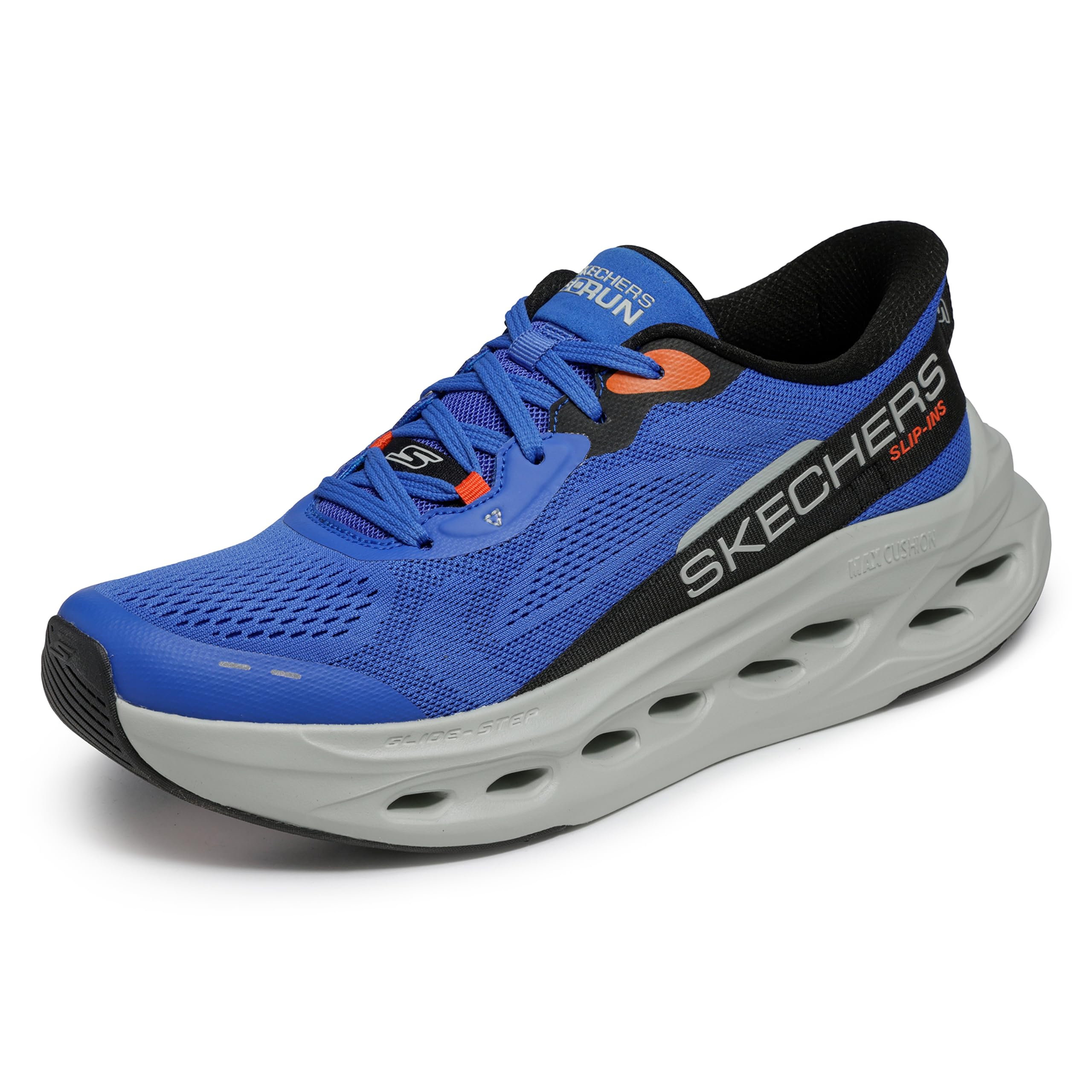
Step in without bending over, then walk eight hours on concrete without foot fatigue.
The spec that defines this shoe is the Heel Pillow — a padded collar built so your heel slides in without you touching a lace. You still get adjustable laces for lockdown, but the whole design assumes you want to put your shoes on standing up. Underfoot, Max Cushioning pairs with a Glide-Step midsole that rocks you forward, so walking gets a rolling assist instead of a flat push.
At 2.1 pounds it is the heaviest shoe on this list — the On Cloudmonster is 1 pound, so this carries double. That weight buys you a lot of material underfoot, a breathable Air-Cooled Goga Mat insole, and a Goodyear Performance Outsole that is the toughest rubber sole in this group. For nurses, trainers and anyone on their feet all shift, that combination lands. People describe walking on pillows and being free of foot fatigue after eight-hour shifts.
Two things to weigh. First, the laces are real laces, not decorative — one older buyer flagged them as a trip worry, though they stayed tied all day. Second, the raised sole takes getting used to, and the shoe is heavy enough that you will notice it. If you care more about slipping shoes on in ten seconds than about shaving weight, this is the pair.
Wins the convenience vote cold: the Heel Pillow slip-in design is the reason personal trainers and shift workers buy it — you are in the shoe without bending over, and the Goodyear outsole outlasts the foam-only soles here.
Price of admission: 2.1 pounds is the heaviest here, roughly double the On Cloudmonster’s 1 pound, so speed work is off the table — this is a walking and standing shoe.
Built for you when: you want maximum underfoot comfort and a hands-free entry, and you are mostly walking or standing.
Pass it up if: you want a running shoe — the weight and raised sole make it a poor training partner for anything fast.
5. Brooks Men’s Adrenaline GTS 25 Running Shoe
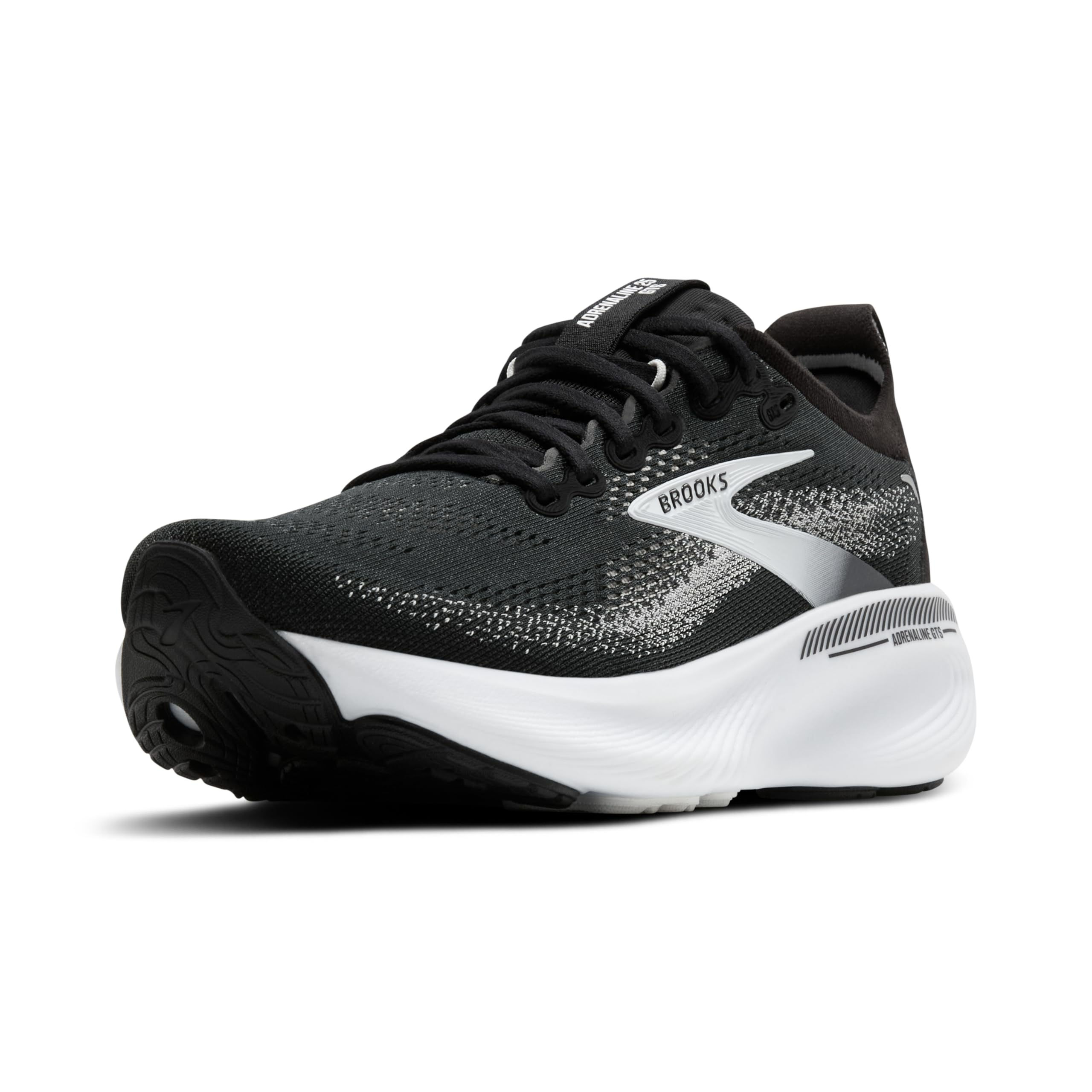
Soft underfoot, held steady by GuideRails — the plush shoe for people who overpronate.
Plush cushioning and stability are usually at war. The Adrenaline GTS 25 is where Brooks tries to end that war — a softer, more cushioned midsole than the version before it, wrapped around GuideRails support (guide rails that keep your knee tracking without forcing a correction). It weighs 1.5 pounds, the same as the Trace 4 above, so it is not light, but it is not lumbering either.
The spec that earns this shoe its place is arch support combined with a cushioning feel that buyers describe as incredibly soft without feeling tight or squishy. That is a hard combination to find. Runners logging five pavement miles three times a week report no knee or ankle pain. One owner working eight-to-twelve-hour shifts is still fine at the end of the day. Wide feet fit too — one owner wearing the widest size with a 10cm forefoot reported a clean fit after two weeks with no internal deformation.
The honest catch is sizing and value. Several buyers report it runs small and recommend going up a half size, and the price commentary is real — it is a step up in budget for a shoe that is still using a foam-only outsole in places. Comfort is the win here, and it is a big one. If you want a soft ride that does not roll your ankle on tired legs, this is the shoe.
The Case for the GTS 25
- GuideRails work with the soft midsole so tired legs stay stable without a hard correction.
- Arch support paired with a soft, non-squishy cushion — a rare combination that buyers praise hard.
- Survives 8-12 hour workdays and 5-mile runs three times a week without pain.
- Wide widths actually fit wide feet.
What You’re Trading Away
- Runs small — size up a half size, according to owner feedback.
- The lace-up can be snug on the upper, which annoys style loyalists who want a slip-on.
- Tier-appropriate price means value is a question for buyers on a tight budget.
Pick it if: you want soft landings but need the shoe to keep you steady when your form goes ragged late in a run.
Look past it if: you need a rocker that rolls you forward or want to save at the entry tier — the Brooks Trace 4 covers the cheaper neutral ride.
6. ASICS Men’s Gel-Cumulus 27 Running Shoes
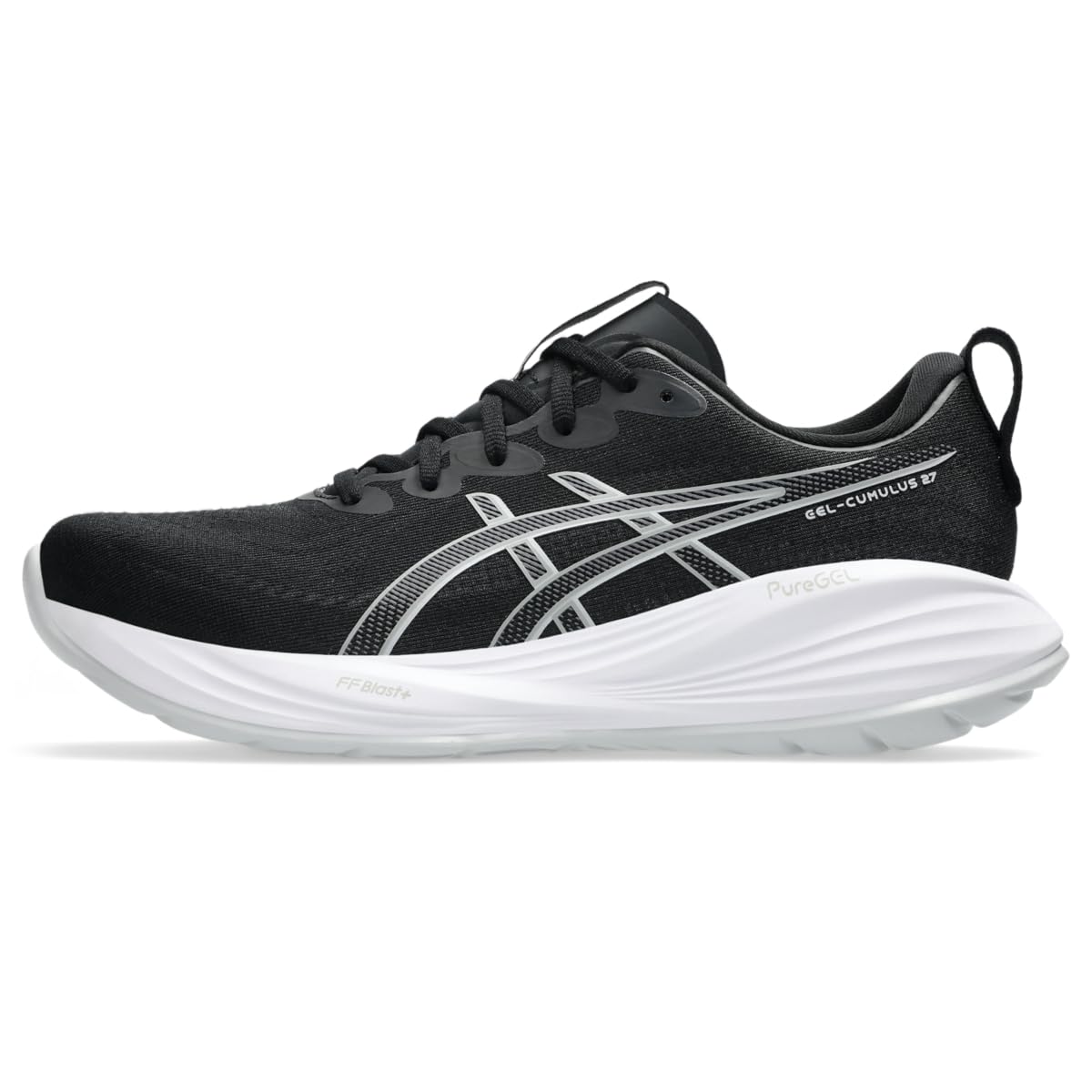
The men’s cut of ASICS’ padded daily trainer, tuned for healthcare shifts and easy jogging.
This is the same Gel-Cumulus 27 platform as the women’s shoe above, but the numbers land differently: FF BLAST PLUS foam for lightweight rebound, PureGEL at the heel to soften impact, and a FluidRide outsole. What stands out in owner feedback is the balance — owners mention good cushioning without it being overdone, and excellent heel stability, which is a spec that matters when you are on your feet eight to ten hours.
Fit is the second thing that keeps coming up. The shoe runs true to size with extra toe room, and there is an extra-wide version that customers note adds significantly more padding through the forefoot. One woman with wide, flat feet who dislikes heavy arch support found her fit in a men’s 8 extra wide. Healthcare workers on thin carpet over concrete report enough cushion for 8-10 hour shifts, and the break-in is short — about a week.
The reason to hesitate is the outsole. Owner feedback on durability is split, with some buyers saying the shoe will not last past 300 miles. One long-walk reviewer called the wet traction abysmal with near-zero tread, and the tread is foam rather than rubber, which limits its life on pavement. Treat it as an indoor or dry-weather daily shoe and it is a lovely, cushioned ride.
Why shift workers love it: heel stability plus cushioning that is present but not overdone means you can stand for a long day without your foot rolling inward on tired legs. The extra-wide option is a genuine difference-maker for wide feet.
The honest ceiling: the rubber coverage is the weak spot — a foam-led tread and near-zero grip wet means outdoor longevity is limited compared with the Goodyear-soled Skechers above.
Reach for it if: your day is long on your feet and your weather is dry, or you want an extra-wide daily trainer with a stable heel.
Skip the outdoor miles if: you log hard pavement runs in the rain — the tread will not hold up.
7. ASICS Unisex SUPERBLAST 2 Running Shoes
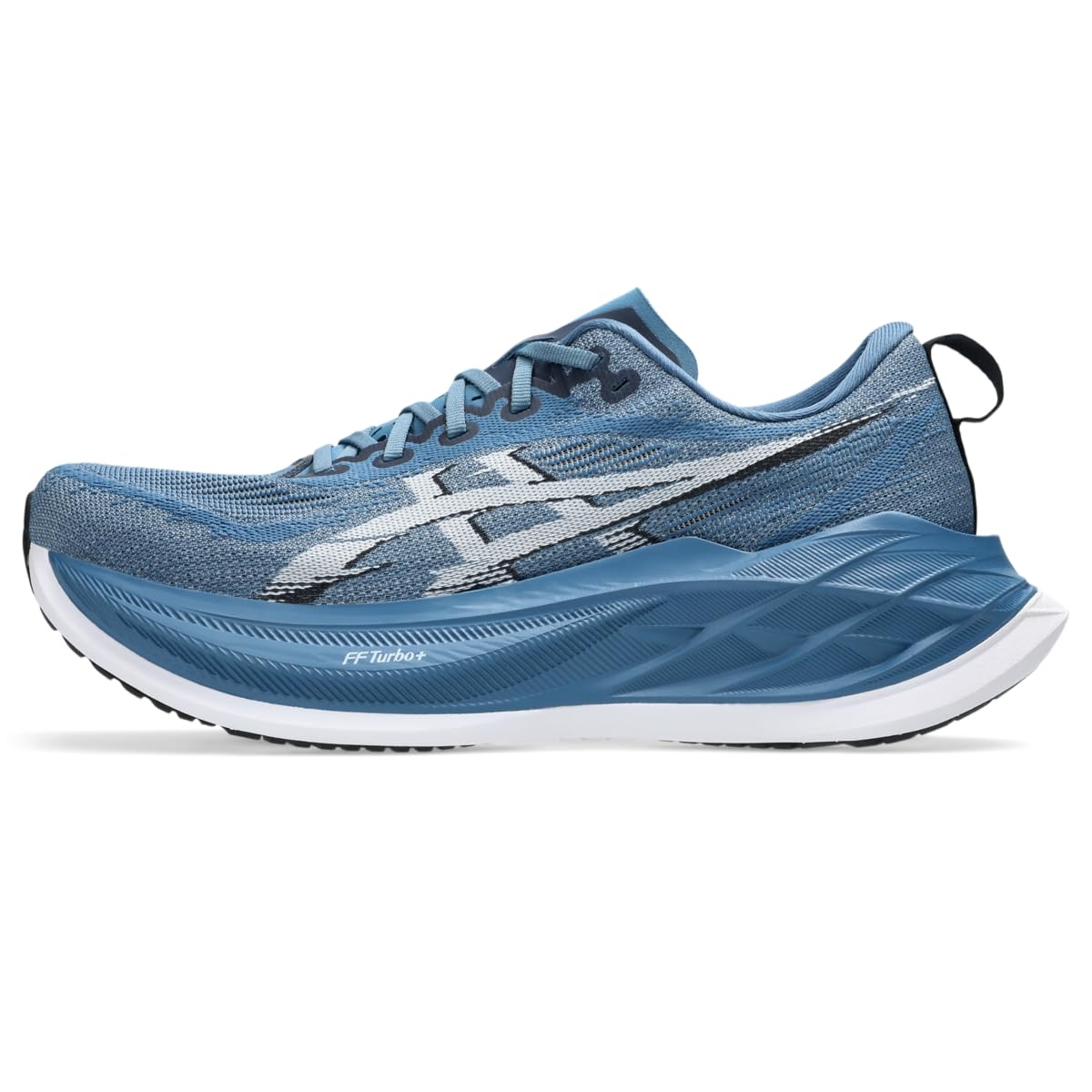
Race foam in a training shoe — the rebound is the whole reason this one exists.
The SUPERBLAST 2 is a unisex trainer built around two foams: a top layer of FF BLAST PLUS for lightweight impact absorption and a bottom layer of FF BLAST TURBO, the same foam family used in ASICS’ METASPEED racing shoes. The combination produces a bouncy, energized ride rather than a soft sink-in. At 1.44 pounds it stays light for how much foam sits underfoot, and the trampoline-inspired outsole design adds a springy return as you push off.
Comfort is the runaway leader in buyer feedback, and cushioning is the second thing buyers name — the midsole is the star of the show. Long-distance runners find it holds up mile after mile: one buyer reports the shoe feeling better than new at over 120 miles, another has roughly 500 miles on a pair and reports only dirt. The engineered mesh upper breathes, and a gusseted tongue wing holds the midfoot snug without the tongue sliding.
What you are accepting: the heel wobbles slightly on direction changes, which is the price of the foam height, and the fit is the coin-flip variable — some buyers find them true to size, others find them too big. If stability is a hard requirement because of knee issues, the Brooks Adrenaline GTS 25 above keeps you steadier.
What Makes It a Trainer-Compromise Pick
- Twin-foam midsole with race-derived FF BLAST TURBO makes this the bounciest shoe on the list.
- AHARPLUS heel plug rubber is placed where outsoles wear fastest.
- At 1.44 pounds, it is light for the cushioning it delivers.
- Holds up over hundreds of miles, with cushioning reported to improve over time.
What to Accept First
- Slight heel wobble on sharp direction changes — less stable than a GuideRails shoe.
- Fit divides buyers; some find the shoe too big.
- Priced in the top tier for a daily trainer.
Go for it when: you want a lively, bouncy ride for long easy miles and varied training, and you want your trainer to feel fun rather than flat.
Not your shoe if: you need maximum stability or a snug lock-down — the heel is deliberately soft and tall.
8. Brooks Men’s Glycerin Max 2 Running Shoe
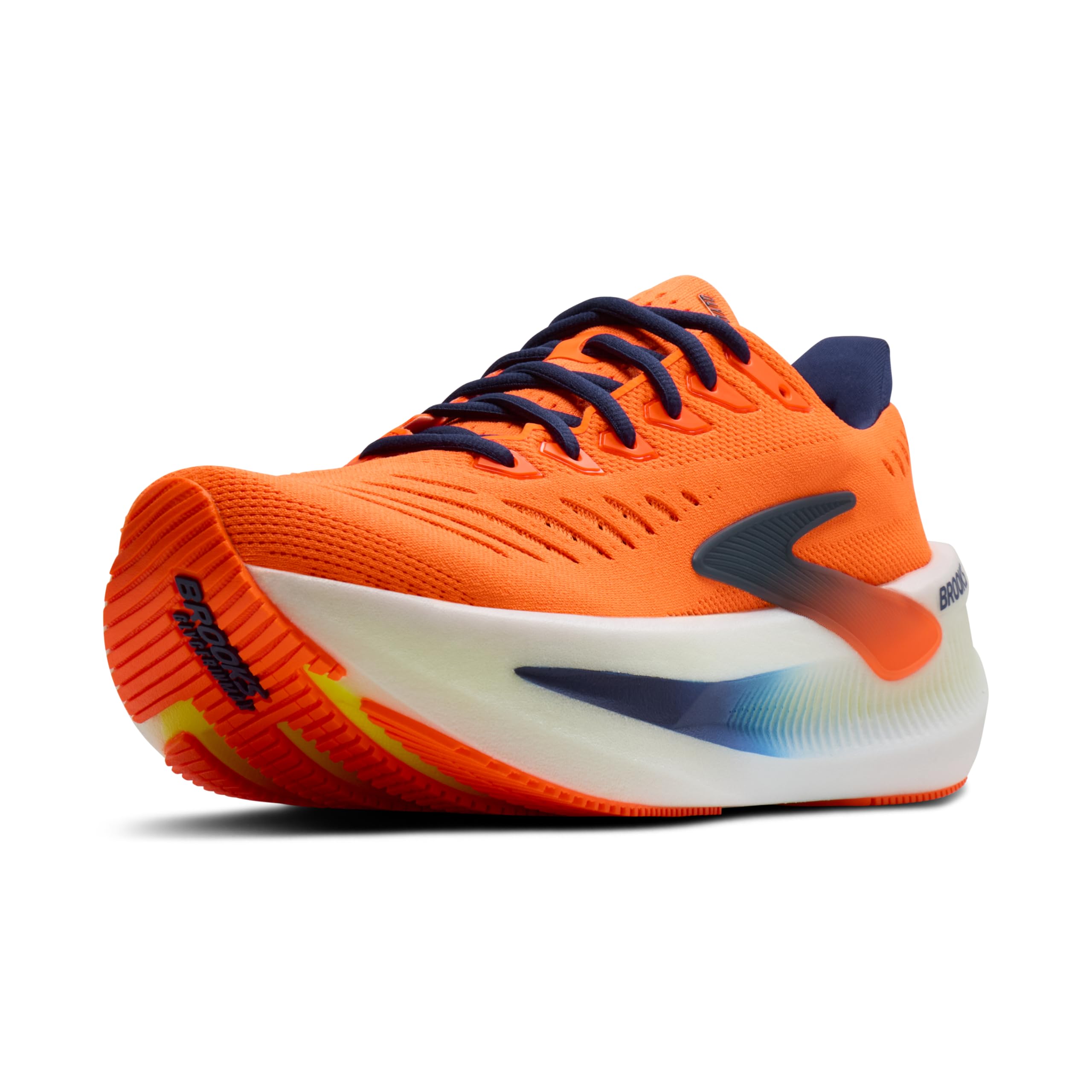
Massive foam stack built to protect tired joints — and you’ll feel the weight doing it.
The Glycerin Max 2 is the maximum-cushion end of the Brooks line, designed for recovery days and for anyone who wants a big foam platform between their foot and the road. The midsole gives you the right balance of cushioning without being squishy, which is the spec that separates a recovery shoe from a marshmallow. Reviewers point out relief from heel pain and joint soreness, with no hot spots on long walks.
What fits best is the sizing story. Shoppers say it runs small in the toe box and recommend going up a half size, and the shoe fits wide women’s feet comfortably too. A walker putting in three miles a day, six days a week, wore through a pair in just over 90 days and is ordering the same shoe again — which tells you where the durability limit is if you log serious walking miles.
Here is the trade-off you need to hear: this shoe is heavy. One buyer describes it as “bricks” and reports leg fatigue quickly at a slow pace, despite excellent underfoot protection. It is a recovery and recovery-walk shoe, not a performance shoe. For easy days when your legs need protection, it does exactly what it says. For speed or tempo, pick the SUPERBLAST 2 above instead.
Where it earns its name: a tall foam stack gives you real joint protection on recovery days — buyers report no heel pain, no joint soreness, and no hot spots on long walks.
The weight bill: heavy enough that a buyer calls it “bricks,” with leg fatigue at slower paces — you are trading speed for protection, deliberately.
Made for you if: your legs are wrecked after long runs and you want a shoe that protects joints and asks nothing of you on a slow day.
Not for: tempo runs, speed sessions, or anyone who needs a light responsive trainer.
9. New Balance Women’s Fresh Foam X More V5

Fresh Foam X under a stable frame — the plush shoe for high arches and heel pain.
The Fresh Foam X More V5 is New Balance’s softest everyday platform, built around Fresh Foam X (a soft-but-supportive EVA-based foam) with 360 degrees of comfort in the design. It weighs 2.1 pounds, the same as the Skechers slip-on and double the On Cloudmonster’s 1 pound — the heft is the price you pay for the deep cushion. Comfort is the runaway reason owners stick with the shoe, and heel and knee relief within the cushion is the consistent note.
Where it earns loyalty is the support for difficult feet. Owners with high arches, plantar fasciitis and bunions report walking without pain. One sciatica sufferer wears them all day pain-free and has bought four pairs. A woman with bunions sized up in a wide and found the foot did not slide inside. The upper breathes, the midsole stays supportive after weeks, and a buyer reports no blisters or hot spots over long distances.
The honest limit is width and durability. The toe box runs narrower than the previous V4, with one buyer finding the side seams indenting into the foot, and fit is the most-debated thing about this shoe. The foam also wears down with heavy use. If you have wide feet and loved V4, try before you commit.
Why It Stays in People’s Closets
- Fresh Foam X delivers a soft-yet-supportive ride that holds up after weeks of wear.
- Support for high arches, plantar fasciitis and bunions — owners describe walking comfortably again.
- Breathable upper with no blisters or hot spots reported over long distances.
- Supportive underfoot for all-day standing, with knee cushioning owners notice.
The Tradeoffs to Weigh
- The toe box is narrower than V4; side seams can indent into the foot.
- At 2.1 pounds it is the heaviest shoe on this list — not for speed work.
- Heavy users report the foam wearing down fast.
Worth it when: you need plush support for a high arch or an aching heel, and you put comfort above speed.
Try first if: you have wide feet or loved the previous V4 — the new toe box is narrower and the fit varies.
Know the Specs
Midsole Foam and Cushioning Type
The midsole is the layer between your foot and the outsole — the source of all plushness. Plain EVA is the basic foam found in cheaper shoes; it compresses and loses rebound. Named blends like ASICS FF BLAST PLUS, Brooks’ DNA Loft, and New Balance Fresh Foam X are engineered to return more energy per step. A softer midsole feels better at first but compresses more underfoot, which is why a shoe that never firms up often feels dead an hour into a run.
Stack Height and Heel Offset
Stack height is how much foam sits between your foot and the ground; heel offset is the difference in stack between heel and toe. Plush shoes need plenty of foam, but the trade-off is stability — a tall, soft shoe can feel tippy on turns. If you only walk or run straight lines, tall and soft is fine. If you do plyometric or weighted work, favor a lower stack with a firm heel counter.
Outsole and Rubber Coverage
The outsole is the rubber on the bottom; it decides how long the shoe lasts and how it grips in the wet. Foam-only outsoles wear fastest because soft midsoles flex and stress the bottom layer. Rubber placed at the heel and forefoot — ASICS AHARPLUS, Goodyear Performance Outsole — is the fastest way to check how long a plush shoe will survive on pavement. Look at the wet-traction feedback too: a plush shoe that slides on wet concrete is a dry-weather shoe.
Upper and Toe Box Fit
The upper is the material covering the foot; the toe box is the front enclosure. Plush uppers are built for comfort, but they vary widely in width. A generous toe box suits bunions and hammer toes, while a narrower forefoot gives a snugger lockdown. Check whether the insole is removable before buying if you wear orthotics — it’s the deciding detail for a lot of buyers.
Common Questions
What actually makes a plush running shoe different from a regular cushioned shoe?
Will a plush shoe bottom out after a few months?
Do plush shoes fit the same as other running shoes?
Are plush running shoes good for people who stand all day at work?
Can I wear a plush shoe if I overpronate?
Is a heavier plush shoe worse for long walks?
How do I know if a plush shoe has enough stability for me?
Do these shoes work with custom orthotics?
What is the difference between a plush daily trainer and a recovery shoe?
Does a cushioned shoe help with plantar fasciitis or a high arch?
The Bottom Line
The plush running shoes worth your money in this lineup start with the On Men’s Cloudmonster, because it delivers the lightest big-cushion ride here at 1 pound, with CloudTec pods that keep all-day standing comfortable. If you want wider toe room and a removable insole, grab the ASICS Women’s Gel-Cumulus 27, since its forefoot room is the most-praised fit detail on this list. And for a combination of soft midsole plus GuideRails stability on longer runs, the Brooks Adrenaline GTS 25 is the one to reach for. If pure joint protection on recovery days is your goal, the Brooks Glycerin Max 2 delivers the tallest, most protective platform here. The Cloudmonster is the crowd favorite, with 4.5+ stars from 2,700+ owners behind its comfort-first reputation.
How we choose
We do not accept paid placement. Every pick is matched to a real buyer and a real use-case; we do not hands-on test units.
Sources
Specifications: manufacturer listings and product documentation. Review insights: verified customer reviews, as of October 2026. Pricing: not shown on this page (it changes often); check the current price via the retailer link.
As an Amazon Associate, Aappliancez earns from qualifying purchases. This does not affect which products we feature.