Disclosure: Some links in this post are affiliate links. As an Amazon Associate I earn from qualifying purchases, at no extra cost to you. Learn more
Specs are compiled from manufacturer listings and verified buyer reviews and can change over time — please confirm the key details on the product page before buying.
You do not need sun to green up the north side of your house — you need plants that actually tolerate shade instead of sulking in it. That strip along a north wall stays cool, holds moisture longer, and often gets nothing but indirect light all day. Choose a sun-lover and you’ll be staring at bare soil by August. Choose shade-tolerant perennials and that forgotten wall becomes the lowest-maintenance bed in your yard. This guide ranks five shade-tough perennials by zone range, light needs, and how big they ship.
This guide is built by comparing the manufacturers’ published specifications and the patterns across verified customer reviews, so you get each pick’s real strengths and trade-offs instead of marketing spin.
Below you’ll find five perennials that hold up in low light, how to read zone and shade labels, and which one fits your wall.
Picking the right plants for north side of house depends on three things: your hardiness zone (the cold-hardiness rating for your region), shade tolerance, and how big the plant ships.
Top Picks

How To Choose Plants for a North-Facing Wall
The north side of a house is a specific microclimate: it gets no direct sun, the soil dries out slowly, and the ground stays cooler than the rest of the yard. That combination suits shade perennials and kills sun-loving ones. Before you buy a single pot, match the plant to the wall.
Start with your hardiness zone
USDA hardiness zones tell you the coldest winter a plant survives. A plant rated for zones 4-8, like the Baltic English Ivy, handles a cold winter in zone 4 and stays alive through hot summers. If you plant something rated for zone 8 in a zone 4 yard, one hard frost ends it. Check the zone range before you look at anything else on the label.
Understand “partial shade” versus “full shade”
Shade labels are not all equal. Full shade means the plant tolerates deep, indirect light — a north wall with an overhang. Partial shade suits a spot that gets dappled light or a few hours of gentler morning sun. When a listing says “sun or shade,” like the Baltic ivy, it means the plant is unusually flexible and tolerates both — not that it prefers blazing sun.
Potted plant versus bare root
A potted plant arrives with its roots already in soil, so the roots are established and you tuck it straight into the ground. Bare root means the plant ships dormant, with the roots exposed and the soil shaken off — it usually costs less per plant and needs to break dormancy after you plant it. Potted gives a head start; bare root gives you volume for less outlay when you need to fill a long strip.
Height and spread control the layout
Spread is how wide a plant grows, and it decides how many you actually need. A ground cover that spreads about 18 inches, like the Creeping Jenny, fills in fast but needs fewer plants than you might guess. A clumping ornamental grass stays tight and works along a border. Read spread and height together so a tall foliage plant doesn’t smother a low creeping one.
Side-by-Side Comparison
| Model | Best For | Hardiness Zone | Light Needs | Expected Height | Amazon |
|---|---|---|---|---|---|
| Baltic English Ivy (8 plants)★ Best Overall | Year-round wall coverage | 4-8 | Sun or shade | — | Amazon |
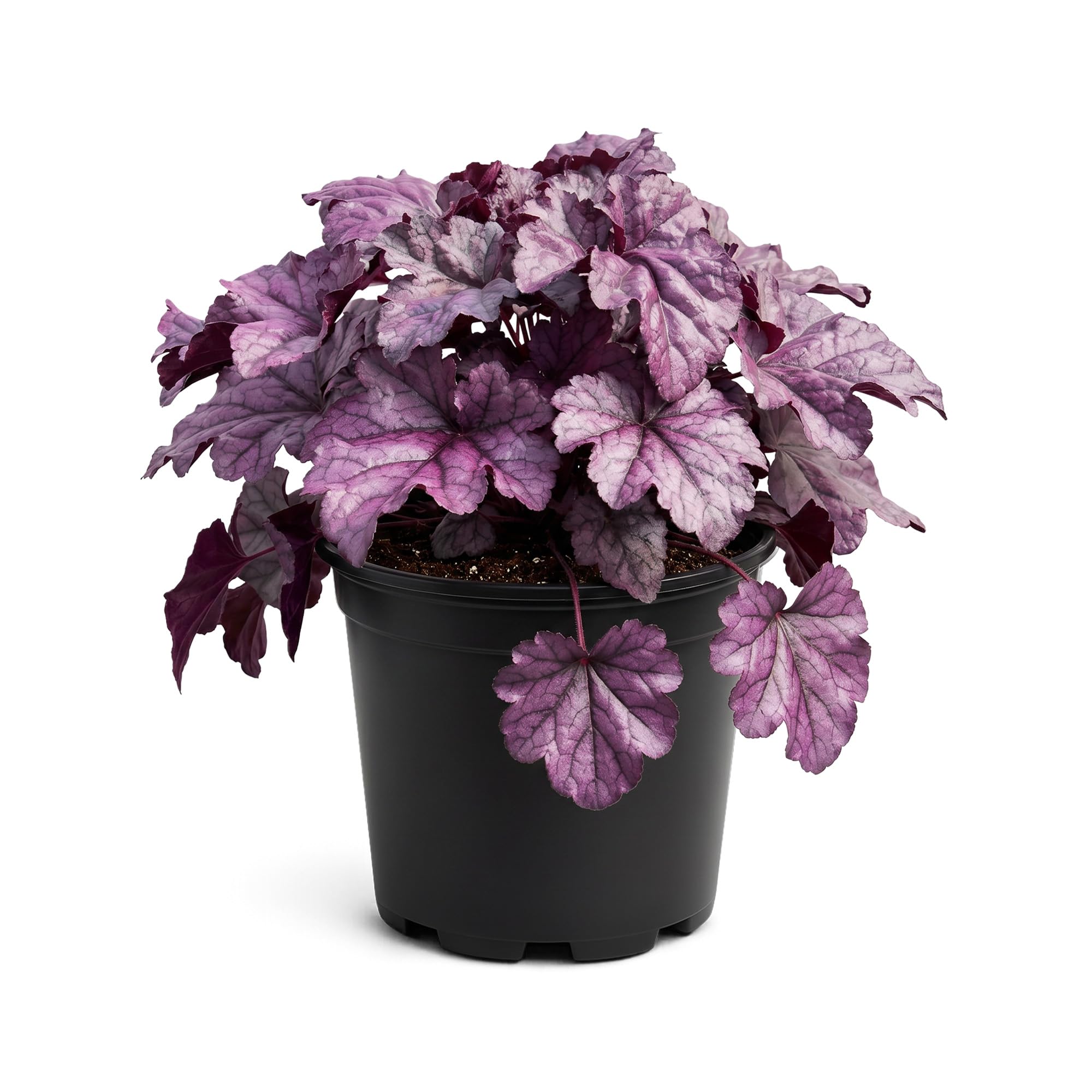
| Heuchera Coral Bells (Shades of Purple)Best Color | Color in deep shade | Zone specific (check your zone) | Partial to full shade | 24 inches | Amazon |
| Perennial Farm Variegated Lilyturf | Edging borders and walkways | 4-10 | Part to full shade | 12 inches | Amazon |
| Creeping Jenny (2 pack) | Fast spreading ground cover | Zone specific (check your zone) | Sun or partial shade | 4 inches | Amazon |
| 9-Pack Hosta Bare Root | Filling a large shaded bed | 3-8 | Full shade to half sun | Spread 20-60 inches | Amazon |
Detailed Reviews
1. Baltic English Ivy 8 Plants – Hardy Groundcover – 2 1/4″ Pot
Our pick — 4.0+★ from 300+ verified ratings; the strongest balance of quality and price.
Eight live ivy plants that shrug off cold, shade, and deer — the easiest win for a bare north wall.
Here is the pick that earns first place: eight named Baltic English ivy plants, each growing in a 2 1/4-inch pot, sold as one unit count of 8. What makes this the strongest all-rounder is flexibility. It is rated hardy in zones 4-8, survives sun or shade, and shrugs off deer — so a cool north strip under partial shade is a comfortable home for it, not a struggle. The Baltic variety, properly Hedera helix ‘Baltic’, is prized as the hardiest English ivy, which matters if you live somewhere winters bite.
What wins people over is the sheer liveliness of what arrives. The plants come packed to protect the roots, and the growth kicks in fast once they are in the ground — roughly 2 inches of new trail in a single week, per the review pages. The potting soil arrives moist, so you are not racing to rescue a dried-out box. Owner after owner uses the same word: healthy. An occasional 4-out-of-5 voice calls them tiny on arrival, which is fair — these are young starts in small pots, not mature plants, and some arrive looking a little sad before they perk up with water.
Treat it as a starter kit, not a finished hedge. Ivy along a north wall asks for patience in month one and almost none after that, because it is deer resistant and rated for moderate watering — so you are not babying it daily. Plant the eight pots in a row and let them knit together. If you want instant maturity on day one, this is not that product; if you want healthy roots that grow for years, this is exactly it.
What Sells This Pick
- Eight hardy starts in one order — rated zones 4-8, so cold winters don’t wipe them out
- Grows in sun or shade and is deer resistant — forgiving of a north wall’s conditions
- Arrives in moist soil with roots well protected; new growth shows up within about a week
Where To Set Expectations
- Young starts in 2 1/4-inch pots — expect modest size on arrival, not a mature mat
- A few plants can look droopy from the start until they get water and shade
Go for it if: you want the toughest shade-tolerant ivy to cover a cooler wall over time.
Pass if: you need a plant that looks fully grown the day it lands.
2. Heuchera Coral Bells 2 Qt Pot
The purple-leaf foliage plant that turns more richly colored the shadier you plant it.
If the north side of your house needs a shot of deep purple rather than more green, this is the plant to reach for. The coral bells foliage runs deep purple and maroon, and here is the quirk that earns you a reward for a dark spot: grown in shadier locations, these plants develop deeper purple and maroon tones. The listing carries an expected plant height of 24 inches, which lines up with the growth note of about 18-24 inches tall and a spread of about 12-18 inches. This pick ships in a 2-quart pot, roughly four times the volume of the 2 1/4-inch pots many ivy and ground-cover listings use.
Buyers praise how this plant looks and how sturdy it arrives. It favors partial shade to full shade, which suits a north wall, and wants evenly moist soil enriched with organic matter. One thing to respect: excess water causes root rot (roots that rot from sitting in wet soil), so the soil must drain well rather than sit wet. The plant condition itself is honestly mixed. Some plants arrive thriving three weeks on, and some arrive wilted or not revived. A 1-star voice sums up the bad end: “It was practally dead when I got it.” That is not the norm, but it is a real risk with mail-order live plants, and it pushes the rating below the top picks.
Size is the second thing to go into this with clear eyes. The listing says 10 inches tall and 6 inches wide, while the specs and growth notes point to a plant that reaches about 18-24 inches tall at maturity — so the shipped plant is a smaller start than the max figure suggests. That mismatch is a genuine point of confusion, not a fault in the plant itself. Buy this for the purple, water it thoughtfully, and give it a season.
The purple payoff: Deep maroon foliage that actually intensifies in shade — rare for a plant you can put on a dim wall.
The real caveat: Plant condition is mixed; mail-order coral bells can arrive wilted, so inspect on arrival and plant promptly.
Reach for this if: you want color, not more green, and your spot stays moist but drains well.
Look elsewhere if: you need a rock-solid guaranteed arrival and want to skip the live-plant gamble.
3. Perennial Farm Liriope Variegata 4 Inch Pot
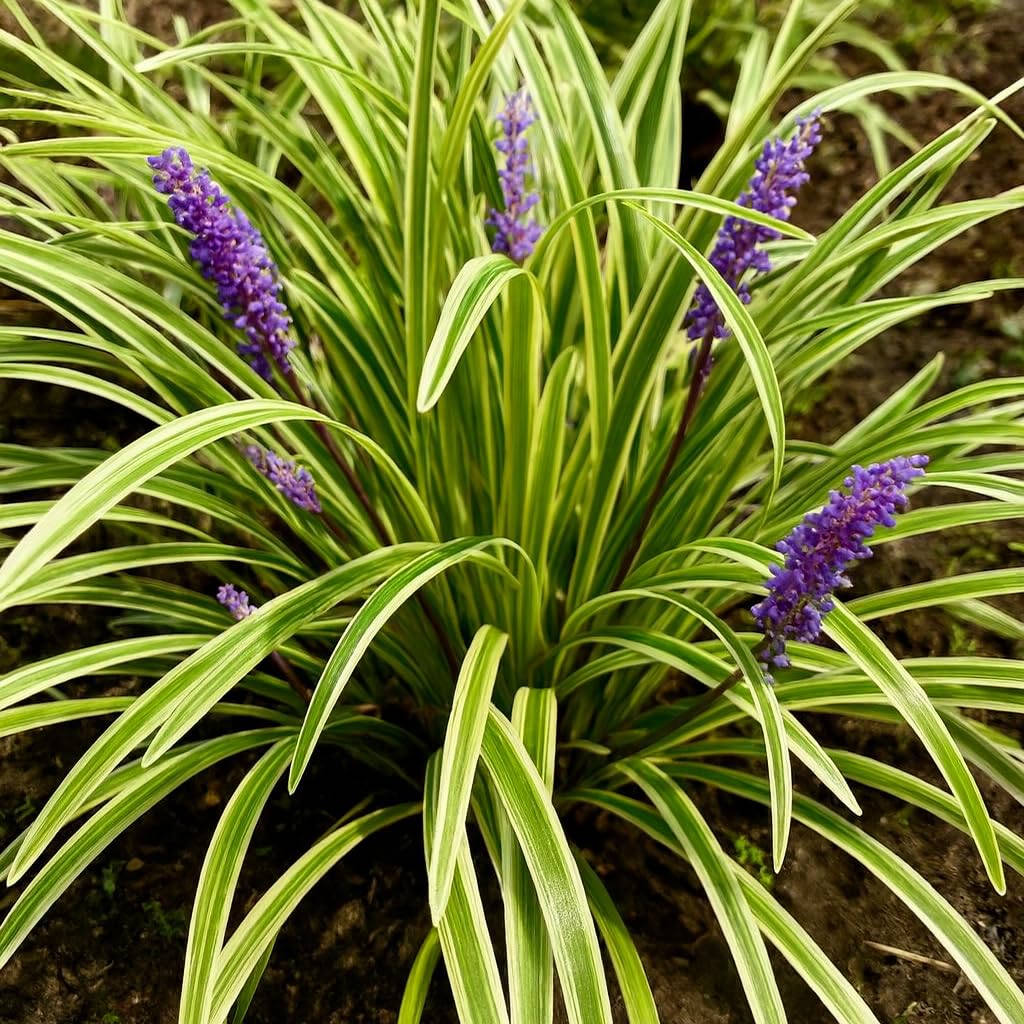
The striped cream-and-green grass that keeps its shape along a shady walkway year-round.
For the tidy edge running along a north wall, this variegated lilyturf does the work most ornamental grasses cannot — it stays compact and tolerates shade. The striped green and cream leaves give you texture and contrast even in a dim spot, and the plant holds about 12 inches tall in a 4-inch pot that arrives fully rooted and ready to plant. It is rated hardy across zones 4-10, an unusually wide range that gives you confidence whatever your local winters do. Quality and steady growth are the two things that keep this pick in the conversation.
Where it shines is the visual pop. Set against dark mulch, the cream striping reads bright even in low light. It is the kind of plant that makes a walkway look intentional rather than forgotten. It blooms with lilac-purple flower spikes in late summer, though flower production is genuinely mixed — some plants grow flowers nicely and some produce few. Read this as a foliage-first plant and you will be delighted; buy it expecting heavy bloom and you may be let down.
Two practical notes before you commit. The seller will not ship to certain restricted states — AK, AZ, CA, CO, ID, MT, NV, OR, UT, WA, and HI — so check the list first. And plants shipped between November 1st and March 1st may arrive dormant and trimmed, which looks sparse but is not a problem; the roots are alive. On size, most arrive larger than expected and well packed, though the occasional buyer gets a plant smaller than pictured. Plant it in partial to full shade and it settles in with little fuss.
What it is built for: Edging borders and walkways — compact clumping habit, 12 inches tall, with variegated foliage that adds texture in shade.
One honest limit: Flower spikes are inconsistent, so treat it as a foliage plant and the blooms as a bonus.
Plant this if: you want a structured, low-maintenance border along a shady path.
Think twice if: you live in one of the restricted states the seller cannot ship to, or you want reliable blooms.
4. Creeping Jenny Lysimachia nummularia 2 Pack
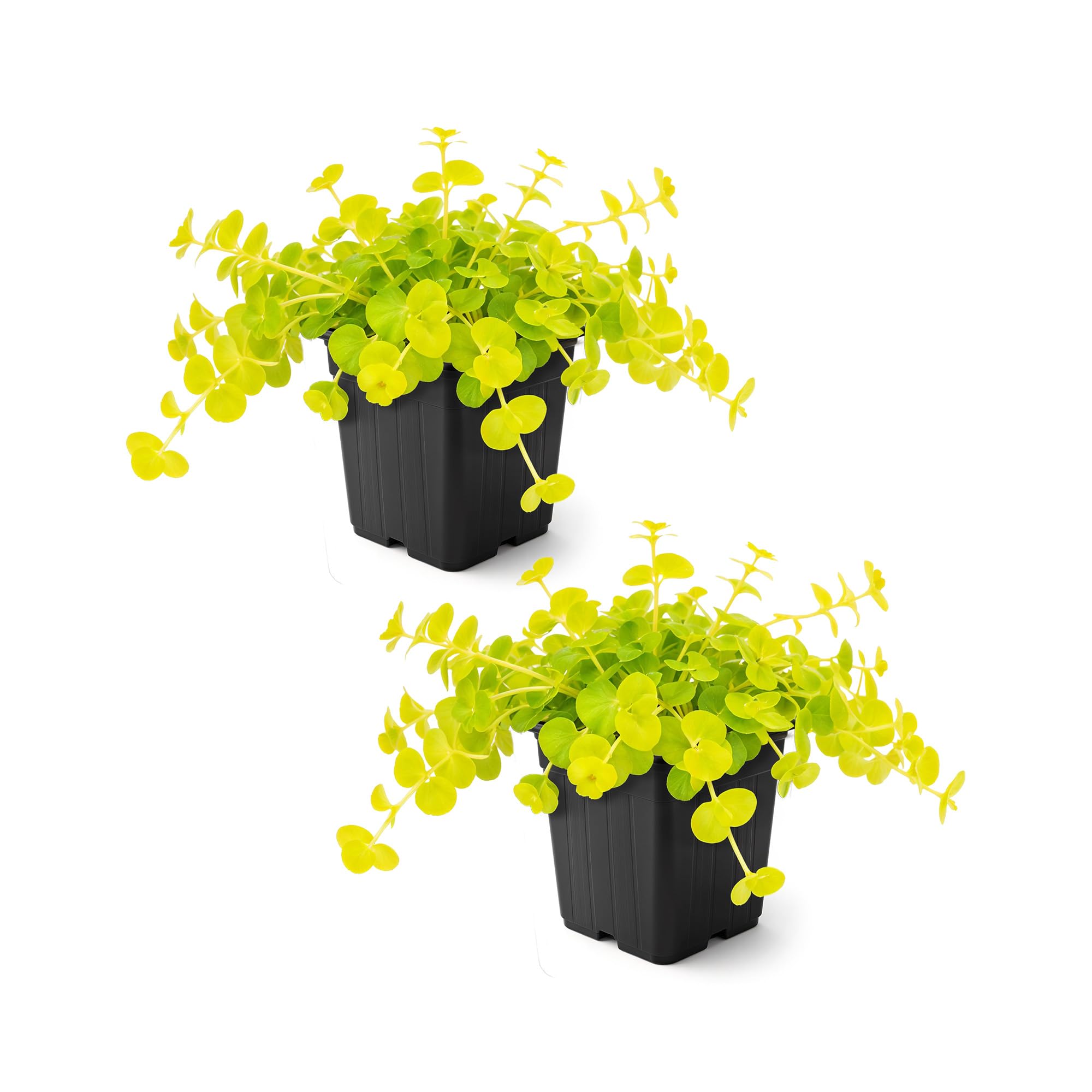
Chartreuse-green trailing stems that knit bare soil into a carpet — this is your weed blocker.
When the goal is coverage rather than a single specimen, creeping Jenny earns its place. It spreads fast and forms a dense mat of coin-shaped, bright chartreuse foliage that chokes weeds and holds soil on a slope. At maturity it stays about 4 inches tall with a spread of about 18 inches, so it hugs the ground while fanning wide. Here is the direct contrast to the bigger foliage plants: the creeping Jenny tops out at 4 inches, while the coral bells is rated to 24 inches — the Jenny covers the floor while the heuchera adds height behind it. Plant them together and the north bed has both layers.
How does it handle a north wall? It grows in sun or partial shade and tolerates a variety of soils, which is exactly the temperament you want where light is patchy. The soil arrives swollen and moist, and buyers report that care — quality is the standout, and the plants ship well watered so they do not arrive parched. Growth is where it gets real: some plants take off faster than expected and show new growth within a week of planting, while some sit there showing no new growth at all and need a patient soak and a shady spot to recover. Creeping Jenny is dramatic and fussy about moisture — it wants moist soil, not soggy soil.
The other honest note is size. It ships in small 1-pint pots, and buyers split on what arrives — some get great large plants, others smaller than advertised. With two plants per pack, treat it as a starting point for a spreading patch rather than an instant carpet. Give it a little time and the spread does the filling for you.
The coverage story: A spreading mat that reaches about 18 inches wide at a low 4-inch height — ideal for erosion control and weed suppression along a bare strip.
The maintenance catch: It needs moisture dialed in just right; too wet and too dry both stall it out.
Choose this if: you have a bare shaded patch that needs covering fast and you can keep the soil evenly moist.
skip it if: your soil swings between bone dry and swampy — this plant wants consistency.
5. 9-Pack Hosta Bare Root Perennial Plants

Nine dormant bare roots that wake up and unfurl broad, heart-shaped leaves — bulk shade filler.
If you have a big, troubled shaded bed to fill, hostas are the classic answer, and nine bare roots in one order covers serious ground. These ship dormant, which surprises some people — you plant what looks like roots, not a leafy plant — but hostas are famous for waking up fast. The reviews back that: green leaves show up within a day of planting and the plants thrive with minimal care. Root quality and plant health both get praise. Rated hardy in zones 3-8 and tolerant of full shade to half sun, hostas handle the cool, dim north side without complaint.
What you are really buying is leaf mass for the shade. The rich green foliage ranges heart-shaped to nearly round and spreads 20-60 inches at maturity, so a row of these anchors the back of a north bed with broad texture. On top of that, slender stems carry mildly fragrant purple or white bell-shaped blooms in mid-to-late summer, and the flowers hold for about two weeks. It is the plant that gives a dark corner presence rather than just a few stems.
The one thing to size honestly is variety. The listing promises a pleasing diversity of textures and colors, but some buyers find all the plants look identical, and seed size draws mixed feelings — some good, some small. Nine bare roots of the same green hosta is still nine strong shade plants; it just may not deliver the mixed look a photo implies. Give them moisture and shade and they grow back year after year with minimal upkeep.
Why it earns a slot: Nine hardy roots (zones 3-8) that sprout green leaves within a day and spread 20-60 inches — broad shade coverage from one order.
What to temper: Variety can look uniform rather than diverse, and bare roots arrive dormant, so expect to wait for the show.
Pick this if: you need budget-wise volume to fill a large shaded bed and love bold hosta foliage.
Hold off if: you expect a colorful mix of different plants from one order.
Know the Specs
USDA Hardiness Zones
A hardiness zone is a number from the USDA that tells you the coldest winter your area reaches, and each plant carries the zone range it survives. A plant rated zones 4-8 lives through cold zone-4 winters and hot zone-8 summers. Check your own zone first — buying outside it is the most common reason a shade plant dies in year one rather than coming back.
Shade Tolerance (Partial vs Full)
Full shade means the plant handles deep, indirect light — ideal for a north wall under an overhang. Partial shade suits a spot with dappled or morning light. A listing that says “sun or shade,” like the Baltic ivy, signals an unusually adaptable plant rather than a sun-lover. Match this label to how much indirect light your wall really gets.
Height and Spread
Height is how tall the plant grows; spread is how wide it fans out. Both matter along a wall because a wide spreader fills gaps and a tall plant adds the back layer. Creeping Jenny stays at about 4 inches with an 18-inch spread; coral bells reaches 24 inches. Reading both numbers together tells you how plants will layer without crowding each other.
Potted vs Bare Root
Potted plants arrive with roots in soil — established and ready to plant straight away. Bare root plants ship dormant with exposed roots and cost less per plant, but need to break dormancy after you settle them in. Potted gives a head start; bare root lets you cover a long strip for less.
Common Questions
What can I actually grow on the north side of a house?
Is full shade on a north wall too dark for flowering plants?
How do I know which hardiness zone my plants will survive?
Why did my bare root hostas arrive looking dead?
Do I need to water plants on the north side more or less often?
Will deer eat plants on a shaded north wall?
Are there states where these live plants cannot be shipped?
Should I buy potted plants or bare root for a north-facing bed?
How fast will these plants spread and fill in?
Can I mix ground cover and taller plants along the same wall?
The Bottom Line
For most people greening up a cool north wall, the winner is the Baltic English Ivy 8-plant set, because it is hardy across zones 4-8 (cold-hardiness zones for your region), grows in sun or shade, and shrugs off deer — three reasons it handles a rough spot with almost no fuss. If you want a jolt of purple foliage instead of green, reach for the Heuchera Coral Bells, whose color actually deepens the shadier you plant it. And to cover a bare, big bed on a budget, the 9-pack Hosta Bare Root fills serious ground while coming back year after year. Whichever you choose, plant for your zone and shade level, water consistently, and give these live starts a season to show what they can do.
How we choose
We do not accept paid placement. Every pick is matched to a real buyer and a real use-case; we do not hands-on test units.
Sources
Specifications: manufacturer listings and product documentation. Review insights: verified customer reviews, as of October 2026. Pricing: not shown on this page (it changes often); check the current price via the retailer link.
As an Amazon Associate, Aappliancez earns from qualifying purchases. This does not affect which products we feature.