Disclosure: Some links in this post are affiliate links. As an Amazon Associate I earn from qualifying purchases, at no extra cost to you. Learn more
Specs are compiled from manufacturer listings and verified buyer reviews and can change over time — please confirm the key details on the product page before buying.
You want hummingbirds hovering at your window by mid-summer, and the honest answer is that not every plant sold as a “hummingbird magnet” earns its spot in the ground. The picks below split into two camps: cheap seed that covers a lot of bare ground, and live plants that arrive small but flower in their own time. Buy the seed if you want volume fast. Buy the live plant if you can water patiently and wait.
This guide is built by comparing the manufacturers’ published specifications and the patterns across verified customer reviews, so you get each pick’s real strengths and trade-offs instead of marketing spin.
What follows is a plain-language walk through seed counts, pot sizes, bloom timing and the shipping realities nobody prints on the packet, so you can pick the right plants for attracting hummingbirds without wasting a season on the wrong order.
Top Picks
How To Choose The Best Plants for Attracting Hummingbirds
Hummingbirds feed on nectar, and they find it by sight — red, orange and coral trumpets get checked first. The plant’s job is to keep producing those flowers through the season, not just for one week in June. Your job is to match the format you buy to how much patience and ground space you actually have.
Seed, bulb, or live plant — three speeds of gardening
Bulk seed is the fast-fill option: a 1/4 pound pouch from this list covers 400 square feet, which suits a long fence line or a bare border. Bulbs (often called corms) are the middle route — you plant them in the ground and they send up arching stems. A live plant or bare root arrives as an actual plant, and it will spend its first weeks recovering from the trip rather than growing.
The trade-off is real on both sides. Seed needs thinning and steady moisture to germinate. Live plants cost more per bloom and can arrive shocked. Match the format to the care you can actually give.
Read the hardiness zone before you read the flower photo
A perennial only comes back if your winters are mild enough for it. Crocosmia Lucifer is listed as perennial in zones 5-9, and Butterfly Weed is listed for zone 3. If you garden somewhere colder or hotter than the label allows, treat the plant as an annual and plan to replace it — that is not a defect, it is a mismatch.
Bloom timing decides your hummingbird season
Trumpet-shaped flowers in red, coral and orange are the shape hummingbirds feed from. Summer bloomers fuel the peak season, while a spring bloomer like Trumpet Honeysuckle gets the earliest arrivals fed. Planting two bloom windows back to back keeps nectar available longer than one block of anything.
Side-by-Side Comparison
| Model | Best For | Format | Quantity | Bloom Season | Amazon |
|---|---|---|---|---|---|
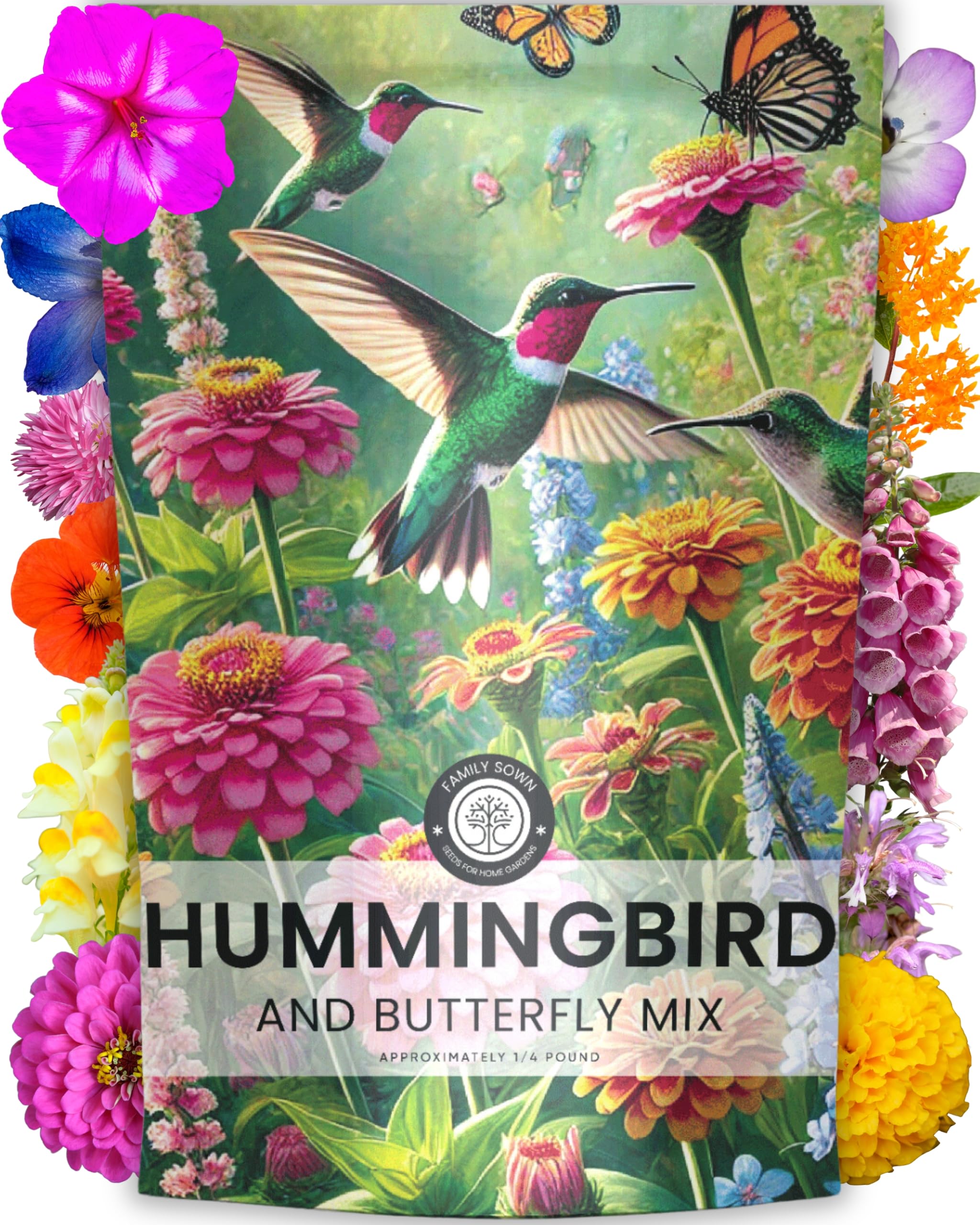
| Hummingbird Butterfly Mix (FAMILY SOWN)★ Best Overall | Filling a long bare border fast | Seed pouch | 4 Ounce / 30,000 seeds | Through the season | Amazon |
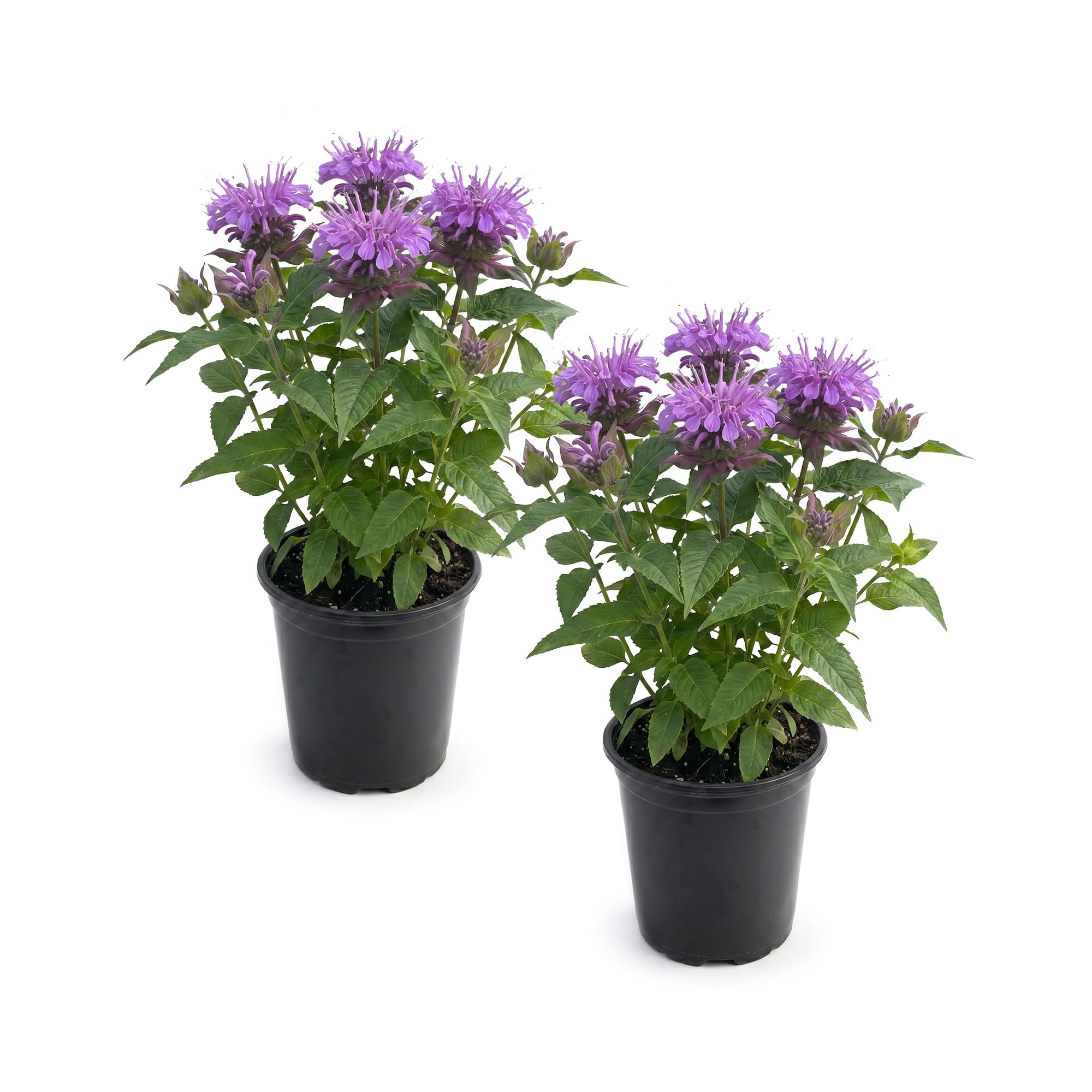
| Bee Balm (The Three Company)Best Live Pick | Purple blooms in a pollinator bed | Live plant, 1 Qt pot | 2 plants | Summer | Amazon |
| Crocosmia Lucifer (Caribbeangardenseed) | Arching scarlet stems on a budget | Corms | 10 bulbs | Summer | Amazon |
| Butterfly Weed (Willard & May) | Cold-climate perennial colour | Bare root | 1 root | Spring to Fall | Amazon |
| Trumpet Honeysuckle Coral (Wellspring Gardens) | Trellis and archway cover | Live plant, 3-inch pot | 1 plant | Spring | Amazon |
Detailed Reviews
1. Hummingbird Butterfly Mix 1/4 Pound Pouch
Our pick — 4.0+★ from 950+ verified ratings; the strongest balance of quality and price.
A quarter-pound of seed that turns a bare 400 square feet into a nectar strip.
Thirty thousand seeds for a 1/4 pound pouch is the number that decides this one. A 400-square-foot bloom block is roughly the size of a two-car driveway, so a single fence line or an empty side border is covered in one order. If you have been staring at bare dirt and want colour and visitors this season rather than next, this is the format that gets you there.
Buyers report butterflies daily, and reviewers cut stems for indoor vases and let the plants rebloom. One 5-star buyer sums up the whole experience plainly with the words “They really work.” Planting is as simple as it gets — one gardener poured the seed straight onto a flower bed and had growth within a couple days.
The catch is the packaging, not the seed. The recurring and most concrete gripe is a pouch that arrives with a slight cut, and one 4-star customer reported that at least 1/3 of the seeds had fallen out during shipping. There is also a single 1-star report of nothing coming up at all, which reads more like a germination miss than a pattern. If your pouch arrives split, ask for a refund and you lose nothing but a week.
Where the pouch earns its place
- 30,000 seeds across a 1/4 pound pouch — enough to cover 400 square feet of bare ground.
- Real nectar variety, with butterflies and hummingbirds both reported at the flowers.
- Nearly no skill needed: scatter, water until established, then thin the seedlings.
- Reusable zipper on the pouch so leftovers stay fresh for next year.
The honest gripes
- Pouches have turned up with a cut seam, spilling seed into the shipping bag.
- A stray report of total germination failure does exist, so it is not a certainty.
- You do not control the species mix — what grows is what the blend hands you.
Buy this when: you have a large bare area and want flowers plus pollinators in the same season, at the lowest cost per square foot.
Think twice if: you want a named plant in a named colour — this is a blend, and you take the mix you get.
2. Bee Balm 2 Pack
Two potted mint-family plants that arrive small, then fill a bed with purple.
Ten inches tall and four inches wide in a 1 quart pot is where this plant starts — small enough that first-time buyers often think they were shortchanged. Bee Balm is a mint-family perennial listed to grow to about 2-4 feet tall with a 3-4 foot spread, so the pot size is the starting line, not the finish. Deep-water it every 1-2 weeks at the base and it does the rest.
The plants travel warm and wet, and they show it. One buyer’s pair rode for over six hours in a 100°F delivery van and arrived wilted and steamed, with soil still wet underneath; both recovered with new growth after about a week indoors. Others had flowers within a few weeks of planting tiny starts. Expect a rough-looking arrival and give it shade and water before you judge it.
What you cannot predict is the colour. The listing shows purple, but shipped plants have bloomed deep magenta instead, and assorted-colour orders come unlabeled — so you discover the real shade in spring, not on the box. Plants also carry a strong smell indoors while they recover, which is the mint family doing its thing. Set it outside as soon as it is strong enough.
What the pot delivers: two live plants in 1 quart pots, listed for full sun and summer bloom, with a mature spread of 3-4 feet — a proper clump rather than a single stem.
The colour gamble: lavender in the photo, deep magenta in the ground, and unlabeled mixes beyond that. If you need an exact shade, plant it where the surprise is welcome.
Worth it for: gardeners who want live plants in the ground now and can baby them through a rough arrival week.
Look elsewhere if: you need a guaranteed bloom colour, or you are ordering in a heat wave and cannot pot them up the day they land.
3. Crocosmia Lucifer 10 Bulbs

The deepest red on the list, sold as ten dormant corms and priced by the handful.
Crocosmia Lucifer is a spring-planted corm — a corm being a swollen underground stem that stores energy for the next shoot. Ten of them go in the ground, throw up arching stems, and open scarlet-red flowers in summer that hummingbirds go straight to. The listing calls for rich, moisture-retentive soil in full or partial sun, and it is perennial in zones 5-9, so a mild-winter garden gets it back every year. It is also listed drought tolerant, which helps in a dry summer.
Compare the counts and the honesty of this listing gets clearer. It is 10 dormant corms against the single bare root from the Butterfly Weed listing, and the price gap lines up with that difference in quantity. Buying ten means you can afford a few failures and still get a clump.
Failure is the thing to plan around here. Dormant bulbs that arrive shriveled and dry are the most repeatable complaint on this listing, and reports of nothing sprouting are common enough that you should plant with a backup in mind. What works is also documented: on a 4-star review a Massachusetts buyer had “All 10 corms sprouted and grew well,” and noted that no bloom in the first cold year was normal. Give them a full season before you write them off.
Best-case season: ten corms, scarlet summer flowers, deer-resistant foliage that returns each year in zones 5-9.
What to expect on arrival: shriveled, dry-looking bulbs are routine. Soak them before planting, plant the full ten, and judge the clump in year two rather than week two.
The right call for: a patient gardener in a mild-winter zone who wants true red trumpets and does not mind planting extra.
Not the one for: anyone who needs a guaranteed flowering display in their first summer, since cold-climate first-year corms often skip the bloom.
4. Butterfly Weed Flower – Perennial Garden Flower Root

A zone 3 perennial that shrugs off hard winters and feeds pollinators all season.
Hardiness zone 3 is the headline for anyone gardening where winters bite. Most flowering perennials on this list stop at milder zones, so a single No. 1 premium bare root listed for zone 3, full sun and moderate watering is genuinely useful in a short-season garden. Mature height is listed at 18 to 36 inches, and the bloom window runs spring to fall, which is the longest on this list.
What lands in the box is a bare root — meaning dormant plant material shipped without soil or leaves — and reviews show the definition matters. Some opened the bag to find only hydrated peat and no visible plant at all, which is disheartening when you paid for something. The bare root that does best is one that is soaked first: one review soaked roots for three days instead of the intended three to six hours, and every one of them pushed out bushy green growth before going into the ground.
The honest summary is that butterfly weed grows vigorously once it takes, and disappoints when it does not. There is truth to the “grows like a weed” reports, and there is also truth to the never-sprouted ones. Plant it, water it moderately, and give it a full sun spot — then let the season tell you.
Why it earns a slot: zone 3 hardiness, 18 to 36 inch mature height, and a spring-to-fall bloom period — the widest window here — plus full-sun tolerance.
The bare-root reality: a dormant root can look like a bag of dirt. Soak it longer than the instructions say before planting, or you may never find out what you bought.
Pick this if: you live in a cold climate and want one root that comes back year after year in orange.
Pass if: you want instant visible plant — a single dormant root is the least photogenic thing on this page on arrival day.
5. Trumpet Honeysuckle Coral Live Plant – Lonicera sempervirens
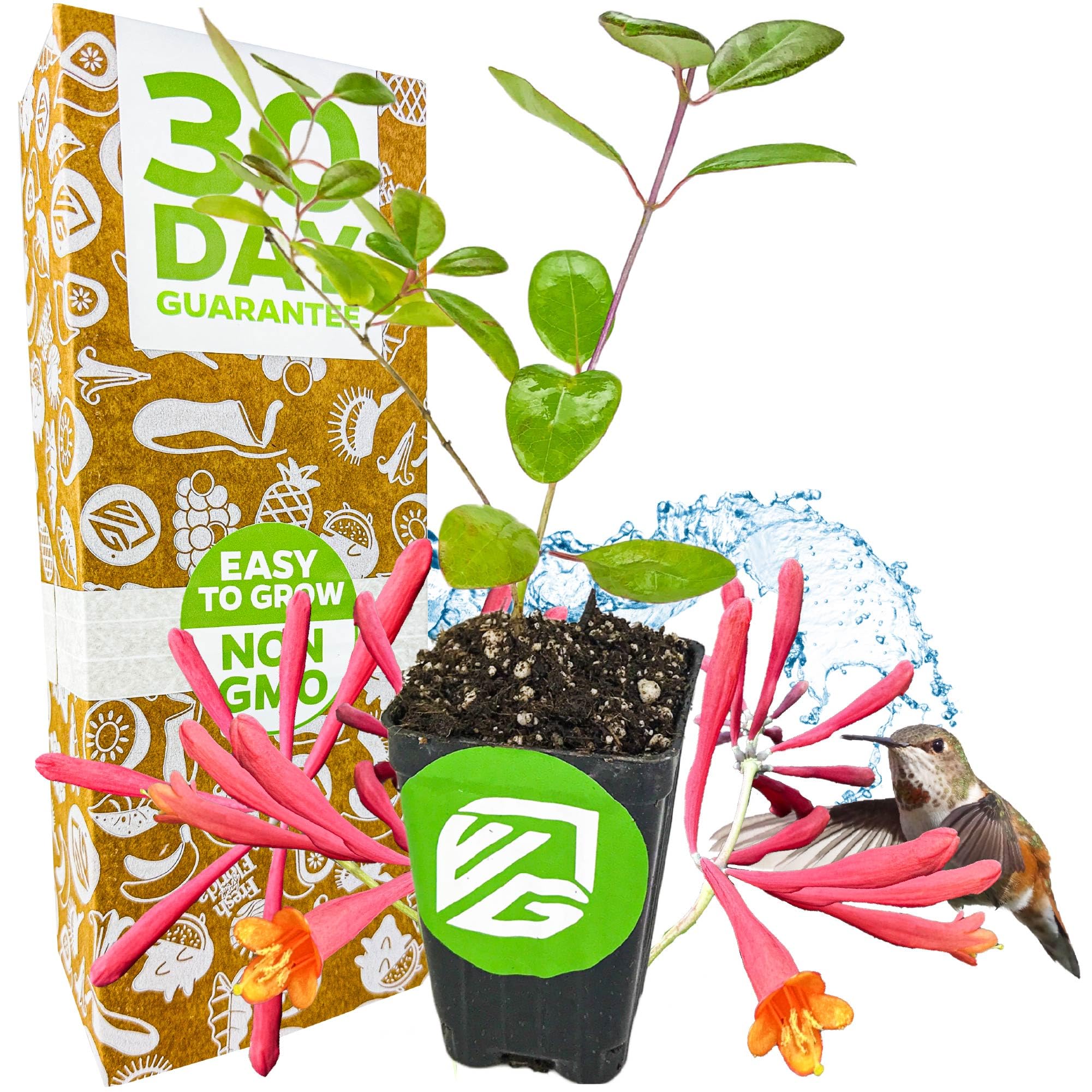
A climbing coral honeysuckle that trades a slow start for a trellis full of trumpets.
Three to eight inches tall in a 3-inch-deep pot is what arrives — a starter vine, not a finished one. Lonicera sempervirens is a climber, so its whole job is to grow up something: a trellis, a fence, an archway. Coral trumpet flowers in spring are exactly the shape hummingbirds feed from, and the plant carries a sweet scent while it blooms. Partial sun and moderate watering suit it, and a sandy soil is listed as its preferred ground.
Growth is the part that takes nerve. One buyer who planted two vines in one pot reported slow growth a year in before both finally thrived on separate trellises, with no blooms the first year — and coral flowers expected the following spring. At the other end of the spectrum, a two-year-old honeysuckle on a trellis has bloomed nearly year-round apart from the coldest weeks. Neither outcome is a defect; a perennial vine just spends its first season underground.
The recurring complaint worth knowing is size relative to cost — the box is small and the plant is small. Packing is generally praised, and plants have arrived green and healthy at full advertised height, but a mailbox drop on a hot day is a real risk. If yours arrives wilted, pot it up, keep it shaded and give it weeks, not days.
Why it suits a garden wall
- Coral trumpet flowers that hummingbirds and butterflies both work.
- Climbing habit for trellises, fences and archways rather than a flower bed.
- Spring bloom gets the earliest arrivals fed.
- Arrived plants have been reported green, healthy and as tall as advertised.
The patience tax
- The plant arrives small — 3 to 8 inches in a 3-inch-deep pot.
- No blooms in the first year is normal for a young vine.
- Hot-weather shipping can leave it wilted and slow to recover.
Go for it when: you have a trellis or arch that needs covering and you are willing to give a young vine a full year.
Skip the order if: you need colour this month — a 3-inch pot needs a season to become the plant in the photo.
Know the Specs
Seed count and coverage
A seed count tells you how much ground a pouch can fill, not how many plants you get — germination and thinning decide that. The 30,000 seeds in a 1/4 pound pouch are listed to cover 400 square feet, so compare any pouch by its coverage figure, not by the weight on the front.
Corms, bulbs and bare roots
These are all dormant plant material, shipped without leaves and looking lifeless on arrival. A corm is a swollen underground stem; a bare root is an exposed root system with no soil. Soaking before planting is the standard way to wake either one up.
Hardiness zone
The USDA hardiness zone on a listing is the coldest winter the plant is expected to survive. A zone 3 perennial handles a colder winter than a zone 5-9 plant, which means choosing by zone is choosing whether it comes back at all.
Bloom season
Bloom season is the window when the plant actually produces nectar, and that is the only window hummingbirds care about. A spring bloomer and a summer bloomer planted together keep the feeder garden productive longer than either one alone.
Common Questions
How long before a hummingbird actually shows up?
Is a quarter pound of seed really enough for a long fence line?
What is a corm and how is it different from a bulb?
Will bee balm come back next year in my zone?
Why does my bare root arrive looking like a bag of dirt?
How much sun do these plants need?
Can I plant trumpet honeysuckle in a pot instead of the ground?
My pouch arrived cut and the seeds spilled — what do I do?
Does deer resistance matter for hummingbird plants?
Can I mix seed and live plants in one bed?
The Bottom Line
For most gardens, the fastest route to hummingbirds at the window is the Hummingbird Butterfly Mix, because 30,000 seeds covering 400 square feet turns empty ground into bloom in a single season. If you would rather plant something already alive and potted, the Bee Balm two-pack puts purple in the bed now — just expect a rough arrival and an unfixed colour. And if cold winters or a trellis are your reality, the Trumpet Honeysuckle and the zone 3 Butterfly Weed are the ones built to come back.
How we choose
We do not accept paid placement. Every pick is matched to a real buyer and a real use-case; we do not hands-on test units.
Sources
Specifications: manufacturer listings and product documentation. Review insights: verified customer reviews, as of October 2026. Pricing: not shown on this page (it changes often); check the current price via the retailer link.
As an Amazon Associate, Aappliancez earns from qualifying purchases. This does not affect which products we feature.