Disclosure: Some links in this post are affiliate links. As an Amazon Associate I earn from qualifying purchases, at no extra cost to you. Learn more
Specs are compiled from manufacturer listings and verified buyer reviews and can change over time — please confirm the key details on the product page before buying.
Feeling a flutter in your chest and wondering whether it is worth telling your doctor? The KardiaMobile is the one to buy first — it reads an EKG (a recording of your heart’s electrical signal) in 30 seconds with no cords, no Wi-Fi and no subscription. The other four picks here cover what it cannot do: blood pressure, blood oxygen and everyday step-and-sleep tracking.
This guide is built by comparing the manufacturers’ published specifications and the patterns across verified customer reviews, so you get each pick’s real strengths and trade-offs instead of marketing spin.
A monitor only helps if you actually reach for it, so fit and simplicity matter as much as the sensor inside. Here is a plain-English look at the best personal health monitoring devices for daily use.
Top Picks
How To Choose The Best Personal Health Monitoring Devices
Start with the number you want, not the brand. A heart-rhythm reader, a blood-pressure cuff and a blood-oxygen ring each answer a different question, and no device on this list answers all three.
Match the device to the number you care about
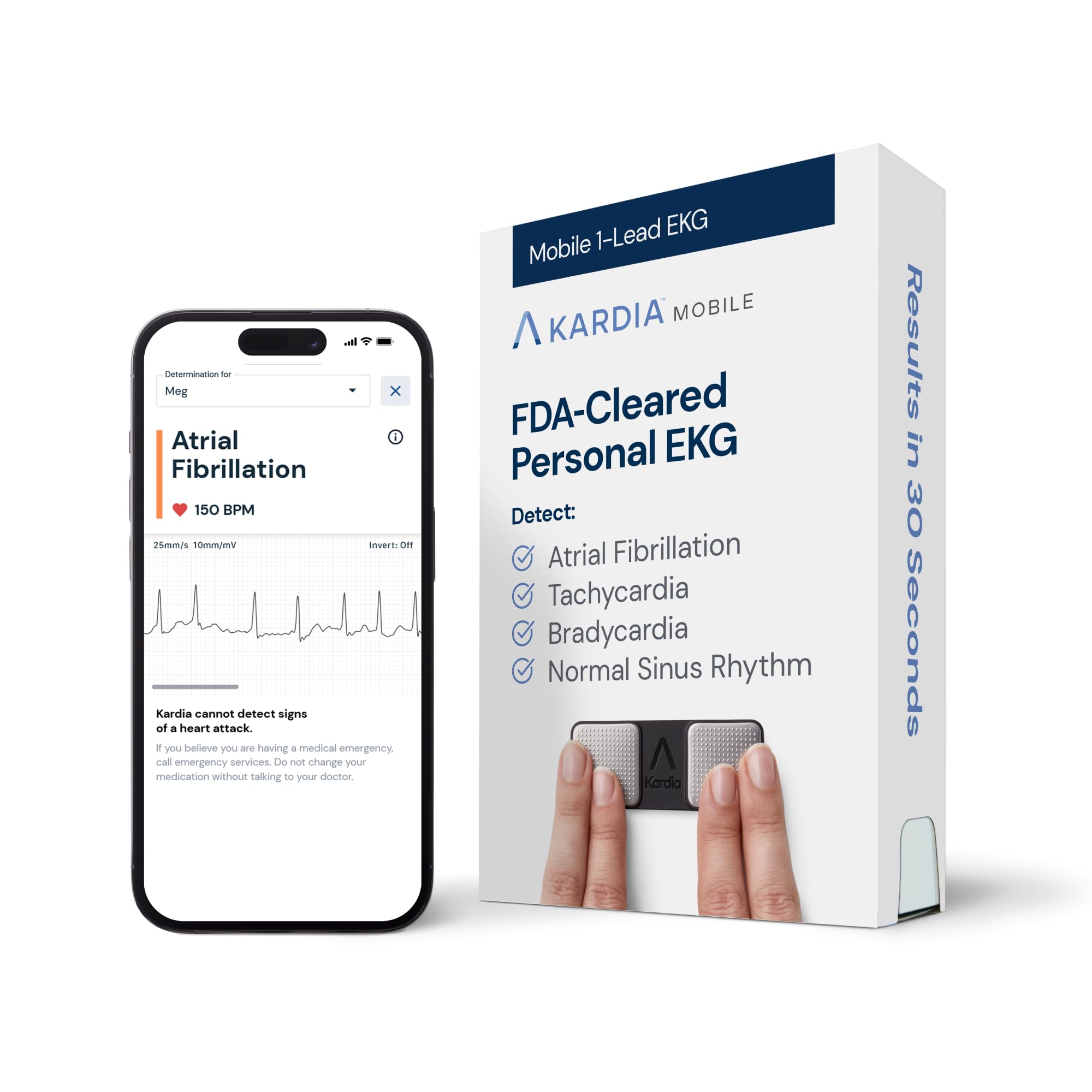
A fluttering or racing heartbeat calls for an EKG (short for electrocardiogram — a reading of your heart’s electrical activity). The KardiaMobile records a 1-lead reading in 30 seconds from two fingers on its silver pads.
Pressure inside your arteries calls for an upper-arm monitor that shows systolic (the top number) and diastolic (the bottom number). Both BP picks here measure on the arm, not the wrist — the more stable spot.
Fit decides whether the reading is even usable
A cuff that is too tight or too loose hands you a number you cannot trust. That is why both arm picks publish a fit range — the CAVN auto-fits arms 7.1″–16.5″, and the FSA/HSA model fits 9″–17″ (22–42cm).
The Fitbit Inspire 3 needs a snug wrist before it can read heart rate at all, and the Wellue ring measures finger perimeter 2.17″–3.15″ (55–80mm). Check the published range before you buy, not after.
Think about who else will use it
Two-user memory earns its keep in a shared household. The FSA/HSA monitor switches between two users with one physical toggle, and the CAVN keeps separate memories of up to 99 readings for each of two people.
Charging habits matter too. Disposable batteries, a Type-C cable and a proprietary cable each demand a different routine, and the cable you cannot find is the one that stops you measuring.
Side-by-Side Comparison
| Model | Best For | Measures | Power Source | Fit Range or Key Spec | Amazon |
|---|---|---|---|---|---|
| KardiaMobile★ Best Overall | Spotting irregular heart rhythms | 1-lead EKG and heart rate | Replaceable lithium-ion battery | 30-second reading; 0.96 in display | Amazon |
| Blood Pressure MonitorBest Value | Budget-friendly shared family checks | Blood pressure, pulse, irregular-beat alert | 1 included battery, rechargeable | Cuff fits 9″–17″ (22–42cm) | Amazon |
| Google Fitbit Inspire 3 | All-day activity, sleep and stress tracking | Steps, heart rate, SpO2, sleep, stress | Rechargeable, 10-day battery | Silicone band, small and large included | Amazon |
| CAVN Blood Pressure Monitor | No-wrap arm checks for shaky hands | Blood pressure, pulse | 2000mAh rechargeable, Type-C | Auto-fits arms 7.1″–16.5″ | Amazon |
| Wellue O2Ring-S | Overnight and all-day oxygen tracking | SpO2, pulse rate, body motion | Rechargeable, 24-hour battery | Fits finger perimeter 2.17″–3.15″ (55–80mm) | Amazon |
Detailed Reviews
1. KARDIAMOBILEKardiaMobile
Our pick — over 4★ from 83,000+ verified ratings; the strongest balance of quality and price.
Rest two fingertips on the silver pads for 30 seconds, and you know whether your rhythm is steady.
It takes the top spot because it delivers a 1-lead EKG in 30 seconds with no subscription — the Fitbit Inspire 3 and Wellue O2Ring-S track heart rate and SpO2, not rhythm. You rest your thumbs on the silver sensors, hold still, and the 1-lead EKG (a reading taken through your fingers instead of chest electrodes) appears on your phone screen. There are no cords, no Wi-Fi setup and no PC. The replaceable lithium-ion battery is rated for 12 months, so it is not a device you think about between readings.
The whole unit weighs 0.02 kg — about the weight of a couple of coins — so it rides in a pocket, and the 0.96-inch display sits right on the device. Buyers report reaching for theirs almost daily for the simple reassurance of confirming a normal rhythm, and that habit is what the 4.4-star consensus is built on — the brand’s rating, based on owner reviews.
Plan for one delay: the first EKG is not instant. AliveCor, the maker, holds the first EKG for medical review — roughly 20–24 hours, as an FDA requirement — before the device becomes usable. So it is not an emergency tool. After that first review, each reading finishes in about a minute, including the 30-second recording.
What earns it first place
- 30-second EKG from two fingers — no Bluetooth, Wi-Fi, cords or PC
- Twelve-month battery and 0.02 kg build mean it lives in a pocket or bag with no upkeep
- Digital readings you can send straight to a cardiologist
Where it asks patience
- Positioning the fingers takes a little practice before readings come out clean
- The free plan stores only your last result, so a subscription is the answer if you want a long history
- Very fast heart rates can return an unclassified result
Made for: anyone tracking palpitations or an intermittent irregular rhythm who wants proof at home instead of a description in a doctor’s office.
Pass if: you need a reading on the spot in an emergency, or you want a full EKG history without paying for the app subscription.
2. Blood Pressure Monitor
Your last reading sits right beside the new one, so the trend shows up without a notepad.
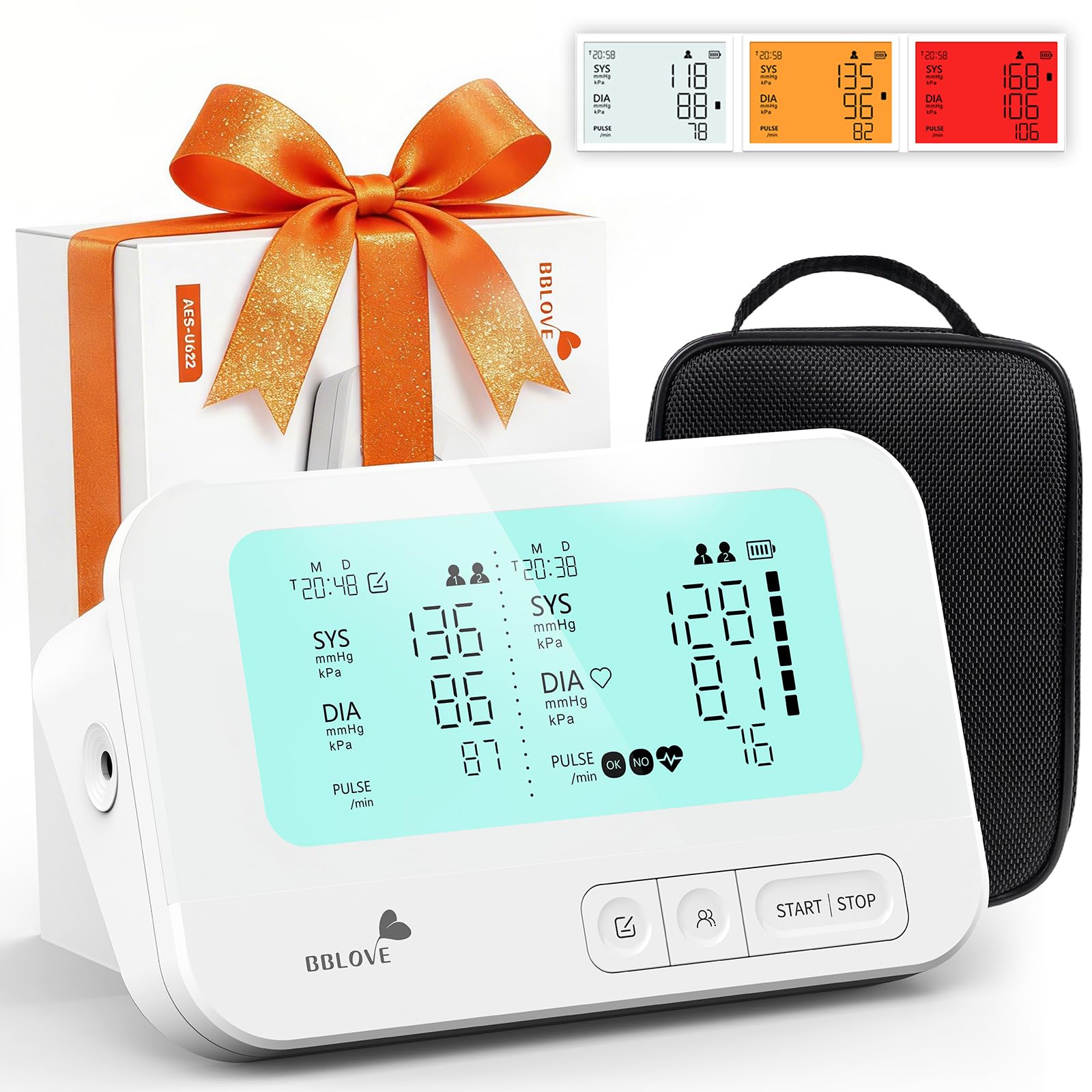
Seeing two readings at once is what puts this cuff ahead of the CAVN for shared households — a single physical switch flips between two users, while the CAVN splits two users with 99 stored readings each. The dual display shows your current number next to your previous measurement. The cuff fits 9″–17″ (22–42cm), the screen is backlit for dim bedrooms, and the whole thing is one-touch automatic.
Owner feedback singles out quality most often, with ease of use close behind. An irregular-heartbeat alert flags a reading that needs a second look, and a carrying case keeps the cuff safe in a drawer or a suitcase. The rechargeable design tipped the decision for one buyer replacing a five-year-old unit, and a soft sleeve that positions on either arm makes solo cuffing easier.
Calibration is the honest catch. Accuracy is the split opinion in the review record — most find it dependable, while a few checked it against a doctor’s office result and came away unconvinced. The audio voice prompt divides people too; it helps some, and the fix for the rest is a single mute button. This model is also FSA- and HSA-eligible, so you may be able to pay with those funds.
Takes the guesswork out: Current and previous readings sit together, so you catch a creeping systolic number at a glance instead of squinting at a memory button.
Worth confirming: Accuracy is the mixed point in owner feedback, so bring it to your next appointment and compare it against the office reading once.
Reach for this if… you want a shared, quiet, rechargeable arm monitor and you value seeing two readings at once.
Look elsewhere if… your arms fall outside the 9″–17″ cuff range.
3. Fitbit Inspire 3

A featherweight band that counts your steps, scores your sleep and asks for a charge once a week.
Forty-plus exercise modes with automatic detection are why this band beats the KardiaMobile for daily tracking — a gym session logs itself while the KardiaMobile only captures 30-second EKG snapshots. It records all-day activity and 24/7 heart rate, then layers on a Daily Readiness Score, Active Zone Minutes, a daily Stress Management Score and guided breathing sessions. SpO2, irregular heart rhythm notifications, menstrual health tracking and resting heart rate are in the mix too.
The battery and bands carry the value. Battery life is rated at 10 days with a 2-hour charge time, and the silicone band uses a tang buckle with small and large straps in the box. It counts steps while in a pocket, which helps if your job keeps a watch off your wrist.
Set expectations at tracker level, not smartwatch. The screen is small with a limited set of displays, and you must wear it snugly or heart-rate readings drop out. Sleep staging is reasonable rather than exact — automatic tracking can blur deep and light phases together. Syncing is phone-only: Apple iOS 16.4 or higher, or Android OS 11.0 or higher, with no desktop path.
Why it earns a spot
- 10-day battery takes charging off your nightly to-do list
- 40+ exercise modes with automatic detection, so a gym session logs itself
- Two band sizes included — no measuring your wrist before the box arrives
Know before you wear it
- Needs a tight fit; a loose band loses heart-rate data
- Small screen and a limited display set next to a full smartwatch
- Phone-only syncing with no desktop option
The tracker to pick: if you want steps, sleep, stress and heart rate in one slim band with a battery you forget about — and you are happy for it to stay a tracker.
Not your pick: if you expect app-heavy smartwatch features or a large, always-bright display.
4. CAVN Blood Pressure Monitor
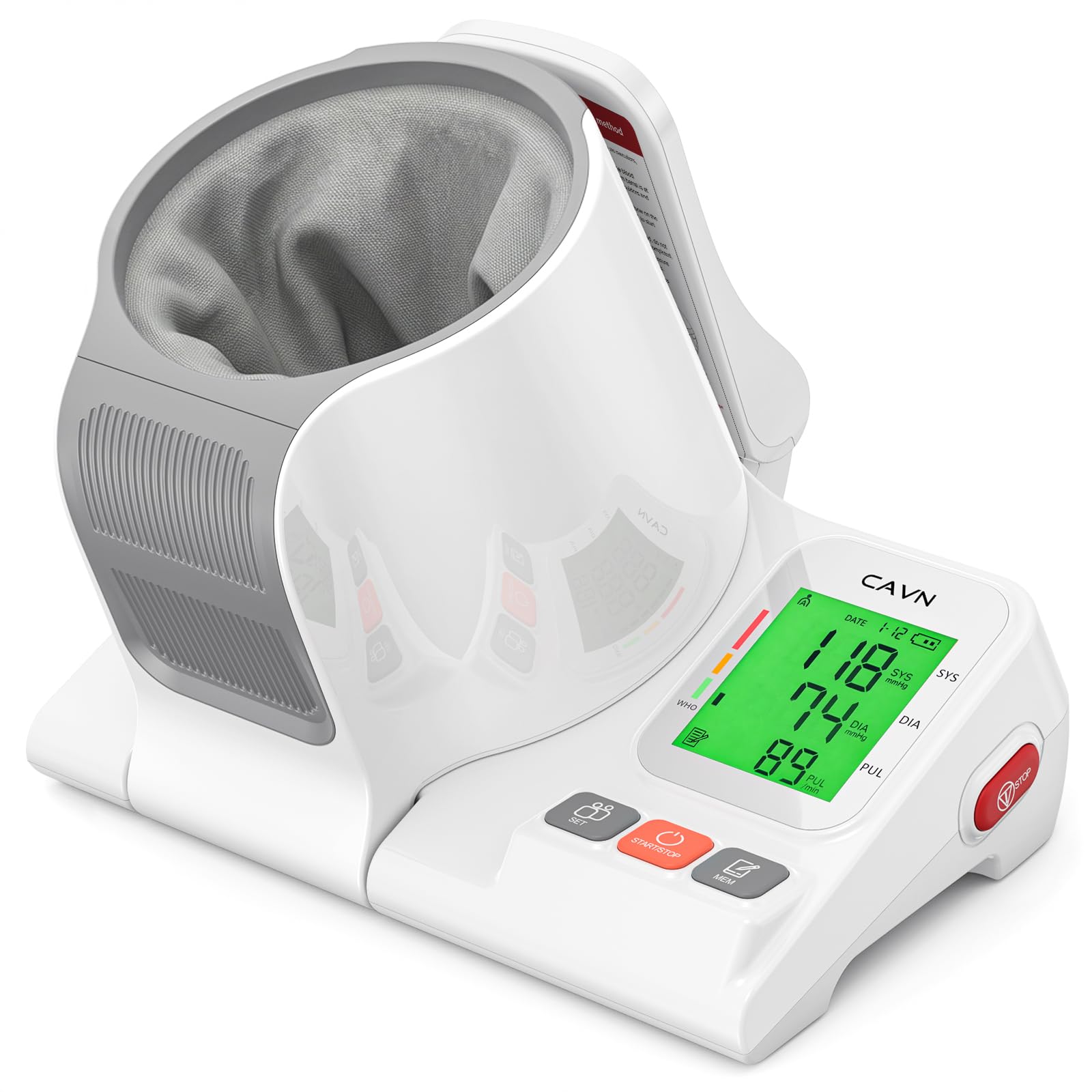
Slide your arm in, drop your elbow, press one button — no wrapping, no guessing.
Its FDA 510(k) clearance (a U.S. government sign-off for home medical devices) and 4.1-star rating across 300+ reviews make it the strongest blood pressure monitor here. You slide your arm into the barrel-style opening, rest your elbow on the built-in pressure switch to lock the position, and press a single button. It auto-fits arms 7.1″–16.5″.
Consistency is the payoff. The barrel holds your arm in the same place every time, so positioning stops being a variable — and buyers credit exactly that for the top quality and accuracy marks. Several buyers compared it against a wrap cuff and got numbers that tracked their clinic reading.
Head-to-head against the value pick above, the CAVN read 158/90 where a wrap cuff read 128/74 in one buyer’s own test, and 144/88 against 126/70 in another. Readouts sit on a bright LCD with a three-color backlight, and two users each get up to 99 stored readings. Power comes from a built-in 2000mAh battery charged by Type-C, so no disposable cells to hunt down.
Two practical notes. Expect a bigger footprint than a wrap cuff — one buyer called it larger than it appears — though it folds for storage. The arm opening is also a fixed size, and buyers are split on whether it lands right for their arm, since one barrel cannot tailor to every build.
The real win: no-wrap positioning kills the single biggest source of bad at-home readings — a cuff you placed a little too high, low, tight or loose.
Measure your space: the barrel body is substantial, so confirm you have a table, a straight-backed chair and room to rest the elbow before you commit.
Confident pick: for anyone who wants accurate, repeatable readings at home without fighting a wrap cuff every morning — particularly older users or anyone with limited hand strength.
Think twice if: your arm sits outside the 7.1″–16.5″ auto-fit range or you want a monitor you can tuck into a small travel bag.
5. Wellue O2Ring-S Oxygen Monitor with Vibration Reminder

A ring that watches your oxygen all night and taps your finger when it dips.
For a full overnight record of blood oxygen instead of a single daytime spot check, this ring stands apart from the Fitbit Inspire 3, which reads SpO2 as part of a broader daily picture. It tracks SpO2, pulse rate and body motion continuously, and the upgraded chip samples at 200Hz (200 readings every second) for up to 36,000 data points per report. Wear it and it starts — no button to remember at 2 a.m.
The vibration reminder is the standout. If your SpO2 drops below a threshold you set in the app, or your heart rate climbs or falls past its limits, the ring vibrates and flags that moment in your report. You see exactly when it happened instead of guessing. It runs up to 24 hours per charge and holds 4 sets of 10-hour data on board, then auto-syncs to the free ViHealth app or PC software for PDF and CSV reports. It fits a finger perimeter of 2.17″–3.15″ (55–80mm).
Honest trade-offs. The ring is bulky enough that one buyer found it awkward for daytime wear and preferred it at night, and you need its proprietary USB-C cable — a standard one will not do. Repeated software connection trouble appears in the review record too, where a few owners found downloads hung and the unit needed to run down before it would reset. It is also not a medical device; the maker states it is intended for sports and aviation use only.
Where it shines: continuous nighttime oxygen data with a vibration alert that catches the exact moment a dip happens, instead of relying on how you felt the next morning.
Pick this for: round-the-clock SpO2 and pulse tracking with an alert you can feel — especially useful overnight or when monitoring someone else remotely through the app.
Know the Specs
Measures and Reading Time
Each monitor here measures something different, and that is the first spec to check. The KardiaMobile reads a 1-lead EKG in 30 seconds from fingertips — fast enough to catch a rhythm in a quiet moment. The two blood pressure monitors read systolic, diastolic and pulse from the upper arm. The Fitbit Inspire 3 tracks steps, heart rate, SpO2 and sleep across the day. The Wellue ring tracks SpO2, pulse rate and body motion. Pick the measurement that matches your question — no single device on this list covers all of them.
Reading time changes the habit. A 30-second EKG fits into a coffee break; a full overnight oxygen record means wearing a device to bed. Match the device to the routine you will actually keep.
Fit Range and Power Source
Fit is where most home readings go wrong. The KardiaMobile uses your fingertips on its sensors. The FSA/HSA monitor’s cuff fits 9″–17″ (22–42cm). The CAVN barrel auto-fits arms 7.1″–16.5″. The Wellue ring fits a finger perimeter of 2.17″–3.15″ (55–80mm). The Fitbit Inspire 3 uses a silicone band and ships with small and large straps, and it needs a snug wrist or heart-rate data drops out.
Then look at how it charges. The KardiaMobile runs on a replaceable lithium-ion battery rated for 12 months. The FSA/HSA and CAVN units are rechargeable, the CAVN via Type-C with a 2000mAh battery. The Inspire 3 charges in 2 hours and runs about 10 days, and the Wellue ring lasts up to 24 hours per charge. A charging routine you will actually keep beats a spec sheet number.
Common Questions
Do I need a subscription to use the KardiaMobile?
How long until the KardiaMobile is usable after setup?
Will the KardiaMobile work with my iPhone or Android phone?
What cuff size do the blood pressure monitors fit?
Is the CAVN barrel monitor accurate compared with a standard cuff?
Can the CAVN monitor be shared between two people?
Does the Wellue O2Ring-S count as a medical device?
How long does the Wellue ring battery last and what cable does it use?
Does the Fitbit Inspire 3 work without a phone?
How accurate is the Fitbit Inspire 3 for steps and heart rate?
The Bottom Line
For most people, the personal health monitoring devices winner is the KardiaMobile. It answers the question that usually starts the search — is my heart rhythm normal — in 30 seconds, with no subscription and no cords. If blood pressure is your number, reach for the CAVN barrel monitor; its no-wrap design removes the positioning mistake that ruins so many home readings. For overnight oxygen tracking with an alert you can feel, grab the Wellue O2Ring-S.
One honest nudge: the KardiaMobile’s 4.4-star standing across more than 80,000 ratings is the strongest signal in this group, and its no-subscription, pocket-sized design is exactly why it earns the top spot.
How we choose
We do not accept paid placement. Every pick is matched to a real buyer and a real use-case; we do not hands-on test units.
Sources
Specifications: manufacturer listings and product documentation. Review insights: verified customer reviews, as of October 2026. Pricing: not shown on this page (it changes often); check the current price via the retailer link.
As an Amazon Associate, Aappliancez earns from qualifying purchases. This does not affect which products we feature.