Disclosure: Some links in this post are affiliate links. As an Amazon Associate I earn from qualifying purchases, at no extra cost to you. Learn more
Specs are compiled from manufacturer listings and verified buyer reviews and can change over time — please confirm the key details on the product page before buying.
Rusted bolts don’t break free because the oil is too thin, too thick, or sprayed from the wrong angle — they stay stuck because the fluid never reached the rusted thread in the first place. The right penetrating oil creeps into that gap by capillary action (it wicks into hairline spaces the way water climbs a paper towel) and starts dissolving the corrosion bond before you put a wrench on it. Below you’ll find the five formulas that actual mechanics, marine techs, and home wrenchers keep buying for exactly this job.
This guide is built by comparing the manufacturers’ published specifications and the patterns across verified customer reviews, so you get each pick’s real strengths and trade-offs instead of marketing spin.
What separates a genuinely useful penetrant from a can of general-purpose lubricant is creep time and how it behaves once the bolt turns — one that evaporates by morning is a wasted soak. These picks cover that whole range of behavior, and every one of them is a legitimate choice for penetrating oil for rusted bolts.
Top Picks

How To Choose The Best penetrating oil for rusted bolts
Most buyers walk into this purchase assuming a penetrant is a penetrant. It isn’t. A can formulated to soak into corrosion and a can formulated to sit on top as a protective film behave completely differently on a seized bolt, and the label rarely makes the distinction obvious. Here’s what actually decides whether the bolt turns.
Creep time beats spray force
Aerosol pressure only delivers fluid to the outside of a rusted nut. What finishes the job is capillary creep — the fluid’s ability to keep moving inward after it lands. That takes time, which is why overnight soaks free fittings that a two-minute spray never budges. Give any penetrant at least several hours on a genuinely seized fastener, and add light taps with a hammer to help it travel.
Viscosity: thin reaches deeper, thick stays put
Viscosity is measured in centistokes, which is simply how easily a fluid flows — lower numbers flow faster. A low-viscosity fluid wicks into fine threads quickly but runs off vertical surfaces. A heavier fluid clings and protects but moves slower. On a rusty bolt, low viscosity usually wins the first round; the heavier film matters for what happens after.
Freeze-style versus conventional soak
A freeze-style penetrant chills the metal sharply to help crack the corrosion bond, then lubricates. That’s useful on an under-car bolt where you want a fast result and can work around the temperature shock. A conventional soak oil needs patience but is safer on delicate parts and finishes. Pick the freeze-style can when you need the bolt out in minutes and the soak oil when you can leave it overnight.
Know if you want protection or just release
Some of these formulas leave a long-lasting corrosion barrier after they’ve done the freeing work; others are meant to release the part and be wiped away. If the bolt lives somewhere humid, salty, or outdoors, a formula with a real protective film is doing two jobs. If you’re working indoors on a clean assembly, a straight penetrant is enough.
Side-by-Side Comparison
| Model | Best For | Container Size | Form | Protective Film | Amazon |
|---|---|---|---|---|---|
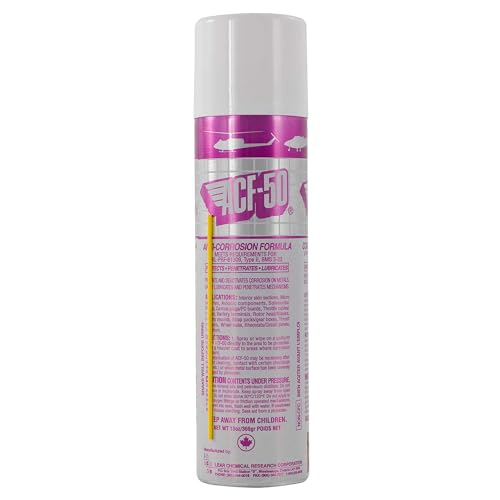
| ACF-50 Anti-Corrosion Lubricant Compound★ Best Overall | Bolts that need to stay rust-free | 13 fl oz | Aerosol | Yes — long-term corrosion barrier | Amazon |
| Made Here Co. Multi-use Lubricating Penetrant OilPrecision Pick | Small, precise jobs at home | 4 fl oz | Squeeze tube | Yes — light protective coating | Amazon |
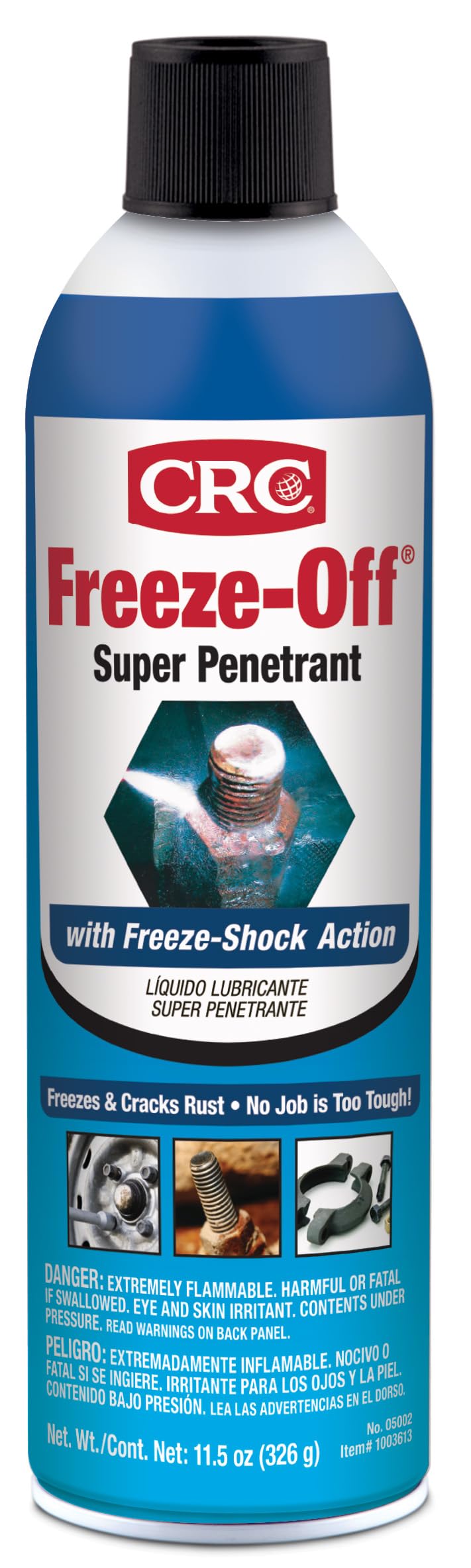
| CRC Freeze-Off Super Penetrant | Fast work on frozen fasteners | 11.5 oz | Aerosol | Rust-resistant | Amazon |
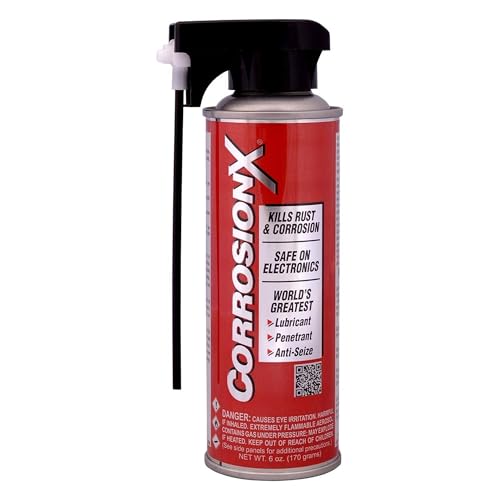
| CorrosionX Rust Inhibitor | Marine and electrical corrosion | 6 fl oz | Aerosol | Yes — dielectric barrier | Amazon |
| Liquid Wrench L212/4-4PK Lubricating Oil | Keeping a shop stocked | 11 oz each (case of 4) | Liquid | Yes — rust and corrosion protection | Amazon |
Detailed Reviews
1. ACF-50 Anti-Corrosion Lubricant Compound – 13 oz Aerosol
Our pick — 4.5+★ from 650+ verified ratings; the strongest balance of quality and price.
A rusted bolt that never seizes again — because this one keeps working long after the wrench comes off
Thirteen fluid ounces of aerosol is the biggest can on this list, and it is the pick for anyone whose real problem isn’t a single stuck bolt but a whole machine quietly oxidizing between jobs. The formula attacks corrosion already in progress on one application, then leaves a film that keeps holding. Buyers report treated surfaces still clean after seven months in a humid, non-climate-controlled workshop, while the untreated table saw beside them oxidized.
What wins people over is how the film behaves. It chemically bonds to the metal rather than sitting on top like grease, and it dries non-greasy overnight. The review pages describe spraying a lathe bed, miter saw, and hand tools, then lightly wiping the excess the next morning — no sticky buildup, nothing to re-clean before you touch the tool again. On a bolts-and-fittings job that means you can free the fastener and leave the protection in place rather than degreasing it off.
Two honest limits. The can isn’t food safe, so keep it out of grill interiors even though it’s popular on grilling forums for exterior protection. And the delivery hardware has a known weak point — an occasional can shows up with the applicator nozzle detached or broken off, which forces you to hold it in place while spraying. The chemistry is excellent; the nozzle is the one component to inspect the moment the box opens.
Where it pulls ahead
- Non-flammable, non-carcinogenic, and virtually non-toxic, with a 79.4 °C flash point that gives it a wider safety margin than solvent-heavy aerosols
- Safe on electrical components, so you can treat battery terminals and connectors alongside mechanical bolts
- 13 fluid ounces against the 4 fluid ounces in the Made Here Co. bottle — a 3.2x gap in volume from one can
- One application handles existing corrosion; the film then holds as ongoing protection
What to keep in mind
- Not food safe — don’t use it inside a grill or on food-contact surfaces
- Occasional cans arrive with a detached or broken spray nozzle
- Heavier than a dedicated penetrant, so plan an overnight soak rather than a fast hit
Reach for this: If your rusted bolts live on equipment that stays outdoors, in a humid shop, or on a vehicle, and you want the release plus the long-term shield in one can.
Look elsewhere: If you need to free one bolt this afternoon on a clean indoor assembly and don’t want a lingering protective film.
2. Made Here Co. Multi-use Lubricating Penetrant Oil – 4oz
A four-ounce squeeze tube that puts oil exactly on the thread instead of everywhere around it
For small, awkward fasteners — the shower fitting, the caster stem, the hinge screw you can barely see — this is the pick. A squeeze tube with a precision applicator lets you place a drop right on the target instead of fogging the whole area. Its viscosity of 8.3 centistokes at 104 °F (a thin, fast-flowing fluid) means it wicks in quickly. Fittings that wouldn’t budge after a spray often give way after an overnight soak with this, coming loose with nothing more than pliers the next morning.
Effectiveness is what it’s known for, and the pattern holds across the whole range of small jobs — gunked-up caster wheels that start turning freely, hedge clippers brought back to working order instead of being replaced. The formula is non-toxic, which matters in confined spaces like a closet or a camper where you don’t want heavy fumes building up.
The catch is real and genuinely divisive: the smell. The odor is among the most-discussed things about this bottle, and it splits opinion hard — some find it mild, plenty find it awful. It’s also a small container, so you get a household quantity rather than a shop supply. For genuinely stubborn, large-scale rust work, step up to one of the aerosol cans below.
Where it earns its place: A 4 fluid ounce squeeze tube with a precision applicator, a non-toxic formula, and a thin 8.3-centistoke viscosity — the combination that makes it excellent for small fittings and hopeless for large-scale jobs.
The honest split: The odor is the most-discussed characteristic and reviews land on both sides. If scent sensitivity is a factor for you, an aerosol alternative may suit your workspace better.
Suits you if: You’re chasing a handful of small frozen fittings around the house and want to aim the oil precisely without aerosol overspray.
Think twice if: You need volume for a rusted chassis or a whole machine — 4 fluid ounces won’t carry a big job.
3. CRC Freeze-Off Super Penetrant, 11.5 oz
The can you grab when you need the bolt out now, not tomorrow morning
Where ACF-50 asks for patience, this one is built for impatience. The freeze-style approach chills the metal to help crack the corrosion bond, then follows with a penetrant — which is why it shows up in brake-job and undercarriage stories rather than long-term preservation ones. At 12.3 ounces it also carries a little more weight in the can than the 13-ounce ACF-50’s lighter fill, so it feels substantial in hand and sprays with a solid, sealed delivery.
The case that defines this can: frozen rear screws on an under-car aluminum cover, sprayed about ten seconds each plus a few hammer taps per the directions, left for five minutes — and they backed out with a JIS Phillips driver (a Japanese-standard cross-head screwdriver). Reviewers report it freed screws that two other penetrating sprays had already failed on. That’s the fast-release scenario exactly, and it’s what the can is for. Skeptical buyers working on tough brake bolts tend to come away surprised, and the sealed packaging matters too — it arrives without leaking.
skip it if you’re working near heat-sensitive parts, paint, or plastics that a sudden temperature drop could stress. And a fast-move can is not a long-term corrosion shield; the rust-resistant claim is about the immediate job, not a season’s worth of protection. Two different cans may be the answer — this one to break the bolt, an inhibitor to keep it from coming back.
Best for: Rusted undercarriage bolts, brake hardware, and any seized fastener where you want a result in minutes and can accept the temperature shock.
Not the tool for: Protecting a surface you’ve just cleaned up — this is a releaser, not a long-term barrier.
4. CorrosionX Rust Inhibitor, 6oz Aerosol
Built for the bolts that live in salt spray, not just the ones that got wet once
If your rusted hardware is on a boat trailer, a dock fitting, or anything within reach of salt air, this is the formula built around that exact problem. It lays down a moisture-blocking dielectric barrier (a film that keeps water off the metal and won’t conduct electricity) that molecularly bonds to the surface and its subsurface. In plain terms, it protects the bolt you freed and the ones around it, in conditions that normally eat through ordinary oil films.
Quality is the thing that carries this can, and it shows across some seriously varied work. Refurbishing fifty-year-old audio gear, it strips nicotine, residue, and grime in a single pass and leaves a protective film behind. On a soft-wash drone repeatedly exposed to harsh mold-killing chemicals, it’s used to slow the oxidation those chemicals cause. It’s also rated to hold a dielectric film over 39,000 volts, so it’s safe on circuits and battery terminals as well as on frozen brackets.
Two issues worth knowing. The spray mechanism is the most-criticized part of this product, and it lands on the negative side of buyer feedback — some cans deliver poorly or stop spraying cleanly. And value is debated; at 6 fluid ounces it’s the smallest aerosol here, so you’re paying for the chemistry rather than the volume. Expect a somewhat messy application too.
The marine argument: You get a dielectric film (an insulating coating that resists electric current) rated over 39,000 volts, a moisture-blocking barrier that bonds to metal and subsurface, and a formulation qualified for marine corrosion protection. Where salt and moisture never stop, this is the one you want.
Pick this one if: Your rusted bolts are on marine gear, trailers, or electrical components that need a moisture-blocking film rather than a plain oil.
Pass if: You’re spraying one dry indoor bolt and want maximum volume for the can — the 6-fluid-ounce fill is on the small side.
5. Liquid Wrench L212/4-4PK Lubricating Oil – 11 oz (Case of 4)

Four cans, so there’s always one within arm’s reach of the rusted thing
This pick solves a different problem than the singles above: it’s the case of four 11-ounce cans that keeps a garage, a workshop, or a fleet of vehicles covered without a reorder in the middle of a job. Each can soaks into gaps, displaces moisture, eases sticking parts, and protects against rust and corrosion, and the formula carries a 2-year warranty. For someone who reaches for penetrant monthly, the multi-pack is the sensible format — one can lasts years for home or single-car use.
What makes it stick around isn’t the initial spray, it’s the staying power. Reviewers report twenty-year-old bolts breaking loose quickly and stuck car door hinges freeing up after a couple of sprays. It penetrates tight spaces well, which is the whole point on a rusted thread.
Be clear about what it is and isn’t. This is a liquid lubricating oil, so it’s a steady maintenance tool rather than a hard-hitting freeze penetrant — when you need to break a truly seized bolt fast, the CRC can is the sharper tool. It’s also not permanent; a heavy mechanical joint that relies on it alone can stiffen again overnight, and a heavier machine oil may hold longer in that specific case. And if you buy the aerosol version of this line rather than the squeeze bottle, watch the angle — spray can blow back toward you.
Why a shop keeps it
- Four 11-ounce cans in one case — enough stock that you’re never mid-job without a can
- Soaks into gaps and displaces moisture, which is what frees a rusted thread and keeps it dry
- 2-year warranty backing the formula
- Holds up as ongoing lubrication, quieting squeaks and easing sticking parts between repairs
Where it falls short
- A liquid oil, not a freeze-style penetrant — slower on a hard-seized bolt
- Not a permanent fix on heavy machinery joints; some need repeated application
- The aerosol variant can spray back toward you — angle it carefully
Made for: Home mechanics and small shops that want a dependable penetration-and-protection oil always stocked, in bulk.
Consider the single can: If you only have one rusted bolt and no ongoing maintenance work ahead.
Know the Specs
Viscosity in Centistokes
Viscosity tells you how easily the fluid flows, measured in centistokes — a lower number means a thinner, faster-moving oil. A thin oil like the 8.3-centistoke formula in the Made Here Co. bottle creeps into fine threads quickly, which is exactly what a rusted bolt needs. The trade-off is that thin oils run off vertical surfaces, so they’re better at releasing and worse at coating.
Container Form: Aerosol vs Squeeze Tube
Aerosol gives you reach and volume, so it covers a big rusted assembly or a frame in one pass. A squeeze tube with a precision applicator gives you placement, so a drop lands exactly on a small frozen fitting instead of everywhere around it. Neither is better — pick based on how big and how visible the fastener is.
Flash Point
Flash point is the temperature at which the fluid’s vapor can ignite, listed here in °C. A higher flash point means a wider safety margin near heat. The ACF-50 formula’s flash point is 79.4 °C, while the CorrosionX formula’s is 132 °C. If you’re working near a hot engine or exhaust, that number is worth checking.
Dielectric Rating and the Protective Film
A dielectric barrier is a non-conducting film that keeps moisture off metal — and the CorrosionX formula is rated to hold a dielectric film over 39,000 volts. That’s what lets it sit safely on circuits, sensors, and battery terminals. On a rusted bolt, the same film is what keeps the corrosion from returning after you free it.
Common Questions
How long should penetrating oil sit on a rusted bolt before I try it?
Is penetrating oil the same thing as WD-40?
What does centistokes mean on a penetrating oil?
Can I use these penetrants on electrical components?
Will penetrating oil stop the bolt from rusting again?
What is a freeze-off penetrant and when should I choose one?
How many cans do I actually need for a rusted-bolt job?
Are these products safe to use around the home and in confined spaces?
Can I use penetrating oil on a bolt that sits near a hot engine?
Should I spray or drip penetrating oil into a tight thread?
The Bottom Line
For most people facing rusted bolts, the winner is the ACF-50 Anti-Corrosion Lubricant Compound — it does both halves of the job, freeing corrosion already in progress and leaving a film that keeps it from coming back, in the largest can here. If you’re working on small indoor fittings and want precise placement, the Made Here Co. Multi-use Lubricating Penetrant Oil puts a drop exactly where it’s needed. And when the bolt has to come out in the next five minutes rather than overnight, reach for the CRC Freeze-Off Super Penetrant — it’s the fast-release tool the slow soaks can’t replace.
A last honest note: the ACF-50 holds 4.5+ stars across 600+ ratings, and that standing comes from corrosion prevention as much as from loosening. Buy it when the rust problem is recurring rather than a one-time frozen bracket.
How we choose
We do not accept paid placement. Every pick is matched to a real buyer and a real use-case; we do not hands-on test units.
Sources
Specifications: manufacturer listings and product documentation. Review insights: verified customer reviews, as of October 2026. Pricing: not shown on this page (it changes often); check the current price via the retailer link.
As an Amazon Associate, Aappliancez earns from qualifying purchases. This does not affect which products we feature.