Disclosure: Some links in this post are affiliate links. As an Amazon Associate I earn from qualifying purchases, at no extra cost to you. Learn more
Specs are compiled from manufacturer listings and verified buyer reviews and can change over time — please confirm the key details on the product page before buying.
Frozen pipe unions, rusted valve stems, and hose bibs welded shut by years of hard water — the right penetrant can mean ten quiet minutes with a wrench instead of a torch, a drill, and a broken fitting. What matters most is creep: how thin the oil stays so it can travel into the thread gap rather than sit on top of it. The picks below are the ones that actually get down into plumbing threads, and each has a different strength.
This guide is built by comparing the manufacturers’ published specifications and the patterns across verified customer reviews, so you get each pick’s real strengths and trade-offs instead of marketing spin.
A rusted joint comes free in three steps: the oil creeps in, you wait, then you turn the wrench. Every pick below earns its spot on that first step, so I ranked these penetrating oil for plumbing options by how far and how fast each one travels into the gap.
Top Picks

How To Choose The Best Penetrating Oil for Plumbing
Plumbing hardware is a harsher test than most garage work. A shutoff valve under a sink sits in damp air for a decade, then you need it to turn in one afternoon. The oil has to travel down a thread that is half filled with mineral crust, and it has to do it without eating the plastic trim or the painted cabinet around it.
Thin beats strong
A thick oil feels protective but it never gets past the first thread. Thin, low-viscosity oil creeps into the gap by capillary action — the same effect that pulls water up a paper towel. That is the whole game with a seized union: the oil must reach the rust, not cover it.
Silicone or silicone-free
A silicone additive leaves a dry film that keeps a freed hinge or valve stem moving and helps block new rust during storage. A silicone-free formula is the safer call in a body shop or a painted space, where an overspray of silicone can cause finish problems.
What it must not touch
You will be spraying near PVC, PEX, plastic escutcheons, and painted trim. A silicone-free formula labeled safe on paint and plastic removes one worry from a job that already has enough of them. Give it time too — most penetrants want minutes to hours, not seconds.
Side-by-Side Comparison
| Model | Best For | Volume | Form | Item Weight | Amazon |
|---|---|---|---|---|---|
| Kroil Silikroil with Silicone (SK102)★ Best Overall | Freed parts that must keep moving | 10 fl oz | Aerosol | 13.12 oz | Amazon |
| Free All Rust Eater (RE12)Best All-Rounder | Household plumbing and painted spaces | 11 fl oz | Spray | 11 oz | Amazon |
| Kroil Original Penetrating Oil (KS132) | Deep creep on badly seized joints | 13 fl oz | Spray | 13 oz | Amazon |
| Lucas Oil 11043 Penetrating Oil | Light repair jobs on a budget | 11 fl oz | Aerosol | 14.24 oz | Amazon |
| KBS Coatings 4202 RustSeal | Sealing a pipe or fitting once it is clean | 8 fl oz | Liquid | 8 oz | Amazon |
Detailed Reviews
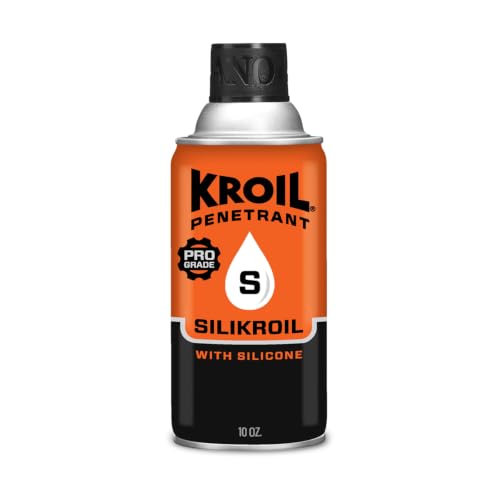
1. Kroil Penetrant Silikroil with Silicone (SK102)
Our pick — 4.5+★ from 450+ verified ratings; the strongest balance of quality and price.
The one that frees the thread and then keeps it moving, long after the wrench goes back in the bag.
What sets this can apart is what happens after the rust lets go. Kroil Silikroil is a silicone-additive penetrant (silicone is a slick additive that leaves a thin dry film behind), sold in a 10 fluid ounce aerosol can. Once the joint breaks loose, that film keeps the metal surfaces sliding instead of grinding back into rust. On a gate valve you open twice a year, that leftover protection is the difference between one repair and the same repair next spring.
The creep itself is what wins people over. Buyers report a stuck part cracking free by bare hand after a short soak, with no torch and no breaker bar. One reviewer sums it up: “Freed two small stuck parts after 5-min wait, bare-handed, no damage.” — the same short soak that frees a stuck supply-line nut. On plumbing, that means a stuck supply-line nut or an old brass union that will not budge — give it a five-minute soak, then try again gently.
Here is the honest catch. The silicone film that helps a moving part is also why this is a poor choice as a pure machine lubricant in high-heat spots. Several owners also call the price the bigger hurdle — 39 people raise cost as a mixed point. You pay for the formula, not the volume: at 10 fluid ounces it holds less liquid than the 11 ounce Free All below. One bottle still goes a long way, because you apply drops and short bursts, not soak a whole assembly.
What earns the top spot
- Silicone additive leaves a dry protective film so freed hardware keeps moving
- Deep creep into tight threads and crevices — the number-one thing owners praise
- Displaces moisture, so it holds up in damp basements and near wet pipe runs
- Doubles as a rust inhibitor and carbon cleaner on the same job
Where it stings
- Cost is the recurring gripe — you are paying for the formula, not the ounces
- 10 fluid ounces is the smallest volume on this list
- As a plain lubricant for sustained moving contact it is not the strongest choice
Reach for this if: the fitting will need to move again — a valve stem, a union you reopen each season, a hinge on the pump-room door.
Look elsewhere if: you only want the cheapest can to soak one stubborn nut.
2. Free All Rust Eater Deep Penetrating Oil (RE12)
The plumbing-specific pick, built to spray a rusted pipe connection without wrecking the cabinet around it.
This is the can I would hand someone whose first problem is a rusted pipe fitting and whose second problem is a finished bathroom. The 11 fluid ounce spray is silicone-free and labeled safe on paint, plastic, and delicate finishes — silicone-free meaning no slick additive that can drift onto surfaces you plan to paint. You can spray a corroded valve under a sink without taping off the escutcheon and the vanity first. It also weighs 11 ounces, which is 14.24 minus 11 lighter than the Lucas Oil can above.
Rust removal is the second thing owners talk about, right behind overall quality, and the plumbing angle comes up directly: Free All freeing a stuck pipe fitting thread is the kind of use these reviews describe. The formula is designed to attack corrosion at the joint rather than sit on the outside of the nut. Spray it, walk away, and come back to a fitting that turns. One 5-star review walks through exactly that: a rusted-solid battery clamp nut sprayed overnight came apart the next morning with little effort.
The trade-offs are real but narrow. The smell gets flagged as mixed, so work in a ventilated basement or crack the window. A few cans have arrived with a nozzle that quit after a few uses — one 4-star write-up otherwise calls it amazing. Keep a spare spray tip or transfer to a pump sprayer if the nozzle is the weak link. On volume, this is also the largest can on the list at 11 fluid ounces — 11 versus 10 for the Silikroil, so you get that much more soak time per can.
Where it fits a plumber’s bench: a silicone-free spray that is safe near PVC, PEX, and painted trim, with enough penetration to loosen a crusted union and enough volume to do it more than once.
The one habit to build: use short bursts and a rag under the joint — runoff is wasted oil, and on a pipe connection you want the liquid at the thread, not on the floor.
Best matched to: household and light commercial plumbing where overspray will land on plastic or paint.
Worth knowing: plan on ventilation for the odor and treat the nozzle as a wear item.
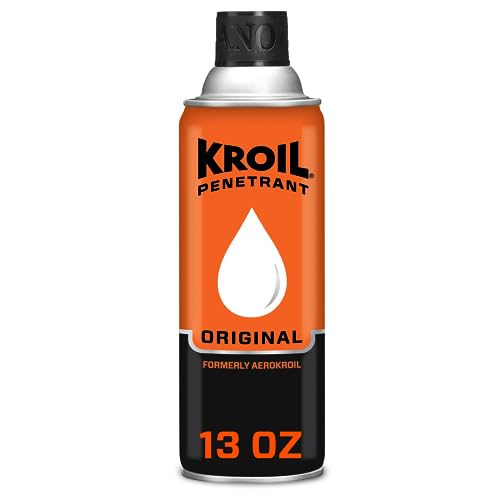
3. Kroil Original Penetrating Oil (KS132)
For the joint that has been frozen so long the wrench has started to round the nut flats.
Where the Silikroil leaves a protective film, Kroil Original is the purist’s penetrant: thin, aggressive, and built to reach the deepest part of the gap first. It is the largest can here at 13 fluid ounces, and it displaces moisture — it pushes water out of the thread and takes its place, which is exactly what you want on a valve stem in a damp crawlspace. Owners describe it creeping into gaps measured in millionths of an inch, and the usual result is a rusted bolt that breaks free with far less torque than expected.
Effectiveness is the whole story with this can. It comes up more than any other quality in the reviews, and the typical scene is a heavily rusted assembly that comes apart without damage. Restoring an old brake line, a rusted farm implement, a dozer that sat abandoned for years — same result, a part that turns when it had no business turning. On plumbing, a seized brass union or a hose bib frozen into a sill cock is the kind of job this is made for.
Two things to plan around. First, it is on the pricey end, and owners openly say so while still buying it — cost shows up as a mixed point. Second, the spray end has been known to break off on some cans, so keep a backup aerosol or decant into a small squeeze bottle before a job you cannot restart. It is a 13 fluid ounce can — more volume than the Silikroil — so if you are doing a long rusted-out repipe, the bigger can spreads the cost over more joints.
The case for keeping one on the truck: it goes after corrosion and carbon on the same spray, so it handles a rusted valve and a fouled moving part without a second product.
Give it time: most real jobs want one to two hours of soak, and a badly seized assembly often benefits from a second and third application before you put a wrench on it.
Pick this when: the part is badly seized and you cannot afford to round it off — you want maximum creep on the first attempt.
The trade-off: budget for the premium and keep a spare spray head on hand.
4. Lucas Oil 11043 Penetrating Oil

The low-cost can for the small stuck nut, with one weakness you should know before you buy.
If the job is a rusted fan blade, a stuck bolt on a pump bracket, or a hinge that has gone stiff, this is the entry-level way in. The formula is aimed at loosening a seized part and then resisting rust coming back — several reviews use it on a PTO driveshaft and report the rust staying away after application. It is an 11 fluid ounce aerosol can, and at 14.24 ounces it is the heaviest can on this list, so the can has a little more body in the hand than the Free All at 11 ounces.
Quality is the part owners rate highest — the oil itself does what it is supposed to and a floor fan that had stopped turning came back to life after a soak. The instruction that shows up again and again is simple: let it sit, then try to remove the part. Do not rush it. The oil needs a few minutes to travel before torque gets applied.
Now the weakness, stated plainly: the spray nozzle is the failure point. A few cans have arrived with a nozzle that will not spray, and the workaround owners use is swapping in a spray tip from a different aerosol can or a paint can. It is annoying, not fatal — the liquid is fine once it comes out. If you have a spare nozzle in the shop, this can is a dependable budget workhorse. If you do not, the Free All above skips that gamble.
Why it earns a spot
- Low-cost entry to the category with a formula that resists recurring rust
- 11 fluid ounce aerosol — 11 versus 10 for the Silikroil
- Works on mixed jobs, from a tractor PTO shaft to a floor fan
Worth planning around
- Spray nozzle has a documented habit of arriving broken or quitting
- Heaviest can here at 14.24 ounces — slightly bulkier to tuck in a tool bag
- Fewer deep-creep reports than the two Kroil cans
Go with it when: you want a low-cost can for light plumbing repairs and you have a spare spray tip in the toolbox.
Think twice if: the nozzle is a dealbreaker for you — the Free All is the safer buy there.
5. KBS Coatings 4202 RustSeal

A different job entirely — the coating you reach for after the penetrant has done its work and the pipe is clean.
To be clear about what this is: RustSeal is not a penetrant. It is a brush-on liquid coating that seals a cleaned steel surface so oxygen and moisture cannot reach it again. That makes it the second step in a plumbing rust repair, not the first. Free the union with one of the oils above, strip it back to bare metal, and then coat the exposed pipe with this. One 8 fluid ounce bottle covers 12.5 square feet with two coats — enough for a run of exposed pipe or a row of fittings.
The finish is where it wins people over: it flows out and levels as it dries, and the result reads like powder coating rather than a brushed-on paint job. A 5/5 review of a 1966 Ford F-100 frame reports the coating still clean after treatment, with no bubbles or fading. In a basement, that means a pipe run that looks refinished instead of patched. It also holds up to 600°F and repels fuels, oils, and most acids and alkalis, so a drain line or appliance pipe is within its comfort zone.
The honesty part matters here. Prep decides everything — the surface must be abraded to bare metal and degreased first, or the coating will not stick. Brush marks and bristles can linger if you use a cheap brush. The can lid has a habit of sealing itself shut, and spills take real effort to clean off skin. Plan your container ahead — decant a working amount into a glass jar rather than fighting the bottle cap each time.
What it does well: a durable, waterproof, non-porous barrier on a prepared steel surface, with a smooth satin finish and 12.5 square feet of coverage from one 8 fluid ounce bottle.
The catch: it is a sealer, not a loosener — and it demands proper surface prep to earn its keep.
Choose it for: the final step — sealing a cleaned pipe run, frame, or fitting so the rust does not come back next season.
Not for: a frozen union you still need to break open — that job needs a penetrant, not a coating.
Know the Specs
Viscosity — how thin the oil stays
Viscosity is a measure of how easily a fluid flows; lower viscosity means thinner oil that slides into tight gaps. A penetrant needs to stay thin to creep into the thread by capillary action, while a general lubricant can afford to be thick and stay put. When you buy, thinness is the first split between a penetrant and a lubricant.
Silicone additive — the dry film factor
Silicone is a slick additive that dries to a thin, dry film on metal. A silicone-based penetrant protects the freed part from re-rusting, while a silicone-free one avoids the risk of finish issues near painted or plastic surfaces. Pick based on if you want protection after the job or cleaner overspray during it.
Flash point — fire safety
Flash point is the temperature at which a liquid gives off enough vapor to ignite. The oil is a solvent-based aerosol, so keep it off open flames, pilot lights, and hot water heaters. Plumb in a well-ventilated space and let the parts dry before you heat anything near them.
Volume and coverage
Volume is the amount of actual liquid in the can, measured in fluid ounces. It matters less than you think for penetrant, because you apply drops and short bursts, not a flood. A can of 10 or 11 fluid ounces can free dozens of joints before it runs dry.
Common Questions
Will penetrating oil damage PVC or PEX pipe?
How long should I let a penetrant soak before turning a rusted union?
Is a penetrant the same as a lubricant?
Can I use penetrating oil on a gas line fitting?
Do I need to clean the joint before applying penetrating oil?
What is the difference between a silicone and silicone-free penetrating oil?
Can I use a rust converter and a penetrant together?
Why did the spray nozzle on my can stop working?
Will penetrating oil stop rust from coming back?
Does the can size matter for a plumbing job?
The Bottom Line
The penetrating oil for plumbing winner is the Kroil Silikroil with Silicone — a 4.5+ star favorite across 400+ owners, and the only pick here that both frees a seized valve stem and leaves a silicone film so the valve keeps turning after you close up the wall. If your work is near PVC, paint, or a finished vanity, grab the Free All Rust Eater instead; its silicone-free formula and 11 fluid ounces of spray make it the cleanest choice for household plumbing. And for a badly seized joint with no room for a rounded nut, the Kroil Original brings the deepest creep of the group. Whichever can you choose, the routine never changes: spray, soak, and let the oil do the work before the wrench does.
How we choose
We do not accept paid placement. Every pick is matched to a real buyer and a real use-case; we do not hands-on test units.
Sources
Specifications: manufacturer listings and product documentation. Review insights: verified customer reviews, as of October 2026. Pricing: not shown on this page (it changes often); check the current price via the retailer link.
As an Amazon Associate, Aappliancez earns from qualifying purchases. This does not affect which products we feature.