Disclosure: Some links in this post are affiliate links. As an Amazon Associate I earn from qualifying purchases, at no extra cost to you. Learn more
Specs are compiled from manufacturer listings and verified buyer reviews and can change over time — please confirm the key details on the product page before buying.
If you are a man shopping for a pelvic floor trainer, know this first: most devices on this page were built and marketed for women, and only a few name men directly. That matters because your training goal is different — you are usually working on urine leakage, dribbling, or bladder control rather than postpartum recovery. The right pick depends on three things: real feedback on each squeeze, whether you will keep using it, and comfort through a full session.
This guide is built by comparing the manufacturers’ published specifications and the patterns across verified customer reviews, so you get each pick’s real strengths and trade-offs instead of marketing spin.
Below you will find seven real options, sorted from the strongest all-rounder down to the budget end, with the honest trade-offs spelled out. Every pick here earns its place on the strength of its own data, so use this breakdown to find the right pelvic floor trainer for men.
Top Picks

How To Choose The Best Pelvic Floor Trainer for Men
The most common mistake men make here is buying the cheapest squeeze device they can find and assuming the muscle will figure it out. Pelvic floor training works the same way any other strength training works: you need resistance you can feel, a way to tell whether you actually contracted the right muscle, and enough consistency to build up. A device that just buzzes gives you none of that, which is exactly why feedback and a usable program are the two things worth paying for.
Feedback beats vibration strength
A trainer that measures your squeeze tells you in real time whether the muscle fired or whether you just clenched your stomach and thighs. That distinction is the whole ballgame in pelvic floor work, because a badly aimed rep builds nothing. Vibration alone, by contrast, is mostly a comfort feature — it can help you relax tight tissue, but it does not teach your muscle to contract harder.
Powered EMS versus a manual squeezer
An EMS unit sends small electrical pulses that make the muscle contract for you, which is useful if you struggle to isolate the muscle at all. A manual device is purely you squeezing against resistance, which builds the kind of control you use in daily life. Neither is better across the board — it depends on whether your problem is activation or strength. Some men end up using both on different days.
Resistance figures and what they mean
Manual trainers quote their resistance in kilograms and pounds, and the spread is real: the picks below range from a fixed 22 KG/48 LB squeeze device to powered units that quote levels rather than raw weight. Higher resistance is not automatically better — if you cannot complete a set comfortably, you will stop using the thing, and consistency is what actually moves the needle.
Battery format and staying power
Rechargeable lithium-ion cells dominate this category, and the runtime claims vary from roughly 40 minutes per charge on a vibration wand to a device pitched as delivering about seven sessions per charge. If you plan to train daily, a built-in rechargeable cell saves you from hunting for batteries, but check whether the unit ships with the cell included.
Side-by-Side Comparison
| Model | Best For | Training Type | Resistance or Intensity Options | Power Source | Amazon |
|---|---|---|---|---|---|
| Perifit Care +★ Best Overall | Real-time guidance with an app | Connected biofeedback probe | 7 guided programs, 5D analysis | 2 lithium-ion batteries included | Amazon |
| TensCare KegelFit MenClinic-Style EMS | Hands-off EMS toning | EMS probe with control unit | 2 preset programs, 0-99 style ramp-up | 1 lithium-ion battery included | Amazon |
| iStim EM-5200 | Clinic-style EMS at home | EMS with two probe sizes | 6 preset programs, 0-16 intensity | USB rechargeable | Amazon |
| Kegel Exercise Device for Men | Discreet seated training | Vibrating silicone seat pad | Multiple vibration modes (settings unclear) | 1 lithium-polymer battery included | Amazon |
| Intimate Rose Vibrating Pelvic Wand | Releasing tight, tender tissue | Vibrating therapy wand | 10 vibration modes | 1 lithium-ion battery required | Amazon |
| Pelvic Floor Exercise Devices (HGAUCAI) | Home lower-body strength | Manual squeeze against resistance | 2 resistance levels, 22 KG/48 LB | Manual — no power | Amazon |
| PelviPulse Pro | Cheapest way to try vibration | Vibrating seat-style trainer | 4 train modes, 4 resistance levels | Battery powered | Amazon |
Detailed Reviews
1. Perifit Care + Pelvic Floor Exerciser with App
Our pick — 4.5+★ from 850+ verified ratings; the strongest balance of quality and price.
The trainer that actually tells you whether your squeeze landed — and turns the work into a game.
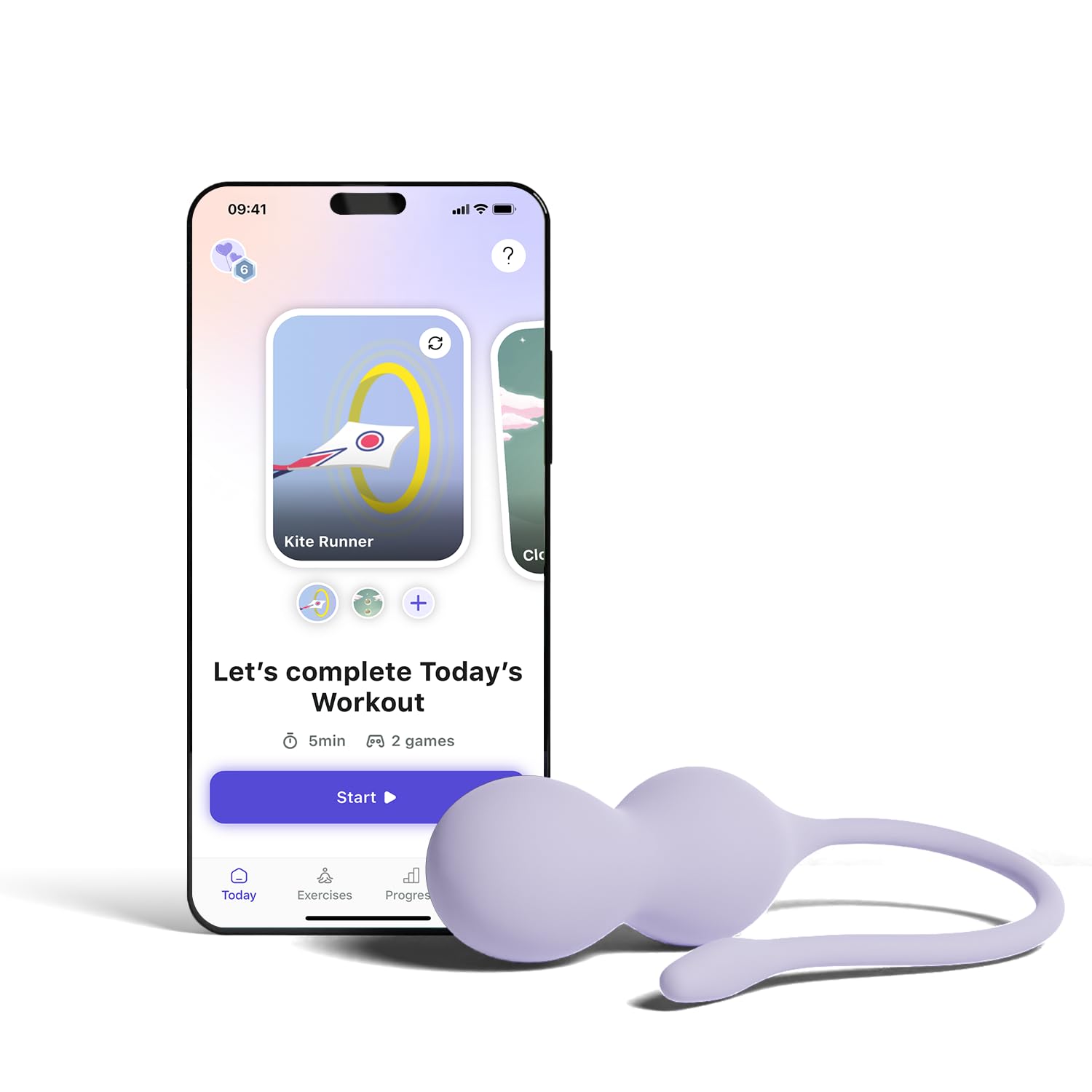
Here is the problem this device solves. Most men training their pelvic floor have no idea whether they hit the right muscle, and a wrong rep is wasted effort. Perifit Care + uses a dual pressure sensor setup — two sensors that read how hard and how accurately you contract — and shows that contraction live in the companion app. The app then breaks your performance down into a 5D analysis covering strength, endurance, precision, quality of contraction and speed. In plain terms, it grades every part of your squeeze so you know exactly which one is lagging.
What keeps people coming back is the incentive layer. The app ships with 7 customized reinforcement programs, and the training itself runs through short games that distract you from the fact that you are exercising. Progress tracking open up extras like backgrounds and accessories as rewards. Buyers report real-world payoff too: after months of regular use, users describe leaks stopping and nighttime bathroom trips falling away.
The catch is practical rather than technical. This is a connected probe designed for women of all ages rather than a men-specific device, so if you want a unit with male anatomy explicitly in mind, you may prefer one of the EMS picks further down. It also runs on 2 lithium-ion batteries, which are included but non-rechargeable in the way a USB unit would be. The build measures 1.57 x 3.15 x 5.51 inches and weighs 9.17 ounces, so it stores easily in a drawer between sessions.
What earns it the top spot
- Live biofeedback shows contraction quality in real time, so bad reps get corrected instead of repeated
- 7 guided programs plus games that make daily sessions stick
- Dual sensor technology the maker describes as patented, aimed at catching ineffective contractions
- Batteries included, and it stores flat at just over 9 ounces
Where it asks more of you
- Designed with women in mind, not male anatomy specifically
- Runs on non-rechargeable lithium-ion batteries rather than USB charging
- Occasional positioning adjustments are part of the routine
Reach for this if: you want proof that each session is working, and you are happy to train alongside an app that keeps score.
Think twice if: you want a device written specifically for male anatomy, or you would rather never think about batteries again.
2. TensCare KegelFit Men EMS Pelvic Floor Toner
The hands-off route — the unit does the contracting for you while you simply sit back.
TensCare is one of the few products here that names men on the box, and it arrives with a probe shaped specifically for male use rather than a unisex design. Instead of you squeezing against resistance, the KegelFit uses EMS technology — electrical muscle stimulation, small pulses that trigger the muscle to contract on its own. The idea is that the muscle gets a full workout even on days when you cannot isolate it by feel. Two preset programs cover the basics: Train for building strength, and Tone for maintaining the level you have reached.
There is one genuinely thoughtful spec here. The unit includes Open Circuit Detection, which means if it loses contact with your skin it resets to zero rather than delivering a sudden jolt. For a device that sends current through a sensitive area, that is the kind of detail that decides whether you feel comfortable using it daily. It runs on a single lithium-ion battery, which is included.
The honest read is that results are uneven. Some users describe clear improvement over a month of consistent use, while others say it never engaged the muscles properly regardless of probe placement. There is also a real comfort curve — the pulses take getting used to, and placement matters enough that a poorly positioned probe can cause discomfort. The two programs are also fairly blunt, running in roughly 5-7 second on/off cycles with no pulse setting for quick-twitch work. If you want fine control over intensities and patterns, the iStim below gives you more dials to turn.
Why men pick it: it is built for male anatomy, it ships with the battery, and the Open Circuit Detection reset makes daily use feel safer than a bare EMS unit.
The honest trade-off: effectiveness splits opinion sharply, the shocks take acclimation, and the two programs give you less control than the 6-program iStim further down this page.
Best for: men who want the muscle worked for them and value a male-specific probe.
Look elsewhere if: you want granular control over intensity patterns, or you dislike the sensation of electrical stimulation entirely.
3. iStim EM-5200 Pelvic Floor Exercises Device

The one that hands you the dials — six programs and sixteen intensity steps to dial in.
If the TensCare’s two fixed programs feel too rigid, the iStim EM-5200 opens things up considerably. You get 6 preset EMS programs and intensity from 0-16, so you can start low and creep upward as your tolerance builds. That graduation matters on a device that sends current through sensitive tissue — starting at the bottom and twisting the probe until it sits right is the usual routine, and the manual walks you through it.
The kit is genuinely complete. The box contains the EM-5200 machine, a small probe with indicator wand, a large probe, a USB charger set, a lead wire, an instruction manual and a quick guide. Two probe sizes means you have a fallback if one does not sit comfortably. It is also FSA/HSA eligible, which is worth knowing if you have a flexible spending or health savings account sitting unused. The manufacturer is Everyway-Medical and the unit is made in Taiwan.
Sessions run roughly 30-40 minutes and the battery is reported to hold up well, though one recurring complaint is worth flagging honestly: some units have refused to hold a charge as advertised, requiring a fresh four-hour charge before each use rather than delivering the multiple sessions the manual implies. A minority also find the device too loud and the pauses between activations too long. Compared with the TensCare’s 5-7 second cycles and no pulse setting, the iStim’s broader program count and 0-16 intensity range simply give you more room to find a setting that works for you.
The strong points
- 6 preset programs and 0-16 intensity give you real room to dial things in
- Two probe sizes included, plus lead wire, charger, manual and quick guide
- FSA/HSA eligible, so an existing account can cover it
- Roughly 30-40 minute sessions with a battery that generally holds up
Worth knowing before you buy
- Some units fail to hold charge, needing a four-hour top-up before each session
- The motor noise is noticeable to a minority of users
- Long pauses between activations on some programs
Pick this one when: you want clinic-style adjustability at home and two probe sizes to experiment with.
skip it if: quiet operation matters more to you than program choice, or you would be frustrated by a unit that occasionally needs a full charge before use.
4. Intimate Rose Vibrating Pelvic Wand
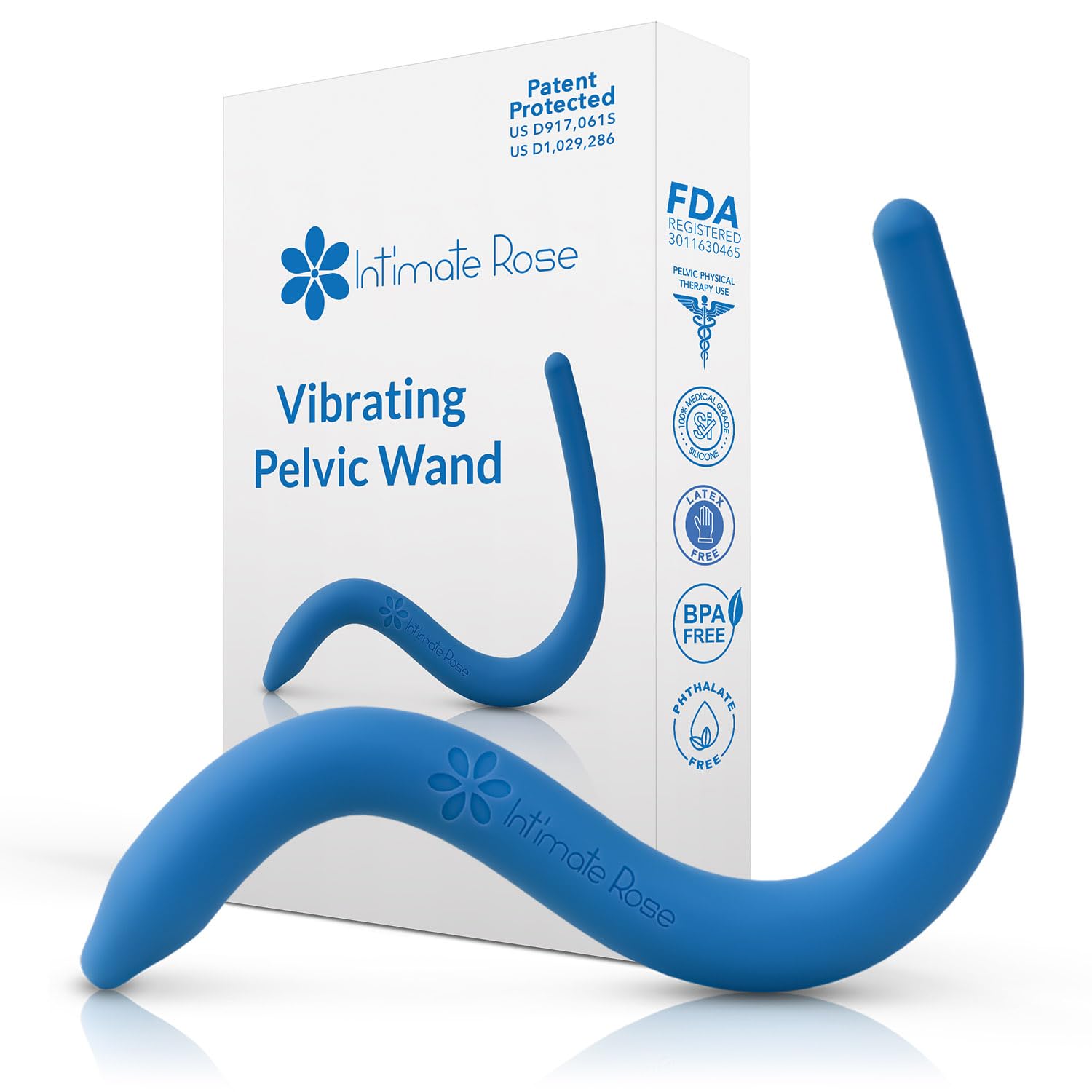
Not a squeeze trainer at all — this one loosens the tight tissue that makes training hurt.
Worth being clear about what this is: the Intimate Rose wand is a therapy tool for releasing tight, tender points in the pelvic floor, not a device that counts your reps. That makes it the natural companion piece to a trainer rather than a replacement. It offers 10 vibration modes, and the vibration is there to improve blood flow to the area and help ease tension out of tender points. A Doctor of Pelvic Physical Therapy designed the angles to reach deep pelvic floor muscles.
The spec sheet backs up the positioning. A single lithium-ion battery is required, and buyers describe around 40 minutes of runtime from a roughly 30-minute USB charge. The silicone is a big part of the appeal — it is described as silky smooth, and the solid build quality means it does not feel flimsy in the hand. Comfort and durability, though, do split opinion: some users find it easy to work with, while others find it painful to use, and there is a report of the handle giving out after roughly one to one-and-a-half years.
One genuinely useful limitation is stated plainly in buyer feedback: this wand handles relaxation better than it handles stretching, so some users pair it with a cold wand for a better result. It also arrives well-packaged with a travel bag and instructions, and the company keeps support staff available. For a man whose pelvic floor is clenched and sore rather than weak, starting here before adding resistance training is the sensible sequence — the training goes much better once the tissue has let go.
Where it shines: 10 vibration modes, a silicone body shaped for deep reach, and roughly 40 minutes of runtime per charge make it a well-sorted release tool rather than a toy.
The catch: it does not strengthen anything on its own, and a minority of users find it uncomfortable — so treat it as the warm-up act to a trainer, not the main event.
Suits you if: your pelvic floor feels tight and sore and you need to release tension before you can train.
Not the one if: you are looking for a device that measures or builds squeeze strength — that is the job of every other pick on this page.
5. Kegel Exercise Device for Men, Soft Silicone Exerciser

A sit-on silicone pad you can use at the desk without anyone knowing what you are doing.
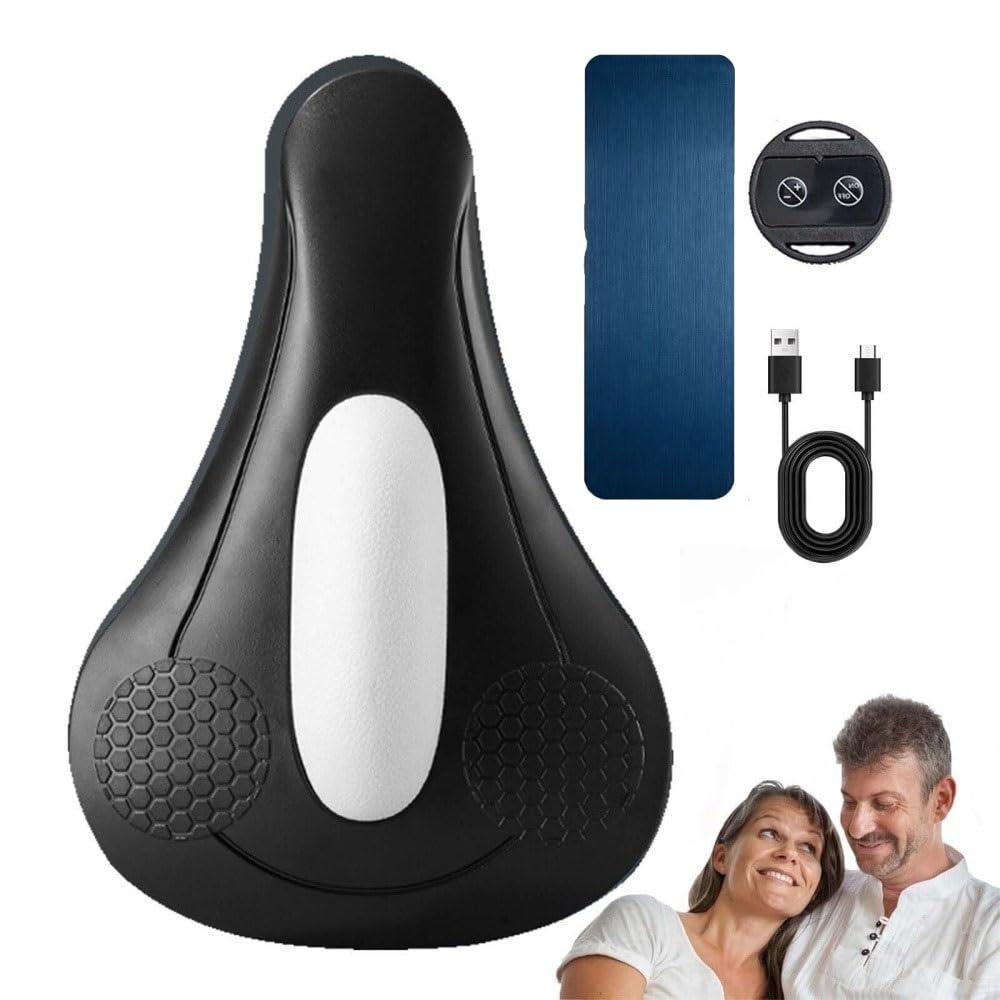
The pitch here is discretion and convenience. You bring the muscles at the base of your hips into contact with the cushion, apply pressure, and work the pelvic floor from a seated position. It is unisex and compact, and the soft silicone is meant to make the whole thing comfortable enough to fold into a daily routine. It runs on a single lithium-polymer battery, which is included, and it clearly suits someone who wants to train quietly at a desk or at home rather than schedule a dedicated session.
But this is the least predictable device on the list, and the operating experience is where it stumbles. The single most repeated frustration is the controls: instructions that do not make the modes clear, a remote that does not reliably command the base unit, and a base that has been known to switch itself on without being asked. There is also a report of the silicone charging cover tearing the first time it was opened. When it works, the build quality gets good marks — buyers describe it as sturdy and well made, and there is positive feedback about improved pelvic floor strength with consistent use.
If you are technically minded and willing to work out the controls by trial and error, the sit-on format is genuinely convenient. If you want something that just works when you press the button, the iStim EM-5200’s 6 programs and 0-16 intensity scale is far easier to reason about. This one is best treated as a secondary, casual-use device rather than the backbone of a training plan.
Where the value sits
- Seated, hands-free format that slots into desk or couch time
- Soft silicone built for comfort during longer sessions
- Compact and portable enough to travel with
- Battery included, so it works straight from the start
The recurring gripes
- Controls and instructions are unclear, with users unsure which mode is active
- Some units have powered on unexpectedly, and one had a charging cover tear on first open
- Vibration patterns can be hard to tell apart
Worth a look if: you want a discreet, comfortable pad you can use while sitting down, and you do not mind figuring out the controls yourself.
Better avoided if: you want clear instructions and predictable behaviour from a device you use every day.
6. Pelvic Floor Exercise Devices, Inner Thigh Kegel Exerciser
No batteries, no app, no learning curve — just squeeze and feel the burn immediately.
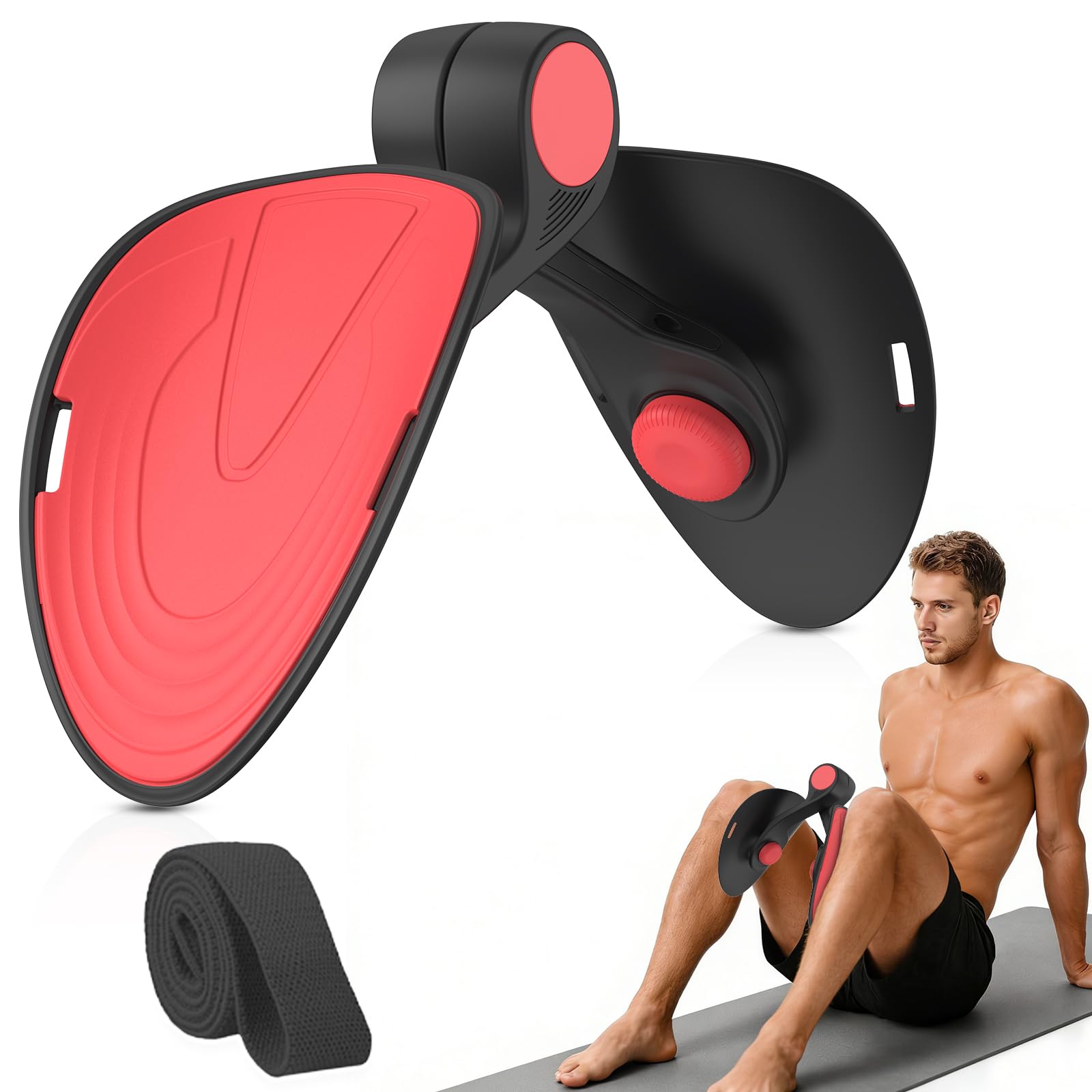
This is the old-school option, and for a certain kind of buyer that is exactly the appeal. You place the exerciser between your thighs, legs or elbows and squeeze. That is the whole routine. Installation takes about 10 seconds across two steps, it needs no power at all, and it works the inner thighs, glutes and core alongside the pelvic floor. The resistance figure is a hard 22 KG/48 LB, and a 40 LB resistance band comes in the box to widen the workout.
The feedback arrives instantly — buyers describe the inner thigh muscles shaking and working from the very first set, and it suits anyone who wants a straightforward tool with no setup to learn. The build is plastic with a 1-year warranty, and it is portable enough to take outdoors. Resistance is where opinion splits, though: this unit offers 2 resistance levels compared with the 4 levels you get from the PelviPulse Pro on this list, so if you like having steps to climb as you get stronger, the ceiling here is lower than you might want. Owners mention the same thing — a wish for slightly more resistance, though the device still gets the job done.
One practical note that will not affect everyone: the padded edges are sized for a smaller frame, and a buyer whose partner fit the pads fine found them too small personally, with the edges digging into the thighs. If you carry a broader build, factor that in. Otherwise this is the simplest, lowest-commitment way to start training, and you will know within a week whether you are the kind of person who keeps up with it.
The case for it: instant burn, zero setup, no battery to charge, a 40 LB band bundled in, and a 1-year warranty on a plastic body that travels easily.
The limitation: 2 resistance levels leaves less room to progress than a 4-level powered unit, and the pads suit narrower builds better.
Choose it if: you want to feel your muscles working from day one with no charging, apps or instructions to decipher.
Pass if: you want progressive resistance levels to grow into, or you know the pad sizing will not suit your build.
7. PelviPulse Pro Men’s Core Trainer
The entry-level way to try seated vibration training, with the biggest caveats on the page.
On paper the PelviPulse Pro looks like a lot of device for the money: 4 train modes, 4 resistance levels, guided vibration, USB-C charging, a quiet-discreet design and a body built from ABS plastic and silicone. It is powered by a battery and operates automatically via a push-button control. If you have never tried a seated pelvic trainer and want the lowest-commitment way to find out whether the format suits you, this is where the entry point sits.
The problem is that the gap between the marketing description and the delivered experience is the widest on this list. There is no instruction manual in the box, which turns what should be a five-minute setup into guesswork — a buyer described having to figure it out without guidance, and the lack of instructions is a recurring theme in the feedback. Customers note units that stop holding charge after weeks of every-other-day use, eventually failing entirely, with charge times stretching from about 30 minutes to 45 before the end. There is also a comfort issue: the hard plastic body has been described as painful to sit on with no give, and some users feel vibration rather than an actual muscle contraction.
To be fair, not everyone has that experience — some reviewers point out the charge lasting a long time and describe it as comfortable with varying intensity. But given the PelviPulse Pro is unproven long-term, and the iStim EM-5200 has a broader program range at a premium tier, most buyers will get more mileage by stretching a little further up the list.
What it gets right
- 4 train modes and 4 resistance levels in one USB-C rechargeable unit
- Quiet, discreet design with a push-button control that is easy to reach
- ABS and silicone body that is comfortable for some users
- The lowest-commitment way to test whether seated vibration training suits you
The honest downside
- No instructions included, so setup is guesswork
- Reliability is the recurring concern — units reported to lose charge and eventually stop working
- The firm plastic seat is uncomfortable for some body types
- Some users feel only vibration, not a real muscle contraction
Reasonable entry point if: you want to experiment with guided vibration training at the lowest cost and accept the reliability risk.
Spend a bit more if: you plan to train daily — the paid-up alternatives on this page reward consistency far more reliably.
Know the Specs
Biofeedback and 5D analysis
Biofeedback means the device measures what your muscle is actually doing and shows it to you, so a weak or misdirected squeeze gets caught in the moment rather than repeated for weeks. Some apps go further and break the reading into separate scores — strength, endurance, precision, contraction quality and speed — which is what lets you see whether you are getting stronger or just getting tired faster. If activation is your problem rather than raw power, feedback is the spec worth prioritizing over vibration strength.
EMS programs and intensity levels
EMS (electrical muscle stimulation) sends gentle pulses that make the muscle contract on its own, which means the device is doing the work while you sit still. The number of preset programs and the intensity range determine how precisely you can match the session to your tolerance — a device with 6 programs and 0-16 intensity gives you far more room to start low and build than one with 2 fixed modes. If you cannot feel or isolate the muscle at all, EMS is often the better starting point than a manual squeezer.
Resistance in KG and LB
Manual trainers quote how hard you have to squeeze in kilograms and pounds — for example 22 KG/48 LB — and the band that ships alongside adds a second, lighter option. Higher resistance is not the goal in itself. Pelvic floor muscles fatigue quickly, so a resistance you can complete comfortably and repeat daily will build more than one you can barely manage twice. Check how many resistance levels the device offers before you commit, since a fixed setting leaves you nowhere to go as you get stronger.
Runtime, charging and battery format
Rechargeable lithium-ion is the standard here, and real-world runtime tells you whether a device fits your routine. A vibrating wand delivering roughly 40 minutes per charge suits a focused session; a unit claiming around seven sessions from a single charge is better for someone training daily without hunting for a cable. Watch the difference between a battery that ships in the box and one you must supply, and note whether the cell is rechargeable — it changes how the device fits into your week.
Common Questions
Can a pelvic floor trainer built for women still work for a man?
How many sessions does a charge actually deliver?
What is the difference between EMS and a manual squeezer?
How long before I should expect to notice a difference?
Is the KegelFit Men or the iStim EM-5200 better for hands-off training?
Do these devices come with everything I need in the box?
Can I use a pelvic trainer while sitting at a desk?
What should I do if a session feels painful rather than like exercise?
Should I buy a trainer and a release wand, or just one?
Does the KegelFit Men really contain the woman’s variant in the box?
The Bottom Line
Here is the short version. If you want to know that every rep is actually doing something, the Perifit Care + with its app is the pick that earns its place at the top — live biofeedback plus 7 guided programs is the combination that keeps men training past the first week, and the improvement buyers describe tends to build steadily with regular use.
If you would rather the muscle was worked for you, the TensCare KegelFit Men is the male-specific EMS option, while the iStim EM-5200 is the one to choose if you want 6 programs and finer intensity control. And if your pelvic floor is tight and sore rather than weak, start with the Intimate Rose wand to release the tension before you add training on top.
The honest nudge: read the two budget-tier picks carefully before you choose them. The HGAUCAI squeezer is a genuinely simple, no-power way to feel the burn — customers note exactly what you would expect, and the fixed 22 KG/48 LB resistance is a real workout. The PelviPulse Pro is the one to approach with realistic expectations around reliability and the missing instructions. Every other pick here rewards consistent daily use, so choose the format you will actually stick with.
How we choose
We do not accept paid placement. Every pick is matched to a real buyer and a real use-case; we do not hands-on test units.
Sources
Specifications: manufacturer listings and product documentation. Review insights: verified customer reviews, as of October 2026. Pricing: not shown on this page (it changes often); check the current price via the retailer link.
As an Amazon Associate, Aappliancez earns from qualifying purchases. This does not affect which products we feature.