Disclosure: Some links in this post are affiliate links. As an Amazon Associate I earn from qualifying purchases, at no extra cost to you. Learn more
Specs are compiled from manufacturer listings and verified buyer reviews and can change over time — please confirm the key details on the product page before buying.
Most peel and stick underlayment listings use the words “peel and stick” loosely, and that is the first thing you need to know before you buy. Only some of the rolls on this list are genuinely self-adhering membranes. The others are synthetic sheets that go down with nails or cap staples. If you order the wrong kind expecting a self-stick sheet, you will find out on the roof. This guide separates the true self-adhered rolls from the nailed synthetics, then explains which one fits your deck, your pitch, and your timeline.
This guide is built by comparing the manufacturers’ published specifications and the patterns across verified customer reviews, so you get each pick’s real strengths and trade-offs instead of marketing spin.
Three things decide which roll you buy: how thick it is in mils (thousandths of an inch), how long it can sit in the sun before it needs covering, and how well it grips underfoot. Whichever of those three you cannot compromise on for your roof is the one that picks the roll. Below is a clear look at the best peel and stick roof underlayment options for a dry, secure deck.
Top Picks


How To Choose The Best Peel and Stick Roof Underlayment
Start with the word “stick.” A genuine peel and stick roll has an adhesive backing under a release film. You peel that film away and press the membrane onto the deck. A synthetic roll has no adhesive at all. It goes down with roofing nails or cap staples and relies on the fasteners to hold it. Both protect the deck, but they demand different prep and different labor. Decide which one you are actually installing before you compare anything else.
Match the material to your roof covering
Asphalt shingles, metal panels, and open porches each put different demands on the layer beneath them. A self-adhered butyl membrane seals around fastener penetrations and is the safer bet where ice dams or wind-driven rain are a real concern. A woven synthetic sheet is lighter, faster to roll out, and works well under metal roofing where you want a barrier against condensation drips. Read the listing’s compatibility line before you commit.
Check the UV window against your schedule
The UV exposure rating tells you how long the underlayment can sit uncovered before the sun starts breaking it down. That number is your slack. If your shingles arrive days later, a short window is fine. If your roof may sit open for weeks while you wait on a crew or a delivery, you need a roll rated for months, not days. Ignoring this is how decks get ruined between installs.
Weigh thickness against how you walk the deck
Thickness is stated in mils, which are thousandths of an inch. A thicker membrane resists tears from dropped tools and boot scuffs. Thinner synthetics are easier to handle and lighter to haul up a ladder. Either way, look for a slip-resistant surface, because a smooth sheet on a steep pitch turns into a slide the moment it gets damp. Traction and thickness trade off against each other, so pick the balance your roof pitch demands.
Do the math on coverage per roll
Every roll lists its coverage in squares, where one square equals 100 square feet. A ten-square roll covers a thousand square feet. Measure your deck area, add a little for laps and cuts, then divide by the roll’s coverage. Buying one roll short means a stalled job and a second order. Buying one roll long means leftover material you can often repurpose as house wrap or ground protection.
Side-by-Side Comparison
| Model | Best For | Coverage | Weight | Install Method | Amazon |
|---|---|---|---|---|---|
| DuPont Roof Protector★ Best Overall | All-round deck protection | 42″ x 286′ | 19 pounds | Fastened synthetic | Amazon |
| SIPA 100 GSMBudget Pick | Budget coverage on outbuildings | 48″ x 250′ (1,000 sq ft) | 21.1 pounds | Fastened synthetic | Amazon |
| HydroShield 50 Year | Fast layout with printed guide lines | 48″ x 250′ (10 squares) | 19 pounds | Fastened synthetic | Amazon |
| Grace Select | True self-adhered DIY membrane | 36″ x 65′ (195 sq ft) | 33 pounds | Self-adhesive | Amazon |
| Titanium PSU30 | Long UV window and steep pitches | 36″ x 72′ (2 sq) | 48 pounds | Peel and stick | Amazon |
| Tyvek Protec 200 | Long-term durability under metal | 48″ x 250′ (1,000 sq ft) | 16.16 pounds | Fastened synthetic | Amazon |
Detailed Reviews
1. DuPont Roof Protector Roofing Underlayment Roll – 42″ x 286′
Our pick — 4.5+★ from 150+ verified ratings; the strongest balance of quality and price.
The four-layer sheet that grips the deck and shrugs off a missed forecast.
Here is the number that should shape your decision: this roll weighs 19 pounds. That is the lightest practical carry on this list, and it matters most on the morning you haul it up a ladder alone. You get a 42-inch wide by 286-foot long roll that covers a lot of deck before you need another one.
The build is four layers: a grip top layer, a water-blocking lamination, a woven polypropylene scrim, and a slip-resistant coating. A top layer gives you grip, a lamination layer blocks water, a woven polypropylene scrim (a mesh of plastic strands inside the sheet) provides strength, and a slip-resistant coating holds the deck. That combination is why tear resistance beats traditional roofing felt. Buyers report it handles and cuts far easier than tarpaper, which is the whole reason a synthetic roll has replaced felt on so many jobs.
The real comfort here is the 3-month weather window before the final roof goes on. The maker states it can withstand the elements for up to 3 months before the final roofing goes on, so an open deck is not a panic. Contrast that with the heavier Grace Select at 33 pounds — this DuPont roll is the lighter lift by a wide margin, and it covers far more deck per roll. What wins people over most is how fast it goes down. An occasional order arrives in a darkish grey rather than the black some buyers wanted, so check the color if that matters to you. The crowd verdict sits at 4.5+ stars across 150+ ratings, and it earns the top spot on that mix of coverage, weight, and grip.
Where it earns its keep
- 19-pound roll is the easiest carry of the picks here, so a solo ladder trip is realistic
- Four layers combine grip, a water barrier, a woven strength scrim, and a slip-resistant coating
- Up to 3 months of weather exposure before the final roof goes on
- Faster and easier to install than tarpaper, per the maker and the buyer consensus
What to plan around
- Color can land darkish grey rather than the black some buyers expect
- Not a self-adhered membrane, so it still needs fasteners to hold it down
- Some orders take a while to arrive, so order ahead of your install date
Go with this: a homeowner or small crew covering a big deck who wants the lightest roll and the longest install window.
Hold off if: you specifically need a self-sticking adhesive layer, since this sheet relies on nails or staples.
2. SIPA 100 GSM Roof Underlayment
A full thousand square feet for the shed, barn, or coop that needs covering now.
If your project is a cabin roof, a shed, or a chicken coop rather than a full house, this is the value play. One roll measures 48 inches wide by 250 feet long and covers 1,000 square feet, so a small structure is handled with room to spare. The membrane carries a 100 GSM rating (grams per square meter, a measure of how much material is packed into the sheet).
The specs line up with the price: it meets or exceeds ASTM D4869 and ASTM D226 and is TDI/FBC approved. It meets or exceeds ASTM D4869 and ASTM D226 performance specs, and it is TDI/FBC approved, so it holds to published standards rather than a vague promise. It also survives UV exposure for up to 60 days, which buys two months of scheduling slack. Under asphalt shingles it stays put and keeps water out. It is compatible with metal roof systems too.
The honest note is durability: some owners mention it only lasts a short stretch, and quality feedback splits both ways. Some buyers find it only lasts a short stretch, and quality feedback splits both ways, so treat this as a fair-weather cover over a dry building rather than a long-term shield on a main house. The good news is installation. Customers note it does not rip easily and is not slippery underfoot while you are on the roof, though roofing shoes and stepping on the plastic nail caps are both smart. For the dollar, it is the cheapest path to a thousand square feet on this list.
The value read: 1,000 square feet of ASTM-rated synthetic for outbuildings, with a 60-day UV window, is hard to argue with on a shed or coop budget.
Fair warning: the durability reports are genuinely mixed, so save it for a barn, cabin, or bird house rather than the roof over your living room.
Reach for it when: you are covering a small outbuilding cheaply and need breadth of coverage over long-term lifespan.
Look elsewhere when: the roof must last decades under heavy weather and you cannot risk a short-lived sheet.
3. HydroShield 50 Year Synthetic Underlayment Single Roll

Printed nailing lines turn a two-person layout into a one-person job.
Weigh the handling against the specs and this roll makes a strong case. It weighs 19 pounds and covers 10 squares across 250 lineal feet at 48 inches wide. Those pre-printed nailing and overlap lines are the quiet win here — you follow the pattern instead of measuring every course by hand.
It holds a 50-year warranty and is guaranteed to shed water. It also carries a stack of compliance codes including ASTM D-4869, ASTM D-5034, ASTM D-226, ASTM D-4533, and ASTM D-7349, plus ICC ESR-4487. For grip on a steep deck, reviewers point out it holds strong traction on a 6/12 roof with staples only, no cap-nailing needed. That traction is the standout feature on a pitch this steep.
One caution comes through clearly, and it is worth stating plainly: despite how some listings read, this is not a peel and stick membrane. It fastens down, and a buyer expecting adhesive was disappointed. Set that expectation and the rest looks good. It lies flat so shingles do not rise and look wavy, and it took a couple days of wind before the shingles went on without ripping. For a synthetic sheet with a printed layout guide, this is a genuinely easy install.
The selling points that matter
- Pre-printed nailing and overlap lines speed up course-by-course layout
- 50-year warranty and a water-shedding build
- Strong traction on a steep 6/12 pitch with staples alone
- Lies flat so shingles sit evenly instead of looking wavy
The catches to know
- Not a peel and stick sheet — it fastens down with staples or nails
- A heavier price tag than the budget synthetic rolls that cover the same footprint
Best suited to: the installer who wants printed guide lines and confident footing on a steep roof.
Think twice if: you came here shopping for a self-adhering membrane, because this one is fastened, not stuck.
4. Grace Select Roll Roofing Underlayment

The butyl membrane that actually sticks down, waxy paper backing and all.
This is the pick for the buyer whose keyword really did mean peel and stick. Grace Select uses a self-adhered butyl material at 25 mils thick (each mil is a thousandth of an inch), and it seals to the deck on contact. It measures 36 inches wide by 65 feet long and covers 195 square feet. Up to 30 days of UV exposure buys you a month of breathing room.
Handling is better than the 33-pound weight suggests, because the waxy paper backing separates cleanly instead of tearing into a mess. It weighs 33 pounds, which is heavier than the 19-pound synthetic rolls here, but it rolls out cleanly. The heavy wax paper backing is the talking point — unlike competitors that use a plastic film, this backing separates without turning into a mess, and it goes smoothly with two people working it. It uses a slip-resistant surface and carries CertainTeed’s SureStart Warranty.
The one honest concern is stickiness holding up over time. Adhesive feedback splits, with some buyers noting the backing lets go after a few months. Most find it very sticky on application, and it suits a DIYer who wants a lower-cost stand-in for a premium ice-and-water shield without the thick, dense build. Keep an eye on it after install if you are counting on the adhesive bond long term.
Who this is for: a DIYer who wants a real adhesive membrane and values the waxy backing that keeps separation tidy.
Keep in mind: the adhesive longevity is the split point, so check your covered areas after the first season.
You’ll want this if: your deck needs an actual self-sticking layer and you are working as a two-person team.
Consider the field instead if: you want the longest adhesive life or you are bidding on a roof where a failed bond would be costly.
5. Titanium PSU30 Peel & Stick Roof Underlayment
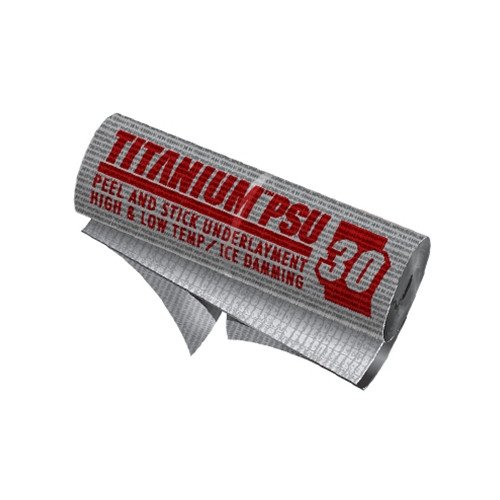
Built for a deck that has to sit open for months before the roof goes on.
Two numbers make this pick for a slow schedule. It carries a 6-month UV exposure rating, the longest weather window on this list. And it sits at 45 mils thick with an asphalt-to-asphalt lap system that fuses the seams watertight. It holds performance from -40 degrees Fahrenheit across to 240 degrees Fahrenheit, so temperature swings are not the weak point.
Your coverage per roll is smaller than the big synthetics. Each roll measures 36 inches wide by 72 feet long and covers 2 squares. It is also the heaviest roll here at 48 pounds, so plan for a two-person lift. The upside is the patented SURE-FOOT slip-resistant surface, which buyers describe as great traction underfoot. It is a genuine peel and stick membrane, so the adhesive is the point, not an afterthought.
The sticky side cuts both ways. In cooler months it may need a heat gun to bond to plywood. In summer heat it grabs anything it touches, including its own backing, and it will not come off once stuck. Line up two or three people and it goes quicker. On a shallow 3:12 pitch, the last rows near the peak can wander and bubble, though some bubbling settles after sun exposure. That application finesse is the trade-off for the long window and tough ripstop layer.
Why it stands out
- 6-month UV window is the longest here, ideal for long open-deck stretches
- 45-mil asphalt-to-asphalt lap system fuses seams watertight
- Rated across -40 to 240 degrees Fahrenheit
- SURE-FOOT slip-resistant surface gives confident footing
The install reality
- 48-pound roll is the heaviest lift on this list
- Adhesive can grab its own backing on hot days, so a second set of hands helps
- Upper rows on a shallow pitch can bubble and wander
Made for: the job that has to wait months for shingles and needs genuine adhesive sticking power.
Skip if: you are working alone, because the weight and grabby adhesive both want help on hand.
6. Tyvek Protec 200 Roof Underlayment – 4′ x 250′ – 1 Roll
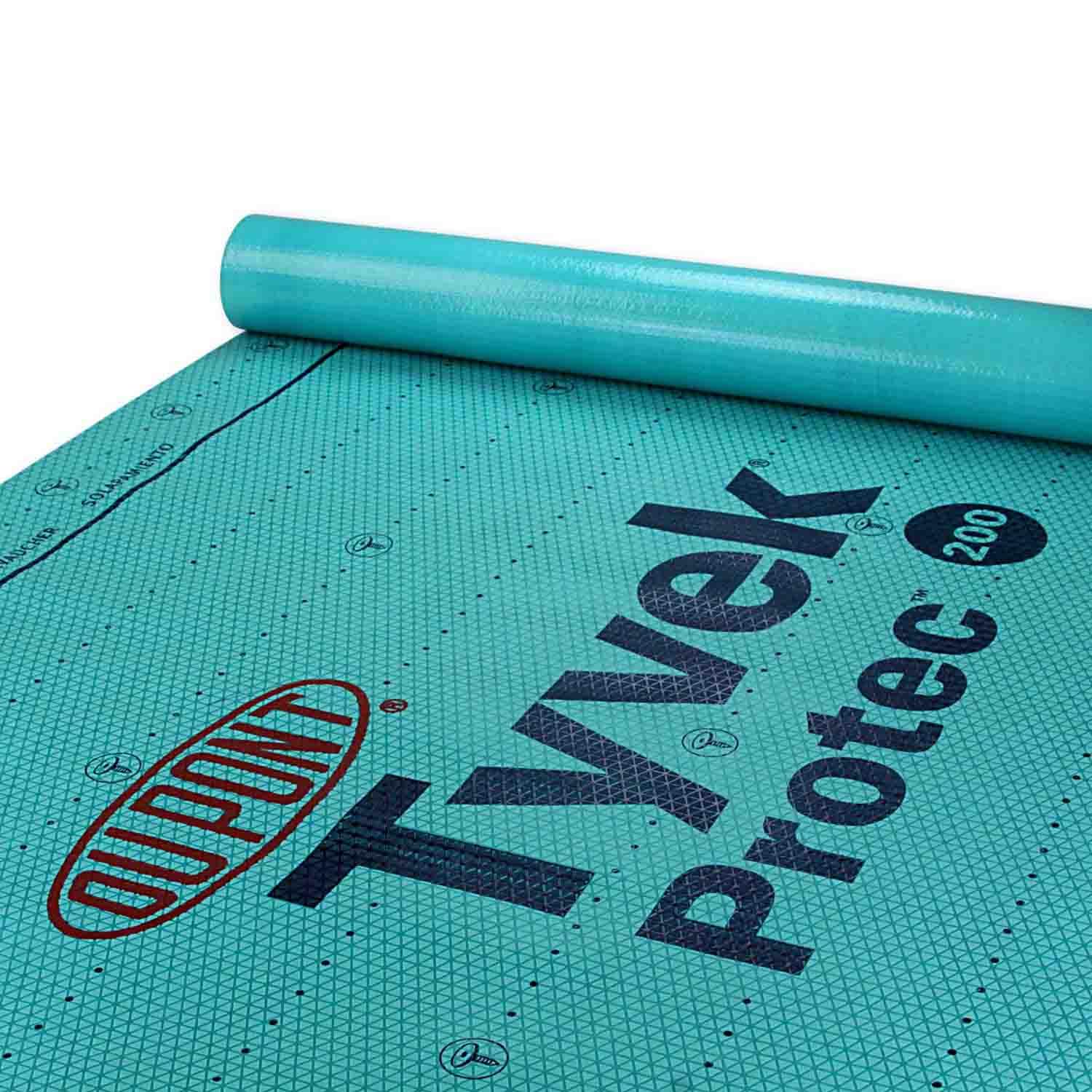
The tough synthetic that shrugs off decades of weather and a boot full of mortar.
Durability is what buyers keep landing on with this roll, and the 50-year warranty and 6-month weather rating back it. It carries a 50-year limited product replacement warranty and is rated for up to 6 months of weather protection. The wrinkle-free build earns a Class A fire rating per ASTM E110, and it holds ICC-ES AC188 code approval plus Miami-Dade County approval. Those are the codes that matter in high-wind zones.
Coverage is generous. One roll spans 48 inches wide by 250 feet long for 10 squares, or 1,000 square feet, at 16.5 mils thick. At 16.16 pounds it is the lightest roll on this list to haul. The pleated texture lets moisture escape if it gets behind the roofing, which is a quiet advantage over smooth sheets. Owners have used it under metal roofing and found it water and snow tight.
The honest trade-off is price and getting the quantity right: some buyers call it pricey, and running a course short means a second order. Value feedback splits, with some buyers calling it pricey. Measure carefully, because running a course short means a second order and it is not always stocked in local stores. The 50-year warranty is the payoff for all of that — the same sheet that shrugs off brickies stomping mortar across it for hours is not going to flinch under shingles.
The long view: a 50-year warranty, a Class A fire rating, and 6 months of weather protection put this in a sturdier class than a short-window sheet.
Plan ahead on: quantity and sourcing, since a course short means another order and it is often online-only.
Pick this when: you want the toughest, lightest-to-haul synthetic and you are willing to measure twice and order once.
Pass on it if: you need peel and stick adhesive or a bargain-basement price per roll.
Know the Specs
Thickness in mils
A mil is one thousandth of an inch, so 45 mils is meaningfully thicker than 16.5 mils. Thicker membranes resist tears from dropped tools and boot scuffs, but they weigh more and can be stiffer to roll. On a walkable deck with heavy traffic, go thicker. On a large light-coverage job, a thinner sheet is easier to handle.
UV exposure rating
This tells you how long the underlayment can sit uncovered before the sun degrades it. A short window in days suits a fast install, while a rating in months suits a project waiting on crews or materials. Match the rating to your worst-case delay, not your best.
Coverage in squares
One square equals 100 square feet, so a 10-square roll covers 1,000 square feet. Multiply your deck area, add a margin for laps and cuts, then divide by the roll’s coverage. Getting this wrong means a stalled job or leftover material.
Stick versus fastened
A self-adhered membrane has an adhesive and a release backing, so it sticks down and seals around penetrations. A synthetic sheet has no adhesive and fastens with nails or cap staples. Both protect the deck; only one does it without fasteners, so pick the method your job calls for.
Common Questions
Is peel and stick underlayment actually self-adhesive, or do some listings mislabel synthetic rolls?
Can I leave peel and stick underlayment exposed to rain before I put shingles on?
Does the Titanium PSU30 work in cold weather, or do I need a heat gun?
What does 100 GSM mean on the SIPA underlayment?
How many square feet does one roll of peel and stick cover?
Will peel and stick underlayment work under a metal roof?
Do I need roofing shoes when installing underlayment on a steep pitch?
What is the difference between a 25-mil and a 45-mil membrane?
Does a thicker membrane mean a shorter UV window?
Can I reuse leftover underlayment for house wrap or ground protection?
The Bottom Line
The strongest overall choice here is the DuPont Roof Protector, and the reasoning is the coverage-to-weight ratio. A 19-pound roll that spreads a 42-inch by 286-foot sheet and holds up to 3 months against weather is the easiest carry of the picks with the most deck per roll. It also beats traditional felt on tear resistance, which is what you want as a secondary moisture barrier. Want genuine adhesive sticking power instead? Go with the Grace Select for its self-adhered butyl and clean waxy backing. And for the longest open-deck window with an actual peel-and-stick membrane, the Titanium PSU30 gives you up to 6 months of UV protection.
One honest nudge if you are still deciding: the DuPont roll sits at 4.5+ stars with the longest track record on this page, so it is hard to go wrong once you know you want a fastened synthetic rather than a sticky sheet. Read the install method line twice, measure your squares (one square covers 100 square feet) once, and order the roll that matches your roof instead of the one that reads best on a listing.
How we choose
We do not accept paid placement. Every pick is matched to a real buyer and a real use-case; we do not hands-on test units.
Sources
Specifications: manufacturer listings and product documentation. Review insights: verified customer reviews, as of October 2026. Pricing: not shown on this page (it changes often); check the current price via the retailer link.
As an Amazon Associate, Aappliancez earns from qualifying purchases. This does not affect which products we feature.