Disclosure: Some links in this post are affiliate links. As an Amazon Associate I earn from qualifying purchases, at no extra cost to you. Learn more
Specs are compiled from manufacturer listings and verified buyer reviews and can change over time — please confirm the key details on the product page before buying.
If you eat pasta with type 2 diabetes, the worry is always the same: one bowl and your blood sugar climbs for hours. The fix is not giving up pasta — it is picking noodles built from eggs, konjac root, lupin beans, or edamame instead of plain wheat flour, so you get far fewer carbs and more protein and fiber per serving. Below are five genuinely different options, from a quick-cooking egg fettuccine to a soy-free edamame spaghetti, each with the real carb, protein, and prep details you need to decide.
This guide is built by comparing the manufacturers’ published specifications and the patterns across verified customer reviews, so you get each pick’s real strengths and trade-offs instead of marketing spin.
The five options below split into two clear camps — egg and bean pastas that cook like the real thing, and konjac or palm-heart noodles that trade chew for near-zero carbs. Pick your camp first, then match the texture to the dish.
Top Picks

How To Choose The Best Pasta for Diabetics
Start with the ingredient list, because it tells you more than any front-of-box claim. An egg pasta, a bean pasta, and a konjac noodle all lower your carb load, but they do it in completely different ways — and each one behaves differently in the pot. Once you know what your noodles are made of, cook time, texture, and sauce choice follow from it.
Read net carbs, not just total carbs
Net carbs are the carbs your body actually absorbs — total carbohydrates minus the fiber, because fiber passes through largely undigested. That is why a pasta can list a modest net-carb number while the total carb line looks bigger. If you count total carbs instead of net, you may rule out a noodle that would have worked fine for you. Check the fiber line on the panel before you decide.
Match the base ingredient to the dish
Egg-and-durum pastas hold their bite, so they suit soups, casseroles, and heavy sauces. Bean-based pastas like edamame bring a firmer, slightly al dente chew that stands up to garlic, tomato, and cheese. Konjac and palm-heart noodles arrive already cooked and packed in liquid, so they need a rinse and a quick heat-through rather than a long boil — and they soak up whatever sauce you give them.
Plan for portion and prep
Texture is where these pastas succeed or fail. Some need nothing more than a drain; others need a longer boil than the package suggests before they lose their rubbery chew. Buy a single pack first, test the cook time that suits your kitchen, then stock up on the one that works.
Side-by-Side Comparison
| Model | Best For | Protein Per Serving | Carbs | Prep | Amazon |
|---|---|---|---|---|---|
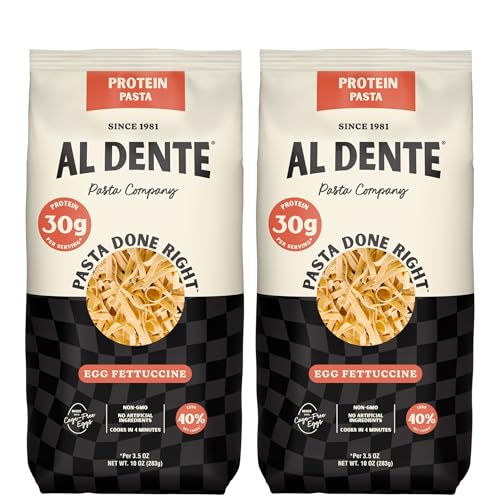
| Al Dente Protein Egg Fettuccine 2-pack★ Best Overall | Replacing regular egg noodles | 30g | 14g fiber, 40% fewer net carbs than wheat | Ready in 4 minutes | Amazon |
| 52USA Konjac Shirataki Noodle 6 PackMost Versatile | Zero-carb Asian dishes | — | Low carb, sugar free | No cooking necessary | Amazon |
| Palmini Low Carb Angel Hair 6-Pack | Cold pasta salads | — | 4g of carbs | Boil about 8-10 minutes | Amazon |
| Kaizen Low Carb Pasta Ziti 3-Pack | Baked ziti and casseroles | 20g | 6g net carb | Stovetop, carton of 4 servings | Amazon |
| Explore Cuisine Organic Edamame Spaghetti 6-Pack | High-protein, soy-free meals | 24g | 13g fiber | Cooks faster than traditional pasta | Amazon |
Detailed Reviews
1. Al Dente Protein Egg Fettuccine 2-pack
Our pick — 4.5+★ from 550+ verified ratings; the strongest balance of quality and price.
The one that actually tastes like egg noodles — 30 grams of protein and no chalky aftertaste
If you miss real egg noodles on a low-carb plan, this fettuccine is the closest swap on the shelf. Each serving carries 30g of protein, 14g of fiber, and 40% fewer net carbs than standard wheat pasta, and the maker builds it from cage-free eggs and premium European durum wheat semolina — not beans or legumes. That matters to your palate, because bean flours are what give so many low-carb pastas that gritty, chalky finish.
Speed is the second thing you will notice. It is ready in just 4 minutes, so a weeknight dinner does not turn into a science project. The firm bite holds up in soups and stews where flimsier noodles fall apart, which is a rare trait in this category. Buyers describe it as indistinguishable from the real thing, and the stroganoff test comes up again and again — as one satisfied cook put it, “Made stroganoff with them it was vary good. Good choice for my type 2 diabetes.”
Taste is clearly what wins people over here — the flavor draws by far the most praise, with the low-carb count and the texture close behind. The honest trade-off is cost and availability of that egg-and-durum formula; a couple of reviewers flag it as pricier than supermarket pasta, and one found the value mixed. If you want the most pasta-like experience and will pay a little more for a truly egg-based noodle, this is your pick.
Why it earns the top spot
- 30g protein and 14g fiber per serving, built on cage-free eggs and durum semolina — no beans or legumes
- 40% fewer net carbs than standard wheat pasta, aimed at keto and point-based diets
- Ready in just 4 minutes and stays firm in soups and stews where other pastas break down
- Taste is the category’s biggest strength — buyers call it indistinguishable from regular pasta
Where it asks more of you
- Value is the one mixed note — some buyers find it a little expensive next to grocery-store pasta
- The egg-and-semolina recipe is a specialty item, so it is not a shelf staple you grab anywhere
Reach for this if: you want a diabetic-friendly fettuccine that behaves like the real thing in soups, casseroles, and stroganoff.
Look elsewhere if: you count every dollar and want the cheapest per-serving noodle — the konjac pick below costs less per pack.
2. 52USA Konjac Shirataki Noodle 52.8 Oz
Six packs of near-zero-carb noodles that soak up whatever sauce you throw at them
Konjac noodles are the classic shirataki swap, and this six-pack spreads the bet across three varieties so you can test which shape suits your kitchen. Each noodle is gluten free, sugar free, soy free, and fat free, made from konjac root — a plant whose fiber is called glucomannan. Because the noodles absorb water as they cook, the maker warns you to chew them thoroughly and avoid overdoing the portion. The upside is real: at 3.3 pounds for the whole box, you get a lot of noodle for a small outlay.
Versatility is what buyers talk about most after the taste, and it makes sense — the noodles carry no flavor of their own, so they take on spaghetti sauce, stir-fry, or a light soup equally well. For anyone tracking carbs closely, that “blank canvas” quality is the entire point. Just know the prep is different from wheat pasta: the noodles are already cooked.
Texture is the honest caveat. Some buyers find it good, others call it rubbery jelly straight from the pack — the fix is a longer boil than the label suggests. Buyers report: “Boil 15-20 min (longer than instructed) for soggy, regular-noodle-like texture; otherwise rubbery chewy jelly.” Value also splits opinions; a few note the price feels high for six servings, though those sticking to keto say it is still the best shirataki they have tried. If you want the lowest carb count and will put in the extra boil, this is a strong, flexible pick.
The carb math: konjac root is about as low as pasta gets — sugar free, fat free, soy free, and gluten free all at once, which is why it suits strict low-carb plans better than any wheat-based option here.
Worth knowing: the box is one 52.8 oz, 3.3-pound package holding six individual noodle pouches across three varieties, so you are not buying a single giant block you have to use up at once.
Pick this one when: you cook stir-fries, soups, and sauced pasta regularly and want the lowest possible carb count with a noodle that absorbs flavor.
Think twice if: you refuse to babysit a pot — these need a longer boil than the label says or they stay rubbery.
3. Palmini Low Carb Angel Hair
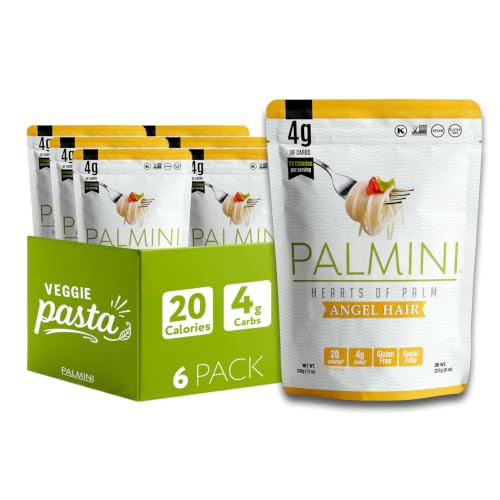
Four grams of carbs a serving and the crunch that cold pasta salads have been missing
Palmini is made from hearts of palm, not grain, so a serving lands at just 4g of carbs. That is the whole pitch, and for anyone chasing low blood sugar impact it is a compelling one. It arrives as six 12-ounce pouches in a single 72-ounce case — at 4.5 pounds for the box, this is a bulky pantry item, so plan shelf space accordingly.
The texture is the dividing line. Some eaters love the slight crunch because it never turns mushy or slimy the way softer substitutes can. Others find that same crunch too firm for a traditional pasta feel. It does, however, hold its shape beautifully in cold dishes, which is exactly where a tender noodle would fall apart. A lot of the praise centers on taste and its role as a pasta stand-in, with versatility right behind.
The cooking note worth remembering is simple: give it a boil if you want it softer. Owners mention: “I do boil the noodles for about 8 minutes and drain.” One package makes about three servings at 20 calories each, so it stretches a long way. And if salads with cherry tomatoes, cucumber, red onion, and a squeeze of lemon are your thing, this is the noodle built for exactly that. The honest catch is that it reads as crunchy, not soft — treat it as its own food, not a fettuccine stand-in.
What it does best
- Just 4g of carbs per serving, made from hearts of palm rather than grain or flour
- Holds its crunch in cold dishes where softer noodles go limp
- Six 12-ounce pouches in a single 72-ounce case — a big, pantry-ready supply
- Each package yields roughly three 20-calorie servings, so it stretches far
Where it splits the room
- Texture is the recurring gripe — the crunch reads as too firm to some eaters and not pasta-like
- Value is a mixed note for a handful who expected a softer noodle for the price
- The 72-ounce case is bulky, so it needs real cupboard space
Best fit: cold pasta salads, stir-fries, and lunch bowls where a little crunch is welcome, not a fault.
Not the pick if: you want a soft, twirlable noodle — the firm bite is the trade-off you are accepting here.
4. Kaizen Low Carb Pasta Ziti 8 Oz
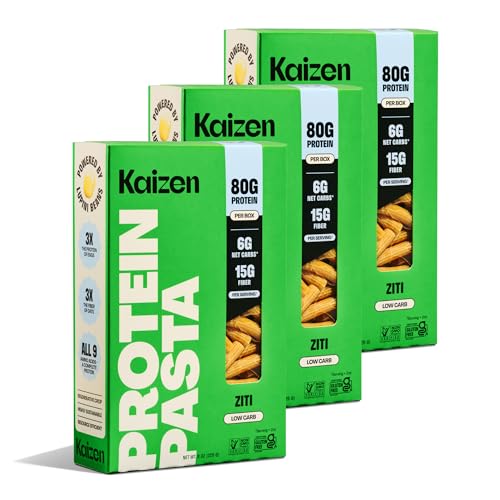
Ziti that survives the oven — 20 grams of protein and 6 net carbs, built for baked dishes
Kaizen is the one to buy if baked pasta is your comfort food. Each 2-ounce serving carries 20g of protein and 6g net carbs, made from lupin beans with no grains, starchy flours, or artificial ingredients. The formula is gluten free, plant based, keto, high protein, and high fiber, and it comes as three 8-ounce cartons — four servings each, 24 ounces total. For anyone who gave up baked ziti along with the carbs, that is a specific and welcome promise.
Holding up in the oven is the standout trait. Customers note the noodles stay satisfying under sauce and stand the bake better than they expected for a low-carb option. One reviewer, happy to have ziti back on the table, wrote: “I’ve been cutting back on carbs lately, but I really missed making baked ziti… Surprisingly, it held up well in the oven.” Texture gets mixed feedback — some find it close to wheat pasta, others describe it as mushy, so cooking time matters.
There is one label reading worth doing before you buy. A carb-tracking dieter points out the 6g figure is net carbs, reached by subtracting fiber from the 21g total carbs per serving. If you count total carbs rather than net, note that difference — it does not make the pasta wrong, but it does mean you should read the panel rather than the front of the box. For baked dishes and flavor-rich sauces, this is the pick that earns its place.
The baking edge: this Ziti is designed to hold shape under a bake, where wheat-free noodles often collapse — 20g protein and 6g net carbs per 2-ounce serving, from lupin beans.
Read the panel: the 6g is net carbs, so if you track total carbohydrates, check the 21g figure before you commit.
Built for: casseroles, mac and cheese, and baked ziti nights when you want pasta back on the menu without the carb load.
Skip the guesswork: if you count total carbs, confirm the 21g per serving first — net-counting eaters will love it here.
5. Explore Cuisine Organic Edamame Spaghetti, 8 oz, Pack of 6
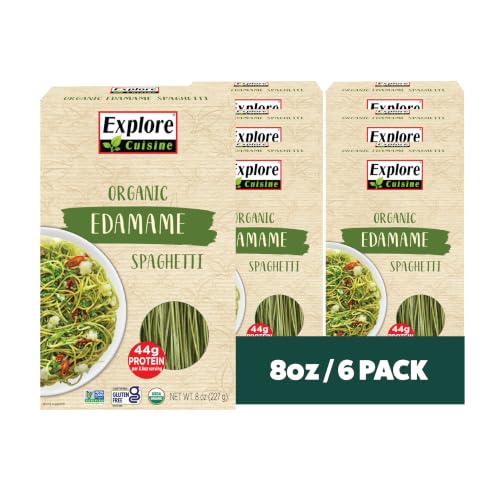
Two ingredients, 24 grams of protein, and a cook time that beats the wheat stuff
Most bagged edamame pasta is just soybeans and water, and that two-ingredient list is the entire appeal — no added flavorings, binders, or gums. Each 3.5-ounce serving delivers 24g of protein and 13g of fiber, and the pasta is USDA Certified Organic, non-GMO, gluten free, vegan, and kosher. Packaged as six 8-ounce boxes, it is the premium end of this list, priced for people who want a clean, plant-based noodle and will pay for the organic certification.
Firmness and speed set it apart from the softer substitutes. It keeps a slightly al dente chew that soaks up sauce instead of dissolving into it, and it cooks faster than traditional pasta — both traits that show up consistently in how buyers describe it. If you have written off low-carb pasta as mushy, this is the one that tends to change minds. One buyer summed up the daily-life payoff simply: “Good choice… edamame is our favorite… It’s so much more nutritious than white-flour noodles.”
The catch is the green color and the strong bean taste — neither is hidden, and neither suits a delicate cream sauce. It is also the least budget-friendly option here. But if you want a soy-based pasta with the highest protein on this list and a bite that stays firm, the trade is fair. For a clean, plant-forward plate with real staying power, it stands on its own.
The plant-based case for it
- 24g of protein and 13g of fiber per 3.5-ounce serving — the highest protein count here
- Two ingredients — edamame and water — with no added flavorings, binders, or gums
- USDA Certified Organic, non-GMO, gluten free, vegan, and kosher
- Cooks faster than traditional pasta and keeps a firm, sauce-grabbing bite
The honest trade-offs
- It cooks up green with a distinct bean taste, so it stands out on the plate and in the sauce
- The most premium price tier here, and a six-box format means committing to a lot at once
- The firm chew and bold flavor are not ideal for delicate cream-based dishes
Ideal for: plant-based eaters who want organic, soy-based pasta with the most protein on this list and a firm, al dente bite.
Not the buy if: you need a neutral, hidden noodle — the green color and beany flavor are front and center.
Know the Specs
Net Carbs vs. Total Carbs
Net carbs are the number that matters for most low-carb and diabetic eating plans — they are total carbohydrates minus fiber, because your body does not fully absorb fiber. A pasta can post a low net-carb figure while the total on the panel is higher, since the fiber is subtracted out. That is why you check both lines: total carbs tells you the whole picture, and net carbs tells you roughly what your blood sugar responds to. If you count total carbs instead of net, a noodle can look more carb-heavy than it functions for you.
Protein and Fiber Per Serving
Protein and fiber are the two numbers that make a low-carb pasta genuinely filling instead of just thin. Protein slows digestion and adds staying power to a meal, and fiber does the same while feeding your gut. In this group, the protein counts run from 20g up to 30g per serving, and the fiber lines sit in the double digits on several options. When you compare pastas, look at both together — a high-protein noodle with modest fiber behaves differently in a meal than a high-fiber noodle with less protein.
Pasta Base Ingredients
The base ingredient controls texture more than anything else. Egg-and-durum pastas, like the Al Dente fettuccine, hold a firm bite, which is why they stand up in soups and casseroles. Bean-and-legume pastas bring a slightly denser, al dente chew that soaks up sauce. Konjac and heart-of-palm noodles arrive pre-cooked and springy, so they need a rinse and a heat-through, and they take on whatever flavor you add. No base wins outright — egg and durum give the closest texture to wheat pasta, while konjac and heart-of-palm give the lowest carb count.
Cook Time and Prep
Cook time varies sharply across these pastas, and getting it wrong is the most common reason people give up on a low-carb noodle. An egg pasta might be ready in about four minutes, while a konjac noodle often needs a longer boil than its label suggests before it loses its rubbery chew. Some options need no cooking at all beyond a rinse. Buy one pack, test the timing on your stove, and note it for future batches.
Common Questions
Which pasta for diabetics has the lowest carbs?
Do these low-carb pastas taste like regular pasta?
How long do I boil konjac shirataki noodles?
Is edamame spaghetti okay for type 2 diabetes?
What does net carb mean on pasta for diabetics?
Can I eat these pastas cold in a salad?
How much protein is in each pasta for diabetics?
Which of these holds up in baked dishes?
Are these pastas gluten free?
The Bottom Line
The strongest all-round choice for pasta for diabetics is the Al Dente Protein Egg Fettuccine 2-pack, because it pairs 30g of protein and 14g of fiber with 40% fewer net carbs than wheat pasta and still tastes like the real thing. If your priority is the lowest possible carb count in stir-fries and soups, reach for the 52USA Konjac Shirataki Noodle 6 Pack. And when you want the highest protein and a clean, plant-based label, the Explore Cuisine Organic Edamame Spaghetti is the one worth committing to —
How we choose
We do not accept paid placement. Every pick is matched to a real buyer and a real use-case; we do not hands-on test units.
Sources
Specifications: manufacturer listings and product documentation. Review insights: verified customer reviews, as of October 2026. Pricing: not shown on this page (it changes often); check the current price via the retailer link.
As an Amazon Associate, Aappliancez earns from qualifying purchases. This does not affect which products we feature.