Disclosure: Some links in this post are affiliate links. As an Amazon Associate I earn from qualifying purchases, at no extra cost to you. Learn more
Specs are compiled from manufacturer listings and verified buyer reviews and can change over time — please confirm the key details on the product page before buying.
You want greenery in that spot where the sun only shows up for half the day. That narrows the field fast, because a lot of grasses sulk in shade and thin out instead of clumping up. The five plants below are the ones that actually tolerate partial shade, and each one suits a different job — a fast evergreen edging, a golden fall plume, a 1-gallon border accent, a tall privacy screen, or a pond-edge rush you can stand in water. Pick by job, not by looks.
This guide is built by comparing the manufacturers’ published specifications and the patterns across verified customer reviews, so you get each pick’s real strengths and trade-offs instead of marketing spin.
Live plants arrive as living things, so the honest question is which one survives shipping and settles in fastest. Below you get plain-English specs, the care each plant really needs, and the live-plant fine print most listings bury. Here is the practical, plain-English read on the partial shade ornamental grasses that earn a spot.
Top Picks

How To Choose Partial Shade Ornamental Grasses
Shade is not one thing. A bed that gets four hours of morning sun is a very different spot from one that sits under a deep maple all day. Before you compare plants, walk outside and watch that spot at noon and again at four in the afternoon. The amount of direct sun you actually count is the number that decides which of these grasses will clump up and which will just sit there.
Match the light label to your real spot
A listing that says “partial shade” is telling you the plant tolerates less than a full day of sun. The Royal Purple Liriope listing describes its ideal as a mix of partial shade and partial sunlight, which is exactly the off-and-on exposure you get under a high tree canopy. Zebra Grass and the Hamlen Grass both list full sun and partial shade, so they give you more room to work with — but both still want real sun for part of the day to bulk up.
Check your hardiness zone before anything else
Your USDA hardiness zone is a number that tells you the coldest winter temperature your area reaches. A plant rated for zones 5-10 survives winters that dip to -15°F, which is what the Variegated Liriope listing states. The Juncus effusus is rated far colder, zones 2-9, but it also carries a list of states that restrict shipping. Always confirm your zone and your state before you click buy, because a plant outside its zone is a plant you are replacing next spring.
Decide the job: edging, screen, accent, or water’s edge
An edging plant needs to be short and dense, so the 12-18 inch Variegated Liriope fits a border line. A privacy screen needs height, which is where Zebra Grass and its 4-8 ft mature height comes in. A single specimen in a container wants a compact shape, like the roughly 1.5 foot Royal Purple. And a pond edge wants something that can sit wet — the Soft Rush can sit in up to 6 inches of water.
Read the live-plant guarantee honestly
Live plants come with warranty terms you will not find on a garden hose. Plants by Mail covers replacement if you report a dead or damaged plant within seven days of shipping, and you must send a photo. Daylily Nursery runs a five-day guarantee that is void if you plant outside your recommended zone, and it does not cover replacements shipped in weather below 32°F or above 95°F. Open the box the day it lands and water it.
Side-by-Side Comparison
| Model | Best For | Light | Mature Height | USDA Zones | Amazon |
|---|---|---|---|---|---|
| 18 Pack Variegated Liriope★ Best Overall | Filling a long shaded border fast | Partial to full shade | 12-18 in | 5-10 | Amazon |
| Zebra Grass, 3 ContainersTallest Screen | A tall privacy screen | Full sun, partial shade | 4-8 ft | 4-9 | Amazon |
| Royal Purple Liriope, 1 Gallon | A single shaded border accent | Partial shade to partial sun | About 1.5 ft | — | Amazon |
| Juncus effusus Soft Rush | Pond edges and water gardens | Full sun, part shade | 36 in | 2-9 | Amazon |
| 3 Hamlen Grass, 4 in Pots | Golden fall plumes among shrubs | Full sun, partial shade | — | 4 | Amazon |
Detailed Reviews
1. 18 Pack – Liriope ‘Variegated’ Grass
Our pick — 4.5+★ from 550+ verified ratings; the strongest balance of quality and price.
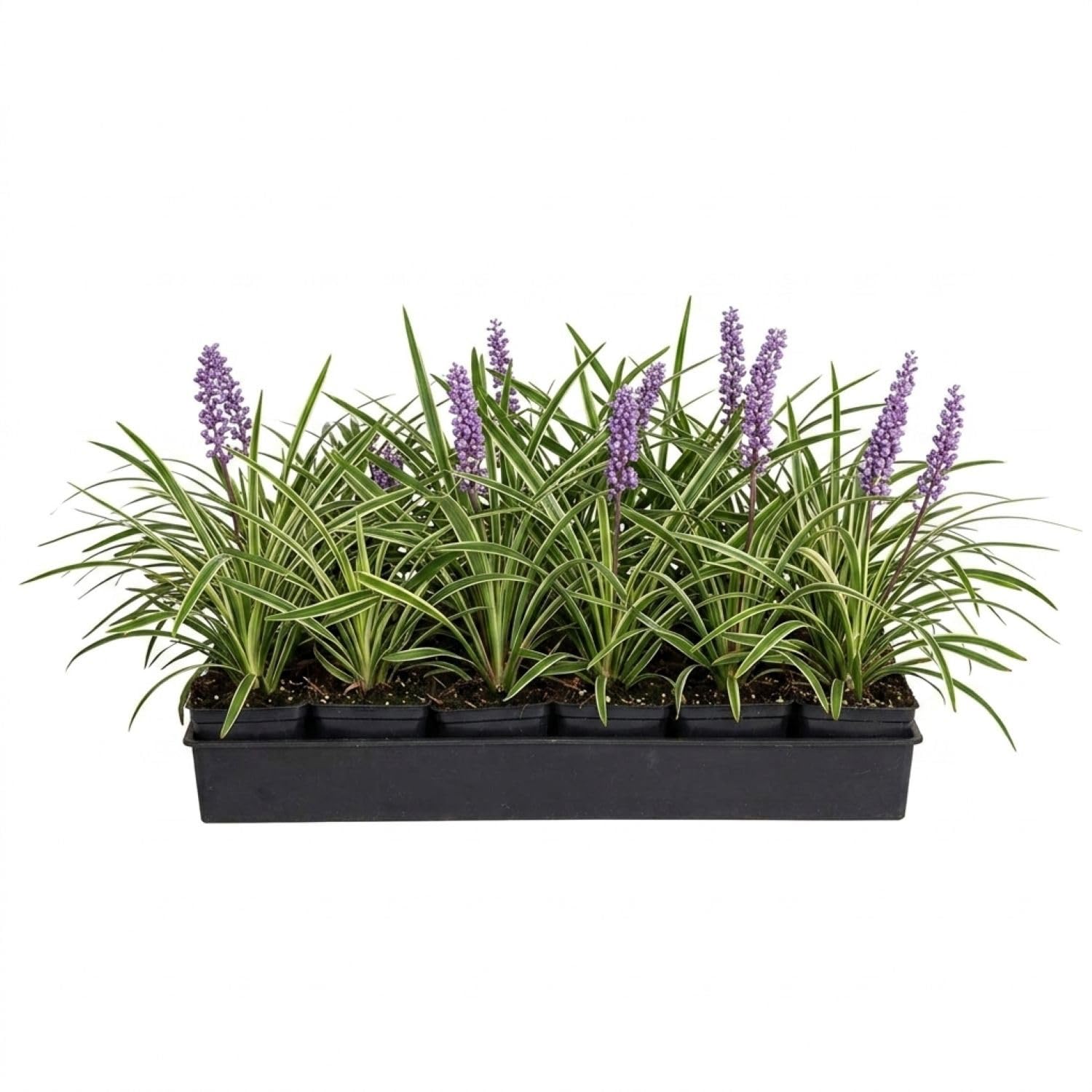
Eighteen striped evergreen clumps that turn a bare shaded edge into a finished border in one afternoon.
If you have a long stretch of shade to dress — the strip along a fence, the curve of a walkway — quantity matters as much as looks, and this pack delivers 18 plants at once. The greenery is Variegated Liriope, also called Variegated Lilyturf: an evergreen perennial with green and white striped leaves that keeps its colour year round. Fully grown it reaches 12-18 inches and spreads into a dense clump, so it knits together instead of leaving gaps. Planted in spring, the clumps send up spikes of small purple flowers in late summer.
What wins people over is the survival rate: buyers report all 18 clumps rooting and thriving. The reputation is built on root systems strong enough to settle in fast, and one buyer summed it up best: “All 18 had amazing root systems and are thriving in my yard.” Buyers judge it on how fast the clumps fill out in the ground, not on how the box looks on arrival. Plant the same day the box arrives, as one buyer warned, since they come nearly full grown. The care is forgiving: partial to full shade, moist well-drained soil, water two to three times a week the first season, then only in real heat or drought.
The catch is the weight and the timing. This is a 10-pound box of live plants, which is noticeably heavier to haul than the 3-pound single Royal Purple pot on this list, so plan to move it straight from porch to bed. It is also drought tolerant only once established — skip a few weeks of watering in the first summer and you will lose plants. Hardy to zones 5-10 and down to -15°F, it handles cold far better than it handles wet feet, so never let it sit in a puddle.
Where this earns its keep
- 18 clumps cover a long border in a single order
- Evergreen green-and-white foliage holds colour all winter
- Eats a 12-18 inch height band so it never hides the flowers behind it
- Happy in partial to full shade, plus deer resistant
Plan around this
- A 10-pound live shipment needs planting the same day
- Drought tolerant only after it is established
- Overwatering invites root rot
Go for it: anyone filling a long shaded edge who wants the job done in one order.
Hold off: if you cannot plant within a day or two of delivery — 18 live clumps will not wait in the box.
2. Zebra Grass 3 Plants in 3 Separate 4 inch Containers
The one that stops being a border plant and starts being a wall.
Three 4-inch pots, and a mature height of 4-8 ft — nothing else here comes close on size. If the shaded spot you are trying to fix is a sightline rather than a border, this is the grass that blocks it. It takes full sun or partial shade, runs in zones 4 through 9, and blooms in late summer. It also happens to be the pick for anyone screening a neighbour’s window or a utility box, because a clump that tall fills vertical space fast.
Speed is the whole story with Zebra Grass: owners call it a fast-growing barrier grass. Owners describe it as a fast-growing barrier grass, and one reviewer planted 24 containers across three months and reported all thriving. The pattern holds on packaging too: healthy 4-inch starts arrive in moist soil, plastic-wrapped and packed tight. Expect the first month to look slow while roots establish, then the height comes. One buyer ordered in late April, planted the day after arrival, and saw little top growth after a month — then it took off.
Here is the trade-off, and it is a real one. This is a zone-4 plant, and the seller’s five-day guarantee is void if you plant outside your recommended zone. It is also not a plant for a dark corner: partial shade means real light for part of the day, and deep shade will leave you with thin, floppy stems instead of a 4-8 ft screen. Gardeners in zone 3 should look at the Soft Rush instead, which is rated down to zone 2.
Screen-builder’s read: Zebra Grass is the only pick here rated to 4-8 ft, which makes it the practical answer to a privacy gap in a half-shaded yard. Pair it with the Variegated Liriope in front and you get a low striped hedge against a tall screen.
Reach for this if: you need height and privacy from a spot that gets sun part of the day.
Think twice if: your shade is deep all afternoon or you garden north of zone 4.
3. Royal Purple LIRIOPE 1 Gallon
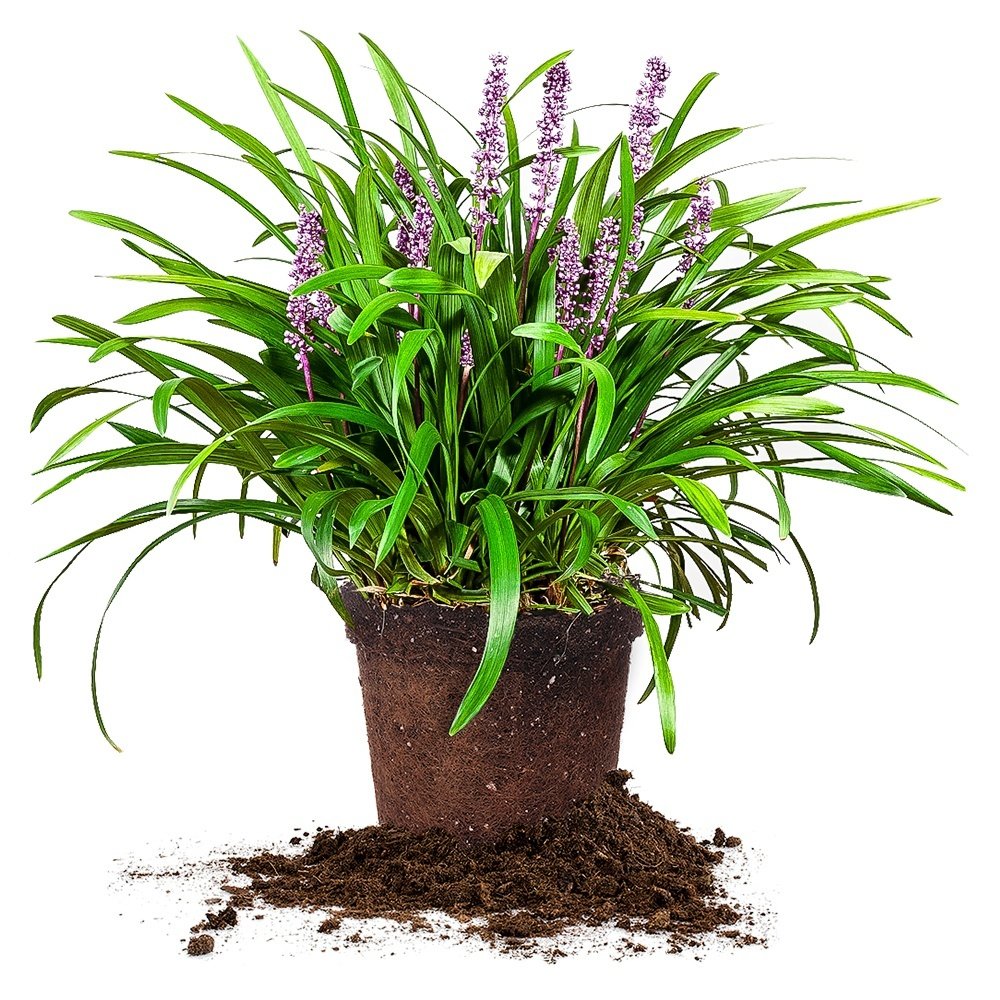
One fat 1-gallon pot of dark green foliage — the tidy answer to a single awkward shaded corner.
Not everyone needs 18 plants. If your problem is one bare spot beside a porch step or between two shrubs, a single gallon-sized specimen makes more sense than a tray of plugs, and this is that plant. Royal Purple Liriope trades the white striping of the pack above for a solid dark green with a rich purple bloom in spring. Slender leaf structure and an outward growth habit mean it spreads into a mat that crowds out weeds. At maturity it tops out around 1.5 feet high and wide, which is why it fits cramped beds with off-and-on sun.
What this liriope is prized for is its glossy dark green foliage and tidy shape right from the start. The appearance is the draw — glossy foliage, good shape, and a plant that perks right back up on a porch. The brand also earns credit for its packing: protective wrapping and a plant that arrives in great condition. It ships as a live plant rooted in its pot, ready to go straight into soil, and the box includes a special blend fertilizer and a planting guide, which removes some guesswork for a first-time grower.
The honest note: these arrive at different sizes. Some come in large and full, others smaller than a gallon pot implies, so set your expectation on the smaller side and be pleased if you get a big one. A four-star buyer described one order as green, full and well rooted and one bloomed about a week after planting, then found a later order arrived with yellowed, waterlogged leaves — reading the fine print helps. If you garden in California or Arizona, you cannot order this at all; both states restrict it.
What the 1 gallon buys you: instant presence. A plant this size fills a container or a border gap on day one instead of the following spring, which is the whole point of paying for a potted specimen instead of a plug. The 3-pound shipping weight makes it easy to carry, and heavy wet soil in fall can push the buyer toward a smaller pot for a tight porch container.
Fits best: a single shaded accent spot or a porch planter where one substantial plant beats twenty small ones.
Look elsewhere if: you are in California or Arizona, or you want a guaranteed uniform size across several pots.
4. Juncus effusus #1 Container
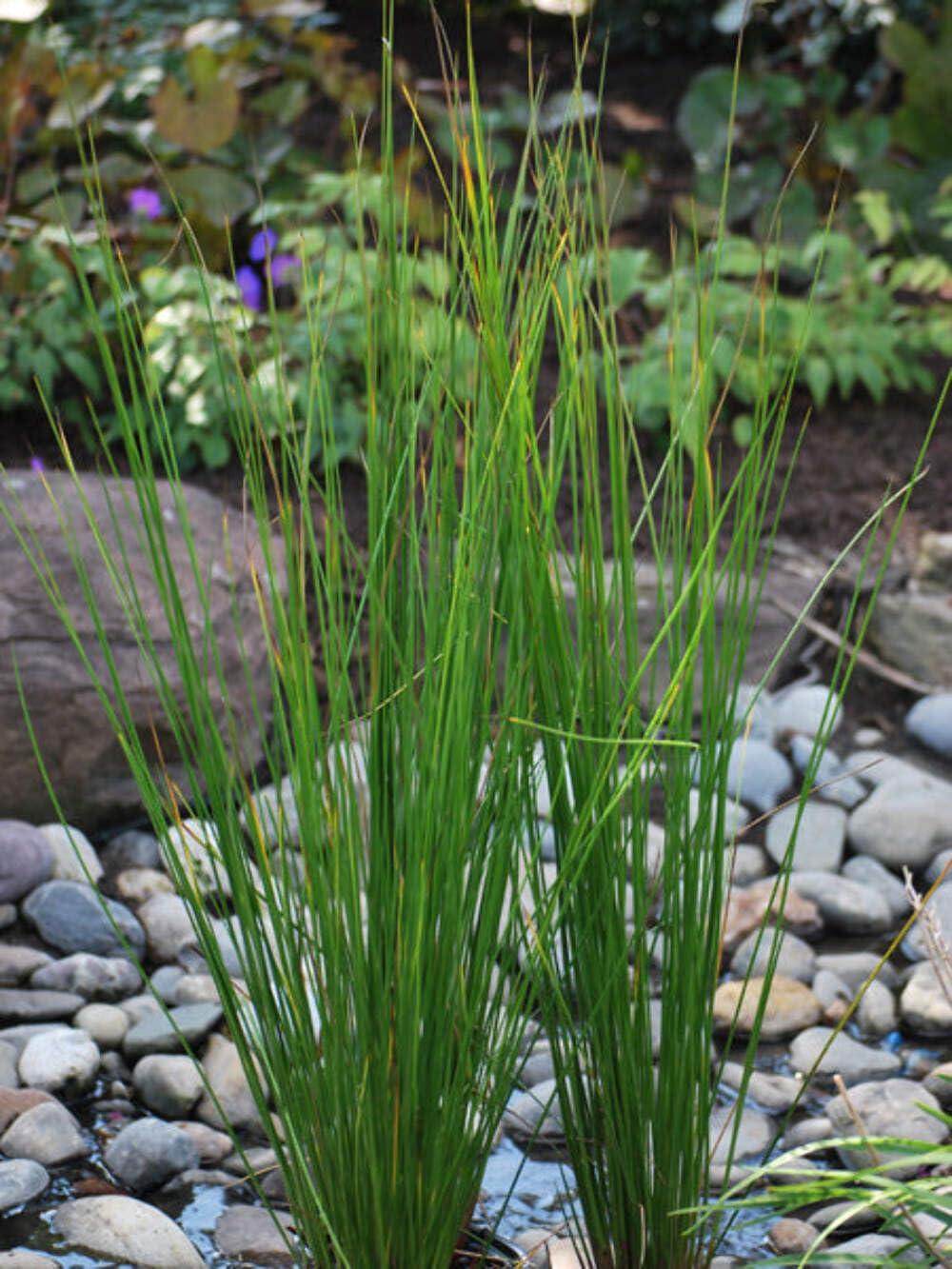
Rounded stems that can stand in six inches of pond water — and survive a northern winter.
This one is different in kind. Juncus effusus, or common soft rush, is a native wetland plant with rounded stems about a quarter inch thick that reach up to 3 feet, fanning out into a rich green fan. The fact that matters: it can sit in up to 6 inches of water. That makes it the pick for a pond edge, a water garden, or a boggy low spot where everything else rots. It is also rated for zones 2 through 9, so it is the coldest-hardy plant on this list by a wide margin.
Healthy plants grow fast here — roots establish quickly, and two 1-quart plants slotted into shallow pond ends took off without fuss. It does need help standing upright in water: without a square pond basket plus rocks for ballast, the clump tips over. Pair it with pebbles or a fabric pond pot and it stays put. Note that the fertilizer included with some orders can turn pond water green; a clarifier fixed it for one buyer, while algae treatment alone did not.
Two hard limits to know before you order. First, this plant is restricted in a long list of states — Alaska, Arizona, California, Colorado, Idaho, Montana, Nevada, Oregon, Utah, Washington and Hawaii — so check yours first. Second, if it ships between November 1st and March 1st it may arrive dormant and trimmed back, which is normal, not a dead plant. A small share of orders arrive and then die, though the far larger story is thriving pond plants that look like they came from a nursery.
The water-garden angle: nothing else on this list tolerates standing water at all, so if your “partial shade” spot is also your wet spot, the rush wins by default. Space it 18 inches apart and it reads as a deliberate planting rather than a volunteer.
Right pick for: pond edges, water gardens, and cold-climate yards that need something wet-footed and hardy.
Not for you if: you live in one of the restricted states, or you want a plant that arrives green in mid-winter.
5. 3 Hamlen Grass in 4 Inch Containers/Dwarf Fountain Grass

Three dwarf fountain grasses grown on a Tennessee farm, with buff plumes that arch over shrubs.
Plant this one for the show, not the coverage. Dwarf fountain grass throws fluffy buff-coloured plumes that arch above the foliage, and that contrast among shrubs or at the back of a perennial bed is the reason landscapers reach for it. The foliage itself turns golden-russet in fall, so you get a colour change the evergreen picks above never give you. It blooms in fall, plants best in fall, and takes full sun or partial shade in zone 4.
Arrival condition is the good part: the three pots come hand-wrapped in plastic film, packed in moist rich dirt, and staked with bamboo. These three arrive hand-wrapped in plastic film, packed in moist rich dirt, and staked with bamboo, and one reviewer noted the trio came through 101°F heat with some blades reaching 20 inches. Growth speed is the other consistent note — the grass is described as growing fast and looking really pretty once it settles. Three 4-inch starts in separate pots also means you can divide them across different spots rather than committing all three to one bed.
Set expectations on size and winter survival. The recurring gripe is that pots run smaller and less full than the photos suggest, and one 3-star buyer measured pots about an inch smaller than advertised. More seriously, a few of these do not make it through a cold winter even when mulched — one buyer lost all three after wintering in the ground. If your winters bite, treat these as an annual or bring them into a container you can shelter. The seller’s five-day guarantee does not cover loss after that window.
Worth it for: anyone who wants warm buff plumes and a fall colour shift in a half-shaded bed.
The single caveat: in a harsh-winter yard, plan for these to be a seasonal planting rather than a permanent clump.
Know the Specs
Partial Shade Means Real Light, Just Not All Day
When a listing says partial shade, it usually means the plant wants some direct sun but can handle a break in the middle of the day, or dappled light through a canopy. It does not mean deep, dark shade under a low deck. The Variegated Liriope goes a step further than most, tolerating partial to full shade, which gives you far more room than the grasses that insist on sun for most of the day.
USDA Zones Tell You the Coldest Night It Survives
Hardiness zones are a range of numbers that map to the lowest winter temperature a plant can take. The Variegated Liriope is rated for zones 5-10 and tolerates cold down to -15°F, while the Soft Rush goes as low as zone 2. Order a plant rated for a warmer zone than yours and you are buying a second plant next spring. Your zone is on every seed packet and most nursery tags.
Pot Size vs. Mature Height
A 4-inch container is a small start that will bulk up in the ground; a 1-gallon pot is a plant with a full root ball that fills space sooner. That is why the Royal Purple in its 1 gallon pot is the better choice for a single visible gap, and the 18-pack of small Liriope plugs wins when coverage matters more than immediate size.
Water Tolerance Is the Real Divider
Most ornamental grasses rot in standing water. The Soft Rush is the exception and can sit in up to 6 inches of water, which is what makes it a pond plant. Liriope wants moist, well-drained soil and will develop root rot if overwatered, so these two should never be swapped for each other no matter how similar the light needs look.
Common Questions
Will Variegated Liriope really grow under a tree in partial shade?
How tall does Zebra Grass actually get in a half-shaded bed?
Can I put Juncus effusus straight into my pond?
Which states restrict shipping on live ornamental grasses?
How soon do I need to plant my box after it arrives?
What happens if my plant arrives dead or damaged?
Is dwarf fountain grass a perennial in a cold climate?
Do these grasses need fertilizer the first year?
How far apart should I space a Soft Rush planting?
Are any of these safe from deer?
The Bottom Line
If your shaded edge is long and bare, the winner is the 18 Pack Variegated Liriope. Eighteen evergreen striped clumps cover a border in one order, they handle partial to full shade, and its record of shipping with roots strong enough to settle in fast is why it stays the crowd favorite — 4.5+ stars from 500+ reviewers. If you need height and privacy instead of a border line, grab the Zebra Grass; it is the only pick here rated to 4-8 ft. And for a pond edge or a wet, cold spot where nothing else will hold, the Juncus effusus Soft Rush is the one to reach for, thanks to that 6-inch standing-water tolerance and zone 2 hardiness.
How we choose
We do not accept paid placement. Every pick is matched to a real buyer and a real use-case; we do not hands-on test units.
Sources
Specifications: manufacturer listings and product documentation. Review insights: verified customer reviews, as of October 2026. Pricing: not shown on this page (it changes often); check the current price via the retailer link.
As an Amazon Associate, Aappliancez earns from qualifying purchases. This does not affect which products we feature.