Disclosure: Some links in this post are affiliate links. As an Amazon Associate I earn from qualifying purchases, at no extra cost to you. Learn more
Specs are compiled from manufacturer listings and verified buyer reviews and can change over time — please confirm the key details on the product page before buying.
You can bring a faded boat seat, a sun-bleached car interior or a stained patio cushion back to life with a spray can and a few hours of good weather. The catches are real: vinyl has to be cleaned properly before any color goes near it, and marine coatings survive sunscreen and wet swimsuits better than general-purpose ones. This guide covers the prep spray and the color coats that owners actually trust, so you can pick the right prep-and-color pair the first time instead of the third.
This guide is built by comparing the manufacturers’ published specifications and the patterns across verified customer reviews, so you get each pick’s real strengths and trade-offs instead of marketing spin.
The trick is treating prep and color as two separate jobs: clean and soften the vinyl first, then lay the color. That is exactly why the right paint for vinyl upholstery starts with a proper cleaner rather than a can of color.
Top Picks


How To Choose The Best Paint for Vinyl Upholstery
Most first-time projects fail on the step people skip: cleaning. Vinyl flexes every time someone sits down, so a coating that cannot grip clean vinyl will crack off within weeks. Buy the prep product first, then the color, and treat them as one system from the same brand where you can.
Prep spray or degreaser first
A vinyl prep is a strong solvent blend that lifts soil, wax and grease — the greasy film that ordinary household cleaner leaves behind. It also softens the surface so a flexible topcoat can bond instead of sitting on top of grime. Spray it, wipe it, then let the surface flash off fully before you paint.
Dye vs coat vs marine coat
A spray dye soaks color into fabric and textured vinyl, while a color coat lays a flexible film over the surface. A marine coat is built for boats, meaning sun and water, and it is the one to look at if your seats live outside. Read the product page for which one it actually is, because the words are not interchangeable.
Coverage and volume per job
Coverage is the number that ruins plans. Large cushions and full seat backs eat a can fast, so count your square footage and plan to buy two cans where one looks close. A 15 oz can and a 12 oz can are different jobs’ worth of paint, even before you add extra coats for dark spots.
Side-by-Side Comparison
| Model | Best For | Volume | Form | Dry Time | Amazon |
|---|---|---|---|---|---|
| SEM 38343 Vinyl Prep★ Best Overall | Cleaning before any coat | 14.1 Fl Oz | Liquid | — | Amazon |
| HI-TECH Big Can Black Spray DyeMost Coverage | Restoring faded black | 15 Ounce | Aerosol | — | Amazon |
| Camel (SEM-15173) | Matching tan and beige interiors | 12 fluid ounces | Liquid (aerosol can) | 16 hours | Amazon |
| SEM M25083 Carver White Marine Vinyl Coat | Boat seats in sun and water | 12 fluid ounces | Aerosol | — | Amazon |
| Dupli-Color HVP113 Medium Beige | Fabric and vinyl cushions | 11 fluid ounces | Aerosol | 1 hour | Amazon |
Detailed Reviews
1. SEM 38343 Vinyl Prep – 13.3 oz.
Our pick — 4.5+★ from 550+ verified ratings; the strongest balance of quality and price.
The unglamorous solvent prep that decides whether your new color survives its first summer.
Colors get the glory, but this 14.1 fluid ounce solvent liquid is the step that makes them stick. It cleans soil, wax and grease off the vinyl while it softens the surface so a flexible topcoat can grab on. The brand lists it for vinyl substrates, and the phrasing on the label is narrow on purpose — it is a cleaner and surface opener, not the color itself.
Where this beats the other picks is the flexibility it gives you afterward. Because it works as a system with SEM’s own flexible coatings, you can pair it with anything from Carver White marine coat to a Camel color coat and get a known result. Skipping it and spraying straight onto a waxed or greasy seat is the classic cause of a coating that flakes at the seams.
Your realistic complaint will be cost. A few owners do the same job with a final wipe or plain alcohol and call this expensive for what it is. So the honest read: it earns its price on a boat or a car you care about. On a cheap throwaway project, a plain solvent wipe gets you most of the way. On seats you want to last, buy the prep.
What it does well
- Cleans soil, wax and grease in one pass — the exact film that makes new paint flake
- Softens the vinyl surface so a flexible topcoat bonds instead of sitting loose
- Boat and auto restorers on forums name it as their default first step
- 14.1 fluid ounce liquid bottle goes a long way per seat
Where you feel the cost
- Priced above a plain alcohol or final-wipe approach for the same cleaning job
- Strong solvent smell — plan to work outdoors or in a well-ventilated garage
- Delivers no color on its own; it is a step, not a finish
Reach for this: whenever you are repainting boat seats or a car interior you want to keep, because the prep is what lets the coat stay put.
Think twice if: your only goal is a quick color touch-up on a cast-off chair and you already have a solvent wipe on the shelf.
2. HI-TECH Big Can Black Spray Dye
A 15 oz black-restoring dye can that sprays color over faded carpet and vinyl like a stain, not a repaint.
If your seats or mats are faded to gray, this is the fastest route back to black. The can holds 15 ounces of aerosol dye, and the maker puts that at 33% more than standard spray dyes — a claim worth knowing because coverage per can is what decides how many you buy. The snorkel-style nozzle with an adjustable fan pattern lets you narrow the stream for a scuffed mat corner or open it wide across a full cushion, with less overspray on textured vinyl.
Truck mats and patio pieces come out looking redone. Owners describe floor mats that took multiple coats and held up for months. One long-running favorite of reviews here is the RV carpet that went from stained beige to a deep black without the color migrating onto clothing. The maker describes the cured finish as permanent and flexible, meant not to crack, split, peel or rub off.
The catch is compatibility, and the maker’s own caution hints at it. Works dependably on the plastics and fabrics it likes, and then a blue hard case or a faded cloth saddlebag can streak gray and stiffen instead of dyeing. Test a hidden patch first on any surface that is not plain carpet or vinyl. As buyers put it: “It’s good stuff easy.”
The coverage story: 15 ounces per can against the smaller cans on this list, with a fan tip that makes full-surface passes quick and even.
Pick it for: black-only restoration on carpet, mats and vinyl where you want volume per can and a fast turnaround.
Skip it for: light colors — this is a black dye, and the manufacturer’s own warning means a spot test on unfamiliar plastic is not optional.
3. Camel (SEM-15173)
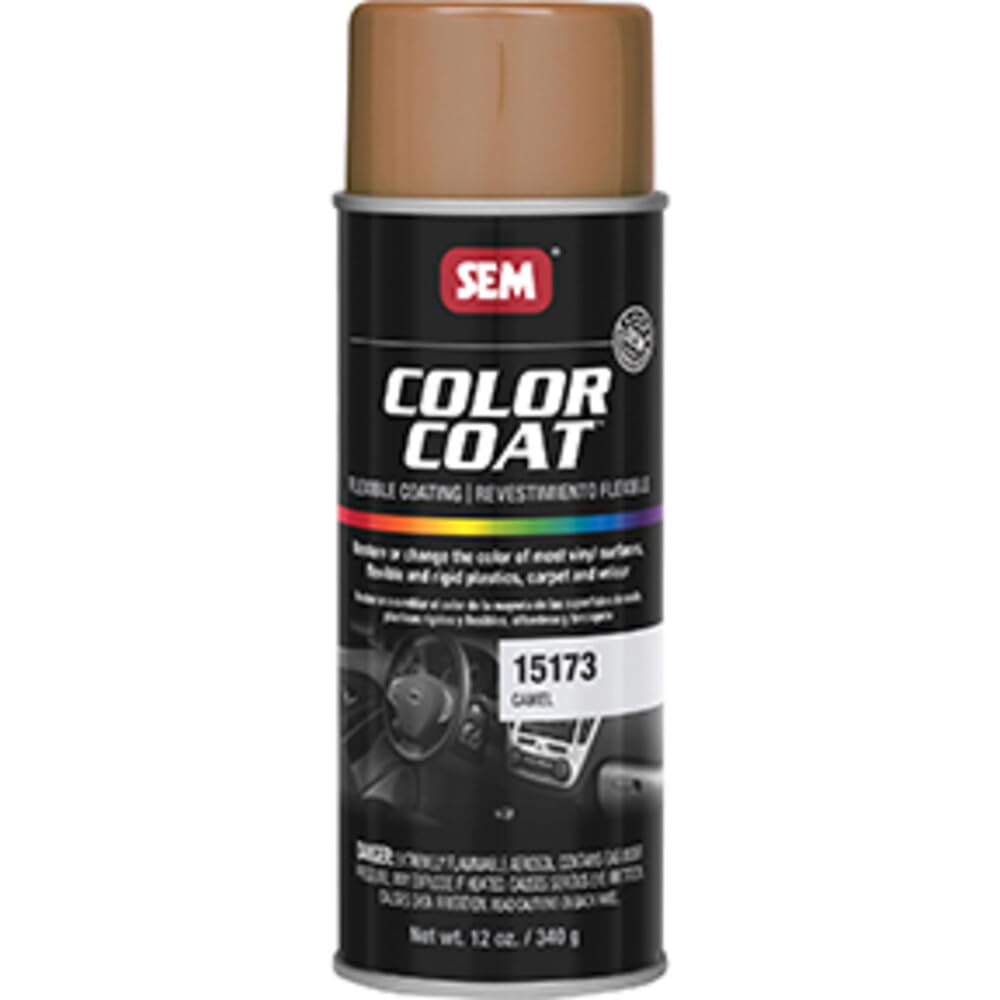
The tan that makes twenty-year-old Jeep and Volvo interiors look factory again.
Matching a factory tan is the whole game here, and this one plays it well. It is a flexible, fade-resistant color coat — not a dye — that goes on as a film over vinyl, plastic and carpet, so it covers rather than soaks. The color code is #C2B280, and the gloss finish is what gives a renewed seat that factory sheen.
You get real coverage numbers to plan with: about 25 square feet per 16 oz, across a 12 fluid ounce can. Plan a full cure window too, because the listed dry time is 16 hours — so this is a weekend job, not an afternoon one. The coverage holds up in use; owners repainted airbag covers, cup holders and whole seat sets and found the color landed close, and the recurring remark is that three coats over good prep produce a factory-looking result.
What wins people over is the color match, and it is not luck. Boosters of this line point to the 1997 Jeep TJ camel interior and the 1998 Wrangler TJ Sahara as near-perfect matches, and a few go lighter instead of darker and still land on the factory shade. One honest gripe that shows up is the nozzle clogging mid-job, which means stops to clean the tip with paint thinner — buy a spare can so a clog does not stall you at 80%.
The number to plan around: 25 square feet of coverage per 16 oz can, with a 16-hour cure — so count your panels and clear a full day.
Where it wobbles: nozzle clogging is the recurring gripe; the color itself rarely disappoints.
Best for: anyone chasing a specific factory tan or beige, especially older Jeep and Volvo interiors where the shade has to be right.
Look elsewhere if: you need the paint dry and back in service the same day — 16 hours is the listed cure time.
4. SEM M25083 Carver White Marine Vinyl Coat – 12 oz.

White vinyl on a boat takes a beating; this coat is built for exactly that beating.
Boat seats see sun, salt and wet swimsuits, and this is the coat aimed at that life. The Carver White shade is a close match for white and off-white marine vinyl, and the gloss finish gives it that factory sheen. It is an aerosol can at 12 fluid ounces, so you get a workable amount for a seat set, though not a whole boat.
The application stories are encouraging. Buyers report it spray-dries fast and adheres well, and multiple coats on a ’98 Sea Ray restored the pliability of old seats instead of leaving them stiff. The good results lean on process: the full SEM prep routine first, a lint-free cloth, no bare-hand contact, and a week of sun curing. Do that and the finish looks like new vinyl.
Where it earns its keep and where it stumbles are both worth knowing. Heavy-contact seats used with wet bathing suits can rub the color up, so keep a can on hand for touch-ups — which is why the practical advice from the boat crowd is to own two cans. And 12 fluid ounces goes quickly if you need four coats, which is common on dark-spotted seats.
The honest verdict: a solid marine white for boats that live outside, best bought in pairs since the can runs dry before the job does.
The caveat: wet swimsuits on high-contact seats can wear the finish, so plan on an occasional re-spray.
5. Dupli-Color HVP113 Medium Beige Spray

One-hour dry, no primer, and it puts color on both fabric and vinyl.
Two jobs, one can. This is a high-performance spray that the maker says works on both vinyl and fabric with maximum adhesion and no primer needed. It has a listed dry time of just 1 hour — which is why it suits a quick cushion refresh rather than a multi-day restoration. You get two 11 fluid ounce cans, so the pair makes a realistic dent in a patio set.
The fabric side is the standout. Cushions and even a tent took the color well, with the tent staying water-resistant after the change and the material going only slightly stiffer. Owners mention the no-crack, no-peel, no-blister promise held for a full season, with one beige set still going strong through a hot summer of afternoon sun. On a rust-colored cushion it fully hid the old color once the coats were built up.
Two cans does not mean infinite coverage. A single can covered one 24 x 24 x 6 inch cushion with touch-up needed from the second, and a pair of large 48 inch cushions took more than people expected. The finish stays soft to the touch, which matters on fabric, and the medium beige is a close shade rather than a deep palette choice. Buy a third can for anything bigger than a small set.
Worth grabbing for
- 1-hour dry time — a cushion refreshes the same day
- Works on fabric and vinyl with no primer needed
- Two 11 oz cans per pack stretch across a patio set
- Medium beige hides stains and holds up through a hot summer
Budgets to plan for
- One can covers about one large cushion, so big sets need extras
- Limited shade range — medium beige is the color you get
- Fabric can stiffen slightly around the textured weave
Best for: patio cushions and mixed fabric-and-vinyl furniture where you want a fast, soft-feeling coat.
Skip if: you are repainting a whole boat interior and need a marine-specific coat and a wider color palette.
Know the Specs
Volume and coverage per can
Volume, measured in fluid ounces, tells you how much paint you have; coverage in square feet tells you how far it goes. A can that states coverage per can — like about 25 square feet per 16 oz — lets you plan coats before you buy. Always count a second and third coat into the budget on dark spots or big cushions.
Cure and dry time
Dry time and cure time are not the same. A fast dry time of 1 hour means it is touch-safe soon, but a full cure can take far longer — one pick lists 16 hours. Plan your project around the cure, because flexing a seat before the coating has set can cause peeling.
Dye or flexible coat
A dye soaks color into fabric and textured vinyl; a color coat lays a film across the surface. A dye restores faded black quickly, while a coat gives you a flexible finish that hides stains and lets you match a factory shade. Read which one the can is before you pick your color.
Marine and fade-resistant properties
A marine coat is built for sun and water, which is why it matters on boat seats. Fade-resistant coatings hold color longer in sun, while a gloss finish gives a factory sheen. If your seats live outdoors, ask for both properties before you buy.
Common Questions
Do I really need a vinyl prep before painting?
How long should I let the paint dry before using the seats?
Will it work on boat vinyl that lives in the sun?
Can I use a black dye to restore gray seats?
Does vinyl paint work on fabric cushions too?
How many cans will one seat need?
Will the color rub off on clothes or wet swimsuits?
Is a dye the same as a vinyl coat?
Can I paint over old, cracked vinyl without fixing it?
Do I need to test on a hidden spot first?
The Bottom Line
For most people bringing vinyl back to life, the smart first move is the SEM 38343 Vinyl Prep, because a proper prep is what lets any color coat bond and stay put. If your job is faded black carpet or mats, grab the HI-TECH Big Can Black Spray Dye and test a hidden spot. For a factory tan match, the Camel color coat is the one to reach for. And if your seats live on a boat, the SEM Carver White Marine coat is the one built for sun and water. Start with the prep, pick your color, and let the cure time do its job.
How we choose
We do not accept paid placement. Every pick is matched to a real buyer and a real use-case; we do not hands-on test units.
Sources
Specifications: manufacturer listings and product documentation. Review insights: verified customer reviews, as of October 2026. Pricing: not shown on this page (it changes often); check the current price via the retailer link.
As an Amazon Associate, Aappliancez earns from qualifying purchases. This does not affect which products we feature.