Disclosure: Some links in this post are affiliate links. As an Amazon Associate I earn from qualifying purchases, at no extra cost to you. Learn more
Specs are compiled from manufacturer listings and verified buyer reviews and can change over time — please confirm the key details on the product page before buying.
Your face is flushed, your cheeks sting, and every new serum you try makes it worse. The fix most people miss is the active itself: azelaic acid at 10% is the strength that over-the-counter formulas settle on. What separates these nine bottles is texture, the supporting ingredients, and how well your skin tolerates them. If your skin is rosacea-prone, acne-prone, or easily irritated, you want a formula that calms rather than one that hits harder. Read on for the picks that get that balance right.
This guide is built by comparing the manufacturers’ published specifications and the patterns across verified customer reviews, so you get each pick’s real strengths and trade-offs instead of marketing spin.
Below, every pick is organized by what it actually does for your face, from the green-tinted serum that hides redness while it works to the fragrance-free budget bottle for reactive skin. Each entry lists what the formula contains and what it feels like on application, so you can match one to how your skin behaves. This comparison of Over-the-Counter Azelaic Acid walks you through all nine formulas one by one.
Top Picks

How To Choose The Best Over-the-Counter Azelaic Acid
Azelaic acid is a dicarboxylic acid — a naturally occurring acid that the skin tolerates far better than most acne actives. The tricky part is that the 10% concentration does the same job in every bottle; what separates one from another is what the maker adds around it. That’s what your skin actually feels.
Match the formula’s supporting actives to your skin’s actual problem
If oiliness and clogged pores are your main issue, look for formulas that pair azelaic acid with oil-balancing ingredients like potassium azeloyl diglycinate or niacinamide. If redness and flushing rule your routine, centella asiatica (often called cica — a soothing plant extract) and madecassoside matter more. A bottle aimed at acne and a bottle aimed at rosacea look identical on the shelf but behave differently over weeks.
Texture decides whether you’ll actually use it twice a day
A watery ampoule sinks in fast and layers under sunscreen without pilling. A cream-gel formula sits heavier and can feel too much on combination skin during the day. The reviews below split clearly on this: oily skin types love the thin serums, dry and mature skin types often prefer the richer creams. Pick the texture you’ll actually use twice a day.
Know what “niacinamide-free” and “fragrance-free” actually buy you
Niacinamide is a form of vitamin B3 that brightens and controls oil, but some sensitive skin types find it stingy at higher concentrations. If you’ve reacted to it before, look for a formula that explicitly omits it. Fragrance-free means the maker added no perfume — that’s not a guarantee of zero reactions, but it removes one common trigger before you patch-test.
Plan for a build-up period, not an overnight fix
Every one of these formulas recommends starting slowly. The standard advice in the data is once daily or every other day, then increasing as your skin adjusts. A mild tingle in the first few days is expected; burning that lasts is your cue to pull back. Pair it with moisturizer and, in daylight, sunscreen — azelaic acid can make skin more sun-sensitive.
Side-by-Side Comparison
| Model | Best For | Strength | Formula Type | Size | Amazon |
|---|---|---|---|---|---|
| SKIN1004 Azelaic Acid 10% Ampoule★ Best Overall | Oily, blemish-prone skin | 10% | Watery ampoule | 1.01 fl.oz | Amazon |
| Azelaic Acid 10% Serum with Niacinamide & Hyaluronic AcidBest Value | Rosacea redness | 10% | Watery serum | 1 Fl Oz | Amazon |
| 10% Azelaic Acid Serum (Niacinamide & HA)Most Popular | Redness and bumps | 10% | Lightweight serum | 30ml / 1 fl. oz. | Amazon |
| NINELESS A-Control 10% Azelaic Acid Serum | Acne and oil control | 10% | Serum | — | Amazon |
| Peach Slices Redness Relief 10% Azelaic Acid Serum | Niacinamide-free sensitive skin | 10% | Lightweight serum | 1.01 oz | Amazon |
| RECIPE Azelaic Acid 10 Soothing Ampoule | Beginner gradual ramp-up | 10% | Fast-absorbing ampoule | 1.01 fl oz | Amazon |
| ZealSea 10% Azelaic Acid Cream | Dry and combo skin | 10% | Cream-gel | — | Amazon |
| TOSOWOONG Azelaic Acid 10% Face Serum | Winter dryness with redness | 10% | Lightweight serum | — | Amazon |
| The INKEY List SuperSolutions Azelaic Acid 10% Serum | Masking flare-up redness | 10% | Lotion-like serum | 1.01 fl oz | Amazon |
Detailed Reviews
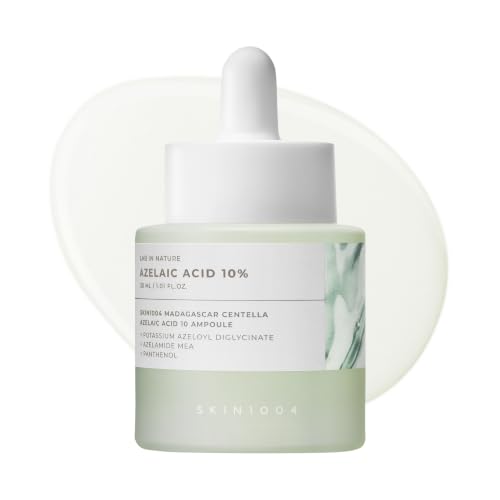
1. SKIN1004 Azelaic Acid 10% Ampoule
Our pick — 4.5+★ from 200+ verified ratings; the strongest balance of quality and price.
Three forms of azelaic acid in one watery ampoule, built for oil and clogged pores.
Most 10% serums give you one form of azelaic acid and call it done. This one stacks three: 10% azelaic acid for oil and pore-clogging buildup, 1% potassium azeloyl diglycinate (a gentler azelaic derivative that helps balance oil and hydration), and 0.5% Azelamide MEA for uneven texture and tone. That layering is why oily, blemish-prone skin types tend to get along with it — you’re getting the active from more than one angle instead of one big dose.
The formula skips niacinamide on purpose. If you’ve reacted to vitamin B3 serums before, that omission alone makes this worth a look, and it swaps in centella asiatica for soothing. The bottle is genuinely compact at 1.01 fl.oz and 5.28 ounces shipping weight — it slips into a travel bag, but the trade-off is that a twice-daily routine burns through it faster than a larger bottle would.
What wins people over is how well it clears congestion: reviewers keep returning to its acne-clearing and redness-calming results. A truthful caveat sits right next to it — this is not a rosacea formula. Some rosacea-prone skin flares badly on azelaic acid regardless of brand, and there’s a blunt warning in the review data from a user who flushed red for days off a single drop. If your skin is reactive in that direction, patch-test on your jaw first and start every other day as the label says.
What earns its keep
- Three azelaic forms at 10%, 1%, and 0.5% — more than one way at oil and texture
- Niacinamide-free, so it suits skin that stings on vitamin B3
- Watery texture absorbs fast without a sticky or heavy finish
- Centella asiatica adds soothing alongside the active
Where it asks more of you
- Small bottle that runs out fast on twice-daily use
- Not formulated for rosacea — reactive skin can flush on it
- Label asks for every-other-day ramp-up, which slows results
Made for: oily, congested, and blemish-prone skin that wants a thin, fast-drying serum and no niacinamide.
Think twice if: your main complaint is rosacea flushing — this one is aimed at oil and pores, not calm.
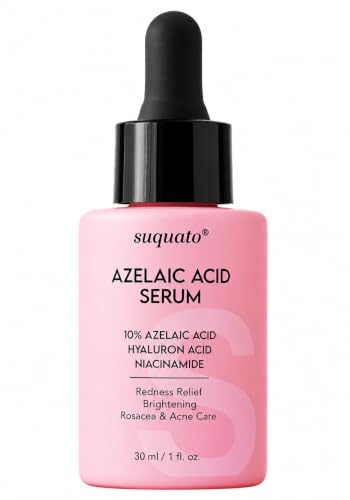
2. Azelaic Acid 10% Serum Niacinamide
The one that stacks niacinamide, B5, and hyaluronic acid into a 10% base for redness relief.
If you want maximum supporting ingredients packed around the azelaic acid, this is the formula to study. Niacinamide and vitamin B3 brighten and control shine, B5 and hyaluronic acid hydrate, and aloe plus plant extracts soften the delivery. That combination is why the calming and moisturizing effect is what people single out most — skin feels soft when it dries rather than tight or stripped.
It’s a compact bottle — 4.21 x 1.46 x 1.46 inches and 3.21 ounces — so it’s easy to store on a crowded shelf but won’t last forever at once-a-day use. The label’s guidance is sensible: once a day to start, morning or night, increasing gradually until your skin builds tolerance. That’s the right way to ease into any 10% azelaic acid, and it’s spelled out clearly here.
Here’s the honest split. The brightening and clearing effect on pores and blackheads is real — nose pores and blackheads visibly improve over a few weeks for many users. But rosacea is a coin flip: some find their redness calms nicely, others report zero impact on the flushing itself even after two months of twice-daily use. If rosacea is your primary target, go in expecting pore refinement first and redness second.
What it delivers: a fragrance-free, easily absorbed 10% formula that layers niacinamide and hyaluronic acid without a greasy feel, and it earns its bargain price tag.
Go for it if: you want a well-rounded, hydrating 10% serum with pore-refining niacinamide and you’re patient about redness results.
Look elsewhere if: flushing is your only concern and you need a formula proven to calm it quickly.
3. 10% Azelaic Acid Serum 30ml
A water-based 30ml serum that pairs azelaic acid with niacinamide for redness and rough texture.
This is the most-reviewed bottle on the list, and the volume tells you something: it’s the safe, mainstream choice. The formula keeps things simple — 10% azelaic acid, niacinamide to control shine and brighten, hyaluronic acid to hydrate. It’s fragrance-free and non-comedogenic (won’t clog pores), and it absorbs quickly enough to layer under moisturizer without waiting around.
What people describe most is the calm: redness visibly fading, bumps reducing, and skin feeling softer rather than stripped. One pattern that comes up again and again is how fast some users see change — a rosacea sufferer who had tried a prescription cream without luck reported noticeable clearing within two days. A mild sting in the first few days is normal and fades; that matches the standard azelaic acid ramp-up.
The real limitation is bottle life. At 30ml with twice-daily use, you’re looking at roughly a month, and several users wish it came larger. It’s a fair trade at the price, but plan on repurchasing. If you want to stack it with other actives, the water-based formula plays nicely — just space it out and don’t overdo the strong stuff on the same night.
The good news
- Fragrance-free and non-comedogenic — safe to layer under moisturizer
- Niacinamide and hyaluronic acid make it hydrating, not drying
- Fast absorption means no greasy wait before sunscreen
- Redness and bump reduction reported as quick for many users
The fine print
- 30ml bottle lasts roughly a month on twice-daily use
- Mild stinging in the first several days is common
- Larger sizes aren’t available, so replenishment is frequent
Best for: anyone with redness, bumps, and uneven tone who wants a no-drama water-based serum that layers easily.
Skip if: you’d rather buy one large bottle and forget about reordering for months.
4. NINELESS A-Control 10% Azelaic Acid Serum
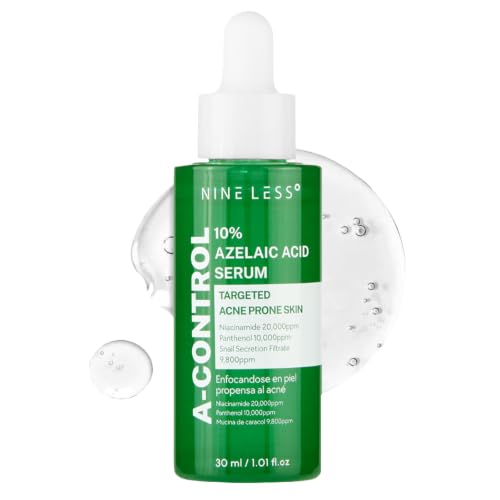
An acne-first serum that fades red marks and keeps oil in check.
NINELESS built this one for the acne-and-oil crowd, not the rosacea crowd. Its 10% azelaic acid fights breakouts, hyperpigmentation (dark spots left after a spot heals), and rough texture, so your skin looks clearer and smoother over time. It also regulates sebum — the oil your skin produces — which suits oily and combination types who shine by midday. It’s a straightforward, single-minded formula, and that’s the point.
Buyers report that it keeps skin clear without causing a ruckus — even skin with a damaged barrier tolerates it, according to users who reported no itching or irritation while switching it into their routine. The texture is smooth and doesn’t leave a greasy residue, so it layers under other products without pilling. The tone-evening effect is the second thing people notice. One user with decades of rosacea found daily application keeps redness from returning, though skipping a day brings it back.
The catch worth knowing: this formula can trigger a long purge phase (a temporary breakout that comes as skin adjusts), so don’t panic if the first weeks look worse before better. It’s also not cheap to repurchase if you rely on it daily, and one user flagged a noticeable price jump after years of use. Budget for ongoing use, and give it a full two months before you judge the acne result.
The draw: it’s the most acne-focused formula on the list — 10% azelaic acid for breakouts, dark spots, and shine, in a texture that doesn’t feel heavy on oily skin.
Reach for this if: acne and dark spots are your main complaint and you want a serum you can wear daily without a greasy film.
Pass on it if: you’re in your first weeks of a new active and can’t ride out a purge without changing course.
5. Peach Slices Redness Relief 10% Azelaic Acid Serum, 1.01 oz
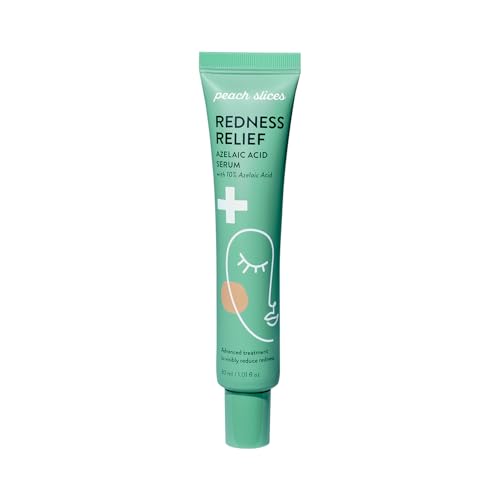
A niacinamide-free 10% serum with cica and panthenol for skin that reacts to everything.
Peach Slices kept this formula simple for a reason: it’s niacinamide-free, fragrance-free, and alcohol-free, which makes it one of the few options here you can hand to someone whose skin stings on everything. The 10% azelaic acid gently exfoliates and evens tone, while rhodomyrtus leaf extract, cica, algae, and panthenol hydrate and soothe. A universal tint helps it blend, so it doesn’t leave a ghostly film.
The daily-use picture is where it shines. Users talk about going months with no drying or irritation on combination and oily skin, and about needing only a small amount. The results show up in the smoother texture and evening of tone; some report perioral dermatitis clearing within weeks and redness fading enough to draw unprompted compliments. If you’ve been burnt by pricier serums, this one often gets called a fair-value alternative.
The genuine catch is that azelaic acid itself is the wildcard. For a subset of users — especially oily-skin types — a cream-adjacent texture like this feels heavy, and a small minority report their skin getting more irritated rather than calmer, arguing the acid worsens sensitivity. That’s not unique to this bottle, but it’s worth a two-week patch test on your jaw before you commit your whole face. The formula is gentle, not universally gentle.
Why sensitive skin types like it
- Niacinamide-free, which is rare among azelaic serums
- Fragrance and alcohol free, with cica and panthenol to soothe
- A little goes a long way, so one bottle lasts months
- Universal tint blends with natural skin tone
What to watch
- Texture can feel heavy on very oily skin
- A minority find the acid irritates rather than calms
- Universal tint may not perfectly match every skin tone
Fit for: reactive, redness-prone skin that has reacted badly to niacinamide serums before.
Not the one if: your skin is very oily and you want a completely weightless, watery serum.
6. RECIPE Azelaic Acid 10 Soothing Ampoule, 1.01 fl oz
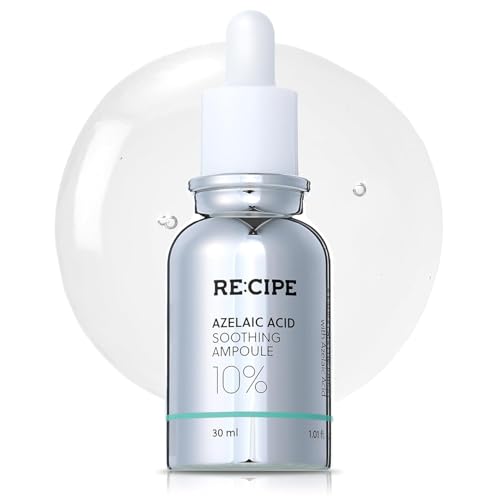
A fast-absorbing ampoule that walks you in from 1-2 drops rather than asking for the whole face at once.
The first thing to know: this formula tells you to start with 1-2 drops and build to 5 as your skin adapts. That drop-by-drop guidance is the most beginner-friendly ramp-up on the list, and it’s paired with a soothing base of hyaluronic acid, allantoin, and panthenol. Madecassoside — the cica-derived active — is in there for redness, and the whole thing is non-comedogenic so it won’t clog pores.
Skin-irritation reports swing positive here, which is unusual for a 10% acid. Users with very sensitive skin describe no burn or tingle, and a thin, water-like texture that absorbs rather than sits. It’s often used as a base layer under vitamin C or a nighttime peptide routine. Dark spots fade with consistency, and the price sits comfortably mid-range.
But there’s a real note of caution in the review data: despite the soothing base, a handful of very sensitive users broke out on it, with one advising others with rosacea or acne to be careful. That’s a textbook azelaic-acid reaction, not a formula flaw — but it means the patch test the label calls for matters. Give it two weeks on a small patch; if the skin stays calm, the rest of your face will likely follow.
Best used as: your first 10% azelaic acid, layered in gently and slowly. The built-in ramp-up takes the guesswork out of starting.
Ideal for: beginners and sensitive skin that wants to ease into azelaic acid drop by drop with a soothing, hydrating base.
Not ideal for: anyone who knows their skin flares hard on azelaic acid and needs to lock in a proven formula.
7. ZealSea 10% Azelaic Acid Cream

A cream-gel with slow-release technology for dry and combination skin that wants a richer texture.
If watery serums leave your face feeling tight, this is the texture to try. ZealSea uses a cream-gel formula with high-permeability slow-release technology — meaning the active is released gradually rather than all at once, which can soften the sting on reactive skin. It’s niacinamide- and pionin-supported, salicylic-acid-free, and pitched at dry, combination, and sensitive types who want something more emollient than a drop.
The reports that matter here are about smoothing: users describe the gel-emollient consistency absorbing well without a greasy finish, and problem areas feeling smaller and less textured with every-other-day use. For those who need a heavier cushion, it doubles as a decent moisturizer replacement. On the redness front, it holds steady for a good share of users, keeping the flushing down with consistent application.
Where this cream can turn on you: the sting. Burning and stinging come up often enough that the label’s patch-test warning is not boilerplate — the standard workaround is to wait about 30 minutes after cleansing until skin is fully dry before applying, or the burn intensifies. If you have a damaged barrier, start every other day and expect a few rough sessions before your skin settles.
Where it fits
- Cream-gel texture cushions dry and combination skin
- Slow-release delivery softens the active’s sting
- Smooths texture and keeps redness down with consistent use
- Salicylic-acid-free, so it won’t stack harsh exfoliants
Where it pushes back
- Can sting — dry skin fully before applying to reduce it
- Too rich for very oily skin during daytime wear
- Results take weeks, not days
Suited to: dry and combination skin that wants a creamier, slow-release azelaic acid for redness and texture.
skip it if: you’ve got oily skin and need a daytime formula that never feels heavy.
8. TOSOWOONG Azelaic Acid 10% Face Serum for Redness & Blemish

A plumping serum with ceramide and centella for dry, winter-weathered redness.
This is the one to reach for when your skin is both red and parched. The 10% azelaic acid is joined by ceramide and centella asiatica, which support the skin barrier — the outer layer that holds moisture in — while niacinamide helps with oil balance and breakouts. There’s also a plant-derived green tint, free of artificial colorants, that visually softens redness on application.
Moisture is the standout. Users describe their face feeling plump, moisturized, and brightened, with one calling it a winter staple. On dry, rosacea-prone skin it calms within weeks, and post-acne scars lighten with consistent use. The formula is reported gentle on sensitive, allergy-prone skin, and a very small amount covers the face.
The honest trade-off is stickiness. That green tint and the rich base make the serum tacky until it dries, which a handful of users find off-putting. There’s also a sun-sensitivity note worth heeding: several users apply it nightly only, and if you use it in daylight, sunscreen is non-negotiable. One caveat in the data — a small number found it drying and brightening-deficient, so a two-week patch test still applies.
What makes it stand out: the plant-derived green tint masks redness the moment it goes on, so you look calmer even before the azelaic acid has done its long-term work.
Choose it for: dry, winter-dull skin that’s red and wants both moisture and a visible tint to cancel the flush.
Another pick if: you can’t stand any tacky feel, even briefly before it dries.
9. The INKEY List SuperSolutions Azelaic Acid 10% Serum
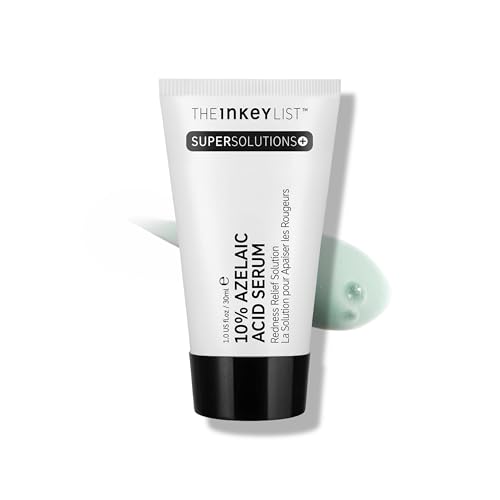
Micro-fine green particles that cancel redness on contact while the 10% acid works underneath.
This is the pick for anyone whose redness is the emergency, not just the long game. The INKEY List loads the 10% azelaic acid with micro-fine green particles that color-correct flush on application — the green counters the red, so the skin looks calmer immediately. It’s fragrance-free, cruelty-free, and developed with dermatologists, and it leaves no white residue or crispy layer under other products.
What people describe most is the instant relief: the green tint masks the red and soothes the heat of a flare-up on contact, so you get visible calm the moment you apply it. Users with mature, dry, sensitive skin rate it above several other azelaic acids they’ve tried. The lotion-like texture isn’t sticky or thick, sits well under makeup, and a matte, non-greasy finish makes it easy to wear in the morning.
The downside is bottle life. At 1.01 fl oz, a daily routine gets through it in roughly a month, and the small size can feel like false economy at this price point. The formula is also high-viscosity, so if you layer it under moisturizer, wait a few minutes or you’ll pill. Some sensitive skin types note a slight tingle on application and benefit from dropping to every other day.
What it does best
- Green particles mask redness on contact
- Lotion-like texture that’s not sticky and sits well under makeup
- Fragrance-free and cruelty-free
- Instantly soothes the heat of a flare-up
What to plan around
- 1.01 fl oz lasts roughly a month at daily use
- High viscosity can pill if you don’t wait before moisturizer
- Some sensitive skin needs to step down to every other day
Reach for it when: you need redness visually cancelled now — a flare-up day, a big meeting, or skin that just looks flushed before an event.
Not the pick if: you want a large bottle that stretches for months between reorders.
Know the Specs
Azelaic Acid Concentration (10%)
Ten percent is the strength most over-the-counter azelaic serums settle on. It’s high enough to work on redness, texture, and breakouts without tipping into the prescription range. In plain terms, 10% is the daily-use zone — strong but meant for regular application. If a formula lists 10% and you’re new to the active, the label’s build-up guidance still matters: start once a day or every other day.
Watery Serum vs. Cream-Gel
The base decides how the acid feels and how fast it hits. A watery serum or ampoule absorbs within seconds and layers under sunscreen, which suits oily skin. A cream-gel releases the active more slowly and cushions dry skin. Neither is better — they’re different delivery styles. Match the texture to the skin type you actually have, not the one you wish you had.
Supporting Ingredients: Niacinamide, Cica, Panthenol
Niacinamide (vitamin B3) brightens and controls shine; cica and madecassoside calm redness; panthenol and hyaluronic acid hydrate. These supporting actives are what differentiate one 10% bottle from another. If niacinamide stings your skin, choose a niacinamide-free formula. If you’re redness-red, choose a cica-forward one.
Patch Testing and Build-Up
Almost every formula here recommends a patch test before full-face use, and most advise starting with a small number of drops or every-other-day frequency. A mild tingle in the first few days is expected; lasting burning is a stop sign. Build up slowly, always finish with moisturizer and, in daylight, sunscreen.
Common Questions
What percentage of azelaic acid should I look for without a prescription?
Can I use azelaic acid with retinol or tretinoin?
How long does a bottle of azelaic acid serum last?
Why does azelaic acid sting when I apply it?
Is azelaic acid safe to use every day?
What’s the difference between an azelaic acid serum and a cream?
Does azelaic acid help with rosacea redness?
Should I pick a niacinamide-free azelaic acid formula?
Can I wear makeup over azelaic acid serum?
Will azelaic acid make my skin purge before it clears?
The Bottom Line
For most people, the winning over-the-counter azelaic acid is the SKIN1004 Azelaic Acid 10% Ampoule, because its three azelaic forms and niacinamide-free base make it the most versatile bottle here for oily, congested, and blemish-prone skin. If redness is your main battle, the 10% Azelaic Acid Serum with Niacinamide & Hyaluronic Acid is the hydration-forward choice that most people find easy to layer daily. And when you need the flush visually gone before it’s actually gone, the INKEY List SuperSolutions Serum uses green particles to cancel redness on contact.
Whatever you choose, remember that 10% azelaic acid rewards patience: patch-test, start every other day, and give it a full two months. The calming and clearing show up for the people who stick with one formula long enough to let it work.
How we choose
We do not accept paid placement. Every pick is matched to a real buyer and a real use-case; we do not hands-on test units.
Sources
Specifications: manufacturer listings and product documentation. Review insights: verified customer reviews, as of October 2026. Pricing: not shown on this page (it changes often); check the current price via the retailer link.
As an Amazon Associate, Aappliancez earns from qualifying purchases. This does not affect which products we feature.