Disclosure: Some links in this post are affiliate links. As an Amazon Associate I earn from qualifying purchases, at no extra cost to you. Learn more
Specs are compiled from manufacturer listings and verified buyer reviews and can change over time — please confirm the key details on the product page before buying.
If your glasses arms dig into your skull after an hour in over-ear headphones, the fix is not thicker padding — it is the right clamp and the right ear-cup shape. The picks below all put soft, low-pressure cushions over your temples instead of pinching them. The Sony WH-1000XM4 tops the list because its updated design relieves pressure, and the comfort holds up over multi-hour sessions.
This guide is built by comparing the manufacturers’ published specifications and the patterns across verified customer reviews, so you get each pick’s real strengths and trade-offs instead of marketing spin.
Every pair here has been checked for temple clearance and long-wear fit, from budget-friendly workhorses to premium noise-cancellers — and the guide below spells out exactly which pairs suit glasses wearers best. Read on for the over ear headphones for glasses wearers that actually keep the pressure off.
Top Picks

How To Choose Over Ear Headphones for Glasses Wearers
Your glasses arms sit exactly where an ear cup wants to press, so a pair that feels fine bare can turn into a headache within thirty minutes. The trick is to shop for three things at once: low clamp force, deep enough cups to clear the frame, and a headband that spreads weight instead of digging in. Get those three right and bass, battery, and app features become bonuses rather than fixes for a fit that hurts.
Clamp force and cushion shape come first
Clamp force is how hard the headband squeezes the two cups together. A strong clamp is what creates the pinch against glasses arms, so a lighter grip with wide, soft padding keeps your temples happy. Memory-foam cushions that sit around the ear instead of on top of it also leave the frame room to sit flat against your head. The Sony’s updated design is pitched squarely at relieving that pressure for long sessions.
Why the noise-cancelling seal breaks over a glasses frame
Active noise cancellation works by sealing the cup and then using microphones to cancel what leaks in. Glasses arms create a tiny gap, so a pair with a more forgiving seal and adjustable ANC levels holds onto its silence better. If you need ANC to survive your frames, look for cups that pivot to the shape of your head — the Soundcore Space One uses 8° rotating ear cups for exactly that reason.
Battery life for a full day in glasses
You will wear these longer than you think, so charge time and runtime matter as much as comfort. One pair here runs up to 40 hours in ANC mode, another stretches to a claimed 100 hours, and a quick-charge feature can add hours of listening from a short top-up. Check both the run time and how fast it refills before you commit.
Side-by-Side Comparison
| Model | Best For | Battery (ANC) | Charge Time | Bluetooth | Amazon |
|---|---|---|---|---|---|
| Sony WH-1000XM4★ Best Overall | Overall temple comfort | 30 hours | 3 hours | 5.0 | Amazon |
| Soundcore Q30Best Value | Budget all-day wear | 40 hours | 40 hours | 5.0 | Amazon |
| Hesh 360 | Marathon battery | 100 hours | 10 minutes | 5.3 | Amazon |
| JLab JBuds Lux ANC | Glasses-friendly on a budget | 70 hours | — | 5.0 | Amazon |
| Sennheiser ACCENTUM | Light long-shift wear | 50 hours | 3 hours | 5.2 | Amazon |
| Soundcore Space One | Rotating cups for frames | 55 hours | 40 hours | 5.3 | Amazon |
| Bose QuietComfort | Premium cushioned quiet | 24 hours | 2.5 hours | 5.1 | Amazon |
Detailed Reviews
1. Sony WH-1000XM4 Wireless Noise Cancelling Headphones, Black
Our pick — 4.5+★ from 42,500+ verified ratings; the strongest balance of quality and price.
The pair that made long listening sessions in glasses feel normal again.
Sony rebuilt the fit on this model with one aim in mind: relieving pressure so you can keep the cups on for hours without your frames turning into a vice. The 40mm dynamic driver (the speaker unit inside each cup) pushes the sound out with room to spare, and the dual noise sensor system handles the outside world. If your glasses already make most headphones feel tight, this is the one to start with.
What wins people over is the sound — deep enough detail that you can hear quiet passages at low volume without cranking anything. The noise cancellation is the second thing everyone raves about, and it does the job on planes, keyboards, and road rumble alike. Battery runs 30 hours, with a USB-C cable included, and that number is real enough to cover several workdays between charges. Speak-to-chat drops the volume when you start talking, though it is sensitive and reacts to humming too, so most people switch it off.
The honest snag is the app and the multi-device switching. When the headphones forget a paired phone, it is the app and a re-pair that fixes it, and jumping between a laptop and a phone is not always instant. A few owners also find the cups get warm and sweaty during hard workouts. For desk work and travel, though, the Bose’s plush cushions and Quiet mode are the whole point of paying more. A quick top-up of 10 minutes gets you 5 hours of playback, which is handy the morning you forgot to charge.
What hold up over a long day
- Updated design that relieves pressure — the reason it leads for glasses wearers
- Dual Noise Sensor ANC that keeps low-level audio clear without blasting volume
- 30-hour battery plus a 10-minute charge that buys 5 hours of playback
- Five built-in microphones for precise call pickup
Where it asks you to adapt
- Multi-device Bluetooth switching can be fiddly and is not always instant
- Speak-to-chat is over-sensitive and reacts to humming or singing
- Cups warm up during sweaty workouts
Reach for this if: you wear glasses all day and want the combined comfort and quiet that made this the crowd favorite.
Look elsewhere if: you need smooth instant switching between a work laptop and a personal phone all day long.
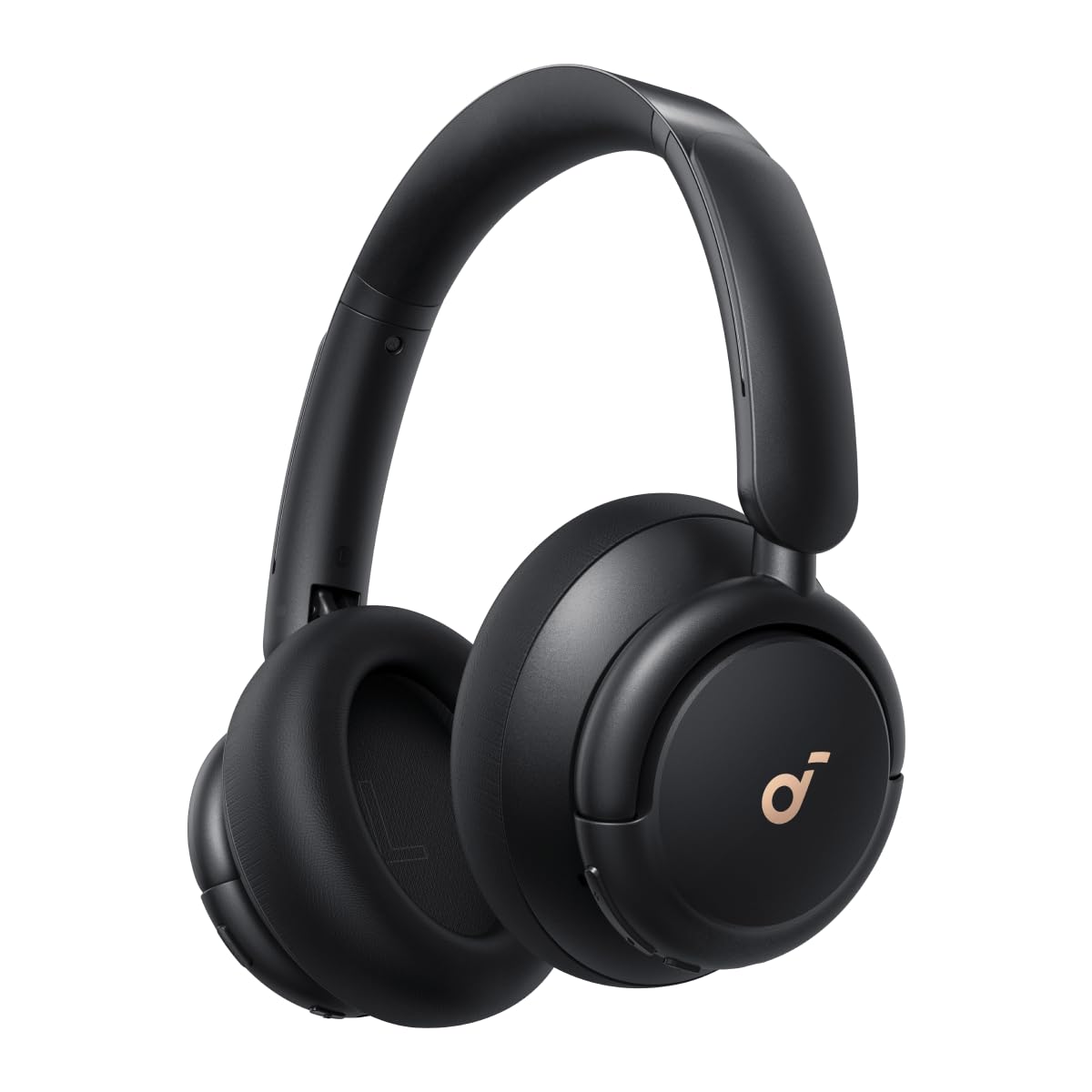
2. Soundcore by Anker Q30 Headphones
Plush protein-leather cups that let glasses sit flat instead of pressing in.
The comfort formula here is simple and it works: ultra-soft protein leather earcups with memory-foam padding sit snugly over the ear, not on top of the frame. For glasses wearers, that means your arms meet soft foam instead of a hard rim. The build is light enough to forget you have them on, and one long-shift landscaper reportedly wore them through 10-hour shifts and still found them easy to keep on.
You get up to 40 hours of listening with ANC (active noise cancellation, which uses microphones to block background sound) on, and up to 70 hours in standard mode. That beats the Sony WH-1000XM4’s 30 hours, but a full charge takes 40 hours here versus a couple of hours for the Sony. The hybrid ANC uses two noise-detecting microphones to filter low-frequency sound, with three modes: Transport for plane engines, Outdoor for traffic and wind, and Indoor for busy offices.
What buyers prize most is the sound, and it lands with a V-shaped bass lift that makes the Q30 fun without being muddy. The recurring gripe is durability — the right slider bracket has cracked for some owners within months — so treat the plastic frame gently rather than tossing it loose in a bag. The soft pouch that ships in the box does not protect it like a hard case would. At its price, the Q30 is a genuine all-day workhorse for glasses wearers.
Sound that carries: 40mm drivers with silk diaphragms reproduce thumping bass and crisp treble up to 40kHz, which is why so many owners call this the best they have found for the money.
The trade-off to know: ANC does not work with the AUX cable connected, and the plastic slider bracket is the part to watch over the long haul.
Your pick if: you want a soft, memory-foam seal that plays nicely with glasses and a battery that goes days without a plug.
Think twice if: you plan to throw them in a bag unprotected every day.
3. Hesh 360 Wireless Headphones
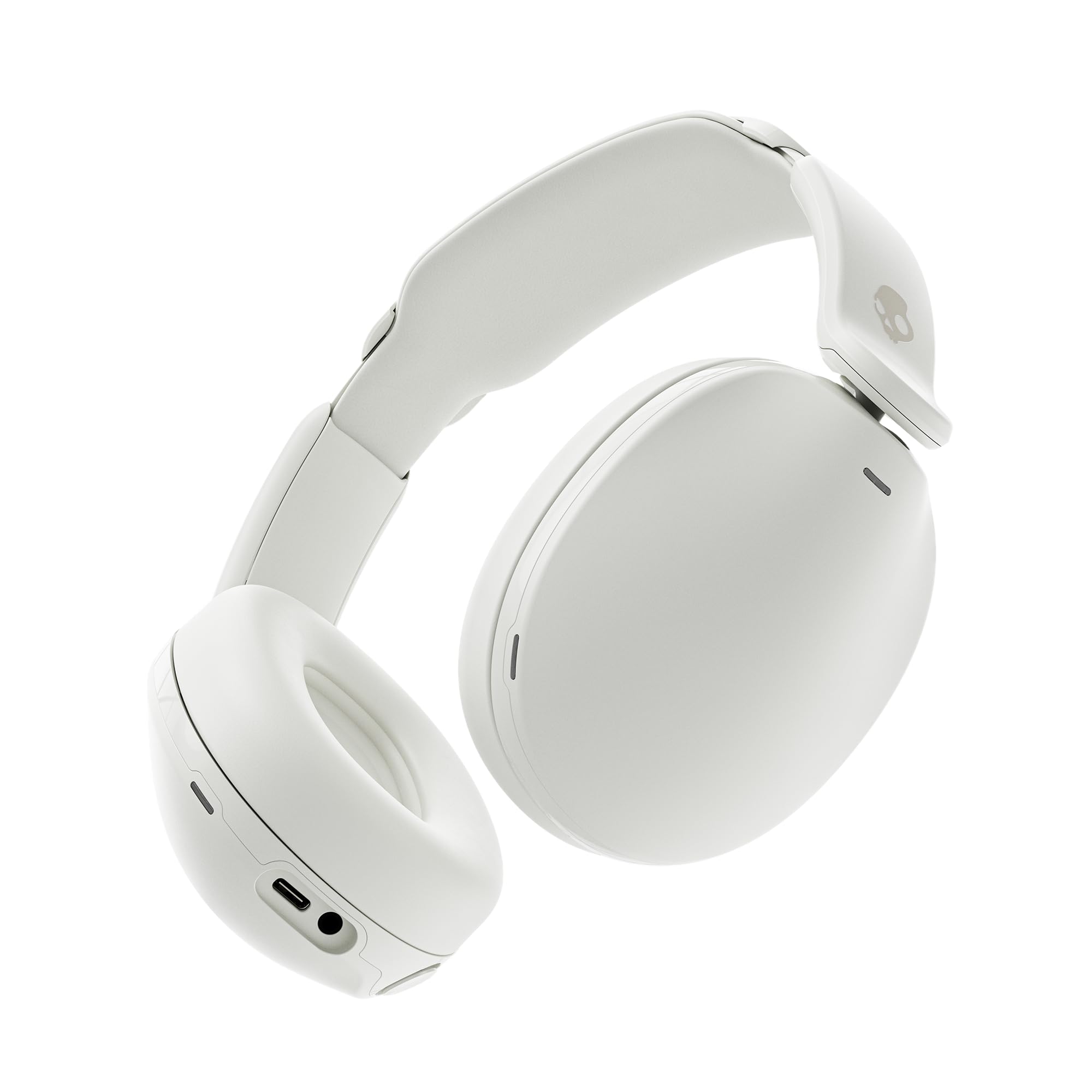
One charge, a hundred hours, and a top-up that adds eight more in ten minutes.
For anyone who hates hunting for a cable, this is the spec that sells it: up to 100 hours of battery, plus Rapid Charge that gives a full 8 hours of listening on a quick 10-minute charge. Bluetooth 5.3 is the newer wireless standard here, which means a steadier connection, and multipoint pairing lets you run two devices at once. The over-ear build pivots, which helps one-ear wear and packing.
The sound is bass-forward and fun rather than neutral, with clear highs and solid low end that owners describe as durable and good for long wear. The push-button controls are straightforward, and the Skullcandy app adds adjustable Stay-Aware mode plus custom EQ profiles. For glasses wearers the key win is the soft fit that stays put — the pivot lets the cups settle around your frame instead of fighting it.
The honest catch is build longevity. More than one owner reports the band or the bits holding the ear cups on snapping within a few months, and the plastic is the weak point. The fit also runs small; people with larger heads or lots of hair find the cups snug and sometimes want a silicone tunnel for the ears. If you want the longest runtime between charges and treat the plastic frame kindly, the Hesh 360 is a strong mid-range pick.
The battery story: a quick 10-minute charge returns 8 hours of listening, which is the kind of buffer that makes a forgotten cable a non-event.
The frame caveat: the pivoting cups help, but the plastic build is the part that ages fastest.
Go here if: running out of battery mid-series is your personal nightmare.
Handle with care if: you stretch the cups wide over big hair every time you put them on.
4. JLab JBuds Lux ANC Wireless Over-Ear Headphones, Mauve

A plush over-ear cup that glasses wearers describe as comfortable with zero ear pressure.
This is the one aimed squarely at frames. The cups clear the glasses arms with no pressure on the ears, and one machine-shop owner wearing them for hours with glasses found them comfortable through a full shift. Battery sits at 70 hours, ANC mode still delivers 40+ hours, which is enough to cover a long-haul flight and the week after. Hybrid ANC blocks up to 35 dB of noise, and Be Aware mode brings the room back in.
The 40mm drivers handle full-range sound with a Lab Spatial Audio mode, and the JLab App lets you tune EQ, adjust ANC levels, and remap the controls. Bluetooth multipoint keeps two devices live, and a USB-C cable lets you go wired when you want. What buyers appreciate most is the sound, followed closely by the comfort — this is a pair people put on and stop noticing.
The compromise is the seal. A few owners describe a suction-like fit with little breathability and some head pressure, so if you run hot or need to hear a doorbell, expect to pull a cup off now and then. The EQ also needs a little tuning per content type, and the plastic can crack where it stretches. For glasses frames, though, the JBuds Lux ANC’s headline is comfort without the squeeze.
Why frames love it: the shallow, plush seal leaves the glasses arms free while the ANC still works to block low-level noise.
The honest downside: the tight seal cuts breathability, so it is best for cool rooms rather than hot commutes.
Made for you if: you want a budget-friendly pair that clears your glasses and keeps the pressure off.
Pass if: you need to hear everything around you at all times.
5. Sennehiser ACCENTUM Wireless Headphones

Soft silicon-lined headband and a light build that lasts a full workday in glasses.
Sennheiser’s comfort pitch here is concrete: a lightweight ergonomic frame with a soft-touch silicon-lined headband that spreads the weight and holds a secure fit. The 180° rotating, sliding ear cups let you angle the cups around your glasses arms — helpful if a fixed cup usually pushes on your temples. Battery is listed at 50 hours, so the charging cable can stay in a drawer for weeks.
Sound comes from a 40mm-class dynamic driver with a 5-band EQ and customizable sound modes, and the dual-microphone beamforming handles calls. Bluetooth 5.2 keeps a steady connection. The catch is the sound tuning — it is the most-discussed aspect, and reviewers split on it, so this is one to audition rather than assume. Noise cancellation is decent but does not wall off the world completely.
The bigger thing to know is reliability. A small number of buyers report mechanical failure after months — a tapping in one ear, wiring issues that are not repairable — so the long-term durability is the real question. If you mostly need light, comfortable cups that clear your glasses for desk work, the ACCENTUM delivers that — just treat the plastic internals gently.
The fit you are buying: silicon-lined headband plus tilting, sliding cups set up a lighter grip than a rigid frame, which is the whole reason it suits glasses.
Where it falls short: ANC lets some outside noise through, and the plastic internals are not built for heavy abuse.
A smart match if: you need a light, comfortable pair for desk and commute use in glasses.
Look past it if: you want premium-feeling durability for years of rough handling.
6. Soundcore Anker ANC Over-Ear Headphones
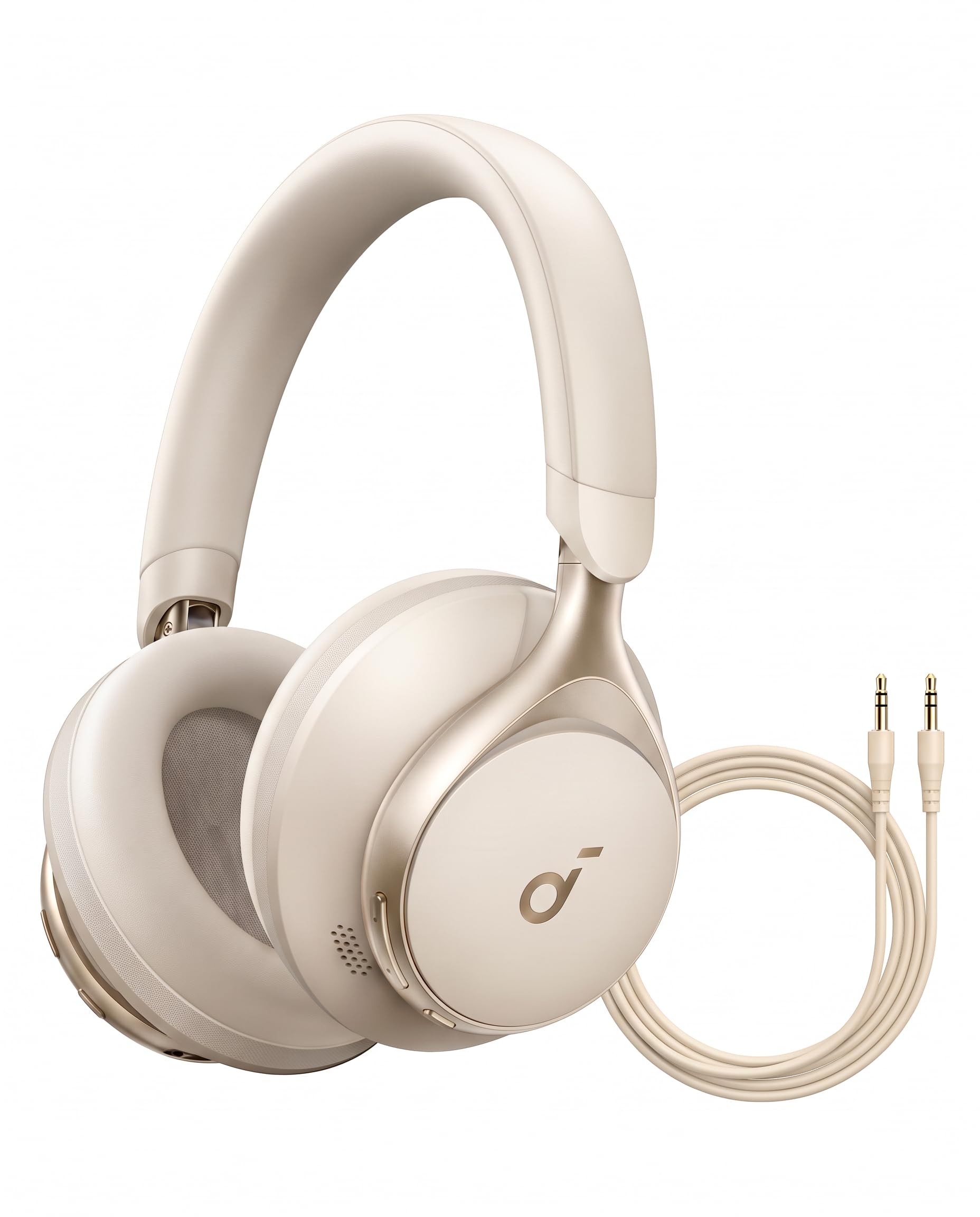
Cups that tilt eight degrees to meet your glasses instead of fighting them.
The engineering here is about fit. The 8° rotating ear cups conform to the shape of your head, and the integrated soft headband spreads pressure evenly for long wear. That is exactly the geometry glasses wearers need, because the cup can settle against the frame rather than pinch it. Adaptive noise cancellation detects external sounds and leakage, then auto-calibrates, so a slight gap from your glasses arms does not ruin the quiet.
Battery runs up to 40 hours with ANC on and 55 hours with ANC off, and there are five adjustable ANC levels in the soundcore App. LDAC support means Hi-Res wireless audio, which carries more detail than a standard Bluetooth codec. Bluetooth 5.3 is the newer standard and keeps the connection steady across a house — one owner reports a clean signal through a five-bedroom home.
What owners praise most is the sound, and the value lands right behind it. The honest edges are material and reliability: a few note the thin rubber may peel and the ANC is present but not extreme. The plastic build is the part to watch, and the drawstring pouch is not a hard case. For the money, the Space One is one of the better-balanced picks for glasses frames, especially if you want to tune the ANC yourself.
Fit where it counts: 8° cup rotation plus the adaptive ANC auto-calibration make it one of the more forgiving pairs over a glasses frame.
Be realistic about: the ANC is good rather than leading, and the thin material may not stay pristine over years.
Pick it if: you want tunable ANC and adjustable cup geometry over your frames.
Keep looking if: you demand the strongest possible noise blocking on every flight.
7. Bose QuietComfort Headphones

Plush, softly hugging cushions that treat your temples like they matter.
The comfort is the point on this one. Plush over-ear cushions softly hug the ears, and a padded band keeps the whole thing gently in place without digging in — the kind of soft, dense padding that works well over a glasses frame. You get two listening modes, Quiet and Aware, so you can flip between full noise cancellation and full awareness with a button. Battery is up to 24 hours, with a 15-minute USB-C charge adding up to 2.5 hours of playback.
The sound is deep and full, with Adjustable EQ for bass, mid-range, and treble in the Bose app. Bluetooth 5.1 handles wireless, and a detachable audio cable lets you keep listening even when the battery runs dry. The cups are light and secure for a long flight, and one pair of owners found the low-pressure fit good enough to sleep in.
Know the quirks before you commit. There is no true “ANC off” — you get Quiet or Aware and nothing in between — and the app is mobile-only, so any EQ you set does not carry over to a PC. The pivoting joints are delightfully floppy for comfort but loose for workouts. As the premium pick, it earns its place through cushioning and quiet rather than battery, which lags the field at 24 hours.
The premium payoff: plush cushions and a secure padded band built for extra-long listening sessions, with the calmest fit in the group.
The battery reality: 24 hours is on the short side next to the 100-hour Hesh 360 and the 55-hour Space One.
Worth it if: softness and quiet matter more to you than marathon runtime.
Consider the alternates if: you want days of battery between charges.
Know the Specs
Clamp Force and Ear-Cup Depth
Clamp force is how tightly the headband squeezes the cups together, and it is the number one reason glasses wearers get pressure headaches. A lighter clamp with soft memory-foam cushions lets the glasses arms sit flat instead of pressing in. Cup depth is the next lever: deep enough cups let your frame clear the foam, so you are not balancing the whole headset on your glasses. Look for pivoting or rotating cups — the tilt lets the cup meet your head shape rather than clamp a fixed angle.
Battery, Charge Time, and Bluetooth
Runtime is the number buyers scan first, and it varies widely: from 24 hours on the premium Bose up to a claimed 100 hours on the Hesh 360. Charge time matters just as much, because a long charge undermines a long runtime — one pair here lists 40 hours for a full charge while another promises 8 hours of listening from a 10-minute top-up. Bluetooth version is a smaller but real factor; 5.3 is the newer standard and helps the connection stay steady, while 5.0 and 5.1 still pair without fuss.
Common Questions
Do over-ear headphones press on glasses arms?
Will noise cancelling still work if I wear glasses?
Are the Sony WH-1000XM4 comfortable with glasses for long sessions?
Which pair has the longest battery life?
Is a hard case necessary for headphones I wear with glasses?
Can I use these headphones wired if the battery runs out?
Do bigger ear cups mean less glasses pressure?
Should I turn off speak-to-chat if I wear glasses?
How much does ANC add to the weight and fit pressure?
The Bottom Line
For most glasses wearers, the over ear headphones for glasses wearers pick that gets the balance right is the Sony WH-1000XM4, because its updated design relieves pressure while still delivering 30 hours of battery and leading noise cancellation. If you want a soft memory-foam seal on a budget, grab the Soundcore Q30. And for the lightest long-shift wear, the Soundcore Space One and its rotating cups are the ones to reach for.
If your frames are the deciding factor rather than the spec sheet, start with the Sony WH-1000XM4.
How we choose
We do not accept paid placement. Every pick is matched to a real buyer and a real use-case; we do not hands-on test units.
Sources
Specifications: manufacturer listings and product documentation. Review insights: verified customer reviews, as of October 2026. Pricing: not shown on this page (it changes often); check the current price via the retailer link.
As an Amazon Associate, Aappliancez earns from qualifying purchases. This does not affect which products we feature.