Disclosure: Some links in this post are affiliate links. As an Amazon Associate I earn from qualifying purchases, at no extra cost to you. Learn more
Specs are compiled from manufacturer listings and verified buyer reviews and can change over time — please confirm the key details on the product page before buying.
That’s the goal. But the biggest mistake first-time buyers make is grabbing a mystery spray at the grocery store and misting the siding. Walk around the foundations you are trying to protect, and the product choice is not about smell or label. It is about whether the active ingredient keeps working after the rain. This guide shows which outdoor roach spray and bait formulas actually hold their ground.
This guide is built by comparing the manufacturers’ published specifications and the patterns across verified customer reviews, so you get each pick’s real strengths and trade-offs instead of marketing spin.
Roaches don’t live on the siding; they live in the wet mulch, the weep holes, and the gaps behind the meter box. Get the formulation right and the colony dies where it nests. Here is the plain-English breakdown of the five outdoor roach spray options worth opening your wallet for.
Top Picks
How To Choose The Best Outdoor Roach Spray
Picking a product for outdoors is different from handling a roach inside a bathroom. Outdoors, you are fighting rain, sun, and much larger colonies. You need a formula that won’t wash away before it does its job.
How The Product Stops The Insect
Some products are contact sprays that kill on touch. Others are non-repellent, meaning roaches pass through the active ingredient and carry it back to the nest. If your main problem is a larger colony under the deck, a bait or a powder you can puff into voids works better than a surface spray.
Residual: Why It Matters Outdoors
The most important label number is the residual. This is the length of time a product keeps killing after you apply it. A formulation with a long residual means fewer re-treatments in the summer heat. Baits in syringes have no fixed residual because they sit in place and work continuously instead.
Form Factor And Where It Fits
Powders like cyfluthrin are excellent for wall voids and crack lines. Granules are best for open mulch beds and ant mounds. Gels are the go-to around cabinets and outdoor kitchen frames. Concentrates let you mix a large volume for a full perimeter.
Safety And State Rules
Any insecticide with an EPA registration works differently across states. One product here is not registered for sale in Alaska, California, Hawaii, Puerto Rico, or Vermont, so check before you buy. Always read the label, keep kids and pets away during application, and wear gloves.
Side-by-Side Comparison
| Model | Best For | Active Ingredient | Form | Target | Amazon |
|---|---|---|---|---|---|
| Atticus Tirade 1% Dust★ Best Overall | Crack and crevice barrier | Cyfluthrin | Powder | Roaches, wasps, ants | Amazon |
| BASF PT 221LTop Performer | Perimeter and weep holes | Cyhalothrin 0.05% | Spray | Crawling insects | Amazon |
| Maxforce Complete Granular | Mulch beds and mounds | Hydramethylnon | Granules | Ants, roaches, silverfish | Amazon |
| Martin’s Permethrin 13.3% | Large perimeter mixes | Permethrin | Concentrate | Insects (ticks, fleas) | Amazon |
| Syngenta Advion Gel Bait | Nest elimination | Carboxylate | Gel | Cockroaches | Amazon |
Detailed Reviews
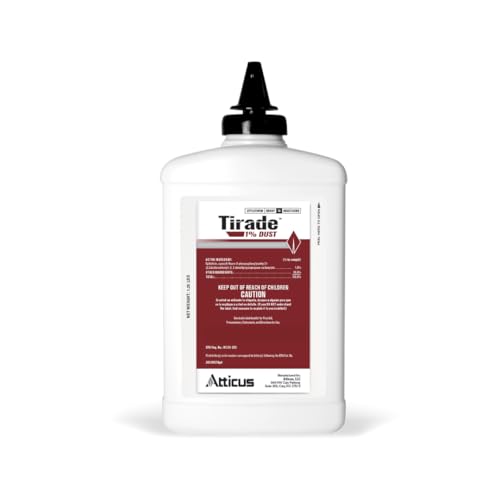
1. Atticus Tirade 1% Dust Insecticide (1.25lb)
Our pick — 4.5+★ from 1,000+ verified ratings; the strongest balance of quality and price.
A fine powder that settles into wall voids where roaches actually hide.
Roaches do not stroll across your lawn in the daylight; they nest in the damp space behind siding and under the threshold. The Tirade 1% Dust carries a 1.25 lb bottle of cyfluthrin powder — a synthetic pyrethroid that keeps killing long after it settles. You puff it into a crack, and it stays put through wind and light rain. The bottle is 20 ounces, so you have plenty of material for several seasonal touch-ups.
What wins people over is the sheer reach. Because it is a dust, you can aim it into a gap you cannot see, and the powder coats the interior. Reviewers report knocking out inaccessible wasp nests under metal siding overnight after sprays and traps failed. It is a non-contact product — the insect walks through the powder and carries it back. Expect about 24 hours to clear a colony, not instant results.
The EPA registration makes it a serious tool, and the low-odor formula leaves no strong scent on the porch. One important catch: Tirade is not for sale in Alaska, California, Hawaii, Puerto Rico, or Vermont, so confirm your state allows it before ordering. It is also a powder, so it works best in dry cracks — avoid over-applying on open wet ground where it may clump.
Where It Wins
- 1.25 lb bottle of cyfluthrin reaches deep cracks and voids a spray cannot coat
- Low-odor and non-staining on siding, upholstery, and masonry
- Broad-spectrum coverage for roaches, wasps, ants, and bed bugs
What To Know First
- Not registered for sale in Alaska, California, Hawaii, Puerto Rico, or Vermont
- Powder formula needs dry conditions to coat properly
- Takes about a day to see a full nest collapse
Reach For This If: you have small gaps, weep holes, or a soffit where roaches keep appearing and need a barrier that lasts.
Think Twice If: you live in a restricted state and cannot legally order it.
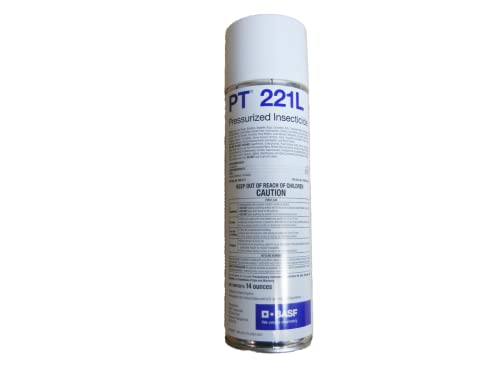
2. BASF PT 221L Pressurized Insecticide Aerosol Spray
A pressurized can of cyhalothrin that shoots into weep holes and siding gaps with force.
The active ingredient here is cyhalothrin at 0.05% — another pyrethroid, delivered as a 14 fluid ounce pressurized aerosol. Pressurized means the can itself pushes the spray with propellant, so it reaches into a wall void or under a door frame with force. That makes it a natural fit for the places roaches enter: weep holes, under siding, and around windows and doors.
How does it compare with the Tirade? The BASF is a non-repellent spray with a long-term residual, so it keeps killing on surfaces rather than just the instant you spray. Apply it as a spot treatment in storage areas and along door frames and the invisible barrier continues to work. The label states reapplication at 7-day intervals for bed bugs, and every 21 days in food handling establishments. Reviewers describe its cyhalothrin as the same class of chemistry professionals use.
The honest downside is the nozzle. Some users have found the nozzle limits coverage and had to switch to a different applicator, and the spray’s effectiveness on fleas is thin. For roaches and crawlers on a treated surface, though, it delivers. It works indoors and outdoors, so you can use it in a garage and around a patio edge without buying a second product.
The coverage advantage: a pressurized 14 fluid ounce can gets spray into wall voids and under siding where a hand trigger cannot reach; the non-repellent residual keeps working on treated surfaces.
The nozzle caveat: coverage can be limited by the spray head itself, so buying a separate applicator is a fair upgrade.
Sharp choice for: spot-treating perimeter gaps and door frames where a forceful stream matters more than fine dust.
Look elsewhere if: you need deep organic bait delivery — a gel or granule serves that better.
3. Maxforce Complete Granular Insect Bait (8 Ounces)

A food-based granule that roaches and ants carry back, killing the colony instead of the stragglers.
Where a spray kills the roach you see, a bait kills the roach you don’t. Maxforce Complete is hydramethylnon — a slow-acting chemical built into a granular food matrix of proteins, simple sugars, fats, and complex carbohydrates. That mix is designed to be irresistible to crawling insects. Roaches and ants eat it, carry the rest home, and the colony feeds on contaminated insects.
This is an 8 ounce container, and it targets roaches, ants, and silverfish. One reviewer reduced a huge red ant mound — hundreds or thousands of insects — to almost nothing in a few hours with a two-tablespoon application. The trick is placement: keep the granules near a mound or a colony’s food source, not directly on top of it, and let the foragers do the work. It is a granular form, so it sits on open soil and mulch where roaches forage at night.
Here is the fair warning. This bait is an insecticide, so handle it with gloves and keep it away from pets and children. A few buyers also found the container small for the coverage, so plan the spread carefully. It is also specifically a bait — if you need a fast surface barrier, this will feel slow compared with the pressurized sprays.
Why It Earns A Slot
- Food-based granular matrix with proteins, sugars, fats, and carbohydrates that foragers feed on
- Targets roaches, ants, and silverfish in mulch beds and around foundations
- Kills the colony, not just the visible crawling insects
Before You Sprinkle
- Requires gloves and careful placement away from pets and children
- Container size can cover small areas only, so budget your spread
Go granular if: you have outdoor roach trails, mulch beds, or ant mounds and want the colony killed at source.
Go back to a spray if: you need an instant surface barrier on a door frame today.
4. Martin’s 32 oz Permethrin 13.3% Concentrate
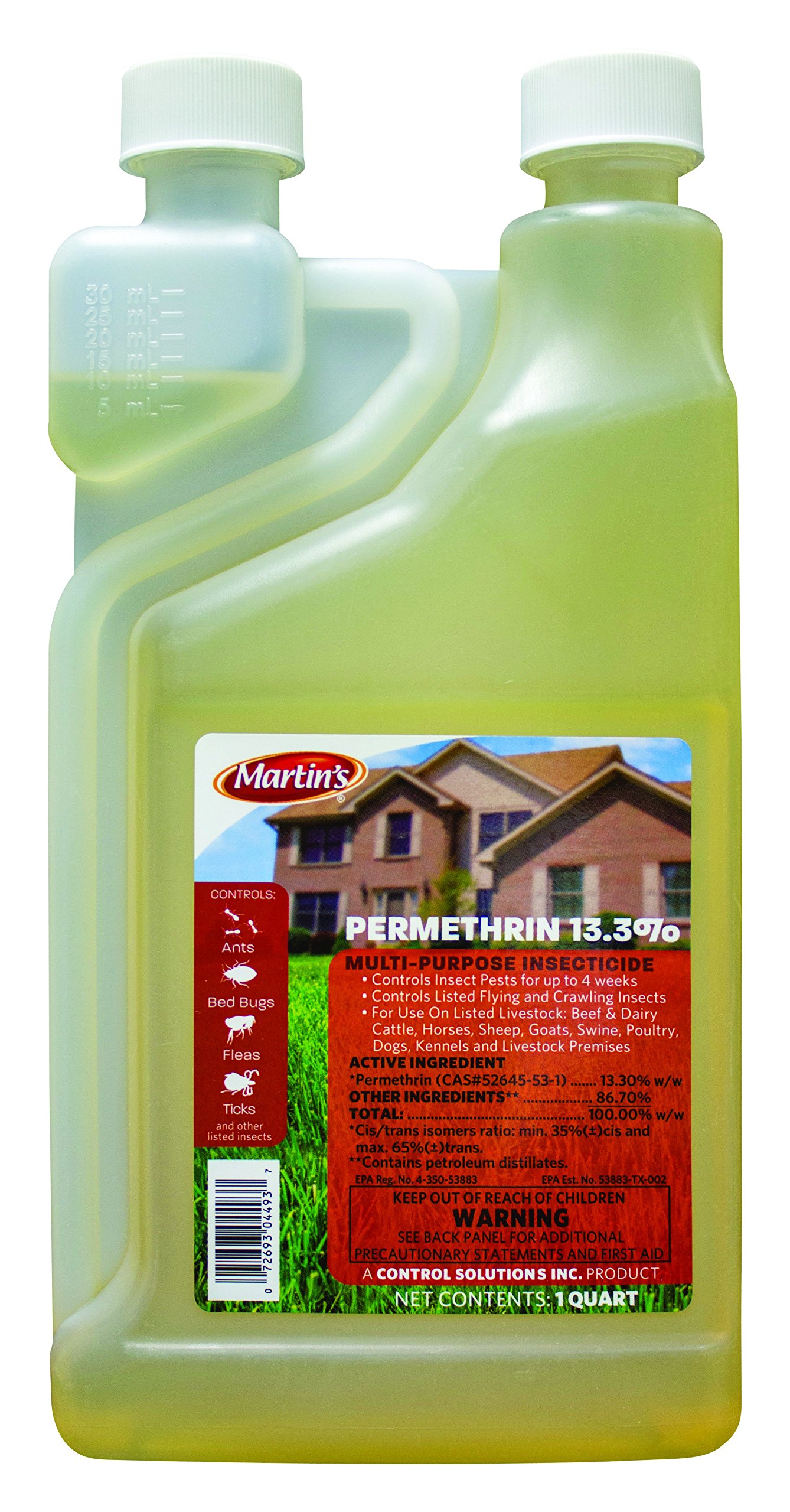
One 32 fl oz bottle that mixes into gallons of perimeter spray — the long-haul math winner.
If you have a full foundation to treat, a concentrate is the most efficient format. This is permethrin at 13.3%, a 32 fluid ounce bottle that you dilute with water. It controls insect pests for up to 4 weeks on treated surfaces, and it works both inside and outside the home. When you want to run a continuous barrier around the whole base of the house, this is the format that scales.
Users describe applying it three feet out from the foundation at 3 ounces per gallon of water, and getting lasting results. It is easy to mix and bears a number of labels on the bottle. It is also a concentrate, so you need to measure and mix carefully and follow the label dilution exactly, because a stronger mix isn’t automatically better.
A word of accuracy: this permethrin blend is a broad insecticide and works against many pests, but it is most often used by owners for ticks, fleas, and perimeter control. If roaches are your only target and the infestation is behind a cabinet, a gel bait is the more direct route.
The value read: a 32 fl oz concentrate that dilutes into a large perimeter volume, so a single bottle handles a full season of foundation treatment.
The realistic trade-off: noticeable odor and a mix-measure step — best used as a dedicated outdoor perimeter task.
A smart pick when: you own a full house perimeter, a shed, or a large yard and want one bottle to cover it all.
Not the first choice when: scent put you off, or you only need to dab a small indoor gap.
5. Syngenta Advion Cockroach Gel Bait (4 x 30 Gram Tubes)
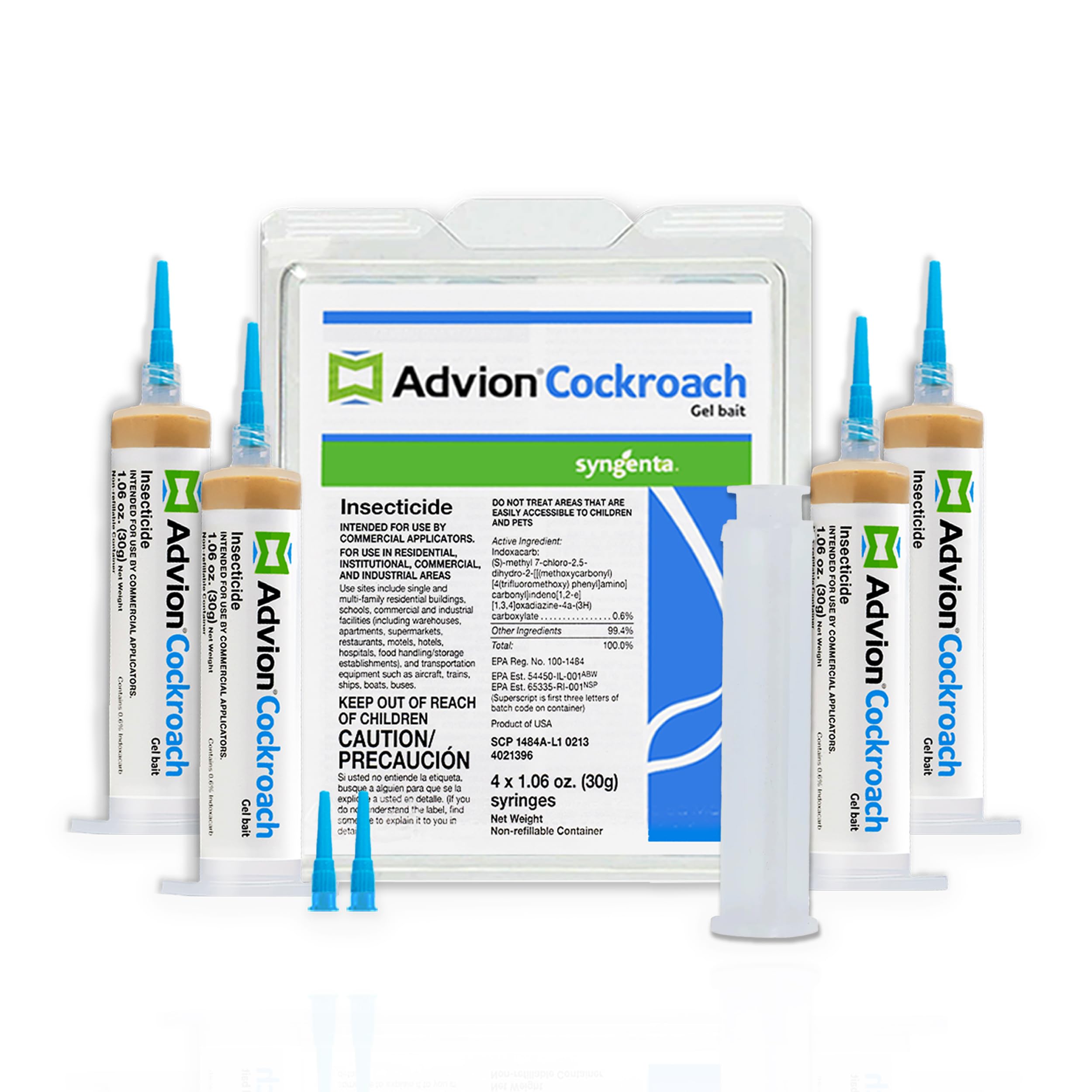
Four 30 gram tubes of gel that land right where roaches walk and then send them back to contaminate the nest.
If your roach problem lives behind the outdoor kitchen frame or under a cabinet, a gel beats a spray. Advion is a carboxylate gel bait that targets cockroaches specifically, and it is approved for use in food handling areas. The package holds four 30 gram tubes, so you get flexibility to dot multiple entry points and refill over months. Each tube dispenses in small, precise beads.
What wins people over is the behavior of the bait itself. Roaches are drawn to the gel and eat it in small amounts near their entry points. The ones that die in the harborage get eaten by others, and the cycle keeps spreading. In severe infestations, buyers report finding no live roaches within weeks of repeated reapplication. Some have found that after two initial applications, they can reapply every 2 to 6 months depending on weather, and this is one of the few products that also works well outdoors around wall holes and plumbing fixtures.
The honest catch is that gel is a targeted roach product, not a perimeter spray. It is not the tool for knocking down a broad mix of crawling insects over open soil, and the cost per tube can feel high if you’re used to a general-purpose can. But if roaches are the specific battle you’re fighting, this is the precision tool.
The Case For It
- Specific roach gel in four 30 gram tubes for targeted entry-point dosing
- Approved for food handling areas and indoor/outdoor use around frames and plumbing
- Creates a bait trail that spreads through the colony rather than killing only the visible roaches
The Honest Limits
- Specific to cockroaches, so it won’t clear a mixed insect population on its own
- Per-tube cost can feel high compared with a broad spray
The right tool for: a roach colony you keep spotting near cabinets, wall cavities, or plumbing fixtures.
Wrong tool for: broad insect control across an open yard, which a spray or concentrate handles better.
Know the Specs
Active Ingredient
The active ingredient is what actually kills the pest. In this set you will find cyfluthrin, cyhalothrin, hydramethylnon, permethrin, and carboxylate. Each one behaves a little differently — some are contact poisons, others are baits that are carried back to the nest. Match the ingredient to how the roaches are moving.
Form Factor
Form is dust, spray, granule, concentrate, or gel. Dust is best for dry cracks and voids, spray for surface and perimeter gaps, granules for mulch and open soil, concentrate for large volume, and gel for precise spots. The wrong form for the surface you are treating wastes both money and time.
Residual Length
Residual is the length of time a formula keeps working after application. Products list residual in weeks or provide a reapplication schedule — one here is labeled for 4 weeks of control, and another notes reapplying every 7 days for bed bugs. A longer residual means fewer treatments across the season.
Target Species
Read the label to confirm the formula is labeled for cockroaches and not only ants or other pests. Some products here target roaches specifically, while others cover a wider list of crawling insects, and a few are broad-spectrum perimeter products. Choosing the correct target saves a second purchase.
Common Questions
Can I spray a roach product directly onto mulch or open soil?
Do I need a different product for roaches versus ants and wasps?
Is a bait better than a spray for an outdoor roach colony?
What does residual mean, and how often should I reapply?
How long does a gel bait stay effective in a hot garage or outdoor kitchen?
Can I use these products around pets and kids?
Will a permethrin concentrate kill roaches on the exterior foundation?
What is the difference between a contact spray and a non-repellent product?
Does one bottle of concentrate really cover a whole foundation?
Are these products allowed in every state?
The Bottom Line
The five products here split into two jobs: kill what’s already in a void, or build a barrier that stops the next wave. For most households, the Atticus Tirade 1% Dust is the outdoor roach spray to start with, because its cyfluthrin powder reaches the cracks and crevices a can cannot coat. Reviewers most consistently describe it as effective against the toughest harborage. If roaches are already inside the kitchen cabinets, the Syngenta Advion Gel Bait is the precision tool that gets carried back to the colony. And for a wide foundation perimeter, a 32 fl oz bottle of Martin’s Permethrin Concentrate gives you the most coverage per mix.
How we choose
We do not accept paid placement. Every pick is matched to a real buyer and a real use-case; we do not hands-on test units.
Sources
Specifications: manufacturer listings and product documentation. Review insights: verified customer reviews, as of October 2026. Pricing: not shown on this page (it changes often); check the current price via the retailer link.
As an Amazon Associate, Aappliancez earns from qualifying purchases. This does not affect which products we feature.