Disclosure: Some links in this post are affiliate links. As an Amazon Associate I earn from qualifying purchases, at no extra cost to you. Learn more
Specs are compiled from manufacturer listings and verified buyer reviews and can change over time — please confirm the key details on the product page before buying.
If you are tired of smiling and nodding through conversations you only half hear, an over-the-counter behind-the-ear aid can put real amplification on your ears without a clinic appointment. These devices are for mild to moderate hearing loss, they sit behind your ear with a thin wire into the canal, and the right one restores clear speech without feedback whistle. Below you get nine picks sorted by how they actually behave in daily life, so you can match one to your ears, your phone, and your patience for setup.
This guide is built by comparing the manufacturers’ published specifications and the patterns across verified customer reviews, so you get each pick’s real strengths and trade-offs instead of marketing spin.
You will see which models stream calls, which ones survive a noisy restaurant, and which ones demand a charger nearby. Every spec below is lifted from the maker’s own listing, and the honest caveats come straight from what owners live with. Here is how to pick the otc bte hearing aids that match your ears and your daily routine.
Top Picks
How To Choose The Best OTC BTE Hearing Aids
Start with your ears, not the feature list. An over-the-counter aid is built for mild to moderate hearing loss — meaning you struggle in group conversations and turn the TV up, but you are not nearly deaf. If people tell you they have to shout, or you cannot hear a smoke alarm, that is a prescription-level problem and a doctor should see you first.
Gain in dB tells you how much louder speech gets
Gain is the amount of extra volume the aid adds, measured in decibels. A higher peak gain figure means the aid can push more sound into a stubborn ear before it maxes out. If your loss is on the lighter side, a modest gain is plenty and keeps background noise from getting shouty. Match the number to what your ears actually need rather than chasing the biggest figure on the page.
The wire-and-dome fit is what stops the whistle
A behind-the-ear aid sends sound through a thin wire to a soft dome seated in your canal. That separation between microphone and speaker is why BTE designs fight feedback better than a solid plug. Dome size matters more than most buyers expect — too small a dome lets sound leak back out and squeal, too large one plugs your ear and makes your own voice boom. Most kits ship several dome sizes, so try each one before deciding the aid is faulty.
Charging case power and streaming hours decide your day
Look at two separate numbers: runtime on a single charge and how many extra charges the case holds. Streaming calls and music drains the battery far faster than plain listening, so an aid rated for a full day of hearing may only manage a few hours of Bluetooth audio. If you take a lot of calls, check the streaming figure specifically.
Self-fitting apps are convenient but not a clinic
An in-app hearing test lets you tune the aid to your ears in minutes without an appointment. What it cannot do is replace a full audiogram or a professional who adjusts for difficult frequencies. If your loss is uneven between ears, or you have severe loss on one side, budget for professional help alongside the app.
Side-by-Side Comparison
| Model | Best For | Peak Gain | Battery & Case | Fit Type | Amazon |
|---|---|---|---|---|---|
| Jabra Enhance Select 700★ Best Overall | Smallest rechargeable with audiology support | — | Rechargeable, charging case | Behind-the-Ear (RIE) | Amazon |
| Lexie B2 Plus Powered by BoseBose-Tuned | Self-fitting with Bose sound tuning | — | Rechargeable, wireless charging case | Receiver-in-ear with domes | Amazon |
| Nova Hearing Aids (iBstone)Simple Pick | Simple button control for seniors | — | Rechargeable, USB charging | Behind-the-ear | Amazon |
| Vivtone Lucid508 | Long backup power in the case | 41 dB | 25 hrs per charge, 125 hrs with case | BTE with recycle case | Amazon |
| NVBOTY M2219 | Light, portable everyday listening | 43 dB ±5 dB | 25 hrs per charge, 100 hrs with case | In-ear with ear tips | Amazon |
| ELEHEAR Beyond | AI speech enhancement with app control | 50 dB | 20 hrs per charge, 100 hrs total | Receiver-in-canal | Amazon |
| Vivtone Xpure 2.0 | Bluetooth calls and music streaming | — | 24 hrs hearing, 3 hrs streaming | Receiver-in-canal | Amazon |
| ELEHEAR Beyond Pro | Fast top-up charging plus AI translation | — | 20 hrs per charge, 4 extra case charges | Receiver-in-canal (RIC) | Amazon |
| Sennheiser All-Day Clear | Bluetooth streaming with a brand name | — | Up to 24 hrs continuous | Receiver-in-canal (RIC) | Amazon |
Detailed Reviews
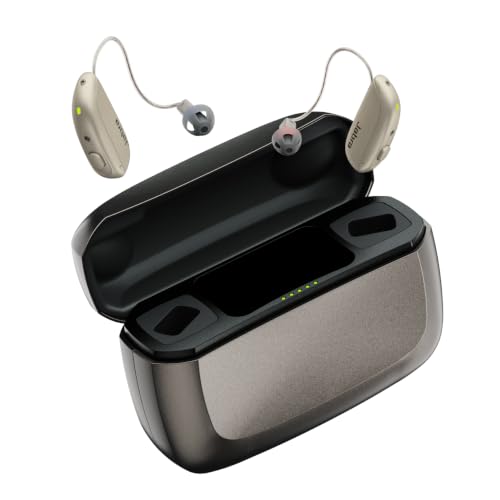
1. Jabra Enhance Select 700 Clinic-Quality Hearing Aids
The tiny rechargeable pair that streams your calls and still fits behind the smallest ears.
The pitch here is simple: clinic-level technology with actual licensed audiology support attached, in a shell Jabra calls its smallest rechargeable design. Each aid weighs 2.12 g, which is why owners describe forgetting they have them on by mid-morning. The receiver-in-ear build puts the speaker deep in the canal, and the item measures 1.04″ long by 0.3″ wide — small enough to hide behind an ear that a bigger BTE would crowd.
What wins people over is the speech clarity. Restaurant tables, car rides, and church pews all come up as places where these keep conversation readable. The adjustability is the second big pull — you can tune the sound specifically to your ears, and remote programming changes get applied without a phone call. Bluetooth LE Audio and Auracast support mean the pair can also pick up streamed audio and calls from a compatible phone, and TapControl lets you answer by double-tapping your ear the way you would with earbuds. You get a charging case in the box.
The catch worth knowing before you buy is reliability at the edges. A pair here and there stops working after the first month, and the refund path through a third-party seller can drag on. If you want a safety net on the hardware, that is the thing to weigh. The one honest nudge for this whole list: the crowd-favorite pick here sits at 3.5+ stars across 150+ ratings, so read the return policy as carefully as the spec sheet.
What earns the top slot
- Sound quality is the most-praised trait — owners hear every word at a noisy table
- Licensed audiology support is bundled, so professional help does not cost extra
- At 2.12 g per aid, you forget them behind your ears
- TapControl answers calls with a double-tap, iOS and Android both
Where it can disappoint
- Reliability is the recurring gripe — an occasional pair fails inside the first month
- Music streaming falls flat; speech and calls are the strong suit
- The app needs a live internet login, so it goes useless without signal
Reach for this if: you want the smallest rechargeable BTE on the list with real audiology backup behind it.
Think twice if: your main use is music streaming, where these are the weakest part of the package.
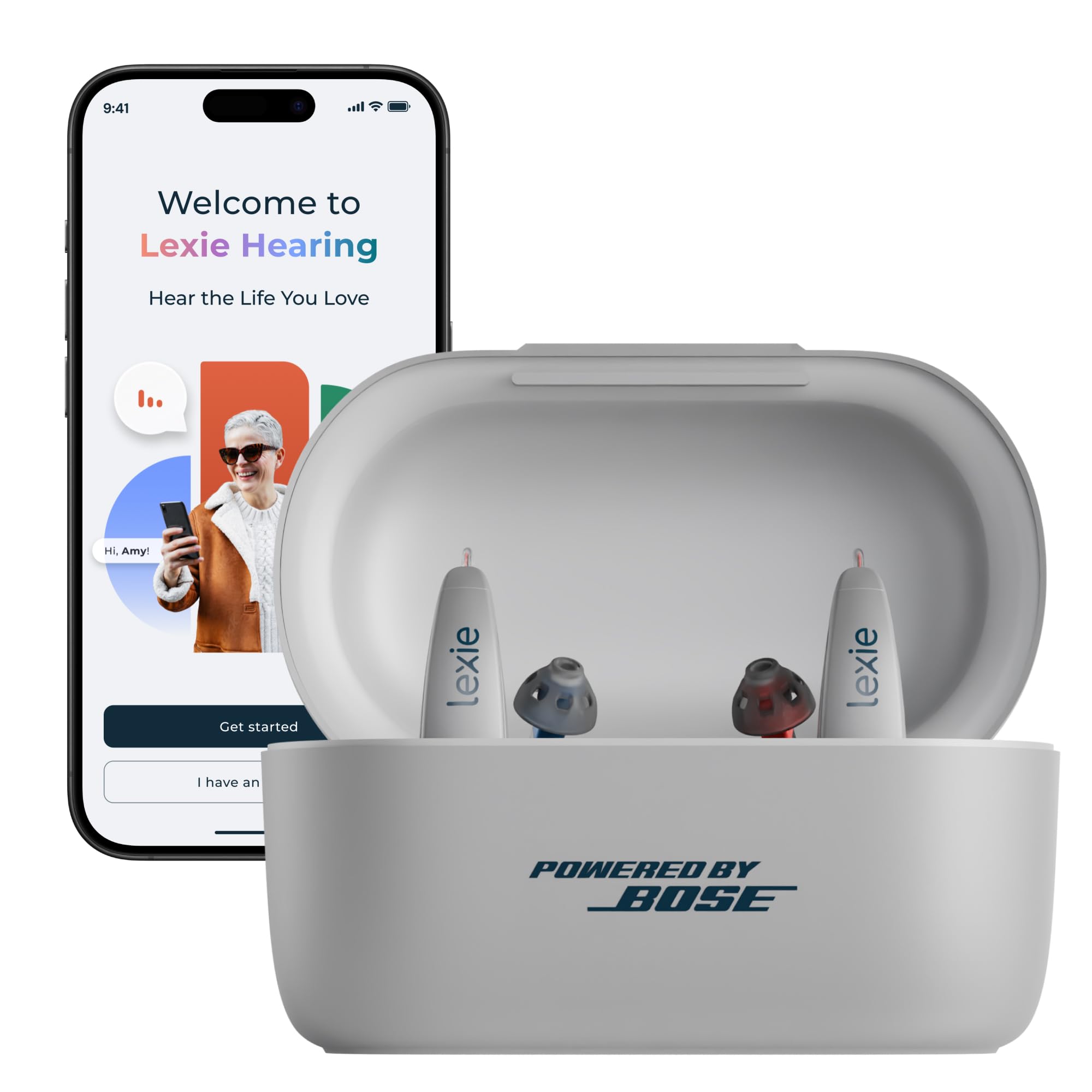
2. Lexie B2 Plus Powered by Bose
Bose sound algorithms in a self-fitting pair, with a hearing test that runs through the aids themselves.
This one carries a name you already know from headphones, and that is the point. The Lexie B2 Plus runs proprietary Powered by Bose algorithms — Noise Management, Wind Noise Management, Impulse Noise Reduction, and Feedback Management — to keep speech clear and suppress the whistle that plagues cheap aids. You take the hearing test right in the Lexie app and it personalizes the device to your profile in minutes.
Where the tuning shines is flexibility. You get 4 Environment Programs from the start, or you can build up to 10 of your own, plus Treble, Bass, World Volume, Balance, and Directionality settings for noisy rooms. Multiple dome sizes ship in the box for a tailored fit. The wireless charging case and rechargeable batteries make it simple to keep topped up.
Here is the honest limit: this is the most-reviewed pick on the list, at 3.5+ stars across 400+ ratings, but the sound-quality feedback is genuinely mixed. Loud output and a finicky setup come up again and again. Setup takes patience — some units arrive undercharged and won’t pair until you seat them properly, and the charge indicators are faint. Buyers report a pair that develops swishy noises around six months, with one aid eventually making an unfixable sound on power-up. If you want an aid that works without fiddling, this one demands patience at setup. But if you have a mild to moderate loss and want Bose-tuned sound with a real self-fitting test, the value is here.
What the app delivers: the in-app hearing test genuinely customizes amplification, and owners with high-frequency loss describe hearing speech in the female range they had been missing. That level of personalization from a self-fitting device is why many buyers keep these over pricier clinic aids.
The trade-off: you’ll need patience at setup, and the charge case only works when the aids are seated just right. Budget 20 minutes with the manual and the phone support line, and expect the Bluetooth link to stay simple rather than smooth.
Go with this: if you already trust Bose sound and want a self-fitting test that personalizes the aid to your own ears.
Look past it: if you want a device you can unbox and wear in one sitting without working through the app first.
3. Nova Hearing Aids for Seniors Adults
Button-first hearing aids for seniors who do not want to build an app relationship first.
Not every buyer wants to run a hearing test through a phone. The Nova pair leans the other direction: physical controls, simple charging, and a design aimed squarely at seniors. Nine volume settings sit on the top button, so a single press gets you louder or quieter without open up anything. Lifting the aid out of its charger turns it on, and dropping it back in turns it off — no fumbling with a switch.
The owner pattern here is comfort and clarity together. The aids amplify the voice across the room while cutting background hiss, and they ship professionally packaged with an easy-to-follow manual. Charging works every other night for most users, and the USB cable is a small but real convenience — it is the same cable your phone uses. The discreet small build means they do not draw attention behind the ear.
Weigh this honestly: an owner who relies on hearing detail in a crowded room says the aids amplify everything at once, which got frustrating fast. Customer feedback also fairly warns that in a busy setting with lots of people and background noise, things can feel a bit overwhelming — one buyer took two weeks before deciding the fit was not right for their needs. Adjusting the volume is described as slightly tedious. For watching TV or talking at home, this is a friendly first aid. For noisy public spaces, it is not the strongest tool on the list.
Where it delivers: clarity and easy wear are the two things owners come back to. A quiet room, a TV on at a normal volume, and a straightforward setup make the Nova a comfortable entry point for someone stepping into hearing aids for the first time.
What to plan for: the button volume is a slight chore, and crowd noise is not where this shines. Treat it as a home and conversation aid rather than a restaurant companion.
Best for: someone who wants a button-controlled pair that livens up TV and one-on-one talk at home.
Skip if: your main need is staying sharp in a crowded restaurant or busy meeting room.
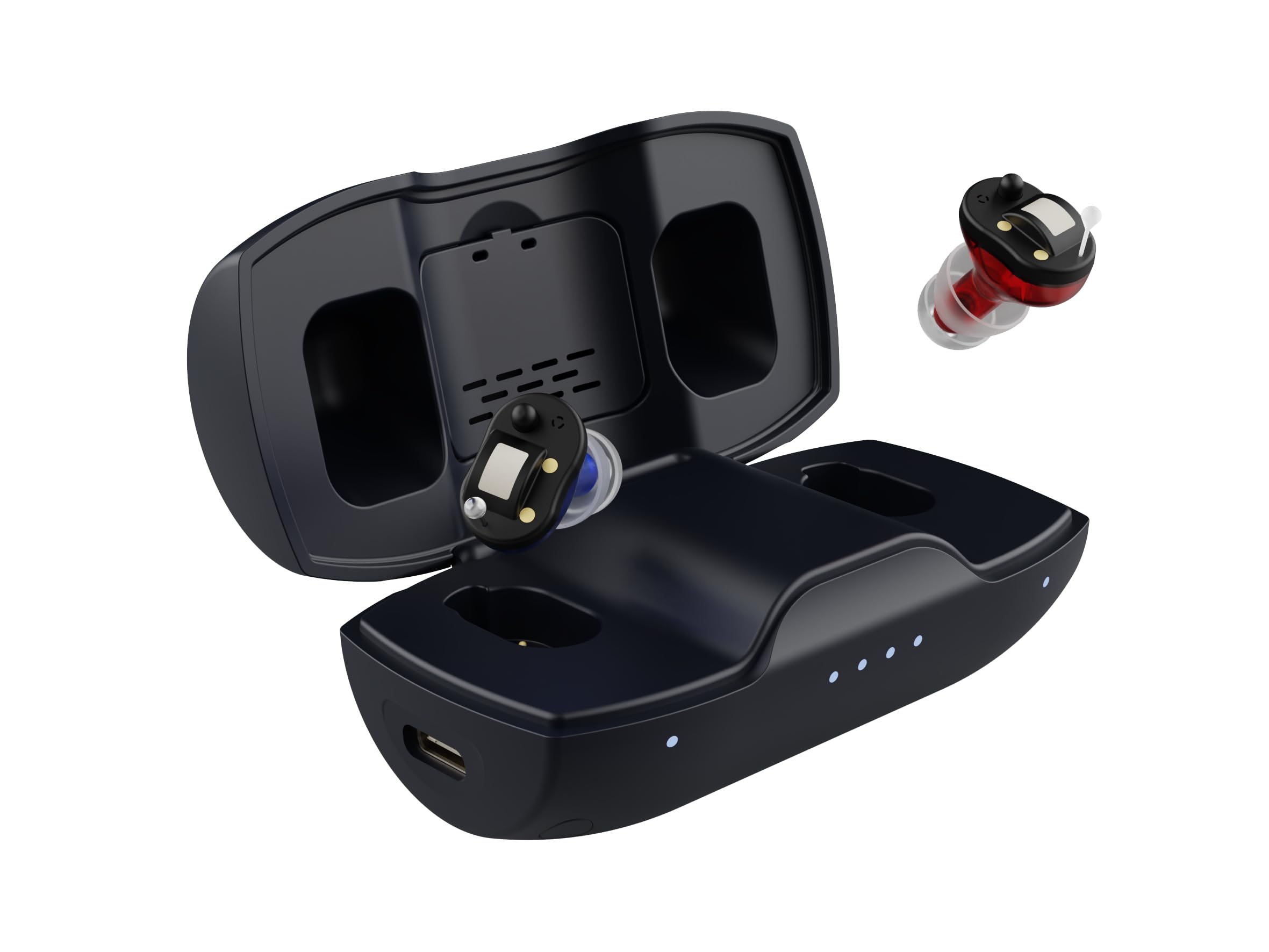
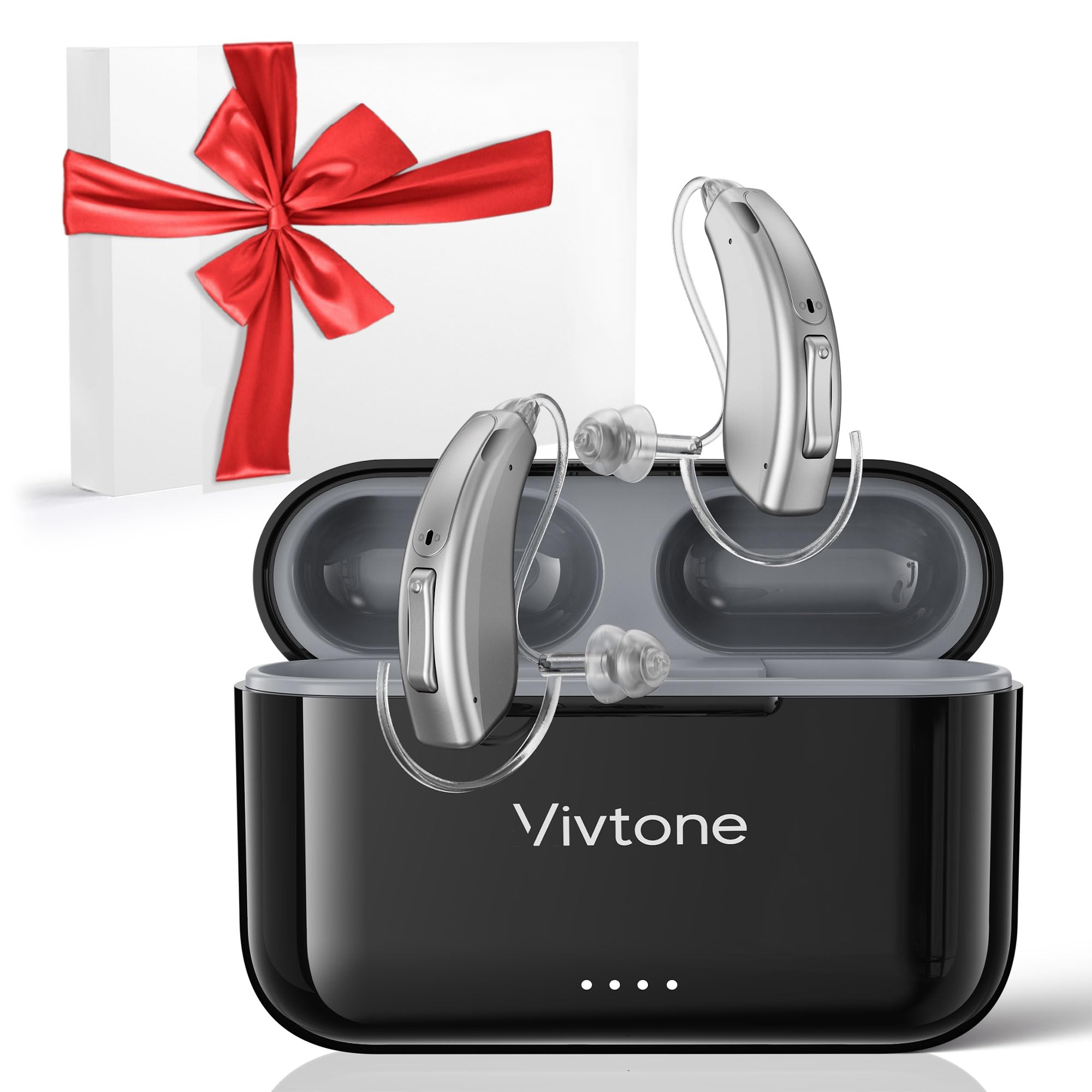
4. Vivtone Rechargeable Lucid508
A rechargeable pair with enough case backup to survive a weekend away from the wall outlet.
Most aids run out of charge at the exact moment you need them. The Lucid508 moves that problem off your plate: the recycle case charges both units 4 times over, and Vivtone packages that as 125 hours of backup power. Each aid holds up to 25 hours of use on a full charge, and a 2-hour top-up resets it. Peak gain tops out at 41 dB, which is a serious lift for mild through significant hearing loss.
Operation is where this one is quietly clever. The Auto-On/Off feature flips the aid on when you lift it out of the case and off when it drops back in, so no fumbling. Quiet mode handles normal rooms, noisy mode pushes background down and brings human voice forward, and a tinnitus masking mode rounds out the set. The discreet behind-ear build is described as nearly invisible.
The honest trade-off is that the case is the useful part of the package, while an occasional aid stops charging after the first month. If you get one, test the charging behavior early and use the warranty path. Customer support on this model has a real track record of calling you back and following through — one frustrated buyer got their unit sorted by charging fixes over a support call. The 3-year warranty covers it, and a free anti-lost lanyard ships via the promotion section.
Why owners keep recommending it
- 125 hours of backup power from the case means weekend trips without a charger panic
- 41 dB peak gain reaches into moderate and significant loss territory
- Auto-On/Off makes the daily routine frictionless
- Support is responsive and warranty repairs are followed up
What a careful buyer notices
- An occasional unit quits charging within the first weeks — test early
- No personalization to your specific audiogram; this is straight amplification
Matches best with: anyone who travels and refuses to plan around a charger, especially a parent who needs a simple on-and-off routine.
Not the fit for: buyers who need frequency-specific tuning matched to a professional audiogram.
5. NVBOTY Rechargeable Hearing Aid M2219
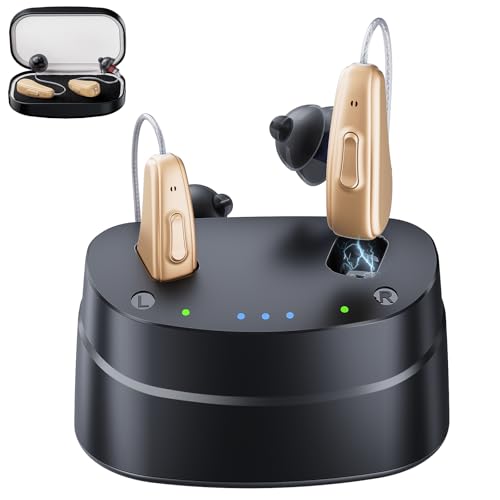
A pocket-sized amp with five button volume steps and a case that stretches 25 hours into 100.
The M2219 keeps the controls simple: five volume levels, a long press on the Volume+ button for three seconds to power it on or off, and a single click to step the volume. A smart memory function restores your last-used setting automatically, which saves you the daily hunt for the right level. Volume gain reaches 43 dB±5 dB — enough headroom for moderate hearing loss, and enough to sound clear in typical rooms.
Battery math is the strong suit. The aid itself runs up to 25 hours of playtime on a full charge, and the included case stretches that to a total of up to 100 hours. A quick 3-hour charge gets you back to listening. The set comes with a main unit, ear tips in three sizes, the charging case, and a carrying case — the compact case slips into a pocket or bag.
The honest catch is that the noise-cancellation claim does not hold up for everyone. Some owners mention that all five volume levels feel too loud, and the background reduction is not strong enough to justify the label — one said the aids amplified everything in the room including the background. The physical build also reads bulky to some, though others find the small, discreet form exactly as described. With 10+ ratings and mixed feedback, this is a pick for someone who wants a simple button-controlled amp and accepts that it favors volume over finesse.
What works for the right buyer: the button volume, smart memory, and 100-hour case total make this genuinely easy to live with. For a first-time user who wants to hear at home without a smartphone, the steps are minimal.
Where expectations slip: the noise cancellation story does not match the experience for everyone, and the aid is on the bulky side for smaller ears.
Fits you if: you want a straightforward button amp with enough case backup to skip daily charging.
Not for you if: your priority is genuinely suppressing background noise in busy settings.
6. ELEHEAR Beyond OTC Hearing Aids

Speech-enhancing AI with a serious gain figure and a companion app that tunes the sound to you.
Fifty decibels of maximum gain is where this one starts, run through VocClear AI Technology and paired with 24 dB of noise attenuation. That combination targets mild to moderate hearing loss with a speech-first tuning — the point is to pull human voice forward and clamp down on whistling and background. Feedback control is built in, which matters most when you turn the volume up.
The app is the control center. You get volume adjustment, AI translation, serene sound relief, telephone speech enhancement, and user-customized compensation. Nobody else on this list offers a translation feature. Dynamic range is 50 dB with multiple dome sizes included for a fit that conforms to your ear. Battery is generous: up to 20 hours of runtime on a single charge, and the case adds 4 more charging cycles for a total of 100 hours. Auto on/off flips the aid when you lift it out or drop it back in.
The honest caveat lives in the sound-quality feedback, which is mixed. Some owners hear crisp, clear speech while others describe the tone as tinny and noisy rooms as brutally loud — a fork scrape on a plate in a tiled kitchen is a recurring complaint. Noise cancellation underperforms for some buyers at every level. The quality and functionality story, on the other hand, is a genuine win: it is the most-praised thing on this listing by a wide margin, with 228 owners calling out the build and 130 citing the features. If speech clarity in normal settings is your goal, the ELEHEAR is a real contender.
Strong points
- 50 dB max gain with 24 dB noise attenuation is the highest figure on the list
- 100 hours total battery with the case, so charging is not a daily event
- AI translation is unique here — no other pick offers it
- Build quality is the single most-praised aspect, by a wide margin
Where it thins out
- Sound quality is a mixed bag — some ears find the tone tinny
- Noise cancellation does not silence a noisy kitchen or busy restaurant for every buyer
- Call quality can drop one-sided and require a power cycle to reset
Worth grabbing: if speech clarity in normal settings is your priority and the AI translation feature appeals to you.
Keep looking: if your daily life involves noisy environments where speech protection has to hold up under real pressure.
7. Vivtone Xpure Bluetooth Hearing Aids 2.0

A receiver-in-canal aid that turns your phone calls and music into something you can hear properly.
For anyone who has given up on holding a phone to a ringing ear, the Xpure is the pick. Bluetooth on this pair does calls, music, and audio streaming straight to the aids, compatible with iOS 12 and Android 11.0 or newer. The receiver-in-canal design keeps distortion and feedback down compared to an in-ear shell. Multiple preset sound modes let you switch between a quiet conversation and a noisy restaurant without a phone app, and fine-tuning volume and frequency is possible through the free companion app or the onboard buttons.
Charging is quick — full in 2.5 hours for both the aids and the case. That yields up to 24 hours of hearing use or 3 hours of Bluetooth streaming, and the recycle case holds a week of standby power. Real-human phone support is on call if you get stuck. Owners with a Galaxy S24 Ultra report excellent results across calls, apps, music, and video — the streaming quality punches well above the aid category.
The honest read on the mixed feedback: effectiveness is the most-discussed aspect and the verdict is genuinely split. Some buyers find the sound tinny and cluttered with background white noise, others report battery life shorter than the rating suggests, and one mentions the domes being too small for larger ear canals. One buyer’s mic failed early but support shipped a replacement after troubleshooting. If you want a Bluetooth-capable aid at a mid-range price and your loss is mild to moderate, the Xpure earns its spot. If your loss is severe, this pair hits a ceiling.
The Bluetooth advantage: 3 hours of streaming on top of 24 hours of hearing time gives you a device that doubles as a phone headset. That is not a small thing if you make a lot of calls.
What to plan around: the fit is dome-dependent, so buyers with larger ear canals should confirm sizing before committing. The effectiveness feedback is genuinely split rather than uniformly positive.
Right for: frequent call-takers who want a Bluetooth-capable receiver-in-canal aid with a real support line behind it.
Wrong for: severe hearing loss, where the output simply caps out short of what you need.
8. ELEHEAR Beyond Pro Bluetooth Hearing Aids
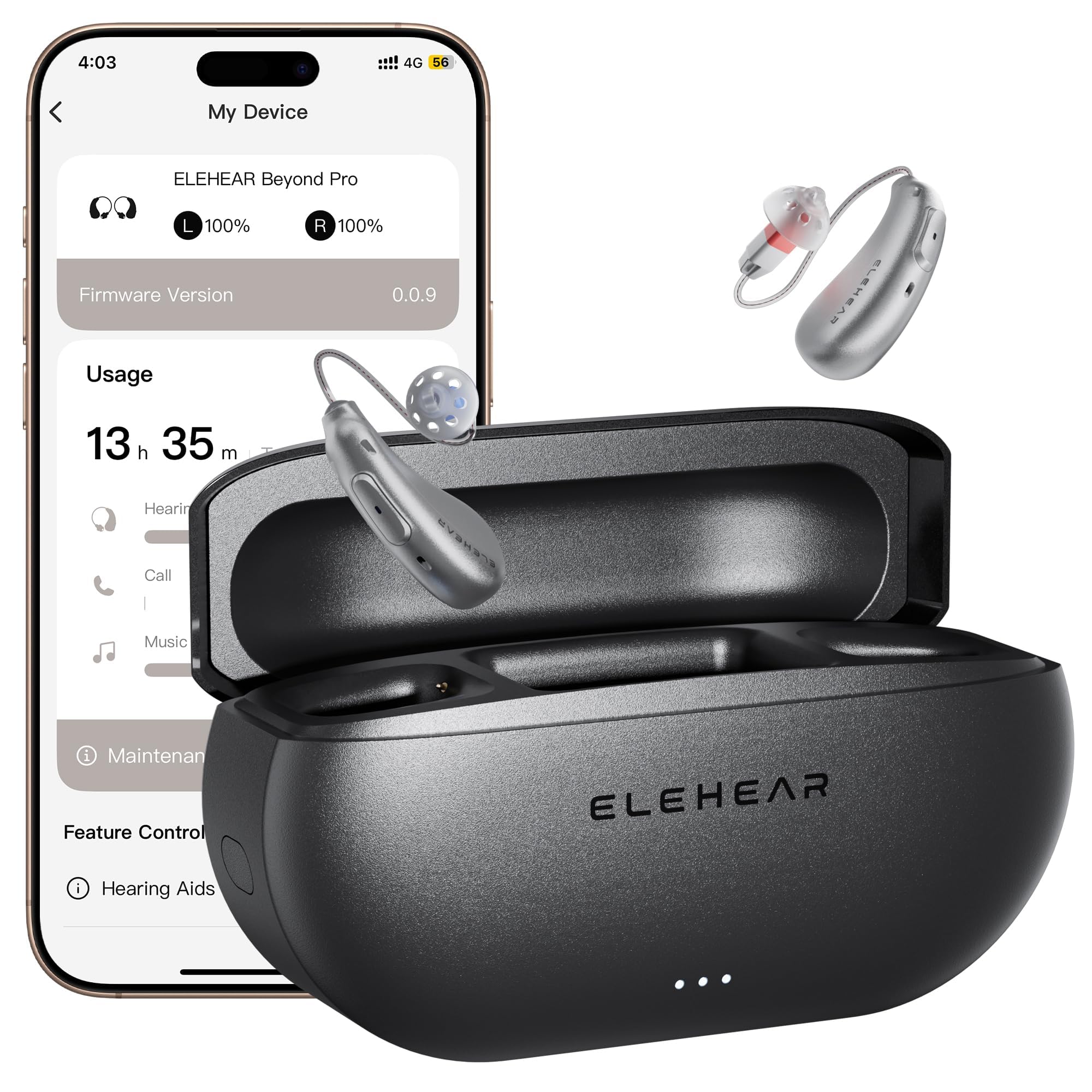
A 15-minute charge buys up to 6 hours of hearing, the fastest top-up here.
The headline tech is VocClear 2.0, and ELEHEAR rates VocClear 2.0 at 30% clearer speech, with enhanced high-frequency detail up to 8500Hz (high-frequency detail means crisp consonants like “s” and “t”) and ultra-low latency of just 8ms (latency is the delay before sound reaches you). That lower latency matters for Bluetooth audio — it means less lag between what you see and what you hear. A music mode rounds out the tuning. Twenty rich soundscapes (rain, breeze, vinyl crackle, ambient tones) let you pick a background that suits your ears or your mood.
Charging is where it separates from the pack. Fifteen minutes on the charger buys up to 6 hours of use, and a full charge runs up to 20 hours. The case adds 4 more full charges. Real-time AI translation covers 20 languages, including Spanish, French, Italian, Japanese, and Chinese — you speak and it translates on the go. The featherlight receiver-in-canal design is built for all-day comfort with multiple dome sizes included, and remote support from hearing care specialists lets them adjust your sound through the app.
The honest trade-off is durability at the boundary. Some buyers lose an aid after seven months — one had a wire ordered to repair it, and the replacement wire failed again two months later. A few describe the app as a 3-channel setup that feels thin next to the on-device tuning. A buyer with severe loss says it is not adequate there, which lines up with the mild-to-moderate spec. Customers note it steps past OTC rivals like Flaygo and Audien on frequency control — one called it “superior to Flaygo, Vivtone, Audien models” for the app’s independence of frequency and volume adjustment.
Where the Beyond Pro leads
- 15 minutes of charging buys 6 hours, the quickest top-up on this list
- 20 hours per charge plus 4 case charges keeps you going for days
- AI translation in 20 languages is a genuinely different capability
- 8500Hz high-frequency detail with 8ms latency for clearest speech
Things worth knowing
- Aids can fail inside the first year — a wire replacement is the documented path
- App shows only 3 channels of control, thinner than the on-device tuning
- Not built for severe loss; the spec ceiling is mild to moderate
Pick it when: your routine cannot survive long charge times and you want the fastest top-up plus AI translation on the side.
Look past it if: long-term durability matters more than the feature list, given the wire failures some buyers hit.
9. Sennheiser All-Day Clear Bluetooth Hearing Aids

A household audio name entering the hearing aid market, with FDA-cleared status and up to 24 hours of runtime.
Sennheiser is the most-recognizable brand on this list, and it brings an audio pedigree to the table. The All-Day Clear is FDA cleared, automatically adjusts to your sound environment, and runs on a receiver-in-canal design that Sennheiser describes as the modern take on a classic shape. Setup is a few minutes in the intuitive app — no audiologist or appointment required. Bluetooth is built in for hands-free calls, music, podcasts, and audiobooks, all streaming straight to the aid. There is a 30-day risk-free trial.
Battery is rated up to 24 hours of continuous use, dependent on how you use it — streaming calls drains it faster, and one owner reports 16 hours with a streaming phone. Setup takes about 20 minutes in the app, and the fit is described as small, discreet, and lightweight on the ear. Eight ear tips come in the box in small, medium, and large, along with wax guards and a cleaning brush.
The honest picture: owner feedback on Sennheiser’s sound quality is mixed. Some find it exceptional and comparable to the big prescription names — one prescription wearer rates it close to ReSound and Starkey — while others report a background hiss and poor performance in noisy rooms. The bigger story is long-term support. An aid can fail just outside the 12-month warranty, and the repair offer there is limited. A charging case without its own battery is the other gripe. If a household brand matters to you for confidence, and Bluetooth streaming quality is your priority, this one is worth a close look.
What the brand buys you: the Streamlined app setup, the FDA-cleared status, the 30-day trial, and a sound signature tuned by an audio company with real pedigree. Effectiveness is the most-praised quality on the listing, with reliability right behind.
The worry to weigh up: the case has no battery of its own, so it needs a wall outlet. Beyond that, plan for the possibility that an aid fails after warranty and the support path is limited.
Reach for this if: you want a name you already trust, an FDA-cleared device, and a 30-day window to decide.
Not your match if: you plan to use a charging case on the go — this one still needs a wall outlet.
Know the Specs
Gain and Max Output
Gain is the boost in decibels (dB) the aid adds on top of the raw sound. The maximum gain is what you see on the box; the maximum power output (MPO) is the loudest the aid will go before it clamps down to avoid distortion. A pair with 50 dB of peak gain can lift speech more than one with 41 dB before the sound starts to crack. If your hearing is on the lighter side, a modest gain with good noise handling is often more comfortable than brute volume.
Receiver-in-Canal vs In-Ear
Receiver-in-canal (RIC) means the speaker sits in your ear canal, connected to the body of the aid by a thin wire behind your ear. That separation is what keeps whistling down, because the microphone and the speaker are far enough apart. In-ear designs place the whole thing in your ear for a smaller look, but they have a harder time fighting feedback at higher volumes. If you plan to turn the aid up, the receiver-in-canal shape is usually the friendlier pick.
Battery Hours vs Case Charges
Any aid listing should give you two battery numbers: runtime on a single charge, and how many extra full charges the case holds. Bluetooth streaming drains faster than plain listening, so an aid rated for 20 hours of speech may manage only 3 hours of streaming. Multiply the per-charge number by the case cycles so you know how many days you can leave the charger behind — a case that holds 4 charges is a weekend away; a case that holds one is a nightstand accessory.
Bluetooth Audio and Auracast
Bluetooth on a hearing aid lets the device act like a pair of earbuds, but the version matters. Bluetooth LE Audio is the newer standard that uses less power and adds Auracast — a broadcast feature that lets one audio stream reach many listeners at once. Latency in milliseconds (ms) is how much delay you hear between the source and the aid, and lower is better for video. If you take a lot of calls, check that the aid supports streaming on your phone’s operating system before you commit.
Common Questions
Can an OTC behind-the-ear aid work for severe hearing loss?
Do I need an audiologist to fit these behind-the-ear aids?
How long do the batteries last on a single charge?
What is the difference between in-the-ear and behind-the-ear aids?
Will these hearing aids stream phone calls and music from my smartphone?
Can I wear a behind-the-ear hearing aid with glasses?
How do I clean and maintain a behind-the-ear hearing aid?
What should I do if my hearing aid starts whistling?
Are OTC hearing aids regulated the same way as prescription aids?
How many dome sizes come in the box and why does it matter?
The Bottom Line
For most buyers, the best otc bte hearing aids pick is the Jabra Enhance Select 700. It pairs the smallest rechargeable behind-the-ear build on this list with licensed audiology support included — the one feature money usually cannot buy at the over-the-counter shelf. If you want Bose-tuned sound and a self-fitting hearing test that personalizes the aid to your ears, grab the Lexie B2 Plus. And for fast top-up charging plus AI translation in 20 languages, reach for the ELEHEAR Beyond Pro.
Two more worth considering depending on how you live. The Vivtone Lucid508 gives you 125 hours of backup power from its case, so a weekend away does not mean packing a charger. The Sennheiser All-Day Clear is FDA cleared, carries a name you already trust, and gives you a 30-day window to decide.
Here is the honest nudge before you click buy: match the aid to your loss, not the feature list. All nine picks here are built for mild to moderate hearing loss. If your loss is severe, none of them will bridge the gap — see a professional first. If your loss is mild to moderate, the right pick here gets you back into conversations you have been nodding through, and the Jabra remains the strongest overall.
How we choose
We do not accept paid placement. Every pick is matched to a real buyer and a real use-case; we do not hands-on test units.
Sources
Specifications: manufacturer listings and product documentation. Review insights: verified customer reviews, as of October 2026. Pricing: not shown on this page (it changes often); check the current price via the retailer link.
As an Amazon Associate, Aappliancez earns from qualifying purchases. This does not affect which products we feature.