Disclosure: Some links in this post are affiliate links. As an Amazon Associate I earn from qualifying purchases, at no extra cost to you. Learn more
Specs are compiled from manufacturer listings and verified buyer reviews and can change over time — please confirm the key details on the product page before buying.
If your brown rice keeps turning out gummy, gritty, or bland, the grain type is usually the culprit — not your pot. The picks below cover the three jobs whole-grain rice actually does in a kitchen: a sticky short grain for bowls, a fluffy long grain for pilafs and curries, and a quick-cooking bag for nights when you forgot to plan. Every pick here is real organic whole-grain rice with a track record behind it.
This guide is built by comparing the manufacturers’ published specifications and the patterns across verified customer reviews, so you get each pick’s real strengths and trade-offs instead of marketing spin.
Stickiness, cook time, and grain length decide whether you enjoy the bag or dread it. Here is how the five leading bags of organic brown rice actually differ once the water hits the pot.
Top Picks

How To Choose The Best Organic Brown Rice
The bag in front of you probably says “organic brown rice” and nothing else that helps. Three things decide whether you will love it: the grain length, the cook time, and how much rinsing it demands. Get those three right and the brand matters far less than the shelf talk suggests.
Grain length decides the dish, not the diet
Short grains are plump and cling together, so they suit bowls, stir-fries, and anything you want creamy or sticky. Long grains stay separate and fluffy, which is what you want under curry or folded into a pilaf. Basmati is its own long-grain lane: aged, aromatic, and built to stay loose. Buying a short grain for a pilaf is the most common way people end up disappointed.
Cook time is the real daily tax
Whole-grain rice keeps its bran layer, so it always takes longer than white rice. Standard brown rice commonly runs around 45 minutes on the stove. Quick-cooking bags shorten that by milling off part of the bran while keeping the germ. That trade buys you weeknight speed but costs you some of the chewier, nuttier character that brown-rice loyalists actually want.
Rinsing is not optional with whole grain
Bran holds dust and chaff, and a quick rinse under the tap will not move it. Expect to rinse two to four times until the water runs clear. Skip that step and the water turns brown and the cooked rice tastes muddy. Rinsing is the one prep habit that separates a good bag from a bad batch.
Side-by-Side Comparison
| Model | Best For | Grain Type | Bag Size | Cook Style | Amazon |
|---|---|---|---|---|---|
| Lundberg Short Grain Brown Rice★ Best Overall | Sticky bowls and creamy dishes | Short grain | 32 Ounce | Standard whole grain | Amazon |
| Lundberg Organic Jasmine Brown RiceTop Performer | Curries and fluffy pilafs | Long grain jasmine | 32 Ounce | Standard whole grain | Amazon |
| Nishiki Brown Rice Quick Cooking | Fast weeknight meals | Quick-cooking brown | 80 Ounce | Quick cooking | Amazon |
| Jiva Organic Brown Basmati Rice | Aromatic Indian cooking | Long grain basmati | 64 Ounce | Standard whole grain | Amazon |
| Food to Live Organic Long Grain Brown Rice | Bulk pantry stocking | Long grain | 48 Ounce | Standard whole grain | Amazon |
Detailed Reviews
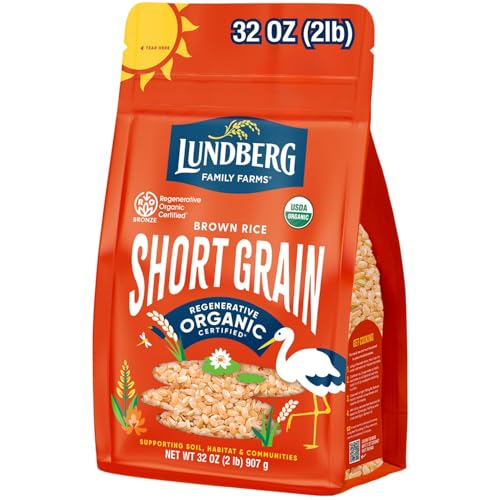
1. Lundberg Short Grain Brown Rice 32 Oz
Our pick — 4.5+★ from 300+ verified ratings; the strongest balance of quality and price.
The plump short grain that holds a bowl together without turning to paste.
This is the bag to reach for when you want brown rice that actually clings. The grains are short and plump, and they keep their bran and germ layers, which is what gives whole-grain rice its chew and its nutty edge. That combination makes it the natural fit for grain bowls, stuffed peppers, and any recipe that asks for creamy or sticky rice. It is also Regenerative Organic Certified, a standard that builds on USDA Organic with added requirements around soil health, animal welfare, and social fairness — so the organic claim here goes further than the basic label.
The flavor is what wins people over, and it is the nuttiness rather than a mild background note. The texture lands firm and fluffy rather than soft, which is exactly how a short grain should behave. As buyers put it: “I’ve been eating brown rice for decades. This is truly the best brown rice I’ve ever had.” It is a 2-pound resealable bag, so it stores cleanly in a pantry jar and reseals against moisture between batches.
Two honest notes before you commit. Several buyers find the price on the high side for a 2-pound bag, and a few question how strictly the organic claim holds. Treat both as sizing decisions rather than flaws — if you want the cheapest possible pound of brown rice, a bulk long-grain bag will serve you better. If you want the grain that makes a short-grain dish work, this is the one. Compared with the Nishiki quick-cooking bag, this is a fraction of the volume at 32 Ounce versus 80 Ounce, so buy it for the texture you are after, not for pantry volume.
What earns it first place
- Short, plump grains that go creamy and sticky on purpose
- Firm, fluffy texture that stays distinct instead of collapsing
- Regenerative Organic Certified, which layers extra standards on top of USDA Organic
- Resealable 2-pound bag that keeps the rest of the rice fresh
Where it asks more of you
- The 32 Ounce bag is small if you cook rice several times a week
- Some buyers feel the cost per pound runs high next to bulk bags
- You need to rinse it well before cooking, as with any whole-grain rice
Reach for this if: you cook short-grain dishes — bowls, stuffed vegetables, anything needing a clingy grain — and want the flavor to carry the meal.
Look elsewhere if: you go through rice by the kilo and want the biggest bag for the least fuss.
2. Lundberg Organic Jasmine Brown Rice 32 Oz
Long grains that stay separate and smell faintly of herbs while they steam.
If your brown rice usually turns into a sticky mass under a curry, this is the fix. The grains are long and they cling together just enough to look tidy on a plate without actually being sticky — so they hold up under Thai curries, in pilafs, and under a piece of chicken. There is a light, herbaceous scent in the bag and a sweet, buttery flavor in the bowl, which is the jasmine character doing its work even in whole-grain form.
What people praise most is the taste, with the overall quality running a close second — the two things that keep a bag on repeat order. It arrives as a 32 Ounce bag, and it carries Non-GMO Project Verified, USDA Certified Organic, gluten-free, 100% whole grain, vegan, and kosher claims on the label, so most dietary boxes are already ticked. At 1.9 pounds it is a lighter bag than the Nishiki quick-cooking option at 4.41 pounds, so it is the easier one to slot into a crowded shelf.
The catch is time and cost. Standard whole-grain jasmine takes real cooking time — the widely repeated figure is around 45 minutes on the stove — so it is not a “start it at 7 and eat at 7:15” bag. Some buyers also find it pricey for the size. Neither is a defect; both are the price of a long grain that stays separate and fluffy. If speed matters more than aroma, the quick-cooking pick below is the better trade.
The flavor case: Sweet, buttery, and lightly aromatic, this is the bag that makes plain brown rice taste like something you would order. Owners who switched from generic long grain tend to stay switched.
The honest limit: Around 45 minutes of cook time and a premium price per pound — plan it as a weekend or meal-prep grain rather than a last-minute one.
Best match for: cooks who build curries, pilafs, and grain salads and want grains that stay distinct on the plate.
Think twice if: you need rice on the table in under half an hour on a weeknight.
3. Nishiki Brown Rice Quick Cooking, 5-pounds

Skip the soak, skip the wait — brown rice that cooks like white rice.
This bag solves the single biggest reason people abandon brown rice: the soak and the long simmer. The grains cook on a regular rice cooker setting with the same water amount you would use for white rice, and no pre-soaking step is needed. What makes that work is partial milling — the bran is removed while the germ stays, which keeps it more nutritious than white rice and far faster than standard brown. The bag is 80 Ounce, which is 2.5x the volume of the Lundberg short grain at 32 Ounce, so it fills a pantry shelf rather than a single jar.
Rice quality is what shines here, then the taste, then the cook time — all three land as the top reasons people keep buying. Buyers describe it as slightly sticky with a good chew, not dry or hard, and it does not carry the heavy bran flavor some people dislike in standard brown rice. As one buyer summed it up: “Love this brown rice, it’s tasty and fluffy. And specially is quick cook. No need to soak it like other that I bought.” It also holds up in rice balls and sushi-style shapes, which most brown rice will not do.
Two things to know. Because the bran is partly milled away, you get less of the deep nuttiness that whole-grain purists chase — this is closer to white rice with a brown-rice conscience. And the quality control is where the honest caveat sits: a run of buyers have found insects in the bag, so check the seal and the contents when it arrives, and store it in an airtight container in a cool, dry spot as the maker directs.
Why weeknight cooks like it
- Cooks on a regular rice cooker setting with white-rice water amounts
- No soaking step required, which removes the main brown-rice hurdle
- Slightly sticky, good chew, and mild enough for picky eaters
- 80 Ounce bag that covers months of meals
What you trade away
- Less bran means a softer, less nutty flavor than full whole-grain rice
- Check the bag on arrival — some shipments have arrived with insects
- The cooked texture runs looser than a true short grain
The shortcut that works: buy it if brown rice keeps failing you because of time or texture.
Skip the shortcut if: you want the full bran layer and its heavier nutty taste.
4. Jiva Organic Brown Basmati Rice 4 LB

Aged for 12 months so the grains cook long, loose, and fragrant.
Brown basmati is its own thing, and this bag leans hard into what makes it worth buying. The rice is aged over 12 months, which is the step that gives basmati its non-sticky, separate-grain texture and its delicate sweet flavor. It is grown on certified organic farms in India and it is Non-GMO, so the origin and the growing method are both on the label. Vacuum packing is the practical detail: each bag is sealed to keep out impurities and pests, which matters with a 4-pound bag you will be working through over weeks.
For anyone cooking Indian food, the aroma is the selling point — basmati smells like basmati, and that scent carries into the finished dish. It also holds up under a 1 cup rice to 2 cups water ratio in a rice cooker, which keeps the method simple. Buyers describe it as delicious and well packaged, with a nutty taste and a grain that stays soft but occasionally gives a little crunch.
The trade-off is real but narrow. Basmati is a long grain with a distinct flavor, so it will not substitute for a sticky short grain in a bowl or a sushi-style recipe — reach for the Lundberg short grain for those. And on the cook side, one reviewer noted a bag that never absorbed liquid and stayed hard past an hour with no instructions included, so keep your own water ratio handy and check the bag if the first batch behaves oddly.
Where it wins: Aging for 12 months is what separates a real basmati from a bag that just says basmati. The grains stay separate and the aroma reaches the whole kitchen.
What to plan around: It is a specialty grain, not an all-purpose one — delicious with beans and salmon, less useful when a recipe wants cling.
Pick it for: Indian cooking, biryani, and any plate where a long fragrant grain belongs.
Pass it for: sticky bowls and recipes that need a plump short grain to hold together.
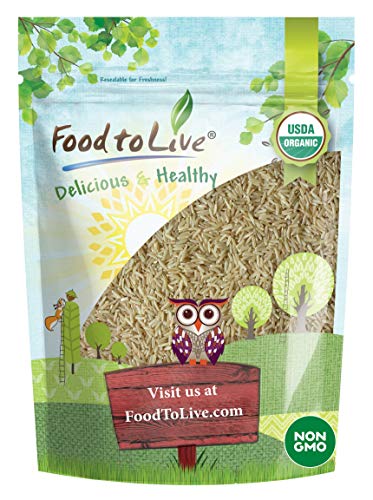
5. Food to Live Organic Long Grain Brown Rice 3 Pounds
A plain, unprocessed long grain that does the everyday job without ceremony.
This is the bag for someone who eats brown rice several times a week and wants a straightforward supply. It is organic, Non-GMO, non-irradiated, kosher, and vegan, and the label lists the glycemic index at about 45 units — a number worth knowing if you are watching how a grain fits into your meals. The 48 Ounce bag is a genuine bulk size, and it is the pick for anyone who used to scoop from grocery-store bins and needs a replacement source.
Cooked, it lands where a long grain should: chewy, nutty, and fluffy when you get the water right. It works in a basic rice cooker on the brown rice setting, and it holds up in salads and pilafs where separate grains matter. Buyers describe it as very tasty and fresh, and note it cooks up nice and fluffy. It is also a rinsed-and-ready grain — the one real prep requirement is to rinse it three or four times until the water runs clear, since unprocessed rice carries chaff dust that will otherwise turn the cooking water brown.
The honest caveat is consistency. Most bags arrive clean and on time, but a few buyers have opened a bag to a dark tint and a moldy smell, and one found the packaging inconsistent with what was expected. Check the bag when it lands and buy from a seller with a clear return path. If you want a guaranteed single-origin story and a certified regenerative label, the Lundberg bags above carry that; this one is about volume and value.
Worth it for: high-volume households and anyone who wants a dependable everyday long grain at a bulk size.
Not the one for: cooks who want a certified farm story or a sticky short grain for bowls.
Know the Specs
Grain Length and Texture
Short grains are plump and release starch as they cook, so they cling and turn creamy — the right choice for bowls and sticky dishes. Long grains stay separate and fluffy, which is what you want under curry. Basmati is a long grain that has been aged, and that aging is what keeps the grains loose and the aroma strong. Match the grain length to the dish before anything else.
Quick Cooking vs Standard Whole Grain
Standard brown rice keeps its full bran layer, which is where the nutty flavor and the long cook time both come from. Quick-cooking rice mills off part of that bran while keeping the germ, so it cooks faster and tastes milder. If you want the deep whole-grain character, accept the roughly 45-minute simmer. If you want rice on the table fast, the quick-cooking bag is the practical choice.
Common Questions
How long does organic brown rice take to cook?
Do I really need to rinse brown rice before cooking?
What is the difference between brown basmati and regular brown rice?
Is quick-cooking brown rice as nutritious as regular brown rice?
How should I store a large bag of organic brown rice?
Can I cook brown rice in a regular rice cooker?
Why does my brown rice come out gummy instead of fluffy?
Does brown rice have a lower glycemic index than white rice?
What does Regenerative Organic Certified mean on a rice bag?
How many servings do I get from a 32 Ounce bag?
The Bottom Line
For most kitchens, the organic brown rice to start with is the Lundberg Short Grain Brown Rice — the flavor is what people praise most, and the plump short grains make bowls and creamy dishes work without any guesswork. It holds 4.5+ stars across 300+ owners, and its Regenerative Organic Certified label adds standards beyond basic organic. If you want grains that stay separate under curry, grab the Lundberg Organic Jasmine Brown Rice. And for the nights you forgot to plan, the Nishiki Brown Rice Quick Cooking skips the soak and gets rice on the table without the wait.
How we choose
We do not accept paid placement. Every pick is matched to a real buyer and a real use-case; we do not hands-on test units.
Sources
Specifications: manufacturer listings and product documentation. Review insights: verified customer reviews, as of October 2026. Pricing: not shown on this page (it changes often); check the current price via the retailer link.
As an Amazon Associate, Aappliancez earns from qualifying purchases. This does not affect which products we feature.