Disclosure: Some links in this post are affiliate links. As an Amazon Associate I earn from qualifying purchases, at no extra cost to you. Learn more
Specs are compiled from manufacturer listings and verified buyer reviews and can change over time — please confirm the key details on the product page before buying.
When you buy quilting fabric online, you can’t touch it first, so three things decide whether you’ll be happy: does the cut arrive the size it was listed, does the cotton hold its color through a hot iron and a cold wash, and does the bundle actually contain the prints you saw on screen. The Vintage Floral fat quarter bundle leads the category with the biggest following — 4.6 stars across 800+ ratings.
This guide is built by comparing the manufacturers’ published specifications and the patterns across verified customer reviews, so you get each pick’s real strengths and trade-offs instead of marketing spin.
Below, I explain cut sizes, fiber content, and fabric weight in plain English — the three specs that decide whether your quilt lies flat or fights you at the machine. I also note where each bundle falls short, so you can pick the right online fabric stores for quilting.
Top Picks

How To Choose The Best Online Fabric Stores for Quilting
Ordering cotton online is a leap of faith unless you know which numbers on the listing actually protect you. The size of the cut, the fiber content, and the way the fabric was finished decide almost everything about how it behaves under your needle. Here is what matters before you click buy.
Match the cut size to your pattern, not to your budget
A fat quarter gives you more usable fabric for appliqué and larger blocks because it’s a quarter-yard cut measuring roughly 18″ x 22″ — a squarer shape than the long skinny strip from a standard quarter yard. Square precuts come already trimmed to a fixed size, so they’re ready for rapid strip-piecing and charm-square layouts. If your pattern calls for strip piecing at 2.5 inches, a jelly roll (a roll of 2.5″-wide strips) is the only cut that works without extra rotary cutting. Buy the cut your pattern names — trimming a 10″ square down to a 2.5″ strip wastes most of the fabric.
Check the fiber content claim against the wash test
Pure cotton takes a hot iron without glazing and holds its color through a cold wash, while a cotton-poly blend can pill or shine under the same treatment. Listings that state the fiber content plainly give you something to verify: press a scrap with a hot iron and watch for melting or scorching, then wash a square in cold water and check for dye bleed. Fabric that passes both is fabric you can trust in a quilt that will be washed many times.
Treat cut accuracy as the real quality signal
Precuts are sold on the promise of saved time — no rotary cutter, no ruler, no measuring. That promise only holds if the cuts are square and true to size. Slightly irregular cuts mean you will be straightening edges yourself, which eats into the fabric you paid for. Order a little more than your pattern requires so you have room to trim, and measure one square the day the package arrives rather than the night before you plan to sew.
Side-by-Side Comparison
| Model | Best For | Cut Size | Pieces Included | Material | Amazon |
|---|---|---|---|---|---|
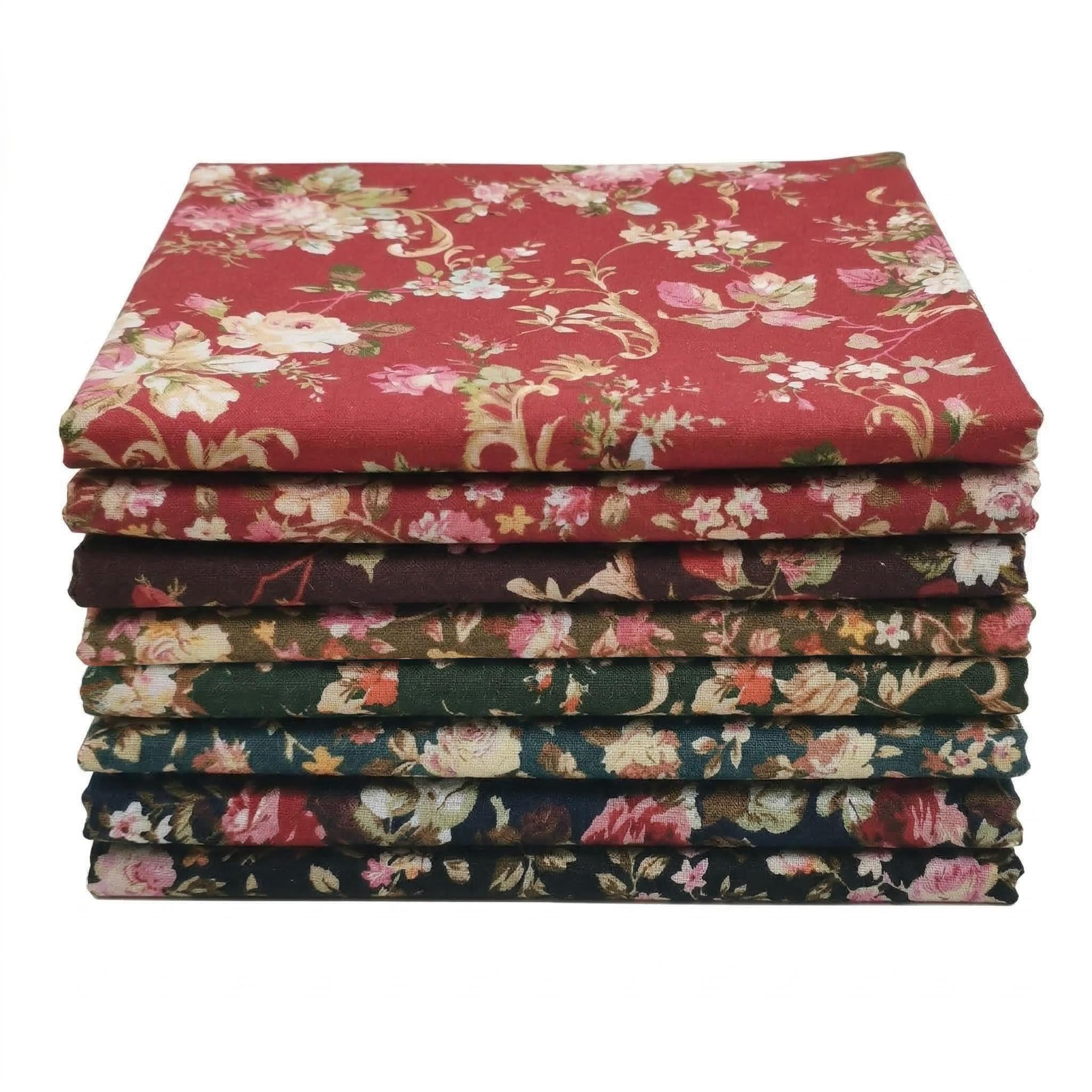
| iNee Precut Cotton Fat Quarters (Vintage Floral)★ Best Overall | Quilters who want larger pieces with less cutting | 18″ x 22″ fat quarters | 8 fat quarters | 100% Cotton | Amazon |
| 8″ x 8″ Precut Cotton Quilting Fabric Squares (Solid)Best Value | Beginners and small projects that need many colors | 8″ x 8″ squares | 50 squares, 50 colors | Sateen-weave cotton, 200-thread count | Amazon |
| 40 Pcs 10 x 10 Inch Cotton Fabric Squares (Classic) | Classrooms, gift makes, and mixed-print scrappy quilts | 10″ x 10″ squares | 40 squares | Cotton | Amazon |
| Fat Quarters Fabric Bundles (Dark Paisley) | Bag makers and quilters working a single coordinated palette | 18″ x 22″ fat quarters | 10 fat quarters | 100% Cotton | Amazon |
| 100% Cotton Jelly Roll Fabric Strips (Paisley Floral) | Strip piecing, jelly roll quilts, and fast precut patterns | 2.5″ x 44″ strips | 40 strips, 10 prints | 100% Cotton | Amazon |
Detailed Reviews
1. iNee Precut Cotton Fat Quarters
Our pick — over 4.5★ from 800+ verified ratings; the strongest balance of quality and price.
Eight vintage floral fat quarters that arrive soft, print-accurate, and ready to cut
If you want the most fabric per piece and the fewest passes with a rotary cutter, this is the bundle to start with. Each fat quarter measures 18″ x 22″ — a squarer, more generous cut than a standard quarter yard, which means you can fit larger appliqué shapes and bigger block pieces without piecing scraps together. You get 8 fat quarters in the Vintage Floral collection, and the whole bundle is 100% cotton.
The larger cut is the real story here, and it’s not a small difference. Compared with the 10″ x 10″ Classic squares below, this bundle’s pieces run far longer — 22 inches against about 10 — so a single fat quarter can span a bag panel or a quilt border strip that no square precut could cover. Each fat quarter also feels heavier in hand than a solid square: 0.31 kg per bundle against 0.38 kg for a 50-piece set.
The print quality is where this bundle earns its following. Owners describe the colors matching the listing photos closely, the floral patterns reading as genuinely pretty rather than washed out, and the fabric feeling soft against the hand with a slight shine gloss in certain light. A quilter who used it for a quilted tote put it plainly: “Purchased to make a quilted tote/purse; LOVED the finished product! Fabrics were a nice weight/quality. Would definitely buy again.”
The Case for the Floral Bundle
- 18″ x 22″ fat quarters give you real usable area — far more than a 10″ square for appliqué and borders
- 100% cotton presses clean and holds print color as pictured
- Soft hand with a faint sheen that reads as quality, not plastic
- Less trimming than yardage: the cut work is already done for you
Where It Falls Short
- Cuts can run slightly irregular, so order a little extra and trim square before you start
- Some quilters find the fabric thinner than expected — treat it as a mid-weight, not a heavy quilting cotton
- Only 8 pieces, so a full-size quilt top will need more than one bundle
Reach for this if: you are building a quilt top that needs generous pieces and you would rather cut less and sew more.
Look elsewhere if: you need fifty different colors to sort through — the solid square set below covers that job.
2. 8″ x 8″ Precut Cotton Quilting Fabric Squares
Fifty solid colors in one box — the fastest way to start a scrappy quilt with zero matching stress
Fifty pieces, fifty different solid colors, all cut to 8″ x 8″. If you have ever stood in a fabric aisle trying to match a print to a background, you already know why that number matters — this box hands you an entire rainbow of solids in one order. The material is cotton woven in a sateen weave at 200-thread count, which gives the squares a smooth, slightly polished surface rather than a rough homespun hand.
The fiber here is the part worth trusting. You get pure cotton that presses clean — it passed a hot iron test with no melting or scorching, and no dye bleeding in cold washes. That’s exactly what you want from a solid that will sit next to a printed fabric in a quilt. Quilters working English paper piecing (a hand-sewing technique using paper shapes) report the squares quilt well and stay colorfast.
The trade-off is thickness. These squares are thin, and the thinness is the most repeated note in the pile of feedback, though plenty of quilters actually prefer it because a thin cotton finger-presses flat and does not add bulk at the seam. Cuts are straight with only minor fraying, which you can manage with a quick pass of fray check or a stay-stitch. One packaging quirk is worth knowing: a rare order has arrived with a bit of oil or grime on the back of a piece, easily cut around. Quilters who measured the squares report they trim to a true 8″ x 8″.
Weight in the hand: At 0.38 kg for the whole box, this is the heavier of the two square sets in this guide.
What to expect on arrival: Fifty squares in fifty colors, straight-cut with light fraying, well wrapped, and true to the 8″ x 8″ listing size once you trim the edges.
Best for: beginners and small-project sewers who want a wide color range without hunting down individual fat quarters.
Think twice if: you need a heavier hand for a quilt that will take hard daily washing — a thicker cotton will hold up longer.
3. 40 Pcs 10 x 10 Inch Cotton Fabric Squares

Forty bright floral squares that turn a classroom craft table into a proper quilting station
Buy this one when you need volume and variety at the same time — 40 pieces, each cut to roughly 10″ x 10″, printed with a spread of floral and cartoon patterns in bright, vivid colors. The listing describes the fabric as soft with a smooth surface, not easy to pill or fade, and washable enough to keep for the next round of holiday sewing.
Size is the honest sticking point. The listing says 10″ x 10″, and Amazon’s own spec sheet clocks the cut at 9.84″ x 9.84″ — close, but not exact, and quilters confirm the squares run small in practice. That matters when your pattern assumes a full 10″ block. If your layout allows trimming down, it is a non-issue; if your pattern is measured tight, add a quarter-inch of slack when you plan.
What makes these squares earn a spot is the print mix. Reviewers describe a largely floral spread — around fifteen floral pieces — with a handful of animal and geometric prints filling out the rest, and the colors reading vivid and true. There are also some honest complaints worth naming: one buyer expected more animal prints than arrived, and a couple of pieces in some bundles land on the “dislike” pile. The fabric also has a slightly thinner hand than premium quilting cotton, and one quilter suspects it may be a cotton-poly blend rather than pure cotton.
The classroom factor: At 10.56 oz for the box, the fabric is thick enough to hand out for group craft sessions without the cuts fraying apart.
How it stacks up: You get more pieces than the iNee fat quarters (40 versus 8), but each square is smaller — this is a volume pick, not a large-cut pick.
Pick this one when: you are cutting for kids, gifts, or a scrappy layout that benefits from many different prints.
Pass if: your pattern specifies exactly 10″ and you cannot afford to trim — the cuts run slightly under the listed size.
4. Fat Quarters Fabric Bundles Cotton
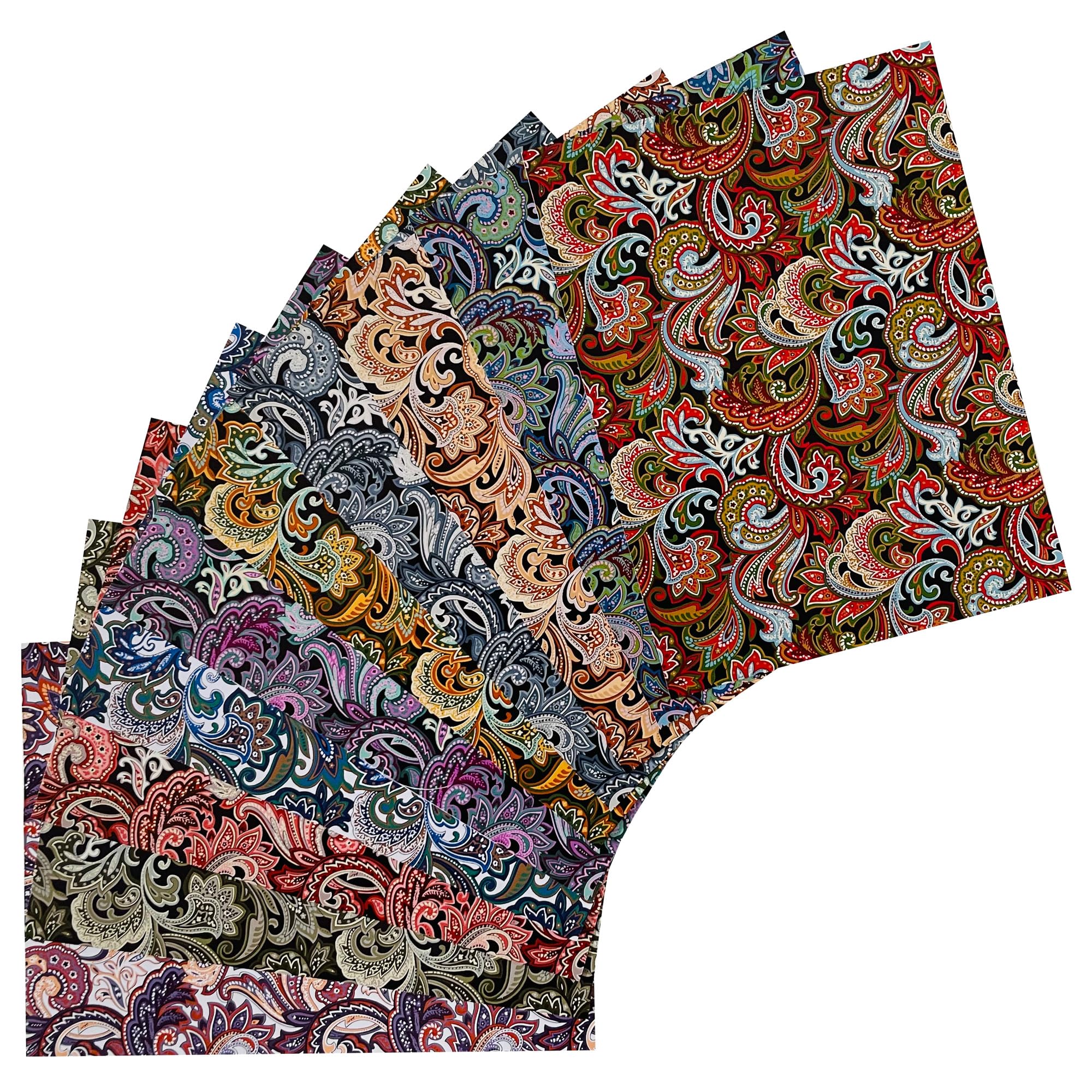
Ten dark paisley fat quarters with a butter-soft hand and a palette that stays coordinated
Where the iNee bundle offers eight floral cuts, this set gives you ten fat quarters in a single dark paisley theme — every piece is 18″ x 22″, and the prints are designed to work together rather than fight for attention.
The paisley pattern is the star. Quilters describe the colors as vibrant and the design as genuinely attractive, with one owner putting it simply: “Extremely pretty, lovely colors. Good quality. This was the second time I ordered this product.” That second order is a real signal — repeat buying is how you know the bundle earns its shelf space.
The listing calls out a couple of useful behaviors: the fabric is stated as microwave safe and does not melt under a very hot iron, and the care instructions ask you not to pre-wash before you sew — instead, wash with cold water after the finished project is done. That pre-wash warning is worth following, because this paisley runs into the same territory as other precut bundles where cold-water-only washing protects the dye.
The catch is thickness and, occasionally, size. Some quilters refer to the fabric as thin, and a few find the fiber content leans toward a blend rather than pure cotton. For bag making and any project that uses interfacing, that is not a problem — the paisley is stable enough to fuse with a fusible interfacing like SF-101 and hold its shape. For a quilt that needs a heavier drape, expect to add a lining or backing.
Coordination edge: One theme, ten pieces — this bundle solves the “which print goes with which” problem before you ever cut, which the mixed-print 40-piece set below does not attempt.
Size note: Buyers disagree on whether the 18″ x 22″ cuts run to spec, so measure one fat quarter when it arrives and give yourself trimming room on the rest.
Go with this if: you want one cohesive palette in larger fat-quarter cuts and you plan to fuse and interface.
Skip if: you need guaranteed pure-cotton content and a heavier weight for a hard-wearing quilt.
5. 100% Cotton Jelly Roll Fabric Strips
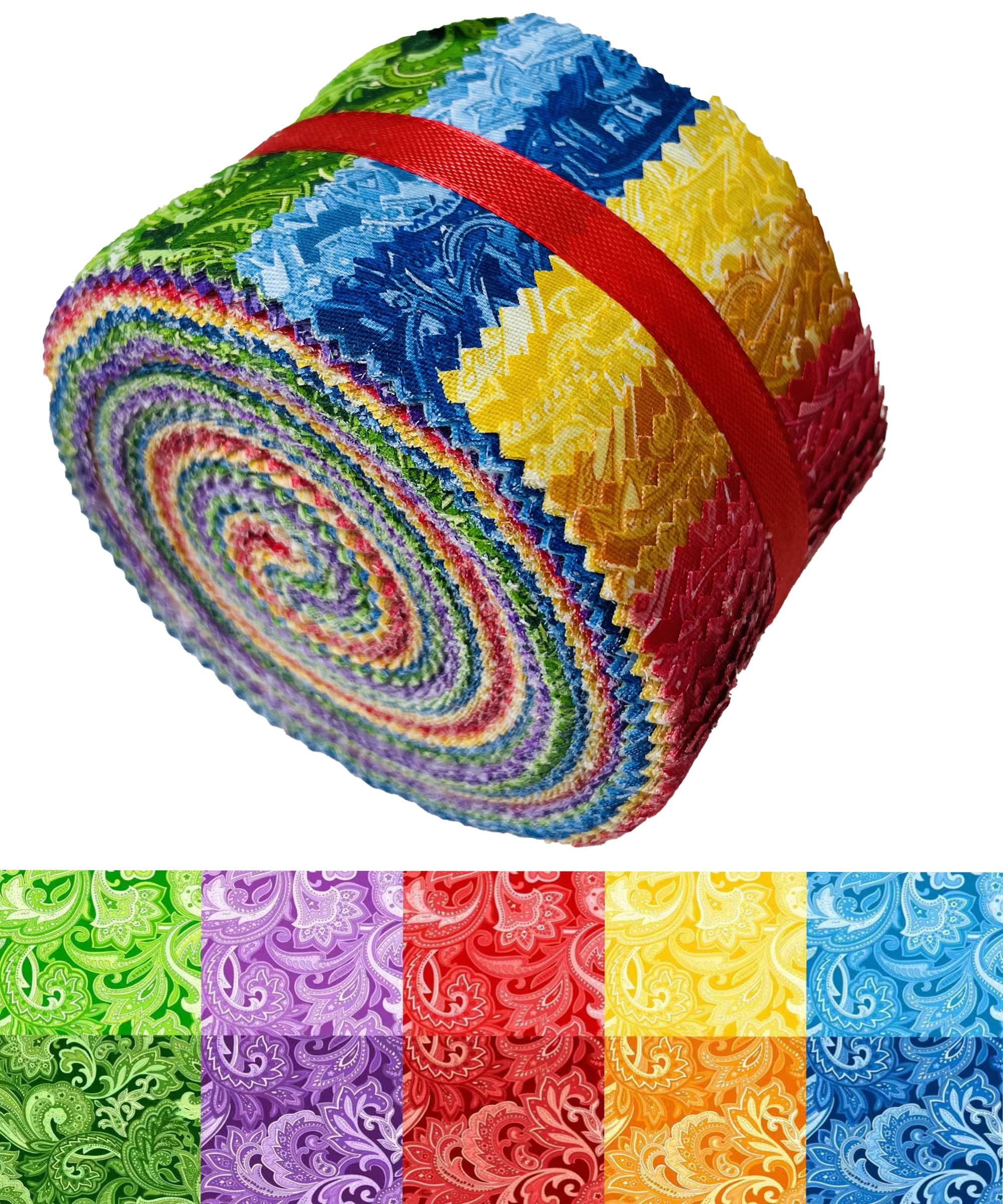
Forty pre-cut 2.5″ strips that feed straight into any jelly roll quilt pattern
A jelly roll solves a problem no fat quarter can: strip piecing. This roll gives you 40 pre-cut strips at 2.5″ x 44″ — the standard jelly roll measurement — across 10 different floral prints, with 4 strips per print. That means you can chain-piece a whole quilt top without touching a rotary cutter for the main strips, which is where the real time savings live.
Strip count and length are the two numbers to check, and both are right here. All 40 strips arrive correctly sized according to quilters who counted and measured them, and the 44″ length is long enough to span a standard fold. There is also no fraying worth mentioning, which keeps your seams clean from the first pass through the machine.
Colors are true across the roll, with a couple of honest exceptions. Reds and oranges read slightly off to some quilters, and the fabric has a faintly shiny surface in certain light. For an everyday quilt or a set of bowl cozies, hot pads, or aprons — the projects this roll gets used for in practice — that is not a practical problem, and most quilters find the palette soft and pleasant overall. As one buyer summed it: “Pretty colors…. Quality fabric… Right measurements… Can use for many different projects… Versatile.”
The real trade-off is fabric weight. This roll’s fabric is the biggest single topic in the feedback, and it splits both ways — some quilters find the strips relatively thick, while others say the fabric is on the flimsy side and thinner than a good-quality cotton quilting fabric. Practical fix: give the strips a light starch before you chain-piece. Several quilters note that starching makes the fabric noticeably easier to control at the needle without changing the finished look.
Time savings: At 2.5″ x 44″ per strip, this is the only bundle here that skips the cutting stage entirely for strip-pieced patterns — the 18″ x 22″ fat quarters above would each need to be sub-cut into strips first.
Consider the pair: If you also need fat quarters for the frame or border of a strip quilt, the iNee Vintage Floral bundle above gives you the larger cuts to finish the job.
Reach for this if: your pattern is a jelly roll quilt, a strip-pieced runner, or any design built around 2.5″ strips.
Reconsider if: you need heavier fabric for a hard-use quilt without adding interfacing or a stabilizer.
Know the Specs
Cut size and what it open up
Fat quarters (18″ x 22″) give you a squarer, more generous piece than a long quarter-yard strip, so they suit appliqué and larger block pieces. Square precuts — 8″ x 8″ or 10″ x 10″ — are already trimmed to a fixed measurement, which makes them fast for charm-square layouts but limits how large a single piece you can cut. Jelly roll strips (2.5″ x 44″) are pre-cut for strip piecing only. Match the cut to the pattern, not the other way around.
Thread count, weave, and hand
Thread count tells you how many threads per square inch are woven into the fabric — the higher the number, the smoother and denser the surface. A 200-thread count in a sateen weave, like the solid squares here, gives a slightly polished finish. A plain cotton weave without a stated thread count will feel more like traditional quilting cotton — softer, a little rougher, and less shiny. Neither is better in the abstract; the difference shows up in how the fabric drapes and how it takes a hot iron.
Fiber content and the wash test
100% cotton takes a hot iron without glazing and holds its color through a cold wash. A cotton-poly blend can pill, shine, or resist dye acceptance differently. On any bundle, the quick verification is a hot iron pass on a scrap — pure cotton will not melt or scorch — followed by a single cold-water wash on a test square to check for dye bleed. Cotton blends sometimes need colder water and a shorter cycle to keep colors stable.
Cut accuracy and fraying
Precuts exist to save you rotary-cutter time, and that only works if the edges arrive square and the size is true. Slightly irregular cuts mean you straighten the edges yourself, which eats into the piece you paid for. Light fraying on the raw edges is normal for pre-cut cotton and can be held in check with a stay-stitch, fray check, or a quick zigzag. Order a little extra fabric than your pattern requires so you always have trim room.
Common Questions
Are fat quarters and 10-inch squares interchangeable in a quilt pattern?
How can I tell whether quilting fabric is really 100% cotton before I sew with it?
Why do my jelly roll strips feel thinner than my fat quarters?
Should I pre-wash precut fabric before quilting with it?
How much extra fabric should I order to allow for trimming precuts square?
What is the difference between a 200-thread-count sateen cotton and a standard quilting cotton?
Will pre-cut fabric squares shrink when I wash the finished quilt?
Are floral and cartoon print bundles suitable for making gifts?
Can I use fat quarters for a project that calls for jelly roll strips?
How do I stop pre-cut squares from fraying at the raw edges?
The Bottom Line
For most quilters, the online fabric stores for quilting winner is the iNee Precut Cotton Fat Quarters (Vintage Floral) because it delivers the largest, softest cuts with print colors that match the listing photos and the biggest following in the category — 4.6 stars across 800+ ratings. If you want a wide range of solid colors for a beginner project, grab the 8″ x 8″ Precut Cotton Quilting Fabric Squares. If you are uncertain where to start and want the one bundle that shows the least risk, the Vintage Floral set is the safest first order.
How we choose
We do not accept paid placement. Every pick is matched to a real buyer and a real use-case; we do not hands-on test units.
Sources
Specifications: manufacturer listings and product documentation. Review insights: verified customer reviews, as of October 2026. Pricing: not shown on this page (it changes often); check the current price via the retailer link.
As an Amazon Associate, Aappliancez earns from qualifying purchases. This does not affect which products we feature.