Disclosure: Some links in this post are affiliate links. As an Amazon Associate I earn from qualifying purchases, at no extra cost to you. Learn more
Specs are compiled from manufacturer listings and verified buyer reviews and can change over time — please confirm the key details on the product page before buying.
You want the polyphenols, but the shelf is a minefield: bottles claim high numbers with no test behind them, and the one you buy may be two harvests old. The fix is simpler than the labels suggest. Buy only oils that print a real polyphenol figure in mg/kg, name the harvest year, and pack in dark or opaque glass. Everything below clears that bar, and the top pick carries 900+ mg/kg in a 16.9-ounce bottle.
This guide is built by comparing the manufacturers’ published specifications and the patterns across verified customer reviews, so you get each pick’s real strengths and trade-offs instead of marketing spin.
You will see the difference between a true high-phenolic pour and a supermarket bottle dressed up as one. Here are the bottles worth your kitchen counter when you want the best olive oil with polyphenols.
Top Picks
How To Choose The Best Olive Oil With Polyphenols
The polyphenol number is the whole ballgame, and most bottles hide it. If a label will not tell you the mg/kg figure and the harvest year, you are guessing. These are the four things that separate a genuine high-phenolic oil from a pretty bottle.
Read the polyphenol figure in mg/kg, not the marketing words
Polyphenols are the natural plant compounds that give good olive oil its bitter, peppery bite and its reputation. The measurement is milligrams per kilogram of oil, written mg/kg. A bottle that states 400+ mg/kg or 600 ppm is telling you something testable. PPM means parts per million, which works out to the same scale as mg/kg, so a 600 ppm bottle is a 600 mg/kg bottle. When a label only says “rich in antioxidants,” you have no number to compare.
Check the harvest date and the bottle colour
Polyphenols fade with time and with light. A bottle that names its harvest year, such as 2025/26, lets you judge how fresh the oil really is. Packaging matters just as much: opaque glass or tin blocks the light that slowly degrades the oil. Clear glass on a sunny shelf is the quiet enemy of a high-phenolic bottle.
Expect bitterness — it is not a flaw
A high-phenolic oil often tastes bitter and leaves a peppery burn in your throat that can make you cough. That sensation is what buyers use as a freshness check. If you plan to sip a daily spoonful, the burn is the point, not a defect. If you mainly cook with it, know that heavy heat softens both the pepper and the aroma.
Side-by-Side Comparison
| Model | Best For | Polyphenols | Origin | Bottle Size | Amazon |
|---|---|---|---|---|---|
| P.J. Kabos Family Reserve Organic★ Best Overall | Maximum potency | 900+ mg/kg (HPLC) | Greece | 16.9 fl oz | Amazon |
| Yolioo Italian High PolyphenolBest for Cooking | Everyday cooking | — | Tuscany, Italy | 25.4 fl oz | Amazon |
| Kosterina Original EVOO | Bold finishing drizzle | 500+ mg/kg | Greece | 16.9 oz | Amazon |
| Kasandrinos Organic EVOO | Mild daily sipping | 5.5 mg per tablespoon | Greece | 16.9 fl oz | Amazon |
| Blueprint Snake Oil | Routine-building | 400+ mg/kg | Single-origin Mediterranean | 25 fl oz | Amazon |
| Zahara Sicilian EVOO | Gifting and dipping | 400 mg/kg average | Sicily, Italy | 16.9 fl oz | Amazon |
| Garisar Arbequina EVOO | Smooth mild taste | >600 ppm | Arbequina olives | 16.9 fl oz | Amazon |
Detailed Reviews
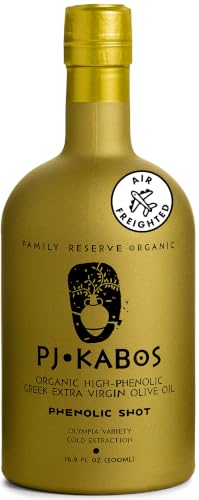
1. P.J. Kabos Family Reserve Organic Phenolic Shot
Our pick — 4.5+★ from 800+ verified ratings; the strongest balance of quality and price.
The bottle that prints its potency twice and dares you to cough.
If polyphenols are the reason you are shopping, start here. This Greek extra virgin is tested at 900+ mg/kg by HPLC and 1400+ mg/kg by NMR — two different lab methods, both printed on the label. HPLC and NMR are simply different ways of measuring the same compounds; showing both is a claim you can check rather than a vague boast. It also prints hydroxytyrosol, the polyphenol tied to the EU health claim, at 14 mg per 20 grams by HPLC and 29 mg per 20 grams by NMR.
You can check the freshness yourself, because the dates are printed on the bottle. The olives are harvested in September/October of 2025, and the best-before date is 12/2027. The oil is flown from Greece to the USA rather than shipped in a container, so it skips slow, warm freight. It arrives in a 16.9-fluid-ounce glass bottle that weighs 2.84 pounds. The Yolioo Italian bottle below holds 25.4 fluid ounces, so you get 8.5 fewer ounces here. That is the deliberate trade: a smaller, fresher, more concentrated pour.
The taste is the tell. This is a genuinely bitter, pungent oil, and the maker says so up front — that bite is the phenolic content you paid for. Owners treat it as a daily shot rather than a cooking oil, and the review pages are full of people who chase the throat burn because it signals a live, potent bottle. It also took a Platinum medal at the 2026 Berlin competition. Reviewers rank overall quality first and flavour a close second. Expect a cough. That is the design.
Why this earns the top slot
- Both HPLC and NMR test figures printed, so the 900+ mg/kg claim is checkable
- 2025/26 harvest with a 12/2027 best-before — a genuinely current bottle
- Air-freighted from Greece instead of container-shipped, protecting freshness in transit
- Peppery, bitter, cough-inducing bite that signals high phenolics
Where it asks something of you
- The bitterness is real and takes getting used to if you sip it straight
- Value splits opinion — plenty call it worth it, others find the outlay steep
- Only 16.9 fluid ounces, so a daily two-tablespoon habit empties it quickly
Buy this if: you want the highest stated phenolic load on this list and will drink it as a daily shot.
Think twice if: you need a neutral oil for high-heat cooking — the pungency is the whole point here.
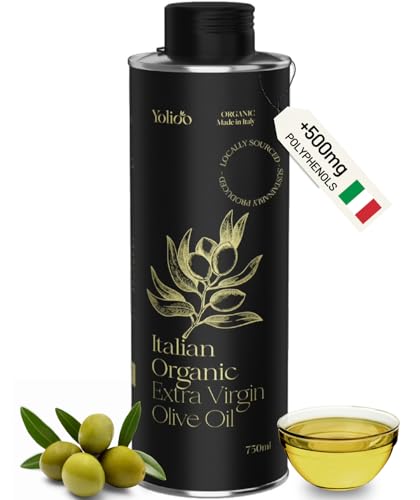
2. Yolioo Organic Extra Virgin Olive Oil
The big-bottle workhorse for people who cook with their oil, not just sip it.
Twenty-five-point-four fluid ounces is the headline here. This is the largest bottle on the list, and it is the one to reach for when olive oil disappears into salad dressings, marinades and pans every day. The olives come from a third-generation family farm near Florence in Tuscany, and the oil is pressed within six hours of harvest at 22-24°C — a controlled, cool temperature that protects the flavour and the polyphenols. It is certified organic and extra virgin.
The flavour is bright and zingy off the spoon but mellows once it hits a recipe, which is exactly what you want from a cooking oil. The pepper is there but gentle. The catch is the bottle itself: the pour spout has a rim that catches oil and gets messy over time. It is a handling annoyance, not a problem with the oil, but worth knowing if neat counters matter to you.
The value read: the largest pour on this list, organic and Tuscan-sourced, aimed squarely at daily kitchen use rather than spooning.
The honest snag: that pour rim collects oil — keep a cloth nearby or decant into a cruet.
Reach for this if: you want an organic Italian bottle big enough to cook from all week.
Look elsewhere if: you are buying purely to chase a maximum polyphenol number — no mg/kg figure is printed here.
3. Kosterina Original Extra Virgin Olive Oil

Early-harvest Koroneiki olives, a 500+ mg/kg floor, and a peppery finish that lingers.
Kosterina prints a minimum of 500+ mg/kg polyphenols and builds the oil from early-harvest Koroneiki olives grown in southern Greece. Early harvest is the key phrase — olives picked at the start of the season carry more of the compounds you are after. It is cold pressed, non-GMO, gluten-free and vegan, and it ships in an opaque bottle, which blocks the light that wears polyphenols down over time. Compared with the taller P.J. Kabos bottle at 3.35 x 3.35 x 8.07 inches, this one runs 2.6 x 2.6 x 12.1 inches — narrower and taller, so check your shelf clearance.
It tastes sturdy and Greek, with a peppery sting in the throat that long-time buyers treat as the quality signal. Use it as a finishing drizzle over pasta, bread or a caprese, where the flavour leads. The bottle carries harvest and best-by dates, so you can verify what you are getting.
What it is built for: finishing, not frying — the bold peppery character is a feature on bread and pasta.
One caveat: the price premium over a plain bottle is real, so buy it for the flavour and the printed polyphenol floor.
Best match: cooks who finish dishes with a drizzle and want a bold, peppery Greek oil.
Not the pick for: anyone wanting a neutral, mild oil for baking or heavy frying.
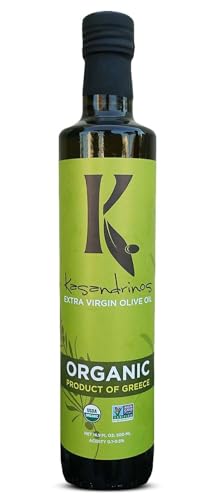
4. Kasandrinos Organic Greek Extra Virgin Olive Oil
The gentle one — mild, buttery, and built for people who sip rather than wince.
Most high-phenolic oils hit hard. This one takes the opposite route: a mild, delicate flavour with a butter-like mouthfeel, so it goes down easily straight off the spoon. The polyphenol figure is stated differently here — up to 5.5mg per tablespoon, alongside hydroxytyrosol and Vitamin E — so you are measuring by serving rather than by mg/kg. It is USDA Organic, Non-GMO, Paleo Certified, Keto Certified and Kosher, made from hand-picked olives off orchards more than 100 years old by the Kasandrinos family.
Owners use it on salads and bread or drink it straight for the health angle, and reviews praise its quality and taste most consistently. It is the mild option, so if you specifically want the cough-inducing burn as your freshness check, this is not that bottle. What you get instead is a versatile, easy-drinking oil that is pleasant enough to take daily.
Why people keep it: mild, buttery and genuinely drinkable — the least aggressive way to add a high-quality organic EVOO to a daily routine.
Worth knowing: it does not give you the sharp peppery burn, so if you judge potency by throat bite, look to a bolder bottle.
Ideal for: anyone who wants a smooth, organic oil they can sip or drizzle without wincing.
Pass if: a big peppery bite is the taste you are actually chasing.
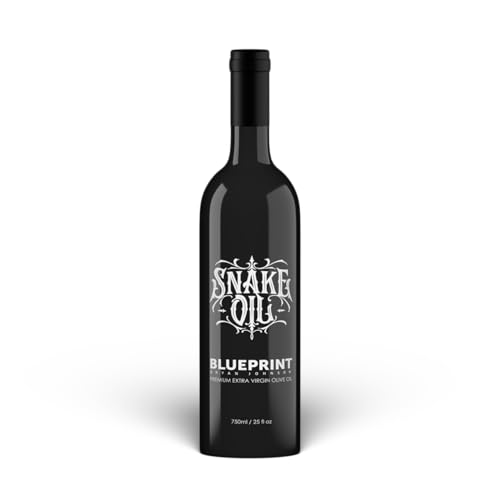
5. Blueprint Bryan Johnson Snake Oil High Polyphenol EVOO
A 25-ounce bottle at 400+ mg/kg, sized for a spoon-a-day habit.
If you are committing to a daily tablespoon, the size math favours this bottle. It holds 25 fluid ounces and states 400+ mg/kg polyphenols plus hydroxytyrosol, made from early-harvest olives as a first cold press, unfiltered and undiluted. Each batch is third-party tested for purity and polyphenol concentration, and it comes in UV-protectant dark green glass to shield the oil from light. That makes it a bigger bottle than the 16.9-ounce P.J. Kabos, so it lasts longer on a routine.
The flavour is smooth with a real peppery throat bite, and owners say the taste is what wins them over above all. It is keto, Paleo and Whole30 friendly, single-origin and never blended. Value is the debated point: it is not the cheapest bottle, and some find the outlay steep, though its fans call it fair for something third-party tested. The maker’s own label notes the statements have not been evaluated by the FDA, which is standard for a food.
The case for a bigger bottle
- 25 fluid ounces stretches a daily tablespoon habit much further
- 400+ mg/kg with hydroxytyrosol, batch third-party tested
- UV-protectant dark green glass helps hold freshness
- Smooth, peppery taste that is easy to take straight
What to weigh up
- 400+ mg/kg sits below the 900+ mg/kg of the top pick
- Some buyers find the price steep for an everyday bottle
Go for it if: you want a large bottle with a printed polyphenol figure to build a daily habit around.
Look on if: you are chasing the absolute highest phenolic load — a stronger bottle exists on this list.
6. Zahara Extra Virgin Olive Oil from Sicily

A Sicilian bottle with a gift box — the one you hand over instead of wine.
Polyphenols here average around 400mg/kg, with low acidity of less than 0.2%. It is made by Oleificio Guccione since 1966 in Chiaramonte Gulfi, a village in Sicily’s Iblei Mountains, from hand-picked Tonda Iblea olives pressed within hours of harvest. It has won the Gambero Rosso “3 leaves” award four years running, and it ships in a 16.9-ounce bottle with a gift box.
The flavour is full and balanced, with green grassy, tomato-leaf and white-pepper notes, and it shines dipped with bread or vegetables. But the strongest case for this bottle is as a present — owners hand it to friends and hosts in place of wine and report it landing well. It is more expensive than everyday oils, so many keep it for dipping and salads rather than cooking, which is a fair way to use a bottle this good.
The standout: an award-winning Sicilian oil in a gift box — buy it when you want a generous, memorable food gift.
The trade-off: the price puts off some buyers, and at ~400mg/kg it is not the highest phenolic bottle here.
Pick it for: gifting, dipping and a full-bodied Sicilian flavour.
Choose otherwise if: you want the strongest polyphenol number or a bottle for cooking rather than finishing.
7. Garisar High In Polyphenol Premium Extra Virgin Olive Oil
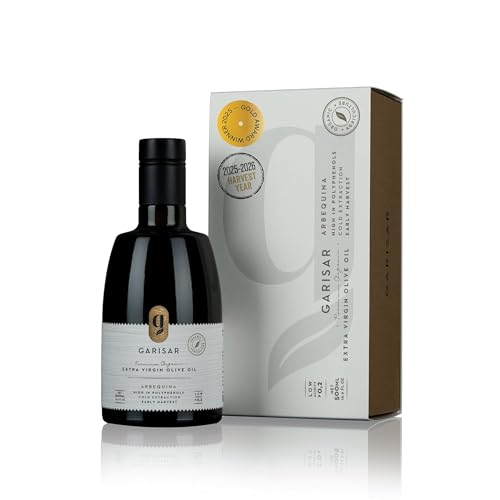
More than 600 ppm polyphenols, yet a mild, smooth flavour — the rare combination.
High numbers usually mean a bitter kick, but Garisar pairs its >600 ppm polyphenol count with a smooth, balanced flavour with light notes of nuts and fruit — which ppm, remember, is the same scale as mg/kg. It is made from 100% Arbequina olives, hand-picked early in the season for a naturally higher flavonoid and polyphenol content, then cold extracted below 30°C with no chemicals or refining. Acidity sits at a maximum of 0.2%, a low figure that signals careful harvesting. It won a NYIOOC 2025 Gold Medal, and its 720-day shelf life lets a 16.9-ounce bottle last well past a year.
Owners prize its quality and taste above all, calling the flavour dynamic and the aroma notable. Freshness is the split point — most bottles arrive fresh, but an occasional order turns up expired, so check the date on arrival. Value is debated, with some finding it steep. What you get is a high-phenolic oil that does not force you to suffer through bitterness to take it, which makes it a smart pick for anyone easing into a daily spoonful.
The smart-money angle: a Gold Medal, >600 ppm, low 0.2% acidity and a smooth taste — hard to find together.
The catch: freshness varies by order, so check the date the moment it lands.
Right for you if: you want a high-phenolic oil whose mild, nutty flavour never turns harsh.
Skip the wait on this if: you want the absolute top polyphenol number — the Kabos bottle prints a higher figure.
Know the Specs
Polyphenols in mg/kg and ppm
Polyphenols are the natural plant compounds behind olive oil’s peppery bite and its reputation. On a label they show up as mg/kg (milligrams per kilogram) or ppm (parts per million), which are the same scale. A 600 ppm bottle is a 600 mg/kg bottle. The higher the number, the more potent the oil tends to taste — and the more likely it makes you cough. If a bottle prints no figure at all, you cannot compare it to anything.
Harvest date and bottle colour
Freshness is the quiet hero of a high-phenolic bottle. A named harvest year, such as 2025/26, tells you how recently the olives were picked. Opaque or dark glass shields the oil from light, which otherwise slowly fades both the flavour and the polyphenols. Early-harvest olives, picked at the start of the season, generally carry more of the compounds buyers are after — which is why so many premium bottles make a point of it.
Acidity as a quality gauge
Acidity is a separate number from polyphenols, but it is a useful quality check. A low acidity figure, like the 0.2% on some bottles here, points to careful harvesting and handling. It does not tell you how high the polyphenols are, so read both numbers when a label offers them. Extra virgin, cold extracted, and low acidity together describe a bottle that has been treated gently from grove to glass.
Bottle size and daily use
If you take a daily spoonful, bottle size decides how often you reorder. A 16.9-ounce bottle empties faster on a two-tablespoon habit than a 25-ounce bottle. Buyers cooking with their oil every day should favour the larger bottles; those chasing the highest potency often accept a smaller bottle in exchange for a fresher, more concentrated pour. Match the size to how you actually use the oil.
Common Questions
What does mg/kg mean on a polyphenol olive oil label?
Why does high-polyphenol olive oil make me cough?
Is ppm the same as mg/kg for polyphenols?
How do I know if a bottle is fresh?
Can I cook with a high-polyphenol olive oil?
Does bottle colour affect the polyphenol content?
What is hydroxytyrosol and why does it appear on labels?
Why is early-harvest olive oil higher in polyphenols?
Should I use a high-polyphenol oil as a daily shot or a drizzle?
How should I store a high-polyphenol olive oil?
The Bottom Line
For a buyer chasing the most pole at the lowest risk, the P.J. Kabos Family Reserve Organic is the clear choice — it prints both HPLC and NMR polyphenol figures, names its 2025/26 harvest, and packs 900+ mg/kg into a fresh, air-freighted 16.9-ounce bottle. If you would rather have a bigger bottle and a smoother sip on a daily routine, the Blueprint Snake Oil at 400+ mg/kg and 25 fluid ounces is built for exactly that. And when the bottle is meant for someone else, the Zahara Sicilian EVOO with its gift box and award record is the one to hand over. Whichever you choose, buy by the printed polyphenol figure and the harvest date, and the label will tell you more than the front of the bottle ever will.
How we choose
We do not accept paid placement. Every pick is matched to a real buyer and a real use-case; we do not hands-on test units.
Sources
Specifications: manufacturer listings and product documentation. Review insights: verified customer reviews, as of October 2026. Pricing: not shown on this page (it changes often); check the current price via the retailer link.
As an Amazon Associate, Aappliancez earns from qualifying purchases. This does not affect which products we feature.