Disclosure: Some links in this post are affiliate links. As an Amazon Associate I earn from qualifying purchases, at no extra cost to you. Learn more
Specs are compiled from manufacturer listings and verified buyer reviews and can change over time — please confirm the key details on the product page before buying.
Anyone who has come home from surgery with a fresh incision knows the real worry is not the hospital stay — it is the quiet two weeks after. You need something that keeps the wound bed moist without stinging, clinging to the healing skin, or carrying an odor that follows you around the house. This guide covers five tested wound gels, silver products, honey gels, and dressings, and it tells you plainly which one fits your incision and which one is built for burns instead.
This guide is built by comparing the manufacturers’ published specifications and the patterns across verified customer reviews, so you get each pick’s real strengths and trade-offs instead of marketing spin.
Your incision heals best when the product you put on it matches its depth and how fresh it is. A thick gel sits on a shallow, healing-over cut; a thinner one spreads into a deeper opening. That is why the right ointment for surgical wound healing depends on two things: gel thickness and antimicrobial approach.
Top Picks
How To Choose The Best Ointment for Surgical Wound Healing
Picking a wound gel for a surgical incision is not the same as grabbing a tube of antibiotic cream for a kitchen cut. An incision is a clean, deliberate cut, and the job of the ointment is to keep that line of skin soft and covered while new tissue knits underneath. The wrong consistency — too runny, too tacky, too smelly — turns a ten-second dressing change into a daily ordeal. Here is what actually matters.
Moisture control beats drying out a wound
A surgical incision kept slightly moist heals along a cleaner edge than one that crusts into a hard scab. That is why so many surgical gel products advertise a “balanced moisture environment” — the gel holds a thin film over the incision so the surface cells can move across it. Choose a gel that stays put once applied rather than one that drips off the moment you sit up.
Match the antimicrobial to your skin and your wound
Silver-based gels, medical-grade honey, and benzalkonium-style cleansers all work on different principles. Some people find silver soothing and non-irritating; others do better with a fragrance-free gel that does not sting at all. If you have sensitive or broken skin around the incision, read the ingredient approach carefully before you commit to a whole tube.
Think about how you will actually apply it
A squeeze tube, an airless pump bottle, and a pre-cut gauze dressing each create a totally different routine. If you are doing dressing changes alone, an airless bottle or a tube you can squeeze small amounts from is far easier than a pot that forces out big blobs. If someone else is changing the dressing for you, a non-stick petrolatum pad can be simplest of all.
Do not overlook the dressing on top
The gel is only half the equation. A non-adherent contact layer keeps the bandage from sticking to the fresh incision line, so removal does not reopen what has already closed. Many recovery routines pair a gel with a petrolatum mesh pad underneath the outer bandage.
Side-by-Side Comparison
| Model | Best For | Form | Size | Antimicrobial | Amazon |
|---|---|---|---|---|---|
| Anasept Antimicrobial Skin & Wound Gel★ Best Overall | Fresh surgical incisions and deep wounds | Gel tube | 3 oz | Antimicrobial gel, fragrance free | Amazon |
| ActivOn Medical Grade Manuka Honey GelTiny But Mighty | Small cuts and stalled spots that need a healing boost | Honey gel tube | 1 oz | 100 percent Manuka honey | Amazon |
| Silver Miracles Colloidal Silver First Aid Gel | Burns, sunburns and irritated skin | Airless bottle gel | 3.38 oz | 99.999% pure colloidal silver, 25 PPM | Amazon |
| Carbou Xeroform Petrolatum Dressing | Large incisions and burns needing a non-stick layer | Pre-cut gauze dressing | 4″ x 4″, 25 pack | Petrolatum with 3% Bismuth Tribromophenate | Amazon |
| SilvrSTAT First Aid Kit Gel | Stubborn wounds and first aid kits | Gel tube | 1 oz | SilverSol Ag₄O₄ particles, 32 PPM | Amazon |
Detailed Reviews
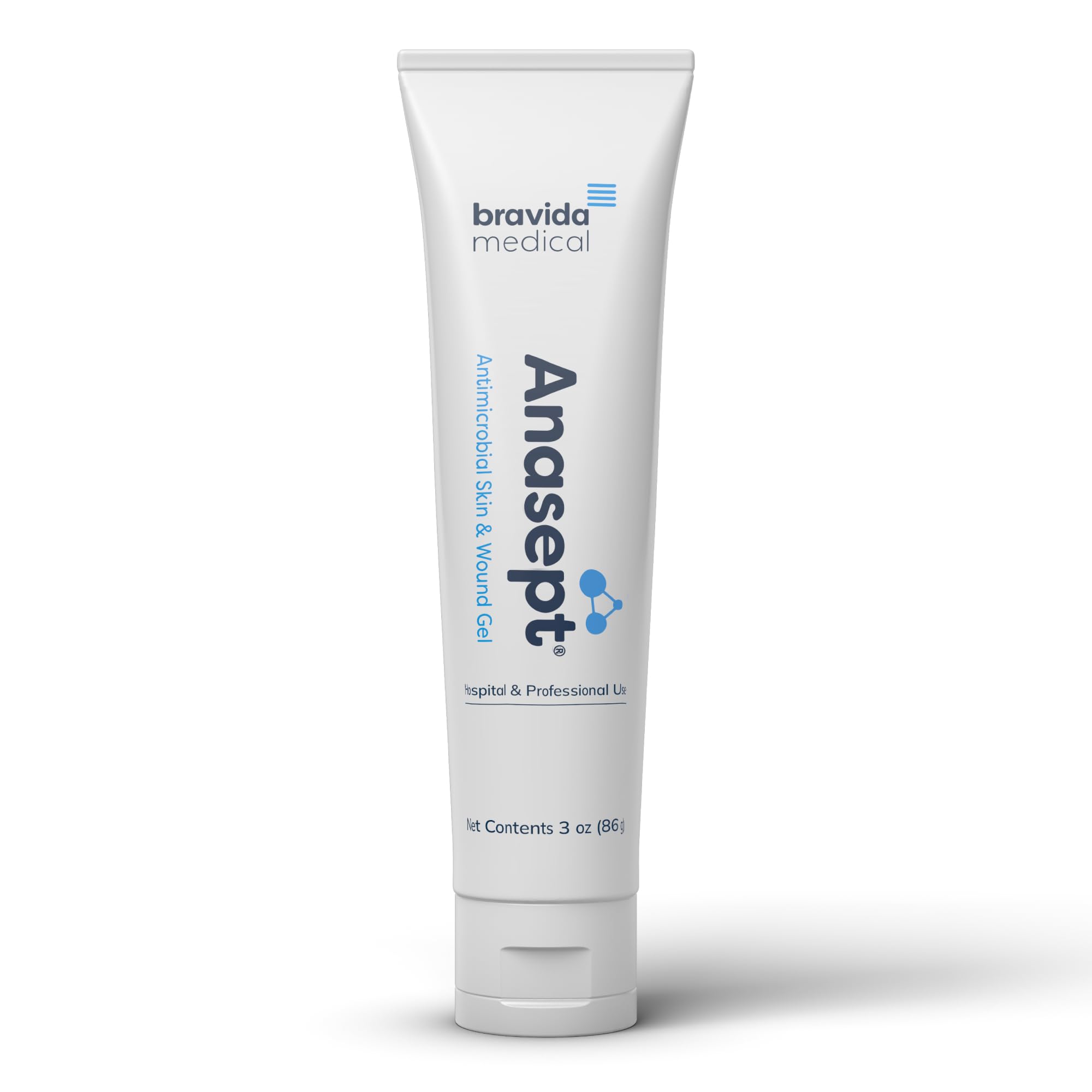
1. Anasept Antimicrobial Skin & Wound Gel 3 oz. Tube
Our pick — over 4.5★ from 900+ verified ratings; the strongest balance of quality and price.
The fragrance-free gel that does not sting, does not smell, and keeps an incision covered without dripping off
If your surgeon sent you home with an open incision and a bare-bones instruction sheet, this is the tube to reach for first. It goes on as a clear gel, spreads thin, and holds that moisture film over the wound line rather than running down your leg. Because it carries no fragrance, you are not stuck with a medicinal after-smell every time you change the dressing. That matters when you are recovering in a shared bedroom or back at a desk.
What wins people over is how it behaves on compromised skin. It does not burn going on, which is the complaint that sends a lot of buyers hunting for a second option. A nurse walking a patient through home care will recognize the name, and the gel doubles as a first-aid staple for dry, cracked patches between dressing changes. The three-ounce tube also goes a long way, since you only need a thin layer each time — a real consideration when you are doing two changes a day for weeks.
The trade-off is the container itself. Squeezing out a small, controlled amount is awkward, and because the top does not come off, you can end up with a bigger blob than you wanted in one push. Work from the very end of the tube with light pressure and it stops being a problem. If you want a product you can dispense precisely with one hand while a dressing is half off, keep that quirk in mind. Otherwise this is the safest all-round pick for a surgical recovery shelf.
What it gets right
- Fragrance free, so no medicinal smell lingering on dressings or clothing
- Does not sting when applied to an open wound line
- 3 oz tube lasts through weeks of twice-daily dressing changes
- Clear gel spreads thin and stays where you put it instead of running
Where it asks patience
- Tube is hard to squeeze for small amounts and the cap does not come off
- Can release a larger blob than intended if you press too hard
- You are paying mid-range money for a plain 3 oz tube
Reach for this if: you are past the first dressing change and want a do-it-all clear gel that covers a healing incision without stinging or smelling.
Look elsewhere if: you need to dispense tiny, precise amounts every time — a pump bottle or pre-cut dressing will suit you better.
2. ActivOn Manuka Honey Gel Tube
A one-ounce tube of medical-grade Manuka honey that punches far above its small footprint
For a small incision, a biopsy site, or a spot that has stalled out, buyers reach for this honey gel again and again. It is 100 percent Manuka honey (honey from New Zealand’s Manuka bush), not a honey-flavored cream, and it comes out as a thick gel with a clean smell. At just 1 ounce it is the smallest option here — roughly a third the capacity of the silver gel — but you only need a thin smear, so that small tube still covers a lot of dressing changes. It also takes up almost no shelf space, which is why it tends to live permanently in a first aid drawer.
Buyers report that this honey gel keeps the wound bed moist without the greasy residue of a petrolatum ointment. The feedback on shallow wounds and biopsy sites is the strongest — a clean-smelling, easily applied gel that does not leave a greasy residue. If you are squeamish about silver or benzalkonium products and want a single-ingredient approach, this fits that brief well.
Here is the honest catch: the twist-off cap does not reliably reseal once opened, so the tube is poor for travel and prone to spilling if it tips over on a nightstand. It also is not the right choice for a large, heavily draining surgical incision — the tube is simply too small to keep up, and you will be back ordering more within a week. For small, clean wounds, though, the small size is exactly the point.
Where it earns its spot: one ingredient, no fillers, and a gel consistency that stays put on a small wound without leaving grease on the surrounding skin.
The honest caveat: that same small size and leak-prone cap make it a poor match for a large draining wound or a travel bag.
Good fit for: small incisions, biopsy sites, and shallow cuts where a thin smear of honey is all you need.
Not the one for: a big or heavily draining surgical wound, where the 1 oz tube will run dry fast.
3. Silver Miracles Colloidal Silver Gel

The airless-bottle gel that stays exactly where you put it and calms angry, irritated skin on contact
Where honey gels are thick and tactile, this colloidal silver gel is light, clear, and almost water-like — and it comes in an airless pump bottle rather than a squeeze tube. There is no cap to lose, no tube to over-squeeze, and no air pulling back into the product between uses. The gel contains 99.999% pure silver converted to colloidal silver, and the maker notes it is normal for the color to shift anywhere from clear to light amber. At 3.38 ounces it holds more than three times the capacity of the 1 oz honey tube, so it lasts.
What the review pages focus on most is effectiveness — by a wide margin, this is the thing people bring up, particularly for burns. Sunburn, kitchen splashes, and blistered skin are where it earns its reputation, and the soothing quality comes up right behind. Because it dries clear and non-greasy, you can use it on your face and hands without a visible film. It is unscented and free of added colors, which is a real plus if you react to fragranced products. One thing buyers point out: as a gel it stays in place far better than a liquid colloidal silver product, so it does not roll off the moment you move.
The catch is that this is not a heavy, occlusive ointment in the way a petrolatum-based product is. If your surgeon specifically wants a thick protective layer over a deep incision, a clear gel like this can feel too light. It is also unapologetically a burn-and-irritation product first — for a deep surgical wound that needs a petrolatum barrier, look at the Carbou dressings instead. For surface-level angry skin, it is hard to argue with.
Why the airless bottle is the quiet win: no cap to misplace and no back-flow into the product, so every pump delivers fresh gel straight to the skin.
Best for: burns, sunburns, blistered skin, and irritated patches where you want a clear, unscented, fast-spreading gel.
Skip if: you need a thick occlusive barrier over a deep surgical incision — this one is deliberately light.
4. Carbou 4″x4″ Medical Xeroform Petrolatum Dressing, 25 Pack
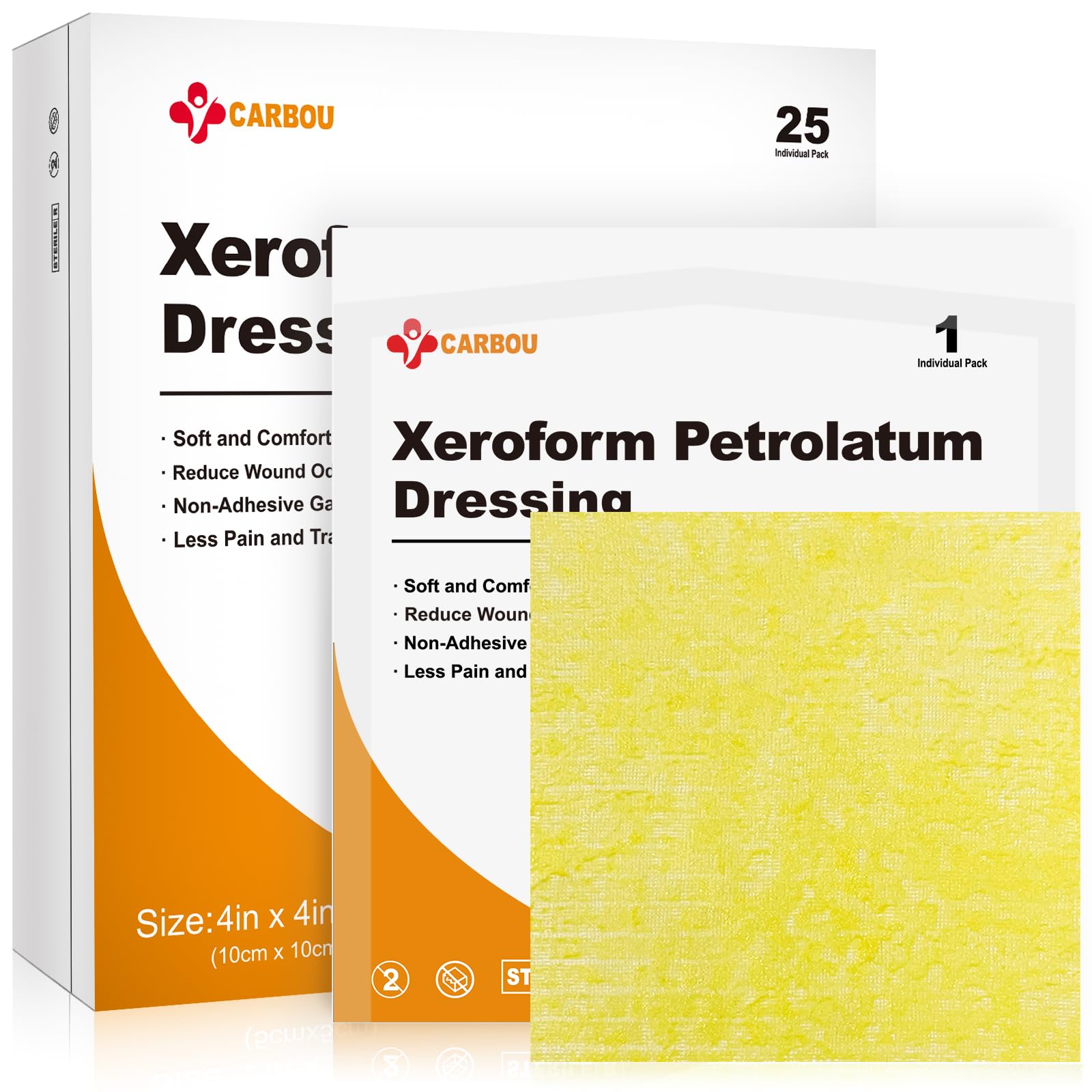
Not a gel at all — a pre-cut petrolatum gauze pad that sits between your incision and the bandage so nothing sticks
This one works differently from every gel on this list, and that is exactly why it earns a place. Instead of squeezing ointment onto a wound, you lay a fine mesh gauze square over the incision; it is impregnated with petrolatum and 3% Bismuth Tribromophenate, which together hold a balanced moisture layer against the skin. Each pad is 4″ x 4″, individually sterile-wrapped, and there are 25 in the box. Because it is non-adhesive, lifting it off during a dressing change does not pull at the new tissue underneath — the single biggest fear for anyone with fresh stitches.
What comes through from people who have used it at home is how closely it mirrors the hospital experience. It is cuttable, so you trim a pad down to fit a small chest-tube site or a narrow incision instead of wasting a whole square. The mesh is fine and soft, and a single layer covers the wound. Households nursing an elderly parent through a long recovery say it makes changes faster and less stressful. For burns, it holds up too — one buyer describes cutting off what they need from the pad and sealing the open package in a ziplock.
The real limitation is moisture retention over time. Compared with the folded hospital version, these pads dry out faster — roughly within a day — and they do not hold their shape quite as firmly. For a wound that needs a fresh, well-sealed covering, plan on changing it daily rather than stretching to three days. If your nurse has told you to leave a dressing in place for several days, this particular pad may not be the match. If you change dressings once a day anyway, it is the cleanest, least painful way to do it.
Why people keep reordering
- Non-adherent layer lifts off without pulling the healing skin
- Cuttable 4″ x 4″ squares fit both small sites and broad wounds
- 25 individually sterile pads give you a long run of changes
- Suitable for surgical incisions, abrasions, donor sites and burns
What to plan around
- Dries out faster than the folded hospital version, so daily changes are safer
- Does not hold its shape as firmly once in place
- Petrolatum means you cannot also use a water-based gel under it
Pick this one: if a nurse or doctor wants a non-stick contact layer over a surgical incision or burn, and someone can change it daily.
Think twice if: your instructions call for leaving one dressing in place for several days — this pad dries out before that.
5. SilvrSTAT First Aid Kit Gel

The concentrated silver gel for stubborn wounds that have stopped responding to everything else
If a wound has stalled — the kind of spot that looks stuck two weeks in — this is the tube to try next. It carries 32 PPM silver built on SilverSol Ag₄O₄ particles, making it the more concentrated silver option here, and it is meant to be reapplied daily or every time the bandage is changed. The 1 oz tube is small, but a little goes a long way, and the maker positions it as a first aid kit staple for home, travel, camping, and emergency bags. For topical management of minor cuts, lacerations, abrasions, first and second degree burns, and skin irritations, that concentration is the draw.
What people rave about is how it behaves on difficult tissue. It goes on without irritation, absorbs rather than sitting greasy on top, and it is odorless — no medicinal smell, no residue left behind. Diabetic users in particular tend to keep this on hand and describe it as their new go-to after trying other silver products. The size is another thing buyers mention positively: the tube is big enough to cover a genuinely substantial wound, which is more than you can say for many 1 oz gels. It is also the priciest pick here, and it earns that by being the one people turn to when lighter options have not moved the needle.
The honest caveat is cost-per-ounce. You pay premium money for a single ounce, so if you are doing weeks of twice-daily changes on a large incision, you will go through it quickly — the 3 oz Anasept tube stretches further for that kind of routine. And like all silver gels, it is for topical, superficial use (on the surface only); it is not a substitute for a thick petrolatum barrier (a heavy petroleum jelly seal) on a deep opening. For stubborn wounds, though, this is the one worth the spend.
The standout detail: it carries 32 PPM silver (parts per million, a measure of concentration) in the SilverSol Ag₄O₄ form, which separates it from the 25 PPM colloidal gel above — this is the more concentrated of the two silver products, so you use less per dressing change.
Worth it for: stubborn or stalled wounds, diabetic foot care, and anyone who wants a concentrated silver gel in an emergency kit.
Less ideal if: you are doing weeks of large-area dressing changes — the premium 1 oz tube runs out faster than a 3 oz gel.
Know the Specs
Concentration (PPM) in silver gels
PPM stands for parts per million — a measure of how much silver is dissolved in the gel. A higher number means a more concentrated product. Here, the colloidal silver gel lists 25 PPM, while the SilvrSTAT gel lists 32 PPM. If your wound is stubborn and has not responded to other options, the higher-concentration gel is the one to consider; for everyday surface irritation, the lower figure is plenty.
Gel versus petrolatum dressing
A gel is a squeeze-or-pump product you apply directly to the wound surface. A petrolatum dressing is a pre-cut gauze pad impregnated with a waxy layer that sits over the wound and under the bandage. Gels are best when you want product contact with the whole wound bed; petrolatum dressings are best when you need a non-stick barrier so removal does not disturb healing skin. Many recovery routines use both — a gel on the wound, a non-stick pad on top.
Tube capacity and how long it lasts
Capacity tells you how far a tube will go. Sizes here range from 1 ounce up to 3.38 ounces — so the largest gel holds more than three times the smallest. If you are changing a dressing twice a day for weeks, a bigger tube saves you reordering mid-recovery. If you are treating a small incision or keeping it for emergencies, the smaller tube is easier to store and less likely to expire before you finish it.
Antimicrobial approach
Different products use different active agents. Some are silver-based, some are medical-grade honey, some use benzalkonium-style cleansers, and some use petrolatum with 3% Bismuth Tribromophenate. Each behaves differently on skin — some are soothing and non-irritating, others are more drying. If your skin reacts easily, favor a fragrance-free or unscented formula and patch-test on intact skin before using it near a fresh incision.
Common Questions
Can I put a wound gel directly on a surgical incision that is still open?
How do I stop a bandage from sticking to my incision?
Which is better for wound healing, honey or silver?
How long does a wound gel tube actually last?
Why does my tube of wound gel keep leaking or spilling?
Is it safe to use a wound gel on a burn?
Can I use a wound gel on a diabetic foot wound?
Does a wound gel need to be changed every day?
Why is a wound gel better than letting a wound dry out?
What does the “PPM” number mean on a silver wound gel?
The Bottom Line
For most people recovering from surgery, the ointment for surgical wound healing winner is the Anasept Skin & Wound Gel: fragrance free, no sting, and a 3 oz tube that lasts weeks of dressing changes on a fresh incision. If your wound is small or has stalled, the single-ingredient ActivOn Manuka Honey Gel is a clean, simple alternative. For burns and irritated skin, reach for the clear, airless-bottle Silver Miracles Colloidal Silver Gel. And when your doctor wants a non-stick layer over a deep incision or burn, the Carbou Xeroform Dressings are the piece that keeps the bandage from sticking. Match the product to your wound type, and change it daily.
How we choose
We do not accept paid placement. Every pick is matched to a real buyer and a real use-case; we do not hands-on test units.
Sources
Specifications: manufacturer listings and product documentation. Review insights: verified customer reviews, as of October 2026. Pricing: not shown on this page (it changes often); check the current price via the retailer link.
As an Amazon Associate, Aappliancez earns from qualifying purchases. This does not affect which products we feature.