Disclosure: Some links in this post are affiliate links. As an Amazon Associate I earn from qualifying purchases, at no extra cost to you. Learn more
Specs are compiled from manufacturer listings and verified buyer reviews and can change over time — please confirm the key details on the product page before buying.
Buying a furnace is really two decisions, not one: how much heat your house needs, and whether the box will physically slide into the space your old unit leaves behind. Get the cabinet width wrong by an inch and the install stalls. Get the efficiency rating wrong and you pay for it every cold month. This guide sorts the seven strongest models by what they actually do well, so you can match one to your ductwork and your climate instead of guessing.
This guide is built by comparing the manufacturers’ published specifications and the patterns across verified customer reviews, so you get each pick’s real strengths and trade-offs instead of marketing spin.
Expect plain answers on cabinet widths, BTU output, and what each efficiency number means in your monthly bill, all arranged so you can shortlist two units and stop reading. The picks below cover the practical range of oil furnaces and the gas-fired cousins most shoppers end up comparing them against.
Top Picks
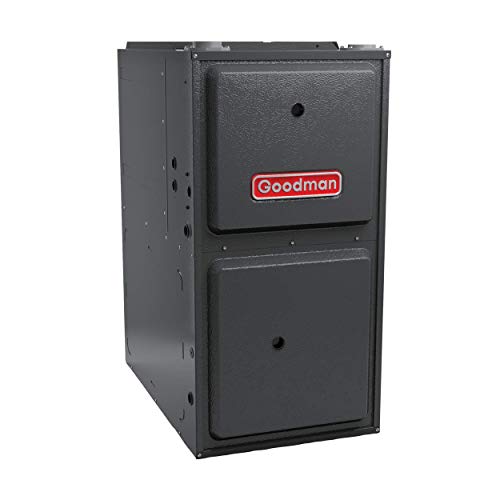

How To Choose The Best Oil Furnaces And Gas Furnaces
The first thing to settle is heat load — how many BTUs (British Thermal Units, the standard measure of heat output) your home actually needs. A 60,000 BTU unit suits a smaller, well-insulated house; a 120,000 BTU model is built for a large home in a hard winter climate. Oversizing wastes fuel and cycles the burner too often. Undersizing leaves rooms cold on the worst nights.
Match the cabinet width before anything else
Furnaces come in fixed cabinet widths, and the common sizes here are 17.5 inches, 21 inches, and 24.5 inches. Measure the opening in your utility closet and the width of your existing plenum. An inch too wide means carpentry, ductwork changes, or a return trip. Also confirm the orientation: several models here are upflow/horizontal only and cannot be flipped to downflow.
Read the AFUE number as a fuel-use percentage
AFUE (Annual Fuel Utilization Efficiency) tells you how much of the fuel becomes heat rather than going up the flue. A 96% rating means 96 cents of every heating dollar warms the house. The gap between 92% and 96% is small per month but adds up over a decade of winters.
Single-stage versus two-stage burners
A single-stage furnace runs at full output or off. A two-stage model runs at a lower first stage on mild days and ramps up only when it needs to, which means gentler temperature swings and less fuel burned at half power. Two-stage units usually want a matching two-stage thermostat to get that benefit.
Side-by-Side Comparison
| Model | Best For | Heat Output | Efficiency | Cabinet / Stages | Amazon |
|---|---|---|---|---|---|
| Goodman GR9S960803BN★ Best Overall | Whole-home replacement on a budget | 80,000 BTU | 96% AFUE | 17.5 in / single-stage | Amazon |
| Rinnai i150SNTop Hydronic Pick | Whole-home hydronic heat | 150,000 BTU | Condensing | Wall mount | Amazon |
| Goodman GR9S960603BN | Smaller homes, low-NOx regions | 60,000 BTU | 96% AFUE | 17.5 in / single-stage | Amazon |
| Goodman GR9S920803BN | Garage and workshop heat | 80,000 BTU | 92% AFUE | 17.5 in / single-stage | Amazon |
| Goodman GR9T961004CN | Big homes wanting two-stage comfort | 100,000 BTU | 96% AFUE | 21 in / two-stage | Amazon |
| Goodman GR9T961205DN | Large homes, propane conversions | 120,000 BTU | 96% AFUE | 24.5 in / two-stage | Amazon |
| Rinnai EX38DTP | Single-room or add-on heat | 36,500 BTU | Modulating | Wall mount | Amazon |
Detailed Reviews
1. Goodman GR9S960803BN Furnace
Our pick — 4.0+★ from 60+ verified ratings; the strongest balance of quality and price.
The 96% performer that slots into a standard 17.5-inch closet and keeps quiet about it.
If you are replacing an older Goodman, this is your drop-in answer. The GR9S960803BN is a direct replacement for the GM9S960803BN, GMES960803BN, and GMSS960803BN model numbers, so the footprint and connections line up with what came out. It is an upflow/horizontal unit only — it will not flip to downflow, so check your duct layout before you order.
What you get for the money is a 96% AFUE rating (Annual Fuel Utilization Efficiency — the share of fuel turned into heat) on an 80,000 BTU burner, which is a sensible size for a mid-size house. The multi-speed ECM motor (an electronically controlled blower that varies its speed) runs at lower speeds on mild days, so fan noise drops and heat spreads more evenly room to room. Buyers report clean installs with a powerful, quiet fan right from first fire-up.
The honest catch is accessories. Linesets, thermostats, and the LP conversion kit are sold separately, so budget for them before the installer arrives. And the cabinet is 17.5 inches wide — measure that closet opening first. The unit itself has the crowd behind it: 4.0+ stars across 60+ ratings, with repeat buyers coming back for a second unit.
What earns it first place
- 96% AFUE turns nearly every fuel dollar into heat
- Multi-speed ECM blower runs quiet and spreads warmth evenly
- Direct replacement for several older Goodman model numbers
- Aluminized steel primary heat exchanger for durability
What to plan around
- Thermostat, linesets, and LP kit sold separately
- Upflow/horizontal only — no downflow configuration
Best for: a straightforward whole-home swap where the old furnace was a Goodman and the closet is 17.5 inches wide.
Think twice if: your ductwork needs a downflow setup — you would need a GD9-series model instead.
2. Rinnai i150SN Condensing Gas Boiler, 150K BTU
A wall-hung boiler that trades a basement footprint for stainless steel and smart controls.
For homes heated by radiators or in-floor loops rather than ducts, this is the pick. The i150SN runs a stainless-steel heat exchanger with a modulating wire mesh burner, and it delivers 150,000 BTU of heat output. It hangs on the wall, so it frees up the floor space a conventional furnace eats. Compared with the Goodman units here, it is dramatically lighter at 68.3 pounds versus the 175 pounds of the GR9S960603BN — an easy one-person lift rather than a two-person job.
The controls are genuinely smart for a boiler. A digital display shows temperature and pressure, and the multizone control lets thermostats and integrated pumps connect straight to the unit. You set central heating anywhere from 104°F to 180°F and domestic hot water from 98°F to 140°F. A child-lock shuts off central heating, which is a thoughtful touch in a house with curious kids.
Rinnai recommends professional installation for this condensing boiler, and the sealed combustion setup makes that advice worth following. Owners mention low fuel bills, and one buyer estimates a 2.5-year payback on the boiler’s higher upfront cost. A word of caution on install: a few buyers found the required pipes and tubing hard to source, so line up your parts before the technician arrives. It holds 4.0+ stars across a modest batch of ratings.
The efficiency story: a condensing stainless-steel heat exchanger plus modulating burner extracts extra heat from the exhaust, and owners consistently point to reduced bills.
The sourcing snag: installation hardware is not included, and one buyer could only find one of six needed parts across multiple sites. Order accessories early.
Reach for this if: your home has hydronic heat (radiators or in-floor loops) and you want a space-saving wall unit.
Look elsewhere if: you need a forced-air ducted furnace — this heats water, not air.
3. Goodman 96% AFUE 60k BTU Low NOx Furnace (GR9S960603BN)

The right-sized burner for a compact house that still wants top-tier efficiency.
Here is the sensible match for a smaller home: a 60,000 BTU burner rated to heat areas up to 2,000 square feet, wrapped in a 96% AFUE furnace. Same efficiency as the larger Goodman picks, just less raw output, so it suits a tight, well-insulated floor plan without oversizing.
The build list is solid — an aluminized steel tubular primary heat exchanger, a stainless steel secondary exchanger, a self-diagnostic control board, a durable silicon nitride igniter, and a multi-speed blower motor. It is designed for vertical upflow and horizontal installs and can be converted for LP (liquid propane) gas. It also complies with California low-NOx emission standards, which matters if you are in a regulated air district.
This nameplate has a long track record behind it. One buyer replaced a 92% Goodman that ran twenty years without a problem with this 96% model. That reliability sits on one side of the ledger; a small number of buyers had the opposite experience with service support. So treat the warranty registration (10 years on parts, lifetime on the heat exchanger) as your safety net and register it online within 60 days of installation.
Strong points worth noting
- 96% AFUE in a right-sized 60,000 BTU package
- Heats areas up to 2,000 sq ft
- 10-year parts and lifetime heat-exchanger warranty by registration
- California low-NOx compliant
Keep in mind
- 175 pounds — plan for two people on install day
- Professional install and online registration protect the warranty
Pick this one for: a small-to-mid home that wants 96% efficiency and is happy with a 60,000 BTU burner.
skip it if: your square footage or climate needs more heat — step up to the 80,000 or 100,000 BTU options.
4. Goodman 92% AFUE 80k BTU Low NOx Furnace (GR9S920803BN)

A workhorse 80,000 BTU single-stage that quietly makes a garage or workshop livable.
This one earns its place on value. It is an 80,000 BTU single-stage furnace at 92% AFUE, and what buyers talk about most is straightforward performance and the money it saves on a space that used to be cold. Heating a garage here genuinely works — the cost to run it comes up as the recurring positive. It is a 17.5-inch-wide cabinet with a multi-speed ECM motor, and it handles upflow and horizontal installs.
Delivery matters with heavy equipment, and this one tends to show up fast. Customers note it arriving well packaged and undamaged, with freight that requires a signature. If you are a confident DIYer, a full tear-out and install can happen in a single day; if not, a pro is the safer call. The heat exchanger warranty (10 years on parts, lifetime on the exchanger) depends on qualified installation and online registration inside 60 days.
The trade-off to weigh honestly: at 92% AFUE it gives up a little efficiency to the 96% models in this list. It carries 4.5+ stars across 10+ ratings — a strong score, though on a smaller review base than the top pick.
Where it wins: inexpensive heat for a garage, shop, or occasionally used room, with reliable delivery and packaging that survives the trip.
One setup note: this is an A2L unit, and the manual calls for disabling that functionality when installing over a 410 coil — read the instructions before you wire it up.
Good match for: DIYers and handy homeowners heating a garage, workshop, or outbuilding on a tighter budget.
Less ideal if: you want the last few points of efficiency for a primary living space — the 96% models fit that better.
5. Goodman 96% AFUE Two-Stage 100k BTU Furnace (GR9T961004CN)
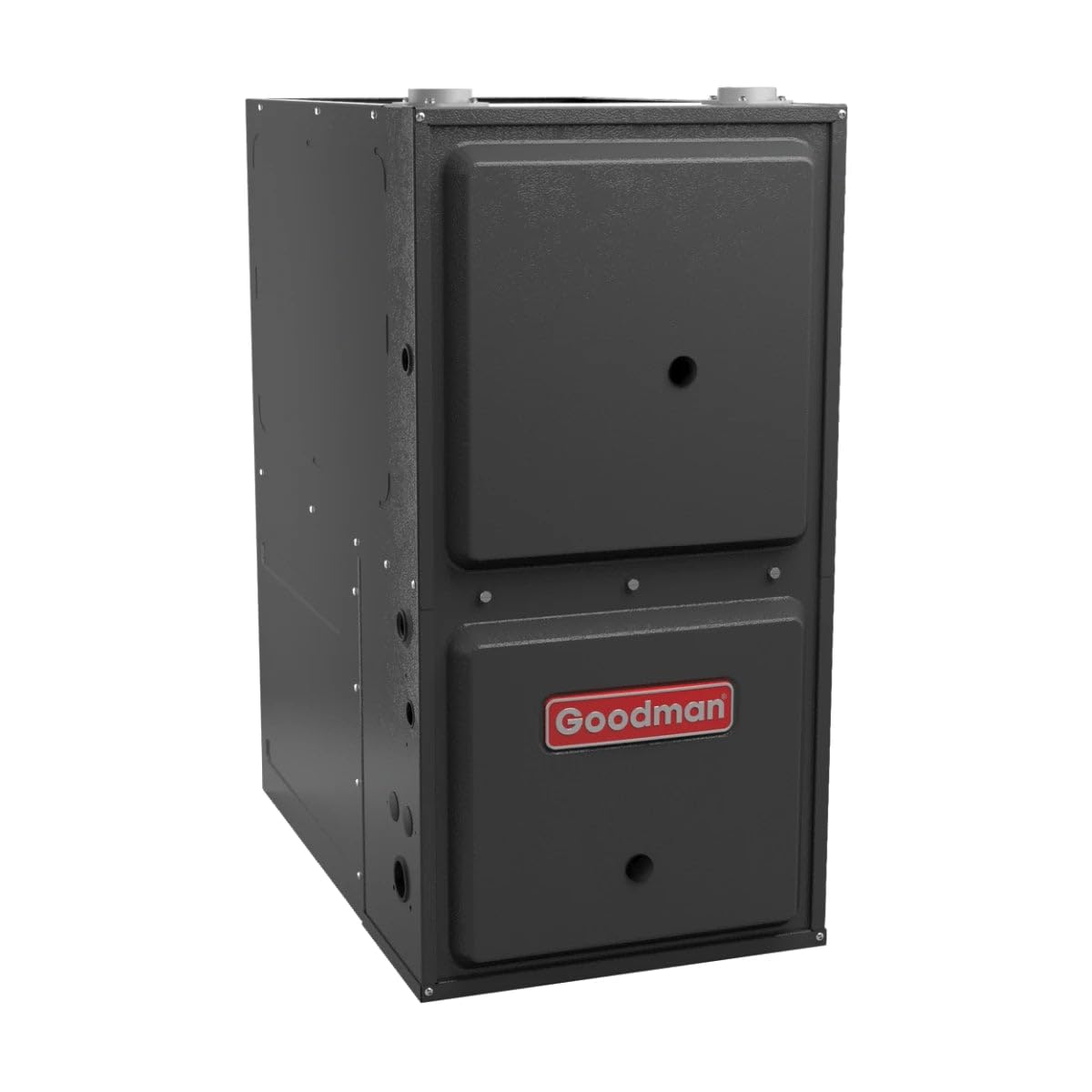
Two-stage comfort for a big house — the highest-rated furnace here, and it shows.
The headline number is 100,000 BTU at 96% AFUE, but the part that changes daily life is the two-stage burner. It runs at a lower first stage on mild days and only opens up when the cold bites, so the temperature swings you feel with a single-stage unit soften out. Combined with the multi-speed ECM motor pushing 1600 cfm of airflow (cubic feet per minute — how much air the blower moves), it heats a larger home evenly and quietly. It is a 21-inch-wide cabinet, so measure before ordering.
What wins people over is build quality — it is the aspect buyers praise most — with easy installation running a close second. The fan gets called out as amazing, and one owner notes the new unit runs half the time of their old furnace while keeping the house toasty. The multi-speed blower plus the aluminized steel primary heat exchanger is the hardware behind that calm, steady heat.
Installation is genuinely friendly for a furnace this size. Buyers describe it as a breeze, and the unit is Energy Star certified. It cannot be installed as a downflow, so confirm your configuration, and buy the LP conversion and venting kits separately. A pinched wire and a mismatched LED readout show up in a few notes — inspect the cabinet before firing it up. It is Energy Star certified and rates 4.5+ stars across 40+ ratings, the highest rating on this list.
Why it climbs to the top
- Two-stage burner smooths out temperature swings
- 96% AFUE at 100,000 BTU for big, cold-climate homes
- 1600 cfm airflow from a multi-speed ECM motor
- Energy Star certified; installers call it a breeze
Fine print to know
- LP conversion and venting kits sold separately
- Not available for downflow installs — check your ductwork first
The standout choice for: a large home that wants the comfort of a two-stage burner and the savings of 96% efficiency.
Heads-up: it needs the full 21 inches of cabinet width, so a tight closet may rule it out.
6. Goodman 120,000 BTU 96% Two-Stage Furnace (GR9T961205DN)

The biggest burner in the lineup, built for large homes and propane conversions.
When 100,000 BTUs will not cut it, this 120,000 BTU, 96% AFUE two-stage furnace moves up to 2000 cfm of airflow from a 24.5-inch-wide cabinet. It runs a multi-speed ECM motor and an aluminized steel primary heat exchanger, and it is ready for a straightforward propane conversion. For a large home in a hard-winter climate, the extra output is the whole point.
Buyers converting from propane gravitate here. One replaced a 19-year-old unit, used the two-stage design to save propane at half power, and reports a second season running great. The footprint matched their old furnace but stood about a foot shorter, so they needed a plenum spacer — worth checking against your existing setup. A two-stage thermostat is required to open up the efficiency, and the LP and drain kits are extras to plan for.
Delivery runs heavy but manageable: it arrives on a wooden pallet and one person can move it. The honest wrinkle is that a couple of units had a rocky first season, with a board and pressure-switch issues reported — the kind of thing the warranty exists for, so register it. The interior is well made and it rates 4.0+ stars across 20+ ratings.
Best reason to buy: the raw 120,000 BTU output and two-stage propane savings make it a fit for an oversize home that runs on LP.
Setup reality: it needs a two-stage thermostat to deliver its efficiency, and the shorter height may call for a plenum spacer.
Suits you if: you have a large home, a 24.5-inch cabinet slot, and want two-stage propane heat.
Look elsewhere if: your closet is narrower or your house is modest — a 100,000 BTU unit is plenty.
7. Rinnai EX38DTP Direct Vent Wall Furnace, 36,500 BTU Propane
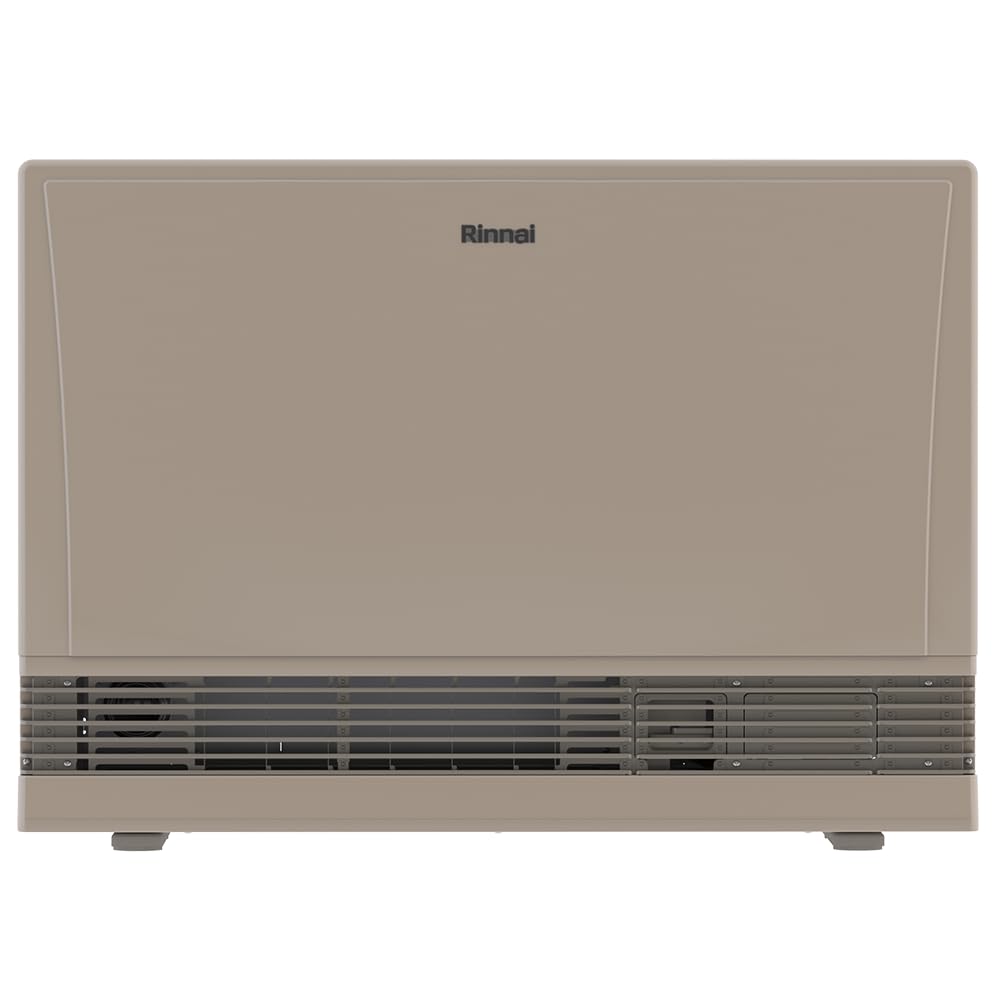
A wall-mounted propane heater that warms one room without touching your ductwork.
Not every job needs a whole-house furnace. This Rinnai is a direct vent wall furnace — it mounts on the wall and vents through the exterior, so it heats a single room without any ductwork. At 36,500 BTU it covers up to 1,600 square feet, which suits a large room, a finished basement, or an add-on space. It uses propane and runs on just 0.98 amps, so it draws barely any electricity.
You get steady comfort from modulating technology (it adjusts output to match the room instead of blasting on and off). Owners swapping out an older vented heater describe it as quieter, with even heat and no turbo cycling. A cool-to-the-touch cabinet and self-diagnostic electronics add confidence in a home with kids, and the programmable thermostat can tie into Wi-Fi systems for scheduling.
Plan around two things. First, the install hardware: the unit does not include the pipes and tubing you may need, and those parts can be tricky to source — line them up before the technician arrives. Second, a wall thermostat kit is an optional extra if you want smart scheduling. It rates 4.0+ stars across 40+ ratings, and reviewers point out it still running strong months in.
Where it fits beautifully
- No ductwork needed — heats a room straight through the wall
- Modulating heat avoids the on-off swing
- Cool-to-the-touch cabinet for homes with children
- 36,500 BTU covers up to 1,600 sq ft
Before you order
- Venting pipes and tubing not included; sourcing can be slow
- Smart thermostat control needs an optional wall kit
The one to grab for: a single room, basement, or add-on space that a central furnace does not reach well.
Not the pick for: heating an entire house — you want a ducted furnace or boiler for that.
Know the Specs
BTU Output (Heat Load Match)
BTU stands for British Thermal Unit, a measure of heat output. A 60,000 BTU furnace suits a smaller, tight home; a 120,000 BTU unit is for a large house in a cold climate. Match the number to your square footage and insulation — too small leaves you cold, too large wastes fuel and short-cycles the burner.
AFUE (Efficiency Percentage)
AFUE, or Annual Fuel Utilization Efficiency, is the share of fuel that becomes usable heat. At 96% AFUE, 96 cents of every heating dollar warms the house and the rest exits the flue. The 92% versus 96% gap is small monthly but meaningful over many winters.
Cabinet Width and Orientation
Furnaces ship in fixed widths — common sizes here are 17.5, 21, and 24.5 inches. Measure your closet opening and existing plenum. Also confirm orientation: many models are upflow/horizontal only and cannot be installed as downflow, which would force a different model number.
Single-Stage vs Two-Stage vs Modulating
A single-stage burner runs full output or off. A two-stage model adds a lower first stage for mild days, giving steadier temperatures and less fuel used at half power. A modulating unit, like the Rinnai wall heater, continuously matches output to demand.
Common Questions
What size furnace do I need for my square footage?
Can I install these furnaces as a downflow unit?
What does the cabinet width mean and why does it matter?
Is a 96% AFUE furnace worth it over a 92% one?
Do these furnaces include the thermostat and venting?
What is the difference between a furnace and a boiler?
Can I install a propane conversion on these furnaces?
How long does the warranty last and what voids it?
How loud is a multi-speed ECM furnace?
Do I need a professional installer?
The Bottom Line
The winner is the Goodman GR9S960803BN — a 96% AFUE, 80,000 BTU furnace with a 17.5-inch cabinet that slots into most standard closets and earns the crowd’s confidence with 4.0+ stars across dozens of owners. If you want the comfort of a two-stage burner for a larger home, grab the Goodman GR9T961004CN. And for a single room that central heat never reaches, the Rinnai EX38DTP wall furnace is the one to reach for — it needs no ducts at all.
How we choose
We do not accept paid placement. Every pick is matched to a real buyer and a real use-case; we do not hands-on test units.
Sources
Specifications: manufacturer listings and product documentation. Review insights: verified customer reviews, as of October 2026. Pricing: not shown on this page (it changes often); check the current price via the retailer link.
As an Amazon Associate, Aappliancez earns from qualifying purchases. This does not affect which products we feature.