Disclosure: Some links in this post are affiliate links. As an Amazon Associate I earn from qualifying purchases, at no extra cost to you. Learn more
Specs are compiled from manufacturer listings and verified buyer reviews and can change over time — please confirm the key details on the product page before buying.
A log cabin oil soaks into the wood fibers instead of forming a film on top, so it moves with the logs as they swell and shrink instead of cracking off. You want a penetrating finish that lets the logs breathe, keeps rain beading on the surface, and still looks like real wood instead of a plastic shell. Penetrating oil versus surface film is the decision that determines how often you have to strip and refinish. Below is a short shortlist of penetrating oils and stains, each matched to a specific cabin job.
This guide is built by comparing the manufacturers’ published specifications and the patterns across verified customer reviews, so you get each pick’s real strengths and trade-offs instead of marketing spin.
Every product here is judged on how deeply it penetrates dry logs, how well it repels water, and how much of it you actually need. The quick comparison table right after the chooser makes the trade-offs obvious at a glance, so you can settle the best oil for log cabin work without a research marathon.
Top Picks

How To Choose Oil For Log Cabin
A log cabin is a moving target. Logs swell in summer and shrink in winter, and that constant flex is what splits a brittle surface finish apart. A penetrating oil sinks into the wood fibers and moves with the log instead, which is why cabin owners tend to favor it over anything that forms a hard shell. What you are shopping for is depth of penetration, water repellency, and a formula that will not trap moisture inside the logs.
Penetrating oil versus film finish
A penetrating oil soaks in and leaves the wood able to breathe — water vapor can escape instead of being sealed in and rotting the log from inside. A film finish builds a coat on top that looks great until it cracks, and then water gets behind it. For log walls and end cuts especially, the oil approach means less scraping and stripping when you finally do need to refresh. You simply clean and apply another coat.
Coverage: do the square-foot math before you buy
Coverage is written as square feet per gallon, and it changes with the wood. Rough, absorbent softwood drinks far more oil than a dense tropical hardwood. A dry log will soak up a first coat and still be thirsty. Plan to buy enough for at least two coats on bare, weathered wood, because the first pass mostly feeds the grain. Measuring your wall and end-cut area before ordering saves you a second shipping wait.
UV, mildew, and water protection
Sun fades and greys raw wood, so a good exterior oil should carry UV protection or stabilizers to slow that down. Mildew protection matters on shaded cabin walls and north-facing logs that stay damp. And water repellency — how well the surface beads rain — is the everyday test of whether the finish is still working. Look for these three jobs named explicitly in the product’s own description.
Odor, food-safety, and ventilation
Some natural oils smell like nuts or cooking oil and are safe to handle without gloves, while solvent-heavy stains need real airflow and a wait before you move back in. If you are also treating cutting boards, counters, or interior cabinetry, food-safe labels matter. Match the formula to where it is going — an interior butcher block and an exterior log wall do not want the same product.
Side-by-Side Comparison
| Model | Best For | Base | Volume | Coverage | Amazon |
|---|---|---|---|---|---|
| Tried & True Danish Oil★ Best Overall | Interior & rustic pieces | Polymerized linseed oil | 32 fluid ounces | Approximately 250 sq ft per pint | Amazon |
| Outlast Q8 Log OilLog Home Specialist | Log homes & end cuts | Oil-based penetrating preservative | 1 gallon | High coverage | Amazon |
| OAIEGSD 128oz Pure Tung Oil | Kitchenware & outdoor wood | 100% pure tung oil | 128 fluid ounces | — | Amazon |
| Penofin Exotic Hardwood | Dense hardwood decks | Oil-based | 128 fluid ounces | 350 sq ft | Amazon |
| Walrus Oil Pure Tung Oil | Floors, saunas & siding | 100% pure tung oil, VOC-free | 1 gallon | — | Amazon |
| Armstrong-Clark Oil Stain | Logs, siding & fences | Oil-based penetrating stain | 1 gallon | 150–300 sq ft per gallon | Amazon |
| General Finishes Outdoor Oil | Exterior furniture & doors | Oil with UV stabilizers | 1 gallon | High coverage | Amazon |
Detailed Reviews
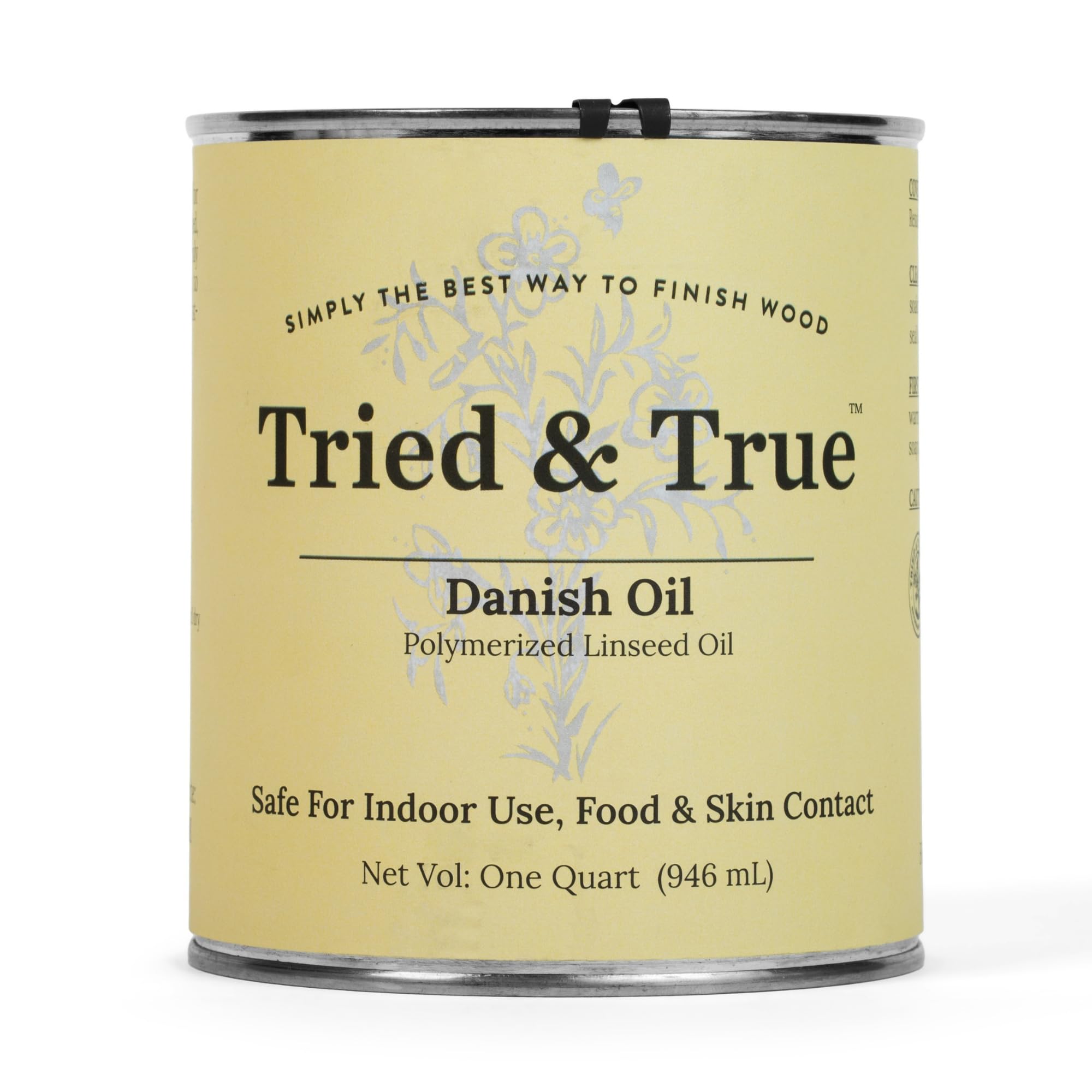
1. Tried & True Danish Oil Quart
Our pick — 4.5+★ from 950+ verified ratings; the strongest balance of quality and price.
Thin coats, no fumes, and a soft sheen that makes raw wood come alive.
This is the crowd favorite for a reason: 4.5+ stars across 900+ ratings backs up what woodworkers already know. The Tried & True Danish Oil is a polymerized linseed oil finish (linseed oil treated to cure faster and harder) that sinks into the grain instead of sitting on it. That makes it a strong base coat on bare, absorbent log interiors, cabinetry, and rustic pieces. You are not sealing a wall off — you are feeding the wood.
Application is thinner and more forgiving than most people expect from an oil. Sand to your preferred level, wipe on a very thin coat with a lint-free cloth at room temperature, let it sit five minutes, then buff dry. Wait a minimum of eight hours, knock it back with 4/0 steel wool, and repeat. What wins people over is how little product that takes — the quart goes a long way, about 250 square feet per pint by the maker’s coverage rate, so a single quart covers a good stretch of cabin trim and interior log faces. The whole job happens at the kitchen table with no respirator, because the formula is low-odor and the buzz is closer to cooking oil than to chemicals.
The finish itself is where it earns its spot. It dries to a soft satin sheen that lifts walnut and cherry grain without a plastic gloss, and it is listed as food-safe for butcher block and rustic counters. Compare that to a heavy polyurethane coat and the difference shows on touch: this one feels like wood, not lacquer. The catch is durability — this is a finish that wants occasional refreshing on high-traffic surfaces, and the natural-oil crowd knows it. For a well-used dining table, a top-coat with a more protective finish is a fair call. The other small quibble is packaging: the bottle can pop its lid at high altitude and arrive with a bit of leakage, so check the seal the moment it lands.
The wins
- Polymerized linseed oil cures faster than plain natural oils and primes absorbent wood well
- Low odor, non-toxic formula you can apply indoors without a respirator
- Soft satin sheen that enhances wood grain instead of masking it
- A thin coat goes far — about 250 square feet per pint of coverage
The honest side
- Needs periodic refreshing on high-traffic surfaces
- Multi-step process with an eight-hour minimum between coats
- Bottle can leak in transit if the lid lifts at altitude
Reach for this if: you are finishing interior logs, cabinets, or rustic furniture and want a food-safe, low-fume oil with a natural sheen.
Think twice if: you need a hard film for a heavily used surface — this one asks for occasional recoating.
2. Outlast Q8 Log Oil Natural 1 Gallon
Built for log walls and exposed end cuts, where water does the most damage.
If your logs are the priority, this is the pick that names them in its own title. Outlast bills the Q8 as an oil-based penetrating wood preservative for decks, log and timber homes, fences with exposed end cuts, and wood roofs. It is formulated to increase the wood’s durability and boost resistance to weathering and aging. Quality is the thing buyers talk about most, and that reputation is why it lands at the top for exterior log work.
Applying it is straightforward. Spray it on with a pump sprayer to the point of refusal — that means you keep going until the wood stops drinking it in. Once the wood cellulose is saturated, the stain is self-leveling, so drips blend away and lap marks are said to be non-existent. A brush works too. It soaks in quickly, which is exactly what you want on thirsty bare logs. Water repellency is the whole point here, and the surfaces people treat tend to keep beading rain months after application.
The size difference is worth stating plainly: this is a 15 x 16 x 28 inch gallon container, against a 4.25 x 4.25 x 5 inch quart from Tried & True — a 3.5x gap in footprint. That is a big jug for a big job, so a full cabin exterior is a natural fit. Two things to know going in. First, it can lightly darken the wood, and on some tone-sensitive woods the shift is more noticeable, so test a hidden patch. Second, the smell lingers for a few days before it fades — plan the job for good weather with the windows open.
What it is good at: deep saturation on log walls, end cuts, and decks, with self-leveling behavior that hides lap marks and a water-repellent result that holds through seasons.
The small print: the natural tone can nudge the wood’s color, and a full gallon is more than a small trim job will use.
Go with this: when your priority is protecting exterior log surfaces and end cuts from water and weathering.
Look elsewhere if: you need a finish that leaves the wood’s exact color untouched, or you only have a small touch-up area to cover.
3. 128oz Pure Tung Oil with Brush
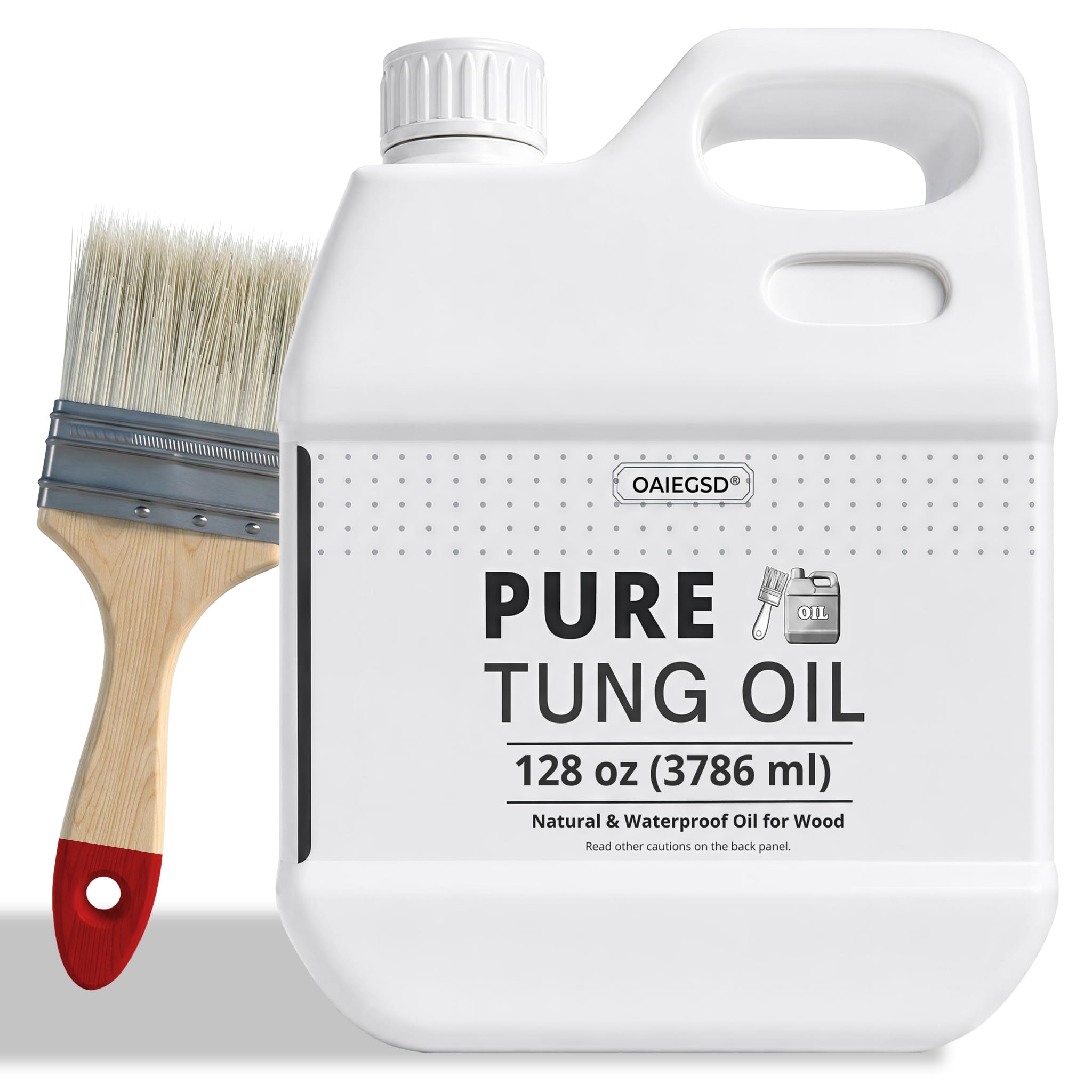
A full gallon of pure tung oil that comes with the brush you need to use it.
Tung oil is the old-school choice for anyone who wants a natural, food-safe finish, and this one leans into that fully. It is 100% pure natural tung oil, extracted from tung seeds with no additives or chemical ingredients, so it is safe for surfaces that touch food. It penetrates deep into the wood fibers and becomes part of the wood, giving you both a water-resistant surface and more luster. The gallon format and included brush make it the practical value pick for a large cabin project.
The process is simple enough to do on a weekend. Apply the oil to bare or stripped wood and let it absorb. Repeat two to three times, letting the wood drink each coat. If a section stops absorbing, wipe the excess off with a towel so it does not sit tacky. On outdoor wood the results hold up well — buyers report coating garden bed planks with it after charring and getting a clean, no-issue finish, and it works on butcher block, counters, tables, and exterior projects. The included brush makes spreading it even, which saves you a trip to the hardware store.
Drying time is the honest variable here, and it is the one complaint worth flagging up front. Some finishes set reasonably fast; others take their time, and tung oil in general rewards patience. Application thickness, temperature, and wood type all factor in. The scent also splits opinion — some love it, some find it strong. Neither is a dealbreaker, but plan for a cure window and good airflow, and do a thin test coat first so you know how this batch behaves.
Where it shines: pure, additive-free tung oil with a brush bundled in, sized as a full 128-ounce jug for big jobs and safe enough for kitchen surfaces.
Cure-time reality: drying speed varies between coats, so give yourself a couple of days per round rather than rushing to the next layer.
Pick it when: you want a natural, food-safe oil in a large format for cabin tables, counters, and outdoor woodwork.
Bear in mind: plan for slow, patient curing and a scent that not everyone loves.
4. Penofin Exotic Hardwood 1 Gallon

Made for dense, stubborn hardwoods that drink ordinary oils and laugh.
Not every cabin is soft pine. If your build uses IPE or another dense tropical hardwood on porches, railings, or trim, this is the oil formulated to get inside it. Penofin’s deep-penetrating treatment is built specifically for exotic hardwoods and adds UV protection to guard the wood against sun damage. It is also formulated with advanced mildew protection. On 350 square feet per gallon of coverage, the math works out for bigger exterior surfaces.
Appearance is the thing it does best — it brings out the wood’s natural tone and lets the grain and color read through, so a tired deck looks renewed rather than painted over. Application rewards a spray-then-brush rhythm: mist it on, brush it in, wipe the excess with rags, and work four boards at a time on horizontal surfaces to keep the finish even. That way you reach thin slat cracks and get a uniform coat. For the density of the wood, a little goes further than you would expect, so pay attention to how fast your gallon disappears.
Two honest notes. Dense hardwoods absorb slowly, so the oil can sit on top for a while and need repeated wiping throughout the day. And the smell is real — it can hang around outdoors for weeks, so hold off on putting cushions back out until it has aired. For IPE and other dense tropical hardwoods, it is the oil formulated to penetrate the grain.
The reason to buy: UV protection plus mildew resistance, aimed squarely at dense exotic hardwood, with 350 square feet of coverage per gallon.
The trade-offs: slow absorption means extra wiping, and the odor can linger outdoors for weeks.
Best for: cabins with IPE or other dense hardwood porches, railings, and trim.
Not the one if: you are working raw pine or soft cedar and want a fast-drying finish with little odor.
5. Walrus Oil Pure Tung Oil 1 Gallon Jug
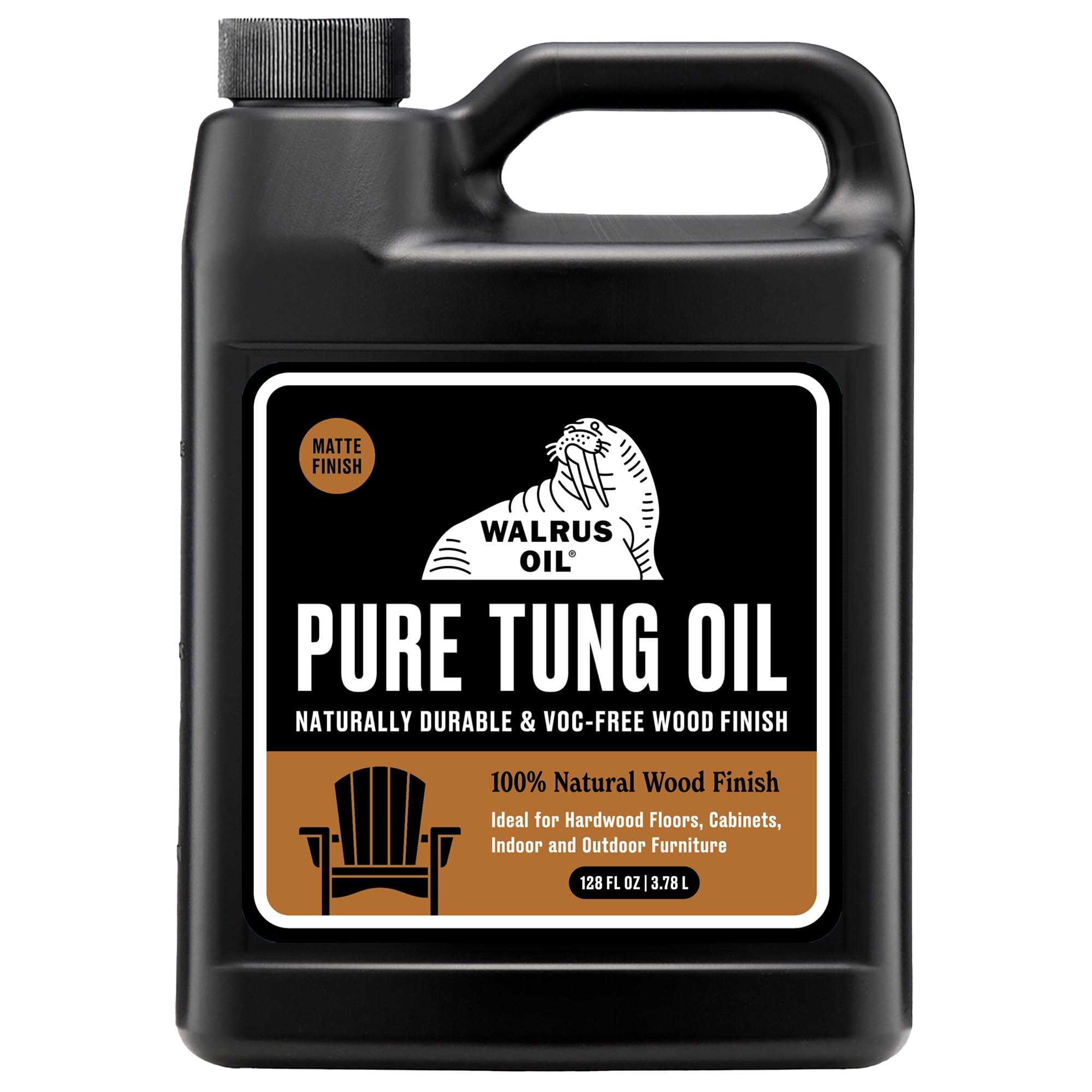
Same gallon, far more places to use it — floors, saunas, beams, even the fence.
What makes this jug worth the premium is reach. Walrus Oil’s 100% pure tung oil is a VOC-free formula (no volatile organic compounds, the fumes that make indoor finishing unpleasant), so you can use it inside a cabin without harsh chemical odor. It is made with FDA food-contact safe pure tung oil, which lets it move from a floor to a cutting board without a second product. The one-gallon jug is sized for real projects, and coverage is the aspect people praise most — it spreads farther than you expect.
The use cases stack up. It seals and protects hardwood floors in residential and commercial settings. It works on cabinets, doors, and indoor/outdoor furniture. It conditions outdoor pieces against weather, UV, and normal wear. And it protects cedar used for saunas and privacy partitions, which is a job that punishes cheap oils full of additives. Application is easy by rag or roller, and it stays fairly thick in the jug, so you are not chasing drips. On dense Brazilian hardwood, the oil absorbs almost immediately.
There are two things to plan around. First, this is a natural oil that does not dry to a hard film like a polyurethane, so it feeds and protects the wood while keeping it feeling like wood rather than sealing it under glass. Second, it will stain concrete or patio surfaces on contact — lay down a drop cloth before you start. The scent is mild and many people find it pleasant, but plant lovers should keep it off plant beds. One gallon covers floors, saunas, beams, and furniture, so a single jug handles several jobs.
Star quality: VOC-free and food-contact safe, with coverage that spreads well across floors, saunas, beams, and furniture.
The catch: it stays a soft, natural finish rather than a hard shell, and it will stain concrete if you are careless.
Matches your project if: you want one jug for floors, saunas, and furniture finishes with no harsh fumes.
skip it if: you need a hard, glass-smooth film on a high-traffic surface.
6. Armstrong-Clark Oil-Based Wood Stain 1 Gallons

A log-friendly penetrating stain that keeps the wood looking like raw wood.
This is a stain rather than a straight oil, and for a log cabin that is a useful thing. Armstrong-Clark’s oil-based formula uses conditioning oils that sink deep into the wood fibers while drying oils lock in protection, which helps prevent cracking, peeling, and premature deterioration. It also seals and shields against sun damage, water intrusion, and weathering. It is designed for logs, decks, fences, siding, docks, furniture, and other exterior surfaces — precisely the mix a cabin exterior throws at you.
The natural tone is lightly tinted, which means it deepens the wood’s own color instead of painting it a flat shade. Owners describe it going on easy and soaking right in, keeping the original look of the wood. That is exactly what most cabin owners want. A key practical advantage is that it can be applied in direct sunlight and warm temperatures, so you are not racing the sun. Maintenance coats typically need only cleaning and reapplication, without extensive sanding, stripping, or media blasting — a big labor saving on a large log wall.
The coverage numbers are the part to plan around. You get roughly 150–250 square feet per gallon on horizontal softwoods, 200–300 square feet on vertical softwoods, and 300–400 square feet on hardwoods. Logs are a vertical surface, so budget toward the middle of the vertical range and buy extra if your wood is dry or highly absorbent. The honest caveat: the color varies with wood type, age, prep, and application, so always run a test board on a log you can hide before committing to the whole wall. And if you have IPE or mahogany, the maker directs you to the Amber, Mahogany, or Black Walnut tones rather than Natural.
Why it fits a cabin
- Oil-based penetrating formula designed to prevent cracking, peeling, and premature decay
- UV and water resistance that seals logs, siding, and fences
- Can be applied in direct sun and warm temperatures
- Maintenance coats need only cleaning and reapplication, no stripping
Before you commit
- Color varies with wood type, age, and prep — test a hidden log first
- Coverage drops on dry, absorbent softwood, so buy generously
Worth it if: you want logs and siding sealed with a lightly tinted penetrating stain you can top up without sanding.
Not for: dense exotics in the Natural tone — the maker points you to Amber, Mahogany, or Black Walnut instead.
7. General Finishes Outdoor Oil, 1 Gallon
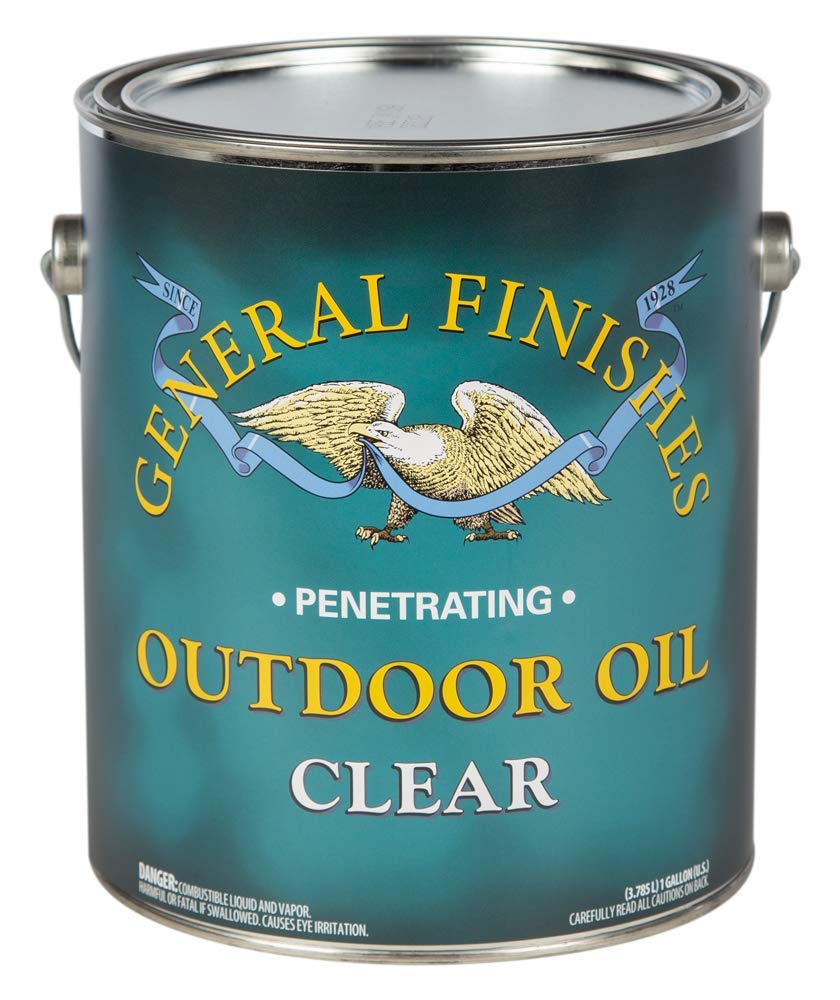
A gallon of oil that packs UV stabilizers and twice the oil of many rivals.
This is the pick for cabin furniture, doors, and trim that get baked by the sun. General Finishes Outdoor Oil is a durable exterior penetrating oil built with UV stabilizers, heat stabilizers, and mildew prohibitors, and the maker says it contains twice the oil of competing brands. It shields wood from harsh weather and environmental wear. Quality is what people notice most — brushed on like a varnish, it dries to a smooth finish and keeps its looks under strong sun. It can go on by itself, over any stain, or on pressure-treated wood.
If your exterior wood has dried out and gone grey, this is a good rescue. On pressure-washed, very dry wood, the oil feeds the grain and brings the natural deep look back without going glossy. The finish is described as a warm satin, which keeps a cabin exterior from looking lacquered. One coat can carry an exterior door past a year, and a two-coat cycle extends the refresh interval. It can go over stain or on pressure-treated lumber.
The one limitation to know is the exotic-wood rule: Outdoor Oil may not adhere to extremely oily exotic woods, so if your build uses those, a hardwood-specific oil is the safer route. Durability splits opinion — you will want to reapply on a several-month to yearly cadence depending on exposure, which is the honest nature of any exterior oil. And the brush you use is best treated as disposable, because this oil is hard on foam brushes and not worth cleaning. For sun-baked doors, trim, and outdoor furniture, the UV stabilizers are the reason to pay more.
The draw: UV stabilizers plus twice the oil of competing brands, a satin finish that holds up under hard sun, and safe use over stain or pressure-treated wood.
Plan around: it may not bond to extremely oily exotic woods, and durability calls for refresh coats every few months to a year.
Great match for: outside furniture, doors, and trim fighting sun and rain that need real UV protection.
Look elsewhere if: your wood is an extremely oily exotic — the maker warns it may not adhere.
Know the Specs
Coverage (Square Feet Per Gallon)
Coverage tells you how far a container will stretch, and the same oil can list a range because absorbent softwood drinks far more than dense hardwood. Use the lower end of the range for dry, rough logs and the higher end for tight, prepped wood. Measure your wall area and end cuts first, then round up — a second coat on bare wood always takes more than the first pass makes you think.
Base Material: Oil Versus Film Finish
A penetrating oil soaks into the wood and lets it breathe, which suits logs that shift with the seasons. A film finish sits on top and can crack when the wood moves. The products here are all oil-based, so their job is to feed the fibers and repel water rather than build a shell. That is why they are easy to refresh — clean and reapply instead of stripping.
UV and Mildew Protection
Sun greys and fades bare wood, and damp shaded logs can grow mildew. A good exterior oil carries UV stabilizers or added UV protection, plus mildew protection where it is named. These are what keep a log wall looking rich rather than silvered. Check that the product names these protections before you buy if your cabin faces full sun or sits in shade.
Food-Contact Safe and VOC-Free
If the same finish will go on cutting boards, counters, or interior cabinetry, look for a food-contact safe label and a low-odor, VOC-free formula. These let you apply indoors without harsh fumes. Note that food-safe does not mean waterproof — for a food-contact item that sees moisture, a protective top-coat still matters.
Common Questions
Is penetrating oil better than paint for a log cabin?
How much oil does one gallon of log cabin oil cover?
Can I use tung oil on exterior log walls?
Do I need to remove old finish before applying log cabin oil?
Which log cabin oil is safe for cutting boards and kitchen surfaces?
How long should I wait between coats of oil on logs?
Will log cabin oil change the color of my wood?
Can I apply these oils over pressure-treated lumber?
What is VOC-free and why does it matter for indoor log work?
The Bottom Line
The winner for most cabins is the Tried & True Danish Oil. It is a 4.5+ star pick trusted by woodworkers, and it feeds interior logs and rustic pieces with a food-safe, low-odor oil that leaves a natural sheen and covers about 250 square feet per pint. If your priority is exterior log walls and end cuts, grab the Outlast Q8 Log Oil, which is formulated specifically for log and timber homes with self-leveling, water-repellent protection. And for cabins with dense hardwood porches or trim baked by the sun, the Penofin Exotic Hardwood and the General Finishes Outdoor Oil bring the UV and mildew protection those surfaces need. Match the oil to the job and buy enough for two coats on bare wood.
How we choose
We do not accept paid placement. Every pick is matched to a real buyer and a real use-case; we do not hands-on test units.
Sources
Specifications: manufacturer listings and product documentation. Review insights: verified customer reviews, as of October 2026. Pricing: not shown on this page (it changes often); check the current price via the retailer link.
As an Amazon Associate, Aappliancez earns from qualifying purchases. This does not affect which products we feature.