Disclosure: Some links in this post are affiliate links. As an Amazon Associate I earn from qualifying purchases, at no extra cost to you. Learn more
Specs are compiled from manufacturer listings and verified buyer reviews and can change over time — please confirm the key details on the product page before buying.
If your sacroiliac joints ache after a morning at the desk, the chair is usually the problem — not your back. The SI joint sits where the spine meets the pelvis, and it hates two things: a chair that lets your hips roll backward and a seat that stops your pelvis from staying level. Every chair below was picked because it lets you change lumbar depth, seat angle, or seat height in ways that let you keep your pelvis neutral for hours, not minutes.
This guide is built by comparing the manufacturers’ published specifications and the patterns across verified customer reviews, so you get each pick’s real strengths and trade-offs instead of marketing spin.
Start with the shortlist if you already know your body type, then read the reviews for the chair that matches your height and sitting style. The right office chair for sacroiliac problems is the one whose lumbar depth and seat height you can dial to your own frame.
Top Picks

How To Choose The Best Office Chair for Sacroiliac Problems
Your SI joint is a small, stiff joint that connects the base of your spine to your pelvis. It does not want to be stretched, twisted, or tipped for hours — it wants your pelvis to stay level while your legs rest flat. That single goal rules out most of what the category advertises.
Lumbar depth adjustment beats lumbar padding
A thick pillow behind your lower back sounds helpful, but if it presses you forward you end up tilting your pelvis and loading the joint. What you want is a lumbar support you can move in and out — called depth adjustment or auto-following lumbar — so the curve sits against your spine instead of pushing it.
Seat height range and seat depth decide your hip angle
If your seat is too low, your knees rise and your pelvis rolls back. If it is too high, your feet dangle and your hips tip forward. A wide seat height range — say 17.7″ to 21.7″ — lets you find the spot where your feet rest flat and your thighs stay level. Seat depth matters too: you want roughly two to four fingers of space behind your knees so nothing presses the back of your legs.
Recline and tilt change the pressure on your lower back
A backrest that locks at a few angles — a synchro-tilt, or a recline range like 96° to 126° — lets you shift pressure off the SI joint without standing up. Chairs that only sit bolt upright force the same load onto the same spot all day.
Weight capacity and base build keep the settings where you put them
A gas lift (the cylinder that raises the seat) can slowly sink on cheap chairs — that is the failure mode that ruins a carefully set hip angle. Look for a certified gas lift and a reinforced base, and match capacity to your weight with room to spare.
Side-by-Side Comparison
| Model | Best For | Weight Capacity | Seat Height Range | Lumbar Adjustment | Amazon |
|---|---|---|---|---|---|
| ELABEST X100★ Best Overall | All-day SI support with a footrest | 300 lbs | 18.3″–23″ | 3D auto-tracking lumbar | Amazon |
| TRALT Office ChairBest Value | Tight budgets and smaller frames | 330 lbs | 17.7″–21.7″ | Adjustable depth lumbar | Amazon |
| HOMRELEXA Big and TallMost Versatile | Cross-legged sitters and pet owners | 400 lbs | 18.9″ minimum | High back support | Amazon |
| ELABEST Ergonomic Mesh | Long typing sessions with shoulder strain | — | 19.6″–23.6″ | Adjustable lumbar, synchro-tilt | Amazon |
| Newtral Ergonomic | Auto-following lumbar on a mid-range budget | — | — | Lockable auto-following lumbar | Amazon |
| FLEXISPOT ErgoX | Adjustable seat depth for taller users | 400 lbs | 20.1″–22.4″ | Dynamic lumbar support | Amazon |
| EXCEBET Executive | Padded cross-legged comfort | 400 lbs | 19-1/4″–22-2/5″ | Back lumbar support | Amazon |
| FLEXISPOT ErgoX PRO | Adjustable height and deep lumbar travel | 551 lbs | — | 5D extendable lumbar | Amazon |
| Steelcase Series 1 | Weight-activated controls and quick assembly | — | — | Adjustable lumbar | Amazon |
Detailed Reviews
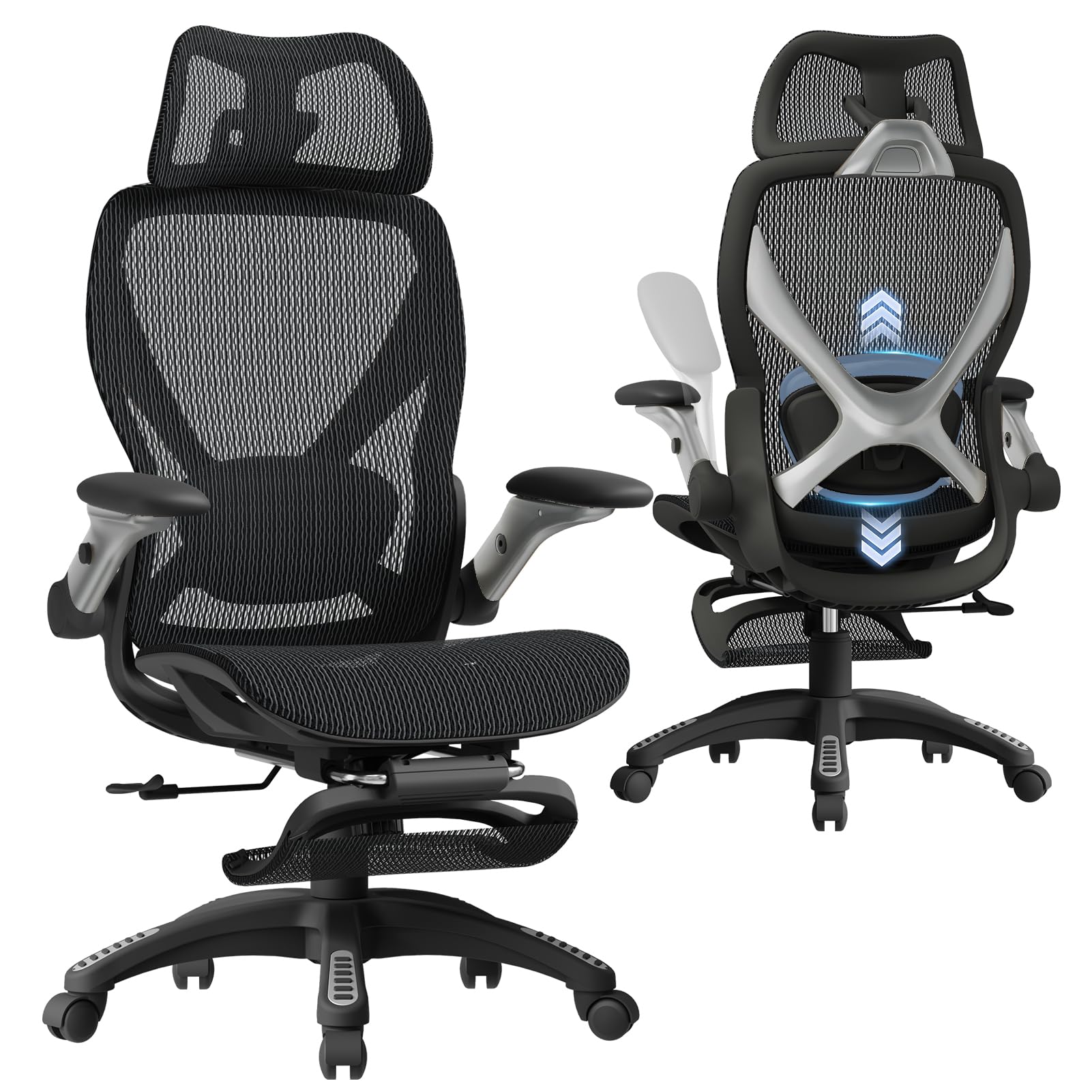
1. ELABEST X100 Ergonomic Mesh Office Chair
Our pick — 4.5+★ from 1,000+ verified ratings; the strongest balance of quality and price.
A lumbar support that automatically follows your spine and an 18-inch footrest to take pressure off your hips.
The X100’s standout feature is its 3D lumbar support, which has three separate adjustments: depth, height, and rotation. It auto-tracks your lower back with spring-loaded tension that moves with you, so you aren’t locked against a static cushion all day. The backrest is 20.2 inches wide, and the price tag reflects a substantially wider seat and back than the 5.7-inch backrest of the TRALT chair further down. For an SI joint that needs consistent pelvic support, that width means your whole back touches the surface, not just your spine.
The X100 supports up to 300 lbs and its seat height spans 18.3 to 23 inches — a range that covers shorter and taller frames. The 5D flip-up armrests move in six directions and fold up to tuck under a standard desk. The 3-stage reclining mechanism lets you shift pressure off your lower back without standing, and the 18-inch pull-out footrest extends in two angle positions to take weight off your hips entirely when you recline. Assembly is tool-free and takes about 15 minutes.
The main trade-off is that it is not a plush chair. The mesh seat and back prioritize airflow and support over soft cushioning, and one recurring note is that the seat edges feel firm. The footrest is also reported as stiff at first and hard to extend. Both are minor against 4.5+ stars across 1,400+ ratings — a solid, well-supported option for most buyers. If you want a soft, padded throne, this is not it. If you want a chair that keeps your pelvis level and your back cool for a full work day, this is the strongest overall pick.
What wins people over
- The 3D lumbar auto-tracks your spine’s movement instead of holding one fixed position, giving lower-back support that adjusts all day
- Adjustable height from 18.3″ to 23″ fits a wide range of body types
- The 5D flip-up armrests free up space and let you sit cross-legged
Where it stumbles
- The seat cushion is firm, not plush
- The footrest is stiff to extend at first
Best for: Anyone who wants the widest range of lumbar adjustment to dial in sacroiliac support with the most stable build.
Skip if: You want a soft, padded seat and don’t need the auto-tracking lumbar or footrest.
2. TRALT Office Chair
The budget pick with a genuinely adjustable lumbar and a certified gas lift that holds its height.
The TRALT gets the one thing that matters most for SI support right, and it does it on a shoestring. Its lumbar support adjusts in depth, so it pushes into the curve of your lower back instead of sitting flat. The seat uses high-resilience molded foam, which the brand says holds its shape far longer than budget foam, so it won’t flatten into a compressed cushion after a few months. The BIFMA Class 3 gas cylinder is certified to a durability standard and built to resist the slow sink that ruins a set seating angle. The seat height range is 17.7″ to 21.7″, which the brand states fits users from roughly 5’4″ to 6’2″ with feet flat on the floor.
It holds up to 330 lbs, and at 19.7″ wide with 17.3″ depth, the seat leaves the recommended two-to-four-finger gap behind your knees — the detail that keeps pressure off your legs and lets your pelvis stay neutral. Buyers report the adjustable lumbar provides excellent lower back support.
The catch is you give up headrest and arm support at this price. This chair is armless and headrest-free, and the brand skipped those on purpose to put the budget into the lumbar mechanism, gas lift, and a metal-core base. So if you need to rest your arms while typing or want a headrest for neck relief, look to the bigger picks above. But the lumbar that genuinely adjusts, the higher weight capacity (330 lbs vs the ELABEST X100’s 300 lbs), and 4.0+ stars across a huge number of ratings make this the smartest entry point if sacroiliac support is the goal and the budget is tight.
Why it earns a spot: Few budget chairs let you set lumbar depth at all — this one does, and pairs it with a certified anti-sink cylinder and a metal-cored base.
The honest catch: No arms and no headrest, so this is a lumbar-and-seat-only solution.
Reach for this if: You want real lumbar depth adjustment and a certified gas lift without stretching the budget.
Look elsewhere if: You rely on armrests for shoulder support during long typing blocks.
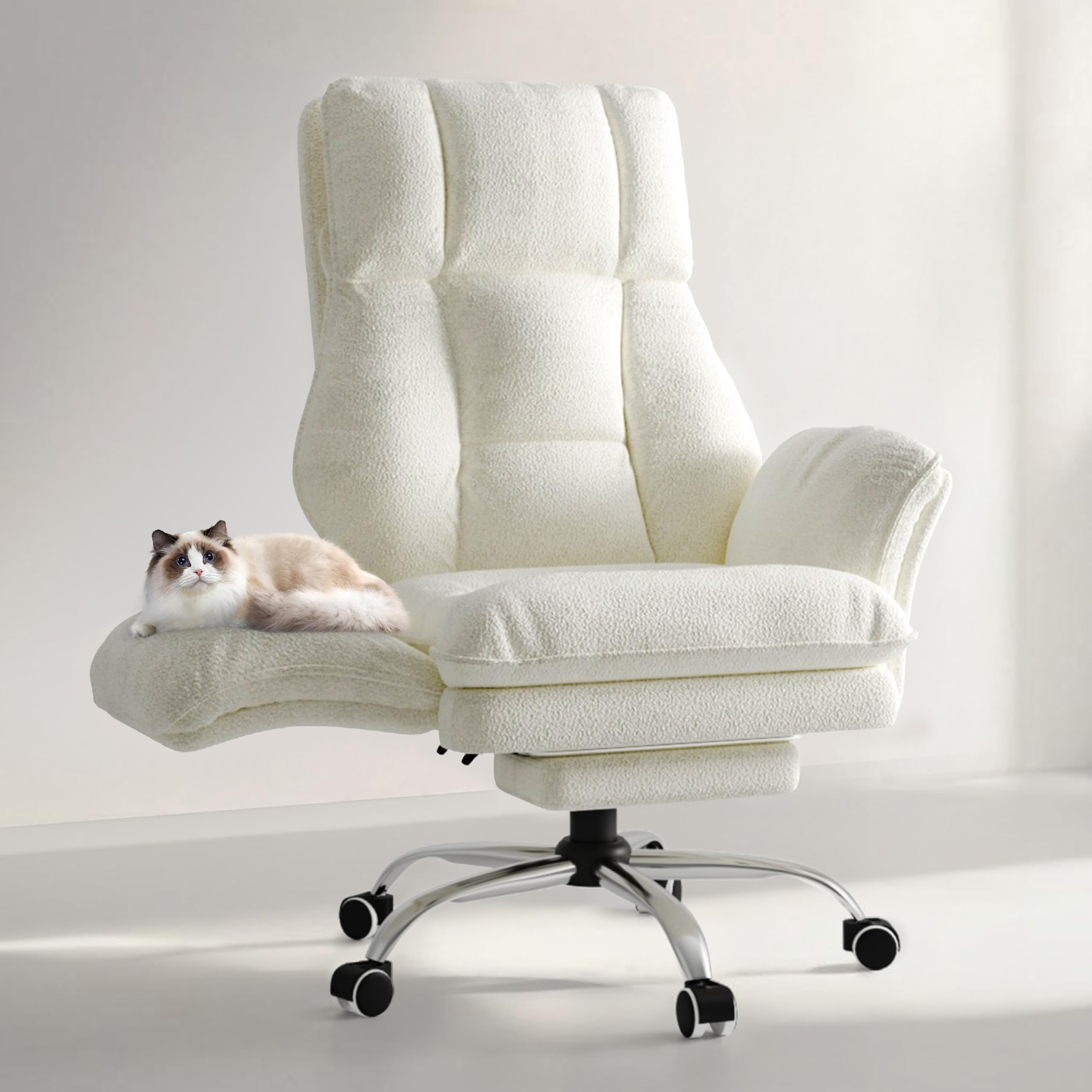
3. HOMRELEXA Big and Tall Office Chair
A plush, wide recliner that lets you sit cross-legged — the position many SI-joint sitters end up in anyway.
Cross-legged sitting is a big deal for sacroiliac comfort because it lets your hips rest in a neutral, wide position instead of forcing them square to a desk. This HOMRELEXA chair is built for exactly that: the padded armrests flip outward, clearing room to sit cross-legged, stretch out, or pull a pet onto your lap. The backrest is 20.5″ wide with a seat that starts at 18.9″ high, and the whole chair supports up to 400 lbs on a reinforced metal base with a TÜV-tested frame and SGS-certified gas lift.
The seat itself is a pocket-spring, high-density foam layer that buyers describe as feeling like sitting on a couch. It reclines with a pull-out footrest and swivels a full 360°, so you can lean back and offload your lower back without standing. Assembly runs about 15 minutes.
Two honest limits. It’s a soft chair, not a firm one — and for an acutely irritated SI joint, some people need a firmer surface to keep the pelvis level. There’s also a reported wobble and a note that the chair is wide enough that it may not tuck fully under every desk, even with the arms up. Against that, the comfort and over-built sturdiness are why it earns 4.0+ stars across 950+ ratings. Buyers who’ve owned it describe it as spacious, sturdy, and stable, with good back support even when reclined.
The case for it: The flip-up armrests and plush pocket-spring seat make this the easiest chair here to sit cross-legged in, and the 400 lb capacity plus TÜV-tested base handle heavier users.
One thing to know: It’s wide and soft — check that it clears your desk, and consider your firmness preference first.
Best for: Pet owners, cross-legged sitters, and anyone who wants big padded comfort and heavy-capacity build.
Skip if: You prefer a firm, narrow, mesh seat that slides fully under a compact desk.
4. ELABEST Ergonomic Mesh Office Chair (BIFMA 5.1 Certified)

A firm, commercial-grade mesh chair with a bionic backrest and a synchro-tilt built for eight-hour days.
The ELABEST builds its backrest around a bionic curve that follows the shape of your spine, backed by an adjustable lumbar support. The tilt mechanism — a synchro-tilt with three lockable positions plus adjustable tension — lets you change the angle your lower back works at without standing up. That matters if your sacroiliac symptom is worse in one fixed position, because you can shift the load instead of enduring it.
Two other features serve the SI-joint buyer. The mesh seat and back eliminate heat buildup and pressure points that foam chairs create, and the 3D armrests adjust in height, width, and angle so your shoulders stay relaxed. The chair is BIFMA 5.1 certified for commercial-grade durability, with an overall width of 28″, a seat height from 19.6″ to 23.6″, and a 20″ seat width. Assembly runs about 15 minutes.
Two things to weigh. The recline is the most divisive feature — while many owners appreciate the tilt, others report the chair doesn’t recline as far as they’d like. And this is a firm chair by design, not a cushioned one, so it suits people who want their pelvis held level rather than sunk into foam. Earning 4.0+ stars across 950+ ratings, it’s the pick if you want a hard-wearing, cool-running work chair you can dial your arm position into and forget.
What stands out
- The synchro-tilt with 3 lock positions and adjustable tension lets you shift lower-back pressure without standing
- BIFMA 5.1 certified build is rated for daily multi-shift commercial use
- Full-mesh seat and back keep you cool and remove pressure points
Where it falls short
- Firm by design — not for cushion lovers
- Recline depth draws mixed reactions from owners
- One owner reported a backrest bolt shearing after a year of use
Suits you if: You want a firm, cool, commercial-grade chair whose tilt lets you change your lower-back angle through the day.
Another route if: You want deep recline or a thick padded seat — the mesh and the tilt range will feel limiting.
5. Newtral Ergonomic Home Office Chair

An auto-following lumbar piston that tracks your lower back as you move — with adjustable support strength.
The feature that makes the Newtral worth a look for sacroiliac support is its lockable auto-following lumbar. Instead of a fixed cushion, a piston automatically tracks your lumbar spine as you shift, and you can adjust how much force it applies. If your SI joint needs a specific amount of lower-back pressure and nothing else, that adjustability is the whole point. The chair also reclines and locks from 96° to 126°, giving you a range of angles to offload pressure.
You get more adjustment than just the lumbar. The seat slides back and forth and lifts up and down, the backrest has three height options, and the headrest angle and height adjust. The build uses a KGS Class 4 gas lift (a heavy-duty lift certified by BIFMA/SGS, two testing bodies), a Korean Filo breathable back mesh (a woven fabric that lets air through), and a 7cm high-density foam cushion with a waterproof, flame-retardant fabric cover. The brand cites an ergonomist who calls this lumbar function among the most unique supports they have seen.
Set expectations on two points. The adjustability is extensive but not everyone finds it easy to dial in — the recurring note is that the armrests don’t lock and move easily, and the adjustment learning curve is real. And the back mechanism is large, which can knock into things in a small space. At 4.0+ stars across 550+ ratings, it’s the pick for a buyer who wants to fine-tune lumbar support strength and doesn’t mind spending a little time getting it right.
What it does differently: The auto-following lumbar tracks your lower back throughout the day and lets you tune the support strength — a level of control rare at this price.
The honest caveat: The settings are numerous, and the armrests don’t lock, so expect a fiddly setup period.
Best for: Someone who wants to actively tune lumbar support strength and travel, and values a wide recline range.
Think twice if: You want a chair that locks every setting in place or you have little room for a bulky back mechanism.
6. FLEXISPOT ErgoX Premium Ergonomic Office Chair Black FM-FT
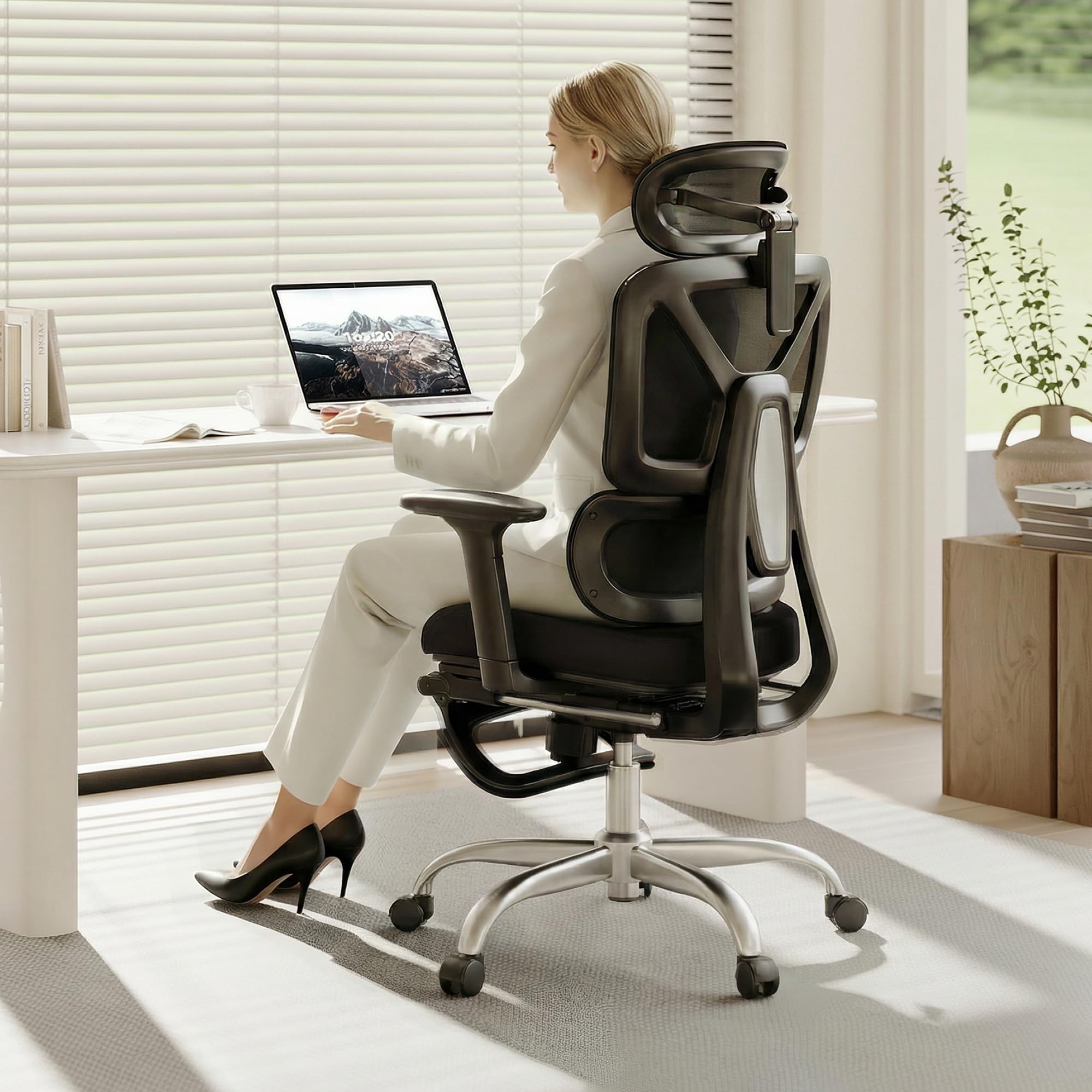
A seat you can slide back and forth to set your exact pelvic angle — plus a nap footrest for pressure relief.
Seat depth is the underrated lever for SI-joint comfort, and the ErgoX is built around it. The seat slides from 17″ to 20″ and the height adjusts from 20.1″ to 22.4″; the brand states it fits users from 5’1″ to 6’2″ with a 400 lb weight limit. Being able to slide the seat forward or back is how you keep two-to-four fingers of space behind your knees, which lets your pelvis sit level rather than tipping. A dynamic lumbar support and a 5-level adjustable back round out the lower-back support.
The ErgoX also gives you a choice of seat material: mesh for cooling airflow or cushioned foam for a cradled feel — a rare option where the seat surface changes but the frame doesn’t. The 3D armrests adjust in height, forward/back, and swivel, the headrest adjusts on three axes, and there’s a nap footrest for leaning back and taking weight off your hips. The Class 4 gas lift and breathable mesh round out a chair made for long office days.
The trade-off to know is that the lumbar support on this model only adjusts up and down, not in depth. So if you need the lumbar to press in and out to match an irritated SI joint, the ELABEST X100 or the TRALT’s depth-adjustable lumbar will serve you better. What you gain instead is the widest seat-depth range in this group. At 4.0+ stars across 350+ ratings, it’s the pick for taller or long-legged users who need the extra seat slide and want to choose their own seat material.
The main draw: The seat slides 17″ to 20″ — the widest depth range here — so you can set your pelvic angle precisely, and you choose mesh or foam for the seat.
Where it stops short: The lumbar only moves up and down, so depth-focused SI support needs a different chair.
Best for: Taller and long-legged users who want adjustable seat depth and a mesh-or-foam seat choice.
Not the one if: You need lumbar depth adjustment to press into your lower back.
7. EXCEBET Big and Tall Executive Office Chair with Footrest
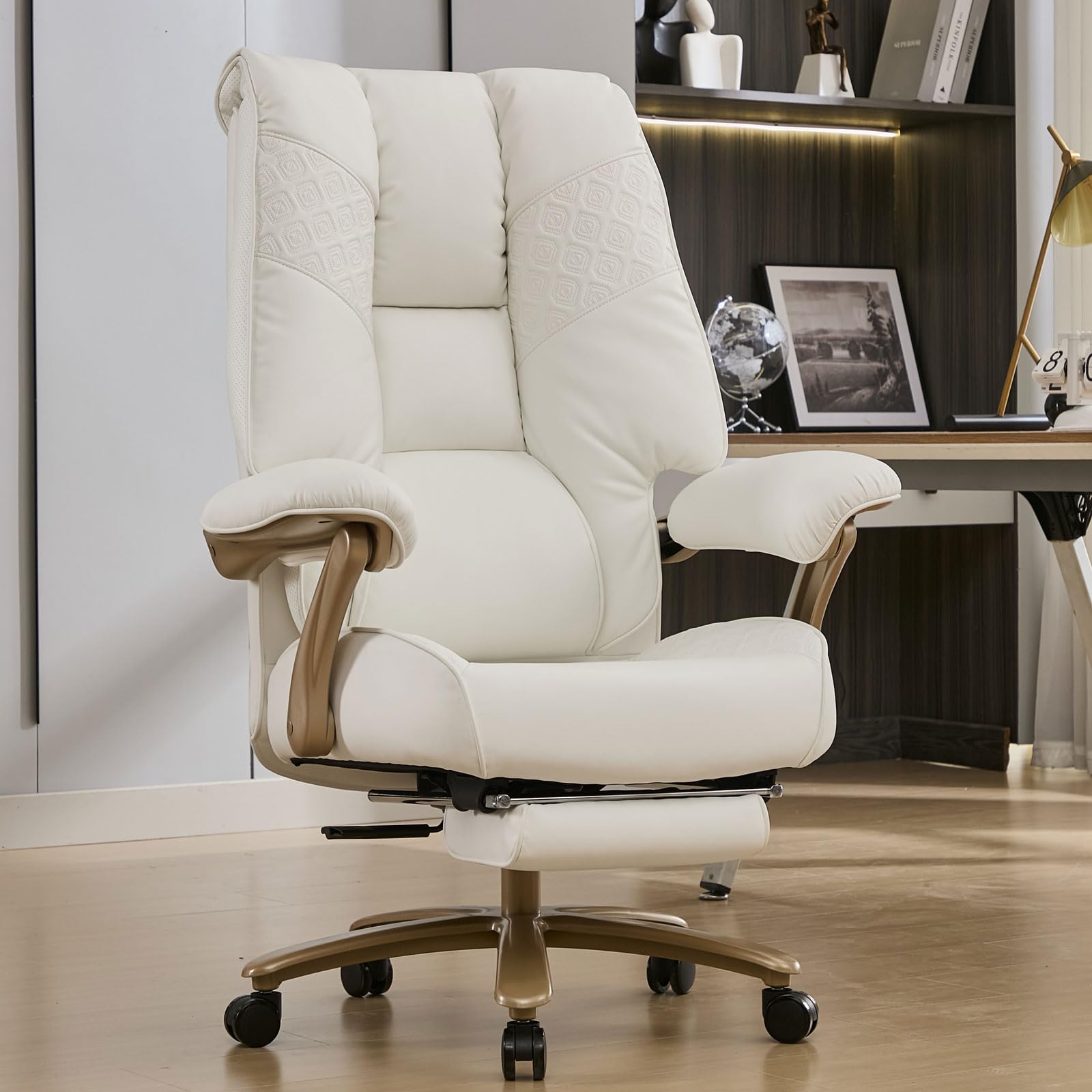
A plush, padded executive recliner you can sit cross-legged in, with a spring-backed seat and thick arm support.
The EXCEBET is for the buyer who wants soft over firm. Its cushion layers a spring with high-density elastic sponge, and the seat is sized generously enough to sit cross-legged — a posture that can help when a straight, square-hip position aggravates your SI joint. The backrest is thickly upholstered for soft support, and the chair reclines to 135° with a retractable footrest, so you can lean back and unload your lower back during breaks.
It holds up to 400 lbs on a BIFMA-approved metal base, uses an SGS-certified Class 4 gas cylinder, and the cushion frame is FSC-certified wood. The height adjusts from 19-1/4″ to 22-2/5″, and the PU leather is finished with an embroidered pattern that several owners say looks better in person. Assembly runs 20 to 30 minutes with the included tools.
Two things to weigh before buying. Some owners describe the lumbar support as insufficient compared to the mesh chairs in this guide, and the headrest is firm. Those are the reasons this is a comfort-and-posture pick rather than a targeted SI-support pick. It still earns 4.0+ stars across 200+ ratings, and owners who value long sessions without stiffness and a wide, padded seat describe it as sturdy and very comfortable.
Why it earns a spot
- The spring-and-sponge seat and thick upholstery make it the softest, most couch-like chair here
- Sized wide enough to sit cross-legged, which can ease pelvic pressure
- 400 lb capacity on a BIFMA-approved base with an SGS-certified Class 4 gas lift
What to keep in mind
- Some owners find the lumbar support insufficient for targeted lower-back relief
- The headrest is firm
- It prioritizes softness that not everyone with an irritated SI joint will want
Suits you if: You want a plush, padded, wide chair you can sit cross-legged in and recline back into.
Look at the mesh picks if: You want firm, depth-adjustable lumbar support rather than soft cushioning.
8. FLEXISPOT ErgoX PRO Office Chair
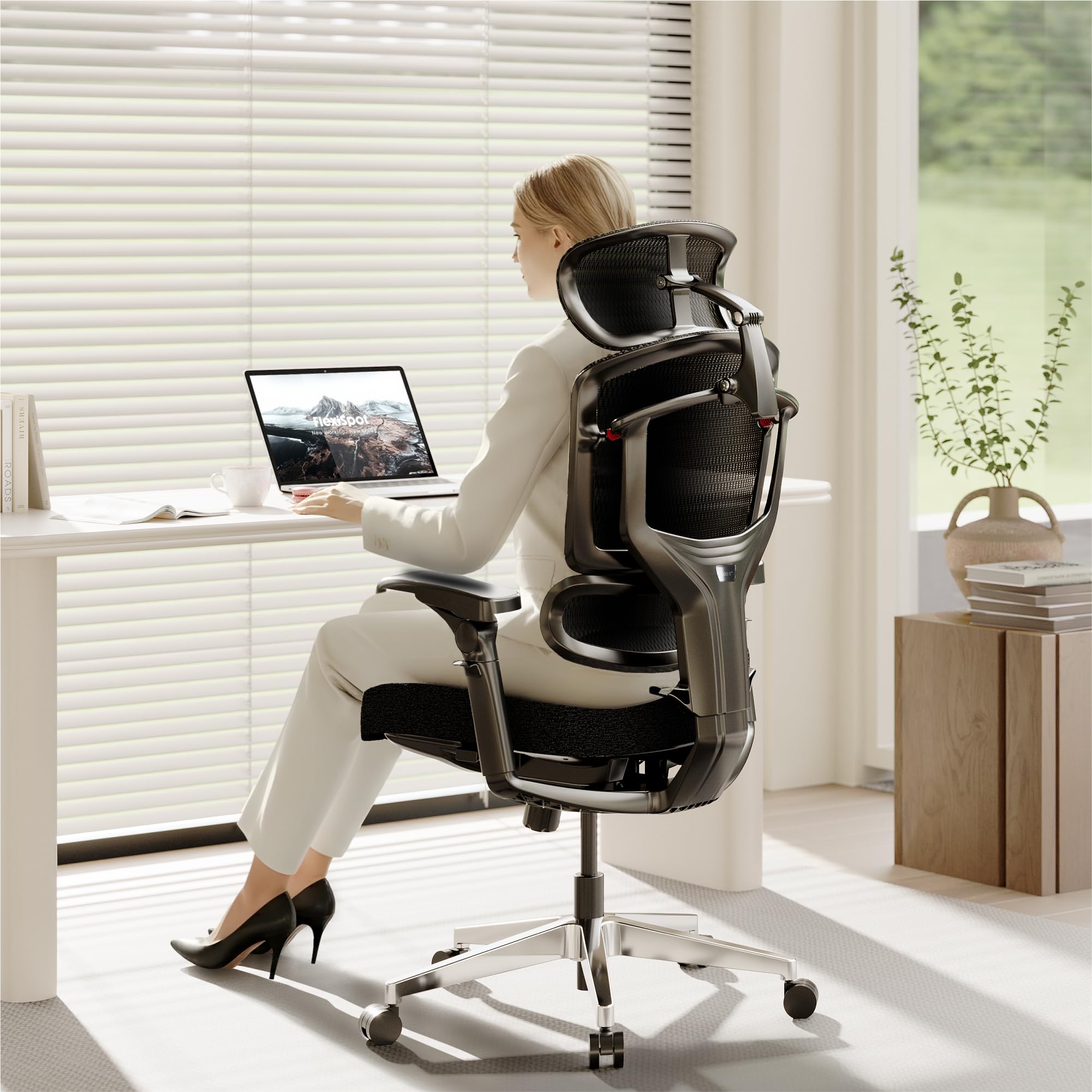
The top-tier FlexiSpot with a lumbar that extends forward and back to keep continuous support as you shift.
If the ErgoX only moves its lumbar up and down, the ErgoX PRO is the version that gives you depth. Its 5D lumbar extends forward and back to maintain continuous support against your lower back, and the 4D 2-in-1 headrest adapts to different heights to support your neck or upper back. That forward-and-back lumbar travel is exactly the control an irritated SI joint benefits from, because you can match the support to the amount of pressure your lower back can take on a given day.
The PRO also jumps in build and adjustability. The 7D linkage armrests move with your body through every posture, so your arms stay supported whether you’re typing, reclining, or gaming. The backrest has 12 fine-tuned levels with spring cushioning, and the 3-position tilt base locks at 90°, 115°, and 135°. You choose between a CloudTech cushion for plush comfort or AeroWeave 5.0 mesh for airflow. A reinforced nylon-and-fiberglass frame and lightweight aluminum base support up to 551 lbs on a Class 4 lift — a substantially higher capacity than anything else on this list.
Two things to know. This is the priciest chair here, so you’re paying for the higher capacity and the finer adjustment range. And, like its sibling, the lumbar travel is the headline. If you need the lumbar to press in and out but not a deep cushioned seat, the CloudTech option may feel soft while the mesh option may feel firm. At 4.0+ stars across 350+ ratings, it’s the pick for heavier users or anyone who wants the most granular posture control and can spend on capacity.
Why it leads on capacity: A 551 lb weight limit on a reinforced nylon and fiberglass frame with an aluminum base and a Class 4 lift — the highest on this list.
The honest trade: It’s the most expensive chair here, and its value is concentrated in the adjustable lumbar travel and the capacity headroom.
Best for: Heavier users and buyers who want adjustable lumbar travel plus fine-grained recline and armrest control.
Look at the mid-range picks if: You want depth-adjustable lumbar support without paying for 551 lb capacity you’ll never use.
9. Steelcase Series 1 Office Chair
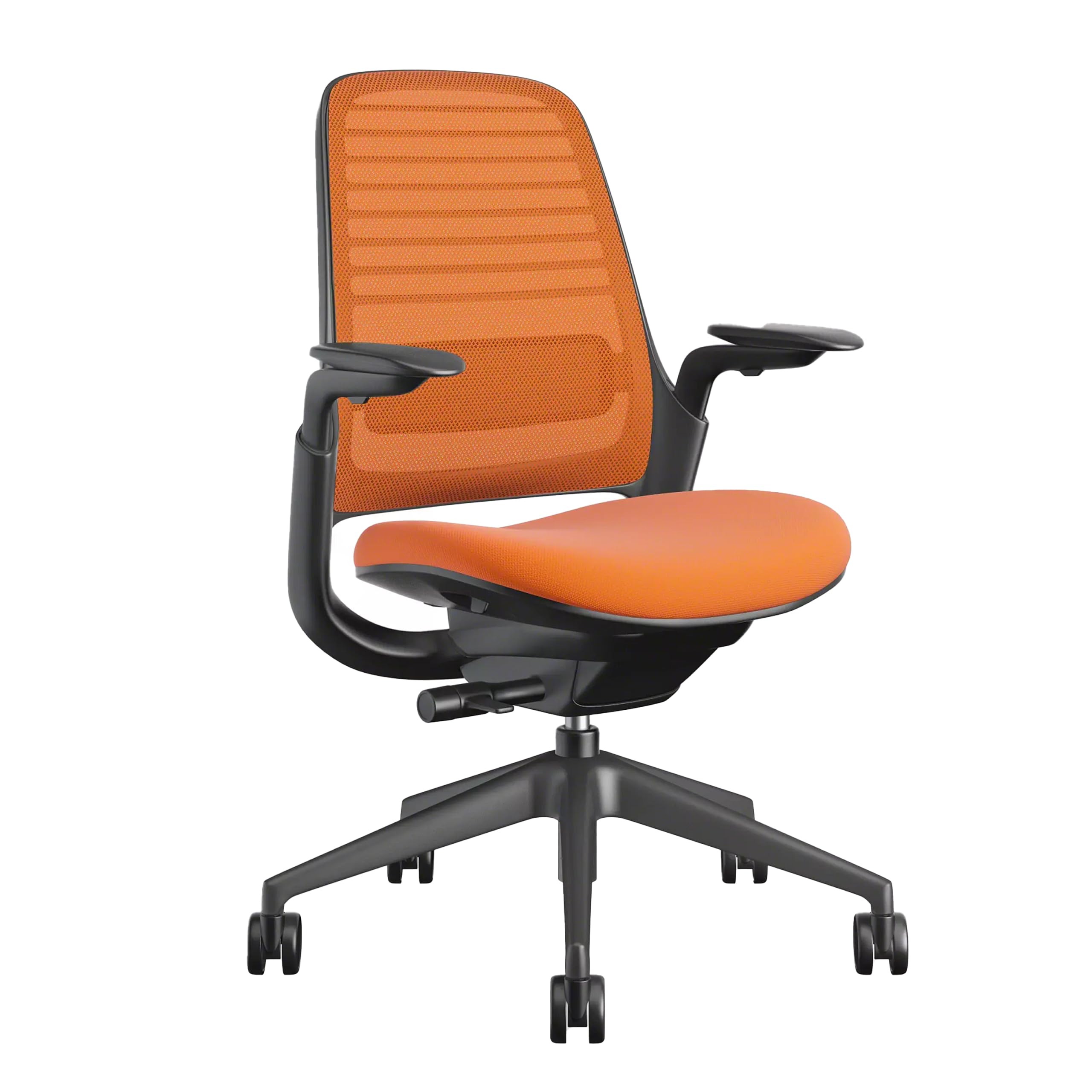
A weight-activated chair that adapts to your body as you lean back, and assembles in under two minutes.
The Series 1 leans on weight-activated controls — tilt the seat back and the chair responds to your weight and movement instead of asking you to turn a knob. The brand states the chair delivers essential ergonomics and quality at a good value, with optional 4-dimensional arm support, an adjustable headrest, and additional back support for a pressure-free sit. For someone whose SI joint reacts differently day to day, controls that respond to your body rather than a preset can be easier to live with.
This version ships with hard-floor casters and comes in tangerine. The backrest is solid, the flexible edges and adaptive bolstering in the forearm area aim for a pressure-free sit, and the chair assembles with no tools in under two minutes — the quickest build here. Owners describe it as highly adjustable on height, recline, lumbar, seat depth, and 4-way arms, with a mesh back that stays cool and a padded, supportive seat that fits both 5’3″ and 6’3″ users.
The honest limits are specific. The value-for-money and construction aspects draw mixed reactions, and there’s a recurring note that the armrest pads slide and don’t lock. Some owners treat that sliding as a helpful feature for their arm position, others find it annoying. On the caster front, at least one buyer received carpet casters despite ordering the hard-floor version, so confirm your floor type is the one you selected. At 4.0+ stars across 200+ ratings, it suits buyers who want a well-known ergonomic brand, minimal assembly, and weight-activated rather than manually dialed support.
The case for it
- Weight-activated controls adapt to your body as you lean, instead of fixed preset settings
- Optional 4-dimension arm support and an adjustable headrest are available on this model
- No-tool assembly in under two minutes — the fastest setup here
What to watch
- The armrest pads slide and don’t lock, which some owners find distracting
- Value-for-money and construction aspects draw mixed reactions
- Confirm you receive the hard-floor casters you selected
Best for: Buyers who want weight-activated ergonomics from a known brand and the fastest, tool-free setup.
Skip if: You want armrests that lock in place or you need a specific lumbar depth adjustment.
Know the Specs
Lumbar adjustment: depth vs height
Lumbar depth is how far the support presses in or out against your lower back. Lumbar height is how far up or down it sits. For sacroiliac support, depth matters most — a support that can move in and out lets you keep the curve of your lower back against the chair without pushing your pelvis forward. A support that only moves up and down (like the FLEXISPOT ErgoX) still helps, but you can’t fine-tune the pressure. This is why the ELABEST X100’s three-axis lumbar and the Newtral’s auto-following piston are the top options here.
Seat height range and weight capacity
Seat height range is the span between the lowest and highest the seat will go. A wider range fits more body types: the TRALT’s 17.7″ to 21.7″ suits roughly 5’4″ to 6’2″, while the HOMRELEXA starts higher at 18.9″. You want your feet flat on the floor and your thighs level. Weight capacity tells you how much the chair is rated to hold and how heavy-duty its gas lift and base are. The FLEXISPOT ErgoX PRO tops out at 551 lbs, and several picks here are rated to 400 lbs. Pick a capacity above your own weight so the lift holds your settings.
Common Questions
What chair feature actually helps sacroiliac joint pain?
Will a chair with a firm mesh seat or a plush cushioned seat be better for my SI joint?
How do I know what seat height range will fit me?
Does a reclining back help with sacroiliac discomfort?
What weight capacity should I look for if I am a heavier user?
Is a headrest necessary for lower-back comfort?
Will the adjustable lumbar on a mid-range chair hold its setting over time?
Can I sit cross-legged in an office chair, or do I need a special one?
How hard is it to assemble one of these chairs, and do I need tools?
Does a footrest make any difference for my lower back?
The Bottom Line
For most people, the office chair for sacroiliac problems winner is the ELABEST X100 because its 3D auto-tracking lumbar adjusts in depth, height, and rotation so you can match support to your lower back instead of forcing one fixed position. If you want real lumbar depth adjustment on a tight budget, grab the TRALT Office Chair. And for moving from one room to another, or for a heavier build and more lumbar travel, the FLEXISPOT ErgoX PRO is the one to reach for.
One practical nudge before you pick: the ELABEST X100 sits on a strong rating across a large pool of owners, and its adjustability is the reason. Set your seat height so your feet rest flat, dial the lumbar depth until your lower back feels supported rather than pushed, then start with the flattest recline angle you can tolerate. If your SI joint is newly irritated and your budget allows it, spend on the chair with the widest lumbar-control range you can find. The ELABEST X100 and FLEXISPOT ErgoX PRO lead here, while the TRALT gives you the depth adjustment at the lowest cost. Whatever you choose, give your body a week of small adjustments before deciding it isn’t working.
How we choose
We do not accept paid placement. Every pick is matched to a real buyer and a real use-case; we do not hands-on test units.
Sources
Specifications: manufacturer listings and product documentation. Review insights: verified customer reviews, as of October 2026. Pricing: not shown on this page (it changes often); check the current price via the retailer link.
As an Amazon Associate, Aappliancez earns from qualifying purchases. This does not affect which products we feature.