Disclosure: Some links in this post are affiliate links. As an Amazon Associate I earn from qualifying purchases, at no extra cost to you. Learn more
Specs are compiled from manufacturer listings and verified buyer reviews and can change over time — please confirm the key details on the product page before buying.
Crossing your legs at a desk sounds harmless until the seat fights back. On a normal task chair, your knee hits the armrest, your foot dangles, and your tailbone takes the load. The fix is a chair with flip-up or fold-out arms and a seat wide enough to tuck both legs up. This guide covers nine chairs built for exactly that, with the honest trade-offs you only find after hours in the seat.
This guide is built by comparing the manufacturers’ published specifications and the patterns across verified customer reviews, so you get each pick’s real strengths and trade-offs instead of marketing spin.
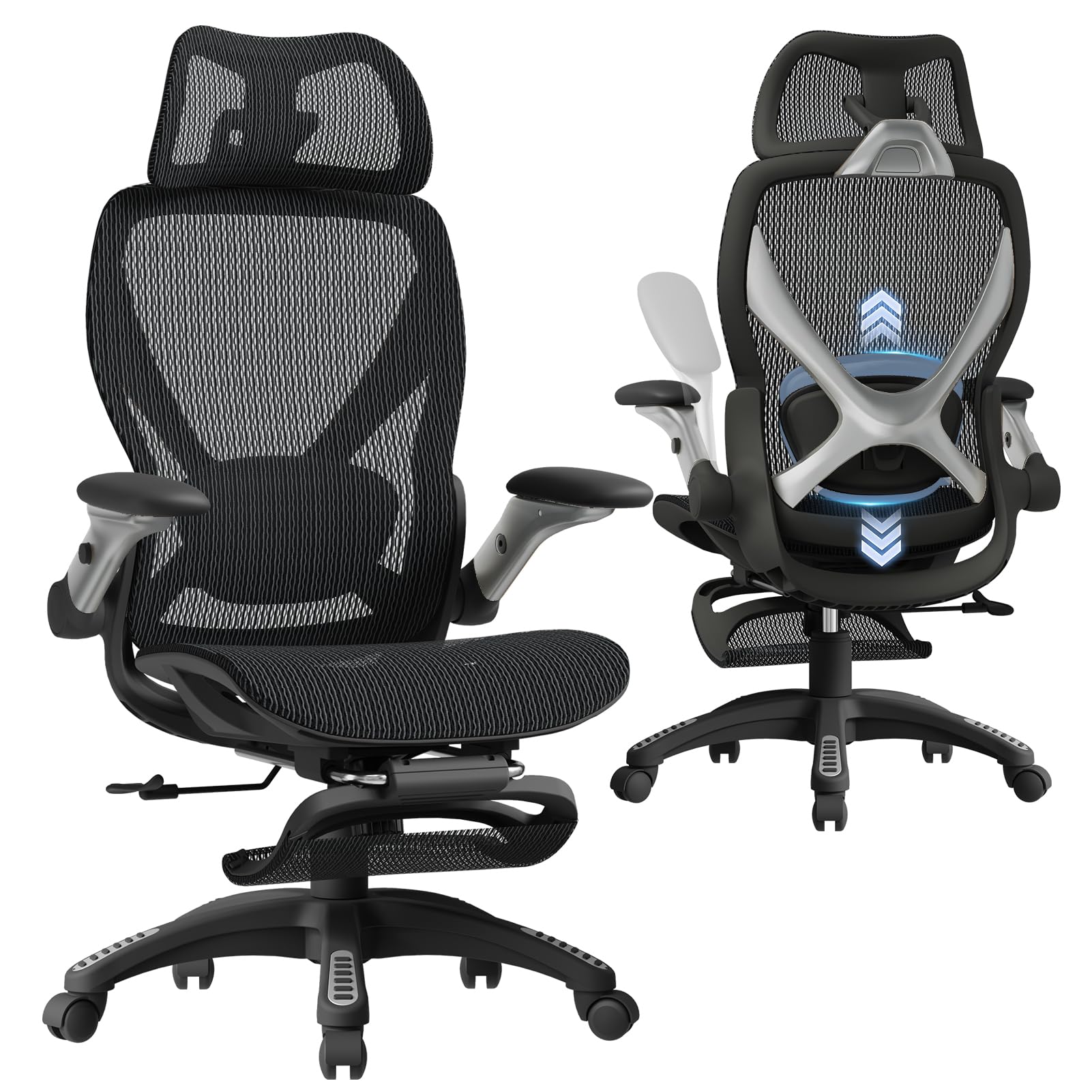
The ELABEST X100 leads the list because its arms flip up, its lumbar floats, and it holds up to 300 lbs — my pick for an office chair for crossing legs.
Top Picks
How To Choose The Best Office Chair for Crossing Legs
Most desk chairs are built for one posture: feet flat, knees at 90 degrees. Tuck one leg under you and the whole design turns against you. The armrest digs into your thigh, the seat edge cuts off circulation, and your hip starts to ache within the hour. Choosing well means checking four things in order: armrests, seat width and depth, seat height, then cushion firmness.
Start with the armrests, because they free the seat
The single most useful feature is an armrest that moves completely out of your way. A flip-up armrest rotates upward 90 degrees so the seat has no side wall. On some models the arm also swivels outward and expands the open width dramatically. On the GABRYLLY, flattening both arms takes the seat from 21.6” to 48.8” of usable room. If your arms are fixed in place, no amount of cushioning will let you sit comfortably cross-legged for long.
Match seat width and depth to how you sit
Width tells you whether both legs fit side by side. Depth tells you whether your back gets support when you shift your hips forward. A deep seat can feel great with feet down but forces you to perch when you tuck a leg up. The GABRYLLY runs a 21.6” wide, 5.9” deep cushion; the TRALT runs 20” wide by 17.3” deep. Shorter sitters should favor shallower seats, while taller sitters need more depth for thigh support.
Check seat height against your leg length
Seat height decides whether your feet reach the floor — and whether your knees clear the underside of your desk when they are folded. The ELABEST adjusts from 18.3” to 23”. FLEXISPOT adjusts 20.1” to 22.4”. A taller seat can be fine if you use a footrest, but a seat that sits too high leaves shorter sitters with dangling feet and a numb edge behind the knees.
Decide between a firm task seat and a soft lounge seat
Soft cushions feel wonderful for the first hour and can bottom out over a long day. Firm, high-density foam keeps your hips lifted from morning to evening but may feel unforgiving at first. The BEASTIER’s foam sits over 16 pocket springs, while the FLEXISPOT lets you pick a mesh seat for airflow. Pick soft if you recline and shift constantly, and firm if you type upright for long stretches.
Side-by-Side Comparison
| Model | Best For | Arm Style | Seat Width | Weight Capacity | Amazon |
|---|---|---|---|---|---|
| ELABEST X100★ Best Overall | Best all-round pick | 5D flip-up | 20.2″ (backrest) | 300 lbs | Amazon |
| FLEXISPOT ErgoXBest for Tall Sitters | Tall sitters | 3D adjustable | 19.7″ (backrest) | 400 lbs | Amazon |
| FelixKing Flip ArmrestMost Versatile | Everyday value | 5-gear flip-out | 22″ to 46.5″ | — | Amazon |
| Bestier Criss Cross | Style-forward rooms | 5-level flip-up | — | — | Amazon |
| GABRYLLY Cross-Legged | Widest open seat | 5-lock fold-flat | 21.6″ to 48.8″ | 300 lbs | Amazon |
| Branch Verve | Design-led offices | Height-only | — | — | Amazon |
| Haworth Soji | Ships assembled | 4D adjustable | — | 350 lbs | Amazon |
| TRALT Ergonomic | Tight spaces | Flip-up | 20″ | 330 lbs | Amazon |
| HOMRELEXA Big and Tall | Heaviest users | 90°-180° flip | 22.8″ to 38.6″ | 400 lbs | Amazon |
Detailed Reviews
1. ELABEST X100 Ergonomic Mesh Office Chair with Footrest
Our pick — 4.5+★ from 1,500+ verified ratings; the strongest balance of quality and price.
Arms that fold up and a lumbar that floats — this is what a cross-legged chair looks like done properly.
Six separate directions of arm movement and a 300 lb capacity make the ELABEST X100 the most complete answer on this list. The 5D arms adjust in height, width, forward, backward, and rotation, then flip up 90 degrees to clear your legs. That flip matters most: for once, you gain room without buying a wider chair. The seat height runs 18.3” to 23”, a broad span that covers both short and tall sitters. Assembly takes around 15 minutes with the included tools.
The lumbar is not a fixed pad but a spring-loaded piece that tracks your lower back through ±1.6” of depth, ±2” of height, and 15 degrees of rotation. Your spine stays supported when you lean back, and the support holds. A 3-stage recline pairs with an 18” extendable footrest set at two angles. The mesh back uses a dual-stripe weave the maker claims moves 38% more air than standard mesh, which in a warm room means a back that doesn’t turn damp.
What buyers highlight most is the overall build quality, followed by how quickly the box turns into a working chair. Sizing comes up in a good way: a 5’4″ customer called the headrest and lumbar “near perfect” and found it fits in a lot of sitting positions including cross-legged. One trade-off worth knowing — the armrests and footrest flex a little when you lean hard on them, so treat them as support, not as a place to push off. A few owners also received free rollerblade-style casters from the manufacturer after asking.
What wins people over
- 5D arms flip up so the seat opens up completely under your legs
- Spring-loaded 3D lumbar adjusts depth, height, and rotation
- 18” extendable footrest with two angle positions
- 300 lb BIFMA-certified structure with a Grade-4 gas column
Where it asks for care
- Armrests feel springy under heavy downward pressure
- Headrest doesn’t move forward toward your neck
- Assembly runs longer than the posted 15 minutes for some
Pick this if: you want one chair that works upright, reclined, and cross-legged without adding furniture.
Think again if: you need a headrest that pushes forward — this one is fixed in that axis.
2. FLEXISPOT ErgoX Premium Ergonomic Office Chair
The 400 lb limit and stretch-out adjustability make short work of long sittings.
If you are big, tall, or both, capacity decides the shortlist before anything else. The ErgoX carries a max weight limit of 400 lbs, the highest here alongside the HOMRELEXA. Its seat depth slides from 17” to 20” and its height from 20.1” to 22.4”, sized for users between 5’1″ and 6’2″. A 3D headrest and 3D armrests let you fine-tune where pressure sits on your neck and forearms. There’s a nap footrest tucked underneath too.
Ordering this one means making a small choice first: a mesh seat for airflow or a cushioned foam seat for a softer base. The mesh version has the edge if you run warm through the day. A dynamic lumbar pad and a 5-level back adjustment let you dial in where the support lands. The class 4 gas lift is rated for the kind of daily cycling a home office chair sees.
Comfort is the strongest theme in what owners write about the ErgoX, with back support right behind it. A 5’2″ owner raved that the padded footrest exceeds expectations and fits right. The recurring honest note is adjustability: the armrests move easily but the lumbar only goes up and down. Assembly is straightforward but step one takes care, and a couple of units arrived with a stripped armrest insert.
Where the ErgoX earns its spot: huge occupant range, real capacity headroom, and a footrest that’s padded rather than token.
What to accept: lumbar is vertically adjustable only — it won’t push in toward your lower back.
Fits best for: those at the upper end of normal height or weight who need headroom.
Less suited to: fans of a lumbar pad that tracks in and out — this one slides up and down only.
3. FelixKing Office Chair, Flip Armrests for Criss Cross Legged
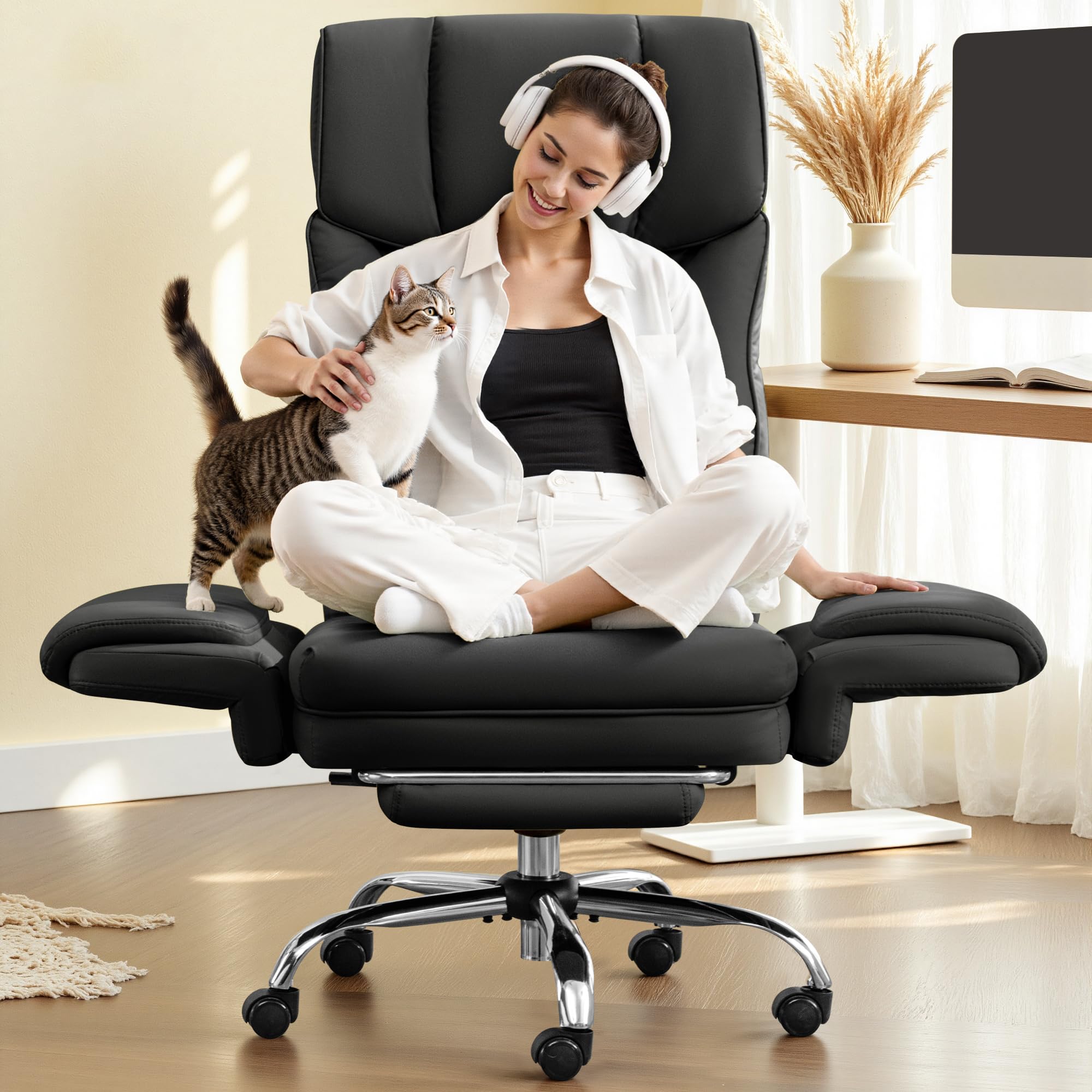
Swing the arms outward and a 22-inch seat becomes a 46.5-inch bench under your legs.
FelixKing takes the flip idea further than most: the armrests swivel outward 90° rather than just folding up, widening the seat from 22 to 46.5 inches. That is a lot of room for cross-legged, kneeling, or reclined sitting. The foam cushion sits over a spring core, so it holds up rather than flattening into a board. The PU leather cover is waterproof and low-fuss to clean, which helps if you have a cat that treats your chair as a bed.
There are three tilt settings from 90° to 135° with an extendable footrest for the deeper recline. Swivel and height work as you’d expect, and the wide steel base sits firm. Assembly runs 15-25 minutes with the included fittings. The black faux-leather look suits a home office without shouting for attention.
Size and comfort are what buyers talk about most, and both land well for most. A 5’3″ owner wrote that the seat depth is right and the tall back reaches the neck. The honest gripe: the seat cushioning divides opinion, and a few sitters found it soft rather than firm. One 5’7″ owner at 260 lbs still loved it but noted legs dangle over the front edge when fully cross-legged.
What the arm widening buys you: a genuinely cavernous surface without a bigger footprint — great when legroom is the whole problem.
The caveat to weigh: if you lean firm and plush feet-on-floor comfort matters as much as crossed-leg room, check cushion firmness first.
Reach for this if: you shift between criss-cross, kneeling, and reclining throughout the day.
Hold off if: you need a very firm, high-density seat — cushion feel splits opinion here.
4. GABRYLLY Ergonomic Chair with Footrest, GY82766
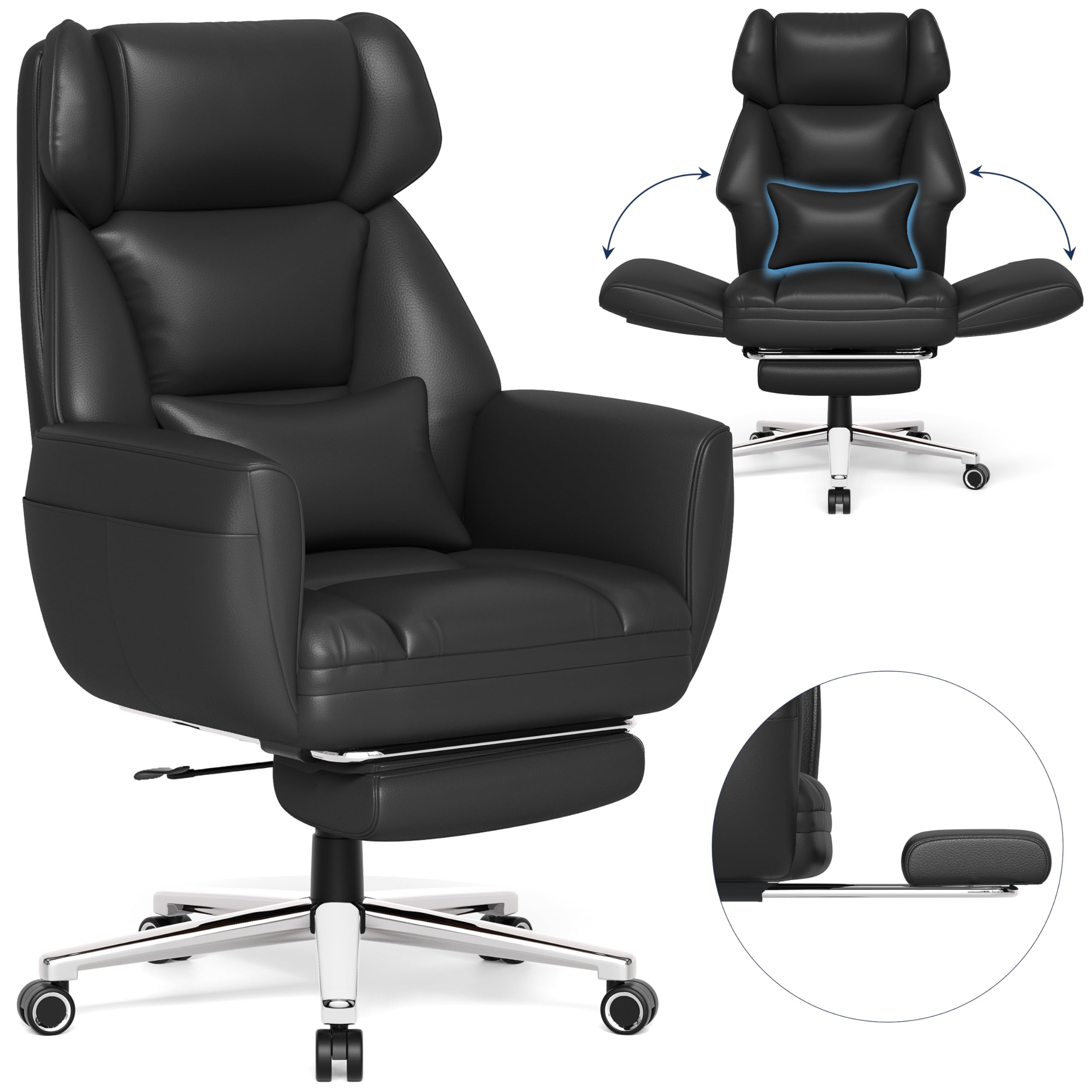
A wardrobe in chair form — four seating modes that shift from cross-legged to executive.
The GABRYLLY markets itself hard at cross-legged sitters, and the mechanics back it up. Its armrests lock in five positions, and flattening both widens the seat from 21.6” to 48.8”. You get a 5.9” thick seat depth and a 21.6” width, so the cushion presents a lot of surface. A retractable footrest adds a stretch option for lounging, and a 120° recline in three settings covers many sitting styles. The spec sheet lists 300 lbs and a user range of 5’2” to 6’5”.
Finish-wise, PU leather over a metal base gives it an executive look that blends with wood or glass desks. Water-resistant upholstery means a quick wipe takes care of most spills. Assembly lands at 25-30 minutes with everything included.
Its stand-out is appearance — owners describe a chair that makes a home office look intentional, with comfort running close behind. The arms fold down so cross-legged sitting works without leaning sideways. The mixed reports are worth facing head-on: a few sitters found the arms and gas column didn’t hold up under heavy use, and the value-for-money score is split. A 5’3″ owner with a roomier seat noted the fold-down cushioned arms as the best feature.
The case for the GABRYLLY
- Arms flatten to a 48.8” open width for generous legroom
- Retractable footrest and 3-position recline in one package
- Soft, water-resistant PU leather keeps it easy to clean
Where it can trip you up
- Some units developed arm or gas-rod issues under daily use
- Owners disagree on whether the chair is worth its price
Worth considering if: you want a home-office look and a genuinely huge cross-legged surface in one chair.
Less ideal for: sitters who need proven long-term arm durability under heavy daily use.
5. Bestier Criss Cross Chair with Flip-Up Armrests

Sofa-like seating with a pocket-spring cushion that keeps your hips from sinking into nothing.
Bestier took a different route: it softened the seat rather than widening it. The cushion stacks doll cotton, foam, and 16 independent pocket springs that push back to keep your hips lifted. The 5-level armrests flip up 90° so you can tuck legs sideways or sit crossed. The high back rest closes into a 135° recline for shorter breaks. The dark Dutch velvet upholstery covers the padded backrest and slightly springy seat.
Two side pockets hold a phone or controller, which keeps a small room tidier. The 100 mm gas lift adjusts the height so elbows hit your desk line. A BIFMA-tested base gives the rolling setup some reassurance under daily swiveling and leaning. The fabric feels soft against bare legs, and black hides pet hair better than a lighter weave would.
Appearance leads what buyers report here — it’s a chair that makes a setup look finished. Comfort sits right alongside, and a 5’8″ owner praised the fold-down arms and cloud-like padding for reading. The honest trade-off: seat height at 19.5″ left one shorter owner’s feet off the floor, and a built-in pillow suits some body types better than others. The adjustable armrests also drew mixed notes about whether they raise high enough.
What makes it different: the pocket-spring build gives it a living-room feel that firm task chairs can’t match.
Know before you buy: if you’re on the shorter side, plan for a footrest under the 19.5″ seat.
Go for it if: you spend your breaks reclining and want a chair that reads like decor.
skip it if: you need a lower starting seat or rocker movement — neither is on the menu here.
6. HOMRELEXA Big and Tall Office Chair, Flip Armrests
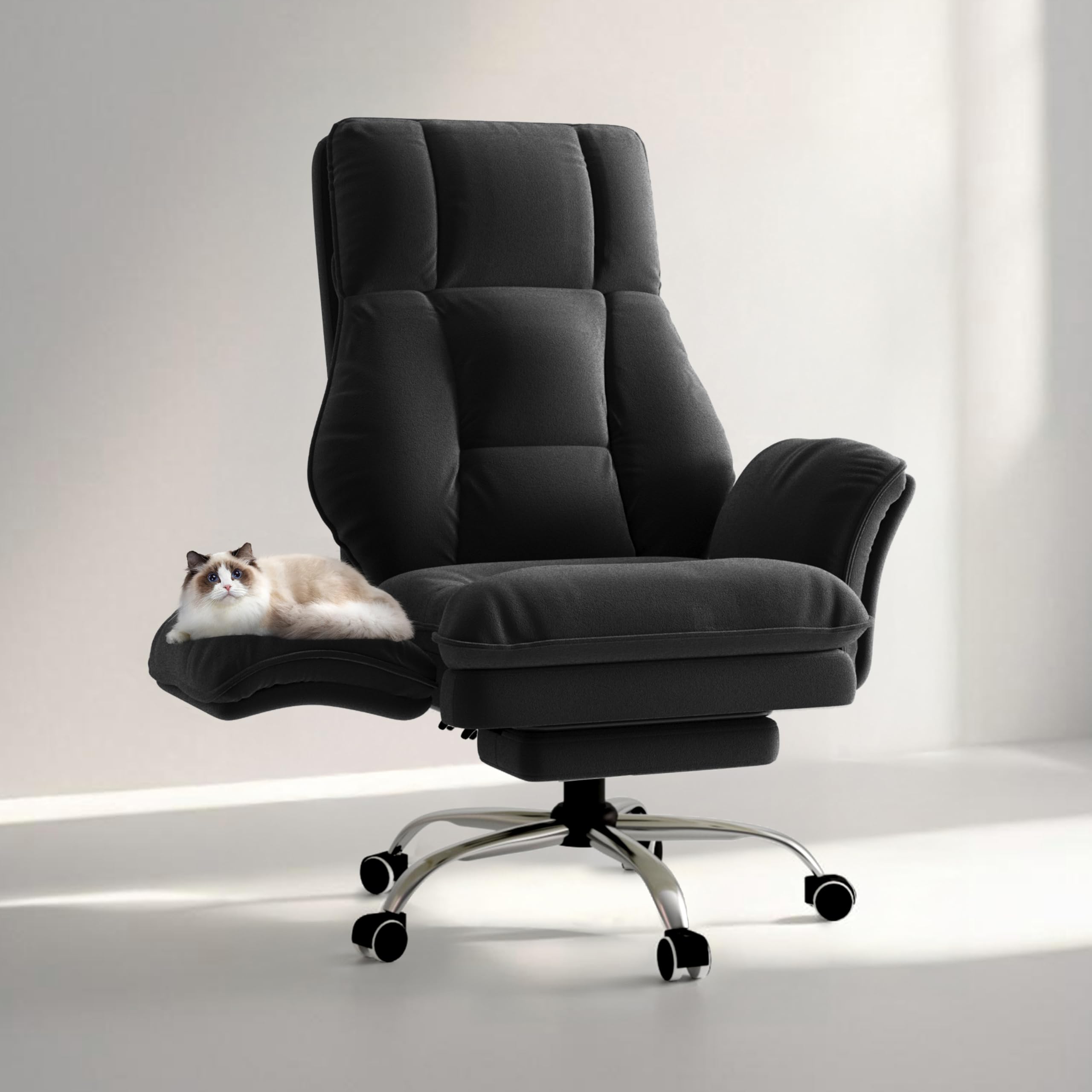
For the heaviest sitters: 400 lbs of support with arms that swing out to nearly 39 inches.
The HOMRELEXA is built for big and tall occupants first. It holds up to 400 lbs — level with the FLEXISPOT — and its armrests swing from 90° to 180° to expand the seat from 22.8″ to 38.6″. Push the arms inward before flipping them out; it’s a small technique that saves you a pinch. Its coil comfort layer is thick sponge layered over foam so weight spreads across the seat while you sit cross-legged through longer sessions. Assembly is around 15 minutes with hardware included.
The base is a BIFMA-approved metal footing with an SGS-certified gas cylinder pulling the height up and down. Two fabric options exist: crystal velvet for a plush look, or a distressed tech fabric that resists scratching. A 360° swivel and a recline round out the seating options. The 20.5” backrest width gives broader shoulders somewhere to rest.
Comfort leads the conversation about this chair, with assembly close behind. It reads to owners as a deliberate cross-legged option rather than a repurposed task chair. The mixed reports are about long-session softness and back support — some found the padding a little thin for a full workday, and one owner said the seat held up at 2.5-3 months of regular use. If you want plush padding for full workdays, sit in one before you commit.
Its real strength: the weight ceiling and opening mechanism combine to make this the roomiest pick for larger bodies.
Its limit: long, unbroken sessions may have you adding a cushion for extra lower-back support.
Right choice for: bigger, heavier sitters who want a lot of open width at an entry-level tier.
Wrong choice for: anyone wanting a firm, deeply cushioned seat for eight uninterrupted hours.
7. TRALT Office Chair Ergonomic Desk Chair
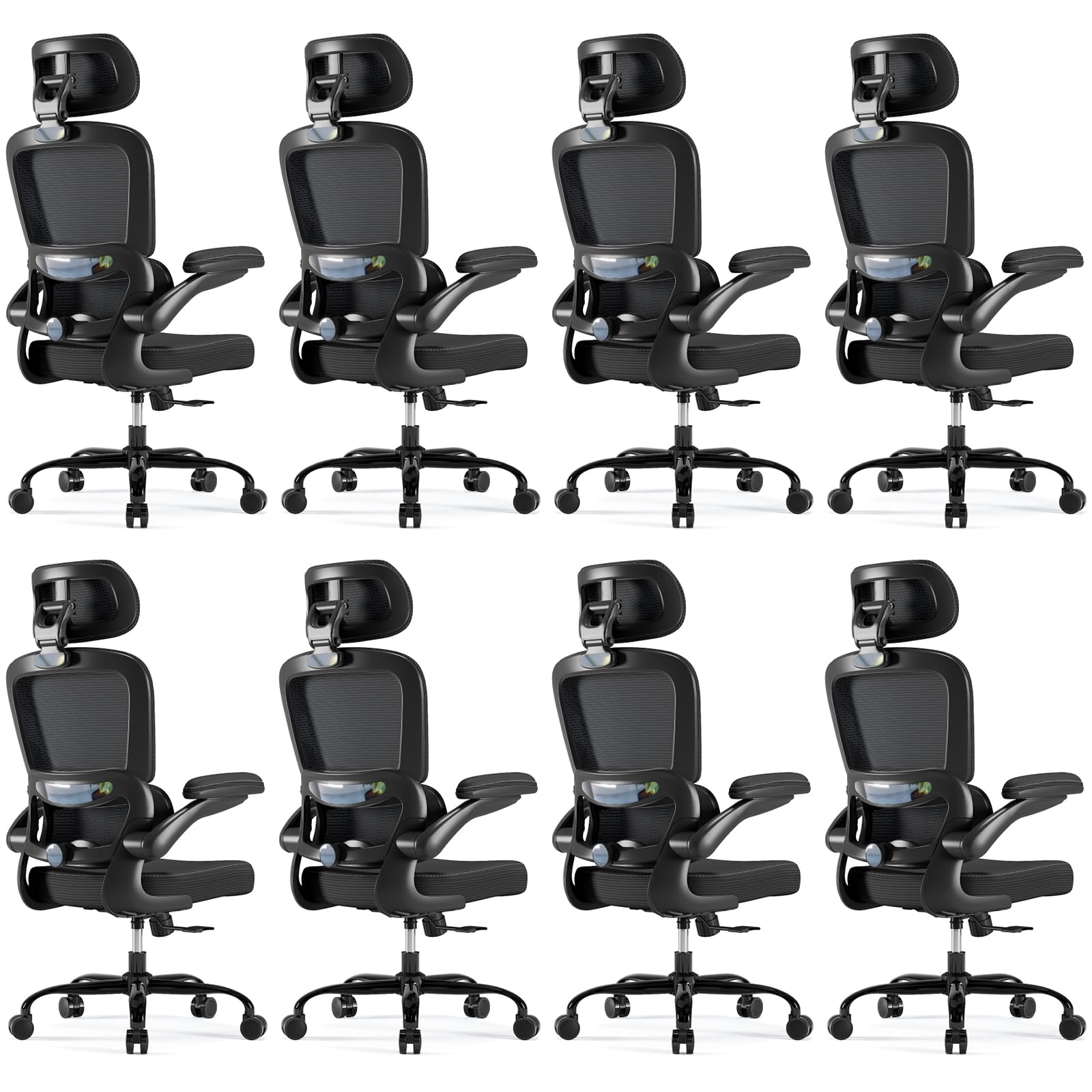
A tucked-away seat that folds down under a small desk and still fights above its weight in support.
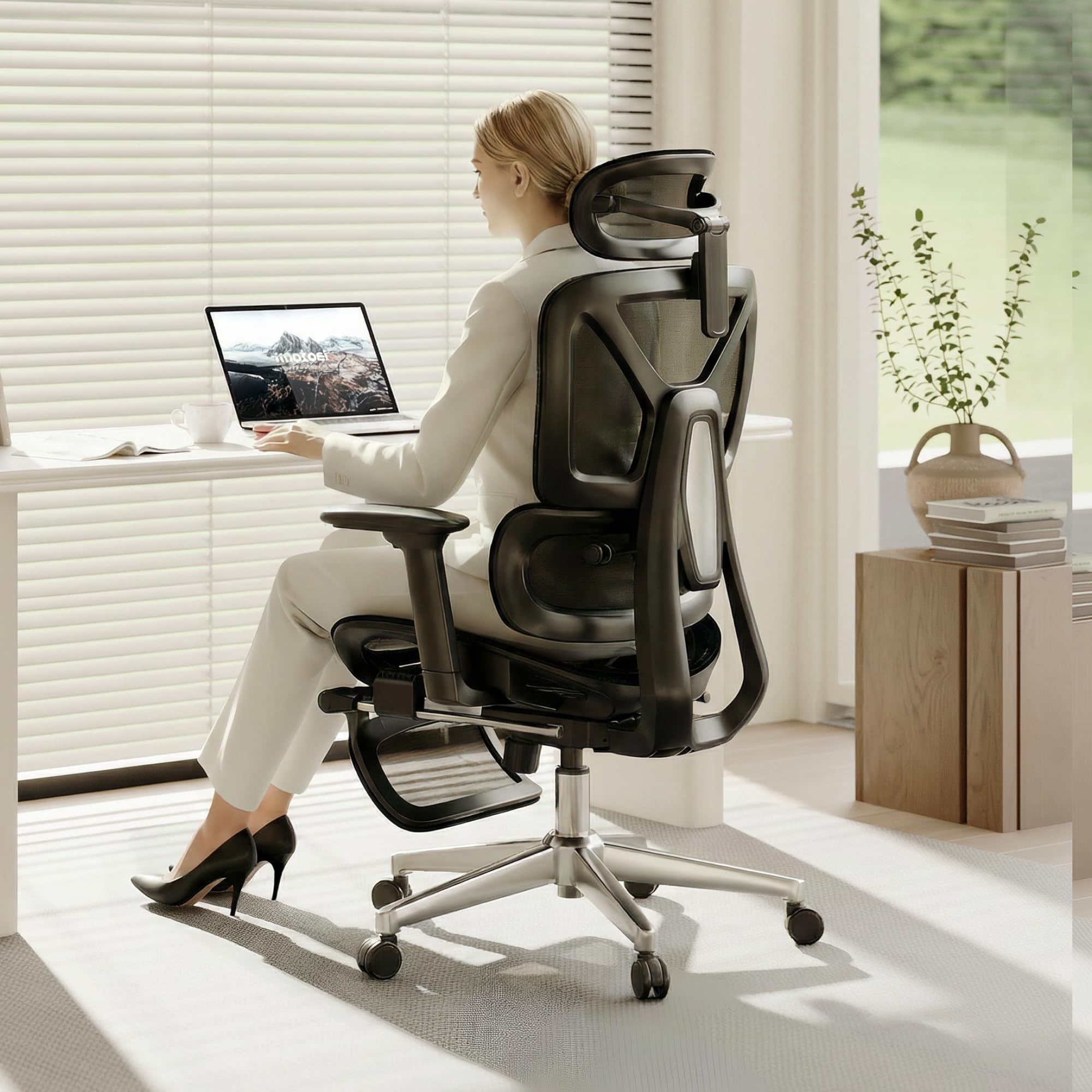
TRALT solves small-room problems, and it does so honestly. The flip-up armrests lift out of the way so the chair pushes cleanly under a normal desk. The seat itself is 20” wide by 17.3” deep, with an adjustable height from 18.5” to 21.3”, sized roughly for sitters of 5’5″ to 6’2″. A 3.5-inch high-density sponge cushion balances softness against sag, so it holds shape past the first hour. The leather seat is skin-friendly and wipes down quickly.
Weight capacity runs to 330 lbs on a metal base with a Class-3 gas lift — a grade above entry-level. The castors roll quietly without marking the floor, and 360° swivel makes multi-screen days easier. Assembly takes 25-30 minutes, longer than some here. TRALT also keeps a 5-year warranty and a 24-hour response line.
The mesh back and breathable foam help a warm room feel less stuffy. There isn’t a footrest or a lumbar pad in the box, so this is the pick for someone who mainly wants a smaller footprint. Just be aware — for taller sitters near 6’2″, the seat depth is on the shorter side; you’ll want to try it before committing if you regularly sit cross-legged and have long thighs.
Small-footprint logic: flip-up arms and a modest seat make this the easiest chair here to tuck under a desk.
What it lacks: no footrest and no lumbar pad — it’s a lean, simple setup.
Strong fit for: compact rooms and short-to-average sitters who value a clean footprint.
Not the one for: tall sitters with long thighs who cross both legs at once.
8. Branch Verve Chair, High Performance Executive Office Chair
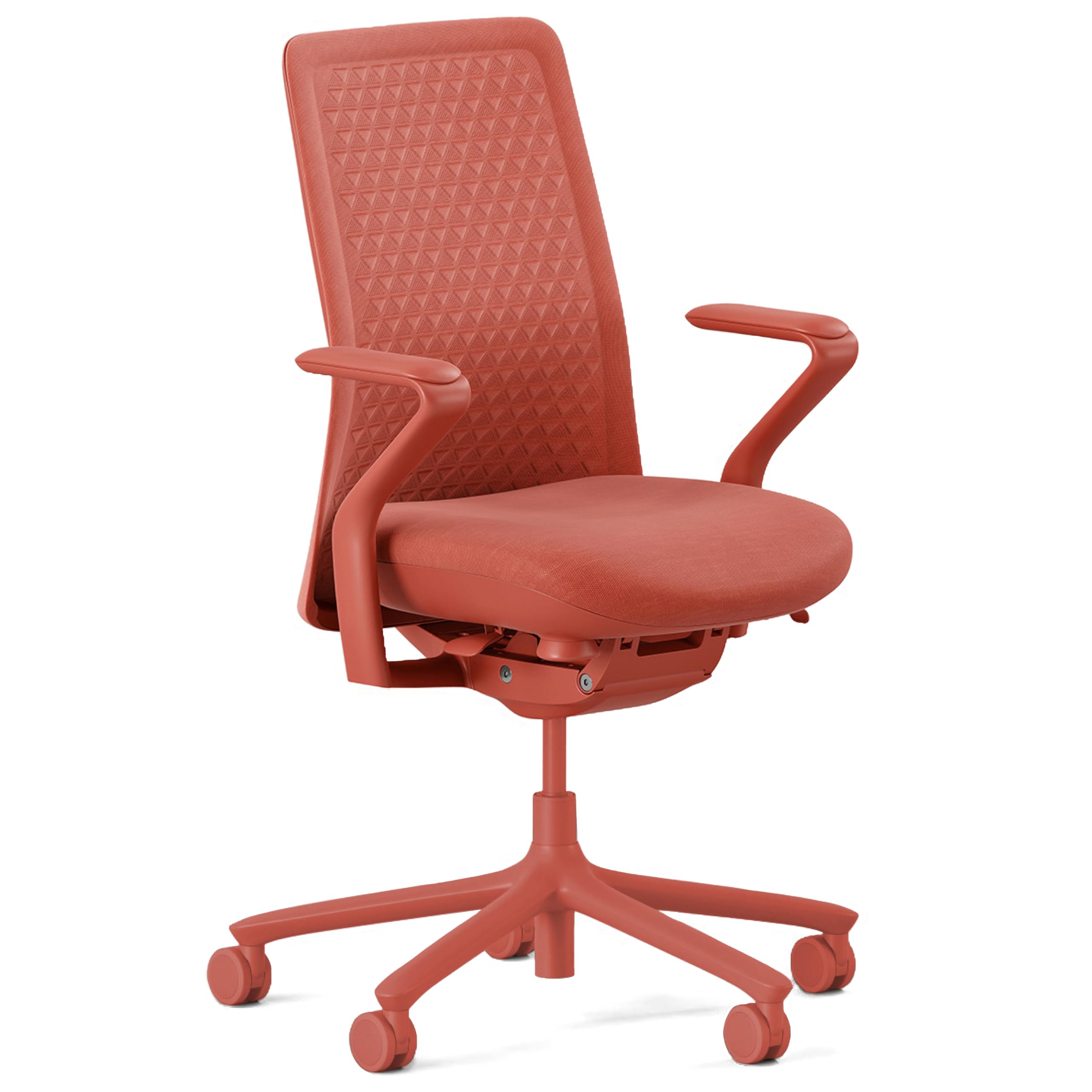
The chair that looks like furniture first and a task chair second — with sculpted back support as the payoff.
Branch Verve is aimed at people whose office doubles as a living room. Its sculpted V-shaped suspended back gives built-in spine support that adjusts to your posture without a protruding lumbar pad. The 3D knit back lets air through so you stay cooler through a long day. Six adjustment points cover seat height and depth, tilt and tilt lock, lumbar height, and armrest height. The aluminum frame and powder-coated finish hold up well to everyday furniture wear.
This is a designed chair, not a spec sheet. Owners mention the armrests as either a favorite detail or a source of friction — they’re height-only, so you can’t push them out of the way for a fully cross-legged sit. The seat also lacks a tilt function (only the back reclines), which limits how far you can lean back without a lumbar shift. On the plus side, the contoured foam seat is genuinely wide.
Buyers praise the build quality first, with sturdiness close behind. One 5’7″ owner says it fits “like it was made for me.” The size caveat runs the other way: a taller owner at 6’2″ and 220 lbs found it uncomfortable at their frame, while a 5’1″ sitter noted feet barely reach the floor at the lowest height. If you sit at either height extreme, try one in person first — return shipping on a fully assembled chair is a chore.
Why it earns the design label: it’s an attractive chair that reads as decor, and the sculpted back gives real posture feedback.
The honest caveat: height-only armrests and a seat that doesn’t tilt make it less flexible for cross-legged work than the flip-up picks above.
Made for: design-conscious buyers who want a sculpted posture chair that looks good in a living space.
Look elsewhere if: you need armrests out of the way or a tilting seat for long crossed-leg sittings.
9. Haworth Soji Ergonomic Office Chair with Mesh Back

Arrives fully put together, and the 4D armrests move in every direction you can name.
Haworth Soji sidesteps the assembly ritual entirely — it arrives fully assembled, so all you do is wheel it in. The 4D armrests adjust in height, depth, pivot, and width, giving you fine placement wherever your arms land. The mesh back flexes with movement rather than holding you rigid, and the seat height, depth, back lock, and tilt tension all move independently. The 350 lb capacity and aluminum frame give you a sturdier footing than the compact picks above. A 12-year warranty sits behind all of it.
Certifications matter to some buyers: the Soji is GREENGUARD Gold and BIFMA Level certified, built with up to 23% recycled content and up to 94% recyclable materials. That’s a genuine point of difference for people who check where their furniture came from. The trade-off is a fixed back angle and no forward tilt on this model, so the recline range is a bit narrower than a synchro-tilt chair.
Quality leads the praise here, with a few sitters naming the lumbar support and cushioned seat as comfortable for hours-long sessions. The armrests have a wide range of positions. The mixed notes: the lumbar’s contact can feel weak for the money, and the plastic brace flexes into the backrest rather than staying still. The armrests also don’t lock, so they can shift when you lean on them.
The standout: no assembly at all, plus a 12-year warranty and full 4D arm adjustment.
The caution: if you want a forceful lumbar push or a fully locked armrest, the Soji trades some of that for adjustability range.
Reach for it if: you want to unbox and sit, with a long warranty backing the decision.
Consider another pick if: you need aggressive lumbar pressure or armrests that stay locked when leaned on.
Know the Specs
Armrest range and flip angle
This is the make-or-break spec for crossing legs. A flip-up arm rotates 90° upward to clear your legs. A swivel arm goes further, opening the seat surface from 22″ up to 46.5″ on some chairs. Fixed and height-only arms block a cross-legged sit entirely. Before you buy, check whether the arm moves in the axis that matters to you — up, out, or both.
Seat width, depth, and height
Width decides whether both legs fit side by side. Depth decides whether your back is supported when you shift forward. Height decides whether your feet touch the floor and your knees clear the desk. A 20”-wide, 17.3”-deep seat (like the TRALT) fits average builds; a 21.6”-wide, 5.9”-deep seat (like the GABRYLLY) gives more room for larger sitters. Measure your hip width and thigh length against the seat specs before you fall for a feature list.
Weight capacity and gas lift grade
These chairs hold between 300 lbs and 400 lbs, so a heavier sitter gets a sturdier frame and column underneath. The gas lift (the cylinder that raises and lowers the seat) matters too: Class-3 covers most home office needs, while Class-4 and Grade-4 lifts are built for more daily up-and-down cycling. Sit eight hours a day and the higher grade is the safer bet.
Recline and footrest
A recline option gives you a way to lean back after long stretches of work. Angles range from 90° upright to 135° or more on lounge-leaning models. A retractable footrest adds a stretch-out option but is not a substitute for a proper desk chair for upright typing. If your sitting is mostly upright, a footrest can sit unused; if you shift constantly, it earns its place.
Common Questions
Will crossing my legs damage an office chair?
How wide does a seat need to be to sit cross-legged?
Are flip-up armrests strong enough to lean on?
Is a soft cushioned chair or a firm one better for long sitting?
Do I need a footrest to sit cross-legged?
How long does assembly take on these chairs?
Can a cross-legged chair also work as a regular desk chair?
What weight capacity should I look for in a cross-legged chair?
Will a mesh back cause back pain if I sit cross-legged?
Can I use a regular task chair and just cross my legs anyway?
The Bottom Line
For long stretches at a desk, the ELABEST X100 is the strongest pick — its 5D armrests (adjustable in five directions) fold away, its spring-loaded lumbar adjusts through three dimensions, and its 300 lb BIFMA structure (a certified office-furniture safety standard) holds up under a daily workload. Need room to splay your legs? The GABRYLLY opens to 48.8” of usable seat. A heavier sitter wanting cross-legged room at a friendlier tier gets the HOMRELEXA, which pairs 400 lbs of capacity with arms that swing out toward 39 inches. And if you never want to build a chair, the Haworth Soji arrives ready to roll.
How we choose
We do not accept paid placement. Every pick is matched to a real buyer and a real use-case; we do not hands-on test units.
Sources
Specifications: manufacturer listings and product documentation. Review insights: verified customer reviews, as of October 2026. Pricing: not shown on this page (it changes often); check the current price via the retailer link.
As an Amazon Associate, Aappliancez earns from qualifying purchases. This does not affect which products we feature.