Disclosure: Some links in this post are affiliate links. As an Amazon Associate I earn from qualifying purchases, at no extra cost to you. Learn more
Specs are compiled from manufacturer listings and verified buyer reviews and can change over time — please confirm the key details on the product page before buying.
Nyjer feeders fail for one boring reason: the seed ends up on the lawn instead of in a goldfinch. The fix is matching the feeder to the bird: a fine mesh screen for clinging goldfinches, or narrow ports sized so bigger beaks cannot reach the seed. Below are five feeders that get that balance right, each labeled by what it does best.
This guide is built by comparing the manufacturers’ published specifications and the patterns across verified customer reviews, so you get each pick’s real strengths and trade-offs instead of marketing spin.
Nyjer thistle is tiny and slippery, so the feeder’s openings decide whether finches get a meal or the ground does. Here is how each of these Nyjer feeders handles that job in a real backyard.
Top Picks
How To Choose The Best Nyjer Bird Feeders
Start with the bird, not the feeder. Goldfinches and siskins are clinging birds — they grip a surface and hang sideways to feed, which is why a fine mesh screen works so well for them. House finches and sparrows prefer to sit on a perch, so a port tube with perches gets them in the door. If you want to exclude the bigger bully birds, that decision is made entirely by how large the openings are.
Mesh screens versus port tubes
A mesh screen is a tube of fine metal grid that Nyjer seed trickles through as birds pick at it. Finches cling to the outside with their claws and pull seed through the weave, so several can feed at once from any angle. A port tube feeds through small holes above perches, which keeps seed more contained but limits how many birds can crowd on. The seed you lose to wind is usually higher with mesh — the trade-off for that extra feeding room.
Opening size is the sparrow filter
Nyjer is a tiny seed, so the opening needs to be small enough that seed stays put but finches can still reach it. Tighter openings discourage house sparrows and larger birds whose beaks do not fit, and they cut down on seed dropping to the lawn. Wider openings mean more bird variety but more spill and more competition at the feeder.
Capacity, weather protection, and squirrel metal
Capacity tells you how many refills you skip. A smaller hanging feeder in the one-pound range suits a single hook near a window, while a larger tube keeps a busy flock fed longer between trips. Look for a lid that shields seed from rain and drainage holes in the base so water does not pool. Metal lids, bases, and perches resist squirrel chewing far better than plastic, and a powder-coated finish helps hold off rust through wet winters.
Side-by-Side Comparison
| Model | Best For | Seed Capacity | Feeding Style | Build Material | Amazon |
|---|---|---|---|---|---|
| Woodlink NAWLNT Audubon Finch Screen★ Best Overall | Clinging finches, squirrel-heavy yards | 16 ounces | Mesh screen | Die cast aluminum | Amazon |
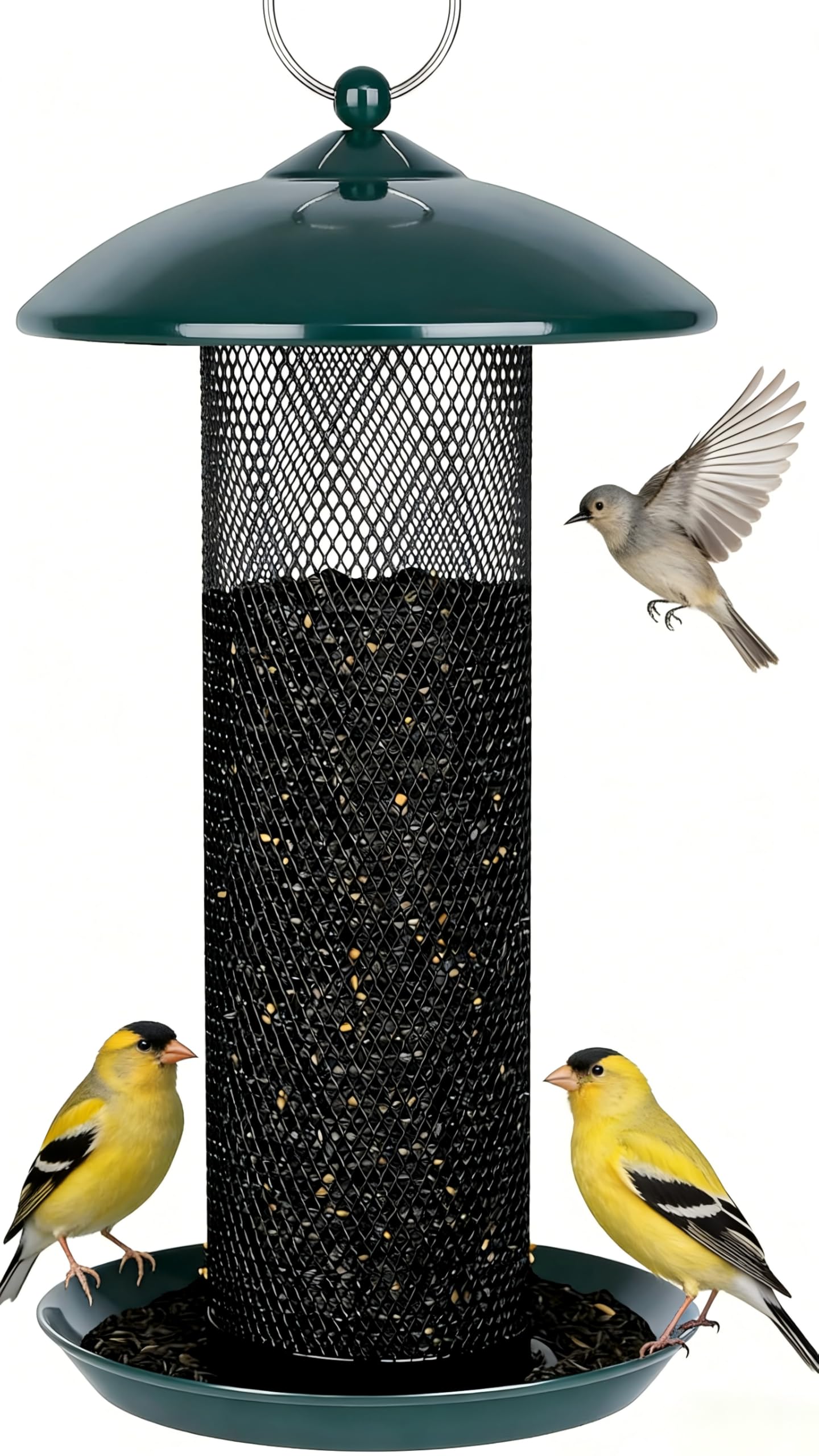
| Gtongoko All Metal Mesh Tube FeederBiggest Capacity | Big flocks, fewer refills | 2.5 pounds | Mesh screen with 0.24″ openings | Metal | Amazon |
| Kingsyard Metal Finch Feeder | Keeping larger birds off | 2 lb | 6 ports with 1.5-inch perches | Metal and plastic | Amazon |
| iBorn Nyjer Tube Feeder | Many birds at once | — | 12 small ports, 8 perches | Metal | Amazon |
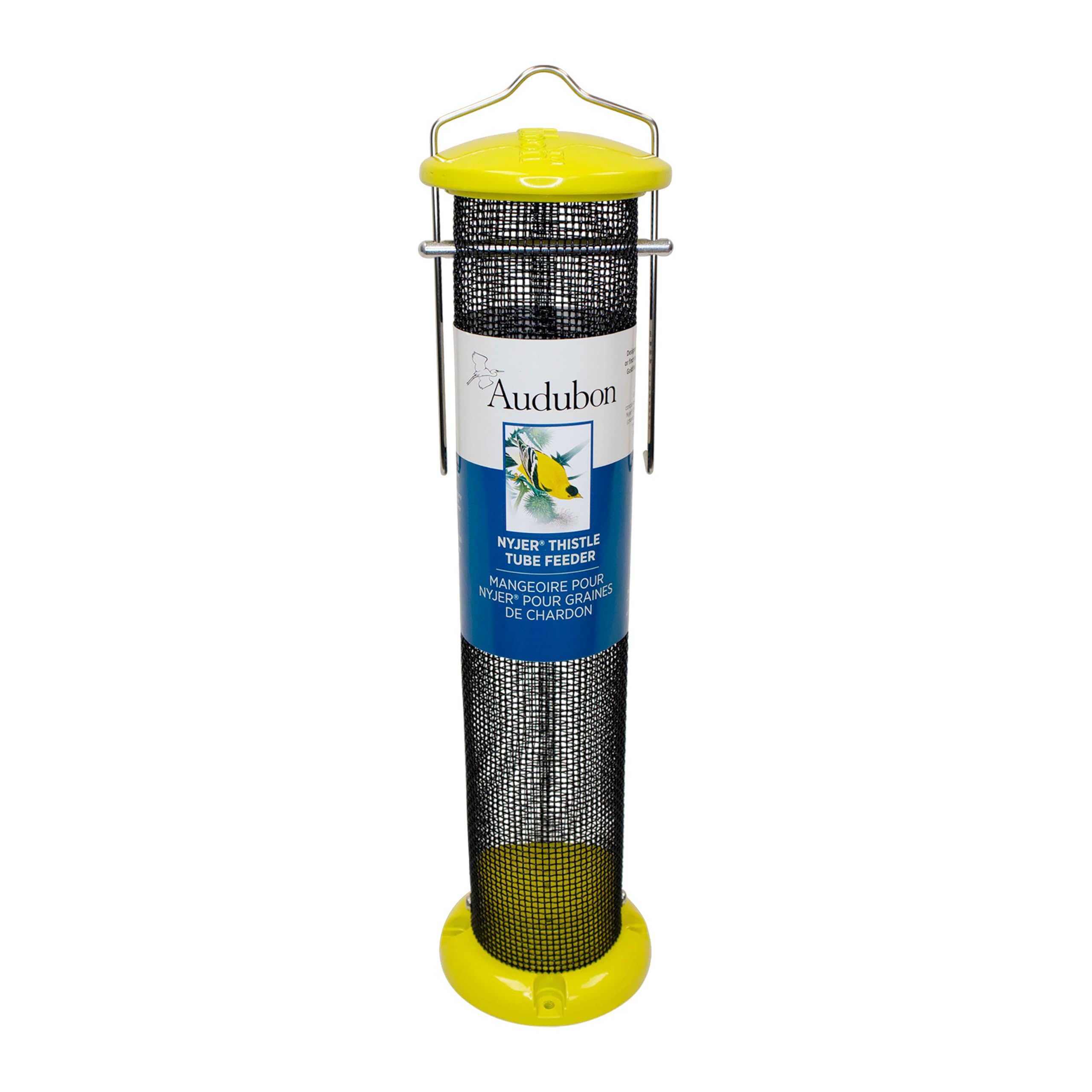
| Stokes Select 38171 Finch Screen | Heavy-traffic mesh feeding | 1.1 pounds | Mesh screen with tray | Plastic | Amazon |
Detailed Reviews
1. Woodlink NAWLNT Audubon Finch Screen Feeder
Our pick — 4.0+★ from 900+ verified ratings; the strongest balance of quality and price.
The no-assembly screen feeder that shrugs off rust and holds a pound of thistle.
The strongest all-round pick here is the one that asks nothing of you: it arrives ready to hang, holds 16 ounces of thistle or a finch mix, and needs no tools or assembly. The die cast aluminum body is why it keeps working season after season — buyers report it does not rust, the usual ending for cheap screen feeders. For a first finch feeder on a single shepherd’s hook, it is the low-risk pick.
Its real advantage is how finches feed on it. Finches cling straight to the screen rather than perching, and the fine mesh lets a group feed from any side. As owners mention: “This is perfect for finches. I have 9 on it a lot. Other birds beaks are too big to get to the thistle. Doesn’t rust. Buy it.” That beak-size filter is the whole appeal: the fine mesh keeps house sparrows from emptying it while goldfinches cling and feed. It is genuinely a smaller feeder than some shoppers picture at 3.5″L x 3.5″W x 13″H, but that narrow profile is what lets several birds crowd around.
The catch to know about: a few finch flocks ignore a new screen feeder at first, and owners sometimes hang an old finch sock nearby until the birds make the switch. Once they switch, it becomes the busiest spot in the yard. Worth patience, not worry.
What holds up
- Die cast aluminum body that owners say resists rust
- Ready to hang straight from the start, no assembly
- Fine mesh screen excludes larger beaks
- Easy-refill top lifts off for quick topping up
What to expect
- Finches may need a few days to discover it
- Compact screen holds less seed than a big tube
Reach for this if: you want a low-fuss mesh feeder for clinging finches that will survive wet weather.
Give it a pass if: you need to hold multiple pounds of seed between refills.
2. Gtongoko Finch Feeders Mesh Tube
A big-belly mesh tube that holds 2.5 pounds and feeds a crowd along the base.
If your yard pulls a serious goldfinch crowd, the math favors this one. It holds 2.5 pounds of Nyjer or thistle, so you refill far less often during peak season than with a one-pound screen feeder. The 0.24-inch mesh openings are sized to let finches cling and pull seed while keeping thistle from pouring out. And the mesh is the thing everyone raves about — goldfinches pile along the base and hang off the sides, with several feeding at once.
Size is the honest trade-off. The body measures 6″L x 6″W x 13″H, which is wider and deeper than the slender Woodlink screen above, so it takes a sturdier hook. That extra girth is exactly what buys the big seed load and the group feeding. The wide opening, removable metal lid, and detachable seed tray make refilling and cleaning tool-free, and a 6-inch weather-resistant lid shields seed from rain and snow.
A few owners note the lid can come loose if you rush the reattach — line up all the tabs and twist to lock. Do that and it holds. Most who try it find finches find it fast: customers note “Birds discovered feeder within 24 hours; 5-6 birds feed simultaneously, many goldfinches.”
Why it earns the spot: 2.5 pounds of capacity plus a fine mesh that specifically suits clinging finches makes it the volume pick for a busy yard.
Built for: backyards with a steady finch flock that empty a small feeder daily.
Not the one for: renters or a single-window hook where a big tube is more feeder than you need.
3. Kingsyard Metal Finch Feeders for Outdoors Hanging
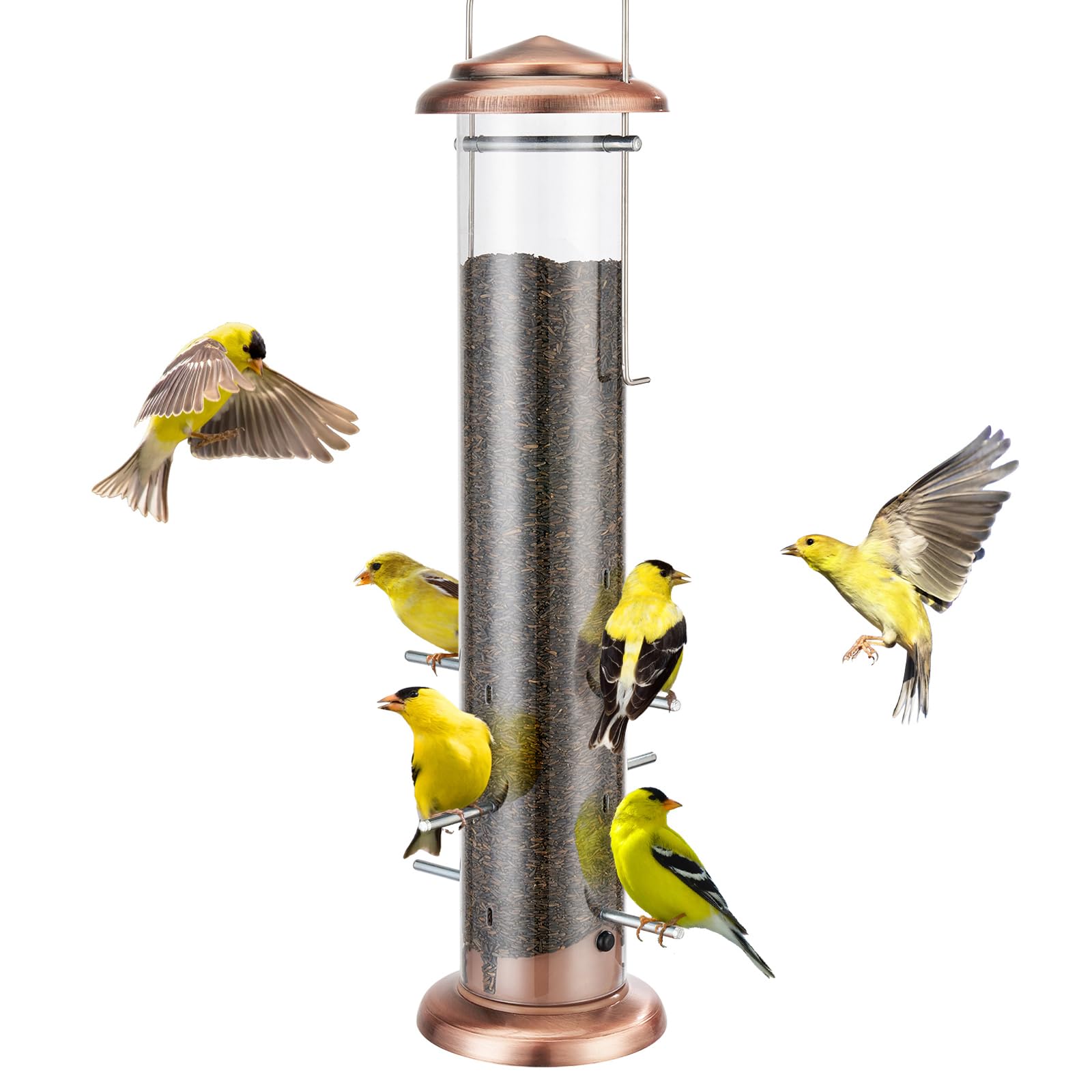
Narrow ports and short perches that let goldfinches in while keeping doves out.
This is the pick for the yard with a sparrow problem. The 1.5-inch perches are sized for goldfinches, siskins, juncos, sparrows, and house finches while keeping larger birds like mourning doves off. Six feeding ports let several birds dine together, and the enclosed seed compartment with narrow ports stops rainwater getting in. Drainage holes in the base handle any water that does collect.
The build is real metal where it counts — heavy-duty lid, base, and perches that resist squirrel chewing, with a powder-coated finish for rust protection. The clear seed tube lets you check levels at a glance, the top lifts for refilling, and a button releases the removable base for cleaning. What wins people over is finch response; owners say lesser finches took to it within 24 hours. As one finch-owner sums it up, “Lesser finches took to it within 24 hours.”
One nuance worth knowing: the perches are standard length, so on some setups birds other than goldfinches can still feed. Some owners trim the perches shorter to tighten the filter. And like most birds, they need a few days to decide a new feeder is safe.
The deciding detail: perch length and narrow ports do the filtering work here — pick it if excluding bigger birds matters more to you than maximum feeding room.
Pick this one: if house sparrows and doves are crowding out your finches.
Look past it: if you want a mesh screen for maximum cling-feeding space.
4. iBorn Finch Feeders 15 Inch Tube
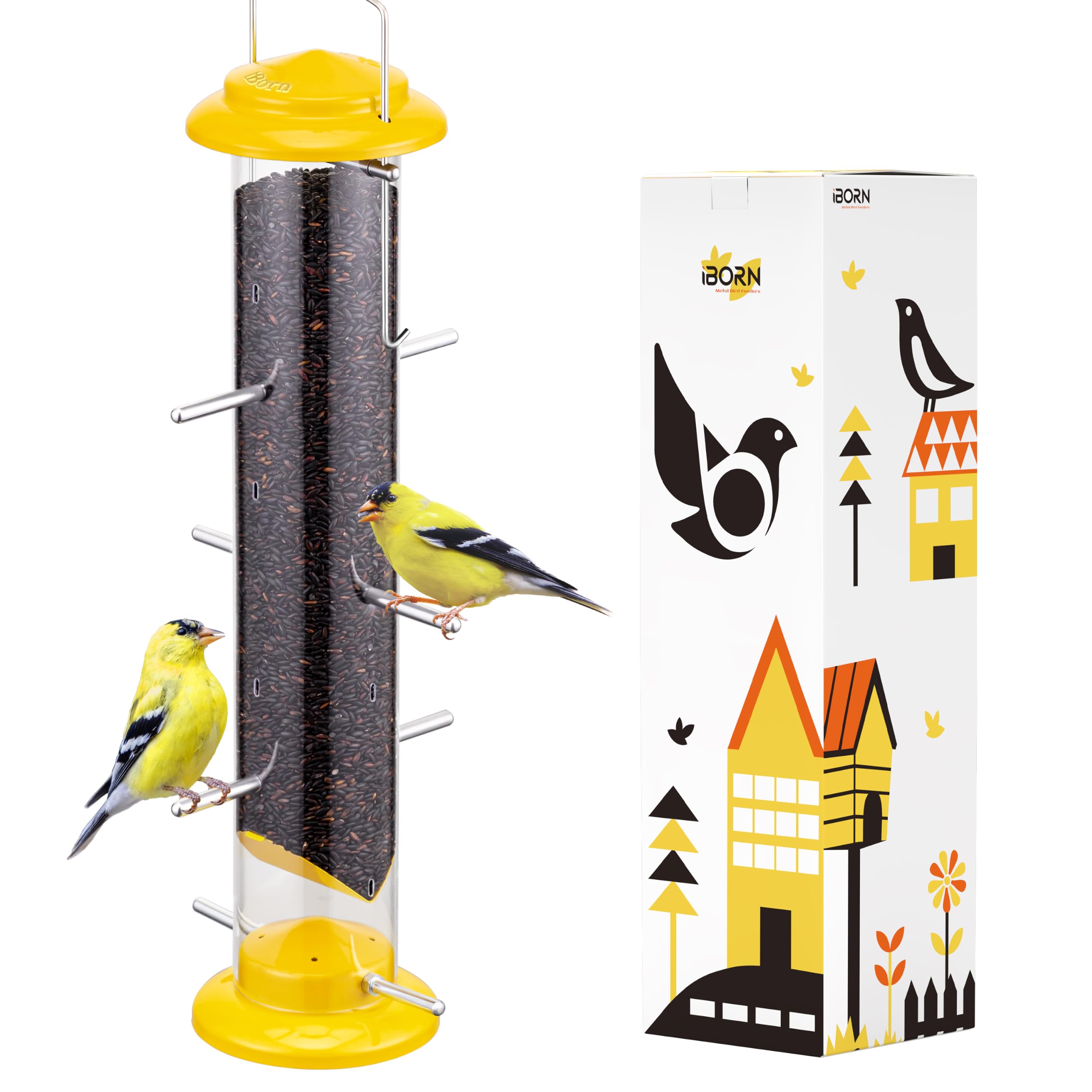
Twelve tiny ports and eight perches turn one tube into a communal goldfinch diner.
A 15-inch tube with 12 small ports and 8 metal perches is the most seating on this list, and that is the whole pitch — more birds at once, fewer squabbles. The tight ports mean less Nyjer falls to the ground, and the durable metal build carries a quality reputation in the reviews. A transparent seed compartment lets you see when levels drop, and the lift-lid makes refilling quick.
The smart detail is the V-shaped spacer and four drainage holes at the base. Those keep food from building up and hardening at the bottom and let water escape, which is how seed stays fresh rather than molding. A fixed metal hook keeps the feeder steady in wind instead of swinging on a string and spooking birds away. Finches get the hang of it: reviewers point out the lesser goldfinches hang upside down to reach a port when seed runs low.
The honest catch is the hole size — a few owners find the ports too tight for larger finches at first, though most birds learn within a week or so. The taller tube also means more seed sitting low if the flock is small, so clean it regularly.
Room to feed
- 12 ports and 8 perches for high bird traffic
- V-shaped spacer and 4 drainage holes keep seed fresh
- Fixed metal hook holds steady in wind
Worth noting
- Small ports take birds a week to learn
- Tall tube needs regular cleaning to avoid buildup low down
Go for it when: your goal is maximum bird traffic on one hanger.
Think twice if: your finches are large and you want loose, easy ports.
5. Stokes Select 38171 Finch Screen Feeder

The twist-top screen feeder with a metal roof that takes thistle, NyjerPlus, and finch mix.
This feeder earns loyalty on construction. Cast alloy end caps, a heavy-duty coated screen, and a twist-off top for filling and cleaning add up to a build that feels more substantial than its plastic-and-screen looks suggest. It holds 1.1 pounds of seed and accepts thistle, NyjerPlus, and finch mix, so you are not locked into one blend. Goldfinches, house finches, purple finches, and siskins all work the screen, and several can dangle on at once.
The metal roof and tray are the practical touches — the tray catches fallen seed where birds can still reach it, and the roof shades the top of the seed column. It is a genuinely light feeder that hangs easily and, with the metal ring instead of nylon string, hangs more securely than flimsier designs.
Two honest caveats. High wind can blow seed through the screen, so it suits a somewhat sheltered hook. And the tray collects seed over time, so a quick clear-out with a stick keeps it fresh. Owners who keep up with that cleaning get the best results from it.
The build case: cast alloy caps and a coated screen put this a tier above basic plastic screen feeders, with a metal ring that hangs steadier than string.
The one for you: if you want a sturdy screened feeder with a metal roof and can handle a little routine tray cleaning.
Skip if: your hook takes full wind and you want seed that will not scatter.
Know the Specs
Seed capacity in pounds and ounces
Capacity is the number that decides how often you walk out with the seed bag. A 16-ounce screen feeder is a top-up-a-lot option for a single hook, while a 2.5-pound tube keeps a busy flock fed longer. Match it to how many birds actually visit — a big tube on a quiet hook just holds stale seed that needs cleaning.
Mesh size and port size
Mesh openings around 0.24 inches let finches cling and pull Nyjer through without the seed pouring out. On a port tube, small ports do the same job while perches give birds a spot to sit. Tighter openings also act as a filter against larger birds whose beaks cannot reach the seed.
Metal versus plastic construction
Metal lids, bases, perches, and mesh resist squirrel chewing and hold up through wet seasons better than plastic. A powder-coated or die cast finish helps hold off rust. Plastic parts are lighter and cheaper, but they are the first to crack or wear when squirrels and weather test them.
Weather protection and drainage
A weather-resistant lid and drainage holes keep Nyjer dry — wet seed clumps and spoils fast. A tray catches fallen seed so birds still get it, and a well-sealed seed tube stops rainwater getting in. In windy spots, a fixed metal hook beats string because it stops the feeder swinging.
Common Questions
What is Nyjer seed and why do finches need a special feeder?
Will a mesh screen feeder keep house sparrows away?
How often will I need to refill a Nyjer feeder?
Does Nyjer seed go bad in a feeder?
Are metal feeders better than plastic for squirrels?
Should I hang a Nyjer feeder near an old finch sock to help birds find it?
What is the difference between a mesh screen feeder and a port tube feeder?
How high or where should I hang a Nyjer feeder?
Do goldfinches prefer Nyjer over other seed?
How do I clean a Nyjer bird feeder?
The Bottom Line
The five picks here all do right by finches; the right one is simply the shape that fits your yard. For most backyards, the Woodlink NAWLNT Audubon Finch Screen is the one — a rust-resistant die cast aluminum screen that keeps larger beaks out and arrives ready to hang. If your flock empties a small feeder fast, the Gtongoko All Metal Mesh Tube holds 2.5 pounds and feeds a crowd along the base. And for a sparrow-heavy yard, the Kingsyard Metal Finch Feeder with its 1.5-inch perches keeps the doves off while letting goldfinches in.
How we choose
We do not accept paid placement. Every pick is matched to a real buyer and a real use-case; we do not hands-on test units.
Sources
Specifications: manufacturer listings and product documentation. Review insights: verified customer reviews, as of October 2026. Pricing: not shown on this page (it changes often); check the current price via the retailer link.
As an Amazon Associate, Aappliancez earns from qualifying purchases. This does not affect which products we feature.